To print article, click
Print on your browser's File menu.
Go back
Go back
Posted 9/20/2001
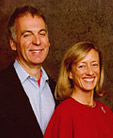
In memory of officer John Perry,
New York Police Department
New features
Check out our new StockScouter rating system
Find the top-rated stocks
What are the top-rated funds?
Read the latest market dispatches
Recent Articles
• Terror isn't predictable, but recovery is, 9/13/01
• A bear awakens feeling bullish, 9/6/01
• Sweating out a trade with a nervous pro, 8/30/01
more...
|

The Speculator
How a NY cop made his mark in life and in death
We lost a friend and model of economic freedom when one of New York's finest died in the tower rescue attempt. We pay tribute to him with a look at feudalism and British stocks that shows why the spirit of a free society will win in the end.
By Victor Niederhoffer and Laurel Kenner
When suicide pilots crashed into the twin towers of the World Trade Center last week, our friend John Perry, a New York City policeman, was headed to lower Manhattan to submit his retirement papers before starting a new career in the private sector. He didn't have to rush to the scene, but he did. He was last seen in the south tower helping the rescue effort.
| New
stock picks from market professionals every day on CNBC. |
As we write on Sept. 18, one week after the terrorist strike, John is among more than 5,000 people still officially listed as missing. We can't stop thinking of him. What a contrast his life of striving, learning, outspokenness and openness to new paths makes to the perpetrators' uncritical obedience to authority.
The market has had three days of decline since reopening. Yet we are optimistic for the future. We think that the worldwide reaction of horror against the attack will result in another peace dividend that will help trade and boost stocks. Israeli officials and Palestinian leader Yasser Arafat have agreed to a cease-fire -- the result, said the Palestinians' chief U.S. representative, of new attitudes in the region after last week's attacks. "We don't like the idea that so many civilians are suffering economically or psychologically," said Israeli Foreign Minister Shimon Peres.
With the market so sensitive now to daily events, we are reluctant to suggest specific stocks to buy. We feel like the workers picking up rubble. It's too soon to start building a new structure, as everything has changed.
Instead, in John's honor, we have taken a small step toward quantifying the effects of primitivism in the marketplace.
For John and the other innocents caught in the attack are victims of a throwback to primitivism. Faced with the challenges of modern life, people periodically imagine that they would prefer simpler times, when power and wealth were conferred by heredity and theocratic authority rather than merit, when people with exceptional ability weren't allowed to rise too high and thus could not be envied, when technology did not exist.
The primitive longing to renounce modern life has many unfortunate aspects. It often includes the preaching and practice of bloodshed and self-sacrifice as liberation from "petty cunning for selfish ends," Jacques Barzun observed in his book, "From Dawn to Decadence." The choice of the World Trade Center on a workday as a target reflects the perpetrators' contempt for modern economic freedom. The attackers are suspected of cynically engaging in insider trades, including selling reinsurers' stocks in advance of the attack.
The medieval mentality of the attackers, the unquestioning obedience to authority rather than reason, reminds us of the fawning obeisance to royalty and hereditary titles that persists in the United States and Britain to this day. Con artists have long exploited this tendency. As Sarah Burton wrote in "Imposters: True Tales of Deception," and as all visitors to England know, "The feudally minded British are inordinately impressed with anyone who appears to spring from the upper ranks of society... If he can hint at an ancient title, a medieval country seat and connections with royalty all defenses are down."
The aura of the aristocrat
John exemplified the life that reason and economic freedom can bring to those with ability and courage. He was without title or family wealth, and he had more interests, energy and jobs than anyone we know. A 6-foot-9 athlete who swam all the way around the island of Manhattan for exercise, he served in the peacekeeping mission to Bosnia. He was also a member of a philosophy discussion group that we attend. Once, as group members relaxed afterward, tango music was played. John removed his sidearm, handed it to Vic and gave Laurel a beautiful rhythmic lead. He had been both a cop and a lawyer at the NYPD, where he helped to bring many police misconduct cases that resulted in the firings of officers. A few months ago, he was a character witness in the trial of a rabbi who administered marijuana to relieve the suffering of the chronically ill -- a move that reportedly upset his superiors so much that they assigned him to dangerous street duty in the Bronx. That didn't silence him. When we last saw him, he delivered an impassioned speech against the war on drugs.
We continue to believe that in the long run the dedication to progress exemplified by John prevails powerfully in the market as well -- that growth inevitably outperforms value simply because investors are rewarded for taking risk, not for shunning it. In a previous column, we sought to test whether research spending indicates superior market performance over the long term. With the Nasdaq Composite ($COMPX) in the throes of a 69% decline from its March 2000 high, let's just say that the jury is still out on that one. We also have considered ranking stocks based on chief executives' education levels and the age of the company.
Stale investments and the upper crust
For today, however, we looked at just one variable: the number of board members with titles among the 50 largest companies by market value in Britain's FTSE 100. (We counted knights, baronesses, earls, a viscount, a lady and a dame along with the lords and right honorable lords. We awarded an extra point if the chairman is a lord.)
We then listed the companies' five-year stock performance, eliminating three that had not been around long enough in their present form.
It turns out that the more lords on board, the worse the stock performance over the past five years. The companies that did best were bereft of titles.
Lords on board and 5-year stock performance
| # Lords on board | Avg. 5-yr. stock perf. |
| >3 (11 companies) | 32% |
| 1-3 (25 companies) | 72% |
| 0 (11 companies) | 107% |
HSBC Holdings (HBC, news, msgs), the fourth-most-valuable company in the FTSE 100, had the greatest number of lords -- seven titled board members and a knighted chairman, Sir John Reginald Hartnell Bond.
Eight of the 10 largest FTSE 100 companies had at least three lords. The largest, BP (BP, news, msgs), formerly British Petroleum, has four lords.GlaxoSmithKline (GSK, news, msgs), the second-largest, has six lords on board and a knighted chairman. About half the companies have between one and three lords. The largest company without lords is insurer CGNU, No. 13 on the FTSE.
We also invented the Earnings/Lords ratio – a measure of attractiveness along the lines of the Price/Earnings ratio.
A small or negative numerator (Earnings) and a high denominator (Lords) would result in a small or negative ratio. For example, HSBC made 75.5 cents a share last year, and has eight lords on board. Therefore, it has an E/L ratio of 0.09, putting it in the bottom third of the companies with both lords and profits. Powergen plc (PWG, news, msgs), with one lord and $1 of earnings per share, giving it the highest E/L ratio. Cable & Wireless (CWP, news, msgs) lost 93 cents a share last year, and has three lords on board; thus, its ratio is –0.31.
We hypothesize that investors might want to stay away from companies with small or negative Earnings/Lords ratios. However, our observations are merely a first step toward defining the market implications of ossification vs. innovation. Proper testing of this idea would require the analysis of several years of data unavailable in computer databases. The widely publicized tests of the predictive efficacy of the P/E ratio, for example, have used databases tainted with survivor bias and retrospective earnings data.
Our observations on the relationship of lords and earnings raises the question of which way causality runs. Was it the lords who caused the lackluster performance, or the lackluster performance that prompted the companies to use lords as window-dressing? We will be happy to hear from all readers who have ideas on the benefits of reason and the detriments of blind reliance on authority.
We believe John would have appreciated our study of lords and performance. He was always irreverent, appreciative and young-hearted. We all will carry the death, the scars, and the losses this tragedy has brought about forever. We offer our analysis as a small tribute to those who epitomized the spirit of a free society.
MSN Money's editorial goal is to provide a forum for personal finance and investment ideas. Our articles, columns, message board posts and other features should not be construed as investment advice, nor does their appearance imply an endorsement by Microsoft of any specific security or trading strategy. An investor's best course of action must be based on individual circumstances.