Dec
22
A Christmas Carol: Socialist Screed? from Jef Watson
December 22, 2010 |
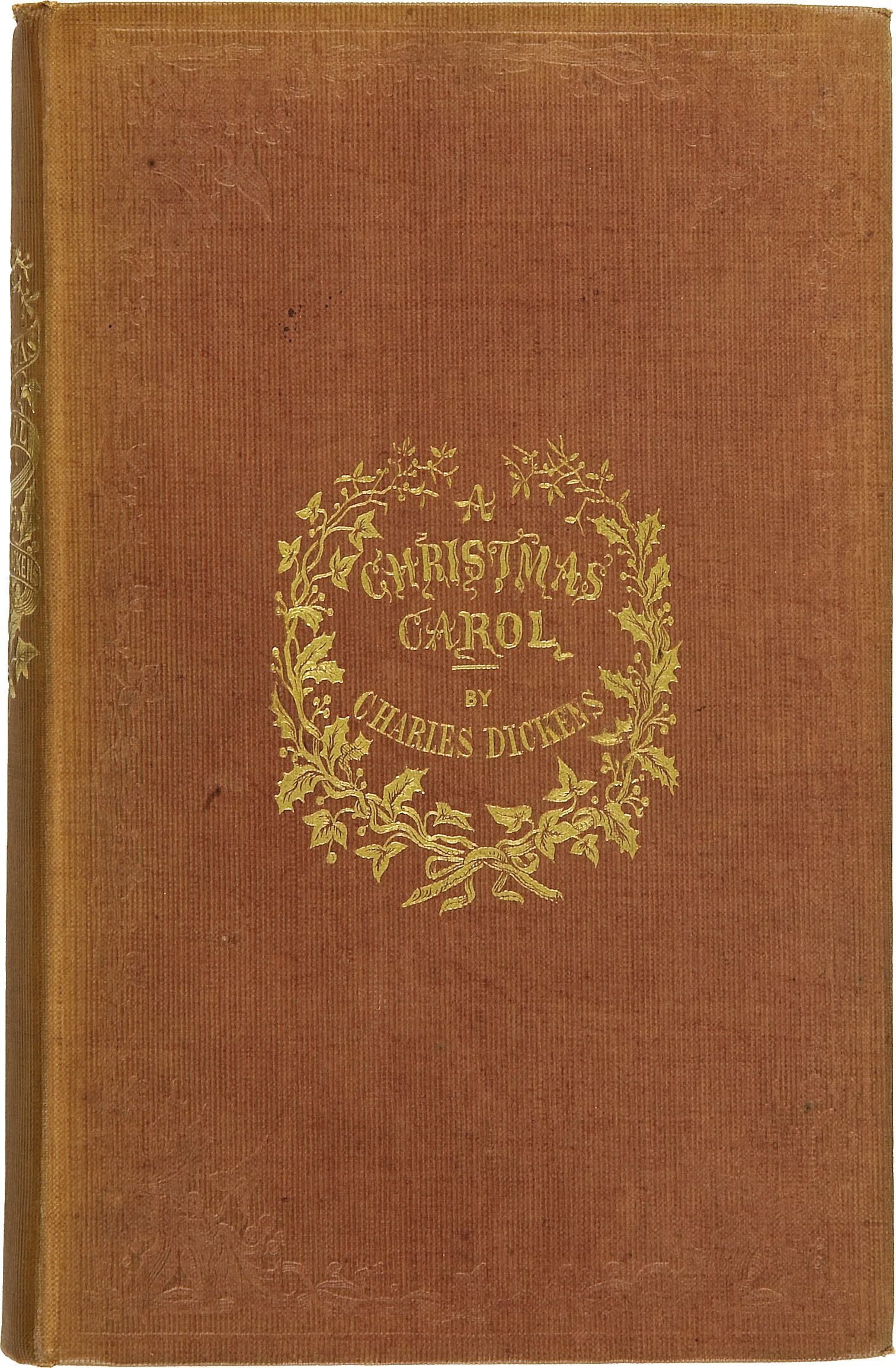
 The other day, I was forced to attend an amateur showing of Dickens "A Christmas Carol." The production was well executed, the stagecraft was excellent, and the scenery was first rate. I've seen the Dickens classic so many times, I either just nod off, daydream, or try to improve my mind. During the show, I started to think of how the author, Charles Dickens, really hated capitalists and was a socialist at heart. He portrayed Ebeneezer Scrooge as the prototypical capitalist of the day, but his real "sin" was that he was a miser, only interested in his self, mistreating everyone. The fact that Scrooge had a bad attitude and dour personality did not work in his favor and was a great device used by Dickens to generate hatred for capitalists and the rich in general.
This got me thinking on many levels. For one thing, Scrooge was a businessman who earned his money fair and square. He cheated nobody and expected his contracts and debts to be paid as per any previous agreements, Scrooge ran a tight ship, to the point of being called miserly. He was a demanding employer of his clerk Mr. Cratchit, who accepted the employment contract with Mr. Scrooge with good cheer. Much has been said and written about the evil Mr Scrooge, his name has become part of the lexicon of the definition of an evil capitalist. Even the people in the neighborhood made disparaging remarks about Scrooge, and this mistreatment and lack of respect added to his dour personality. There was no evil to Mr Scrooge, and his unfavorable treatment was a literary device, a populist reaction by the left, the socialists who portray all rich as greedy, evil people who allow people to suffer while they live rich, extravagant lives.
As I said before, Mr Scrooge had an employment contract with his clerk, Mr. Cratchit who was a man of good cheer. Cratchit's wife constantly complained that Scrooge was an old miser with a flinty heart of stone. She neglected to mention that Mr. Cratchit was free to seek employment elsewhere if his working conditions were so bad, but this aspect and so many others were left out by Dickens. As for Scrooge's miserly description, some would call his miserliness thrift, which is an esteemed Franklinian virtue.
Scrooge's refusal to participate in a festive dinner with his nephew and wife was his business and he certainly didn't deserve the ridicule heaped upon him by the women folk, nor was he required to offer an explanation or apology. He was merely exercising his freedom to do what he wanted, and if he chose not to celebrate Christmas, that was his natural, god given right. During Scrooge's pre ghost phase, he was a hard nosed flinty business man, albeit a bit ill mannered. There is no law against being ill mannered, dour, mean, or miserly. Scrooge was free to do whatever he wanted, with no worries what society would think as long as he behaved within the law and remaining scandal free.
Every good story likes to make a case of human redemption, a change from self interest to the interest and service of the collective. In popular culture, rich are inherently evil, their gains ill gotten off the backs of workers, and the poor always triumph over the rich. Dickens masterfully pulled this off when he had three ghosts visit Scrooge on Christmas Eve to scare the hell out of him and change his evil ways. His powerful scare tactics caused Mr Scrooge to abandon his own self interest, abandon his personal freedom for the good of society, destroy the profitability of his business, and spend his hard earned wealth on charity to repent for his earlier miserliness.
The messages Dickens made in a Christmas Carol were very clear. Productive people must give to the more deserving poor to be considered worthy, rich people are not happy due to guilt, producers must abandon self interest in order to satisfy the needs of others in a society who don't work as hard, businessmen must run their personal business for the sole benefit of their employees, conversely to the detriment of the stockholders. And finally one must give exorbitant sums to the poor, provide medical care for the employees, and give retroactive raises to allegedly underpaid employees. Benevolence is not a virtue in this world, it is a requirement. Scrooge was manipulated into this transformation by the three ghosts creating immense guilt and fear, and by the end of the story Mr Scrooge was more concerned with what people thought of him, his personal image, than the real work of creating profits, creating jobs, growing a business, and contributing to the general business climate.
At the end of the story Mr. Scrooge was a transformed man. He was happy, benevolent, highly thought of, giving,almost giddy, much like a person who has had a drink or ten. A good case could be made that he was a better man, but w hat he lost was the real tragedy. Scrooge lost his independence, his freedom, became dependent not on profits, but on the opinions of others. He was required to give money away, raised expectations of others, and caused economic imbalance by changing the market pay scale of employees in his business. In a way, Scrooge's new found largesse probably was bad for the economy as a whole a la the theories of Hazlitt. On another note, happiness tends to be fleeting much like health and I suspect that with Mr Scrooge, old habits die hard.
When the curtain closed, everyone was cheering. I felt a bit of sadness, as here's another story of poverty trumps wealth, rich is evil while poor is good, and being a second hander is more important than being a real, virtuous free man. In the end, Mr. Scrooge was the real loser and the real story was the transformation of a rich, productive man into a welfare state.
Rocky Humbert comments:
Dear Jeff:
Considering "A Christmas Carol" to be an indictment of Victorian Capitalism is not a novel idea, yet I still find your words and spirit to be sad, indeed.
While you are free to intrepret Dickens however you see fit, you have no such freedom with respect to core Judeo-Christian values, which parts of Dickens' play embodies. The principles which you lament are the core principles of Judaism and Christianity.
What you find lamentable, I find laudable. When you find trivial, I find grand. In short, I celebrate the charity and goodness toward man that Christmas celebrates, while you mock it as political correctness.
I wish you a happy holiday, and hope that you someday discover what Scrooged learned– that there is no greater joy than bringing happiness to others.
Scott Brooks adds:
 Let's not confuse charity with force of threat.
Scrooge offered a fair deal at a fair price. The way we can infer that this is the case is that people came to him, and willingly signed a contract. Scrooge performed his half of the contract by loaning them money. What is wrong with him expecting that they honor their portion of the contract?
And, let's not confuse what Scrooge did for charity. Giving to other under threat of force…..i.e. the spirits (under the direction of Dickens) threatened him with the threat of eternal damnation if he didn't commit business suicide.
Another problem with "A Christmas Carol" was that the story ended on December 25th. Let's flash forward to the "The Week After Christmas":
Bob Cratchit shows up at work on the 26th only to find that he doesn't have a job. Why? Because Scrooge, in his "fit of charity to bring happiness and joy to others" tore up all the debts owed to him and there was no more accounting work for Cratchit to do.
Later that day, and throughout the next week, a bunch of former Scrooge customers come to the office to borrow more money, only to find it closed because Scrooge has no more money to lend out. If he did, it would be evil (under Rocky's view of the world) to unfairly loan out money. And he couldn't just keep the money, he would have to give it away to atone for his supposed sins.
Therefore, the vital role that Scrooge played in the community…i.e. loaning money to people that had need of a loan for whatever purpose they felt they needed a loan for (and that Scrooge deemed as a good "loan risk")….that vital role was no longer available in the community.
And what happens when credit dries up in a society….well, I think we can all agree that that's not a good thing.
Sorry Rocky, but you're wrong in your assessment. This is not charity or Christian/Judeo ethics. This is a story by a man who didn't like Capitalism, that slams capitalism. It could have been written by most any journalist or university professor in today's society.
David Hillman writes:
 And then, there's the contrarian point of view…
….which makes as much sense as does the interpretation of A Christmas Carol as an indictment of Victorian Capitalism [which, by the way, was far different from what we generally think of as 20th Century capitalism, i.e., the kinder, gentler Fordist model or the so-called millennial capitalism that has been evolving since the 1980s.]
I don't know much, but two things I know, 1) what Dickens' meaning and intent in A Christmas Carol was is about as clear as what the founding fathers intended in the Constitution, or as clear as whether the origin of the universe was a God or a Big Bang, and 2) we don't see things as they are, we see things as we are.
That said, I would posit that one's interpretation of A Christmas Carol, or just about anything else for that matter, tells us far more about the interpreter than it does of Dickens.
Gary Rogan writes:
It's interesting that with all of his supposedly anti-capitalist novels, Dickens undertook two trips to America mostly to lobby for copyright enforcement. He also blamed his bankruptcy and later health and financial problems close to his death on being deprived of his rightful royalty stream. Somehow various American software companies and their hyper-liberal billionaire founders fighting intellectual property theft in China come to mind, although they are all in decidedly better financial shape.
Kim Zussman chimes in:
It's not every day you see Jewish pro-Christmas arguments against Mormons; a market top indicator?
The 1938 Christmas Carol is a great film, and if you don't tear up your trading accounts are definitely too flush.
Scrooge's encounters with ghostly futures cause us to ask what is really important. It is difficult to balance the race for money with taking time for things and people who will too soon be grown, old, or gone.
Stefan Jovanovich writes:
"A Christmas Carol" is far less about what our List calls "capitalism" - i.e. pricing by competition - and far more about Dickens' wanting the world to have a universal catcher in the rye and not be like the America he saw in 1842. He was appalled by our slavery and by our insane "push". He was also upset by the fact that, like the East Asians today, Americans were notorious copyright pirates. We were also the source of his growing wealth by being the best customers for his books. During his visit to New York his American publisher and his admirers (Washington Irving, William Cullen Bryant) held a gala in his honor, with 3000 people attending.
Dickens knew almost nothing about business by 1843 (the date of A Christmas Carol's publication) from direct experience or observation. His father had worked in the Navy Pay office and lived on a family inheritance. Dickens' only job in any "dark, satanic mill" was a few months sticking labels on bottles of shoe polish. He then went back to school. After school he worked in a law office as a clerk, taught himself the new short-hand and became a court reporter through a family connection. That led to political journalism. Sketches by Boz - his first book published in 1836 - is a collection of his political pieces for the Morning Chronicle, covering the Parliamentary elections.
The socialism Jeff finds in the story is there; it is the same socialism you find in Thoreau. It came from the same source - Unitarianism - which Dickens became interested in while visiting the U.S. And, capitalism in its modern forms was still in its infancy. It would be another decade and more before limited liability was formally recognized in Britain in the legislation of 1855-1856.
Gibbons Burke writes:
A Christmas Carol is not anti-Capitalist as such. But it makes a case strongly against Capitalism run by capitalists who serve Mammon rather than God. Scrooge, who initially perfectly represents that anti-human form of Capitalism at its worst soul-less excess, is the perfect picture of a seemingly-self-satisfied soul roasting in a Hell on Earth of his own devising, and he seems certainly destined for the eternal flame pit until his heart is converted later in the book. At that moment he becomes filled with the Joy that is the gigantic secret of the Christian (according to Chesterton).
Here is Dickens' initial description of old Scrooge - which seems to have plenty of editorial voltage:
Oh! But he was a tight-fisted hand at the grindstone, Scrooge! a squeezing, wrenching, grasping, scraping, clutching, covetous, old sinner! Hard and sharp as flint, from which no steel had ever struck out generous fire; secret, and self-contained, and solitary as an oyster. The cold within him froze his old features, nipped his pointed nose, shrivelled his cheek, stiffened his gait; made his eyes red, his thin lips blue; and spoke out shrewdly in his grating voice. A frosty rime was on his head, and on his eyebrows, and his wiry chin. He carried his own low temperature always about with him; he iced his office in the dog-days; and didn't thaw it one degree at Christmas.
External heat and cold had little influence on Scrooge. No warmth could warm, no wintry weather chill him. No wind that blew was bitterer than he, no falling snow was more intent upon its purpose, no pelting rain less open to entreaty. Foul weather didn't know where to have him. The heaviest rain, and snow, and hail, and sleet, could boast of the advantage over him in only one respect. They often "came down" handsomely, and Scrooge never did.
Nobody ever stopped him in the street to say, with gladsome looks, "My dear Scrooge, how are you? When will you come to see me?" No beggars implored him to bestow a trifle, no children asked him what it was o'clock, no man or woman ever once in all his life inquired the way to such and such a place, of Scrooge. Even the blind men's dogs appeared to know him; and when they saw him coming on, would tug their owners into doorways and up courts; and then would wag their tails as though they said, "No eye at all is better than an evil eye, dark master!"
But what did Scrooge care! It was the very thing he liked. To edge his way along the crowded paths of life, warning all human sympathy to keep its distance, was what the knowing ones call "nuts" to Scrooge.
The book is available in several illustrated editions for free on Project Gutenberg.
Jeff Watson responds:
So, in other words, while Scrooge was unpopular, he enjoyed total freedom. That sounds pretty good to me. At least If I had his rep, I wouldn't have to say no to 30 requests for donations a day. Can you imagine how refreshing it would be to perform an essential service, perform admirably in business, deliver superior service, and not give a damn what people thought of you? That would make Hank Reardon proud. It is not a crime to be disagreeable, a skinflint, self serving or any other eccentricity. If we punished men for their eccentricities, Henry Ford would have never created and revolutionized the automobile business, J.P. Morgan would never have risen beyond the level of margin clerk, the old Commodore Vanderbilt would have probably died in a house of ill repute, Barney Frank would have been hanging out on…, and Bill Clinton would probably be in an Arkansas … for a very youthful indiscretion.
John Tierney writes:
In 1899 Elbert Hubbard viewed the "Scrooges" thusly:
We have recently been hearing much maudlin sympathy expressed for the "downtrodden denizen of the sweat-shop" and the "homeless wanderer searching for honest employment," & with it all often go many hard words for the men in power.
Nothing is said about the employer who grows old before his time in a vain attempt to get frowsy ne'er-do-wells to do intelligent work; and his long patient striving with "help" that does nothing but loaf when his back is turned. In every store and factory there is a constant weeding-out process going on. The employer is constantly sending away "help" that have shown their incapacity to further the interests of the business, and others are being taken on. No matter how good times are, this sorting continues, only if times are hard and work is scarce, the sorting is done finer- but out and forever out, the incompetent and unworthy go.
It is the survival of the fittest. Self-interest prompts every employer to keep the best- those who can carry a message to Garcia.
I know one man of really brilliant parts who has not the ability to manage a business of his own, and yet who is absolutely worthless to any one else, because he carries with him constantly the insane suspicion that his employer is oppressing, or intending to oppress him. He cannot give orders; and he will not receive them. Should a message be given him to take to Garcia, his answer would probably be, "Take it yourself."
Tonight this man walks the streets looking for work, the wind whistling through his threadbare coat. No one who knows him dare employ him, for he is a regular fire-brand of discontent. He is impervious to reason, and the only thing that can impress him is the toe of a thick-soled No. 9 boot.
Tim Melvin comments:
 The question of scrooge and how we view him is one that men of business have wrestled with since the damn story was published. The thing is that Dickens does not paint Scrooge as the example of every businessman. We tend to take much of the Scrooge story out of context, I think. Business itself is not painted as evil or wrong. Was not Fezziwig the owner of a prosperous and successful business when young Ebenezer was employed there in his youth. Judging by the Christmas party it was prosperous business indeed. Yet Fezziwig was a generous soul to his employees who treated then well and asked for a fair days work for a fair day's pay and got it it cheerfully from those in his employ. Scrooge described his time employed there and his boss thusly, "The happiness he gives, is quite as great as if it cost a fortune ."
In contrast Scrooge underpaid Bob Cratchitt and treated him poorly. To say that Mr. Cratchitt could simply look for other employment is as ridiculous a statement as it is heartless. With a large family and a sick child he would be foolish to change what employment he did have by seeking other employ. Given the hours he toiled when would he had the time anyway?
Scrooge is indicted not for being a man of business but for being a man who shuts out the world and pursues only business in a mean spirited way. I greet my lender when I see him on the street. Scrooge was harsh man who was probably the lender of last resort and treated his customers poorly. Good business is a win win were the partied walk away feeling that both have scored a victory in my experience. To have your neighbors ignore you in the street and cackle over yor corpse does not paint the idea that he did business fairly in my mind. To be sure we all have probably made some enemies along the way, but we have made friends as well who would mourn our passing/ not so in this case.
Scrooge is indicted of closing his heart to all of humanity. He chooses commerce over the love of a woman and the potential for a life and a family. He helps no one with a kind word, a gentle lesson or a shared idea. The concept of charity is unique to us all. But hard asses as all of us are, as libertarian and objectivist rooted as we are, would we hesitate to assist a friend, relative or even employee who had an ill child if we had the resources to do so? Which of us would not give our nephew, our only family a visit on a holiday eve or at least a kind word, a lesson in the ways of the world that might help them succeed in life?
Scrooge was not indicted and sentenced to haunting for being a business man. He was convicted of living without love. The love of a child, of a woman, of humanity. He hated himself as much as he hated the rest of the world. Scrooge's crime was not being a business man but for failing to appreciate the wonder that life actually can be. I like so many other readers of this site detest the corporate charities, and I say no quickly and clearly in my best bah humbug fashion. But just like everyone else here there are charities and causes I believe in and donate my time and money. I do not buy the in the give to all philosophy or faceless giving anymore than the rest of you. I do believe in libraries, special olympics and a few other causes and I give. So do you whether it's a church, a cause, a philosophy of a friend in need so quit pretending your are an objectivist hardass who helps no one. Not only is that so much BS, it's a heartless life that would create a scrooge like existence and so far I have met no spec who fits that description.
Scrooge's crime was not business. It was living with love, without the touch and hear of another, without a child's smile, a lover kiss or the hand of a friend. By Dickens account he denied himself all the makes life special. There is no account given of good food, or beautiful music or even good books. Scrooge's crime was not one of business. He was guilty of crimes against life itself.
Jeff Watson responds:
(While I agree with much of Tim's premise, I'd like to see the statutes Scrooge violated regarding the aforementioned crimes). If those are indeed crimes that Scrooge committed, I fear the state is on the road to becoming more totalitarian if they feel the necessity to regulate those areas of normal but eccentric human behavior. Again, it's not against the law to be a total dick, nor should the government concern itself with forbidding person to be rude, self absorbed, cheap, hated, or mean spirited. I certainly can't find anything in the constitution addressing this issue.
Stefan Jovanovich writes:
Dickens wanted women to stay in the kitchen; Hubbard wanted them to own the restaurant.
His company - Larkin Soap - gave Frank Lloyd Wright his first big commission. The friezes on open galleries of the building had these mottoes: GENEROSITY ALTRUISM SACRIFICE, INTEGRITY LOYALTY FIDELITY, IMAGINATION JUDGMENT INITIATIVE, INTELLIGENCE ENTHUSIASM CONTROL, CO-OPERATION ECONOMY INDUSTRY.
Here is Hubbard's story of how he started the Philistine magazine and the Roycroft shops. Begins at page 309
Comments
Archives
- June 2026
- May 2026
- April 2026
- March 2026
- February 2026
- January 2026
- December 2025
- November 2025
- October 2025
- September 2025
- August 2025
- July 2025
- June 2025
- May 2025
- April 2025
- March 2025
- February 2025
- January 2025
- December 2024
- November 2024
- October 2024
- September 2024
- August 2024
- July 2024
- June 2024
- May 2024
- April 2024
- March 2024
- February 2024
- January 2024
- December 2023
- November 2023
- October 2023
- September 2023
- August 2023
- July 2023
- June 2023
- May 2023
- April 2023
- March 2023
- February 2023
- January 2023
- December 2022
- November 2022
- October 2022
- September 2022
- August 2022
- July 2022
- June 2022
- May 2022
- April 2022
- March 2022
- February 2022
- January 2022
- December 2021
- November 2021
- October 2021
- September 2021
- August 2021
- July 2021
- June 2021
- May 2021
- April 2021
- March 2021
- February 2021
- January 2021
- December 2020
- November 2020
- October 2020
- September 2020
- August 2020
- July 2020
- June 2020
- May 2020
- April 2020
- March 2020
- February 2020
- January 2020
- December 2019
- November 2019
- October 2019
- September 2019
- August 2019
- July 2019
- June 2019
- May 2019
- April 2019
- March 2019
- February 2019
- January 2019
- December 2018
- November 2018
- October 2018
- September 2018
- August 2018
- July 2018
- June 2018
- May 2018
- April 2018
- March 2018
- February 2018
- January 2018
- December 2017
- November 2017
- October 2017
- September 2017
- August 2017
- July 2017
- June 2017
- May 2017
- April 2017
- March 2017
- February 2017
- January 2017
- December 2016
- November 2016
- October 2016
- September 2016
- August 2016
- July 2016
- June 2016
- May 2016
- April 2016
- March 2016
- February 2016
- January 2016
- December 2015
- November 2015
- October 2015
- September 2015
- August 2015
- July 2015
- June 2015
- May 2015
- April 2015
- March 2015
- February 2015
- January 2015
- December 2014
- November 2014
- October 2014
- September 2014
- August 2014
- July 2014
- June 2014
- May 2014
- April 2014
- March 2014
- February 2014
- January 2014
- December 2013
- November 2013
- October 2013
- September 2013
- August 2013
- July 2013
- June 2013
- May 2013
- April 2013
- March 2013
- February 2013
- January 2013
- December 2012
- November 2012
- October 2012
- September 2012
- August 2012
- July 2012
- June 2012
- May 2012
- April 2012
- March 2012
- February 2012
- January 2012
- December 2011
- November 2011
- October 2011
- September 2011
- August 2011
- July 2011
- June 2011
- May 2011
- April 2011
- March 2011
- February 2011
- January 2011
- December 2010
- November 2010
- October 2010
- September 2010
- August 2010
- July 2010
- June 2010
- May 2010
- April 2010
- March 2010
- February 2010
- January 2010
- December 2009
- November 2009
- October 2009
- September 2009
- August 2009
- July 2009
- June 2009
- May 2009
- April 2009
- March 2009
- February 2009
- January 2009
- December 2008
- November 2008
- October 2008
- September 2008
- August 2008
- July 2008
- June 2008
- May 2008
- April 2008
- March 2008
- February 2008
- January 2008
- December 2007
- November 2007
- October 2007
- September 2007
- August 2007
- July 2007
- June 2007
- May 2007
- April 2007
- March 2007
- February 2007
- January 2007
- December 2006
- November 2006
- October 2006
- September 2006
- August 2006
- Older Archives
Resources & Links
- The Letters Prize
- Pre-2007 Victor Niederhoffer Posts
- Vic’s NYC Junto
- Reading List
- Programming in 60 Seconds
- The Objectivist Center
- Foundation for Economic Education
- Tigerchess
- Dick Sears' G.T. Index
- Pre-2007 Daily Speculations
- Laurel & Vics' Worldly Investor Articles
