Apr
29
A Fair Game, from Victor Niederhoffer
April 29, 2010 |
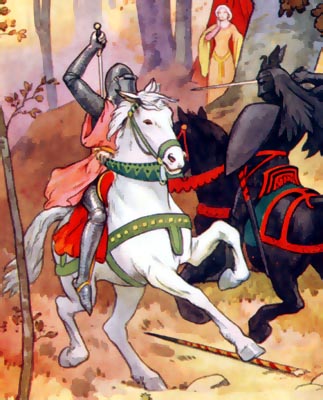 How often does it occur in martial arts like the battle of King Arthur and King Pellinore that one combatant lets the other up for a breather out of chivalry or malevolence and then loses the battle as the other side takes the opportunity to turn the tables. What is the market analogy of this and can it be quantified before noon?
Ralph Vince comments:
Hmmm, letting your opponent up… constitutes a new fight altogether… and as I always say, "In any fight– anything can happen." (Not that I've ever been in a fight — I've just heard in passing…)
You can never be sure of anything, and all the planning and training in the world go out the window the moment it's on.
And scale doesn't matter — be it on the individual level (remember that bum who knocked out Lennox Lewis some years back, with just one lucky, little pop) or on the scale of nations (Iraq should have been a cakewalk, right?).
It's a new fight, and in any fight anything can happen — which is why fights should be avoided. There are those fights that will find their way to me that I won't be able to avoid, so I don't need to look for fights, and, if unavoidable, always take them very seriously.
Ralph Vince is the author of The Leverage Space Trading Model, Wiley, 2009
Art Cooper writes:
Mr. Sogi once recounted a personal experience of this: He represented the plaintiff in a lawsuit to recover money owed to it by the defendant. Just before the case was to be heard, defendant's attorney asked Mr. Sogi for a minute to use the restroom. Mr. Sogi obliged. (What reasonable person could refuse?) Defendant's attorney used the "bathroom break" to walk down the hall of the Courthouse and file for bankruptcy, thereby insulating his client against plaintiff's claim.
Sri Viswanath comments:
 A nice analogy for us sports fans… The Colts' undefeated season (would have been the first since the '73 Miami Dolphins) was "donated" as the coach benched starters much to their dismay against one the arguably worst teams and 'succeeded' in collecting a loss. This 'success' was later repeated a few weeks later in the Superbowl.
Also in pugalism, something I know a bit about as an amateur, often playing possum was a great success of Sugar Ray Robinson in his later career and many younger opponents eased up on the old man, who later took his payments with additional compounded interest. A similar thing happened in the amateur olympics in boxing in Beijing and most famously in pro football when a team removes its starters to rest its players and then proceeds to loose on a 'miraculous comeback.'
Another fake chivalry was observed yesterday at downtown building. A young man getting out of elevator made a huge gesture for a shapely young woman coming out of the elevator to proceed first. After you, my dear…But then as the woman proceeds out, the chivalrous young suitor goes in for the kill and checks out her assets and proceeds to make jokes with friends. The female turns around a then lands the knockout punch with a slap to the face and a 'how dare you'….. a lil lagniappe from the new south. female victorious again.
Max Greene replies:
I don't believe the patriots example quite fits what you were going for in the realm of chivalry. The pats were resting starters so that they would win it all, not out of courtesy or kindness. They were doing that as a strategy to win it all, not to succeed in losing that game. Often football players (injury risks) rest the big players before the playoffs because failure to protect a big player in an irrelevant game could cost a coach his job or the team their chances in the playoffs. Like the ropadope, this is a strategy tailored specifically for the situation to win (like a poison pawn). Mercy is not often found in football or the market.
The best sport to look for tradition and codes of the older guard (chivarly, honor, respect) was, is, and always will be baseball. The few examples I can think of off the top of my head in other sports and its not easy are in basketball it is customary to stop dunking and shooting 3's when up by a lot in someone else's house. That's courtesy, but on top of that the bench players usually enter the game or the starters go into cruise control (holding the ball long into the shot clock and not being as aggresive on offense or defense). So instead of driving the stake through, they leave the window open, as many great playoff games have shown, the opposing team can come back and win and have.
The 2nd example I can think of is when a great hitter is at the plate, and the opposing pitcher has the dignity and honor to go after him and "attack the zone" instead of simply throwing him garbage and hoping he swings. If the hitter's team were down and men on base, pitching to pujols could let them back in it. But not ever giving him pitches to hit is not dignified in the eyes of many.
The 3rd is when a hitter is down in the count maybe 0-2 (0 balls and 2 strikes). The pitcher may decide to throw 3 straight balls and see if he will chase or can do the honorable thing and continue to attack the zone the same as he would if the count were even. Often pitchers who do the honorable thing can get hurt badly by not stomping on the throat when they had the chance. The simplest analogy would be individual sports like tennis or boxing. Since it does not take a team decision to be chivalrous. I know all too well the pitfalls of not attacking an opponent when he's down (hence my notorious rep for coming like a mad bull from behind but losing even some of the biggest leads).
Thomas Brittain remarks:
Don’t be nice and testify in front of Congress. They will only card-stack all of the information available and try to make you look like a fool.
Victor Niederhoffer replies:
I may be excessively naïve but relative to the hearings, it seems more like the situation where a judge is definitely going to rule against you but he leans over backward to give you every benefit of the doubt in the trial so your appeal will not get to first base. The Dershowitz thing where he is asked to sit as the head of all the committees that are going to choose the establishment for the chairmanship so they can't say there was anti "scholarship" involved. The Zacharian thing "your own man says you were out." After giving the colleagues a few centi centis they are called in, "I'm going to have to give you a drubbing in public. Hope you don't mind. Otherwise we're both going to have egg on face." But I have no experience on this and certainly think this a very appropriate function of the legislative branch and related helpful executive entities.
Comments
Archives
- June 2026
- May 2026
- April 2026
- March 2026
- February 2026
- January 2026
- December 2025
- November 2025
- October 2025
- September 2025
- August 2025
- July 2025
- June 2025
- May 2025
- April 2025
- March 2025
- February 2025
- January 2025
- December 2024
- November 2024
- October 2024
- September 2024
- August 2024
- July 2024
- June 2024
- May 2024
- April 2024
- March 2024
- February 2024
- January 2024
- December 2023
- November 2023
- October 2023
- September 2023
- August 2023
- July 2023
- June 2023
- May 2023
- April 2023
- March 2023
- February 2023
- January 2023
- December 2022
- November 2022
- October 2022
- September 2022
- August 2022
- July 2022
- June 2022
- May 2022
- April 2022
- March 2022
- February 2022
- January 2022
- December 2021
- November 2021
- October 2021
- September 2021
- August 2021
- July 2021
- June 2021
- May 2021
- April 2021
- March 2021
- February 2021
- January 2021
- December 2020
- November 2020
- October 2020
- September 2020
- August 2020
- July 2020
- June 2020
- May 2020
- April 2020
- March 2020
- February 2020
- January 2020
- December 2019
- November 2019
- October 2019
- September 2019
- August 2019
- July 2019
- June 2019
- May 2019
- April 2019
- March 2019
- February 2019
- January 2019
- December 2018
- November 2018
- October 2018
- September 2018
- August 2018
- July 2018
- June 2018
- May 2018
- April 2018
- March 2018
- February 2018
- January 2018
- December 2017
- November 2017
- October 2017
- September 2017
- August 2017
- July 2017
- June 2017
- May 2017
- April 2017
- March 2017
- February 2017
- January 2017
- December 2016
- November 2016
- October 2016
- September 2016
- August 2016
- July 2016
- June 2016
- May 2016
- April 2016
- March 2016
- February 2016
- January 2016
- December 2015
- November 2015
- October 2015
- September 2015
- August 2015
- July 2015
- June 2015
- May 2015
- April 2015
- March 2015
- February 2015
- January 2015
- December 2014
- November 2014
- October 2014
- September 2014
- August 2014
- July 2014
- June 2014
- May 2014
- April 2014
- March 2014
- February 2014
- January 2014
- December 2013
- November 2013
- October 2013
- September 2013
- August 2013
- July 2013
- June 2013
- May 2013
- April 2013
- March 2013
- February 2013
- January 2013
- December 2012
- November 2012
- October 2012
- September 2012
- August 2012
- July 2012
- June 2012
- May 2012
- April 2012
- March 2012
- February 2012
- January 2012
- December 2011
- November 2011
- October 2011
- September 2011
- August 2011
- July 2011
- June 2011
- May 2011
- April 2011
- March 2011
- February 2011
- January 2011
- December 2010
- November 2010
- October 2010
- September 2010
- August 2010
- July 2010
- June 2010
- May 2010
- April 2010
- March 2010
- February 2010
- January 2010
- December 2009
- November 2009
- October 2009
- September 2009
- August 2009
- July 2009
- June 2009
- May 2009
- April 2009
- March 2009
- February 2009
- January 2009
- December 2008
- November 2008
- October 2008
- September 2008
- August 2008
- July 2008
- June 2008
- May 2008
- April 2008
- March 2008
- February 2008
- January 2008
- December 2007
- November 2007
- October 2007
- September 2007
- August 2007
- July 2007
- June 2007
- May 2007
- April 2007
- March 2007
- February 2007
- January 2007
- December 2006
- November 2006
- October 2006
- September 2006
- August 2006
- Older Archives
Resources & Links
- The Letters Prize
- Pre-2007 Victor Niederhoffer Posts
- Vic’s NYC Junto
- Reading List
- Programming in 60 Seconds
- The Objectivist Center
- Foundation for Economic Education
- Tigerchess
- Dick Sears' G.T. Index
- Pre-2007 Daily Speculations
- Laurel & Vics' Worldly Investor Articles
