Jan
8
The Last Lecture, from Victor Niederhoffer
January 8, 2009 |
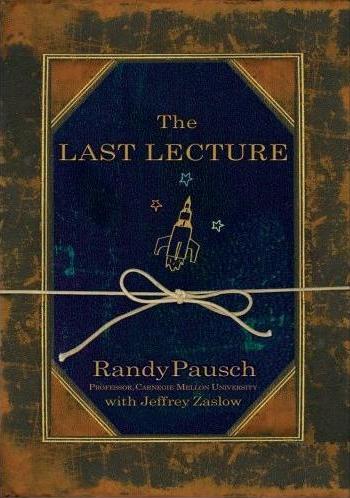 If one were to deliver a last lecture like Randy Pausch, what would it be like? I'd start with trying to prolong life. It's terrible to die at an early age like he did, and there are many things that a person can do now to prevent it. Let's start with the Mediterranean and Okinawa diets and statins, Tagamet, and nsaids like Vioxx and Celebrex. In addition to the added time to enjoy and liquify the wealth, this gives one the power of compound interest.
The second thing I'd say is always be aware of deception. The market is at least as smart as the caterpillar which has a hundred ways of deceiving its predators. A good understanding of deception in nature, and models that go into first, second and third level deception in various games is a good start.
The third thing is similar to Randolph's head fake thing and is contained in Liddell Hart best. The power of indirection. A frontal attack is often met by the adversaries best defenses. It wastes too many resources. Absolutely essential is to divide and conquer.
The fourth thing is to develop a good character. All your faults will come out in the market. and if you are a chronic complainer, or liar, or compulsive gambler, or procrastinator, the market will ferret them out and do you in.
The fifth thing is to always be humble. The market is so smart, so changing that to think you ever have the answers for too long, is certain to lead you to be behind the eight ball when things change.
The sixth thing is to develop good fundamentals. Randolph says that he likes to use football analogies and to get a good three point stance and to play well without the ball. I'd go back to coach Wooden and start with washing the hands, and putting on the socks, and keeping your execution costs low, and making sure that you don't pay too high a cost in promotion or that you're carrying too many people on your shoulders who aren't paying an appropriate part of the passage.
The seventh thing is to learn how to count. Too many people are prey to wishful thinking and an inability to distinguish regularities from randomness too many are subject to real psychological biases, (not the ones talked about by the Nobelites) to think that you can overcome them without some hand studies and calculations of variability.
The eight thing is to learn how to handle failure. It's bound to happen, and you have to learn from it.
The ninth is to read good books. We have many that we recommend on this site.
The tenth thing is like Shakespeare to suit your apparel to your position, and to suit your positions to your size so that you don't get in over your head.
The eleventh thing is to have some escape hatches and contingency plans i.e. the mouse with one hole is quickly cornered or as Randolph says, what happens if the wolves are after you. I could go on and on, and perhaps I will but I"d like to get your insights on this.
Valery Kotlarov comments:
I’d take the best of the best writers and begin with something like what Kurt Vonnegut said here. I love every book he wrote, and the most important thing that I took from them is the fun– that every situation in life can be so comical and funny, so we should never take anything too seriously. As humans, we are driven by language, and sometimes it’s funny what one can understand from the same sentence or even word– something totally different from what another would understand. Also, I’d speak about the charismatic and optimistic personalities, like Ayn Rand. I’d mention the legendary people. I’d also speak about the bank robber, whatever his name, just to show that success is something that we can create and follow, but we should never be slaves of it, or friends of it.
When I was in Turkey, I heard that many families build homes for themselves. Each year, they build it higher and higher, step by step, so in a few years they get a warm house. And I’d speak about some of the greatest inventors like DaVinci, Edison, Tesla, Archimedes, and what they did to show the achievements and that dreams can come true. I’d take some of the Gregory Bateson’s ideas, and emphasize that the ideas and dreams are things we are made of. And from here again to Vonnegut: “We are what we pretend to be, so we must be careful about what we pretend to be.” And, well, I’d also emphasize reading and learning– the importance of it, and to try make fun of it all–life, whatever it is. Also I’d never think or call it my last lecture, just too optimistic for that, even if 99% of facts would point that it is (gimme events not the descriptions) Last, I’d buy some S&P or other stocks of healthier, economologically speaking, countries, and give it to someone I love (so he or she could only use it after some 15-20 years.)
Nigel Davies writes:
There's only one major addition that I can think of, and that's the importance of having a higher purpose or mission in life. This is something that all the great people in history have in common, whether it's 'queen and country' (e.g. Nelson), 'the truth' (e.g. Galileo) or helping others (e.g. Mother Theresa). This could even be the biggy, the one that holds other principles in place.
GM Davies is the author of Play 1 e4 e5: A Complete Repertoire for Black, Everyman, 2005
Victor Niederhoffer adds:
Find a good mentor. You can ride on their shoulders and they will achieve immortality and pay back for the mentoring they received through you. But by the same token, never take a tip from anyone, a trade for the day, because you won't know if it fits in with your persona as it did with theirs, and you'll never know how strong their convictions are, and when they change them, and you'll be weak.
Be optimistic. Nothing good has ever come to those who hope for the destruction of civilization or the market or who fight the upward drift which must continue up to follow the strands of human progress, which is still grand, even today especially if you consider all the individualism unleashed on the world in India and China.
One of my mentors, Dr. Raymond Chang, says that the best meal for a lifetime he knows is to take a vitamin D3 Supplement each day, and I would add it to the list. Exercise is always helpful as it prolongs the life, and eases the tensions, and improves the digestive process, and makes you look better, thereby attracting better mates, and mentors, and is in keeping with the fundamental nature of humans, which involves play and sympathy.
Family. The people that you can always count on are your extended family, and the more you use this to support you, the better you'll be. Conversely, be aware that most of your non-extended family, except for your very good friends, can never be trusted to support you when you need it the most and indeed are likely to disappoint you over the long run.
Friends. Friendship based on business is always better than business based on friendship. I would augment my little thing about deception above by saying that one should always beware of the negative lie as a tool of deception. The thing where the deceiver tries to say something bad about himself so as to get you off your guard so he can go in for the big kill. I was interested in this regard to see that the French firm that killed itself out of honor on the Madoff matter was taken in by the very self deprecating manner in which B. M. told them that he once lost too big while his kids were tugging at his coat, and telling him not to help others, when he tried to intervene with big bucks against his kids advice. It is interesting how the kids "apparently" did not tug at his coat vis a vis any of his other less noble activities.
Stephen Stigler comments:
That is a good list, although I'm tempted to repeat a comment of my father's, "There are not ten good reasons for anything." Which would suggest focus and priorities.
James Sogi adds:
Do what you love. Love what you do. Don't do what you hate. Many people will tell you what to do. There are social and family pressures, some hidden. Follow your own agenda. Trade your own style. You can't follow someone else's style. It won't fit, and you will lose money. Trade and make money the way you know how, they way that is comfortable to you.
Spend time with your family. As Vic says, no one but they will really be there when your really need them. There is not much time, and it will soon be gone. Spend time with them.
Kim Zussman writes:
Regarding Vic's "fourth thing," use the market-mirror for self-diagnosis, but never rule out the possibility that your condition (you + the market you're in) could be pre-malignant and require complete excision.
Laszlo Birinyi comments:
There are two things I would add. One, read different books and develop breadth. Drucker amazed me in school because he could illustrate ideas from history, literature, life and whatever. I encourage my kids to take courses in Arab culture or Norwiegen or whatever, not just literature and art which are their major interests.
Second, learn to listen. I find at bonus time everyone has inflated opinion of their contribution. I did well in my career because I never argued with my bosses. If they paid me x, my contending that I was worth 2x wasnt going to fly. If it was .5x (fortunately it never was) that was a signal to shape up.
David Brooks writes:
All of Victor's ideas about ways to prolong our mortality are right on. I particularly like the comments about deception, because I have always believed that one of the things that differentiates excellent surgeons from merely good surgeons is the ability to see things that others don't, such as tissue planes, obscure vessels, the deceptive picture that disease often presents.
Comments
Archives
- August 2026
- July 2026
- June 2026
- May 2026
- April 2026
- March 2026
- February 2026
- January 2026
- December 2025
- November 2025
- October 2025
- September 2025
- August 2025
- July 2025
- June 2025
- May 2025
- April 2025
- March 2025
- February 2025
- January 2025
- December 2024
- November 2024
- October 2024
- September 2024
- August 2024
- July 2024
- June 2024
- May 2024
- April 2024
- March 2024
- February 2024
- January 2024
- December 2023
- November 2023
- October 2023
- September 2023
- August 2023
- July 2023
- June 2023
- May 2023
- April 2023
- March 2023
- February 2023
- January 2023
- December 2022
- November 2022
- October 2022
- September 2022
- August 2022
- July 2022
- June 2022
- May 2022
- April 2022
- March 2022
- February 2022
- January 2022
- December 2021
- November 2021
- October 2021
- September 2021
- August 2021
- July 2021
- June 2021
- May 2021
- April 2021
- March 2021
- February 2021
- January 2021
- December 2020
- November 2020
- October 2020
- September 2020
- August 2020
- July 2020
- June 2020
- May 2020
- April 2020
- March 2020
- February 2020
- January 2020
- December 2019
- November 2019
- October 2019
- September 2019
- August 2019
- July 2019
- June 2019
- May 2019
- April 2019
- March 2019
- February 2019
- January 2019
- December 2018
- November 2018
- October 2018
- September 2018
- August 2018
- July 2018
- June 2018
- May 2018
- April 2018
- March 2018
- February 2018
- January 2018
- December 2017
- November 2017
- October 2017
- September 2017
- August 2017
- July 2017
- June 2017
- May 2017
- April 2017
- March 2017
- February 2017
- January 2017
- December 2016
- November 2016
- October 2016
- September 2016
- August 2016
- July 2016
- June 2016
- May 2016
- April 2016
- March 2016
- February 2016
- January 2016
- December 2015
- November 2015
- October 2015
- September 2015
- August 2015
- July 2015
- June 2015
- May 2015
- April 2015
- March 2015
- February 2015
- January 2015
- December 2014
- November 2014
- October 2014
- September 2014
- August 2014
- July 2014
- June 2014
- May 2014
- April 2014
- March 2014
- February 2014
- January 2014
- December 2013
- November 2013
- October 2013
- September 2013
- August 2013
- July 2013
- June 2013
- May 2013
- April 2013
- March 2013
- February 2013
- January 2013
- December 2012
- November 2012
- October 2012
- September 2012
- August 2012
- July 2012
- June 2012
- May 2012
- April 2012
- March 2012
- February 2012
- January 2012
- December 2011
- November 2011
- October 2011
- September 2011
- August 2011
- July 2011
- June 2011
- May 2011
- April 2011
- March 2011
- February 2011
- January 2011
- December 2010
- November 2010
- October 2010
- September 2010
- August 2010
- July 2010
- June 2010
- May 2010
- April 2010
- March 2010
- February 2010
- January 2010
- December 2009
- November 2009
- October 2009
- September 2009
- August 2009
- July 2009
- June 2009
- May 2009
- April 2009
- March 2009
- February 2009
- January 2009
- December 2008
- November 2008
- October 2008
- September 2008
- August 2008
- July 2008
- June 2008
- May 2008
- April 2008
- March 2008
- February 2008
- January 2008
- December 2007
- November 2007
- October 2007
- September 2007
- August 2007
- July 2007
- June 2007
- May 2007
- April 2007
- March 2007
- February 2007
- January 2007
- December 2006
- November 2006
- October 2006
- September 2006
- August 2006
- Older Archives
Resources & Links
- The Letters Prize
- Pre-2007 Victor Niederhoffer Posts
- Vic’s NYC Junto
- Reading List
- Programming in 60 Seconds
- The Objectivist Center
- Foundation for Economic Education
- Tigerchess
- Dick Sears' G.T. Index
- Pre-2007 Daily Speculations
- Laurel & Vics' Worldly Investor Articles
