Jan
3
As Many Shades as Joseph’s Coat, from Stefan Jovanovich
January 3, 2008 |
 One of the measurable facts about S.A.T.s, I.Q.s and most other standardized tests is that test subjects can have their scores improved by 10% or more if they are allowed to intensively study for 6-10 weeks, take repeated practice tests and be coached on the keys (i.e. the tells) for the test. That is why cram schools have become a multi-billion dollar business.
When I asked Dad why he hadn't invested in cram schools for I.Q. test as he had for the other standardized tests, his answer was that I.Q. testing already had a limited market because people mistrusted the results; if they learned how malleable the results really were, it would ruin what little demand there was. Then he laughed and said that the irony was that the tests were not to be trusted not because study and hard work would change your score but because they diminished the actual range of difference in intelligence; like school itself they pushed people towards the social middle, when the reality was that there was as much distance between a genius and a near-genius as there was between the near-genius and "handicapped" child.
I had far more arguments with my father than I am happy to remember; and he was as capable of folly as any genius, but he knew the reality, practice and even the theory of standardized testing better than anyone. The vast majority of his customers wanted to believe that "intelligence" was a measurable quantity, like height or the atomic weight of copper. Many of them needed that belief to buttress their neo-Darwinian assumptions about the poor being poor solely because they were stupid.
By the end of his life, as the child of an illiterate, Dad felt more than a little disappointment and even shame at the fact that few, if any, curricula were founded on the assumption that intelligence came in as many shades as Joseph's coat and as many forms and rhythms as nature itself. A few months before his death, when the pain had begun to make him more than usually cranky, he gave me his last word on the subject: "There has always been a lot of talk about each child's reaching his potential; but the potential better be something that could be measured in 40 minutes and scored on a Scantron." Some shadows on the wall are produced by the sun shining on rocks that can be kicked; others are the pure projections of the faulty assumptions of social (sic) science.
Nigel Davies adds:
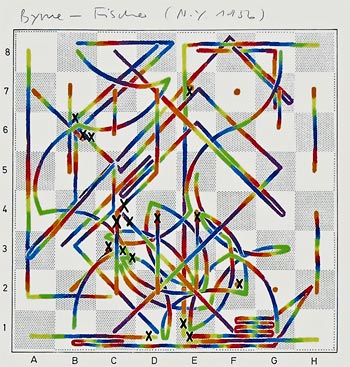 Having hung around a lot of high IQ people for most of my life I think your Dad was spot on. Some have evident trouble with things like shoelaces. And they don't necessarily make the best chess players, which at first seems really baffling when one considers that a nice closed environment like chess should be perfect for someone with a high IQ. But when you play against these guys you start to realise the issues they have.
A common trait, for example, is for them to look at chess as a kind of mathematical puzzle in which their brilliant brain will eventually work out a solution The problem with this 'pure' view of the game is that it can make them highly predictable, so all you then need to do is find a problem with one of their lines.
Their solution based view also makes them highly vulnerable to provocation should you play a line which might be considered inferior. They'll want to punish your move (in their paradigm it is incorrect) and start to lose their objectivity. And then the problem is that they won't easily be able to pull themselves back from this state of mind because of a belief that their 'brilliant mind' is not capable of anything but objective, pure analysis.
De Bono also mentions the 'intelligence trap,' which is the tendency for people with high IQs to show off how quickly they can see something. This manifests itself as bad thinking habits, for example a failure to consider alternatives. So in chess someone with a high IQ will often calculate a single variation very quickly, but fail to consider alternatives along the way.
There can of course be advantages to high IQ, but I suspect that other talents also need to be in place to make it work for someone. And the problem may be that these may actually be inhibited during their development.
Sushil Kedia extends:
 I believe a number of Daily Spec readers are members of Mensa.
There is a serious problem with Mensa India. Some who have catapulted themselves to be the managers of Mensa India have not been letting it grow at all. The last several years there have been no examinations done to let in new members. Forget about elections to the management bodies, new people can't get in now.
If you check the Mensa India website and call the phone numbers listed there they tell you for the last two years that the number of Mensa has changed and Ms. Sudha Tendulkar (she is a secretary to an Indian industrialist who has manipulated Mensa) will always tell you that in a few days the new numbers of Mensa India will be put on the website.
Requesting all readers who are also members of Mensa if they will kindly escalate it through their local chapters to the Mensa worldwide management that Mensa India needs their attention.
Comments
Archives
- June 2026
- May 2026
- April 2026
- March 2026
- February 2026
- January 2026
- December 2025
- November 2025
- October 2025
- September 2025
- August 2025
- July 2025
- June 2025
- May 2025
- April 2025
- March 2025
- February 2025
- January 2025
- December 2024
- November 2024
- October 2024
- September 2024
- August 2024
- July 2024
- June 2024
- May 2024
- April 2024
- March 2024
- February 2024
- January 2024
- December 2023
- November 2023
- October 2023
- September 2023
- August 2023
- July 2023
- June 2023
- May 2023
- April 2023
- March 2023
- February 2023
- January 2023
- December 2022
- November 2022
- October 2022
- September 2022
- August 2022
- July 2022
- June 2022
- May 2022
- April 2022
- March 2022
- February 2022
- January 2022
- December 2021
- November 2021
- October 2021
- September 2021
- August 2021
- July 2021
- June 2021
- May 2021
- April 2021
- March 2021
- February 2021
- January 2021
- December 2020
- November 2020
- October 2020
- September 2020
- August 2020
- July 2020
- June 2020
- May 2020
- April 2020
- March 2020
- February 2020
- January 2020
- December 2019
- November 2019
- October 2019
- September 2019
- August 2019
- July 2019
- June 2019
- May 2019
- April 2019
- March 2019
- February 2019
- January 2019
- December 2018
- November 2018
- October 2018
- September 2018
- August 2018
- July 2018
- June 2018
- May 2018
- April 2018
- March 2018
- February 2018
- January 2018
- December 2017
- November 2017
- October 2017
- September 2017
- August 2017
- July 2017
- June 2017
- May 2017
- April 2017
- March 2017
- February 2017
- January 2017
- December 2016
- November 2016
- October 2016
- September 2016
- August 2016
- July 2016
- June 2016
- May 2016
- April 2016
- March 2016
- February 2016
- January 2016
- December 2015
- November 2015
- October 2015
- September 2015
- August 2015
- July 2015
- June 2015
- May 2015
- April 2015
- March 2015
- February 2015
- January 2015
- December 2014
- November 2014
- October 2014
- September 2014
- August 2014
- July 2014
- June 2014
- May 2014
- April 2014
- March 2014
- February 2014
- January 2014
- December 2013
- November 2013
- October 2013
- September 2013
- August 2013
- July 2013
- June 2013
- May 2013
- April 2013
- March 2013
- February 2013
- January 2013
- December 2012
- November 2012
- October 2012
- September 2012
- August 2012
- July 2012
- June 2012
- May 2012
- April 2012
- March 2012
- February 2012
- January 2012
- December 2011
- November 2011
- October 2011
- September 2011
- August 2011
- July 2011
- June 2011
- May 2011
- April 2011
- March 2011
- February 2011
- January 2011
- December 2010
- November 2010
- October 2010
- September 2010
- August 2010
- July 2010
- June 2010
- May 2010
- April 2010
- March 2010
- February 2010
- January 2010
- December 2009
- November 2009
- October 2009
- September 2009
- August 2009
- July 2009
- June 2009
- May 2009
- April 2009
- March 2009
- February 2009
- January 2009
- December 2008
- November 2008
- October 2008
- September 2008
- August 2008
- July 2008
- June 2008
- May 2008
- April 2008
- March 2008
- February 2008
- January 2008
- December 2007
- November 2007
- October 2007
- September 2007
- August 2007
- July 2007
- June 2007
- May 2007
- April 2007
- March 2007
- February 2007
- January 2007
- December 2006
- November 2006
- October 2006
- September 2006
- August 2006
- Older Archives
Resources & Links
- The Letters Prize
- Pre-2007 Victor Niederhoffer Posts
- Vic’s NYC Junto
- Reading List
- Programming in 60 Seconds
- The Objectivist Center
- Foundation for Economic Education
- Tigerchess
- Dick Sears' G.T. Index
- Pre-2007 Daily Speculations
- Laurel & Vics' Worldly Investor Articles
