Apr
15
Game of Life (Excel Help), from Gordon Haave
April 15, 2007 | 4 Comments
 The Game of Life is like the real thing. It gets complicated over time. I bought it to play with my daughter, and it is a lot different than the one I played as a kid. Now, there are various careers, which creates a bit of complexity.
The worst aspect, however, is that they have functionally removed the "buying a house" angle to the game. Although I have not done the math, it would appear that the expected return for most of the houses is negative. Perhaps for one or two of the better houses (different kinds of houses is also an addition to the game) the expected return is slightly positive if you don't buy insurance, but with the risk of a massive loss. So, I just don't buy houses ever, and my daughter seems to have figured that out as well.
Some of the careers pay off depending on what number is spun. For example, if you are the artist you get 10,000 every time the spin is "1". Also, one can buy stock. Each stock certificate has a number on it, and whenever that number is spun, you get 10K.
This necessitates everyone paying attention to what number is spun, which causes arguments because people forget to ask for their money, and then someone else says "too late, etc".
Adding to the mix is that the spinner has apparently been outsourced to China, and is a piece of garbage. It is near impossible for a kid to spin without it spinning off of the track, getting stuck, etc.
So, I have a little excel sheet (really open office) that does a few things. First, it is a 1-10 random number generator, so instead of spinning the wheel, one hits F9. Next to that is a 100-100000 random number generator. This is a control number that makes it clear if when you hit F9 you got the same number again, or you hit F8 or something by accident and in fact did not "spin".
Also, I have a little matrix where I put in the numbers that people need to keep track of, like their stock certificates, and it flashes "pay Gordon" or pay whoever's number comes up.
Here is the help I need:
One of the careers is the entertainer. He starts out on a low salary scale, but if two 8s, two 9s, or two 10s are spun in a row, he "hit's it big" and gets a higher salary.
What is the best way in Excel (anything in Excel I can translate to open office) for tracking when two 8s, two 9s, or two 10s have been drawn in a row? It should be simple, but once I sat down to do it, I could not recall ever having to have the computer remember a previous random number. Any thoughts?
Apr
12
Deception, from John De Palma
April 12, 2007 | Leave a Comment
 A recent NY Times op-ed reminds me of your Junto remarks last Thursday about how insider buying can transmit a deceptive signal. Daniel Gilbert's op-ed has some examples of other potential false signals. Gilbert wrote:
"In an advertising campaign that began last week, Nissan left 20,000 sets of keys in bars, stadiums, concert halls and other public venues. Each key ring has a tag that says: "If found, please do not return. My next generation Nissan Altima has Intelligent Key with push-button ignition, and I no longer need these." …There is no selfish reason to bend down and pick up a key ring, but Nissan knows that we will bend without thinking because the impulse to help is bred into our marrow. Our best instinct will be awakened by a key ring and then punished by a commercial. Like rubes throughout the ages, we will be lured by a false cry of distress and quickly cured of our innocence and compassion. We are used to commercial tricks that play on our fears. The official-looking letter marked "Verification Audit" is actually a magazine subscription renewal form; the credit card company's ominous call to "discuss your account" is actually an attempt to sell new services…"
Gordon Haave adds:
The biggest investment disaster I have been a part of was Edison Brothers Stores, which went to zero. A couple of months before it went under, all the directors bought some shares on the same day. After the fact, it was clear that it was doomed when they purchased. It was a clear head-fake.
Apr
7
The Wrong Tools for the Job, from Gordon Haave
April 7, 2007 | 1 Comment
Richard_Petty_Photo.jpg) Last weekend I did the Richard Petty Driving Experience in Forth Worth After a tiny bit of training, eight laps around Texas Motor Speedway.
Last weekend I did the Richard Petty Driving Experience in Forth Worth After a tiny bit of training, eight laps around Texas Motor Speedway.
I am glad that I did it, but I would not do it again. It's very inefficient. Basically, for 20 minutes of action (including suiting up, getting latched in, learning and then forgetting all the things to do if the car catches on fire), you wait around for 3.5 hours or more. It is such a popular product that they just herd people into every class and make you wait, rather than trying to make it more efficient.
In the markets, people often use the wrong tools for the job, often due to habit and the lack of acceptance of new ideas. In the consulting industry, this is common. Consultants operate the same way that they did 20 years ago. Now, they won't say that. Every two years they invent a new ratio that they apply to past performance and claim that it is an important breakthrough. Nevertheless, in my time, I was the only consultant who actually used factor analysis and systematic statistical techniques to separate beta from alpha. I think this is because I started on the hedge fund side, so when I moved to consulting I looked at the tools and thought "these aren't the best tools for the job."
Anyway, the simple fact is that the steering wheel is the wrong tool for the job. This might sound strange, but bear with me: Normally in a car you might hold the wheel at 10:00 and 2:00. We were told to hold at 11:00 and 5:00. Why? Because the car only turns left, and by holding at 11:00 and 5:00 you never have to roll your hands over. My first thought was, "Rather than using a new tool, they changed the way they use the old tool!"
I found that driving is actually quite physical. I had always dismissed it when the NASCAR announcers said so, but I was wrong. It's quite tiring to constantly pull the wheel hard to the left, particularly as the G-forces rise (my top speed was ~140 mph). You have your arms extended about half way in front of you as you are yanking on the wheel.
Thinking about it later, the wheel is simply the wrong tool for the job. Old bombers use a wheel because they don't engage in physically exerting maneuvers, yet a fighter plan will use a stick. Think of passengers' cars as bombers, and stock cars as fighters. For the physically exerting maneuvers, it would be much less taxing to have a flight stick lower and in front of you than a wheel up high. If you had a flight stick, it would be much less tiring, and would free up a lot of attention and dashboard space for mirrors and understanding your surroundings.
From James Lackey:
The Petty Driving Experience is only a quick ride. The anticipation is half of the fun. The smell of racing gas and burnt rubber, the roar of the engines, the butterflies before taking the wheel is all the fun. Run any 50-lap racecar driving school. Two each ten lap warm-ups then a 30-lap draft run. On lap 27, the heat, the stress had me say "get me out of this thing."
The physical strength it takes to turn the wheel of a car or slam on the brakes is all in the mechanical systems. A stick on an airplane is a full computer controlled hydraulic system. In your passenger car, with traction control, computer assist and anti lock brakes coupled with hydraulic assist power steering and brakes makes for an effortless drive. Rules and restrictions in racing keep the tech low. The reason often stated is to keep the costs down. Yet the real reason is to keep the drivers input relevant. New technologies make some forms of racing basically a remote controlled car, with a human along for the ride. The reason a racecar is hard to steer is so you can feel if the tires start to lose traction, to correct before a crash.
In the glory days of racecars, the 1960s, technology had not yet made drivers irrelevant. It was easier to make more horsepower than the traction of the tires and the track could hold. A driver needed the ability to control the engines power to control the car. Nowadays everything is restricted by either rules or computers. The worst is the bureaucracy of racecar sanction rule makers. A good result may be achieved by restricting engine size alone. Let all things in the car be unlimited, besides cubic inches.
Trading has seen the same technological advances that make individual traders as relevant as racecar drivers today. We all have a friend that scales in and out of the market using size, time, average range and price. When you point out that they could just as easy program a computer to do the job, they point out that every year is different; the markets constantly change. They can do a better job on the fly then a pre-programmed box.
Market rules seem to restrict technology. Years ago we had limit down rules. The old excuse was in 1987 computer program trades crashed the system. Funny thing since we removed the tight limit down rules, smart traders can't save the market from stupid computers and limit down opens. It's remarkable how much profit I have lost as a trader since that rule change.
Boy, was I happy after the fact on that down 500-point day a few weeks ago. No, not at all happy for the 5th day down being a 500 pointer, I was pleased to see that computers were blamed for the malfunction. We need humans in the markets. My kids need me in the market with the ability to profit. That is a much more honest answer than that the NYSE needs the specialist system to remain intact for public benefit.
When I was a little kid in the late 70s it not only took a fortune to make a drag race car run 8 flat in the quarter; it took knowledge. Money alone could not buy a fast car. The knowledge was not readily available. A few years ago I built a car for less than half of what it would cost 20 years earlier. The first day out the car ran with in 8% of perfect. On paper the car should have run 7.97 seconds at sea level. With in a couple weeks we had the car run 98% of perfect.
Yet in my class, super comp, I would guess that some 3,000 cars in the country run 99.9% perfect and any given race. A few cars have a perfect run down to the 10,000th of a second. Most of that ability to run the 99% of paper perfection is new technology. Yet that last one percent is knowledge. Let's put it this way, you can run your car with in one percent of potential and count on a loss the first round of competition.
In the markets we do not have to compete. We can in theory just buy the market and match the return. Lets call that trading not to lose. At races when conditions are good, to win you need to be with in 0.006% to win. The other day some one mentioned it was a stop run at 1424. A two-point drop on that stop run translates into only a bit over a tenth of a percent. That is tight competition.
A real stop run was last Feb when we broke down 2% on the day; the market dropped 20 more handles in an hour. After many sessions of not having a down one percent day, many were set for tight trading. In racing that would be a nice sunny summer day of practice, then rain and a 50-degree change in the temperature. The best racers have the ability to change set ups quickly.
After heavy weather, the cool air and low humidity, racecars or trading accounts, make much more power. After a big fall in the markets, the intra day moves can be wild. After the big cold front came through in Feb, if you revved your account to 5,500 rpms, dumped the clutch at the open you blew the tires right off your account.
Perhaps it is not the tools for the job, just the calibration. After the huge down it took weeks for risk mangers and funds to adjust. Two days after the fall traders adjusted and were making more than the weeks prior on half the size. If the markets can drop 50 again, they will move 20 points on any given day. It's much easier to make 8 points on a 20 point day than to make the entire 8 point range months prior, unless your investing.
Once conditions become stable at whatever temperature and pressure it becomes much harder to win. In low temperatures engines make more power. Once the car is set up to run at the increased power speeds will increase. It's the same with the markets and absolute daily returns. The problem is taking it easy until the weather and the markets become stable. You can easily crash your account. Yet once conditions are stable, everyone has adjusted, the new problem is being very aggressive with your set up.
If you are too conservative when the conditions are great a rookie will blow you away. That is to say a rookie with a good computer. It's remarkable how quickly the markets adapt vs. just five years ago.
Apr
4
Coffee, from Jim Sogi
April 4, 2007 | 2 Comments
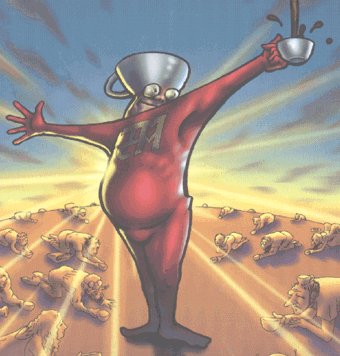 The best coffee is Arabica. You guys drink the worst coffee. I'll bring some good Kona stuff out when I come next.
I got a sampler of eight different international coffees with the new iRoast 2, in green bean from Mexico, Peru, Timor, Sumatra, Congo, Panama, Nicaragua, Guatemala, and a few others. I'm not sure if it's what they're trying to sell or just trying to get rid of, but none held a candle to fresh roasted homegrown hand-picked sun dried Kona Coffee. Most were bland. Peruvian was about the best of the bunch, but still rather bland. Some were close to undrinkable. Sumatra tasted like dirt, Panama very bland, Nicaragua very bitter, and Peru mellow, good to mix 10% with 90% Kona.
Sam Humbert asks:
Why does anyone voluntarily drink "flavored" coffee? I'm having a cup just now, because "hazelnut flavored" beans were all we had on hand in the office today. But I feel like the high-school stoner who's so desperate he'll smoke roaches. The stuff tastes like something the EPA would send HazMat-suited guys out to Jersey to detoxify.
Who buys it? Is it a ladies' drink? Would appreciate insight.
Yishen Kuik adds:
A coffee importer once told me that the flavoured coffee industry grew out of a desire to use cheaper robusta beans and yet avoid the inferior aftertaste that caused manufacturers to prefer arabica. But then flavoured coffee took off.
J T Holley writes:
Having earned and financed my college education working at various coffee shops such as Mill Mountain Coffee and Tea in the Roanoke Valley, and Food For Thought in Missoula, MT, I can tell you very few [buy flavored coffee]! Most coffeehouses have pots of coffee lined up on the counter of some sort for self pouring. The ratio to the best of my knowledge on refilling those was around 5 to 1 compared to regular coffees of many varieties.
Not that what you drank was good but there are two ways to flavor coffee. I have utilized both ways. One is with a horrible flavored oil and the other is via bottled syrup. The oiled way is to roast a rather cheap Columbian bean and then mix the oil and coat the beans (like applying chemicals to kill weeds). The other is much better and that is having an individual cup of coffee and adding a shot of flavored syrup. This seemed less toxic to me even though both are probably the same.
I witnessed very few people other than women that would order flavored coffee. Espresso drinks would be the exception to that. I would classify flavored coffee along the lines of 100 cigarettes. We used to joke that those extra long 100's were for people that like to ash not smoke. They don't smoke the cigarette they simply puff to be able to "ask" so they look sleek and sexy or something. Same with flavored coffee drinkers I've witnessed. They don't drink coffee like you and me, they sip and end up throwing half of it away in those plastic lined trash cans that weren't made to hold liquids!
My experience in the Navy taught me something about coffee as well. Cream and sugar were rarely added to a cup on my ship. Your sexual orientation back in the early 90s when I served was questioned if you had a stir stick in the cup. It was taunting or hazing thing on my ship. Words were slung at you in humiliating ways and made a man either quit drinking coffee altogether or go with the straight black cup of coffee to avoid the hassle.
It's amazing how psychological warfare works. I drank my coffee straight anyways so it wasn't a bother to me, but literally saw fights break out. Can't even imagine what would've come about if someone would have brought their own International Flavored Coffee onboard.
On a lighter note, I spent 6 to 8 years of my life roasting and serving coffee in all of its varieties. I have to confess that it is amazing how much caffeine is abused and that literal addicts consume the beverage. The mark-up on a cup of coffee from raw bean, to roasting, to brewing and serving is utterly amazing to me as well. The shops that I worked in did absolutely zero advertising as well, another fascinating fact of the coffee business.
Pitt Maner adds:
I hate to think of the abuse one might get for using the following, but based on a crude experiment it does seem that cold brewing makes for a smoother (some say lack of) taste.
With respect to Nicaragua there seems to be a fair amount of variability in the taste of the coffee. The best coffee growing region is up around Matagalpa and Jinotega in northern Nicaragua.
The Nicas seem to like to drink it black with a fair amount of sugar.
Problem with all coffee though seems to be how long it has been sitting on the shelf. You don't always get a "born on date" on the package. Of course you can pay $9 a pound for some of the brands that are sealed with nitrogen gas.
I know of someone who actually was marketing small discs that you put in your coffee maker to flavor the coffee of your choice. Better living through chemistry indeed.
Pamela Van Giessen writes:
The Irish coffee flavored stuff is the worst. My mother served it to me once when I was visiting. Being sleepy I didn't focus on the malodorous nature but the second it hit my taste buds I literally spit it out. Thankfully we were outside. I think that stuff was made for older ladies.
Scott Brooks writes:
Chicory is a plant that I use in my food plots to feed and attract deer and turkey. It is highly desirable, palatable, and nutritious to deer and turkey as well as many species of birds, and other assorted animals.
Gordon Haave adds:
I am a big chicory fan. The only kind to get is Cafe Du Monde. Every other kind I have tried is terrible. That being said, I don't know that it mellows the flavor, unless the underlying coffee is much more harsh than regular. I drink it with sugar and cream.
Mar
31
On the Coming Commoditization of Hedge Fund Strategies, from Henrik Andersson
March 31, 2007 | Leave a Comment
 I believe hedge fund strategies will be new frontiers in the ETF market. As we are seeing ETFs move into more active strategies, we have already seen the beginning of this trend. The quantitative backdrop for evolution can be found in these articles by hedge fund Bridgewater, on selling beta as alfa and levering betas.
My prediction is that the increased accessibility will make it harder to prosper for hedge funds that are currently selling beta as alpha. In effect I see no reason why it couldn't soon be as easy to access some of these strategies as it is to trade the QQQQ today.
Gordon Haave writes:
Yes, but the whole point of the ability to replicate these funds is that you don't need the lockup, or at least not as much of one. One can short volatility without a 1-year lockup.
From Bill Rafter:
The largest portion of hedge fund money is employed in long-short. Long-short is highly liquid and highly scalable, and could easily endure a zero-day lockup. For example, we have a long-only (in theory, less liquid that long-short) large-cap program that has a zero-day lockup. One might ask why. Our answer is "marketing." Investors (particularly pros) are a lot less reluctant to give you money if they can get out on an instant's notice.
Lockups are really only necessary for strategies such as event-driven or distressed assets. The hedge fund industry mostly uses lockups to keep control of its assets. Recall how the recent ('06) Greenwich-based fund went guts-up and tried to manipulate its reports to shareholders to have the latter miss a redemption deadline.
Brian Haag adds:
If the funds are algorithmically managed, they are a short. Fixed systems die. If the funds are actively managed, they are a short. They will not attract the talent that 2/20 type arrangements will, and will thus be the mark at the table.
This whole "you can replicate any hedge fund strategy by adding beta and a few formulas" meme is no different from the "You can beat Wall Street at its own game!" type hucksterism so prevalent in the late 90s. It's just marketing crapola. While the base idea may be sound, that you don't have to get involved in hedge funds to receive average returns, so what? The only possible outperformance in products like these is relative to managers with subpar returns. It's all just another way for the industry to sell average performance.
Managers who do add alpha are very happy about this whole development. It's another source of edge. One needs to look no further than the "Goldman roll" in commodities to see an example.
Charles Sorkin adds:
I have been offered structured notes (intended to be re-offered to our customers) that pay interest based on the Tremont hedge fund indices. Depending on the degree of index participation desired, investors have the option to have total return floored at zero percent (principal guaranteed, like a bank note). Naturally, the secondary market for such a thing is limited, but it's still better than a hedge fund lock-up. Moreover, the issuer is generally an AA-rated large European bank.
Need to get more aggressive? Just buy 'em on margin…
Henrik Andersson adds:
Some of these structured products, which are particularly popular in Europe, are selling with a participation rate of 100% and no Asian etc. This is strange since it seems you get the put for free; but in these cases the cost of the option is most likely taken from the fees of the underlying funds.
Mar
31
Activist Funds, from Gordon Haave
March 31, 2007 | Leave a Comment
 I used to work for my Dad's hedge fund. At peak we had ~300 million. We never considered ourselves an "activist fund" in the new sense. We were just money managers. Now "activist fund" is the new fad. When I was in college my dad sent me to wage a proxy fight at Ceradyne (CRDN). We frequently owned ~15% of companies, and were involved in this sort of thing.
In the instance of Ceradyne it was somewhat of a surprise attack, but we had ~17% and another guy with ~5% was on board with us. The CEO knew we and the other guy were cheesed off. There was cumulative voting for directors at CRDN. So I show up at the meeting, I nominate the candidate. The vote is called, I show my proxies. The CEO didn't challenge them at all. Why? He knew. He knew how we felt, and he knew how the guy with ~5% felt, and he saw in my hand the proxy from the guy with ~5%. It wasn't that hard for him to know.
So when a hedge fund calls up and says others are with him, what do you do? Say, "I don't believe you unless you tell me who they are." Then you call them and ask them. It's not that tough. When I worked at Devon I knew the IR guys. They knew darned well who owned the stock and what they thought of management. That was their job.
Once, the unions were leading a big proxy fight against Avondale Shipyards (AVDL). The unions claimed big shareholders were on their side. So what did management do? They looked at the 13Fs, talked to the custodians to try to get ownership info, and they called the shareholders. It's not that hard, happens all the time.
Mar
30
I Would be a Great Fed Chair, from Gordon Haave
March 30, 2007 | Leave a Comment
I would be a great Fed Chair. I would just leave the money supply alone and never touch it. Now, some say that deflation is a bad thing. Why should it be? Wouldn't you like the prices of the goods and services you buy to go down?
The argument is made, though, that wages are sticky, and wages won't move down, so the net result is economic slowdown because wages are too high. Fine. If the economy is forecast to grow 4% this year, increase the money supply 4%.
Mar
30
Interesting Bifurcation, from Steve Ellison
March 30, 2007 | Leave a Comment
While oil goes above 65, agricultural commodities widely viewed as alternative energy sources fall, with corn near a 2-month low and sugar below the round at an 18-month low. What does this apparent schizophrenia portend?
From Gordon Haave:
As energy goes up, the price of that drill bit, and the price of moving that rig, etc. goes up. Drilling costs are up 100% in the last few years. This causes people to drill less, just as they would if they actually counted all of those inputs.
From Stefan Jovanovich:
The actual numbers for the rig counts over the past few years are rather different.
It is the spread that matters, not the absolute cost. The increased cost of drilling only cuts back on the rig count if drilling becomes unprofitable at the anticipated revenue from production. The difficulty with alternative fuels - like bike paths and free subways - is that their marginal costs are inflexibly high. None of them has the declining marginal cost curve that coal, oil & gas production still has. The costs (both in dollars and in gross energy consumption) of the fertilizer, water and mechanical energy to produce #X barrel-equivalent of corn or sugar-based energy are not significantly different from those for #X-1. (Neither are they for subway train or bicycle #x vs. #x-1).
For oil & gas and (to a lesser extent coal), the numbers are very, very different. I hate to quarrel yet again with James about transportation history; but he has it backwards. The evil oil companies and their customers built the roads in the United States. Three quarters of the paved roads in the United States were built after 1950, and they were funded almost completely by the taxes paid on gasoline and diesel fuel consumption. It was those same funds that have paid for and continue to pay the subsidies for mass transit as well as all Federal Highway improvements. It may be different in Hawaii, but the state contribution to road building here in California has been funded by state fuel taxes. As usual, the devil is in the counting details.
Mar
30
My Viking Beard of Sun and Fire, from Gordon Haave
March 30, 2007 | 1 Comment
 I haven't shaved for weeks. The result is my manly Viking beard. You see, most men have difficulty growing nice beards — they are spotty on the chin. Not mine. Mine is a mixture of red, blond, and light brown. And it was even better back in 1997-2000, when my beard was soaked with sun, salt from the wind, seawater, and rum.
Most people don't like beards in the business world, maybe because most people can't grow good ones, and their inferiority complex leads them to marginalize beard growers.
Roger Arnold advises:
W-2? A shave is due.
1099? You look just fine.
Mar
15
Managing Directors? from Justin Klosek
March 15, 2007 | 1 Comment
 Brothel Discounts 'Matinee s-x' for Pensioners
Mar 14, 2007 11:57 AM Reuters News Agency
BERLIN — A brothel in Germany hopes to capitalise on the growing number of pensioners interested in "matinee" s-x by offering them a 50 percent discount during the afternoon hours.
The "Pascha" in the western city of Cologne has introduced reduced rates for s-x sessions for clients aged 66 and above — provided they can prove they are old enough.
"All clients need to do is show us some proof of age," said a spokesman for the brothel's managing director Armin Lobscheid. "A 'normal session' costs 50 euros with us — and we're now paying 50 percent of that for these older guests."
"Life begins at 66!" it says in an advert for its "senior citizens afternoon" next to a picture of a motorcycle rider.
Brothels have Managing Directors? Wow, I bet those MDs at Morgan Stanley feel super-special now.
Gordon Haave replies:
And I'd bet the "talent" are all vice-presidents.
Roger Arnold queries:
How does this get accounted for in GDP? Is it a deflationary indicator or indicative of an increase in productivity? Are there any hedonic adjusters that need to be accounted for? Looks like free market animal spirits are beginning to reawaken in Europe!
George Zachar responds:
Simplistically, I'd say it would show up as a decline in productivity, as seniors will simply shift their s-x purchases to the earlier time slot, with the establishments earning only half their prior revenue per session. GDP would similarly take a hit, and assuming quality remains constant, this would show up as a price decline.
So look for Trichet, at his next press conference, to be asked about stag-de-flation.
Marion Dreyfus explains:
George's explanation is a wrong take entirely. The early bird special is income that would be extra, since these are men who would not be coming in at all, short of lowered price per assignation. These are men who are thus providing income in the slow early afternoon hours when nothing much else is happening. Since the wear and tear on the females is supposedly less (I don't know from experience what the difference is in men from 20s, 30s, to 70s, etc.) than from the younger males that give them a harsher workout, maybe the lower price is fair, since they are not working as hard for the money.
Thus it seems like a win-win, actually. Management is selling product in normally slow hours, and the clientele will be doubly pleased at low-priced but professional action and can get a workout without having to be especially nice to their wives. Or if single, they can feel manly again, despite not being able to date perhaps, at their age or with a paucity of date-objects around. And likely as not, some of the men will use the opportunity to simply talk, as a surrogate for therapy, and bloviate on topics they can't share comfortably with their wives or friends without censorious responses.
I think the whole thing a fit subject for a PhD, actually, when one considers all the ramifications.
Adi Schnytzer adds:
I agree entirely. This is very definitely a topic for a PhD in sexual economics, a field I will be delighted to pioneer if anyone wants me as a supervisor and who isn't scared of fieldwork. Marion's gritty microanalysis makes a lot of sense and an econometric analysis of the wear and tear caused by different age males on working females is long overdue.
Mar
14
“Speed Was a Contributing Factor,” from Gordon Haave
March 14, 2007 | Leave a Comment
 I have written before about meaningless statements in finance, like "overdue correction." This sort of thing is not unique to finance, however.
Someone flipped his Mustang over the median and ran into a truck in Oklahoma City today. I am watching the news right now. The police say "speed was a contributing factor." Well, isn't speed a contributing factor in every automobile accident? How does one car hit another if speed is not a contributing factor? I suppose that if a car were parked precariously on the wall of a parking garage and the wind blew it off and it fell on to a car below that speed would not be a contributing factor, but that's about the only example I can think of.
What they mean, of course, is that excessive speed was likely what caused the accident, i.e., the idiot was doing 100mph around a turn and lost control. But if so, why not just say that?
It reminds me of the two years I spent on a federal grand jury (one or two days per month). A DEA agent was before the grand jury telling us about a drug bust, and he emphasized that the suspect had a "saleable amount" of cocaine.
I asked him what a saleable amount was. He said "He had X grams, and that is enough to sell." I said "But isn't any amount of cocaine a saleable amount?" He said "Well, he had X grams."
I said, "I understand, it's just that you didn't say that he had 'an amount' of cocaine. You said he had a saleable amount. I am trying to determine what the cutoff is for a saleable amount. If he had the tiniest amount on the eraser on a pencil, would that be a saleable amount"
He said, "Well, yes, you can sell any amount of cocaine."
And I said, "Well, that is my point, the phrase 'saleable amount' has no meaning, and you just use it for effect."
He started to say something, and then the Assistant US Attorney stepped in and stopped my line of questioning. Something also happened when I questioned the definition of "packaged for sale" when it comes to drugs. In short, unless it is scattered on the floor, it is packaged for sale.
Craig Mee replies:
I recently drove with my father. He has much driving experience, though he hadn't been on a highway for quite some time. With me in the passenger seat, he was tailgating cars at 100kph, not something he has normally done. The perception of distance and safety for him has obviously been impaired, as has sensing trouble with cars braking in front of him.
The relationship to the market is this: Having a good understanding of trading and knowing what needs to be achieved may be fine. But diminishing perceptions and feel for the market may interfere with results over time and might lead to a major disaster if not detected early.
My father also recently mentioned to me that life and death situations which he narrowly avoided in his youth, and did not think too much about at the time, had recently come back to haunt him in the shape of dreams and waking up in cold sweats.
Being on guard and aware of changes taking place is paramount.
Nigel Davies adds:
Consider how someone knows he's driving too fast. Speed tolerance varies greatly from one person to another. For me it's when I feel tired after the journey because of the stress. My body's telling me I wasn't fully in control. Of course, here in the UK there are so many speed cameras now that it is difficult to get so stressed without losing one's license.
Can this be applied to markets? Are constant feelings of market-related stress due to "lack of control" an important message from our bodies?
Sam Humbert notes:
From After the Race, in James Joyce's 1914 collection Dubliners:
The car ran on merrily with its cargo of hilarious youth. The two cousins sat on the front seat, Jimmy and his Hungarian friend sat behind. Decidedly Villona was in excellent spirits, he kept up a deep bass hum of melody for miles of the road. The Frenchmen flung their laughter and light words over their shoulders and often Jimmy had to strain forward to catch the quick phrase. This was not altogether pleasant for him as he had nearly always to make a deft guess at the meaning and shout back a suitable answer in the teeth of a high wind. Besides, Villona's humming would confuse anybody: the noise of the car, too.
Rapid motion through space elates one; so does notoriety; so does the possession of money.
Mar
14
Subprime Information and Real Estate, from Gordon Haave
March 14, 2007 | 3 Comments
Why is it whenever the government decides to protect us from market forces, we tax payers get the shaft? Would it not be better just not to interfere in the first place?
Financially it would be better to let the foreclosures happen. Not foreclosing on bad debts means the economy doesn't get to reallocate capital to its best uses. That, in short, was the cause of the 10-year recession in Japan.
If it is in the interest of the lenders to give people breathing room, they will do so without the government forcing them to.
Rich Ghazarian adds:
Not long ago, I was involved in building predictive models for sub-prime products for one of the major shorts in the market today. There was no way of predicting today's scenario, because a large part of the poor credit performance is due to fraudulent mortgages (loans originated on falsified information). Thus, most of the models are based on false historical data. For instance, a borrower with a Debt to Income Ratio (DTI) of 0.4 is now all of a sudden a borrower with a DTI of 1.4 … oops! It is interesting that this fraud was mostly conducted by "Loan Officers" and not the borrowers. Here is an example of quant models being useless!
Mar
9
This is very, very important. In previous career as a consultant, I reviewed hundreds if not thousands of pitches for "growth stock" managers. At least half of them had the same theme, some form of informal study about how accelerating earnings estimates, increases in number of analysts raising estimates, etc., had a positive impact on stock prices.
Because such numbers are easy to calculate, and because there are so many players playing that same game, I generally found it amusing that one would think one could make money in a strategy that is widely followed. If I prodded a manager on that, the response was always something along the lines of "well, but the numbers continue to work".
Well, now we know why "the numbers continue to work". The numbers are no good. Click for relevant article.
Mar
9

Once again, we see the common meme whenever there is a big down day. From various email lists, to chat boards, to news sites, and to TV, the commentary is all the same: What went wrong? This is usually followed by posts about how this or that system that is supposed to prevent the market from going down didn't work.
Never is there consideration that the movement might have been random, or that in fact the move was in fact an act of the capital markets efficiently pricing in new information.
Noticeably absent, of course, is the lack of "what went wrong" statements whenever the market goes up big.
Why? I offer two explanations, and the answer is likely a combination of both.
First, human psychology. It is well known that people tend to assign their winnings to skill and their losses to luck, malfeasance, someone's part, or a system breaking. Most likely there is a large issue at play regarding people refusing to view events logically when the event itself is negative. Perhaps Dr. Dorn could comment.
The other explanation is a mistaken view of the role of capital markets, specifically the stock market, in an economy.
The role of capital markets in an economy is, at its most basic, to serve as a meeting place for those with surplus capital and those with a shortage of capital. The primary market in equities consists of those with excess capital wanting to buy shares in companies who are in need of capital.
The secondary markets then serve to offer liquidity to those who purchased equity in the primary markets. The secondary market is critical to the success of the primary market. Without the liquidity of the secondary market, investors would take a liquidity discount on what they are willing to pay in the primary market.
In order to entice investors to invest in common equities, they must offer a risk adjusted return that is above other more secure investments. If there was no risk adjusted return, people wouldn't invest in the secondary markets, and thus people wouldn't invest in the primary markets.
For most of the century, the figure needed to keep the equity markets chugging along has been around a 10% annual return.
The pricing in the equity markets also sends resource allocation signals to the economy as a whole.
Now, most people don't see that as the purpose of the stock market. Most see the purpose of the stock market being "to go up." Therefore, when it goes down they think that something has gone wrong.
But, the purpose of the stock market is neither to go up nor go down. For it to serve its purposes, it must go up over time, but going up is not its purpose in and of itself.
In short, the market went down today. If you lost money, it is nobody else's fault but your own. If you made money, there's a good chance it was luck.
Janice Dorn writes:
In partial response to Professor Haave's insightful commentary, I have a several minute-long video which I made on January 24. 2007, discussing what is known as the self-attribution cognitive bias. If I am able to send it to the list, I will. Until then, perhaps this will be of some assistance, perhaps not.
Human beings are fragile as regards the whole situation of self-esteem. This is much more detailed than the small paragraph or two, but perhaps it captures some of the essence.
The human brain has many ways of protecting against assaults on the fragility of self-esteem. In psychoanalytic literature and much of the psychiatry literature, these protective tactics (which are, in large part, little or big lies we tell ourselves) are called defense mechanisms. In the language of behavioral neurofinance, they are called cognitive biases.
The self-attribution bias manifests as a tendency for good outcomes to be attributed to skill, and bad outcomes to be attributed to just plain hideous bad luck.
A decision matrix for self-attributional bias looks something like this:
GOOD OUTCOME BAD OUTCOME
Right Reason Skill ( or luck) Bad luck
Wrong Reason Good Luck Mistake
Among the questions that follow from this very brief discussion of self-attribution are:
- When are we lucky and when are we skillful?
- Are we right for the "right" reason, or are we right for some other reason.
- Does it matter, as long as we are right?
- How do we measure and "fess up" to mistakes, i.e. recognize mistakes as mistakes by taking personal responsibility and accumulating regret?
- Is it important to do this, and why?
- How do we learn from this and what do we learn from this?
- How important is it to learn from this?
- What about all the other cognitive biases and how they impact self-attribution?
The essence of the self-attribution bias is: Heads was skill, tails was bad luck, with all and every due apology to any long tails who may or may not be listening in!
Art Vandalay writes:
This article is two months old but very important in my opinion. It will be the main driver this year.
Mar
5
I Just Did a Linux Install, from Gordon Haave
March 5, 2007 | 5 Comments
 I am not at all computer literate, so this might be useful to others who are not.
I have generally not had problems with Microsoft. I have had no problems with WindowsXP and OfficeXP, although prior to the release of IE7, I thought IE6 was very poor. But I got around that by using Firefox and/or Opera.
Anyway, I find WindowsVista to be so outrageous that I have determined never to use it. My current laptop and wife's computer are WindowsXP machines, and I figure both have a two-year lifespan left. So I took an older Dell and installed Ubuntu on it. I totally wiped out WindowsXP, so I don't have two partitions.
The problem with leaving the Microsoft world is some of the applications. Now, OpenOffice actually seems to be pretty good. But I regularly use Crystal Ball, which is an Excel add-in. I suppose I could hope for it to be available on Linux in two years. But my question is, what do Linux guys do? How do they deal with the fact that most business software is Windows only?
Anyway, the install went quickly and there were no problems. It has sped up the computer compared to how it ran with WindowsXP. The multimedia packages don't have the codecs for mp3s, but a quick question about that to a message board got me the answers I needed.
I intend to use this computer frequently for the next two years as training for a planned ditching of Microsoft altogether.
Mar
2
Treachery, from Gordon Haave
March 2, 2007 | 1 Comment
McCain's Campaign Collapses
Dick Morris & Eileen McGann, Tuesday, Feb. 27, 2007
The John McCain candidacy, launched amid much hope, fanfare, and high expectations, may be dying before our eyes. Even worse, it may go out with a whimper instead of a bang. It may not end in an Armageddon style primary defeat, but just dry up from lack of support, money, or interest.
When Benedict Arnold moved to England, he discovered the English didn't like him, either. Nobody likes a traitor. The McCain hype was built on his disagreements with the GOP mainstream. Now that he has either turned back on some of those issues, or they are no longer issues, the GOP faithful still don't like him, and surprise, surprise — now that the Dems and the media have no use for him anymore, they don't like him either.
Feb
20
Analyzing Hedge Funds, Like Sharpe Ratios, from Allen Gillespie
February 20, 2007 | Leave a Comment
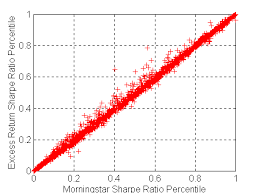 Is ROIC (return on invested capital) a viable alternative to measures such as information ratio, Sharpe ratio, etc.? It appears to me that even some of the marquee hedge funds employ a lot of capital in order to realize ordinary returns.
Should one be using net exposures or truly looking at gross exposures, or are there alternative measures that would be useful?
Gordon Haave notes:
The problem with ROIC is that it doesn't account for the level of risk the capital was exposed to in order to generate the returns.
Feb
17
Love It or Hate It, from Gordon Haave
February 17, 2007 | Leave a Comment
"One of the things I look for in DVD reviews on Amazon is extreme and opposite reviews. That is, where the DVD is completely loved by some and hated by others. With such a movie, the chances are that you too will either love it or hate it. However, if you are afraid of losing $15 on a bad movie, you will also miss the great movies. Examples of this are the reviews for the movie "The Thin Red Line."
For what it's worth, I think the movie is amazing. It just popped into my head that perhaps there is an application to the markets. Here it goes:
In my first job out of college, I invested in deep-value and distressed situations. Typically, nobody ever had mixed opinions on these investments. Anyone with any opinion on them typically loved or hated them.
From this came big losers, but big winners also. One could not, in my opinion, have had the big winners while also having some big losers. I considered the big losers to be the price of the big winners, and since so many investors won't pay that price, there is a fair amount of alpha to be had in those strategies.
Back to the Amazon reviews: Now that Wall Street analysts occasionally tell the truth and put out negative opinions on stocks, might a good way to screen for ideas to be to search on stocks that only have very positive and very negative opinions on them?
Perhaps this could be done using a measure of earnings estimates divergence (one would have to adjust for financial and operational leverage to compare estimate divergence across companies, i.e., a 30 cent divergence on a utility might say more than a 40 cent divergence on a tech company).
Feb
15
Empty Voting, from Gordon Haave
February 15, 2007 | 1 Comment
'Empty voting' ploy used by hedge funds is on SEC's radar By David Hoffman February 12, 2007
PHILADELPHIA — The practice of borrowing company stock to manipulate the outcome of company votes has piqued the interest of the Securities and Exchange Commission and has rekindled a debate over stock lending. In at least two speeches this year, SEC member Paul S. Atkins talked about the practice, which has been dubbed 'empty voting.'
If investor A doesn't care about the outcome of a vote, and investor B does, why shouldn't investor B be able to pay investor A for the right to vote investor A's shares?
This is in fact economics at its best. If investor B's voting harmed the long term interests of Investor A, then investor A wouldn't lend investor B the shares.
Feb
15
Last of the Mohicans, by Gordon Haave
February 15, 2007 | 1 Comment
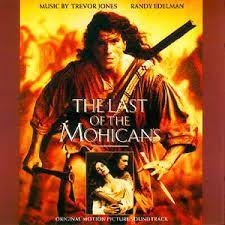 I bought the director's cut of Last of the Mohicans. I have always found that film to be remarkably beautiful, both the scenery (filmed in the mountains of North Carolina) and the last 20 minutes of the film, particularly when Alice leaps to her death. Anyway, if like me you always wondered which of the Mohicans was last (the dad, or Hawkeye, the adopted Mohicans), it is settled in the directors cut. At the end of the film the dad proclaims himself the last of the Mohicans.
I don't necessarily recommend the director's cut. It's really only an extra 10-15 minutes or so, and most of that is filler (the Mohicans spending more time running through the woods). The two notable scenes are the bit at the end when we find out which Mohicans is last, and there are 3 extra minutes or so at the siege of Fort William Henry, where major Heyward leads a column of British troops outside of the fort to fight the French and the Indians.
Feb
13
Excalibur, by Gordon Haave
February 13, 2007 | Leave a Comment
 "I dreamt of the dragon."
"I have awoken him."
"Can't you see all around you the dragon's breath?"
From one of the greatest movies of all time.
I watched the director's cut of Blade Runner, which is fantastic, and finally in this cut it becomes apparent that Deckard himself is a replicant.
Now, I am watching the movie with the above lines, where, interestingly, Patrick Stewart plays a role.
Feb
9
Accuracy and Precision, from Gordon Haave
February 9, 2007 | Leave a Comment
 Accuracy and precision are conflicting traits in any forecast. Most market forecasters are completely inaccurate, is it because they are trying to be too precise? After all, what kind of forecaster would get paid if he didn't at least try to nail down next year's market return within 5%?
Perhaps more value can be added by drastically reducing the attempted precision, and so I offer the following:
The market gives 10% per year to those who are willing to freely accept it. This 10% includes big drawdowns such as 2000-2002, and fall 1987.
Therefore, if one could target precision of simply "is there a high chance of a 30% drop in the market", one could add a worthwhile amount of return to the 10% offered by the market.
The P/E ratio is probably the ratio that is most commonly used in inaccurate forecasts, but I give you the following:
I don't know which direction the market is going to go, and I don't know what will happen to corporate earnings.
I do know the following per the graph: Despite the strong bull market since 2003, the PE ratio is exactly where it was at the start of the late 1990's bull market. Combine that with the fact that the Earnings yield on the SPX - the 10 year yield is positive (and it was negative in 2000 and late 1987), we can perhaps safely assume that a negative 30% year is not in the cards, and therefore the expected return on the stock market this year is greater than 10%.
Feb
6
Underperformance, by Gordon Haave
February 6, 2007 | 1 Comment
I currently monitor how many managers beat the relevant indexes every quarter. It appears to be surprisingly cyclical. For 2006, most managers (defined by separate accounts in the PSN database ) underperformed the indices. In fact, in many categories only 20% of managers beat their indices. The issue, though, is finding an explanation for this. What is it about the average separate account manager that he underperformed this year?
I postulate trend following. Most managers outperformed in some prior years, and I wonder if perhaps a trend following instinct leads them all to be overweight in, say, oil compared to the indices, and then oil breaks and they all get hit hard.
I suspect the fund flow out of active managers differs from the fund flow into ETFs. If someone withdraws money from a manager who closely tracks the S&P 500 and puts it into an SPY, there will not be any change in the outperformance of managers vs. the index.
Perhaps, though, the ETFs are representing a total allocation that is different from all the active managers combined. Active managers must hold a significant, say, a few percent at least, of stocks that aren't covered by the better-known indices, and these holdings are hurting them.
This should be testable in various ways. For example, stocks that are more heavily overlapped in indices should be outperforming now.
Alston Mabry replies:
Portfolio-weighting may play a role, too, as it interacts with changes in the small cap/large cap cycle. Indices are cap-weighted, so in order to produce a return different from the index, a fund portfolio must move some distance away from the cap-weighted index, towards equal - or random - weighted portfolios. When small cap/midcap stocks are doing well relative to large caps, there's a greater chance that an equal/random - weighted portfolio will beat the S&P. The reverse is true when large caps are the best performers.
I'm conflating funds that would say they have different benchmarks (large, mid, small, value, growth); but I would think that the analysis holds up even when restricted to subsets of stocks.
Feb
3
Shilling Website, by Gordon Haave
February 3, 2007 | Leave a Comment
 OK, it's been settled. We have found the winner for the influential financier with the most vague, yet still wrong predictions award.
I was thinking of commenting on it line by line, but there are no good markers for how to separate the different ideas. It is one continual BS stream of consciousness. Notice of course that three of his predictions use the term "might," and how he congratulates himself for his predication that a renewed bear market in U.S. stocks might occur.
A year ago, Gary Shilling, in his monthly INSIGHT newsletter,
outlined his 6 investment themes for 2005.He said three of them were likely to develop in 2005
while three would maybe unfold last year.What made those six ideas stand out
was that they were not simply a rehash
of what most Wall Street analysts, economic forecasters
and other cheerleaders were saying at the time.In fact, all six were non-consensus and, therefore, could produce
significant investment rewards.
One year ago, Gary Shilling
1. predicted a rally in the dollar.
2. forecast spreading deflationary expectations.
3. said the yield curve would continue to flatten.
4. said the housing bubble might burst.
5. said a renewed bear market in U.S. stocks might occur.
6. stated that a hard landing in China might happen.How did things turn out? The dollar rallied. Deflationary
expectations spreading beyond autos and into appliance stores,
department stores, computers and recreational vehicles. The yield
curve flattened and, late in Dec. 2005, inverted. While the housing
bubble hasn't burst, that red-hot market has evidently cooled. While
U.S. equities didn't plummet like they did in the 2000-2002 bear
market, the Dow Jones Average last year was down while the S&P 500 and
Nasdaq registered only slight gains. And despite efforts to cool an
overheated economy without dumping it into a recession, China's
economy appears to be facing serious difficulties.Gary Shilling has often been way ahead of the crowd. [Read more here]
Jan
31
The Flawed Sharpe Ratio, by Gordon Haave
January 31, 2007 | Leave a Comment
Let's be clear that the Sharpe ratio is an extremely flawed measure. It makes perfect sense only in a purely efficient market. Otherwise, there can be plenty of ways to generate a good Sharpe ratio without really adding any value.
Take, for example, investing in timber or other forms of private equity (or like all the side pockets that hedge fund managers are doing these days) and then only marking the investments to market once per quarter. Voila! You can assign near zero volatility to your investments and get a great Sharpe ratio that you put in your powerpoint presentation.
Jan
20
Presentation of Predictions, by Victor Niederhoffer
January 20, 2007 | Leave a Comment
Sparked by an article on euphemism in politics, I have been studying the tendency of market participants and commentators to present themselves in a favorable light. The topics I have reviewed include the theories of boasting, euphemisms, biases in self reporting, self evaluation bias (325,000 entries), the superiority complex, the halo effect, and presentation of self in everyday life and deception. Nothing quite fits. However, considering that there are 132,000 entries for "as predicted" stock market on Google, I feel the topic deserves some serious consideration. Lacking theories or quantifications exactly on point, I'll have to take a crack at the subject myself.
 My previous forays into this subject in Education of a Speculator started with the consideration of how the oracle of Delphi was able to maintain its prominent place in Greek life for over 2000 years. I concluded that the key was never to administer a forecast that could be falsified, maintain an impressive site and a mystical ambience, evaluate your forecasts yourself, deceive with the startling forecast when you already know the answer, and mix in Bacchanalia. I gave examples of market people who had adopted these principles and classified them as mystic (the secrets of pi), unappreciated (I stood alone in making the forecast), other worldly persons ("the parking lots are as empty as the ships in the harbor"), mathematicians (the lognormal distribution explains it), the traditionalist (the opera chairman, the palindrome and the abstract mathematician use my methods), the Washingtonian (I met with the Fed chair often), the correlation expert (soybeans traditionally fall before a rally in bonds), the loner (I am on an around the world cruise), and the Insider ("a bullet bid has been made").
I also reported favorably on the late Harry Browne's magnificent analysis of self administered reports. He gives repeated hilarious examples of "as predicted" that actually weren't the way they predicted. He also gives examples of pretended modesty in admitting a gap in accuracy that is designed to make you feel that the forecaster is so much more honest than you or I that he's a model of integrity as well as a genius. (Such a deceptive technique is particularly relevant today as the world's worst forecaster in my opinion, the weekly financial columnist, who has been consistently bearish on stocks 100% of the time while the Dow went up from 800 to 12,500 over 40 years, admitted in his January 22 column that he gave a terrible forecast in saying that oil would go to 70 before 50). "The only thing positive about that prediction was that it didn't take more than a wink for us to be proved wrong." This technique is also detailed in The Perfect Lie of distracting attention from the real deception (i.e. his grotesque record on stocks, while admitting the oil statistics to be wrong).
Such a typology holds up pretty well after 12 years, but I feel it misses the essence of all the "as predicted" ones. For example, it doesn't focus on the multiple prediction, the person who predicts so many things that he has to be correct on one of them. A beautiful example of the same, as it's so compact, would be the person that says "X is the key level" and then boasts about being right if it goes up or down from that level. Also missing is the retrospective forecast, the forecaster that lets you know that he was bullish well after the bull move has started. Another omission is the survival biased forecaster, the person that reports just the fund or stock results that are extant right now, leaving out the results of the funds that have folded, or less insidiously, just the years or the results that were completely unfavorable. Another omission is the academic forecaster (the academic who writes a paper uncovering an anomaly with almost a clarion call for funding contained in the retrospective low priced impacted data presented). Another more subtle fudger is the person who reports their results while the going is good and then hides ostrich-like in the sand when the going is bad. (I have used a variant of this in my own business where I was happy to report while I was making returns sufficient to win awards but stopped when the going got tough. All I can say in my defense is that I figured that if my future results were good, it would create less supply against me and more demand with me. If they were bad, why should I give my adversaries the platform on which to drive in the final nails?)
Here are preliminary suggestions for those who wish to present performance figures without undue boasting and hype:
1. All results should be presented with a view of providing the truth, the whole truth, and nothing but the truth, and should be accompanied by a statement to that effect.
2. Particular care should be made to present the results of programs and funds that are no longer in existence or no longer reported for any reason with which you are associated. For example, one should never report 40% a year returns on the one program or two programs that you still have outstanding if others, invariably involving much higher amounts of money under management, have been eliminated.
3. A complete enumeration of money contributed, money taken out, profits made, commissions taken out, fees taken out, and net to customers should be made by month.
4. A similar enumeration should be made for any funds the manager was associated with that are not included in 3. (for example, the biotech fund or the growth stock fund or the trend following fund in stocks that is no longer in existence)
5. All changes in style of investment, markets invested in, fee schedules and leverage used should be noted with a fair discussion of how this would change results.
6. Third party arrangements of any kind with selling groups or brokers or service providers should be enumerated by year.
7. The independent third party that reported and calculated these results should be noted and addresses should be given and auditors enumerated.
In addition to following the above guidelines where applicable, those who make forecasts should add the following:
8. The exact time and levels of the items being forecasted and what it is you are forecasting and how to measure what is being forecasted.
9. A complete enumeration of all forecasts made over the last five years with the information required in #8.
10. An assessment of the accuracy of the forecasts made in the past, with the bad forecasts as well as the good ones equally featured.
11. A measure of the a priori likelihood of the forecast being true due to chance factors alone, for example, the forecast that oil will be higher in the future would have a 100% a priori chance of being true.
12. The independent party, like Hulbert who has vetted your forecasts or advisories in the past.
13. The amount of self interest the forecaster has in what he's forecasting. For example, whether he has a position in the recommendation, did he front run, and what his policy is in extricating from the forecast with respect to his own positions.
 No matter how carefully one develops a set of guidelines, it will always be possible to violate it in some way even when someone is not overly lax in presenting the truth, the whole truth, and nothing but the truth. As such, a letter from the forecaster describing any problems or gaps that the user might have in using the forecast should accompany the forecasts. For example, was the manager once managing a considerably larger set of assets? Has his organization changed now that he is a mere shadow (what used to be called a ghost in the stock markets of the 19th century) with a much smaller organization? Or have the financial circumstances of the manager changed so that he has an interest in a Hail Mary kind of prediction because he has been so devastated recently or as in the case of the weekly financial columnist, he's been short for so long that if he ever closes his trade, he'll realize a 1500% percent loss or so?
These are just preliminary suggestions. Remember that even with perfect reporting, past results have little or no reason to be predictive of future results because of the problem of ever changing cycles, and ageing as described by Bacon. However, exceptionally bad past results would seem to be somewhat predictive to the extent that they usually result from excessive fees and grind paid to the house.
I would be interested in any augmentations or suggestions that the readers might make here that would improve reporting and predictive methodology so that the users will have a better backdrop for decision making.
Vic further adds:
What he wrote for Mr. Wiz and myself, which he considered his best book, was that "when a master seems to fall into a trap, be doubly careful." This is an extension of what the able Mr. Mee had in mind and I am sure that Mr. Grandmaster Nigel Davies will have a few apt comments on this point.
Vincent Andres comments:
Another omission is the survival biased forecaster, the person that reports just the fund or stock results that are extant right now, leaving out the results of the funds that have folded …
This reminds me of a scene in Groucho Marx's biography (hope not to confound). Groucho was negotiating a contract about an advertisement using his image. The man proposes Groucho $500. Groucho laughs and says no. The man proposes Groucho $5000. Groucho also says no. The man proposes Groucho $15000, and Groucho agrees. Then the man brings out of his pocket a $15000 check, already written.
"By the hell, how did you know I will agree at $15000?" asked Groucho.
Well, I have four pockets said the man. In pocket one a $500 check, pocket two a $5000 check, pocket three a $15000 check, and pocket four a $30000 check.
Aaaaaaaaaaaaaarg! said Groucho.
Sorry for the approximate English and certainly an approximate remembrance.
Hany Saad adds:
While this is a very valuable framework for thought and it definitely will give one a significant edge in markets as well as the proverbial "don't take things at face value," I suggest looking at the other side of the coin, which admittedly is less common but every bit as valuable in solving market puzzles. I am talking here about the money manager who only talks about his losses and how tough it is to manage funds yet one realizes at year end that he outperformed all his peers by a large margin. The money manager who always starts his speeches with "I am a smaller fish than I like to admit" or "what do I know" or "after a very tough year" or my all time favorite, "yes, finally a good one" in response to a congratulation over a trade so outstanding that it can no longer be hidden under the carpet. The money manager whose performance is so mediocre that he was debating retiring in his thirties and only stopped when he realized that this year could be a good year as well … so why not? The lessons are very valuable since this practice keeps the enemy away and prevents envy, or so goes the tale. The only problem with such a practice is that year after year, the adversary starts noticing your bluff, and as he's leaving your office after you utter your usual "yes, finally a good year," you hear him murmur invariably "yeah, right."
It is mind boggling how people learn so quickly that you are laying low, but they hardly ever call your bluff when you practice your shameless grandiose on them a la Ableson.
Gordon Haave offers:
The most common euphemism that I noticed was the naming of every downturn in almost any asset price as a "correction." One of the reasons that I find it notable is that those who call it a correction invariably are implying that the long term trend is still up. Well, if the future price will be higher, then why is having it go down today "correct" in any manner?
A good example of this would be today's bloomberg story about Rogers saying that the downward movement is just a "correction" and that the price will later go up to $100. If the price is going to $100, then any significant downward movement is not a "correction." Rather, it is a "mistake."
I for one think that oil is going to stay down, but that's not the point. The point is that this idea that anyone who is long can at the same time justify or excuse a downward price movement as being an ok event will still proclaim a long term rise in price.
Jan
16
Venezuelan Bonds, by Gordon Haave
January 16, 2007 | Leave a Comment
Venezuelan 2027 bonds are now yielding 1.7% over comparable treasuries. Thus, rational investors would not expect a credit loss of greater than 1.7% per year.
(This is a simplified model in many ways, but close enough for this analysis.)
The credit loss would be the probability of a credit event times the expected loss in a credit event.
(So, for example, a 10% chance of a credit event times a 50% loss if such an event happened would be an expected annual default loss of (.1*.5)=5%)
Any investor in these bonds must expect an annual credit loss of less than 1.7%.
Recently, Argentina "got away with" giving foreign creditors a 66% loss of principal. If Chavez decided to stick it to the dollar bond holders (like he shows every indication of doing to many foreign equity owners), there is no reason to expect that the bondholders would recover more than 33%.
So, we then solve for 1.7% = X * .66 = 2.57% This shows that an investor in these bonds must expect a less than 2.57% chance of Chavez defaulting, or a greater than 33% loss given default.
Given his political sensibilities, thoughts on economics and investors in general, and massive spending plans, would you bet that there is only a 2.57% chance of Chavez defaulting? I wouldn't. I also wouldn't bet on an only 66% loss given default. I wouldn't be surprised if there was an event where the loss given default on these bonds was 100%.
Read Venezuelan Dollar Bonds Rise, Rebounding From Last Week's Drop
Dec
21
Don’t Forget the Drift, by Victor Niederhoffer
December 21, 2006 | Leave a Comment
One must repeat that the unconditional drift of the market is 10% a year. Whenever you are short, you have a drift going against you. When you wish to go short, chances are that the drift of the market will be above 10% a year. That’s because you and others think there’s a bear market retrospectively, and require a higher rate of return to be invested. In addition there are frictional costs to being short. Put them all together, and I’ve never seen a short seller who’s made money, nor has the Palindrome. It does give psychic value however in that it lets you vent your hatred of the system and yourself. It also gives stature because you are always on the negative which seems so much more poignant than the positive.
Since you always are giving away money on the short side, on an expectational basis, it is best not to consider it as the wind is against you unless you are truly insecure. The question of when you should go short is the wrong question. A better question is when you should increase the leverage of your long investments. I would propose a hypothesis that it is good to do that when the market has suffered a decline with a given period of a certain magnitude or more.
I believe the above reasoning, as well as the questions I ask bears about whether things are truly so much worse than before, and whether if they are, is this bullish or bearish, which I have made repeatedly since 1960 but also for the last four years, during which the market has doubled, has prevented many people from self destruction.
Dr. Janice Dorn provides a different perspective:
Part of the profundity of Victor’s remark is that the bears make poignant arguments which are almost tailor-made to touch something very deep inside of those who are always watching and waiting for some disaster or catastrophe. The bearish arguments tend to be more scholarly, detailed, laced with Latin words and appeal to the limbic core of the brain (which holds memories of fear and terror and sees them even in their absence), as well as the higher neocortical areas which are, in some way, hard-wired to process, consolidate and retain bad news more firmly and longer lasting than good news. Bad news is stored as pain and that pain can be evoked in almost any situation. Good news tends to be more fleeting and there is more difficulty reaching into the brain stores to retrieve the memories of euphoria. Perhaps the neurochemistry of euphoria (be it dopamine, serotonin, norepi, or any of the thousands of neurochemicals) is configured in a way as to be more transient, spontaneous and non-entrained. Depression, disaster, danger lurking around every corner is much more “reachable” in terms of our psyche. Once again, this is likely a function of the way that the cortical neuro-pathways are laid down and communicate electrochemically with each other in the vast cortical landscape.
In any case, the rah-rah cheerleaders are often seen as buffoons, whereas the permabears are the scholars and masters of Latin.
“A mass of Latin words falls upon the facts like soft snow, blurring the outline and covering up all the details. The great enemy of clear language is insincerity. When there is a gap between one’s real and one’s declared aims, one turns as it were instinctively to long words and exhausted idioms, like a cuttlefish spurting out ink”
–George Orwell, writer (1903-1950)
John Bollinger adds some numbers to the discussion:
S&P 500, 1950 to date, returns by month, ex dividends mean = 0.734%, standard deviation = 4.085%
Dr. William Rafter explains the professional’s dilemma:
Dear Mistress Market,
To second the chair’s remarks about the risks of being short, I emphatically state that “a friend” has never made any money on the short side of equities. Even in profound bear markets, the friend has gotten nothing but frustration out of the short side. Conversely the friend has been able to make money on the long side in those same profound bear markets. But the friend has a problem: people who hire his services want him to add a short component.
More than a quarter of the hedge funds pursue a long/short (”L/S”) style. Let’s assume that our friend had a very successful fully-invested long-only (”L-O”) strategy. The funds don’t want to employ his L-O strategy because they are under the impression that a market-neutral strategy of L/S is less risky. But our friend knows that the short side is just wasted; he can prove that his L-O strategy beats a L/S version of the same thing. By beating it, we mean in every way: higher Sharpe Ratio, lower drawdowns, etc. Now the friend is looking for an allocation of X dollars in his L-O program, but the funds only want to give him .3X or .5X. Since he clearly cannot make money on the short side, he has adapted by finding a strategy that will go nowhere - and that’s what he shorts. (He cannot short the index, because he knows that also will go up.) By his little charade he gets his full allocation, and the fees that go with it.
But this irks, as there are inefficiencies all around: extra transaction costs, risk of errors, extra man-hours, etc. Furthermore, our friend assumes that he is not unique. Others must have the same problem. With more than a quarter of the hedge funds using L/S strategies, how much is being wasted? Is our friend on ethical quicksand by giving the “professional client” what that client says he wants?
Sincerely,
“Puzzled”
Laurence Glazier asks if Optimism in the Markets Exists for More Simple Reasons:
Putting it very simply (or too simply?) is the positive drift in the market an inevitable manifestation of human potential and the innate cheerful optimism we all have, or at least were born with?
Scott Brooks provides his perspective:
I would say no.
Most people are not innately positive or optimistic. Most Americans are blessed by capitalism simply by accident of birth. If they had been born in a communist country, they would simply be sheep there (as they are sheep here) albeit much more unhappy sheep with a greater sense of hopelessness.
Growing up where I did and being surrounded by the people (and their negative destructive attitudes), I don’t think most people are innately optimistic. Any optimism they have is because they are surrounded by an environment of capitalism which breeds some optimism because here they are at least safe (no secret police to break down your door in the middle of the night), they are well fed (no mass starvation, or really, any starvation here), there is consistency of rules (rules and laws are not based on the arbitrary whim of whomever is in charge) and they can see that what is happening around them is consistent with what they innately know is the philosophy of life (as opposed to the propaganda they are exposed to in statist countries…innately they know its a load of cr-p).
No, people are not innately optimistic. Capitalists are. Think about it. What we have today is because of the skills and mind set of very few men. Rockefeller, Carnegie, Edison, Gates. Or men like Jefferson, Franklin, and Henry. Or scientists like Currie, Oppenheimer, Watson and Crick, or my uncle Bob.
What we have as a country is the result of just a few people who were truly optimistic and had the strength of character to fight through all the naysayers and negative busybodies (the Elsworth Tooheys and Wesley Mouchs, Dan Rathers, Paul Krugmans, Alan Abelsons, etc. of the world).
No, people are not optimists. They are negative pessimists who will almost always resort to the lowest common denominator of gossip, destructive thinking and thinking the worst of people.
Just a few of us actually create something of value in this world.
The rest of the world rides on our coat tails….and most of them are dragging anchors behind them or throwing rocks at the back of our heads, or climbing up on our backs to whisper in our ears all the negative things they can think of…but the nice thing is that on our coattails there is also an odd person or two (not very many mind you) who are glad to be on our coat tails…
They appreciate what the men of the mind do for them. And they fight the negative naysayers dragging anchors, throwing rocks or whispering in negativism in our ears.
They are known by many names…but most on this list would think of them as the “Eddie Willers” of the world.
Prof. Gordon Haave Disagrees:
No. The things you cite explain the growing economy. The positive drift is simply what the market pays you to part with your $$$ to put into volatile investments. In fact, the more optimism you have the less the market would have to pay you, so that would actually bring returns down, which of course highlights the important to us optimists of people like Abelson. If everyone thought like us, returns would be lower.
Dec
21
Contrarian Plays in Casinos, from Steve Leslie
December 21, 2006 | Leave a Comment
There is nothing more thrilling in gambling than stepping up to a craps table to wager a few chips on the roll of the dice. The dynamics of the game are absolutely fascinating, and can be quite confusing for the neophyte gambler. Chips are flying around from seemingly everyone, gamblers are placing their chips all over the board and people are screaming and yelling out catchword phrases like ” 7 come 11, baby needs a new pair of shoes, box cars, 8 hard 8″ and many others. The action can be furious when suddenly a shooter gets hot and money comes from everywhere around the table in the hopes of cashing in on this blessed event.
 In dice, practically everyone at a table is betting along with the shooter. That is to say that they are putting their money on the pass line, taking odds, betting the points, and playing the hard ways in the hope and dream that the longer the shooter stays alive the more money they can rake in.
However, a player can also take the other side of the wager and be a “wrong way” better. They can bet on the don’t pass bar 12, the don’t come bar 12 , and the prop bets that are one time bets such as any craps and any seven.
The “wrong way” betters at craps are the most unpopular people at the table. They are called a variety of names, “coolers” and a host of others normally reserved for biker and country and western bars. If you have ever tossed a chip out on a table during a shooter’s hot streak and yelled out ” any craps” you will know what I mean. You will receive stares, threats, innuendos and quite possibly be doused with a cocktail if the bet gets paid off while everyone else’s money gets cleared off the table after a shooter craps out.
Interestingly the don’t pass and the don’t come bets carry the same odds of success as their counterparts the pass and the come bets which as many people know are the best wagers based on the odds in a casino that a gambler can make. This is approximately 0.6% in favor of the house. However they are the least played areas on the layout. Everyone would much rather bet alongside the shooter. It is generally seen as un-American to bet against a shooter.
This reminds me of those who choose to bet against the shooter so to speak or against the stock and be short sellers or contrarian investors. They are many times going against the consensus or the implied bullishness of the times yet they can have an equally positive payoff, and in many cases a greater payoff than the field in general.
It takes a certain strength of character to short a stock that has risen meteorically and breaks its trendline. It takes equal strength to invest in a company that has fallen upon hard times, replaced management, restructured, just come out of bankruptcy and is unloved and its stock price is sitting at multi-year lows. However, properly done it can also be very financially rewarding if one succeeds in pulling it off.
Vic responds:
Mr. Leslie has given us a primer on dice psychology, but I believe that his analogy breaks down on the short side because the grind and drift are much bigger than on the long side.
Allen Gillespie responds:
The allure of the short side, however, is that the declines tend to be much swifter than the rises. For example, in counting swing magnitudes and durations of both the market and high volatility stocks we have found rallies and declines to be only slightly different in magnitude (but favorably tilted for the rises) but significantly different in average duration with declines lasting about 2/3 the length of time as the rallies.
Prof. Gordon Haave responds:
 Let me clarify: I have nothing against telling someone who can afford it “just invest say 2K per month, and do it every month, regardless of market conditions”. That is fine.
There are a lot of people, with the lump sum, however, who get the bad advice to dollar cost average. I see it all the time even with large consulting clients. They get the advice to take their money and “dollar cost average it in” over say 12 months. All that does is leave much of their money in cash instead of the market. Any possible benefit from dollar cost averaging in such a case is built into the probability that over the course of the year there will be some opportunities to get in cheaper than if you went all in at day 1. However, the probability of that does not over come giving up the 10% drift with some of your money for some of the time.
Steve Leslie responds:
I think rather than splitting hairs on where performance is better with dollar cost averaging or lump sum investing, and making this a full blown debate:
In my view:
This is more of a philosophical based decision rather than a performance based issue. People do not invest because they are afraid of being wrong more than they want to be right. Fear always trumps greed. Many are more interested in the return of their capital rather than the return on their capital. They really don’t know what the return of their money is anyway so speaking in percents is a complete waste of time in the majority of cases.
Therefore if one can devise a “scheme” to make the process less painful then where is the harm. In sales the technique is “reduce it to the ridiculous.” It is easier on the psyche to say to the client “I want you to invest $2000 pre month, for a year.” rather than “I want you to invest $24000″. It is less invasive less of a shock to the system.
Nobody buys a $30,000 car, they make monthly payments of $400 a month for 6 years. Nobody buys a $400,000 apartment, they buy a mortgage. People look backwards and do the math of what they can afford on a monthly basis and make their purchase accordingly. Most live off a budget so when you talk to the client in those terms they can relate more easily.
Furthermore, in the clients eye, it takes away the timing aspect of investing. Instead of professing to know the correct time to buy, essentially a financial advisor is stating that nobody knows the right time to invest, especially me so lets put a little in over a long time rather in all at once. In psychological circles this is eliminating “all or nothing” thinking. Plus it takes away the reply “I think I am going to wait until next week, month, year, to put the money to work, because I think the market is going to be lower then.”
My father, one of the great salesman I have known said that the client buys emotionally but justifies logically. Try to see things from the clients viewpoint rather than your own.
He also used to say “The husband buys but the wife confirms.” It is far easier for the husband to go home and tell the better half that this is a plan that is the foundation of virtually all retirement plans in the world. Plus, he doesn’t have to look at his statement and explain to the wife why their $50,000 is now worth $40,000.
In summary, working with individuals requires a far different set of skills than working with institutions, Institutions will tell you what amount they are looking to place with you. They are transactional based and are bottom line people. They are brutal, because they have a board to answer to and they eliminate warm fuzzies from the equation. Just as quickly as they hire you to manage money they will just as quickly fire you. Nothing personal but as I like to say “That’s how they do things downtown.”
Individuals are more interested in relation based investing. One of the great statements about relationship based selling that the client must settle in their mind is “Do you care about me and can I trust you?”
Some might say that this is fluff and takes away the substance of the investing. My reply would be ask the Chairman who his first client was and why he chose to stay with him through the good times and the bad for so many years.
Dec
19
Barron’s Roundup, from Prof. Gordon Haave
December 19, 2006 | Leave a Comment
Abelson: PNC Financial services every year counts up how much it would cost to buy everything in the 12 days of Christmas song. This year it would cost $18,920, which is up 3.1% from last year. Nice dancing ladies cost $4,759. The main problem with the nutcase from Iran appears to be that he himself is obsessed with dancing ladies. OPEC is acting up, trying to cut production. The drop in oil from $70 to $50 is probably a brief respite … prices should go back up. Abelson flummoxed that the Dow is up 16% this year, and the S&P up 14%, given all the bad news he regularly regales us with. Corporate profits look good, but this can be bad because they come at the expense of hiring people, investing capital, and inventing new gadgets. Of course, there should be a recession next year and earnings will reflect that. However, there is still lots of private equity money sloshing around. Complacency is running rampant. Not only is the country borrowing a lot of money, but John Q Public is all tapped out in his home equity and is now resorting to credit cards and payday loans. The sky is falling.
Page 17: Citigroup is up 12% since Barron’s recommended it. Citi appears to have change agents in the right place, and it looks good. The 10 stocks Barron’s told you to buy after Katrina have done well, averaging a positive 23.2%. The Tulane professor who picked those stocks now recommends SMRT, CRR, and MSL.
Page 19: Turbo Chef makes great ovens, their new home model cooks a 12 pound turkey in 42 minutes. But really, they focus on the commercial markets. The quality of the cooking is generating great reviews. Turbo Chef doesn’t really make any money, yet it has a $418 million market cap. So, the shorts hate it. But, Starbucks is going to be getting into hot foods, so the bull story might actually come true and this stock could be up 40% in the next year. Dunkin Donuts is also testing the ovens.
Page 20: Newfield Exploration used to be all offshore, but now they are drilling for a lot of gas onshore. Because of Katrina, they missed some production goals, but now they look to be about to hit a sweet spot. It is up a little, but still cheaper than XTO and EOG. Unlike others, Newfield has expanded production mostly through the drill bit. Anyway, you should buy it.
Page 21: Some people like New York Community Bancorp because it has a nice dividend, but if things continue the way they are, the dividend could be in jeopardy. Plus, too much of their income comes from low margin businesses, and their acquisitions haven’t been all that great. Sell it.
M3: In case you were planting the raven flag in Newfoundland in an attempt to reclaim Vinland for us, the markets were all up last week, the fed held steady, and bullish economic reports came out. By the way, the Citigroup Panic/Euphoria Model says we are still in a panic mode, as we have been all year, except for in April (when there actually was a panic Is there any more useless model in a mainstream publication?). Even the bulls think that a short term pullback would be healthy. Earlier in the year, the rally was on cheaper oil prices and waning inflation, going forward, the rally will have to be pushed by corporate profits. Some activist hedge funds want Brinks to split up. They think it could go for over 70 per share to a buyout firm. The market hasn’t warmed up to brinks because of pension liabilities and capital expenditure requirements. MasterCard has had a great year, but is now overpriced. Keefe Bruyette and Woods says to sell MasterCard and buy Amex.
M6: Novartis is slimming down as it prepares to invest in new drugs. This should have it on the right track, as Novartis’s prospects should be more clear now.
M7: Macau casinos are hot. Melco and its joint venture partners Publishing & Broadcasting are going to list an ADR in the US. It will be the only pure Macau gaming play in the US. It will have much lower PE’s than Las Vegas Sands and Wynn. The catch is that Melco has spend billions, and hasn’t really made any money yet, and there is a lot of competition, so we don’t really know if you should buy it or not.
M8: While stocks went up last week, the bond market went slightly lower. Dow Theory says that the upward move in the Industrials has not yet been confirmed in the transports. Actually, Yellow lowered its guidance. If this is like the 1995 market, we are in the clear. If it is like the 2001 market, we are not.
M9: Nickel is up big this year on supply and demand dynamics. Specifically, new supply is technologically challenging to mine. What’s next for the market: “Signals are mixed”. Gee, thanks.
M12: Barron’s classifieds, “where opportunities meet their match” down a 1/2 page in ads since last week. But, if you want you can get a timeshare for 60-80% off retail.
M12: A bunch of little companies that run clinical trials for drug makers have been doing well. Despite premium pricing, they could still go up because drug companies are outsourcing more and more late stage trials. There has been a recent sell off, which is a buying opportunity. These stocks are known as “CRO’s” for Contract Research Organizations. Check out Pharmaceutical Product Development and ICON.
M16: You can’t buy options on the IShares Comex Gold Trust or the StreetTracks Gold Trust because it is not clear if the CFTC has to regulate them or not. Lots of investors aren’t comfortable with futures. You can, surprise surprise, buy options on companies that mine gold, like Newmont.
Page 23: Heely’s is a silly fad with huge product liability concerns. Watch out.
Page 25: Cover Story: ConocoPhillips is a big bargain. It has been in the dumps since last years Burlington acquisition, which the street didn’t like. It has the lowest PE amount the Dow Global Titans. Some guy echoes that, saying that it is too cheap to ignore. A guy from Morgan Stanley likes it, and John S. Harold says it is the top value among the energy firms it tracks. It currently trades at $9 per barrel in the ground, with most E&P firms valued at 12, and this ignores Conoco’s other assets. Wall Street is happy that they have cut their 2007 capex budget, and are doing more share repurchases. Oh, and Warren Buffet likes it. (Why didn’t you say that earlier, case closed, I wouldn’t have had to read the article!) Anyway, they are not planning any more big acquisitions. The big knock on Conoco is that most of their reserves are in mature areas. Conoco says that people underestimate the ability of new technology to expand reserves in these areas. Also, they have a sizable Venezuela exposure, and who knows what that psycho down there might do.
Page 30: We warned you about SIRF, you should have listened. Despite the bulls, it could still be bad going forward.
Page 31: Ryan Jacobs, who helped you lose a ton of dough promoting tech stocks on CNBC and running the Kinetics Internet fund and the Jacob Internet fund, is still in business. After the crash assets dwindled to 10 million. But, he endeavored to persevere. He now has $100 million, his holdings are more diverse, and he has learned to appreciate value. His fund now has a five star rating from morningstar. He’s up well the last three years. Right now, he likes Napstar, Infospace, Google, Yahoo, Newscorp. He says that margins in e-commerce are too thin, which is whey he doesn’t like Amazon or Ebay. On a totally different subject, retro video games are back in business, and Glu Mobile is putting old Atari games on cellphones.
Page 32: www.timertrac.com measures the performance of nearly 600 market timers. It turns out that some of them are actually doing well (but no mention of the fact that just by randomness some of the 600 should do well). Tradestation now has live Eurex stuff. OptionsXpress now has 24 hour trading for electronically traded futures contracts.
Page 33: Interview with Manu Daftary of the Quaker Strategic Growth Fund. He’s battered, but unabowed. Recently, it has had poor performance. He had beat the S&P 500 for eight years in a row… but not this year. However, the fund still looks good. He likes GD, MER, and COP. His home run stock for 2006 is BG. The fees on this fund are huge. 5.5% upfront, 1.9% expense ratio. Then again, his ten year return is 17.94%. He got shelled in the 3rd quarter owning PD,CNQ, and X. He has restructured and added defensive names WYE, and WLP. He likes GS, too.
Page 36: George Roche is retiring from T. Rowe Price. He thinks individual investors need to educate themselves more, particularly since he thinks returns won’t be so hot the next few years. He think the whole reason for the bull market is the Fed having driven interest rates down to 1%. Individual investors chase performance too much. He used to think scandals on wall street were limited, but now he sees greed everywhere. Today’s markets look like the 60’s. Unpopular war, big deficits, inflation risks. Probably 10% of a family’s assets should be in inflation protected investments. Evergreen is mailing out proxies to merge a bunch of their funds.
Page 37: Books for the holidays — Commodities Rising says commodities are going up. Money, Bank Credit, and Economic Cycles says that the Fed screws everything up, and it is the power given by governments to bankers to create money and credit that causes booms and busts. The Quotable Mises quotes Mises. Notable commie Barbara Eherenreich says in Nickel and Dime’d that low wage work leads to poverty and debt. She did no research for this. Navigating the Low-Wage Labor Market, using lots of research, finds the opposite. Shelby Steele wrote a good book called “White Guilt”. “The Cure” proposes market reforms to health care.
Page 38: It looks like this decade is shaping up to be the worst ever for stock markets. But that doesn’t mean the next few years will be bad. There is no reason to expect markets to continue to be bad, it is just not rational to think so. Economy is going well, corporate finances are doing well. All this says the markets will do well for the next few years.
Page 40: Interview with Jeff Everett, CIO of Templeton Global Equity Group. He oversees $152 billion. Unlike everyone else, he digs the largest companies in developed markets with stable businesses. Anyway, their methodology is to look at industries first, and then countries. He rates the global equity environment very strongly. He sold BHP Billiton and bought News Corp. US investors think foreign returns are great, but a lot is due to dollar depreciation. In local terms, the foreign markets have not been as hot. Anyway, he is a dollar based investor and doesn’t try to predict currency movements. He likes GlaxoSmithKline. It has a cost of capital of 5% and ROE of 15%, and is trading around the low end of its historic multiples. He also likes Sanofi. He likes US financials MER and JPM, and some foreign banks. He likes France Telecom, strong balance sheet, 5% dividend. The most threatening external risk is trade disputes.
Page 42: Scotts Miracle Grow is going to make a large one time dividend payment, and repurchase some stock. BA, GE, HON, and EXC all upped their dividends.
Page 43: Patents are very important. A Chicago Bank named Ocean Tomo has developed a 300 company index that have a large part of their book value in patents. They claim that they have a computer that rates the value of patents. The R&D tax credit comes and goes, we know it will exist next year, but not the one after. Everyone thinks it should be permanent, but Congress just turns it on and off and tinkers with it. Instead, then, we should just abolish it.
Dec
12
The Barron’s Round Up, by Prof. Gordon Haave
December 12, 2006 | Leave a Comment
Abelson: In a turn of events, there have been a lot of leaks out of the Whitehouse lately. The leakers were probably Rummy and Hadley themselves. However, Rummy’s memo makes him look like a fool. But who cares, the Iraq Study Group report came out. It says things in Iraq are pretty bad. Bush responded predictably, nobody has bothered to answer the real question - how soon do we leave? Meanwhile, there is something hilarious about the worlds biggest debtor preparing a vaudeville act to take to china. Meanwhile, the Russians want people to do business in Russia. As we pointed out a few weeks ago, our graph that charts how often the word “goldilocks” is used in the press (A chart that appeared useless on its face, by the way - GH) shows that the world is coming to an end. Wealth disparity is at an all time high, which is why wall street is bullish, they don’t see that main street isn’t doing as well. Some guy who buys into this has a bunch of put options on BBY, SNDK, TXN, GOOG, DELL, LRCX, AMAT, NVLS, RIMM. RIMM looks particularly silly when compared to MOT. The sky is falling.Page 19: A while back we told you to buy Mellon, you should have. We were negative a while back on Station Casinos. We were wrong. We told you to buy Intuit, you should have, even though it is down, it is still a good stock to buy.
Page 23: Guidant trades at the same multiples as its competitors, but it has more promise because it puts wireless stuff inside its pacemakers and other devices for easier treatment.
Page 24: Nortel was a big dot-com bust, and wall street still hates it, but a Jack Welch protege is cutting costs and focusing on core competencies, so you should buy it.
Page 26: Everyone likes upstart newspaper company Gatehouse Media because of the fat dividend, but the dividend is all of its net income, and other newspapers could up their dividends, so don’t get too excited about it.
Page 28: Alcon is down over short term issues, but the long term looks great. The baby boomers are getting older and will need the lenses they make for cataract surgery. Also, as wealth rises around the world, more people can afford cataract surgery. On the downside, Johnson & Johnson might enter the business. Still, you should buy it.
Page 30: A high stakes delegation is going to China, they want the Chinese to save less and spend more, as opposed to our old stance that China revalue the currency. (How a group of a couple of guys is going to convince a billion people how to run their households is beyond me … I guess that is what Washington does to your common sense - GH). Of course, a kazillion commentators have all sorts of hedged opinions on what might happen.
M3: In case you were fishing the Lofoten Islands last week, the market was up, and there has been a lot of M&A activity. WARNING, RARE USEFUL INSIGHT COMING: Milton Ezrati of Lord Abbett points out that this is a sure sign that stocks in general are cheap. “It remains very profitable to borrow and buy”. Also, the WACC for the S&P is unchanged from three years ago, while profits have exploded, says someone else. A collapse in the dollar could end the party. Typically, everyone loves Southwest Air, but lately the shares are trading cheap, and that is undeserved, so buy some. It used to be easy to screen for LBO candidates, but not anymore. The normal screens have missed a lot of the recent deals -”the rules of engagement have changed” says some guy. The Nikkei is down lately because the government is going to scrap a reduction in the cap gains rate, the US could be next now that the Dems. control congress.
M6: Unlike every other large corporation, Vodaphone looks abroad for growth. They have a good portfolio of assets in emerging markets, where the state run phone companies are even worse than ours, so consumers there like to go all cellular and ditch their landlines. Voestalpine, the Austrain Steel Company looks good, unless of course global steel demand drops.
M8: Can’t make money in the US housing bubble? Don’t worry, there is always China. CSFB thinks that the China housing market is in a structural bull run. Take a look at 0688.hk, 2777.hk, 2355.hk, and 3900.hk. Hedge funds like the Chinese property sector, too, as it is a proxy for the slow appreciation of the Yuan vs. the dollar. Lately, developers have been acquiring land banks aggressively, so take a look at those, too.
M13: Barron’s Classifieds, where opportunities meet their match. Or maybe not, since there is only one page of classifieds (3/4’s of a page if you count the Barron’s ad).
M16: Subprime mortgages and their issuers aren’t doing very well. Ford issues a convert, which was a hit with the convert-arb funds. (A smart move, these funds have too much cash, and have to invest in the strategy - GH). For you, buy the S series 6.5% convert preferreds.
Also M16: Folks are buying funds that own land in Brazil’s interior. It’s cropland. Interest is from institutional investors in it for the real estate and agriculture profits. Some guy thinks that he can always get cash for the land, since there is always interest in agriculture. He also thinks there is no currency risk since they are planting dollars since, Brazil commodities trade in dollars.
M20: When PFE went down last week, investors bought a lot of long dated PFE options. Some guy thinks you should buy PFE stock and sell long dated calls. Also, PFE might buy its way out of its problems so take a look at ISIS and NKTR.
Page 30: 2006 is shaping up to be a good year, so, naturally, prognosticators are saying that 2007 will be a good year, too. A bunch of people like Abby Cohen (I left out the Joseph just to annoy her) were interviewed on their predictions. Basically, they all think that the market is going up.( I could write a little bit more about this but I would be doing you a disservice by misleading you into thinking what they have to say is important -GH)
Page 41: Maserati Ad. You can get 1.9% financing on a Maserati Quattroporte. If you want to really show off your wealth, you spend it foolishly on a piece of garbage car. I know, when I was a kid my dad bough an XJ12, and it broke down all the time. Buy a nice car, you earned it, but there is nor reason for it to be a piece of garbage. A BMW will do just fine.
Page 44: ONE OF THE BEST BARRON’S ARTICLES EVER: (Last year, I was fortunate to attend a get together that Victor and Laurel had at Belmont, where I learned a great deal about horse racing. I have since read up on it quite a bit. It is fascinating, far more fascinating than the stock market. The problem is that the vig is roughly 20%, so it is hard to come out ahead). Anyway, according to the article, harness racing is making a comeback. Betting is not addressed, but you can buy horses for modest sums and recoup your investments easier than you can with thoroughbreds. The sleazy race fixing is on the way out.
Page 46: Pfizer is a value play because it is cash rich and has plenty of time to fix its problems, which it is already trying to do.
Page 49: For a smart bet on outsourcing, try EDS. It trades at old-world valuations but is getting into India and China in a major way.
Page 50: A Disney Patent filing suggests they might start making their videos available on Ipods. John Malone is showing interest in DirecTV. This is weird because as everyone knows, everyone who has DirecTV hates it and its customer service.
Page 52: Gene Epstein says that the economic numbers on employment all look good.
Also Page 52: Yum brands raised its dividend, so did Paccar and Stryker.
Page 53: Interview with Martin Barnes. Unlike everyone else in the late 90’s, ten years ago, he said that the US was at the start of a long growth spurt due to tech, and he was right. He has no insight on geopolitics. He still feels good about the tech driven economy. Short rates are not low by historical standards. There shouldn’t be much surprise the dollar has weakened. Productivity growth can not be slowing as much as thought since profits are staying high. Wages pose no threat to inflation right now. Housing was destined to weaken, the worst is not over. Labor market holding up reasonably well. The fed will cut rates. There is some potential for bond yield to come down, but not a lot. As long as Asian banks buy dollars, we are cool. Unlike everyone else, he likes Brazil, China, Singapore and Russia. He does not like India, South Africa, or Korea due to high leverage and raising rates.
Page 55: The managers of the Eaton Vance Income Fund of Boston think that the junk bond market rally is over, so they are on the defensive. In their opinion, junk yields have priced in zero probability of an economic slowdown next year. Morningstar likes them. They are on the shorter end of the curve, and they prefer senior debt. “When junk yields rise as prices fall, the pair’s strategy is to keep the senior cash bonds and either short the subs or buy credit default swaps protection on them” The like F bonds, asset coverage is significant. They also like Intelsat bonds, Gamestop, GP, and TRMP.
Page 58: This has been a surprising year in the fixed income market. Everyone has different opinions on what will happen next year, but most fund managers are defensive in various ways.
Page 60: There are some people you shouldn’t trade against, one is Sam Zell, so if he sold EOP, why did Blackstone buy? Because that is what they do, they take on tons of leverage that others wouldn’t. The PE boom resembles the junk bond boom of the late 80’s. This could all end very badly.
Page 63: Thomas G. Donlan goes on record as perhaps the first person ever who thinks that the “Blue Ribbon Commission” model for solving problems is a good one. He thinks congress should operate that way.
Dec
4
Prof. Gordon Haave’s Weekly Barron’s Roundup (12/3)
December 4, 2006 | Leave a Comment
Abelson:: Not in. We hope he is well. Randall Forsyth writes instead: Various political intrigue around Iraq. Nothing you haven’t read elsewhere. The dollar is declining, tourists are all over NYC. Nobody really wants a weaker dollar since everybody depends on exporting to the US. Foreign Banks furiously buying dollars. Central Banks with large reserves face losing money on all of their dollar investments. Big carry trade in Swiss Francs. people borrowing at 1.75% to invest in other countries … threatens a big blow-up. Kind of like everybody borrowing when the Feds were targeting 1%, now they are paying the piper. Grants says foreclosures are up 42%. The ISM was down, but some guys says that its just a sign of a classic mid-cycle slowdown, and not a hard landing. this is good for stocks once the tightening stops. HD could be the target of a PE buyout. The bond market rallied. The sky is falling.Page 18: Follow-up section: P&C insurers are going to see big earnings gains, you should have listened to us and bought some in July when we told you to. Three years ago we told you to buy Ralph Lauren, it has done well since, and looks like it will continue to do well. Last year we told you to buy Direct TV, you should have, it is up. It’s still undervalued.
Page 20: advertisement by Bristol Myers Squibb: Big photo of Lance Armstrong. If you like him, you should like us.
Page 21: Copycats like to track what the hot hedge funds are doing and copy them. We tell you how to do it. The ones people copy most are Appaloosa, Greenlight Capital, Lone Pine, ESL, and Icahn Partners. You can copy them by looking at their 13-F reports.
Appaloosa’s 3 biggest holdings are Oracle, Micron, and Applied Materials, recent addition AMR, recent sale Mirant.
ESL’s 3 biggest are Sears, AutoZone, and AutoNation. no recent additions, no recent sales.
Greenlight’s 3 biggest are Ameriprise, Microsoft, and Hospira. Recent addition of First Data, recent sale of Live Nation.
Icahn’s 3 biggest are TWX, Imclone, and American Railcar. Recent add of Hilton, recent sale of Symantec.
Lone Pine’s 3 biggest are Brookfied Asset, GOOG, and Comcast. Recent add SLB, recent sale Research in Motion.
M3: In case you were hiking The Sneug last week, the market was all over the place. Stocks went up some, and down some, finishing down, and the ISM came in below 50. The housing market gave contrary signals, and it is weird that Bernanke expressed inflation fears on Tuesday but bond yields fell on Friday. Going forward, the market might go up, but it could also go down. Despite all the press of hordes of shoppers, the retail picture is looking fairly bleak. The dollar was down last week. Will the slide continue? Maybe, maybe not. Some people think this is good news for US multinationals.
M6: The business and political details surrounding Gaz de France and Suez continue. I find it too boring, so that’s it. Peugeot and Renault are having tough competition from Asia, and have seen a rise in their materials costs. Now their suppliers want to more favorable terms.
M7: Everyone thinks, at least superficially, that Vietnam is the hot new place to be. The problem is that there isn’t much liquidity and nobody really knows what will happen with OTC investments. In other words, it’s still very early.
M9: The housing market decline could be big news, as you already know. The CIO of TCW group thinks that the housing decline is still in the early innings, and his gut tells him that 2008 at the earliest will start the rebound.
M16: Oracle shares are up, and the premiums on its options are up, too. This means that traders think there could be some big moves ahead. Lots of option buying in the oil sector last week. The buying of cheap calls in the hops for a post-tax loss rally is over.
M17: Platinum is more expensive than gold. Demand should remain strong, for various reasons.
Page 23: Duke Energy is going to break up. The sum of its parts are worth more than the whole. You should buy Duke now and hole the parts, over time, at least, they will be big winners.
Page 24: IBM hasn’t done much for the past few years, but their new strategy is working. Software now provides the bulk of earnings. Nobody thought the new CEO Sam Palmisano would be very radical since he is an IBM lifer, but he is making big changes. Despite this turn around, the stock isn’t up much, and trades at 15 times earnings. This growth in software is the key to the turnaround because the margins for software are much better than for their other lines of business. IBM is going to try to change Wall Streets perception of IBM by emphasizing that IBM is changed, and how profitable the software is. They key to all this has been IBM’s software acquisitions, which brought in lots of talent. Services is doing a little better, but still not doing all that well.
Page 28: There was a conference about the secrets of good giving, where William Bowen, Rita Hauser, William Randolph Hearst and Jeffrey Sachs spoke. Bill Gates Sr. is also talking about this stuff. Bill Gates Sr. thinks that rich Americans are rich just because they were fortunate to be Americans i.e. don’t really deserve it, and therefore have an obligation to spread the wealth. Some people think its ok to give to things like the arts, others think you should give to starving people. Jeffrey Sachs says that if we give enough to Africa, we can keep them from starving.
Page 29:: Microsoft finally launched Vista. Shares are up lately. The Vista launch will probably succeed. There will be stock buybacks. A smart analyst at Friedman Billings & Ramsey figured out that Dell has been using the warranty accruals as a piggy bank for manipulating earnings. Also, the cost of actual warranty claims is steadily rising. He thinks this info isn’t in the consensus earnings estimates. Earnings restatements could be coming.
Page 30: A bunch of neat gadgets you might want to buy for yourself or someone else.
Page 32: Options are priced in 5 cent increments, soon, it will be 1 cent increments. This should be a cost savings for investors, and should help turn profits on smaller price movements. Fidelity launched a trading knowledge center that you can access from their website.
Page 33: Interview with Jeff Mortimer, the CIO of Equities of the Schwab Core Equity Fund: He lost some money in a biotech stock when he was 13, but it taught him a valuable lesson. He says “People think they know what they are doing, but they don’t”. Therefore, he prefers the Schwab Equity Ratings System, which, by the way, Barron’s featured last week. Doing so has resulted in strong performance for the Schwab Core Equity fund. The rest is pretty much a re-hash of last week, yet for some reason Barron’s though you should know about this guy, who apparently doesn’t actually do all that much himself.
Page 35: You might be shocked to learn that publicly traded mutual fund companies do better when their funds are getting inflows, and worse when they are experiencing outflows. This is in part due to the transaction costs that happen due to outflows. To fix this, a company called Reflow has come into being. If a mutual fund has resumptions, Reflow will buy the mutual fund shares, and then sell them back to the mutual fund as money comes back in. The result is that the mutual fund won’t incur transaction costs as money flows in and out. (Sounds like a great idea, but there is no mention what will happen if money just keeps flowing out).
Page 36: Identity theft is on the rise. Companies are losing laptops left and right, with all of their employees info on them. Don’t download stuff you shouldn’t, get virus protection, etc.
Page 37: The PMI has predicted four of the last one recessions. So don’t panic. Lou Dobbs is a fool and a hate-mongering, yet he has two books out, so lets talk about him: He lies about job growth to further his anti-immigration and anti-outsourcing agenda. He also constantly calls China “Communist China”.
Page 38: Interview with Tom Brown of Second Curve Capital: Nobody does as much to look under the hood of companies as he does. His hedge fund invests in financial services stocks. He goes around not making payments and stuff to see how the companies react. He think you should buy Compucredit. He also likes Capital One., and RenaissanceRe. He thinks that the financial conglomerates should all be broken up. He doesn’t like regional banks and is short some of them, but won’t say which. The flat yield curve is hurting them. However, he likes TNCC.
Page 39: There are two books out about emerging markets. One by Antoine van Agtmael, another by David Riedel. Basically, emerging markets stocks have been up big, and should continue to do well. The Riedel book tells you how to invest on an idea that you might have.
Page 40: China is exporting contemporary art like mad. It is so hot, however, that it might be getting out of hand. I didn’t read the whole article because I don’t care.
Page 42: The Wii is a great product, but Nintendo is over-priced at 25.6 times 2008 earnings.
Page 43: When a stock-picker is very good, everyone piles into his mutual fund until all abnormal returns are dissipated into management fees. Most of the article is trying to relate that simple concept to the tragedy of the commons and the fishing industry. You can skip all that and just read the last 4 paragraphs.
Nov
30
Barron’s Roundup, from Professor Gordon Haave
November 30, 2006 | Leave a Comment
 Abelson: The O.J. episode happened. A handy chart tracks the number of times the press uses the word “goldilocks”. It is up lately, which might mean people are using that as a reason to stay bullish in the face of bad news. (Of course, a simple look at the chart shows basically zero correlation between the number of times goldilocks is used in the press and later stock market action.) The dollar has gone down, it will go down further, which will hurt the economy. Miracle of miracles, there is some good news: The world is awash in liquidity. In other news, the sky is falling.
Page 18 (follow-up section): We were wrong about B of A. The US Trust purchase was smart, and B of A stock is doing well. Avon stock is up despite lack of improved fundamentals, plus there are a lot of clouds on the horizon. Snap-On Tools has been doing great.
Page 21: One of the reasons there has been so much buyout activity is that corporate managers are risk adverse compared to the LBO guys. With debt financing so readily available, the LBO guys have been willing to load up their targets with debt… something that corporate and/or strategic buyers aren’t willing to do. This has given the LBO guys an upper hand in the buyout game. The Private Equity boom will end badly if the economy weakens.
Page 22: The Schwab Equity Ratings system has been doing great. The guy who designed it doesn’t focus on forecasting earnings, rather he looks for factors that help to predict earnings surprises. Free Cash Flow is the most important factor. He also compares inventories to sales. Profit margins have no correlation with future stock returns.. rather FCF to equity does. Another good indicator is comparing rates of change in sales vs. assets. The higher the capex rate, the lower the return over time, for various reasons. Tracking short selling in a stock also had predictive ability.
Page 25: Lots of people have Hepatitis C, and there is no cure. Wall Street is betting on Vertex to find one. However, the doctors think you should be looking at IDIX, ITMN, ACHN, VPHM, XTLB. You can read the rest of the article to learn about Hep. C, or you can just google it.
M3: For those of you cruising the Gulf of Bothnia last week, there were a lot of big buyout deals, Dell did well, and the dollar declined, resulting in profit-taking by Kirk Kerkorian and insiders in general. It was a good week for copper stocks, and it could get better. The Phelps bid could move higher. KFC has a new logo, and a nice start in China. Large cap stocks are finally outperforming small caps.
M6: Lots of reasons to worry about Google, mostly that we haven’t really seen any sort of big payoff to its non-cores businesses yet. Fred Hickey things consumer spending, which will hurt Google advertising.
M7: There are lots of people in China who don’t have mobile phones yet, so buy China Mobile and China Unicom.
M8: M&A activity is going crazy, and bondholders are taking it on the chin. It used to be you could buy the bonds of big, safe, companies and be ok. Not anymore. Deal sizes are huge, and getting bigger. Bondholders are fighting back, asking for better covenants.
M9: It used to be that options markets predicted takeovers, but that didn’t happen on the big deals last week. The reason is two fold: 1. The prevalence of all cash deals (that makes no sense to me whatsoever, the stock will still go up if the cash is at a premium), and perhaps there is so much option volume it is not as obvious that there are inside traders. The new technique for insiders is selling calls that go out more than a year.
M11: Air France-KLM is silly for even thinking of buying Alitalia. So silly, that people are speculating that there are political reasons behind the deal.
 M14: Gasoline futures have been clobbered lately, but they should do well through the winter, better than crude oil.
Page 27: It used to be that philanthropists gave their dough to popular causes like hunger relief. Now people are tailoring their giving in a much more narrow manner where they feel they can have a greater impact and more personal meaning. There are 4 pages of various example of this, if you care.
Page 32: You don’t have to give away cash, you can give away stuff like rare books. You should talk to a lawyer to figure out if you should give them directly, or give them to your family foundation and then sell them, etc.
Page 34: A Mellon activist hedge fund wants ASM International to break up. ASM doesn’t want to. This is ironic because Mellon is having the same problem with its shareholders. Either way, ASMI shareholders should be winners.
Page 35: The Human Genome Organization needs help naming new genes. The CEO of Cyberonics stepped down.
Page 36: There is a pretty cool Wine service called Vintrust. You buy wine, and store it at their facility. Then, you can trade wine back and forth with people, and all it does is require the moving of the barcode on the bottles. They have about 2 million bottles under management.
Page 37: Buying insurance online is pretty cool, but you still want to take your time and know what you are getting. With a lot of these sites, after you enter all your info, etc. you get phone calls from insurance agents, which is a pain.
Page 38: The AMT was designed to snare people who used every trick imaginable to avoid taxes. However for a few reasons, including inflation, it is nailing all kinds of people. It is not fair, and needs to be changed.
Page 39: Hedge fund Roundtable. blah blah blah. Overview of strategy returns. Going forward, M&A activity will continue. A way to hedge against geopolitical events is to go long volatility by buying VIX options. If Volatility goes up, equity markets will sell off, credit spreads will widen, and the dollar will strengthen. Where are we in credit cycle? Defaults low but rising, when will it really head up - who knows? 50% chance credit cycle goes bust next year. Interesting take on Amaranth: Investors were screwed because the creditors were running the show with nobody looking out for the investors.
Page 44: Joe Queenan went to the $99 dollar wealth Expo at the Javits center that Trump spoke at. The two pages can be summed up as: “As you might have expected, it is one big fraud, and the people who pay many for this thing are idiots”.
Page 45: The democratic congress is going to try to force net neutrality, which is the dumb idea of forcing the fiber providers to charge the same thing to everybody, when really they should be able to charge more to access bandwidth clogging sites.
Page 46: Interview with Will Chester of the Westcore Select Fund. It is a midcap growth fund. He oversees $2.8 billion. He thinks midcap growth stocks are great. He likes DOX, CSE, ERTS, STZ, DVA, GHCI, DOV, OSK, TPX, COH. Also, CAL and AMR. He just sold TROW because of valuation. The playstation 3 and Nintendo Wii will help Electronic Arts and Gamestop. He has a positive outlook on health care.
Page 47: Everyone tells you to diversify, but if you want to build wealth you need to concentrate and leverage your investments. You also need to be a hard-core contrarian investor. For example, you should like GM and F better than Toyota or Honda. Sometimes, of course, beaten down companies stay beaten down, like Kmart. Take a look at the Forbes 400, most got there because of large concentrated bets.
 Page 48: Silicon breast implants are back on the market, and Mentor and Allergan, who make them, are up, and could go higher.
Page 51 Editorial: Airlines lose lots of money in general, despite there being lots of travelers. They keep buying lots of new planes during the good times, and receiving them in the downturns. The US Air and Delta merge will be bad news, and synergies are never realized. The bankruptcy judge should liquidate Delta.
Nov
20
Barron’s Roundup, from Prof. Gordon Haave
November 20, 2006 | Leave a Comment
Sorry I missed last week folks, was traveling quite a bit:
Abelson: The USDA has gotten rid of all the hungry people in the US by defining them away. Now they have “very low food security”. “Speculative sap” is rising, as indicated in increases in bullish sentiment. Exiting early could be costly, but exiting late could be disastrous. Housing is collapsing, and is going to get worse. Alan Newman suggests that the market is up because of the $34 billion that has gone into ETF’s this year, which must purchase their underlying stocks. He also says that insiders are selling financial stocks on a major scale. The sky is falling.
Page 18: Barron’s was bullish on airline stocks last month, and we were right. Barron’s has been generally upbeat on Sony, but the stock keeps languishing, will continue to do so until Sony proves that a broad turnaround is underway.
Page 21: The interests of CCE and KO have diverged, so KO ought to buy CCE back, should be willing to pay $21 per share.
Page 22: The street thinks that MGIC is great, but the housing bubble collapse is going to hurt them worse than everyone thinks. The troubles facing them are the same things everyone has been talking about for a year, but somehow two pages were written about it.
Page 24: Dupont has been saying for years that they are going to have to be a science company again, but nothing has really happened. Now, they really, really mean it. They are getting into the kinds of GM seeds that Monsanto does, and they have a new fiber coming out.
M2: For those of you in Saamiland, stocks were up last week. They might keep going up because even those who are skeptical have to chase the market in order to not lag behind the indices. There could be more mergers happening before the end of the year. Despite a lack of buzz, Verizon’s yellow pages spin-off looks interesting. Consumer stocks have been doing well since oil has been down.
M4: The Nymex IPO did well, it went up. (”Doing well” obviously refers to those who bought stock, and the bankers who will get paid a good sum despite having totally mispriced the IPO., costing the sellers of stock massive amounts of money. - This is one of the last great Wall Street scams. Such a poor job performance would, in any other industry, be a matter of disgrace and shame. Instead the I-bankers will get nice bonuses this year).
M5: The socialist candidate from France may be good for investors because she may wipe away the last vestiges of Mitterrand era socialism. On the downside, she is still a socialist. The film Blood Diamond looks to be a winner for TWX. The diamond industry, not surprisingly, isn’t too happy about it since it is about how the diamond trade results in all sorts of misery and death in Africa. On the other hand, its not as simple as that, so don’t get all worked up after seeing the movie.
Also on M5: Lot’s of stuff happened last week in the credit markets. What is all suggests is a general lack of worries. Volatility is low. It’s time to count our blessings.
M6: Singaporean stocks are finally doing alright. Ng Guan Mean thinks that this is going to continue. Long term, however, if the US economy goes south it will hurt Singapore. He likes property stocks, and the marine, oil, and gas sectors.
M7: High wholesale prices mean that supermarkets won’t be offering good deals on Turkeys this year (For what it’s worth, I recommend brining your Turkey as taught by Alton Brown). Turkey production is down. Chicken prices are down, however. Crude-oil and copper were down last week.
M12: Options on retail stocks are inexpensive, which is surprising because Black Friday is just a few days away. (Another possibility is that the markets are somewhat efficient and there is no reason to assume that known events recurring events should impact the markets a few days out). Retail investors should sell their high priced retail stocks and buy low-priced calls. If they are concerned about taxes, they should buy contracts that expire in January ‘08.
Page 27: Cover Story, the Death of the Floor: You need a cover story to tell you that technology is destroying the trading floor as more and more trades are being done electronically.
Page 31: Cardiac device makers, who have been pummeled in the past, may start doing better thanks to some reassuring safety studies. Investors will be watching Medtronic’s earnings report. A new wireless protocol is out.
Page 32: Gates, Nealy, Doerr, et all are spending a lot of money and knowledge on green technology to try to save the world.
Page 33: Free trades aren’t free. Not all of the costs of investing are commissions. Execution quality plays an important role, and you should consider the interest paid on your cash balances as well. Some brokers might route your orders to market makers that pay them for the order flow, even if that market maker is not offering the best prices.
Page 34: Picking the right bonds requires care, but don’t worry, you subscribe to Barron’s. We like Harvard College 6.3% 2037. Dallas, Texas, 4.75 2026. Freddie Mac 4.75 2009, Wal-Mart 6.875 2009, Kraft(Nabisco) 7.55 2015, K. Hovnanian 7.75 2013, GMAC 8.00 2031. Two good places to look for bonds are www.bonds4sale.com and www.shop4bonds.com. Tax free munis can be good.
Page 35: UAS is a great separate account manager.
Page 37: After the Blackrock-Merrill deal, everyone thought that there would be a bunch of other huge M&A deals in the mutual fund industry, but that hasn’t happened, although it still might. Basically, the Mutual Fund companies are over-priced.
Page 38: Everyone keeps saying that the dollar is going to go down, but there is a huge demand for the dollar since it is the main currency used for trade, and global trade keeps increasing. Plus, other countries all have an interest in keeping the dollar strong so that we can buy their stuff. Now is the time to be long the dollar.
Page 39: Wynn resorts is going to pay a fat dividend. JCI and ADP are boosting their dividends.
Page 40: The KBR spinout will help Halliburton. HAL is a complicated company, so its energy services business doesn’t trade at the same multiples as SLB and BHI. Without KBR, Halliburton will be “cleaner” and should close the multiples gap with its competitors.
Page 40: Farewell, Milton Friedman, for all of the reasons that ever other right of center pundit has made clear.
Page 41: The money fund/Wilshire gauge indicates how much cash is sitting around, waiting to fuel a stock rally. It currently suggests that the rally could continue. (However, looking at the graphs they supplied, there appears to be zero predictable relationship.)
Page 42: Interview with David and Lyric Hale of Hale Advisors and China Online. This couple gives advice to hedge funds and has an internet site. Their stunning insight is that the election creates risks to trade and tax policy. That the coming report from the bipartisan commission on Iraq will be important, that the US economy is in a slowdown, and that inflation is creeping up. Asked what asset classes are most attractive, they offer that that equities are more attractive than bonds because interest rates are low, but, at the same time, the slowing economy should help bonds. Also, the private equity boom is spinning out of control.
Page 44: Chinese manufactures are able to undercut their competitors. How come? Is it because of mercantilist policies, or something else? The U of Cal/Irvine China price project is trying to figure that out. They say 39% of the Chinese price advantage. 11% of the advantage is an undervalued currency. Export subsidies count for another 17%. Piracy and counterfeiting are 9%. 5% due to lax environmental and worker safety regulations. Network clustering i.e. supply chain members in close proximity accounts for 16%, and foreign direct investment 3%. What does all this mean? For one thing, US corporations should be careful transmitting technology there. They should also consider the ethics of relocating to where there is slave labor.
Page 46: The good news: There will be more nuclear power plants built. The Bad News: There is no place to store the spent fuel. The source of the Problem: Jimmie Carter made it illegal to reprocess spent fuel rods. The solution: Recycling.
Nov
14
Operant Conditioning, by Victor Niederhoffer
November 14, 2006 | Leave a Comment
The Hawaiian polymath James Sogi recommends Coercive Family Processes by Gerald R. Patterson. The book discusses how to measure and study aggressive behavior, and has already lead to great controversy in my family, as it recommends an authoritarian approach to raising children by removing what kids value, e.g. attention, when they are bad. Don't give them attention when they cry. Removing the attention is called negative reinforcement. The whole subject of how we behave when faced with stimuli of various kinds, with selling and buying being the behavior, and the environment, e.g. an economic announcement, a vivid change in a related market, or a backdrop of staged conditioning by the Fed Commissioners, would seem to call out for study and testing. This introduction to operant conditioning provides a nice summary of the kinds of things that behavioral psychologists study and might open up some fruitful lines of inquiry. A good reference to Patterson's work can be found here. In examining the diverse bodies of stimulus and response schedules covered by behavioral psychologists, one comes away with the impression that the grass is always greener on the other side and that if instead of following the promiscuous theories of cognitive psychology, that have a hypothesis for any seemingly irrational behavior, (albeit most of them are completely rational and based on rules of thumb that people in real life as opposed to college students for a buck an hour would choose), the often validated and completely specified studies of operant conditioning would be a much more fruitful line of inquiry for market people. One feels he is one the right track here as "Operant Conditioning" and "Stock Market " is almost a Google whack at 337 mentions but "Operant Conditioning" "Cognitive Psychology" has a promiscuous 38,700 mentions. It would be good to take the basic two by two table of operant conditioning and classify it by fixed ratio, fixed interval, variable ratio, variable interval, and see how these relate to predictive patterns. For example: bonds up/ stocks down, a positive reinforcer when it occurs at a steady rate with little variation (fixed interval) versus when it occurs with great variability (variable ratio). But bonds up/ stocks down, if it occurs at an unsteady state, it is an example of a positive punishment variable ratio. All the predictions of operant conditioning could be tested in the real world of humans with prices in markets, instead of on rats.
| Reinforcement (behavior increases) | Punishment (behavior decreases) | |
| Positive (something added) | Positive Reinforcement: Something added increases behavior | Positive Punishment: Something added decreases behavior |
| Negative (something removed) | Negative Reinforcement: Something removed increases behavior | Negative Punishment: Something removed decreases behavior |
Source: "An Animal Trainer's Introduction To Operant and Classical Conditioning"
Alston Mabry Replies:
 As I understand it, in animal learning trials, if you put the rat in the cage with the little lever, eventually, in the process of exploring the cage, the rat pushes on the lever, and there is some possibility that a bit of food plops out. The process repeats, and the rat learns to associate pushing the lever with getting food. Interestingly, if what you want is for the rat to push the lever a lot, you provide the food reward only intermittently and randomly. If the food is provided each time the rat pushes the lever, the rat will push the lever only when it is hungry. However, if the food appears only occasionally when the lever is pressed, the rat will press the lever over and over, brimming with anticipation. Now let's assume the Mistress is a master trainer, to her own benefit. She places the rat (trader) in it's cage (home office with high-speed internet access, TradeStation account, etc.) and waits until the rat discovers the plastic keys on the keyboard and starts tapping them. Then she provides the rat with a food pellet (profitable trade).
  If the Mistress wants the trader/rat to trade as often as possible, she will reward the trader/rat with a profit (food pellet) only intermittently and randomly. If the trader/rat could get profit/food any time it pleased just by tapping the keys on the keyboard, then it would tap the keys only when it needed money. But because it is actually the Mistress who is in control, and she wants to maximize trading behavior from each rat, she keeps the rewards as random and unexpected as possible. In fact, "unexpectedness" is one of her most important tools. By the Rescorla-Wagner model of conditioning, the greater the unexpectedness of the reward, the higher the associative strength of the learning. This is why it is so effective for the Mistress, after a rat has tapped the keys many, many times with no reward at all and become convinced in bleak despair that no further reward is possible, to toss a nice food pellet into the cage and provoke the rat to even greater efforts.
Russell Sears responds:
This is of course the opposite of what is recommended for a baby totally dependent on the parent. I find this one of the greatest challenges of parenting, determining when to use negative reinforcement to cut off the dependency. And looking around to family and friends, especially with young adults, it seems many have never truthfully acknowledged this.
Steve Leslie adds:
This is exactly the foundation of slot machines. Intermittent rewards promote more activity on behalf of the participant. The theory is that if one gets rewarded on equal installments the activity is seen as work, whereas if one receives an intermittent reward then it is seen more as recreation. This is also how companies motivate their salesmen and saleswomen. They conduct sales contests but they do it randomly. It is one way that the company keeps the salespersons attention. Brokerage firms were famous for offering sales contests during the summer months, typically the slowest months for commissions to keep the brokers working and keep the revenue flowing. Here is a sidebar to this discussion. In Las Vegas, if a casino advertises that they give a 99% payout on their slots, then they must pay out on average the machines that they have posted to pay out that amount. This does not mean that every slot machine in the casino pays out 99%. It applies only to the bank of machines that are listed as paying out this amount and the patron has to look long and hard inside the facility to find those. What this does mean is that if you took a large enough sample size for example a $1 slot machine and played this machine forever and each individual were to put $100 in and no more, taken collectively they would receive back $99 on average. Now statisticians will tell you that everyone who plays slots will eventually go broke. The reason for this is that people continually take their reward and plow it back into the machine until eventually they have spent their full bankroll. Therefore the machine will collect everything, it just takes longer if the payouts are higher. This applies to all other games as well including roulette baccarat and dice. Even though you can approach almost even money odds such as betting the color on a roulette wheel, the player only on the baccarat table, and the line on the craps table, if you keep playing them long enough you will lose your entire bankroll.
Jay Pasch replies:
Markets are authoritarian, nature is authoritarian, society is authoritarian, the world they're going to live in is authoritarian, "ya gotta serve somebody" as Dylan would say. Of course there is great benefit to self and others in going against at times, i.e. Thoreau's Civil Disobedience, the rebel call, et al. But on the battlefield of child-rearing, relieving one's self of authority is like dropping one's arms on the field, and pants, and waiting to take one between the… eyes. What works best for the young warriors is that they have 'contracted' to decency and respect with all of the ensuing benefits and luxuries given their meritorious behavior; but break the contract and it is they that surrender their benefits, rather than the mindset that some sort of entitlement has been 'taken away'. Under this arrangement the kids have buy-in, they feel important, creative, their ideas beneficial, because they were asked to help create their world in the first place. They see clearly the reality of their own behavior, understanding it was they that surrendered their privileges rather than the big bad general removing their stripes…
Daniel Flam replies:
It would seem to me that all education revolves around pain. So you say we can't "flik" the kids? Ok let's give them a mental pain Like take away something they like, put them in the corner, its like the way the intelligence interrogators in the western world operate under the democratic laws, we just find a better way of inflicting pain in confines of the law… I find the same with the market… which bring an old adage… "No pain, no gain" How would we go about studying pain in the market?
Steve Leslie replies:
First let me say that "No Pain No Gain" is a very dangerous statement. Physical pain while training is an indication that one is approaching a physical limit. By going too far, one can instill permanent damage. Only a fool would feel a muscle tearing during a set of lifting weights and continue to lift weights. Now there are minor aches and pains that an athlete must endure however there are limits that the body can withstand. An athlete who is in touch with their body is well aware of the difference. I am sure my good friends Dr. Goulston and Dr. Dorn are much more qualified than myself to comment on this subject matter and I hope that they do weigh in. However, there are three distinct subjects here.
- Positive reinforcement
- Negative reinforcement
- Punishment
Giving a child an iPod for excellent grades is positive reinforcement. Withholding a reward from a child or taking away privileges would be negative reinforcement. Yelling and/or corporal punishment would be forms of punishment They are very different. The problem with punishment is that it has a very short term result. And repeated punishment eventually will result in no positive result whatsoever. Please forgive me for probably misrepresenting this study but here goes: There was a famous study performed where an electric grid was installed in an enclosed box. Mice were placed in the box and half of the box was shocked. The mice went over to the other side away from the pain. Then a barrier was installed so they could not move from one side of the box to the other. Then the mice were shocked. They initially tried to escape to the other side. However the barrier would not allow them to move over. After repeated shocking, the barrier was removed. The mice were shocked yet they did not move over to the safe side. In effect, they were conditioned to just sit and take the pain. Think about this: When your dog runs away and you beat it. That is punishment. If the dog runs away and you beat it again it will be trained to stay away. If you beat a dog long enough eventually it will just lie there and allow itself to be beaten. This is shown dramatically in abused wives. They become beaten physically and/or mentally and that if this occurs long enough that eventually they just sit there and continue to be beaten. And should someone come along and offer them sanctuary, the abused wife will chose to stay with the abuser. Someone once said you train animals but you teach children. If you really want to go into deeper understanding of this, I recommend an exceptional person Dr. James Dobson either in his numerous books on this subject most notably Love Must Be Tough. He also hosts an extremely informative radio show entitled Focus on the Family. My church radio station broadcasts this as do many Christian radio stations around the corner. He is seen very regularly on Fox shows such as Hannity and Colmes.
Daniel Flam adds:
Having spoiled brats that everyone in the room hates to be around because you don't want to put them in their spot, Will just delay the point in time where someone that is not a family member will put him in place in a most unpleasant way. Bringing up Children is like painting a work of art. You must use all the colors of the spectrum, although some colors should be used a very small dose, or you might get an ugly result. I see additional factors to the one suggested:
- Fourth: Randomness. We also act randomly, the fact is that we need to be *taught* to be consistent parents. (it is referred as a mood and there is a theory that most people have moods).
- Fifth: The Counter. Kids also press our buttons in order to understand how to live in a society. As James Sogi mentioned kids training their parents.
Today we find names for anyone who doesn't behave like a sedated rabbit. This reminds me of that shirt "I hate it when people think I have ADD! Oh look, a chicken!"
James Sogi replies:
Rather than 'greed' and 'fear', counting, like behaviorism, is more scientific. Quantify to predict. The market trains everyone to do the wrong thing. When one is trained to go long, the market goes south. When one is trained to play the range, it breaks out. Of course it trains one in the just the most intermittent and thus most powerful manner, like slots, to go the wrong way. It is called variable reinforcement. Counting gives the clue that the training is in play and not to follow the masses and to stay a step ahead of the market. Be the trainer not the trainee. Who is in control here after all. Little babies train their parents. It is the brat in public that has the haggard parent running around like a chicken. Both are miserable. Proper training involves the use of love attention and affection. It is not the rats-in-a-box syndrome. The natural reaction is to run to the crying baby. That merely reinforces the crying. The natural crying pattern has variations. When there is a break in the first few moments of crying, use that moment variation to sooth the child. The reinforces the calm not the cry. Inconsistent parents give mixed signals can cause confused children, unhappiness. Consistency give certainty and clearness to the child. I tried to see how many days we could et my kids without crying. How many times per day would they cry? Why did they cry, what were the operant conditions? Quantify the responses. Forget the mumbo cognitive jive. In the market, the public rushes to the upsurge, but is this the correct response? When the market tanks, the public trained panics. Again, scientists, is this the right response? Quantify one's own responses to get an idea of what works, what doesn't. consistency brings profit.
J. T. Holley reminisces:
My PaPa would espouse to me "the grass might be greener on the other side but someone has to mow and rake it too" whenever I would act like those cognitive psychologists! I think the operant conditioning like B. F. Skinner is appropriate for those dealing with the markets. The classic philosophy (shortened and brief) is that Plato felt to "know the good was to do the good", whereas Aristotle had a more operant conditioning belief in that "to do the good was to know the good".
Russell Sears suggests exercise:
What the kid needs is an outlet for his energy. Have the kid run a few lapse, go a few miles on his bike, or even shoot some hoops. I would suggest, that what Lackey encourages his kids to do has more to do with his kids well adjusted behavior . Lackey little league, and coaching wouldn't see these kids. Kids with no competitive outlet, takes it out on the adults. Exercise generally works better than any drug for mild depression. But what Doctor will prescribe 2-3 miles run everyday for 2 months to a single Mom for her kid. Its called "child abuse". But giving him mind altering drugs, to a developing growing brain, is called "therapeutic care."
Pamela Van Giessen laments:
 This seems to be part of a larger issue where every single moment of childrens' days are being structured and moderated by adults. There is school, soccer practice, swim lessons, judo, music lessons, play dates, etc. It's kind of like jail. Even worse because at every turn there are adults loitering, supervising, and otherwise keeping a watchful eye. I call them helicopter parents. They mean well, but I can't help but be eternally grateful for my parent's lack of vigilance. I read an excerpt from John Dickerson's book about his mother, Nancy (first female TV news star), where he noted how absent his parents were and that he and his siblings were often left to their own devices, and how, in the long run, that turned out to not be an entirely bad thing. My American nephews are supervised 24/7 and while they are smart and adorable children, I notice that they are more prone to temper tantrums and the like. My Dutch nephews roam free; they rarely have a baby spell. And, honestly, the Dutch kids seem more creative and amusingly naughty. I like children who stick carrots up their nose at the dinner table, provided they are stealthy and quiet about it. Kids don't put up with other kid's temper tantrums and so children who hang out with children stop behaving like brats — at least if they want to have friends. At the age of seven, I was biking a mile to go get candy. I rarely see children about my 'hood without adults. Can't they even go to the bodega without Mom? At what point will they not be supervised and watched over? I've also noticed that the young women (oh, how I hate saying that) that work for me seem to approach their jobs, careers, and even daily to-do list like a school exam that they must ace. They miss the larger point about spontaneity, about creating, about doing as you go and it all becomes about getting an A and moving on to the next "test." They also seem to structure their lives accordingly. From x-time to y-time is work time, from z-time to a-time is not work time. One hopes that romance isn't scheduled so rigidly. When I think of all the wonderful experiences and successes (and even some failures) I've had by being spontaneous, by looking in rooms I wasn't due to be in, by not scheduling my life with much structure it makes me sad to see us creating a society of automatons.
Nat Stewart adds:
One of the most worrisome trends in my view is the "bans" on student organized, spontaneous recess games, which for me were always the highlight of the day in the early grades. The spontaneity and sense of it being "ours" and not a teacher/instructor lead activity also increased the value and fun of these activities. I think for many kids this type of vigorous exercise is almost a need or requirement, It certainly was for me. Kids who are naturally curious, such as this kid in the article who is a "gifted reader" need independent outlets to exercise their own curiosity, and opportunities for individual study and thought. I think many of these kids are just bored stiff! The extreme bureaucratic environment is not a good learning environment for many children. Kid can use logic, and I believe many start to rebel and have trouble when they are repeatedly asked to do things that they do not find logical. "Johnny has a problem…" Well, maybe he is mad that so much of his day is wasted in useless, pointless, mind numbing activities? Maybe he would rather be off on his own, reading a book. Kids can be sensitive to injustice, and little things over time poison can poison ones attitude to the entire process or system, which is unfortunate. All kids are different. Labeling children with 1000 different Disorders is only a smokescreen that hides our severely dysfunctional system.
Professor Gordon Haave replies:
I would suggest that what is wrong with the children is nothing… except a total lack of discipline and their learning at 5 when taken to a psychiatrist that being crazy is normal and they can do whatever they want because they are not being bad, they are "sick". Another good thing about Oklahoma: I don't know anyone who sends their kid to a psychiatrist. Kids get discipline, hard work, and an ass-whupping if they do something particularly egregious.
November 11, 2006 Troubled Children What's Wrong With a Child? Psychiatrists Often Disagree By Benedict Carey
Paul Williams, 13, has had almost as many psychiatric diagnoses as birthdays.
The first psychiatrist he saw, at age 7, decided after a 20-minute visit that the boy was suffering from depression.
A grave looking child, quiet and instinctively suspicious of others, he looked depressed, said his mother, Kasan Williams. Yet it soon became clear that the boy was too restless, too explosive, to be suffering from chronic depression.
Paul was a gifted reader, curious, independent. But in fourth grade, after a screaming match with a school counselor, he walked out of the building and disappeared, riding the F train for most of the night through Brooklyn, alone, while his family searched frantically.
It was the second time in two years that he had disappeared for the night, and his mother was determined to find some answers, some guidance.
Sam Humbert responds:
The long-time sense of the word "discipline" was to instruct, educate, train. It somehow became twisted (as has the word "liberal") to mean, in common usage, Prof. H's "ass-whupping." What does an "ass-whupping" instruct or educate? Well, it teaches that if you're frustrated, angry, tired or stressed, and have the advantage of being bigger and stronger than the other guy, then it's OK to indicate your frustration with verbal or physical violence. Is this the what a parent wants to teach? "Discipline", in the bastardized sense of the word, means the parent has failed. Failed to authentically instruct, educate, train. And is now lashing out, motivated by frustration, not by a desire to educate or improve the child. The parent's reptile brain is in charge. And what becomes of kids who are beaten into submission for 12, 14 years.. But then become teenagers? How will they conduct themselves "out of eyeshot" of their parents, when their parents are around to "control" them with "discipline"? What actually does work in parenting — since "discipline" doesn't — is spending time with kids, and most especially, meeting them at their level, not at your own. Becoming engaged in their lives, their interests, their hopes, fears, dreams. Really hearing them, rather than lecturing them. My kids have never been "disciplined", and many parents in our town have commented to us that there are — far from being "undisciplined" — among the kindest, most thoughtful little boys they've met. The proof is in the pudding.
Professor Gordon Haave replies:
Although, as I have said, I don't believe in Ass whupping, I don't think what you are stating is correct. In its simplest form, it is the most crude way of stating "actions have consequences". Most of this on this list know that there are better ways of teaching that then ass-whupping, therefore they don't do it. Around here in Oklahoma, it is probably not very common, but was even just 15 or 20 years ago. Now, what goes on in NYC is simply the opposite message, that actions don't have consequences, that nothing is your fault, that if you look out the window during class or talk back to your mother you have a problem that needs to be medicated. Mr. Wiz suggests that those who receive an ass-whupping grow up having learned the wrong lessons, etc. I submit that it is better than the weirdos who grow up thinking that actions don't have consequences. They are more prone to destroying families and societies, in my opinion. So, I will restate: Ass-whupping is preferable to the NYC psychobabble approach, even if it is crude in its own right.
Stefan Jovanovich responds:
The "ass-whupping" meme seems to me more than a bit overdone. Striking a small child is like beating a cat. Children are small creatures compared to us adults, and they spend most of the years up to the age of puberty navigating around us comparative giants. Simply restraining them physically - holding them still - is enough physical punishment for "acting out". What was notable in the article about poor Paul Williams is that his father - the person most likely to have the physical strength to be able to hold him still - is nowhere mentioned. You can step on a cat's tail, and she will instantly forgive you even though the pain was excruciating. Intentionally strike the same animal with one-tenth the same force, and she will view you as an enemy until the day one of you dies. I agree with Gordon's skepticism about psychiatric diagnoses. Since they almost always have no clinical basis in blood chemistry or any other quantifiable physical symptom, they are usually like visits before the parole board. The patient - i.e. prisoner - has to reassure everyone that he is "sorry" and will make a sincere effort towards "rehabilitation" - i.e. sitting still in school. My Dad's theory was that compulsory education was invented so that the adults could find somewhere to warehouse the children during working hours. In his darker moments he also speculated that it was an expression of society's underlying belief that poverty was a crime. Since almost all children were destitute, society was simply doing what it did with other criminals - locking them up and then pretending that incarceration had some useful purpose.
GM Nigel Davies responds:
I agree. And given that one of the tenets of libertarianism is to remove physical force and coercion from human affairs, this seems to be given quite the wrong message. I strongly suspect that kids who get beaten will tend towards an authoritarian attitude to life. There are more creative ways to instill discipline, such as gaining a child's attention by showing them something that actualky interests them and using a system of reward and punishment based on what they like to do. If good behaviour is rewarded it represents a trade and fosters an attitude to life based on exchange rather than force.
The President of the Old Speculators Club:
I recently read an article with a darker view — suggesting that Americans who send their children to public schools are allowing the "state" to "kidnap" their children for 8 hours a day. Hours in which they are taught what it is believed they should be taught, and shielded from those things that might make them less than docile, cooperative citizens. The goal is to produce individuals who will view governments the provider of all solutions.
Roger Arnold replies:
When I was a boy, getting a butt tannin from time to time was a part of growing up, as it was for everyone else I knew. I can still hear the sound of my father's belt as it is pulled through his belt loops. My mother would send me and my brother to our room with a pronouncement of "wait til your father gets home", and we would sit in there laughing and joking until we heard the front door open — and oh my god that's when the terror began. Nowadays we joke about it at family get togethers and, although I have never raised a hand to my own child, I can understand the utility of the spanking as a tool of nurturing.
Jim Sogi adds:
The characterization as 'authoritarian' places the wrong emphasis. The reason is that firstly operant conditioning is not necessarily controlled by parents as the authoritarian and that secondly rewards are more powerful than punishments. Everyone is subject to operant conditioning regimes, some of which they may be aware, but also by many others of which they are not aware. There are in fact random conditioning regimes that wreak havoc on the unsuspecting. The result is superstitious behavior and the development of personal "issues" and psychotic behavior due to the various random influences at work creating random patterns in people without their knowledge. We see this in the markets daily. When one is not aware of the theories of social learning, feedback loops can be created that are destructive and create bad habits. When one is aware of feedback patterns in social situations one can control the bad influences and foster the good. A human cannot opt out of conditioning regimes. They exist everywhere in the family, in society, at work, and also as random elements in daily life. The question is not whether social learning takes place, the question is which regime is going to dominate your development? The random crying of a baby? The whims of a teenager? The random flow of traffic? Or the structured goal oriented regime of successful adults in the pursuit of happiness. To believe one is not conditioned every minute is denial. The question is who is doing the conditioning and to what ends? In the delightful and hilarious book, Taxonomy of Barnacles by Galt Niederhoffer, read during the last vacation, the issue posed by the author was whether nature or nurture were the determining factors in the success of a person. This issue has been a great debate in our family and I agree with the author that nature is the predominant influence, and that we in fact are subject to many of the same traits our grandfather's displayed to a remarkable degree, and that conditioning might try to guild refined gold or paint the lily, but the mold is cast genetically to a much greater degree than most are willing to admit.
Steve Leslie offers:
Jim, you have nailed what I find one of the most difficult aspects of trading. If I open a trade and the price goes the direction I want, I feel rewarded; if it goes the other way, I feel punished, but these feelings have little to do with actual success. Success is trading when, and only when, one has an edge. Individual trades may not be profitable because of variance or because the hypothesized edge is illusory or has fallen prey to changing cycles. Success is managing risk so that, after the inevitable setbacks, one lives to fight another day.
Nov
7
Barron’s Abridged, by Prof. Gordon Haave
November 7, 2006 | Leave a Comment
 Live from Baton Rouge, it’s Barron’s abridged:
Abelson: It is a great challenge being a worrywart right now. There are so many things to worry about, that it is hard to figure out what to worry about the most. An actual bull was lose in Newark and was lassoed, this is a bad omen for the stock market. Corporate Fat Cats set up a committee to undermine regulation and lawsuits that they don’t like. Growth stocks can be overpriced because there is career safety for money managers in buying well known names, says Jeremy Grantham. The sky is falling.
Page 18-20: Walmart not doing so hot, investors should apply a nice discount to shares. SWS group is a buy. The movie Saw 3 is so good that Lions Gate might do well.
Page 22: Evercore partners is overpriced, it is also risky since a lot of its revenue comes from a few clients.
Page 24: Adidas, which owns Reebok now, is looking pretty good because it is big in the world of soccer, a sport that is apparently big around the world. A guy from Evergreen thinks it can go up 30%.
M3: In case you have been in Spitsbergen all week, the Dow slipped below 12,000 at one point. Unemployment came in at 4.4%. Investors are worried about inflation. Guy from Banc of America says that is is going to be hard to make the case that inflation will be less than 3% for the next three years. In other news, no human character traits were observed in any of the well known indicies.
M4: CIT group could go up if it spins off its aircraft leasing business.
M5: Canada has proposed changing the way it taxes royalty trusts.
M6: Far Eastern stocks are cheap, and have been doing well, even though there is all sorts of crazy stuff going on over there. Goldman likes Daewoo Shipbuilding, and CSFB likes United Microelectronics. Thai banks could be a good short term play.
M9: UBS is pricey, this could be troubling because the more risk they take trading the more money they seem to lose. Plus, they are dependent on a large financial advisor force, which is expensive.
M10: Le-Nature filed for bankruptcy, which could be the start of a bad season for junk bonds and leveraged loans
M11: To hedge the election, buy DJX strangles.
M12: Orange juice prices are up due to a small crop. This affects KO and PEP. Randolph and Mortimer Duke unavailable for comment.
M18: Possibility of democratic win leading options players to hedge their prescription drug co. positions. CSFB says sell large cap health care and buy biotech - since the dems like throwing money at their favorite biotech fads. Overall risk perception in the broad market is low.
Page 29: The Big Money poll says that the Dow is going to 13,000 Democrats will gain in congress, rates will fall.
Page 36: Despite the fact that the world is, as a whole, the best fed it has ever been, Barron’s thinks that the population boom means people are going to starve in the future. It will take a lot of fertilizer to avoid that, so buy Potash.
Page 37: GPS stocks have been up lately.GPS devices are powered by chips made by SIRF Technology, buy it. Paul Wick looked like a fool telling people in Barron’s to short APCC, it got bought out right after publication. Logitech Z-10 interactive 2.0 speaker system if pretty good.
Page 38: We told you a few weeks ago that Oracle might go out and buy stuff, they are already at it. They bought Stellant, and it is a good fit for Oracle. Red Hat is up the creek without a paddle.
Page 39: Annuities can be a big ripoff, so if you are going to buy one do some research. …some good websites.
Page 41: There are more and more long-short mutual funds, so hedge funds better watch out.
Page 43: Technology mutual funds are very volatile, sometimes they are up big, sometimes they are down big. MFS Technology fund is no exception.
Page 44: ASV stock is down big, and should go lower. Nobody noticed that their mini bulldozers were piling up in inventory until the CEO abruptly quit. Investors should have noticed this earlier, but didn’t.
Page 45: Interview with Gary Greenberg, Muse Capital. He is a specialist in global investing. Unlike anyone else, he thinks renewable energy is a good long-term play. Naturally, he recommends a bunch of renewable energy stocks. He also likes CVS, the State bank of India, Lundin Mining, and British Airways.
Page 47: The stock and bond markets are giving divergent views on whether or not their will be a hard, soft, or no landing. Who knows?
Page 48: After ruining Lucent and HP, Carly Fiorina rights a mostly useless book, with no honest self-appraisal. See Dan Quayle’s book. Didn’t know he had one? That’s the point.
Page 49: We told you to buy US Steel. You should have, it has raised its dividend payout by 50%. The Canadian Gov’t is changing how it taxes royalty trusts. ACAS has been a great company for dividend owners, should continue to be. FCX and CHKE also raising payouts.
Page 50: You thought Brazil was an emerging market? Try Bulgaria. Emerging Emerging markets are now called Frontier markets. They key to not getting burned is to buy a good mutual fund that invests in these markets. If you want to invest in Africa, you should check out this site.Vietnam is already looking overbought.
Page 54: Politics needs more speech, not less. As it turns out, the Canadian politicians can’t be trusted either when it comes to stable tax policy
Oct
26
Speedreading Barron’s, a New Feature from Prof. Gordon Haave
October 26, 2006 | Leave a Comment
Alan Abelson: Everyone is celebrating Dow 12,000, but it is silly to celebrate because the guys who predicted Dow 36,000 are still 24,000 points away. The sky is falling.
Page 18: Larry Ellison is taking a victory lap after successfully pulling off big mergers. However, the benefits of this are priced into the stock; investors are betting that there are no bad mergers or acquisitions in the future.
Page 19: Chicago looking up due to CME’s buying CBOT. But the stock is not cheap.
Page 21: Jones Apparel is a good deal at the current price, according to a guy from Lazard, and a guy from UBS.
Page 22: Agilent has some great products and a good outlook. Shares are enticing, says their IR guy, and a guy from Robert Baird.
Page 27: Barron’s race by race examination of the mid term elections says GOP will continue to hold both Houses of Congress. The main factor is money raised, which they say has a pretty good track record, although they are sometimes wrong. Democratic takeover will hurt SLM, help FNM and FRE.
Page 31: Barnes and Noble looks iffy due to concerns over growth prospects, but has a strong market position and generates cash, something private equity firms will notice, so perhaps a buyout is coming. Shareholders should get a 25% premium in a buyout.
Page 33: Nokia has not had the hippest phones like Motorola, but they have kept operating profits high by sidestepping that battle and concentrating on cutting prices to keep market share. Now, however, they have the thinnest phone. Things look good for NOK.
Page 34: Tech industry doesn’t look good, except for GOOG and AAPL.
Page 35: Regulators not so hot at policing small caps, so websites such as stockim.com are filling in the void, but some people who post on them are morons.
Page 37: Guy who runs Value Line Growth and Income Fund figures that with 200 stocks and 25% fixed income, he’s protected from disaster. He likes dividend-paying stocks. Unlike everyone else in the world, his biggest holding is GE, followed up by MSFT and PFE.
Page 39: International mutual funds have been taking in more scratch than domestic mutual funds, but on the margin the flows might be greater to the US next year since the Dow broke 12,000. There are various socially responsible funds out there, but the debate never ends as to whether or not they are worthwhile. A new one called Blue Fund claims that companies that give dough to Democrats do better.
Page 41: Guy from Wells Capital Management says the rally still has life. Prefers small stocks to large, despite all the talk about large stocks lately. P/E boom means there is too much liquidity in the system.
Page 44: The credit derivative party is huge, and it centers around the Wall Street banks, but the Chicago exchanges are eyeing a piece of the pie.
Page 46: Cruise lines are doing well, boosting payouts.
Page 48: Econospinning is a good book. The labor markets in Germany and France are no good.
Page M3: Dow pauses to contemplate the view. Columnist Michael Santoli likes to ascribe human emotions and thinking to a price-weighted index. The new milestone is important because he thinks it wakes up investors to what they have been missing. Also of note, stocks are generally up this year. If you owned the weaker sectors, you did worse than by owning the stronger sectors. CS derivative guys suggest buying SMH and shorting SWH.
Page M6: Larry Ellison said that SAP is losing ground to ORCL, but that claim isn’t really true. Prudential PLC routinely makes claims that they don’t live up to, and they wind up looking foolish.
Page M7: Egor Rybakov of Tradewinds Capital says Asian finance companies look cheap.
Page M9: The Yen carry trade is a big play again, but if the dollar declines the yen carry traders will get burned.
Page M12: Ag report about a smaller than expected corn crop has sent corn prices up. End of year inventories will be down due to ethanol demand. As a result, corn acreage will be up big time next year. People have various opinions about all of this.
Page M14: It’s trendy again to be bullish with options strategies.
Oct
26
The Innocent Man (Men), by Professor Gordon Haave
October 26, 2006 | 1 Comment
John Grisham’s new book The Innocent Man is really about four innocent men, all railroaded to death row or life in prison in Ada, Oklahoma, where my wife was born.
I know many of the locations in the book, having been to funeral’s at Criswell’s, the funeral parlor in town. I also was married in Ada, although not at any of the churches mentioned in the book.
I was encouraged to read the book by my mother in law, who knows most of the characters in the book. She grew up with and was/is pals with one of the judges who figures prominently in the book, and one of the accused’s lawyers was her divorce lawyer many years ago.
This book was extremely disturbing to me. Despite the fact that I generally have a negative view of government as a whole, I found the complete and total breakdown of justice in this case to shatter my entire view of the US justice system, particularly in light of the fact that two of the innocent men are still in prison.
I have long been a proponent of the death penalty in theory. Per the thinking of Jon Locke, I believe that since all humans have equal rights, once you take away the human rights of another, you have essentially taken away your own rights as well since yours were equal to those of your victim. Hence, I have no problem with the execution last night of the Gainesville serial killer.
The issue, however, is that I no longer trust the government to only execute guilty men. My first major doubts began a few years ago when I read the book “Death and Justice” by Mark Fuhrman. Death and Justice covered the sordid tail of phony convictions across Oklahoma due to the fraudulent lab work by Joyce Gilchrest.
“The Innocent Man” covers two trials in Ada during the 1980’s. During both of them, two men were convicted of murders with almost zero evidence other than videotapes of suspects relating dreams that they had about the murders.. the details of such dreams being totally conflicting with each other and having no relation whatsoever to the actual crimes.
In both cases, police employed jailhouse snitches to relate supposedly overheard conversations in the Ada jail, despite the fact that in certain cases the person claiming to have overheard a conversation was physically not in any position to do so. In fact, the same check-bouncing jailhouse snitch figured prominently in both trials.
Grisham tells a story of corrupt police, prosecutors, and crime lab personnel fixing evidence, encouraging false testimony, and failing to consider (or turn over to the defense) a multitude of evidence that clearly led to other suspects.
The judge in both cases failed to recognize that one man was clearly insane and not fit for trial, and in another case held a hearing on the prosecutions failure to over-turn evidence (the video-taped confession of another man) AFTER the trial was over and the verdict reached.
Ultimately, two of the innocent men were freed after DNA evidence was analyzed due to the work of Barry Sheck’s “The innocence project”. Unfortunately, two innocent men, Tommy Ward and Karl Fontenot, remain in prison. How this can be is frightful. More importantly, why those who faked evidence, both in these cases and in the Mark Fuhrman book, are allowed to walk the streets is mind boggling. To fake evidence and encourage false testimony in a capital case is nothing short attempted murder, and those responsible should be charged with such.
James Sogi responds:
Our legal system has many defects, and has great room for improvement. Yet it is among the best the world has ever seen in history. If you think the fog of war or the uncertainty in the market is great, you have never been in trial where the world can seem to turn on its head. As in the markets, the probabilities favor the proper outcome. Tell that to the unjustly accused, the wrongfully sued. I see many things in the smooth, fast, efficient electronic administration of the markets that the justice system ought to adopt such as standardized contracts and electronic filing. The system is slowly moving in that direction such as the Uniform Codes, use of standardized forms, arbitration, mediation, but the friction is very high. The friction comes from the participants, the litigants, the business people, who want, but cannot get, guarantees.
In an adversarial system where half the people lose, the common talk on the street is bound to have a large negativity factor. Who among you will volunteer to have your case be streamlined, and set aside the historical precedents that brought the US to where it is now to help speed up the system? Who will pay the extra costs to have a private qualified arbitrator decide the case and bypass the free service provided by the government for citizens to resolve disputes. Who has not thought that extra judicial process, such as Acme collections, guaranteed service 24 hours, 50% commission might not be preferable to the interminable delays, excessive fees in the short run, but which will leave us like Gaza, Iraq and Afghanistan? Who among you will ask their lawyer to skip steps, to take short cuts to save some fees? Would you ask your doctor to skip tests for your child? As your resident legal eagle, I apologize to all of you for the expense and slowness of the system, but do not think that throwing it out the system is right or reforming it will be easy or fast, nor is it all bad as you have claimed. You must understand that we are only historically one step away from trial by combat used a millennial ago in English jurisprudence. Though the adversarial system is difficult, like the markets adversarial nature, it helps arrive closer to the truth. Let those who criticize attorneys and the legal system step up and be the first to give up their rights for which our troops fight. If we were to listen to the losers in the markets one would think it should go as well, filled with scams, frictions, dishonesty, poorly qualified operators, underperforming funds, and brokers with divided loyalties and conflicts.
Stephen Jovanovich adds:
I hate to be arguing with James; but the primary virtue of the American legal system was that it had a relatively limited reach. That is no longer the case. For the statistically average American family with an income of $50,000 and assets of twice that much, a summons is the equivalent of a serious illness that is only partially covered by health insurance. Win, lose or draw the costs will be financially devastating. I write this as someone who spent a good deal of 2 decades being the lawyer (but, Thank God, never the plaintiff or defendant) in California’s criminal and civil courts; but my best evidence is the experience I had while working my way through law school at Berkeley as a process server. If the legal system were not a financial horror for the parties, the lawyers whom I served would not regularly have threatened to (1) kill me and my few remaining Serb ancestors or (2) perform unnatural acts free of charge (an extreme example of pleading in the alternative).
The only cures for the extortionate costs and for the regular abuses of prosecutorial discretion that have also become imbedded in our system are to adopt the sensible rules of our British cousins: the loser pays the winners costs AND legal fees, and there is no pretrial disclosure or publicity of any kind in criminal cases.
Prof. Adi Schnytzer reminds:
Anyone interested in this issue should read Bleak House by Charles Dickens. It may be the finest novel in the English language and tells us as much about the legal system as we would ever want to know. Plus ca change …
Oct
26
Barron’s Roundup, by Professor Gordon Haave
October 26, 2006 | Leave a Comment
Abelson: Karl Rove is the man behind the curtain, tells W what to do. There is no October surprise, except for the bad economy. A smart guy from Merrill predicted the bad GDP numbers, and he thinks housing is going to get worse. For some reason, the stock maket has been strong. Google is so overpriced, that Abelson admires them for using their overpriced stock to buy things. It’s not just the economic fundamentals that look bad, Frederic Ruffy says the techinicals look bad, too. The sky is falling.
Page 19: Canadian Natural Resources is sitting on a high-growth project in the Alberta Tar Sands. Wall Street worries that it will spend too much money developing it, but over the last 20 years CNQ has done a great job with acquisition and drilling activity, so the shares are enticing.
Page 21: Verizon is a great company. Buy now. In May, Barrons recommended Sovereign Bancorp, and it is up 20% since. Now it is a buyout candidate. Buy now.
Page 22: Tellabs went from over $60 in 2000 to $10.30 today. But it has great long term prospects and is undervalued.
M4: The market goes up, and it goes down, so don’t sweat the fact that it went down on Friday. Coming off of last week’s assignment of human character traits to the Dow, Michael Santoli is upset because this week the market was not forthcoming with us about why it does what it does. Anyway the rally is legit, because a lot of people haven’t participated in it, and are now itching to get in. The options back-dating scandal still has legs, and will hit a bunch more companies.
M8: The Airbus deal with China presents a lot of problems for Airbus because working out the logistics of the production agreement will be tough. Royal Dutch Shell paying top dollar to minority owners of Shell Canada. Costs in their tar sands operations are way over budget (but don’t let that scare you away from CNQ, mentioned earlier).
M9: Sinopec (SNP) looks cheap.
M13: In case you have been on a desert island, GDP growth was bad, and the housing market is bad. Washington and Wall Street will be watching October’s employment data, due out Friday.
M15: Sugar supplies may dissolve quickly in early 2007, due to the vagaries of the sugar market in Brazil. Somebody says prices could top out at 13.50. Due to ethanol used in Brazil and elsewhere, sugar prices are now influenced by oil, somebody points out that if crude remains high, and lot of Brazil’s sugar will go to ethanol. Corn futures were up.
M18: When MSO reports earnings, option traders, like Dan Quayle, will be expecting the unexpected. Therefore, options traders have all sorts of different positions.
Page 25: United Health is looking good now that they have raised earnings projections and fired their chairman. Christopher Bonavico says the stock is dirt cheap when he considers where earning could be in three years.
Page 26: Feature article detailing the fact that the tech sector is very competitive. Paul Wick of Seligman Communications and Information has done a good job of picking the winners and losers. He likes ASML, CYMI, KLAC, MFE, STX, SYMC, SNPS. He hates APCC, AVCI, CCI, DELL, NTES, NYT, KNOT, WBMD. Dell is a one trick pony and the trick is gone.
Page 30: Chrysler and Mercedes haven’t meshed well because Mercedes doesn’t want to ruin its image by being associated with Chrysler. Chrysler is a mess, and CEO Tom LaSorda has lost credibility despite his legendary record on the field. Chrysler, however, is doing what it can to improve.
Page 32: The guy on page 26 was wrong, Dell is at the bottom, and there is real value in it. The release of Vista ahould help.
Page 33: New rules for options margining, now you can take a “portfolio approach” to your position, and net out your long and short positions in the same stock when calculating maintenance margin.
Page 34: Former Columbia Professor Michael van Biems now runs a value focused fund of funds. Says it is impossible to forecast growth, so he likes value strategies since they don’t try to forecast growth. He doesn’t like leverage. He has $155 million in his funds.
Page 35: Fund of funds are listing on exchanges in Europe, people like this because it provides liquidity. There are also tax efficiencies.
Page 38: Before you buy a Chinese index fund or ETF, figure out what you are buying. Different funds have different construction rules. The Powershares global dragon fund is based on the Halter USX China index. This Halter guy has a side business having Chinese companies do reverse mergers with shells that he has an interest in, and then they make it into his index. This could be good or bad.
Page 40: M.D. from Stifel Nicolaus ponders various telecom issues. Says the most important issue for the next two years is what happens with the direct-broadcast satellite companies. Lots of different things could happen to them.
Page 46: Capitalism is the answer to health care costs. In Maryland, the state is reneging on promises it made to its deregulated utilities.
Oct
19
The Drift, by Victor Niederhoffer
October 19, 2006 | Leave a Comment
For the past four years I have tried to reduce the prevalence of all doomsday talk on this site, as I believe it misses the forest for the trees in that the return from stocks is some 5% per year more than bonds (6% + 5% growth rate, versus 4.5%), and I felt that the doomsday arguments were economically nonsensical in that they didn’t take account of the fundamentals of entrepreneurial ability to earn a return and investor willingness to part with money for that return equilibrating economically and empirically at 10% a year, regardless of the backdrop of negatives, usually already discounted, and overwhelmed by numerous positives. I have tried not to allow the this site to be littered, as are so many financial sites, with hateful anecdotes about the weakness or problems in this or that, as I felt that this will miss the main chance, the beautiful woman with the 10000-fold return per century, lighting up the future with a torch in her hand. There is a certain satisfaction today as the Dow trades above 12,000.
 Before anyone upbraids me for patting myself on the back, note that I’ve posted 1000 memos, and written two books, discussing the long term drift in stocks and its inevitability over reasonably long periods. I have saved countless individuals from the doomsday scenario so prevalent on other sites, and which could have overwhelmed this site. Why should I not remind others of these long term factors at the dinner party I host, as it should be a cause for mutual celebration? Like most, I have not participated as much as I should have in this long term drift, but I have eschewed the terrible catastrophe of ever being short, and my constant drumming of this message has been a highlight of my productive years, and thank goodness I was able to at least bend a few at this dinner party in that direction or at least against a self destructive alternate.
I N D U - - D O W J O N E S I N D U S . A V G
W 10/18 12025.50
T 10/17 11950.02
M 10/16 11980.60
F 10/13 11960.51
T 10/12 11947.70
W 10/11 11852.13
T 10/10 11867.17
M 10/ 9 11857.81
F 10/ 6 11850.21
T 10/ 5 11866.69
W 10/ 4 11850.61
T 10/ 3 11727.34
M 10/ 2 11670.35
Richard Gula adds:
There is no one lonelier in the world of fast money than the lonely bull. AbelandCain has had the public leaning the wrong way for years. Staying positive in this business strains every element of your soul. Keep smiling through the pain of optimism!
James Sogi responds:
The question is: how many have been long the whole bull run since July? The second more important question is how do you capitalize on such bull runs while avoiding May’s bear market?
Prof. Gordon Haave replies:
I am not a full time speculator, although, as I say almost every day “soon” I will be again. I would, however, proffer that the very nature of our good friend Mr. Sogi’s question is at the root of many problems that speculators have. The drive to miss every downturn causes one to miss the upturns. We see this time and again on studies of individual investors, and how they routinely earn 4-5% per year instead of the 10% year offered by the market. Catching the upturns is more important than missing the downturns, simply because there are more of them.
Most of us are trying to do much, much more than “catch the drift”. If one uses leverage to accomplish that, then suddenly avoiding the downturns, or at least the worst of them, is very important if you want to avoid ruin.
But let’s all be clear that to simply catch the market drift, one shouldn’t worry about the downturns at all.
P.S. Here is an example of someone with probably little detailed knowledge of the financial markets, yet caught the drift (money quote: “she liked blue chip stocks”).
Oct
18
Agriculture, by Craig Mee
October 18, 2006 | Leave a Comment
For those interested in the recent move up in agricultural products like wheat and corn, you may enjoy this read by Jim Sloman. Here is an extract:
The Great Plains of the United States is the world’s bread basket. Half of all the grain exported in the entire world comes from the U.S. Great Plains.
Beneath the Great Plains is a vast underground reservoir of water called the Ogallala Aquifer, laid down through eons of geological time. Water drawn from this aquifer through millions of wells has helped to greatly increase grain yields in the last half century because the water can irrigate crops whenever and wherever desired.
Similarly, there are vast underground aquifers beneath the farmlands of China and India-who along with the U.S. account for half the grain grown on the planet-as well as in many other countries around the world.
The experience in the United States is being replicated in these other countries. That is, water from these gigantic aquifers has been tapped in the last 50 years to greatly increase crop yields worldwide, particularly on lands that are dry or somewhat dry.
However, there’s a catch. The increased use of electric and diesel pumps since 1950 has hugely increased the amount of water that can be brought to the surface, but in doing so the amount of water in these deep aquifers has been dropping.
I certainly know that things here in Australia (the drought) haven’t been this bad for a very very long time, from the West to East Coasts almost all areas — cotton, wheat, and fruit crop lands –are in dire straits and most have had only one decent season in six years. And the weather and rainfall are worst than ever. (Sydney has just had its hottest October ever with consecutive days of 35C)
Prof. Gordon Haave replies:
This story is a little bit alarmist, at least as far as the U.S. goes. The U.S. has been harvesting its aquifers for a long time now, and the decline has been slow (although I suppose that is a relative term). What is obvious, although not mentioned in the article, is of course that aquifers are replenished over time. Now, we might be taking water out faster than it is being replenished, but it’s not like one day the water runs out and there is no more. The required cutback might be rather small.
The real problem, of course, is simple economics. Scarcity dictates that the sum of wants for any particular good that is free is greater than the supply. Property rights, the free market, and the rule of law overcome the scarcity problem.
However, property rights have not really been extended to aquifers in any meaningful sense. Extending property rights in some form or another will solve the aquifer problem, but of course those who get something for free have a strong interest to lobby the government to keep it that way.
J. T. Holley replies:
I would definitely like to say that the “invisible hand” of Smith shall take care of overage of price and the underage of water. Latin America is slowly and rather quickly in other aspects becoming the “bread basket” of the World. In the “Global Economy” in which we all chip in, food is Latin America’s contribution. Need I mention most U.S. restaurants in the last five years having “Chilean Sea Bass” on their menu’s? Also, Julian Simon if alive might make a bet with you concerning the upswing in prices of corn, wheat and such? I certainly will sell you some long term calls if you’d like? Desalination will most certainly be a technological breakthrough in years to come with entrepreneurs flooding (no pun intended) the space in my opinion. If we can produce “grass seed” for my yard to make “drought resistant seed” then I assure you that corn and wheat can be accomplished in the same manner.
Sep
21
Corporate Finance Theory and Applications, from Prof. Gordon Haave
September 21, 2006 | Leave a Comment
 The Modigliani and Miller theorem states that in the absence of taxes, bankruptcy costs, and asymmetric information, the capital structure of the firm does not matter.
We know, of course that these assumptions do not hold true. The tax treatment of debt financing vs. equity financing provides an incentive to carry debt. At the same time, bankruptcy costs reduce the incentive for carrying debt.
Hence, firms carry debt to the point that the marginal benefit of the tax treatment of debt meets the marginal predicted bankruptcy cost of that debt.
Bankruptcy costs can be represented by the cost of a bankruptcy times the likelihood of a bankruptcy. The likelihood depends on the volatility of the assets of the firm.
Hence, firms with low asset volatility, such as utilities, tend to carry more debt than firms with higher asset volatility, such as software companies.
Bankruptcy costs are the reduction in the value of assets of the firm that result from bankruptcy. This is not just the money eaten up by lawyers and investment bankers, but also the ease with which assets are transferred to another owner.
So, for example, if an E&P company hits bankruptcy, it is very easy to transfer ownership of wells to a new company, meaning the bankruptcy costs for energy companies are low. The same goes for railroads. If the primary asset is track and rolling stock, it is very easy to transfer the assets to a new owner.
For firms where the asset is primarily intellectual or relationship based, bankruptcy costs are very high because the knowledge and individuals with relationships cannot easily be "re-painted" like a box car and sold to another company.
 With Amaranth, the asset is roughly $4 billion in financial markets positions (perhaps levered to a much greater amount than that), as well as intellectual capital. The finance industry is notoriously poor at being able to hold on to intellectual capital, so Amaranth's intellectual capital will leave. This is because, 50% in the hole, Amaranth will not be able to earn performance fees until its high water mark. This means that other funds can poach Amaranth talent by offering higher pay than Amaranth can possibly offer.
Hence, Amaranth will have to ultimately either close up shop or become a much smaller organization based on the strategies that the founder can run himself, assuming he is willing to stick it out without performance fees for a while.
Therefore, there is a huge bundle of financial assets coming on to the market. The question is, how easily are those assets repainted and sold?
Theoretically, it is very easy to repaint the assets. All it requires is exchanging the title of ownership at the brokers/clearing houses.
The problem, however, is that others are able to short these assets, in essence front-running Amaranth.
 One cannot really do something like this in the corporate world. If BNSF goes bankrupt, one cannot borrow and sell box cars and engines, hoping to cover at the BNSF box car auction.
One can, however, do that with financial assets.
How this plays out at Amaranth will have repercussions for years to come. Presently, banks are willing to lend vast sums to hedge funds. So long as margin calls are met, there is not a great deal for the banks to lose. But what happens if the bankruptcy costs are higher than pre-supposed, i.e. the value of assets used in calculating margin calls is not as great as believed due to the bankruptcy costs being higher than the Street assumed?
If things do not go well, credit on Wall Street could become much tighter.
Aug
14
In order to price-discriminate, a firm must be able to prevent the transfer of the good once it is sold. So, for example, if a Broadway producer knew exactly who was willing to pay $5 for a ticket, and who was willing to pay $1000, it would have difficulty trying to charge $1,000 to those willing to pay $1,000 because the people willing to pay $1,000 would contract with those who are willing to pay $5 to buy their tickets for $10.Restaurants get around this by creating different meals for children and delivering them only to children. Movie theaters and other outfits check IDs before giving their discounts to seniors. Airlines charge based on customer profiles (how soon in advance you buy, or whether you stay over Saturday night) and do not let you transfer tickets to others. Universities charge everyone the $1,000 and then pretend to be generous by giving aid to those who they think can only afford the $5.
So what does this mean for markets?
- Traders and dealers should be able to make more money and markets where there is less public information, i.e. when the person willing to pay $1,000 for a ticket is unaware that others are paying only $5 for it.
- There is money to be made by customer profiling and knowing who is willing to pay how much for a security, so that you can buy it at a better price from someone else and re-sell it to the person willing to pay more.
Archives
- June 2026
- May 2026
- April 2026
- March 2026
- February 2026
- January 2026
- December 2025
- November 2025
- October 2025
- September 2025
- August 2025
- July 2025
- June 2025
- May 2025
- April 2025
- March 2025
- February 2025
- January 2025
- December 2024
- November 2024
- October 2024
- September 2024
- August 2024
- July 2024
- June 2024
- May 2024
- April 2024
- March 2024
- February 2024
- January 2024
- December 2023
- November 2023
- October 2023
- September 2023
- August 2023
- July 2023
- June 2023
- May 2023
- April 2023
- March 2023
- February 2023
- January 2023
- December 2022
- November 2022
- October 2022
- September 2022
- August 2022
- July 2022
- June 2022
- May 2022
- April 2022
- March 2022
- February 2022
- January 2022
- December 2021
- November 2021
- October 2021
- September 2021
- August 2021
- July 2021
- June 2021
- May 2021
- April 2021
- March 2021
- February 2021
- January 2021
- December 2020
- November 2020
- October 2020
- September 2020
- August 2020
- July 2020
- June 2020
- May 2020
- April 2020
- March 2020
- February 2020
- January 2020
- December 2019
- November 2019
- October 2019
- September 2019
- August 2019
- July 2019
- June 2019
- May 2019
- April 2019
- March 2019
- February 2019
- January 2019
- December 2018
- November 2018
- October 2018
- September 2018
- August 2018
- July 2018
- June 2018
- May 2018
- April 2018
- March 2018
- February 2018
- January 2018
- December 2017
- November 2017
- October 2017
- September 2017
- August 2017
- July 2017
- June 2017
- May 2017
- April 2017
- March 2017
- February 2017
- January 2017
- December 2016
- November 2016
- October 2016
- September 2016
- August 2016
- July 2016
- June 2016
- May 2016
- April 2016
- March 2016
- February 2016
- January 2016
- December 2015
- November 2015
- October 2015
- September 2015
- August 2015
- July 2015
- June 2015
- May 2015
- April 2015
- March 2015
- February 2015
- January 2015
- December 2014
- November 2014
- October 2014
- September 2014
- August 2014
- July 2014
- June 2014
- May 2014
- April 2014
- March 2014
- February 2014
- January 2014
- December 2013
- November 2013
- October 2013
- September 2013
- August 2013
- July 2013
- June 2013
- May 2013
- April 2013
- March 2013
- February 2013
- January 2013
- December 2012
- November 2012
- October 2012
- September 2012
- August 2012
- July 2012
- June 2012
- May 2012
- April 2012
- March 2012
- February 2012
- January 2012
- December 2011
- November 2011
- October 2011
- September 2011
- August 2011
- July 2011
- June 2011
- May 2011
- April 2011
- March 2011
- February 2011
- January 2011
- December 2010
- November 2010
- October 2010
- September 2010
- August 2010
- July 2010
- June 2010
- May 2010
- April 2010
- March 2010
- February 2010
- January 2010
- December 2009
- November 2009
- October 2009
- September 2009
- August 2009
- July 2009
- June 2009
- May 2009
- April 2009
- March 2009
- February 2009
- January 2009
- December 2008
- November 2008
- October 2008
- September 2008
- August 2008
- July 2008
- June 2008
- May 2008
- April 2008
- March 2008
- February 2008
- January 2008
- December 2007
- November 2007
- October 2007
- September 2007
- August 2007
- July 2007
- June 2007
- May 2007
- April 2007
- March 2007
- February 2007
- January 2007
- December 2006
- November 2006
- October 2006
- September 2006
- August 2006
- Older Archives
Resources & Links
- The Letters Prize
- Pre-2007 Victor Niederhoffer Posts
- Vic’s NYC Junto
- Reading List
- Programming in 60 Seconds
- The Objectivist Center
- Foundation for Economic Education
- Tigerchess
- Dick Sears' G.T. Index
- Pre-2007 Daily Speculations
- Laurel & Vics' Worldly Investor Articles
