Jan
14
There is Much Talk, from Victor Niederhoffer
January 14, 2016 | 1 Comment
There is much talk of bearish forecasts and bearish things. I don't buy it. I just believe it's an even better time to garner that 40,000 fold a century return. Quantifying it, the greater it's down over the last relevant 4 day, the more bullish it is. And guess what, almost most bullish of all is down 10% from a hi. I note Israel was relatively strong only down 0.2 % on Monday there as well.
Gary Rogan writes:
I don't claim any consistent ability to predict the next few months. I didn't think the late September to early November snap-back in the stock markets would happen. One can still have an opinion. Victor is pretty much optimistic no matter what. For sure in terms of not unduly exiting one's long-term positions on some hunch that's valuable because of the drift. I was actually quite optimistic in March of '09 after a huge fall, but (possibly mistakenly) only for high-quality consumer non-durable stocks. Until about a year and a half ago I had no particular opinion as it was something in between, and then turned pessimistic. Of course the longer the market stays down and especially goes down the larger the expected returns at that point will be. As I'm mostly in the market as always and only have slightly larger reserves than average to deploy if and when good cheap stocks shows, my only downside is that they never do. If so, so be it. The real question is the effect of low interest rates on how expensive stocks can or "should" get vs. historical stock ratios with respect to their various internal parameters and the tendency of the latter not to grow to the sky. As there is a lack of precedent for how the Fed has behaved in the last almost decade and how all of this will play out at the end of secular interest rate declines and happy days in commodities, there could be a difference of opinions.
Jan
5
On China, from Gary Rogan
January 5, 2016 | Leave a Comment
The Chinese stock market is a reasonable barometer of the worldwide demand for manufactured goods and commodities used in their manufacture, as well as the state of the world's second largest economy. As such it has some predictive properties. To claim it's not important because few people participate in it just sounds idiotic.
I keep saying that good stocks in aggregate are too expensive in the US and that "onwards and upwards" isn't the most likely direction, but there isn't much resonance for this type of thinking that I can find. Also today a whole bunch of hotel stocks made new 52 week lows (a relatively new phenomenon) and so did Sotheby's, again. I'm not too optimistic.
Dec
30
Machiavellian Maxims, from Scott Brooks
December 30, 2015 | 1 Comment
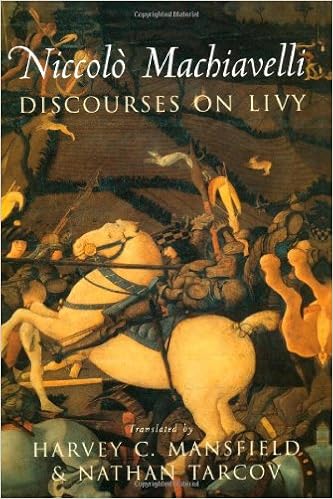 I think the group will find many useful lessons for both life and trading in these machiavellian maxims and I'm sure that the list will find plenty of fodder for debate contained herein.
Bill Rafter writes:
Those are not Niccolò's thoughts, but the author's wish as to how Machiavelli would think. The two are not the same. Also, many believe they know Machiavelli because they have read The Prince, a very short work hastily put together in three months with an expected readership of only one person, for the expressed purpose of getting a job. Because Machiavelli has become the Progressives' poster child of evil, some anti-Progressives have taken to championing him. But unfortunately they do so poorly read and for the wrong reasons.
The Discourses on the First Ten Books of Livy are Machiavelli's best work, written over three years (concurrently with The Prince) for a universal audience. The Founding Fathers of the United States all read "The Discourses" as a prelude to creating our government. It would be well worth your time.
Gary Rogan writes:
The Prince was written for, well, a Prince. One problem with applying both the original Maciavellianisms from The Prince as well as these new improved maxims is that they don't seem to concern themselves with basic competency in one's line of business outside of manipulating people. For a Prince it fits: his job is essentially to manipulate his subjects, enemies, and any threat or potential resource provider into benefiting the Prince. He doesn't personally build bridges or grow food, etc. On the other hand, imagine a plumber who is also the world's greatest student of Machiavelli but is a really bad plumber. It's doubtful he can overcome his major deficiency by simply manipulating his customers.
Dec
23
Cheap Stocks, from Stef Estebiza
December 23, 2015 | Leave a Comment
Warren Buffett's Berkshire Hathaway is on track for its worst year since 2008. Buffett can't find cheap stocks to buy. The last time that Berkshire had a down year and underperformed the S&P 500 was all the way back in 1999.
Gary Rogan writes:
I also can't find cheap stocks to buy. I don't think this is a sustainable situation and is likely to be resolved either by a crash or years of under-performing stock market. On the other hand, if Trump is likely to win Trump is likely to win, who knows whether his anti-fee trade rhetoric will outweigh his anti-regulation rhetoric in terms of impact on stocks.
Victor Niederhoffer writes:
One must balance the return on capital of companies versus the 10 or 30 year interest rate.our guests are good at compounding. And this adjusted for growth must go back to the cheapness of the p/e one thinks.
Oct
13
Kareem, from Victor Niederhoffer
October 13, 2015 | Leave a Comment
 Kareem Abdul-Jabbar has a nice knowledge of Sherlockiana in this novel about the young Mycroft in boxing, rowing, boating, and caring for his companion of color in the caribbean with a femme fatale waiting in the background. Except for the contrived heroism and prejudice of the person of color, and the contrived observations of Mycroft on character and cryptography, the book can be recommended. I don't believe we have fully considered the insights of Sherlock and Mycroft, as they relate to markets, and I'd be interested in your thoughts. Perhaps the least insights are those emanating from the spiritualism of Conan Doyle.
Adam Grimes writes:
Interesting topic and idea. I recently re-read A Study in Scarlet and there were a number of spots that jumped out as having pretty direct relevance to markets. I'm sure I'll misquote, but (roughly):
"They say genius is an infinite capacity for taking pain. It's not a good definition, but it does apply to detective work…"
Also "the world is full of obvious things which nobody, by any chance, ever observes"
It will be interesting to think about this topic in more depth, but the connections to market "detective work" seem to run strong.
Gary Rogan adds:
"The dog that didn't bark" has got to be one of the most important concepts in understanding how things really work.
Jul
29
I Am Searching for a Song, from Victor Niederhoffer
July 29, 2015 | 4 Comments
 I am searching for a musical song that illustrates the constructal law.
The constructal law teaches us that anything that flows, which is just about everything, is 'alive' because it evolves as it flows. Life is the persistent movement, struggle, contortion, and mechanism by which animate and inanimate flow systems morph to generate better access for what flows. When the flow stops the configurations becomes a flow fossil (dry riverbeds, snowflakes, animal skeletons, abandoned technology, and the Pyramids of Egypt).
From Design in Nature
Victor writes to Rorianne Schrade:
One wonders if there are any musical pieces that illustrate this idea.
Rorianne Schrade responds:
 Dear Victor,
I hope this finds you and all of your beautiful family doing well. My apologies for not getting to this sooner–you are always delving into such interesting topics. While I'm probably unqualified to comment in any depth on constructal law, I think music relates to ideas of flow in more ways than one could ever count. The first thing that pops to mind is the need to keep a single tone itself "alive" — something that in early music gave rise to all sorts of trills and embellishments for the prolongation of tones, the continuation of the melodic momentum, and the development of musical life in a composition or improvisation. Whole sets of variations could be used to illustrate this as well, the starting with a simple theme, the gradual building and elaborating all as a way of keeping the theme alive as well as creating new music. The "flow" may be interrupted with what seems like musical "death" (a "flow fossil" or "dry riverbed" as you mention– these are beautiful too, in their own ways) in the middle of a piece of music– but the flow somehow returns or survives until the end of the piece (and longer in one's mind) if I've got the right idea of what is meant here. Another illustration might be jazz improvisation on standard tunes … keeping it flowing in a single performance as well as keeping it "flowing" through the decades through variation and new interpretations… I must be oversimplifying, but thank you always for the food for though! love to you all, r.
Alston Mabry writes:
Here are some musical pieces that I find illustrate constructal flow/order/disorder.
Starting off with the more challenging stuff:
Richard Carrick: Dark Flow - Double Quartet
And the more accessible:
Claude Debussy: Dialogue du vent et de la mer
Stravinsky: Le sacre du printemps
Cliff Martinez: Is That What Everybody Wants
Scott Brooks:
Here are two metaphorical songs about the flow of life's progressions
"Wasted on the Way" by Crosby, Stills and Nash
"Nether Lands" by Dan Fogelberg
Both of these songs are two of my all time favorite.
I am especially fond of two sets of lyrics in Nether Lands where Fogelberg sings…
Anthem's to glory and anthems to love
And hymns filled with earthly delight
Like the songs that the darkness composes to worship the light
and
Once in a vision, I came on some woods
And stood at a fork in the road
My choices were clear, yet I froze with the fear, of not knowing which way to go
One road was simple acceptance of life
The other road offered sweet peace
When I made my decision my vision became my release
As I think about those lyrics, my mind wanders to the progression of life and how we end up where we are today. I think of many of the decisions, good, bad (and non-decisions that I wished I had had the courage to make) that I've made. I don't focus on how I would be happier or my life would have been different had I made other choices in my progression. For if I let me self start the "second guessing game", it will consume like a cancer.
Instead, I focus on what I've learned from all those decisions and how I can apply them to my progression going forward and, hopefully, improve my life, the life of my family, my clients and my friends.
I think that's what progression is all about.
Gary Rogan comments:
Couldn't think of anything totally appropriate but this may come close (and it's The Surfer's favorite band)
"Natural Science"
By Rush
When the ebbing tide retreats
Along the rocky shoreline
It leaves a trail of tidal pools
In a short-lived galaxy
Each microcosmic planet
A complete society
A simple kind mirror
To reflect upon our own
All the busy little creatures
Chasing out their destinies
Living in their pools
They soon forget about the sea…
Wheels within wheels in a spiral array
A pattern so grand and complex
Time after time we lose sight of the way
Our causes can't see their effects
A quantum leap forward
In time and in space
The universe learned to expand
The mess and the magic
Triumphant and tragic
A mechanized world out of hand
Computerized clinic
For superior cynics
Who dance to a synthetic band
In their own image
Their world is fashioned
No wonder they don't understand
Science, like nature
Must also be tamed
With a view towards its preservation
Given the same
State of integrity
It will surely serve us well
Art as expression
Not as market campaigns
Will still capture our imaginations
Given the same
State of integrity
It will surely help us along
The most endangered species
The honest man
Will still survive annihilation
Forming a world
State of integrity
Sensitive, open and strong
Wave after wave will flow with the tide
And bury the world as it does
Tide after tide will flow and recede
Leaving life to go on as it was…
Jul
24
The Bears, from Ed Stewart
July 24, 2015 | 2 Comments
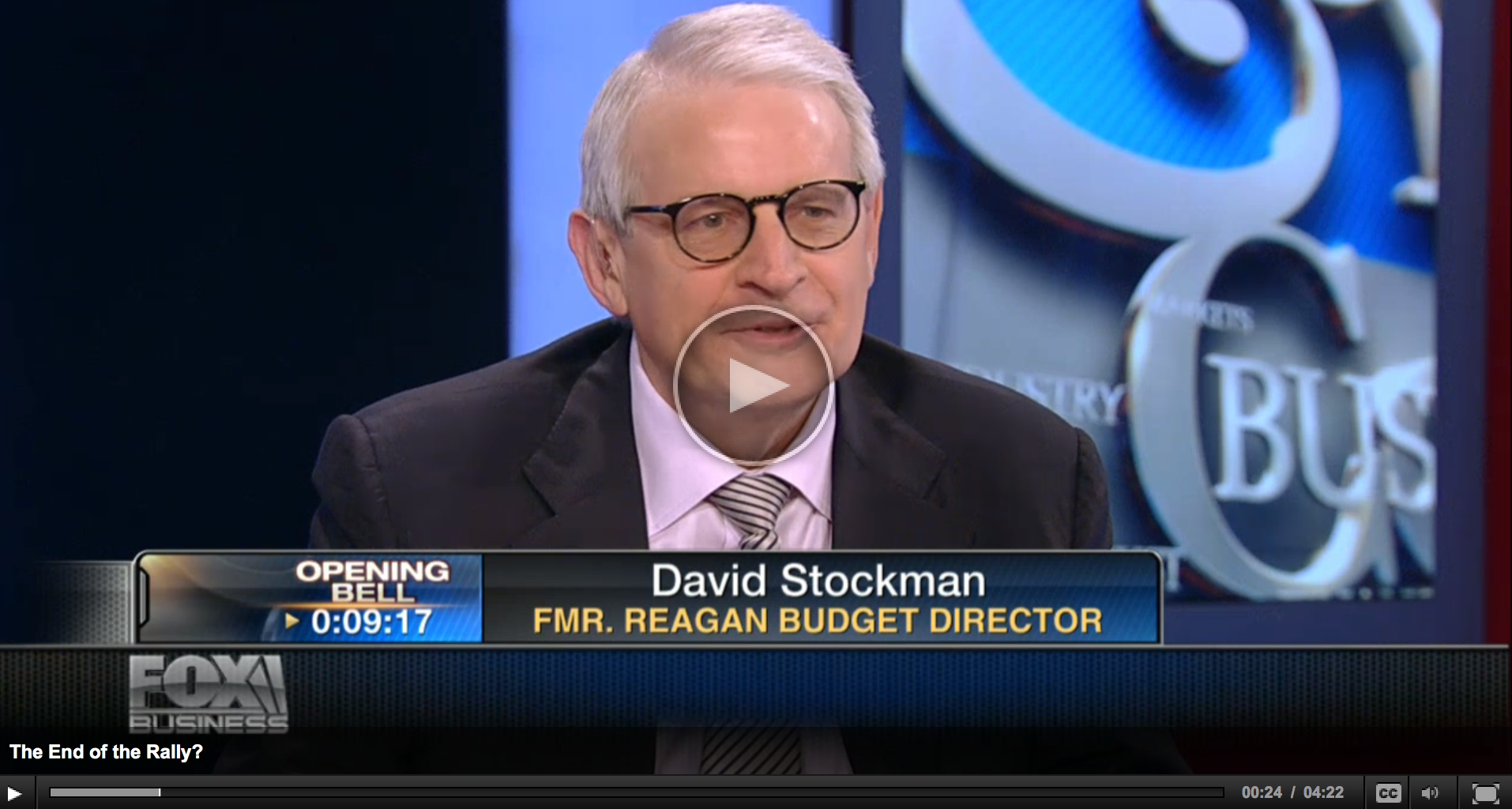 I was recently referred to the David Stockman's blog, and after reading a few articles was nearly wetting my pants in fear. The fear brought to mind an occasion, a dark, dark memory, of a time I almost blew up my account(s), shorting SP futures just as my son was a few months from being born, one of the darkest periods of my life. And while I had some numbers I was going on, the over leveraging and stubbornness that set in was based subconsciously on the rantings of people like Stockman.
I came to the conclusion that libertarianism, or listening to libertarians is one of the most dangerous investment afflictions around, I disavowed any belief that this perspective that could help me make money, and it seems I have been cured for 6 years. I'm still sympathetic to the position philosophically, but have learned to ignore the market based rantings that I had ignorantly begun to factor into my world view.
I've not done any significantly leveraged short trades since that time. If the crash comes I'm happy to miss the "upside" of that event, play the swings, and hopefully position for the next upside with surplus in high return on invested capital stocks, hopefully be positioned to short some premium, but as for rooting for the crash, "chickens come home to roost" and all that, count me out. I could care less about the opinions, even if on a 100 year time horizon (perhaps) they will be proven true.
Victor Niederhoffer writes:
Mr. Stockman came to the junta and called for Dow 10,000 a year ago, and said to hide your money in mattress as banks are not safe also. I felt compelled to counter his views with data based on interest rate versus return on capital, and a buy and hold return of 40,000 fold a century. It occurred to me that my approach is somewhat Malthusian. Earnings grow by a compounded rate based on the return on capital. This trumps algebraic opportunity costs and interest rates.
Anatoly Veltman writes:
Of course what can't be historically tested is next year's stocks profitability following a 35-year fixed income rally. That means that no history is helpful to one's S&P positioning today.
Gary Rogan adds:
Why does this situation have to be viewed in terms of the trend that led here as opposed to the set of numbers that exist today regardless of the path to the present?
Jul
24
10 Lessons, from Henrik Andersson
July 24, 2015 | Leave a Comment
Here are some lessons I've learned during the past 8 years:
1. Call options. If you truly have conviction, buy long dated call options as volatility tend to be under priced for long maturities.
2. Short selling. It is harder to short sell than most think, and almost no one is good at it. One hurdle is the drift, but there are countless more.
3. Romance. You're clearly better off to marry someone in management than to marry the stock.
4. Dip buying. The successful buys on dips and vice versa, it follows that the unsuccessful do the opposite.
5. Market. Everyone is always bearish on the market, only the super successful dares to be bullish/naive.
6. Story. Human brains are hard wired over thousands of years to build stories around your beliefs/thesis.
7. Flexibility. The super successful are always ready to change their mind/direction. Go from long to short or from short to long.
8. Art. Stock picking is as much art as science and very rarely are the smartest the best at this game.
9. Top-down. Local knowledge remains under appreciated. The top down guys ends up shorting the best companies and vice versa.
10. Management. Always invest with the best in class management, however you are better off with a good end market and bad management than the other way around.
Stefan Jovanovich writes:
Yes! Especially #10. "You are better off with a good end market and bad management than the other way around". It applies even more to private business than it does to public companies. Believe me.
Gary Rogan writes:
#10 is a lot like the Sage's favorite. When a management with a reputation for brilliance tackles a business with a reputation for bad economics, it is the reputation of the business that remains intact.
Russ Sears writes:
Most people cannot admit when they are wrong, in over their head or incompetent. If the tide turns and a business with good economics but bad management becomes a business with bad economics and bad management, then the fraud, accounting tricks and pleas for government bailouts come out. The "smartest guy in the room" is leading the way.
Jul
5
A Great Book, from Victor Niederhoffer
July 5, 2015 | 1 Comment
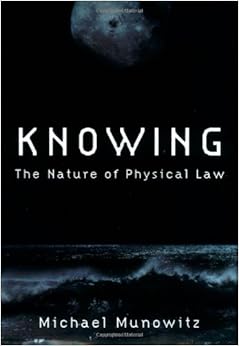 Michael Munowitz's Knowing: The Nature of Physical Law is a great book. All pairs attract and repulse based on proximity. Very relevant to bond stocks last week while away. A do si do.
Gary Phillips writes:
I was lucky enough to buy spoos/sell bonds Tuesday morning feeling that the principals had traveled far enough apart, and would begin to attract to one another. I subsequently added 20% to my position the following day as their proximity increased and the attraction between them grew stronger. Unfortunately, I only covered a portion of my position on the payrolls number, and then the balance between attraction and repulsion tilted the other way. I hope that that the principals are simply taking a "step back" (covering short bonds due to a less than robust number), and that the attraction will resume next week.
Gary Rogan writes:
Why is it more useful to look at unrelated things being attracted to one another vs. them getting to cheap or too expensive and reverting to some sort of a "mean" which would look like attraction if one is so inclined? Or if the yield on one sort of security is out of whack with respect to another and they equalize over time is this attraction or people buying for yield and selling expensive stuff?
Jun
23
Suez Doubles Down, from Stefan Jovanovich
June 23, 2015 | 1 Comment
 "Widened Suez Canal to Open in August"
This is the first significant expansion of the canal's carrying capacity in its 145 year history.
Paolo Pezzutti writes:
The Panama Canal is also expanding. The size of ships has increased. They need important changes also to port infrastructure.
"The Panama Canal expansion project (also called the Third Set of Locks Project) is intended to double the capacity of the Panama Canal by 2016 by creating a new lane of traffic and allowing more and larger ships to transit."
anonymous writes:
This latest development is positive for Israeli stocks. The project was underwritten by Egyptian citizens and they are making a bet on the absence of events that will threaten the revenue from the widened canal like and Egyptian attack on Israel or a nuclear bomb exploding in the region. And the fact the Sisi's government decided to undertake it and declared it "military led" is a concrete (no pun intended) sign that their rhetoric of being business-oriented (as opposed to say oriented to destroy Israel).
anonymous writes:
Egypt is a military dictatorship, as such there is of course no "free will" exercised by "the people" of Egypt, but it's certainly a polity. Usually when a dictatorship wants to create an investment by someone other than the core clique it has two choices: coercion or guarantees of repayment of questionable quality. After all, they can change their mind at any time and all the guarantees will be gone with the wind. So observing a non-coercive investment process in a dictatorship is useful to estimate the confidence in the dictatorship by either foreign or local investors. Often large foreign investors have substantially more leverage since they can threaten a military or political retaliation via their own government. In this case, Egyptian citizens, of their own free will, trusted the military to repay them by buying the investment certificates that sold faster than expected. While this is certainly no example of Western property rights, this means that some relatively savvy citizens in a very impoverished country (thus no money to waste) trust their leaders. This is a useful datapoint in evaluating investment and other stability-related prospects in that part of the world.
Gordon Haave writes:
What everyone is missing because (per our discussion last week) the watch and read US propaganda media is that last week the Deputy Crown Prince of Saudi Arabia, The Saudi defense minister, the Saudi foreign minister, and more importantly the Saudi Oil Minister met in Russia and inked 6 new deals including defense, nuclear, and energy deals with a goal towards a "petroleum alliance".
But hey, an Al Jazeera columnist was once quoted as saying something he shouldn't have 15 years ago, so by all means keep reading US media.
Gary Rogan writes:
Gordon, as the likely target of the last comment, let me respond. While this bit of news from All Jazz TV is valuable in it's own right (and most certainly no propaganda) and is likely to have major worldwide implication from the war in Syria, to Russia supplying Iran, to Israel, to the Saudi relationship with the US, the price of oil, Egypt, and more specifically Suez Canal, it is unlikely to have had an impact on why the Suez canal project was started many months ago. If it did, the world is even more convoluted than I could ever imagine.
May
7
The Big Fight and Trading, from Gary Phillips
May 7, 2015 | 1 Comment
 Guaranteed paydays in boxing implies there is no inherent risk premium, so taking larger risks in prizefights does not provide larger returns. Accordingly, Floyd "Money" Mayweather took very little risk last Saturday evening, and fought "not-to-lose".
Both traders and fighters are susceptible to being emotionally enticed into behavioral patterns that adversely affect their performance, so while Floyd's approach may have appeared to be "uninspired", his strategy was based on reason rather than emotion.
Throughout the night Mayweather displayed superb technique, pacing, discipline, patience, and emotional symmetry.
In the end, the punch count was close to even, but Mayweather landed more "big" blows. It may not have been an exciting fight to watch, but asymmetric punches were the difference.
Mayweather exploited Pacquiao's weaknesses while staying away from his opponent's strengths. Even though Manny was the aggressor, Mayweather took the fight to Pac-Man and pressed at the right times. When the openings weren't there, he covered up and rested.
The chair exposed naive analysis of the markets for the pseudoscience it is; with technical mumbo-jumbo, spurious correlations, and causal urban myth making it a negative-sum proposition for most to try to predict the market.
Even for non-pugilist tacticians who can make a variant perception of the market look like anything but rocket science; without proper execution, an ever-changing and idiosyncratic market will quickly render any prescient analysis less than effective.
A trader sits down in front of his screens, and faces what is arguably a much tougher and more formidable opponent. At times his opponent is very predictable and easy to hit, but the majority of the time, his opponent is extremely unpredictable and elusive.
The trader will know his opponent's tendencies and have a plan, but just like the fighter, the trader will ultimately rely on a dynamic assessment of price action and adjust his strategy accordingly.
In either game, no matter how well you have sized up your opponent and tested your strategy, you still have to go out there and fight-your-fight.
Jeff Watson writes:
Gary, great post by the way.
I might add, the "not to lose" habit is the most important characteristic of any successful speculator. When winning, one presses their bets, and when losing, one takes the losses with alacrity. Managing the losses with strict discipline will allow the wins to take care of themselves, provided one knows how to take a win. Winning is not as easy as it sounds or looks.
Gary Rogan writes:
Once again diversification is an alternative to taking losses "with alacrity", at least in some markets. If what you are buying or selling has no known intrinsic value than perhaps there is no choice but to let the market be your guide. But as the well-known metaphor of "Mr. Market" indicates, in some areas "he" is not rational and should be taken advantage of instead of being used as a guide. I know that's not how you operate Jeff (and what's the intrinsic value of onions when not in a burlap bag?), but there are alternatives.
Mar
12
Can’t Help But Think About the Contest, from Craig Mee
March 12, 2015 | 2 Comments
I can't help thinking for the competition "what is a trader" what percentage bias it may have on the outcome to have the voters' thoughts on the winning entry exposed (i.e entry with favourable early views having a greater chance to go on and win it) with ballots where the entry is positioned in the queue. This kind of thing may influence markets and prices in addition to this competition.
Gary Rogan writes:
Years ago in a college psychology course I had to devise and conduct an experiment. What it wound up being was walking up to women in a shopping center and asking them to rank the attractiveness of something like five men in photographs. In half of the attempts, they could see previous results and in the other one they could not. The previous results were fake and ranked "ugly" men quite high. The effect was quite significant, although now I'm having trouble quantifying it.
Feb
27
The Market Infrastructure Very Happy, from Victor Niederhoffer
February 27, 2015 | Leave a Comment
Very happy. February 26, 2015: Exactly unchanged to open and from open to close. Anyone who trades loses the bid asked spread and more through stops.

Paolo Pezzutti writes:
There cannot be a forecast at any moment, but there are technical situations in markets that stimulate non random moves. These patterns occur over time. Although cycles are everchanging and all good things eventually end. You have to listen to the inner music of the market, the hidden messages that it sends at certain times of the day, certain days of the week, when it moves from point A to point B in a given time and magnitude. Behaviors are recurring because of regulations, operational technicalities of big players, effects of fear and greed on the herd, impact of margin calls, announcements, rollovers, etc… It is up to your creativty, intuition and ability to scan the markets finding the hidden jems that can provide you with a meal for a lifetime. Unfortunately, this is not enough to be a profitable trader. Similarly to other endeavours in life, I would say that the technical edge is never enough.
anonymous writes:
Imagine the 1000's of shorts looking for their profit target on a day like today– "missed by a tick or two". Price moves back to breakeven– "Never turn a profit to a loss, time to exit". Price reacts down again– "but I can't afford to miss the overdue correction, It's now been confirmed". Then stopped out once again, to be repeated at the end of the day. If it held it overnight, it will gap up big the next morning for maximum capitulation.
Gary Rogan writes:
But is this intentional (teleological to get all philosophical) or just a day out of many days in which this particular relationship between the open and close holds? Almost all the other days are different, so how should one view this particular day: a totally random occurrence, somebody's clever plan, or the market itself deciding through some collective thinking process to play a practical joke on all the short-term trading participants?
Ed Stewart writes:
Gary, if for a short-term trader there are questions that leads to meals for a lifetime if studied and answered, that is one of the better ones I have seen.
anonymous writes:
The round number magnet effects must be exacerbated by the fact that many options strikes are at round numbers. Pin risk and gaming risk of options are real. Exotics make the numbers hidden but draw in large capital sometimes.
You can't see the motivations if the options are OTC and not listed. Recall the story of the large macro manager who got into a lawsuit with his exotic option brokerage firm. He was able to get prices to go just one momentary tick beyond his barrier knock-out/knock-in strike and the prospective payout was so large that the breaking of the barrier on the single tick was contested by the parties.
One of the parties offered unlimited supply on the offer to stop the breach of the strike. –Can't recall seeing who won that lawsuit. Still the fact that large players often think in terms of hidden strikes, could lead to defending and attacking of certain price levels on a given day. The exotic expirations are customized as well.
anonymous writes:
A word about round numbers & option strikes in the OTC markets.
It is interesting to consider, study & think about the following;
1. What is the 'real' round number. Consider the currency markets. As I type, the AUD USD spot FX rate is 0.78244. The June 2015 AUD futures contract is at 0.7773. The forward FX points that one adjusts the spot rate by the get the outright forward are merely interest rate differentials expressed as FX points. So, if the futures price rallies UP through the 0.7800 round then the spot market will likely be around 0.7845/50 - arguably a 'nowhere' price.. So, because the futures price incorporates the forward does that 'round' have any significance at all. Arguably, the important 'rounds' are only relevant to the core market. It is an interesting null hypothesis that currency futures rounds of a given expiry are 'artificial'… Something to chew on there.
2. Another point about the 'Strike Price Heat Maps' that our magnanimous friends in various market making institutions provide in 'research' pieces/ updates. Be aware that many, many flows are NOT included in these due to wording in various Prime Brokerage agreements, other legal documents and sometimes courtesies given to, for example, institutions in mercantilist high growth non English speaking parts of the world. So you end up just looking at poor quality partial information infected by contractual, confidentiality & 'cover my posterior' bias.
For the avoidance of doubt and to pre-empt the snipers on the list who pop their heads up when a sacred Taboo of theirs is breached, I am specifically referring to OTC markets, incomplete information provided by market makers & bias that anyone who has tested the information will have seen in out of sample results.
Feb
12
The Great Chart Debate, from Rocky Humbert
February 12, 2015 | 6 Comments
Any reader who has not looked at a price chart in the past 90 days please stand up and identify yourself. For that person and that person alone can cast a stone (at technical analysis).
Gary Phillips writes:
I look at charts all the time, but that's really not the point. For someone who is as truly blessed with the ability to determine causality as yourself, you must realize that charts are not predictive in of themselves.
Larry Williams writes:
Parts of charts are most definitely predictive. Patterns repeat. And I agree that so much of TA is misleading and based on whims and fancy yet there are parts that really do work.
anonymous writes:
Ah, the chart debate has returned.
While surely an example of survivor bias, I have witnessed industry greats use charts and technical analysis as part of their speculative arsenal. Of more interest is that these people used their own personally derived versions of these methods and not the versions available at no cost to everyone. I dare say that the creators of well known indicators have ways of using them that they would never reveal (rightly so!).
A few points about charts:
1. At the higher frequency end, in the OTC macro markets, ALL of the chart services are wrong and ALL of the chart services are correct. Each has its own price, so there is no 'right'. This probably doesn't matter to most and doesn't fatally damage the pro chart school.
2. Some market extremes are written out of history for various reasons (regulatory, legal, error, political correctness and vested interest). The move toward full electronic trading might alleviate some of these in future.
3. Commodity prices on charts…. Should we adjust them by inflation? What are we actually looking at? What are we comparing.
4. Equally spaced data? What to do with price action measured in equal intervals (say, for example, 5 minute charts) when the price doesn't change during the period but the recording software has to put a number in there so it averages, uses the last price, the first price of the next period etc…
5. There is a reason why the big quant firms have interesting individuals whose life's passion is ensuring data is clean/ accurate.
6. It is probably a fair point to state that the recording of price information has improved since, say, the 1970's. The tricks now are more to do with latency of its delivery and the subtle recursive methods some providers appear to use to set their lows and highs. As an example, watch EURUSD spot today if you have something approaching Direct Markey Access and if you watch closely enough you may note that the high as printed on your screen (for eg.) sometimes moves higher a few seconds after the price has actually moved lower. A less charitable person than I would suggest it was to ensure all the stops on the banks' electronic platforms could be said to have been done within 'the range' ( whatever that is ). I guess it might just be an optical illusion generated by my mind's inability to accept being stopped at the high. Ha!
SideBar on this last thing– one great method market makers employ to get stops done is to drastically widen their spreads when near stops. ( Much small print allows stops to be done if inside the spread for ' risk management' purposes ). This may go some way to explaining the mystery of the changing highs/lows after the fact….
John Bollinger writes in:
I don't understand. If charts aren't predictive why in the hell do you all waste your time looking at them? Do you have so much time on your hands that you can engage in frivolous pursuits at work? If you gonna talk the talk, walk the walk. If you think charts aren't helpful, STOP LOOKING AT THEM.
Rocky Humbert writes:
While I am in agreement with the inestimable Mr. Bollinger that looking at charts has utility, I would be cautious about the term "predictive."
When I go to the doctor's office, her nurse always takes my temperature. My temperature is not so much "predictive," but rather it is informational. In numerous ways, looking at charts are like taking a patient's temperature.
I wish I could claim credit for this insight, but I can't. It's from Bruce Kovner (who I still consider the best trader/investor from a risk-adjusted return perspective of the past 30+ years.)
Ed Stewart writes:
It seems to me that body temperature is predictive of future temperature change do to homeostasis. The breakout from the range where homeostasis functions is going to be predictive of body temp = ambient temp if there is not a reversal or intervention.
Rocky Humbert replies:
Fair point. But you don't need to take a patient's temperature to know that EVENTUALLY body temperature = ambient temperature.
Keynes figured that out when he wrote that "in the long term, we're all dead." (See: JM Keynes "Tract on Monetary Reform, (1923) Chapter 3)
Kovner's actual quote was in reference to so-called fundamentalists who scoff at charts. He said, "Would you go to a doctor who didn't take a patient's temperature."
Gary Rogan writes:
You don't need to take the patient's temperature nor to study medicine to know that eventually the body will assume ambient temperature, but there are clearly situations when the current temperature is highly predictive of the timing, barring an intervention. As such, this whole analogy and the corresponding point just don't work.
A more expanded quote by Keynes reads as follows: The long run is a misleading guide to current affairs. In the long run we are all dead. Economists set themselves too easy, too useless a task if in tempestuous seasons they can only tell us that when the storm is past the ocean is flat again. He was in fact arguing for short-term action based on predictions even though in the long run the economy will recover. So it a way it's almost the opposite point to what Rockstergeist indicated he was making.
Craig Mee writes:
No doubt with the right risk management you can make money trading in many ways, but surely the best outcome is to not leave plenty on the table and have a lot of what ifs in the outcome, together with an ordinary win loss ratio while still banking a healthy return. In the pursuit of excellence, it doesn't seem winning and the above go hand in hand. Though possibly for others this isn't an issue, and probably quite rightly it's all about the bottom line. Hence the saying, "trade the way that you're comfortable with".
Gary Phillips writes:
Considering the maelstrom of controversy and unchecked emotion the subject elicits, perhaps TA should join sex, politics, and religion on the list of banned subjects for this site.
John Bollinger replies:
Careful, the site will become very quiet as the best part of what is discussed here is technical analysis in one way or another as a survey of the literature will confirm.
Feb
1
Stock Market Vigilantes Create Greek Moussakis Delight, from Victor Niederhoffer
February 1, 2015 | Leave a Comment
 Stock market vigilantes create Greek moussakis delight
"Tsipras Targets Deal With Euro Area After Market Pummeling"
By Nikos Chrysoloras and Corina Ruhe (Bloomberg) — Greek Prime Minister Alexis Tsipras sought to repair relations with creditors after a week-long selloff in bonds and stocks, a move welcomed by euro area officials concerned they were headed for a showdown with the bloc's most indebted nation.
Greece will repay its debts to the European Central Bank and the International Monetary Fund and reach a deal "soon" with the euro-area nations that funded most of the country's financial rescue, Tsipras said in a statement e-mailed to Bloomberg News on Saturday.
"The deliberation with our European partners has just begun," Tsipras said. "Despite the fact that there are differences in perspective, I am absolutely confident that we will soon manage to reach a mutually beneficial agreement, both for Greece and for Europe as a whole."
Bond yields surged on Friday after Finance Minister Yanis Varoufakis said the new government will turn its back on the rescue program that allowed Greece to pay pensions and public wages for the past five years in exchange for a punishing regime of spending cuts that wiped out 25 percent of its economy.
Gary Rogan writes:
You'd think that almost 3,000 years after inventing Western Civilization they'd have enough sense not to believe the "No more bailouts, no more submission, no more blackmailing" promises of a wild-eyed radical.
Jan
29
Some Poorly Quantified Thoughts On a Variety of Topics, from Richard Owen
January 29, 2015 | Leave a Comment
 1. Average returns on equities are, to pick a number at random, 7%. But if business was untaxed that might become 10% and if sales taxes disappeared and fell to the bottom line, that might become 14%. Over fifty years, the difference reinvested would be over 20x more capital and we could all take things easy.
2. The British government likes to take "payments on account" from its non-PAYE taxpayers, thus taking prepayments on tax due before the year end. With a 2% cost of capital and vast working capital resources, this seems somewhat ungracious behaviour. Unless perhaps it has been noted by the government that most small businesses fail under a vast burden of taxes, domestic and European regulations, import and export duties, etc. and like a retail forex broker who well knows all his Ma & Pa clients will eventually liquidate under monstrous vig, in all cases novates client collateral as early as possible.
3. It has been noted that a handful of rich people control as much wealth as billions of poor do. But most of the world's poorest people have no savings at all, and thus if you summate a partial set with its values chosen to be very close to zero and compare it to another set who's numbers are not, you will obviously see a large inequality. You could just as validly say that a regular US citizen with $1,000 of savings has a thousand times as much wealth as someone in the Congo who is down to his last dollar, and present this too as being fetid and greedy.
4. "The 1%'s" per capita wealth is calculated as a capitalised mean sum, with the average net worth of "the 1%" in the US being around $15-20m. But every hundredth person you meet does not have a balance sheet close to that, as the mean and median are very different. Thus the media creates a perception of "the 1%'s" situation that is totally unrelated to reality.
5. It is a great shame that there are so many poor in the world. But what have the free markets wrought in this respect? By the power law of the distribution of wealth, just Bill Gates' and Warren Buffett's wealth alone must represent a significant percentage of "the 1%s" stash. It so happens that these two individuals have donated, or earmarked for the future, close to 100% of their accrued savings to philanthropic causes. Bill Gates is one of the most accomplished businessmen on the planet and he has thrown his labour, intellect and organisational skills in for free. In contrast, had they been taxed to the utmost on the way, might it be reasonable to expect that their funds would have dissipated across a variety of government departments of dubious efficiency?
7. Indeed, if "the 1%" control around $20tr of the USA's $60tr of wealth, and Buffett and Gates are packing $150bn between them, that's already 0.75% of the dough being hotly debated that is in fact earmarked for charitable purposes.
8. If one continued this calculation all the way down the wealth tree, excluding capital that's either pledged for philanthropic purposes or being reinvested in fixed capital in order to create better living standards for the population (something consistently hidden in the hedonic adaptation of inflation statistics), what percentage of their wealth do the megarich actually consume?
9. Are the megarich not in fact spending most of their lives competing for their table ranking on the Forbes.com website, each download of which is worth about 0.001 cents? Should we not be grateful for this self-deception on their and their no-doubt heavily plastic-surgeried wives and girlfriends behalves?
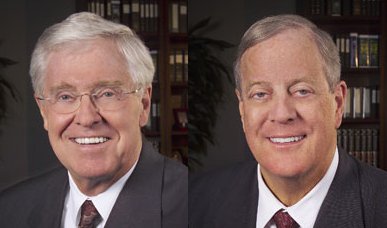
10. These notes may or may not have been sponsored by the Koch Brothers.
Gary Rogan writes:
There seem to be at least two aspects to the "growing wealth disparity": (a) To what degree the "elite" controls new wealth creation through illicit/illegal/immoral means (b) To what degree the highly intelligent/educated/those of "proper" disposition are able to earn more than the rest simply because they are better suited to thrive in today's economy. Usually, the vast majority of those who talk about this subject of the "growing inequality" have an agenda to capitalize on wealth redistribution rhetoric and want to attribute wealth inequality to the simple existence of capitalism, and have no intention to solve "the problem" nor even care about it otherwise.
Jan
20
Interactive Brokers Lost $120 Million, from Gary Rogan
January 20, 2015 | 2 Comments
 The situation with Interactive Brokers is somewhat analogous to Uber vs. the medallion holders, although not necessarily in the speed of execution. For close to a hundred years or whatever (since 1937 in NYC) some poor shmucks had to buy a medallion to be able to do business. Some saved for years to buy one, others watched the appreciation of their prized property with great satisfaction. Then wham, Uber comes along and the system falls apart. Should there be medallions? Not in a free society. But if they exist, should their value be allowed to be drastically reduced because the collective government action suddenly allowed to a politically connected company what was considered a crime before? Not clear.
Jan
12
Airplane Crashes and Trading, from Chris Tucker
January 12, 2015 | Leave a Comment
 On December 20, 2011, at 9:38am, Jeffrey Buckalew, a successful investment banker and pilot, departed Teterboro, NJ bound for Atlanta in his Socata TBM 700 turboprop along with his wife, their two children, a business associate and the family dog. By 10:05, they were all dead.
The NTSB declared the probable cause(s) of the accident to be:
The airplane's encounter with unforecasted severe icing conditions that were characterized by high ice accretion rates and the pilot's failure to use his command authority to depart the icing conditions in an expeditious manner, which resulted in a loss of airplane control.
Happily, I wasn't working that morning, but I worked that sector for 25 years and the controller who was working the aircraft when it went down is a friend of mine.
The accident highlights a couple of issues that are highly relevant to trading. First, the threat of complacency which can lead to a failure to recognize that a dangerous situation is developing, and second, the need to take action to correct the situation immediately. We must be vigilant and nimble.
This excellent video by AOPA's Air Safety Institute gives a thorough discussion of the accident and its causes. I was particularly keen on the last two minutes or so (transcribed below) and it's insights. In the first paragraph, replace the word aircraft with "systems" and aviation and flying with "trading" and you can see what I mean.
Sometimes experience harms more than it helps. Rather than making us more vigilant, it can lead to a sort of comfortable complacency, not only about the dangers we face, but about our own capabilities and those of our aircraft. Complacency is arguably aviation's most common vice, and one of the hard truths about flying is that it's sometimes punished with extraordinary severity.
The pilot of N731CA was in the clouds for a total of approximately five minutes. Roughly two minutes passed between his first indication to ATC that icing was a problem and the beginning of the final plunge.
It takes time for the human mind to spin up when suddenly confronted with a problem. It takes time to recognize that things have changed and process the idea that an extraordinary response is called for. All during that time, part of the mind is fighting against the new reality, arguing "stay the course".
Two minutes isn't much time, but it's enough time. Enough time to make a decision, declare an emergency and reverse the climb. Or, just push the nose over and worry about ATC later.
Or at least, that's what we'd like to think. The truth of the matter, which is that two minutes really isn't much time for someone who is surprised, conflicted and almost certainly frightened, is decidedly less comforting.
Anatoly Veltman writes:
Yes, there is an adage that biggest losses come immediately following biggest gains. It's also possible that big gains may follow big gains. My explanation is that what brought the initial big gains was the increase in volatility.
Gary Rogan writes:
So if either big losses or big gains follow big gains what is one supposed to do after big gains?
Stefan Martinek adds:
Theoretically, we should de-leverage and adjust for volatility (I assume our initial position was volatility normalized). Practically, doing nothing and ignore some vol. spike usually does not hurt as much as believed especially for long vol. strategies. Exit/adjustment is therefore different if strategy does well in storms or if it is killed by storms. Some trading storms are good.
Jan
9
Speculator Wolves, from Laurel Kenner
January 9, 2015 | 1 Comment
 To what extent are speculators like the wolves in this very interesting brief documentary on Yellowstone's ecosystem?
Gary Rogan writes:
Clearly the both the wolves and speculators improve their respective ecosystems, so in that sense they are alike. As far as I can tell speculators provide one main benefit to the world: they remove irrational anomalies from markets by making a profit off any irrationality they are capable of perceiving. They also provide liquidity under difficult circumstances, which could be thought of as a special case of the previous function. Is it the same as controlling the overgrazing deer? Seems like a stretch, but if I were on debate team where I'd have to argue this point, I'm sure I could come up with some plausible arguments.
Jan
5
McDonalds Fail, from Ed Stewart
January 5, 2015 | 2 Comments
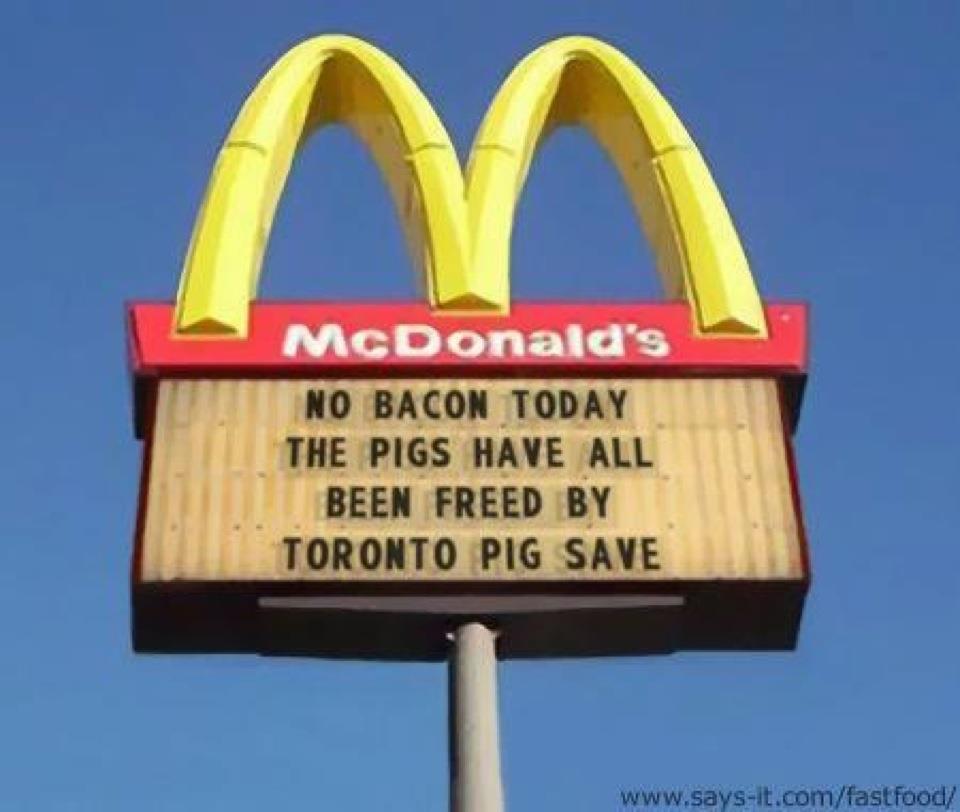 "Millennials regard McDonald's as unhealthy, outdated and downmarket"
I Noticed the dismal quality and service on a road trip in 2013, were I tried all the "new" menu items and found them worse than sub-par.
Ive noticed that many of the Downtown McDonalds (Chicago) are underclass hangouts nearly 24/7, to the extent I would not take my kids to one, period. Even the neat "Rock n Roll McDonalds" was recently hit by a flash mob, as you can see here.
I was happy to see the rumor that the Ackman might be targeting the stock, would love to see a shake-up including (first thing) removal of the failed CEO before things get worse. And I'd bet that there is a mountain of bureaucracy to cut.
Gary Rogan writes:
The first article seems like a not-too-subtle Shake Shack PR piece. The Shake Shack propaganda is suddenly everywhere, helped by the slow news period when the IPO was announced and its NYC roots. The hamburger marketplace is just crap, pure and simple. It's saturated (with fat and otherwise) and a lot of exploration of alternatives has occurred due to the age and low barriers to entry of the basic concept. There is not that much to be done about McDonalds unless someone serendipitously hits some goldmine with some random menu item or trend. It may make sense for them to be associated with the urban delinquents if a lot of them congregate and eat there. Or maybe go full Angus and get the upscale clientele. Probably six of one, half a dozen of the other. There are better places to fish for both growth and value.
Ed Stewart writes:
I agree, it was definitely a Shake shack PR placement. However I also agreed with most of the criticism it offered of McD, including the notion that niche, more targeted business models are more workable given the transformation from a relatively homogeneous population.
At this point I don't think the underclass is big enough to sustain a chain as big as McDonalds in the USA. The issue is that when they become a critical mass, they start to lose everyone else. Plus, the antics increase operating costs — stores with that situation become tainted very quickly.
Chipotle has been a great success for investors, but it is a health disaster. It's amazing that it is mentioned as one of the new "healthier" options.
Gary Rogan writes:
I guess I'm simply looking at the present situation and not seeing much of a nationwide opening, either in terms of "fixing" McD or some deterministic success for a wide-footprint competitor.
McD and pre-existing large competitors have penetrated every nook and cranny of the US market (and quite a bit of the world's). This is not new. McD historically has been somewhat experimental as replicating local menu item additions and any other gimmicks on a wider scale.
There are "upstarts" like In-N-Out that are actually more than half-century old that have expanded greatly in the west and are still rapidly expanding. Should any gimmick like serving wine with your burger work anywhere they will copy it in a nanosecond or someone else will. Yes, it's possible that there is some solution either for an existing player like McD or a new entrant that will produce a Chipotle-like effect nationwide, but knowing in advance that anything in particular will work in the nationwide, and more so in the world-wide market seems like a risky bet.
As a rule, restaurants fail. Fast restaurant expansion plans usually fail. Once in a blue moon something succeeds and your availability bias will always move you in the direction of pointing at it and saying "See!", but it's still risky to predict a great success no matter what they do.
Dec
27
Speculative Advice from Guys & Dolls, from Richard Owen
December 27, 2014 | 1 Comment
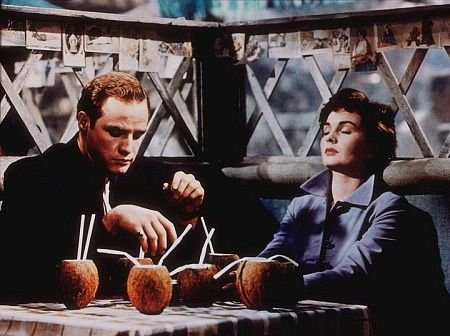 The film version of Guys & Dolls is often repeated during the holiday period. It contains some sage advice on gambling, handicapping and, if you so desire, how to run a floating craps game without getting caught. It features a thirty-year-old Marlon Brando at the height of his acting powers as big time gambler Sky Masterson. Brando was born in Omaha, Nebraska and so the financial advice should be reliable.
Here are some apposite quotes:
I know it's Valentine, the morning works look fine
You know, the jockey's brother's a friend of mine
And just a minute, boys I got the feedbox noise
It says the great-grandfather was Equipoise
I tell you Paul Revere, now this is no bum steer
It's from a handicapper that's real sincere
I'm pickin' Valentine cos on the mornin' line
The guy has got him figured at five to nine
So make it Epitaph, he wins it by a half
According to this here in the Telegraph
—
Nathan: Not Sky. He doesn't lend money. He bets money! So why don't I bet with him? Why don't I bet a thousand with him on something?
Nicely: You would bet with Sky Masterson?
Nathan: I am not scared. I am perfectly willing to take the risk, providing I can figure out a bet on which there is no chance of losing.
—
 Nathan: Offhand, would you say that Mindy sells more cheesecake or more strudel?
Sky: Going strictly by my personal preference, I'd say more cheesecake than strudel.
Nathan: For how much?
Sky: What?
Nathan: For how much?
Sky: Why, Nathan! I never knew you to lay money on the line. You always take your bite off the top.
—
Sky: Nathan, let me tell you a story. On the day I left home to make my way in the world, my daddy took me to one side. "Son," my daddy says to me, "I am sorry I am not able to bankroll you to a large start, but not having the necessary lettuce to get you rolling, instead, I'm going to stake you to some very valuable advice. One of these days, a guy is going to show you a brand-new deck of cards on which the seal is not yet broken. Then this guy is going to offer to bet you that he can make the jack of spades jump out of this brand-new deck of cards and squirt cider in your ear. But, son, you do not accept this bet because, as sure as you stand there, you're going to wind up with an ear full of cider. Now, Nathan, I do not suggest that you have been clocking Mindy's cheesecake.
—
Sky: But if I wish to take a doll, the supply is more than Woolworths has got beads.
Nathan: Not high-class dolls.
Sky: There's only one class: interchangeable.
Nathan: A doll is a doll?
Sky: All dolls, any doll. You name her.
Nathan: Any doll? Will you bet on that? Will you bet $1,00 bucks that if I name a doll, you can take the same doll to Havana with you tomorrow?
Sky: You've got yourself a bet.
Nathan: I name her.
Sky: Her?
Nathan: Sergeant Sarah Brown [head of the Christian mission].
Sky: Daddy! I got cider in my ear.
—
 Arvide: What are you unhappy about, son?
Sky: Gambling.
Sarah: Apparently you're a successful gambler.
Sky: Is it wrong to gamble, or only to lose? I'll come back for help when I'm broke.
Sarah: Don't misunderstand. It's just so unusual for a successful sinner to be unhappy about sin.
Sky: Besides, my unhappiness came up very suddenly. Maybe it'll go away again.
Arvide: We can keep you unhappy, son. Give us a chance. You don't look like a gambler at heart. What made you take it up?
Sky: Evil companions. Evil companions who are always offering me sucker bets.
Sarah: Just what is a sucker bet?
Sky: A bet that is reserved for suckers. For a gambler to get sucked in on such a bet is most humiliating. But to lose it means that you are marked for a very long time as a chump. You must go all out to win it.
Sarah: Is that so terrible, to be marked as a chump?
Sky: Among my people, being a chump is like losing your citizenship. A chump is an outsider, a yokel who will buy anything with varnish on it.
Sarah: Like a solid gold watch for a dollar?
Sky: This is a real chump.
—
Sky: Only one thing has been in as many hotel rooms as I have - the Gideon Bible. Never tangle with me on the Good Book. I must have read it a dozen times.
Sarah: If all that was no help to you…
Sky: Who says it wasn't? In one of my blackest moments I came up with a three-horse parlay: Shadrach, Meshach and Abednego.
—
 Big Julie: And since I've been cleaned out of cash, I announce that I will now play on credit.
Nathan: Big Jule, you cannot imagine how exhausted they are. Especially on a non-cash basis. Me, personally, I'm fresh as a daisy.
Big Julie: Then I'll play with you.
Nathan: But I am not a player. I am merely the operator.
Big Julie: You been raking down out of every pot. You must have quite a bundle.
Nathan: Being I assume the risk, is it not fair I should assume some dough?
Big Julie: Detroit, I'm gonna roll ya, willy or nilly. If I lose… I'll give you my marker.
Nathan: And if I lose?
Gangster: You will give him cash.
Nathan: Let me hear from Big Jule.
Big Julie: You'll give me cash.
Nathan: I heard.
Big Julie: Here's my marker. Put up your dough. Anything wrong?
Nathan: "IOU one thousand. Signed X." How can you write "one thousand" but not your signature?
Big Julie: I was good in arithmetic but I stunk in English.
Nathan: Here. This'll put you through Harvard. Big Julie: I'm rollin' the whole thousand. And to change my luck, I'm going to use my own dice.
Nathan: Your own dice?
Big Julie: I had 'em made especially in Chicago.
Nathan: I do not wish to seem petty, but may I have a look at those dice? But these dice ain't got no spots on 'em. They're blank.
Big Julie: I had the spots removed for luck. But I remember where the spots formerly were.
Nathan: You are going to roll blank dice and remember where the spots were?
Big Julie: Detroit… do you doubt my memory?
Nathan: Big Julie, I have great trust in you.
—
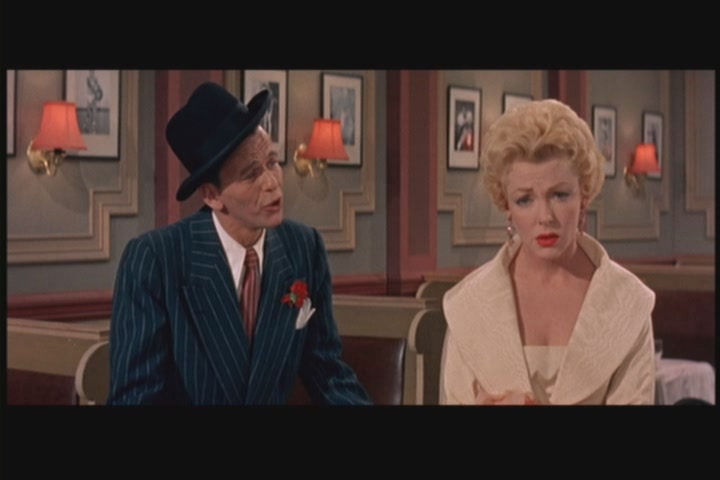 A lady wouldn't flirt with strangers
She'd have a heart, she'd have a soul
A lady wouldn't make little snake eyes at me
When I've bet my life on this roll
So let's keep the party polite
Never get out of my sight
Stick with me, baby, I'm the fella you came in with
Be a lady Luck, be a lady, Luck, be a lady Tonight
Jeff Watson writes:
Those are such great quotes. Runyon once said that all life is 6:5 against. You can make a hundred billion dollars like the Walton family has done, but Runyon's 6:5 grind ensures you will ultimately lose.
Dec
23
Here’s a Pretty Kettle of Fish, from Victor Niederhoffer
December 23, 2014 | 1 Comment
Here's a pretty kettle of fish. Suppose you have two forecasts that are disparate. One is bullish and the other is bearish. For example it's up 100 over 4 days. That's bearish. But it's up 4 days in a row, that's bullish. How to combine? There's a bayesian approach, a regression approach, and an inverse variance weighted approach, and a practical approach that Zarnowitz found. Just add up the number of bullish and bearish and that's your forecast. But what's your best way of solving same? The answer might provide a meal for a lifetime. I asked Stigler this question 15 years ago, and he thought it was a very good question, and I've not seen a good answer yet.
Alex Castaldo writes:
I would start with Diebold and Pauly: The use of prior information in forecast combination.
Gary Rogan writes:
There has got to be some way of incorporating the rare nature of one of the set of circumstances. Clearly 100 points is more unique than 4 days. Does this carry any special weight? Also there is a very large number of other possible "circumstances", like time of day, month, year, what the future portends if prior history was similar during this time of day, month, year. where are we in the economic cycle? With respect to various moving averages? What's the money supply and it's history? What has the price of oil and any number of other thing doing and where is it? And what matters more: all these other things or the one unique thing?
anonymous writes:
You're mixing apples and oranges. The premise for regression and related approaches is that there is a fixed law that can be discerned, or at least modeled, in such a way that it does not vary in any dimension. Whatever the model/rule was 50 years ago is still what it is today—unless of course, additional information either disproves the model or allows for its refinement. Either way, it's time invariant. Bayesian analyses are different by definition. Unless the prior is the same, the result will be different. Since priors will change with the passage of time, the analysis is time-dependent. You might try to specify the Bayesian model as fixed at any one point in time and try some form of combination, but since the moment you do that, the prior will shift and the exercise becomes worthless.
Dec
15
The Differences in Trending Between Stocks and Commodities, from Gary Rogan
December 15, 2014 | Leave a Comment
Is this really true in general?
"The most important thing you need to know about commodities" :
If you have traded stocks for a while, you probably have a sense of when a move has gone far enough to be due for reversal, and you're probably used to seeing longer term positions more or less alternately green and red on the day over any reasonable stretch of time. Be careful, because these (correct) instincts will work against you in commodities, which can trend and trend and trend and end in blowoff moves that go far beyond what anyone expected. Simply put, if you come to commodities from a stock trading background, temper your urge to fade moves…
There was a time in market history when S&P 500 traders (experienced, professional traders) flocked to the soybean pits to daytrade, thinking they could apply their ability from one market to another. That incident ended badly for the S&P traders (but very well for the locals in beans!).
Bill Rafter comments:
Futures are mean-reverting in the shorter run, and that also applies to equity indices. Much less so with individual equities. That being said, that statement does not apply to squeezes in either. Futures moves tend to be linear, whereas stocks and their indices tend to be parabolic. There are logical reasons for these, but not enough room here to write them.
Dec
2
An All Seeing Eye Could Write a Novel About What Happened, from Victor Niederhoffer
December 2, 2014 | Leave a Comment
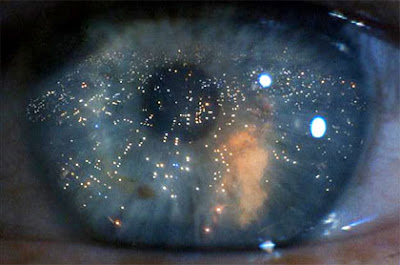 An all seeing eye could write a novel about what happened today. Some lessons seem to cry out. Buy on the announcement of the bad news. Gold lost the vote in the mountains, and oil lost the OPEC meeting amid talk of 40 buck oil. They both sent up 10% or so from low. The first day of the month is the most bullish day. Great. Too many people know it. Great time to sell when it don't open the right way. Bonds, nas, and dax finally went down after 12 or 13 of the last 15 up. Nothing goes up forever even stocks and bonds. Gold's price up 50 bucks from its overnight low has nothing to do with deflation. It's beautiful, useful, and a hedge against evil. When the battleship is leaking, that's the time to buy. Commodities all around at 5 year low. They're up 3 or 5% today.
What other things do you see that the all seeing eye should note?
anonymous writes:
The sneak attack has to come at night, on a holiday, when the Americans, and only the Americans, are eating turkey and on holiday, stuck in airports.
Ken Drees comments:
The grains at the end of the summer–indeed.
Gary Rogan writes:
Something needs to be done to avoid the supposed "government shutdown" by Dec. 11. Talking about it could provide some mild market-related entertainment.
Steve Ellison writes:
Silver made both a 20-day low and a 20-day high on Monday. Going back to 2006, I find no previous occurrences of such an event.
Craig Mee comments:
It would appear the commodity turn around was a function of a Friday Monday suicide run created by combined single factors and then astute cover, not by a function of any meaningful low being in and a return to global meaningful growth.
Duncan Coker writes:
March Chicago wheat had a robust move to the upside almost at limit on Monday, which in this case was not mimicked by the other grains, in other words grain spreads got a lot wider.
Jeff Watson comments:
Yesterday, the spread between beans and wheat narrowed, and is still narrowing, while the spread widened with corn. Spreads in wheat stayed pretty much in line. Due to arcane exchange rules for the delivery in grains, there is much gamesmanship in the front month that's ready to expire. The gamesmanship comes from the cash side of the business.
Nov
4
Gross Says Deflation a ‘Growing Possibility’ Hurting Wealth, from Victor Niederhoffer
November 4, 2014 | 1 Comment
A most compelling talking of one's book, by a collectivist.
"Gross Says Deflation a 'Growing Possibility' Hurting Wealth":
By Mary Childs Nov. 3 (Bloomberg) — Bill Gross, in his second investment outlook since joining Janus Capital Group Inc., said deflation is a "growing possibility" as governments worldwide are struggling to create inflation and stimulate growth. Central banks around the world have made "a damn fine attempt" at fueling inflation, yet their efforts have pushed up financial assets, rather than prices in the real economy, Gross wrote in his outlook titled "The Trouble with Porosity"…
Gary Rogan writes:
"Balanced budgets are increasingly in vogue". What universe is he living in? And has anyone ever explained to him that when you have deflation you gain wealth without earning a dime?
Nov
3
Some Lessons Learned from the Last Week, from Victor Niederhoffer
November 3, 2014 | 1 Comment
 Here are some lessons learned from the last week (2014/10/24 to 2014/10/31):
1. Potential energy is very great for a rise in stocks. Any big central bank, any big pension fund, any big asset allocator can raise the proportion of its mix of bonds and stocks by a little, and the market can jump 3 or 5% just on the thought.
2. It's easier for a market to go up 10% from a low, then to go down 10% from a high. And improvements and much more likely than falls.
3. All my people know how to make money after the market is going down, but none of them know how to make money after the market has gone up. It's just as bullish after the latter as the former.
4. The worse the news, the better it is for the market as weak hands have got out.
5. When you are way down on a position and it goes to a point of manageable loss or worse yet break even, it's a great time to double up rather than get out.
6. Markets like to go to a round number. Crude broke 80 and gold broke 1200. And SPU broke 2,000 among others. The rub is what will they do when they get to the construals. In two cases they broke right through, in the crude case, they went right back up.
7. If you put in positions of size over night, you are a goner. Either you'll make a small profit, or you'll be wiped out, so you have to stay awake the whole time, for 24-7 which is impossible.
8. When the market refuses to hit your limit for a very long time but touches it the way my bond positions from the long side did often last week, prepare for a big loss.
9. The ratio of stocks to bonds is bounded on one side but not on the other.
10. The unexplained strength in the market on Thursday, was a precurse to Japanese activity on Friday.
11. After a streak of wins you are likely to lose if you try the same thing over and over again.
12. Having positions in many different markets is very dangerous as they all can go against you, especially temporarily in an effort to force you into oblivion. The markets often have a theme and if you play the theme in many different markets, they'll kill you in an ensemble when they go against.
13. The gold bulls, the doomsday crowd, with all their bravado is more pusillanimous then a mouse as witness a 6% decline in gold in a week.
14. Ephemeral things like protests in Hong Kong are opportunities to buy.
15. The favorite thing for market commentators to do before an election is to say that the market does better when the agrarian reformers win rather than the enterprises. Yes, that's true, when an agrarian is going to win, the market will go down 10% in the weeks before, and when an enterpriser is going to win, it will go up 10% in the weeks before.
anonymous writes:
Great points Victor, maybe add:
Have something in your arsenal for markets that are trading not in your preferred setup mode, (mean reversal, say, or breakout) but are exactly where your fundamental bias lies. A good example this week was dollar yen for me after FOMC. It was effectively the strongest recent currency against the weakest but nothing was done on the long side here as my trading tool arsenal was too rigid and zero opportunity presented itself. The rocket took off and the trail is still burning.
Gary Rogan writes:
Up until about 2009 I have been a great stock picker, but since then my record has not been too good. But my mental commitment to never sell other than to balance the gains imposed on me by buyouts has been a pretty good strategy. Most of the winners from way back when are still with me and they don't know any better, they just keep rising. Unless Alan Abelson is proven right posthumously I expect the latter to continue.
Oct
30
Minor League Companies, from Stefan Jovanovich
October 30, 2014 | 1 Comment
 "For others who did make it to the major leagues it took 5 and even 10 years longer to grow to the necessary maturity and capability. That was what the industrial and minor leagues were for; it is what college baseball now does."
George Brett, who is in the Baseball Hall of Fame and owns the highest season batting average in post WW-II baseball, has a career batting average of .305. He ranks 16th among baseball players of all time in career hits.
But, in his four years in the minor leagues, he never once hit above .300.
He needed the time to grow up to become great.
P.S. I still want the Giants to win (once a Giants fan, always) but I do love the Kansas City team; I hope it goes 7 and Tim Hudson gets his ring before he retires.
Victor Niederhoffer writes:
Are there any companies like that which become good buys after 5 years of mediocrity?
Gary Rogan writes:
It's rare, but if it does happen it's only when there is a new CEO. Analogous change doesn't seem possible with individual human beings.
Sep
22
Nobel: QED we’re always bad, from Kim Zussman
September 22, 2014 | 2 Comments
 "Nobel winner Fama: Active management 'never' good":
Eugene Fama, the University of Chicago investing researcher who won the Nobel Prize in economics last year, once again warned investors against the lure of active management.
"The question is when is active management good? The answer is never," Fama said to laughs Thursday at the Morningstar ETF Conference in Chicago .
"If active managers win, it has to be at the expense of other active managers. And when you add them all up, the returns of active managers have to be literally zero, before costs. Then after costs, it's a big negative sign," Fama added.
He's known as the father of the efficient-markets theory, which says that asset prices reflect all available information; investment managers can never truly get an edge.
Fama dismissed the idea that it was possible to pick the best managers.
"The good ones might be good or they might be lucky. The bad ones might be bad or they might be unlucky. We can't really tell the difference," he said. "I don't know if it would ever make sense, even if the fees were zero, I don't think you'd be better off because you'd be investing in an undiversified way."
Read More Economy weak because of 'stupid' policies: JPMorgan pro
Asked about Warren Buffett's long-term record of picking good companies, Fama said the Berkshire Hathaway (BRK-A) chief actually agreed with his index-based thesis. Buffett said recently he actually has directed much of his fortune to be placed in passive index funds after he dies.
"He's, like, my hero," Fama said. "What he says is, 'I can pick a company every couple years, but if you have to form a portfolio, you're better off going passive.'"
"All the behavioral people say the same thing," Fama added. "In the end, they realize that the game of doing something active is fraught with problems."
Fama was also asked about hedging against big crashes, like what happened to the markets in 2008. Attempting to protect against them, he said, was the unwinnable game of market-timing.
"If you sold when the market crashed, you made a big mistake, and if you saw it coming you're a genius," Fama said.
Gary Rogan writes:
Everything that The Sage deems right and proper will happen after he dies, the charities, index investing, who knows what else. I guess it's no longer politically correct to say "Après nous, le déluge".
The statement "If active managers win, it has to be at the expense of other active managers. And when you add them all up, the returns of active managers have to be literally zero, before costs." is probably mostly correct but given that some active managers are also activist managers it's not completely correct. Also imagine that every single person in the world was an index investor, that would be an absurd situation where nothing in particular but the inflow of new money would determine the price of all stocks. And still, if the average of all managers, aren't some managers better than indexing? At the very least Fama could say that no person is capable of either being or choosing a better-than-average active manager, but he isn't actually saying this.
Bill Rafter writes:
That's a poor logical argument by the good professor. While Dr. Fama may be right that before costs the average return of all active managers must be zero, clearly it is possible (if not likely) that there will be serial winners and losers. Speaking only of the latter, several years ago we were asked to propose solutions to a shop that had managed to underperform the S&P for every one of the prior 15 years. They did not like our proposals and also rejected proposals from other research providers, continuing with their own methods. They are now 0-18 versus the S&P. Since it is possible for some to get this investment "thing" totally wrong, it is perfectly logical to assume that some others have better than average performance with consistency.
anonymous writes:
In the case of Buffett you might ask: cui bono? His non Berkshire index assets could fill an Omaha thimble. Is it not the same press release as Betfair put out about their fixed odds versus exchange book on the Scots referendum?
Sep
16
Poor Charlie’s Almanack, from Gary Rogan
September 16, 2014 | 1 Comment
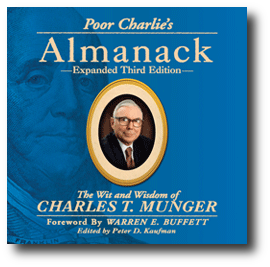 I now recall that Victor once mentioned that Charlie Munger wrote about him in his book, but I had forgotten about it, and it was a surprise to see Victor's picture and a very complimentary commentary about him and "Niederhoffing the Curriculum" in Poor Charlie's Almanack.
The book is not new, it's from 2006 but I find it worthwhile. Some day I'll resolve the cognitive dissonance between Stefan's experience-based opinion that Munger is evil and the relatively useful book in which he doesn't appear to be.
Sep
15
Do Random Paths All Lead to the Same Place, from anonymous
September 15, 2014 | Leave a Comment
 Shades of Galton….
In his fourth-floor lab at Harvard University, Michael Desai has created hundreds of identical worlds in order to watch evolution at work. Each of his meticulously controlled environments is home to a separate strain of baker's yeast. Every 12 hours, Desai's robot assistants pluck out the fastest-growing yeast in each world, selecting the fittest to live on, and discard the rest. Desai then monitors the strains as they evolve over the course of 500 generations. His experiment, which other scientists say is unprecedented in scale, seeks to gain insight into a question that has long bedeviled biologists: If we could start the world over again, would life evolve the same way?
Stefan Jovanovich writes:
The absence of time's arrow is fascinating. The "fittest" compete in a world where the rules are constant and invariable - "meticulously controlled" - while everything we know says that the rules are always changing in ways that even we brilliant humans fail to predict. Still worse for the purposes of experiment, the rules sometimes instantly and violently, even as they obey all of our entirely predictable laws of physics.
Ralph Vince comments:
This has nothing to do with "fitness," and everything to do with randomness.
Take X scenarios. At each discrete point in time, they branch into one of these X scenarios, such that after Q discrete periods, you have X^Q branches.
Your "expectation," (not in the classic sense) is the sorted median outcome (whereas the classic sense expectation is the probability weighted mean outcome, and I contend that in the limit, i.e. as Q->infinity, they converge *).
About this sorted mean outcome (at QP0, in the paper this thread pertains to) there is a vast region of similar-outcome branches. It sounds to me as though this experiment has lass to do with evolutionary "fitness" and more to do with artifacts of expectation in finite time.
I am working on a proof of *, but working on it with respect to continuously-distributed outcomes (as opposed to discrete "scenarios") as well as continuous(though fininte) time, rather an discrete increments of time to Q.
It is a struggle.
Mr. Isomorphisms adds:
This may not be what you're looking for in proving *. But the other day I worked out that you can exploit the "soft max" identity (seen in tropical geometry and elsewhere) to get analytic formulae for the median, third-from-top, etc. (only with log base ∞) which might get you where you need to go.
max = log_t ( t^a + t^b + t^c ), t going to infinity
min = log_t 1/( t^-a + t^-b + t^-c ), t going to infinity
second_max = max( {a,b,c} - max({a,b,c}) )
With recursion you can get all the way to the middle. (Now since we've turned the median into a continuous function we can take derivatives, which I haven't simplified or played around with since I realized one can do this. But I don't think that relates to your * — just hoping the method would.)
Steve Ellison comments:
Regarding Shane's original question, yes, there is a phenomenon known as evolutionary convergence. Isolated areas with similar conditions often have similar life forms that developed independently. For example, cacti originated in the Western Hemisphere, but there are plants that originated in Eastern Hemisphere deserts that also store water and have spiky exteriors.
Gary Rogan writes:
Clearly there are niches in the environment, just like there are in the economy, the market, the arts, sports, etc. It seems self-evident that a species that thrives on a Pacific island is likely to be different from a species being able to survive in the Arctic or at the bottom of the ocean. Not having "a single, cannibalizing species inhabiting the planet" only speaks to the niches in the environment not some complicated problem with evolution.
Ralph Vince adds:
Perhaps we DO, in effect, have one, cannibalizing species, depending on how broad the field of view of our lens of examination.. How many animal life forms on the planet have but one eye? "Evolution" having eliminated that not-so-robust construction in all earthly environments. Is our notion of "species," which we believe to exhibit a vast array of life forms, only show us carbon-bases life forms with, at most, five senses. In that sense, is a penguin so much different from a scorpion from a human being? The notion itself of "food chain," with such biochemically similar life forms, is, in effect, an exercise in cannibalism.
Gary Rogan writes:
Since the evidence points to life arising or being successfully introduced to Earth just once, it's not surprising that we only have carbon-based life forms. And just because a scorpion shares a lot of genes and proteins with penguins doesn't mean they are of the same species, simply based on the definition of the word: to be so classified they'd have to be able to interbreed. I'm now no longer sure what the point is, but hopefully "descent with modifications" is not in question.
Ralph Vince clarifies:
My point simply put, is that I don't find "evolution," or "Survival of the Fittest," an adequate model, i.e. a panacea for how life arose and differentiated (to the restricted sense that it has) on earth. I find it too simplistic of a solution, believe there are likely many other explanations (all of which are, in a limited sense, true, similar to the wave/particle properties of light) and am interested in any other explanations (there is not a debate here, aside from one which I don't believe you ascribe to of "Fitness" being an explanation for all life on earth).
For example, (to the best of my knowledge) every living thing seems to fit somewhere into the food chain. Perhaps there is an overriding-yet-undiscovered mechanism requiring this as a license for life on earth? (And if not, why not? A stupid question, unanswered, is still an unanswered question. I believe evolution seems to explain so much that we use it to explain where a different mechanism may be the driving one, yet, occluded by the seemingly-obvious-to-us explanation of "fitness"). Evolution is a powerful explanation, but it does not explain everything.Not that I have a problem with "fitness" as a driver here — clearly it is, so I am not at odds with you there (though I am not so sure life was introduced on earth only once, again, viral and fungal life is a difficult leap from living cells). So I simply wonder of what other driving mechanisms are at work here that we are unaware of.
Gary Rogan writes:
Ralph, as it's generally hard to prove a negative, especially in open-ended complicated situation, I can't argue that there are other forces at work. As for fitting somewhere on the food chain, all carbon-based life forms eventually get weak and if not eaten at that point die. Weak or dead concentrated proteins and other valuable chemicals present too rich and too easy a food source not to be consumed by something, so this particular point doesn't instill a sense of wonder in me, but perhaps there is more to it than meets my eye.
We should keep in mind that on the average over any appreciable number of generations every existing species or otherwise categorized collection of biological creatures has almost exactly one descendent per individual, otherwise within a short span of time the group's mass would exceed that of the planet or conversely disappear. Therefore available resources present arguably the highest hurdle on the success of species, but as Hamlet said, "There are more things in heaven and earth, Horatio, than are dreamt of in you philosophy."
Ed Stewart writes:
Speaking of the food chain, I think the concept of the tropic level has some serious application to the markets, as I the chair documented in his first book. Might be particularly good model to analyze the impact of various stimulus measures - what level the stimulus directly stimulates, then who feeds on that level directly and indirectly for investments opportunity.
anonymous writes:
There are no marsupials above the Wallace Line above Australia. Below there are the myriad odd and strange life forms in Australia. It was a function of geology creating distinct eco zones and separate paths of development of life forms.
Aug
4
Briefly Speaking, from Victor Niederhoffer
August 4, 2014 | Leave a Comment
 1. Darwin in the Origin pictures the twigs of a tree at all times trying to crowd out and overtake those surrounding it. How can this be applied to market moves?
2. The theory of maximum pain would predict that options end up at the price that maximizes the value to the option sellers. What other moves can cause maximum pain to the lower levels of the market ecosystem and how can hope be maintained and new energy be taken in if maximum pain is inflicted on a regular basis.
3. The stocks are at a 2 month low relative to bonds and this is bullish for stocks.
4. Before a market is ready to spring back it will pretend to recap the old woeful path.
5. The system of digital records for doctors is much less friendly to the patient than the old way where a patient would call the Dr. To get his results and diagnosis.
6. The bank stocks supped with the Bad One in the 2008 period, and now they must carry a long spoon. However, the more the facade of penalties on them is inflicted with one hand, the more they must wallow in the oblivion of unfavorable publicity, thereby keeping man small, the greater the likelihood of the helping hand on the other side. I like buying back below the constructal number of 15.
7. The upside down man disseminated bearish remarks on fixed income, at just the right time to create maximum level of selling at just the wrong time. For example, the bonds went down to 126 and are up almost 10 percentage points since he told everyone the gig was up. The flow of funds man at the Brothers, who held the same position as the upside down man in esteem and followship in his day was more helpful to the public when he changed from bearish to bullish in 1981 when interest rates were 16% or so.
8. Europe has been incredibly weak relative to the Us in recent weeks down about 5 percentage points more than us stocks.
9. The best book on physics for the layman is Knowing: The Nature of Physical Law by Michael Munowitz. I have not read his book Principles of Chemistry but many reviewers and esteemable academics say he has also written the best book on chemistry.
10. The book Design in Nature by Bejan and Zane proposes that the tree like structure occurs in all things that move and this is the structure that minimizes the loss of energy during the movement.
11. The book Survival Analysis with Long Term Survivors by Maller and Zhou should be required reading for all those who say that the longer the market has gone without a great catastrophe, the greater the chance that it will die.
To be continued.
Peter Grieve writes:
 To expand on the Darwinian twig idea, visual processing centers in the retina also compete for brain space during a "plastic" period.
Kittens were placed in an environment which contained only vertical stripes (with an unpleasant sounding head clamp to make sure the stripes remained vertical with respect to their heads). The result was they responded less to other patterns in learning experiments, presumably because the vertical stripe receptors won the competition for brain support during the developmental period.
Now that I've written this, it occurs to me that the head clamp might be the most useful analogy for aspects of strategic learning.
Gary Rogan writes:
I read this interesting book a couple of months ago: It's a Jungle in There: How Competition and Cooperation in the Brain Shape the Mind. According to the book the entire nervous system is always Darwinian on multiple levels:
"He argues that the overarching theory of biology, Darwin's theory, should be the overarching theory of cognitive psychology, the science of mental functioning. He explores this new and intriguing idea by showing how neural elements compete and cooperate in a kind of inner jungle, where only the fittest survive. Competition within your brain does as much to shape who you are as the physical and figurative competition you face externally."
Aug
1
There Has Been Much Talk, from Victor Niederhoffer
August 1, 2014 | Leave a Comment
There has been much talk about the market having been due for a decline, i.e. it hadn't had a big decline like 1% in a day, or 10% from a high, or a big x day minimum of some.
The drs on this list, and those who study numbers rather than mumbo jumo know when a long time has elapsed since a calamity, the more likely it is that the calamity will not happen. That's why after 5 or 10 years from onset of the terrible disease, most patients like to tell their friends they are free of the disease. Most components on the other hand, including the artificial hip, have a uniform hazard rate, i.e. the prob of calamity each subsequent year is constant. Compare this to the bath tub distribution which the fake Dr. is particularly prevalent to.
How about some stats on the table. There are a number of good ways to do this, and those that have gained access to such a program developed here by Mr. Downing and myself to do such things can easily do it to their own satisfaction. But here's one. The last 10 point decline occurred on 7/17, 10 trading days ago. The probability of a 10 point decline occurring on any day is at a maximum at 27% after there was a decline the previous day. That's called the hazard rate. The duration to the next such decline is at a minimum at 5.2 days after that event. The hazard rate declines and the duration continually expands to 11 days after 20 days without such an event. The expectation after 10 days without such a decline is about 0.4% a day.
Here's another one. We went 60 days from the last 20 day minimum which occurred on 4 14. After 60 days the average duration to the next 20 day minimum of 37 days. The expectation is positive for all subsequent days of remission at about 0.2 % a day. The hazard rate for a 20 day minimum to follow the previous one once it occurs is 0.5, and it drops as it should by randomness to about 10% after 10 days.
In short, no matter how you define it, the longer a period has gone by without a big decline or a big minimum, the better it is. I have the numbers in front of me, and the gist of what I said is completely true, but I haven't fact or spell checked everything here as one is more concerned with the trade of the day than the good throwing today.
Gary Rogan writes:
I'm sure the numbers are what they are, but why is that? Hopefully, if you are free from a terrible disease for a long time, it is not doing further damage, but a market that goes up becomes more and more expensive. Other than the human life span, while you living disease-free it's not true that in any fashion you are getting more biased towards getting it again, but the more expensive the market becomes the more it seems that it is biased to regress towards the mean historical P/E or some other metric. A person who's been disease free for 30 years seems qualitatively different than a market with a P/E of 30.
Jul
24
The Nature of Randomness, from Isomorphismes
July 24, 2014 | Leave a Comment
Pure random sequences are difficult to artificially generate using computers or algorithms. Some random number generators use natural phenomenon, such as a flame to generate a random sequence. Looking at the ocean waves, or sand dunes it is fair to think of the patterns a being random in the sense one cannot predict where a particular peak or valley will be at a particular time and place. Sailors know this all too well. However, there is an underlying process with its own set of internal rules that generates the the so called random pattern. For waves it is the dynamic between wind, the water surface and the water surface tension and viscosity, the length of the fetch and speed of the wind. Even with such a seemingly random pattern it is possible to predict certain aspects of wave generation such as size, direction with information of the wind speed and direction and duration. Applying the idea to markets, if one could identify the underlying functions would it not be possible to have some predictive ability on the wave size, or in markets volatility as to size time and place as is possible in wave prediction. The navy and NOAA has spent considerable sums on creating models for waves as it is used to time war attacks, landings, how it affect shipping, oil rigs and other industrial needs. Weather prediction is one of the main forefronts of computer science and modeling due to the large number of people affected, and the risks of life and property. Surfers happen to benefit being able to quite accurately predict waves, timing, arrival and size.
What are the winds that drive the markets? Fed stimulus, currency moves, economic forces, upward drift, regulation, bank policies.
Jeff Watson writes:
It is much more difficult than one would think, to generate truly random numbers.
Gary Rogan writes:
While there is no mathematical proof, as far as we know the digits of pi while of course truly deterministic also form a truly normal distribution.
Orson Terrill writes:
How would that be? It seems to me that the 10 digits (0 to 9) would merely have an irregular distribution for any stopping point, but would approach the same number of observations as the number of digits observed approaches infinity. Therefore, the digits would form a uniform distribution, no?…
summary(piVector)
Min. 1st Qu. Median Mean 3rd Qu. Max.
0.000 2.000 4.000 4.443 7.000 9.000
691 decimal points.
Mr. Isomorphism writes:
Getting arbitrarily long π is pretty easy with the Berkeley Calculator.
$ echo "scale=2222; a(1)*4" | bc -l > pi.2222
( a(1) == arctan(1) == quarter-circle )
then in R:
pi.2222 <- scan('pi.2222', 'character')
slice.pi <- strsplit(pi.2222, "")
table(slice.pi)
slice.pi
. 0 1 2 3 4 5 6 7 8 9
1 199 229 230 204 219 230 223 217 227 245
One is then limited only by patience….
It's unclear what a 'normal distribution' of digits would mean, since the normal is defined on [−∞,+∞] and most of its mass is between [−3,+3] … it's not defined on {0,1,2,3,4,5,6,7,8,9}…. I think that Ï€ is actually a normal number, which means the digits are distributed uniformly.
Another nice artefact of using bc -l is that with obase=2, obase=16, etc one can play with the question a bit more, as 10 digits is not sacrosanct. The binary expansion of pi
11.00100100001111110110101010001000100001011010001100001000110100101
should have a 50/50 distribution of 0's and 1's if the decimal digits are evenly distributed, and higher bases (imagine base 12837687622234) would count what appear as "longer patterns" in base 10. I believe it's this way of thinking that leads people to say eg the works of Shakespeare are encoded in pi.
Jul
3
 I've spent the last week in Sacramento, and the week before that in San Francisco. Two things caught my attention that seem like ticking time bombs no one is talking about: sub prime auto (and other non-mortgage) loans and interest rate resets on mortgage rate resets from 2010—leading to lots of houses about to be foreclosed on. I heard a bit about these two from individual perspectives. I don't know, though, how large these two may be. Anyone know how big the sub prime auto loan market is now?
Victor Niederhoffer writes:
In my 55 years in wall street, there is always a month when there is something bad happening. From 1954 to his helpful passing for those who refrained from buying during his incessant and invariable weekly bearishness, one can merely look at the king of pessimism's column to find the bearish thing of the month– a very helpful thing for the bulls as it creates unnecessary fear and selling. After his passing, there was our friend the bearomoter who consistently found bearish things. This will save one from having to look through every days newspaper which I'm told is much easier now that you can look at it in the net and don't have to use microfilms any more, although I have not had the pleasure of doing this yet. However, Doc Lilienthal often has very helpful pessimistic things he's noticed, and the ticking time bombs mentioned above are a helpful substitute for the bearomoter with the elegant equestrian partner.
Gary Rogan writes:
But overall it seems like examining any individual piece of news, positive or negative, is pointless with respect to predicting the future market direction. If it's out, it's already in the market, and the vast majority of them are too small to affect the market in any predictable way anyway. Certainly something that is known by someone will affect the market, but knowing what it its among the thousands millions of candidates doesn't seem worthwhile. The good doctor seems to have an idea that the market needs an excuse to do something. I don't know if it does, but short of a sudden outbreak of a major war that one can't predict anyway or some well-known employment of Fed news that everyone knows, it seems pointless to look at news as a guide.
Ralph Vince writes:
I would point to any short which shows US Equity prices and US recessions, and I would argue that US GDP is relevant when it is contracting for multiple quarters, and we should bear in mind the 1st qtr predictions, none of which were as negative as the final number came in at, and consider we have second quarter preliminary right around the quarter.
anonymous writes:
Auto loans are not backed by the feds, while most home loans are, thus I expect fallout from the sub prime auto loan market will not get the same attention in the media or in Washington that home loan foreclosures will get.
Jun
26
Quantum Reality and the Market, from Gary Rogan
June 26, 2014 | Leave a Comment
A kind of a longish article, but the gist is as follows: there is a framework, supported by experiments on droplets bouncing off vibrating liquid surfaces (and those vibrations having been caused by those very droplets), that helps explain the observed statistical nature of quantum reality as particles interacting with their own pilot waves.
Can market events create their own pilot waves that guide future events in a seemingly unpredictable fashion?
"Fluid Tests Hint at Concrete Quantum Reality"
Jun
18
The Biology of Risk, from Gary Rogan
June 18, 2014 | Leave a Comment
 I thought this was a fun read. Some excerpts below.
In one of my studies, conducted with 17 traders on a trading floor in London, we found that their cortisol levels rose 68 percent over an eight-day period as volatility increased. Subsequent, as yet unpublished, studies suggest to us that this cortisol response to volatility is common in the financial community.
A question then arose: Does this cortisol response affect a person's risk taking? In a follow-up study, my colleagues from the department of medicine pharmacologically raised the cortisol levels of a group of 36 volunteers by a similar 69 percent over eight days. We gauged their risk appetite by means of a computerized gambling task. The results, published recently in the Proceedings of the National Academy of Sciences, showed that the volunteers' appetite for risk fell 44 percent.
Most models in economics and finance assume that risk preferences are a stable trait, much like your height. But this assumption, as our studies suggest, is misleading. Humans are designed with shifting risk preferences. They are an integral part of our response to stress, or challenge. When opportunities abound, a potent cocktail of dopamine — a neurotransmitter operating along the pleasure pathways of the brain — and testosterone encourages us to expand our risk taking, a physical transformation I refer to as "the hour between dog and wolf."
One such opportunity is a brief spike in market volatility, for this presents a chance to make money. But if volatility rises for a long period, the prolonged uncertainty leads us to subconsciously conclude that we no longer understand what is happening and then cortisol scales back our risk taking.
In this way our risk taking calibrates to the amount of uncertainty and threat in the environment. Under conditions of extreme volatility, such as a crisis, traders, investors and indeed whole companies can freeze up in risk aversion, and this helps push a bear market into a crash.
Unfortunately, this risk aversion occurs at just the wrong time, for these crises are precisely when markets offer the most attractive opportunities, and when the economy most needs people to take risks. The real challenge for Wall Street, I now believe, is not so much fear and greed as it is these silent and large shifts in risk appetite.
I consult regularly with risk managers who must grapple with unstable risk taking throughout their organizations. Most of them are not aware that the source of the problem lurks deep in our bodies. Their attempts to manage risk are therefore comparable to firefighters' spraying water at the tips of flames.
Stefan Jovanovich writes:
One of the luxuries of sitting in the bleachers here in Spec Park is that you have all this time between innings to ask yourself questions about what the players are doing on the field.
Gary's referral to the latest wisdom from the New York Times raises a new query: Isn't "risk" simple the word that is used in financial theology instead of "sin"? Everyone is against it, but no one can define it until after someone has lost a large amount of money.
P.S. The suggestion that "firefighters' spraying water at the tips of flames" is foolish is dead wrong. That is precisely where the water is supposed to go so it can disperse the gases that are the actual fire. One of the first things shipboard firefighters learn is precisely any water sprayed anywhere else is not only stupid but dangerous. When the Forrestal had its fire, the greatest danger to the ship came from too much water being used; it almost sank the ship.
Jun
8
What Do You Call it When, from Victor Niederhoffer
June 8, 2014 | 1 Comment
 What do you call it when one of your friends pretends that he's criticizing you while really praising and exonerating you. It's not "your own man". It's a variant of "the perfect lie". You pretend you're blaming your friend while really praising him. "We called silver top at 950 but it really went to 10 before cratering so we were wrong." As Harry Browne said, "Well, if this guy considers himself wrong when he misses by just 5%, he must be incredibly accurate. I better sign up now."
Gary Rogan writes:
I have seen Woodward do it a number of times. Some may remember "the threat" to Woodward from the White House a little over a year ago after "Inarguably, Woodward has had greater access to the White House than any other journalist in town."
Kathleen Parker: The Obama White House 'threat' to Bob Woodward matters
Now Woodward is somehow sure (from the Newsmax article) that "Obama didn't intend to do something dumb… He just wanted to do the humanitarian thing and get Bergdahl released, "and then they failed to manage it."
I mean what else can it be? In the olden day the King never knew all the bad things that happened to the simple people, he was always deceived. But he always meant well.
And those who watched last Sunday's Fox's morning program saw how Woodward gently (well OK, snidely) made fun of a conservative talk show host because she just can't forget about Benghazi. What's a man to do if he has to maintain access? Or maybe this is about more than maintaining access. There is no reason to anthropomorphize these animals.
Russ Sears writes:
In track it's called "missing his seeded time". The only thing I have personally experienced that comes close to the lies traders to themselves and others is runners and their training and Personal Record. If you don't believe me talk to some fat person who has been to jogging for over a year and hasn't lost any visible weight, how their training been going.
A PR in most big races that have entry times now must be validated. Often in a race like Boston, the NCAA Track Championships or the Olympic trials, the times are so stringent that the racer often peaks before the race and then race day conditions are never as perfect as they were on PR day.
But in track, in minor races, coaches must give a "seed time" for the race officials to pick the lane and the heat that often are unverified. A seed time is suppose to be from a recent race, but rarely are they verified. The good coach will whittle his best runners times down to give him the best lane/heat. Then of course after his race, when his times are higher than seeded, "it wasn't his day".
Its unspoken but understood if he had the best time on the team, why he missed his seeded time.
George Zachar writes:
This seems like a first cousin of the "humblebrag", which is when you, usually consciously, try to get away with bragging about yourself by couching it in a phony show of humility, like "your inflatable inner-tube is way cooler than my 80-foot yacht. You get to be so much closer to the water and to nature. I envy you, I really do."
Perhaps it should be called "humblepraise".
Jun
8
Scorpions and Slow Markets, from Gary Rogan
June 8, 2014 | Leave a Comment
Slower-running female scorpions are quicker to sting, possibly to compensate for not being able to escape as quickly as their male counterparts. Could this ever be true about "slow" markets?
May
28
Pascal’s Law, from Victor Niederhoffer
May 28, 2014 | Leave a Comment
 To what extent can Pascal's principle where a change in pressure is transmitted undiminished to all parts of an enclosed liquid or gas system, whereby a small change in force on a narrow area can move a much larger force on a larger area as used in car lifts or construction machinery, be applied to markets in certain situations? Is this a useful question?
Stefan Jovanovich writes:
The Chair has asked a question that I cannot answer so I will add to my stack of irrelevant comments. What is called the Industrial Revolution was neither. Metal working and large scale enterprise were not new things. The Arsenal at Venice and the Royal Navy's yards with Brunel Sr.'s block carving automatic lathe did not need the "invention" of the steam engine. It was the discovery and application of the paradoxes of fluid dynamics that created our modern world — first steam, then gases and liquids generally.
Gary Phillips writes:
Mauboussin likes to talk about the market as a complex adaptive system and critical points where large scale reactions are the result of small scale perturbations, the implication being that causality can be difficult to identify because it is often very subtle.
Traders tend to focus on multiple and ubiquitous agents that may not drive price, but do support their directional bias, while ignoring potential outcomes with low probability that may be driven by hidden or obscure agents. Same with systems with too many degrees of freedom and over fitting.
Gary Rogan writes:
I often think of the market as a Pascal system or a school of fish. How do all the stocks know to move the similar direction?
Ralph Vince writes:
In the context of fluid dynamics, Gary's question leads to the (near inescapable) conclusion that the movement of stocks prices, in this context (with an isomorphism to 3D space of the varioius stocks) is characteristic of the flow WITHIN the de/compressing cylinder itself, under varying states of compression at varying times.
A study of hydraulic flows would show that fluid flow within the cylinder itself is not uniform, and is also a function of various degrees of pressure.
From this we could create such a model.
Gary Rogan responds:
It is kind of like that, but it's almost like there are local agitators within the cylinder. This morning provides a perfect example that I can see in my own stocks. Some joint venture news in MDLZ, one of the Kraft spinoffs has provided positive agitation to the food stocks, and more so to the specifically beverage stocks, and less so to the consumer non-durable stocks. This agitation is somewhat sticky in that when the market first rose for whatever reasons and then fell likely on Yellen's remarks, these stocks seemingly have experience a smaller sensitivity to the market had the important news not occurred. It's like a decompressing cylinder with small local explosions/collapses.
Ralph Vince adds:
 Matter in the expanding (i.e. decompressing) universe may be a better model?
But it still boils down to a feed back loop where the output of one becomes the input for the next ( in one case amplifying and in the other dampening).
Gary Rogan writes:
That's an excellent analogy and something I've been reading a lot about! It's not perfect but likely productive.
Immediately after the Big Bang the small world was pretty uniform. But then quantum uncertainty fluctuations have added a small pattern to the Universe that was the progenitor of what we all see today. In addition sound-like wave resonated within the Universe leading to the spectrum we still see in the microwave radiation today. Gravity has dramatically amplified the initial quantum fluctuation leading to the truly observable local pattern of galaxies, stars, and planets. And of course all the following star formations, collapses, and explosions created all the heavy elements as well reshaped the local structure of galaxies. Plus there is all the dark matter and dark energy (dark pools?) that exert gravitational and expansionary forces that can only be guessed at by their effect.
Craig Mee writes:
From the back benches, I think the problem may lie in measuring the change in volatility, since under no news conditions, the environment may be ideal, for example, after news releases in Europe mid morning before the states come in. After that though, it may be difficult to separate cause from effect.
Jim Sogi writes:
Might a small amount of money pouring into something like gold or oil or wheat move the entire market? The canary principle might be at work rather than Pascal's causal function, and there may be a lag, complicating the relationship.
anonymous writes:
 The use of finite-volume methods in sell-side modelling suggests it is a useful question. Market cap is a "squishy" concept of volume, as it can change when prices rise and fall. Book value is less squishy but still far from rigid.
Imagine a directed graph of trade flows among several companies, forming a trade network. Suppose there is a bottleneck somewhere. Destroying this link might be more disruptive than destroying other links.
My father used to talk about one of his coworkers who whirled about his organisation with fingers in every pot. This individual did much more than his job description suggested. When he left the organisation many projects across departments floundered.
The Allies' North African campaign of WW2 was meant to attack a "pressure point": Rommel's petrol supplies. Paraphrasing ER: "The bravest man can do nothing without guns, the guns can do nothing without ammunition, and neither guns nor ammunition are mobile without petrol."
I would also use the metaphor of joint-locks in jiu jitsu. Consider the manifold of configurations of your opponent's feet, knees, hips, shoulders, elbows, wrists, fingers. Applying pressure (vector) to the wrist and fingers in most of these configurations will not move the opponent's feet or hips. Joint locks find the configurations where a small force in precisely the right direction will cause the opponent's feet and hips to move a lot.
Saving the geekiest example for last: in George Lucas' fantasy world, certain Jedi Consulars are able to, with sufficient meditation and magic, see "shatter points" in a situation–precisely the kinds of vulnerabilities that will spread and multiply force to a wider area.
May
26
Endurance, from Jim Sogi
May 26, 2014 | 2 Comments
 I'm reading one of the best training books I've ever read for training for endurance sports, which they define as almost any sport lasting more than two minutes. Training for the New Alpinism: A Manual for the Climber as Athlete House, Steve, Johnston, Scott. They draw on many studies from high level Olympic athletic training and physiology.
Technical physiological detail supports their theory. In a nutshell to train for endurance sport, duration as opposed to intensity is key. Building up an aerobic base where you can exert yourself without hard breathing is key to to building mitochondrial mass, capillaries and appropriate ST muscle fiber which builds endurance. High intensity is not a short cut, and can lead to a decrease in endurance and performance. Cross fit is an example of high intensity.
There is no shortcut. It takes long hours building a base for endurance. The effect builds over years.
Larry Williams writes:
I would add to this discussion that endurance does not win races. The winners are the fastest runners, skater's bikers, etc.
When the marathon running aspect of my life began I was doing 100 miles a week, ran 50 milers and all that but could never qualify for The Great Marathon; Boston, as I had to post a 3:25 at a sanctioned race to qualify. I was then running 4 hour marathons, and while I could run all day that was not enough.
Once we began doing speed work on the advice of a Kenyan runner who, while running with I asked, "What do I have to do", was given the simple answer, "run faster".
So off to the track we went for speed work and that on— top of endurance— got us to 4 Bostons, one with Ralph V.
There is a difference between completing a race, triathalon, etc and wining. Winners are fasters and work very hard to gain speed.
Seems like this applies to the markets in some fashion but I'm too slow to put that all together.
Anatoly Veltman writes:
We're always taught that staying in the game is the key, because that's your prerequisite to catch the once-in-a-lifetime move. But then again, ascribed to palindrome: it's not whether you're right or wrong; it's how much you have on when you're really right!
Larry Williams adds:
It's that delicate balance between spend and endurance– above average performance and staying in the game— in our game it seems. At times I have had speed in trading, competition, and like all in this list we have endured, but getting both at the same time still eludes me.
Buffet only has endurance.
Anatoly Veltman writes:
I don't think Buffet only has endurance. He'd been given valuable chunks on silver platter.
Gary Rogan writes:
 It seems like being given valuable chunks came after 1990, when he was already a billionaire. He made his first million in 1962, and a million was worth a little more back then. Perhaps someone has the goods, but it doesn't seem like he built up his fortune early on on anything but taking advantage of available opportunities. Early on the opportunities were not flexionic, but later on they got to be that way more and more. He will do or say anything to make a buck, but was he given or did he take what he saw?
As for only having endurance, it would appear based on his objective net worth that in acquiring wealth endurance matters more than speed, unlike marathons.
Rocky Humbert comments:
Mr. Rogan makes a key point which should be underscored. The tortoise beats the hare in investing because of the law of compounding.
In a marathon, the objective incremental value of the runner's speed at mile #2 is the same as at mile #22. That is, the marathon result is a simple sum of the time used for each mile.
In a lifetime of investing, the incremental value is different at year #2 versus year #22 … because net worth is a geometric series due to compounding.
There are many subtle aspects to this — the effects of volatility on the compounding, and the effect of a bankruptcy in year #1 versus year #22, etc.
Lastly, to the extent that one believes that there is a random/luck/chance is a factor, the turtoise will do even better than the hare.
Ralph Vince writes:
Good points Rocky (ever-prescient, except in matters matrimonial and matriarchal, in my humble opinion). In reading what you wrote though, the following question comes to mind (and I am unable to answer it, perhaps you or someone with a more sports-physiology knowledge can — my interest here in in the mathematical function pertaining to…).
There is not difference in benefit accruing to the marathoner by a given speed at mile 2 versus mile 22. However, is there a tradeoff a cost, involved between running wither of these faster that would indicate a particular strategy as being more preferable than another? I know individual marathoners may have a different take on this, I'm more concerned with the actual physiological function however.
anonymous writes:
Overall fitness requires strength, speed/agility, and flexibility. The mental component is extremely important as it is the brain that gives the signals to the muscles to act. If there is no deep reserve, or lack of strength, the brain senses this and pulls back autonomic functions. Motivation however allows the brain to tap the reserves of strength and endurance in times of need.
Each individual has different training requirements. Many a sport trainer or coach has found this out the hard way. Each individual reacts to training in different ways at different times in the training regime.
Training actual changes the body and brain functions. Mitochondrial cellular mass actually increases, as does enzyme production and along with muscle mass and function.
Recently I started logging my training efforts in a quantitative manner. Very helpful.
Overtraining is a common problem. A typical cure is to increase training, but it is counterproductive. When you feel tired, cut back, or rest. Your body is telling you something.
May
20
Modi and the Elections, from Gary Rogan
May 20, 2014 | 1 Comment
 The term "pro business" is dangerous, and is often the first step towards some combination of crony capitalism, state subsidies to large businesses, and eventually naked fascism. If it means reducing business regulations and red tape in general, I'm all for it.
Someone like Modi is certainly a great improvement compared to the typical Indian flexion who is more from the government "class" vs. business "class", as he himself is a former businessman. On the other hand, when your claim to fame is bending over backwards to provide some conglomerate with enough incentives to build locally you are likely at the very least to start a subsidy race to the bottom, and eventually increase inequality, both in power and income, to the point where socialism will again seem like the obvious solution. As I firmly believe that what he should do is enforce property rights and reduce all manner of subsidies and welfare to individuals, local governments, and corporations only time will tell how well this will play out on the national level. In the medium term, just cutting through the red tape, reducing wasteful spending, and setting some abstract "pro-business" tone may be enough to start an overall economic growth spurt, which is why the Indian stock market responded.
Rick Perry is a crony capitalist by nature, but he just "incentivized" the Toyota headquarters to move to Texas for California, and he is certainly better for unemployment than the power elite in the latter state. But it may all still end very poorly in the long run.
Kora Reddy writes:
For the Indian elections there is hope of a stable government with further development a theme this year (a toilet at every home is one of the Modi's fabricated promises this year). Take it with a pinch of salt, all my biased qualitative comments against the right wing party who won (I supported the national congress/non right wing party equivalent/ branded as dynasty politics in India/losing party, but the USA has no problem, when it might be Bush vs. Clinton in 2016 ) …
Anyway the S&P 500 index 3 months prior to election date, (Tuesday after the first Monday in November) since 1950:
# 16
% wins 56%
avg 0.39
med 2.34
avg win 4.61
avg loss -5.02
max loss -21.99
stdevp 6.78
t-test 0.23
vs any 62 trading days period
# 16134
% wins 65%
avg 2.09
med 2.37
avg win 6.13
avg loss -5.42
max loss -40.60
stdevp 8.91
t-test 29.83
It is bearish (as in it under-performs, slightly by 20 basis points minus that 2008 out-liar) in the USA.
Below are the moves 3 months prior to elections till election date:
Election SPX t-3mth SPX chg %
06-Nov-12 1428.39 08-Aug-12 1402.22 1.87
04-Nov-08 1005.75 06-Aug-08 1289.19 -21.99
02-Nov-04 1130.56 04-Aug-04 1098.63 2.91
07-Nov-00 1431.87 09-Aug-00 1472.87 -2.78
05-Nov-96 714.14 07-Aug-96 664.16 7.53
03-Nov-92 419.92 05-Aug-92 422.19 -0.54
08-Nov-88 275.15 10-Aug-88 261.9 5.06
06-Nov-84 170.41 08-Aug-84 161.75 5.35
04-Nov-80 129.04 06-Aug-80 121.55 6.16
02-Nov-76 103.1 04-Aug-76 104.43 -1.27
07-Nov-72 113.98 09-Aug-72 110.86 2.81
05-Nov-68 103.1 06-Aug-68 97.25 6.02
03-Nov-64 85.18 05-Aug-64 82.09 3.76
08-Nov-60 55.11 10-Aug-60 56.07 -1.71
06-Nov-56 47.6 08-Aug-56 49.36 -3.57
04-Nov-52 24.6 06-Aug-52 25.44 -3.30
perhaps different election manifesto's for different parts of the world ??
May
6
The Royal Mail Scandal, from Richard Owen
May 6, 2014 | Leave a Comment
 I came across this article today: "Royal Mail float scandal: how hedge funds cleaned up"
Is it not the case that, for almost every IPO in history, the first days of trading are typically vastly outsized volume days in the stock? And that good underwriters will put in the book shareholders with a mixture of holding time horizons, thus ensuring two way liquidity upon listing? And that the point of a share listing is to provide ready liquidity and freedom to chose to buy or sell shares at any given moment?
For example, what percentage of retail owners "flipped" their stock straight out of the gate? Was this higher or lower than the mean and nasty hedge funds (as portrayed)? And if the hedge funds flipped their stock overnight (to presumably more loyal and less mean and nasty buyers), did they not actually forgoe substantial gains versus the longer term holders, and thus it is they who are really greedy and bad for wanting profits (per the article's logic)?
Or perhaps next time, lets hold a seance for Oliver Cromwell's ghost and have him run the IPO?
Gary Rogan writes:
There is an interesting contrast between these two parts of the article:
1. An analysis of Royal Mail's share register shows that Och-Ziff, an aggressive US-based hedge fund, had a holding of 10 million shares on 15 October, the day the company's shares started trading. A week later it had reduced its holding to 3.5 million shares. It is not known if Och-Ziff was allocated shares or bought its holding from other institutional shareholders who sold out as soon as shares started trading.
vs.
2. "We wanted to make sure that the company started its new life with a core of high-quality investors who would be there in good times and bad, interested in Royal Mail and the universal service it provides for consumers over the long term. We were told if we sought a higher price, these investors would have walked away, leaving the company exposed to short-term hedge funds with different objectives." Mr Cable in an interview in December 2013 "Having a long-term investor base remains a basic objective, and we have achieved that fundamental objective."
Was the second part a statement by a crook or an idiot, considering the first part? Regardless this supposed contrast between the benevolent, long-term "lord of the manor" holder vs. the evil speculator is something both Dickens and Marx would appreciate, but perhaps for different reasons.
May
5
So this is why large caps favored obamacare:
It seems like all the big initiatives wind up with privatization of gains, and socialization of costs: this, the credit crisis, illegal immigration. Perhaps there is no way to avoid it as every system eventually winds up being mostly crony-whatever. At least some of those who have a lot of money/power use some of it to assure this outcome occurs.
Apr
25
A modern French Karl Marx Jr., from Gary Rogan
April 25, 2014 | 2 Comments
 Thomas Piketty's new book Capital in the Twenty-First Century named to seem similar to Das Kapital supposedly proves that capital is bad for everyone, and some people owning a lot of it is REALLY bad.
The solution? Tax the heck out of their wealth, and globally because destroying wealth will create more of it. All data-driven, because in France economists are not respected and need to prove their case. Since Marx Sr. had such a pleasant impact, who knows what this book destined to be "something big" and much appreciated in a thorough Harvard Business Review review will bring?
Apr
10
Nobody Asked Me, But…from Victor Niederhoffer
April 10, 2014 | Leave a Comment
 1. If an agrarian reformer without the agriculture is in the driver's seat, does that mean you should steer the car for bullish highways for gold and bank stocks.
2. Who would have thought that ducks are as smart as the floor traders, and at the slightest movement of voice, smell, or reflection will veer away from your blind at the speed of light or the speed of a HFQ slipping ahead of you.
3. All books by the former intern at the Brothers will be engendered by a foundation of hatred of the rich and envy. How would this affect in reflection his book on the statistics on baseball.
4. The continuously adjusted corn contract hit a low of $1.80 in June 2010 and reached a high of $7.00 inSpe 2012 and went down again to 4.2 in Feb 2014, and is now playing footsie with $5.00
5. The kudos being handed to Smith for breaking the 3 point record is a horse from the same garage of ephemeral moves always being harmful to shortsighted people.
6. What are the transformations of markets like the Laplace transform in math that make it easy to unravel their basic structure and path?
 7. The best restaurant in the US is Brushstroke on Duane street, but it takes the life of a Methusala to finish the meal there.
8. The SPU is very high relative to the Nikkei and this is presumably bullish for Nikkei as was the recent leading movements in the Tel Aviv 25 bullish for SPU.
9. What are the most recent humorous remarks by the Chairwoman that should be added to the 1.4 million adulatory references on Google of her past humorous remarks.
10. If there was one person from history that I would like to sit on a log with and learn from, it would be Francis Galton. One wonders if he was as good with the buying and selling of stocks as his cousin Darwin who filled out a questionnaire in 1869 saying that the timely buying of stocks was his greatest talent.
David Lillienfeld writes:
I’d go for Richard Feynman. My father told me that in addition to the intellect, Feynman had a wicked sense of humor in high school (and he apparently ran circles around the Columbia math PhDs then teaching at Far Rockaway High).
anonymous writes:
 Speaking to both HFT and Laplacian transforms, some of the bid/ask action from HFT algos look spot on for the triangular wave, square wave, sawtooth, and step functions. Catching the price with a sawtooth and moving it with step function.
Steve Ellison writes:
A propos of your third point, there is a hint on the book jacket of the library-owned copy of Moneyball in front of me at this moment. The last sentence on the flap goes: "He also sets up a sly and hilarious morality tale: Big Money, like Goliath, is always supposed to win … how can we not cheer for David?".
Gary Rogan adds:
The full title of the book is Moneyball: The Art of Winning an Unfair Game. The man himself is a son of a community activist and lives in Berkeley. The richer he gets, the more he hates his own kind and the side represented by his other parent, a corporate lawyer.
Apr
9
David Ogilvy’s 18 Lessons on Leadership, from Richard Owen
April 9, 2014 | 1 Comment
 Kenneth Roman is the former Chairman and CEO of Ogilvy & Mather Worldwide. He is author of a book about his firm's buccaneering founder, David Ogilvy. The following eighteen lessons in leadership are inspired by Ken's book The King of Madison Avenue: David Ogilvy and the Making of Modern Advertising.
1. On principles (borrowed from J.P. Morgan): "Our policy is only first-class business, and that in a first-class way."
2. On professional standards: "Top men must not tolerate sloppy plans or mediocre work."
3. On setting lofty goals: "Raise your sights. Blaze new trails. Compete with the immortals."
4. On knowledge: "Suppose, your gall-bladder has to be removed this evening. Will you choose a surgeon who has read some books on anatomy and knows where to find your gallbladder, or a surgeon who relies on his intuition?"
5. On focus in an organization: "If we are to prevent the eventual disintegration of our world-wide church into a Tower of Babel, we must continue our evangelism, make sure that every office is headed by a member of the True Church, and not by a stranger and, never again entrust the supervision of offices to outsiders or lay brothers. This errors leads to schism, balkanization, apostasy, bankruptcy and ultimate disintegration."
6. On size in an organization: "If God is on the side of the big battalions, and that seems to be the case, the path of wisdom lies in becoming one of the big battalions."
7. On committees: "Search the parks in all your cities, You'll find no statues of committees."
8. On mergers: "Clients never like mergers. They hate them. They don't like their accounts being sold. I don't blame them. If my doctor said he had sold his patients to another doctor, whom I had never met and must consult for all future health care, I wouldn't jump up and down with joy."
9. On acquisitions: "Finance aside, I have always thought [acquisitions] a rickety way to grow. Good agencies are never for sale."
10. On hiring: "If you hire people who are smaller than you are, we shall become a company of dwarfs. If you hire people who are bigger than you, we shall become a company of giants. Hire Big People, people who are better than you. Pay them more than you pay yourself, if necessary."
11. On meritocracy: "No spouses. No nepots"
12. On corporate culture: "We treat our people like human beings. We help them when they are in trouble. We help our people make the best of their talents. Our system of management is singularly democratic. We abhor ruthlessness. We like people with gentle manners. We admire people who work hard. We despise and detest office politicians, toadies, bullies and pompous asses. The way up the ladder is open to everybody. In promoting people to top jobs, we are as influenced as much by their character as by anything else."
13. On minimizing office politics: "Sack incurable politicians. Crusade against paper warfare."
14. On compensation: "Pay peanuts and you get monkeys.
15. On checking expense accounts: "Even the Pope has a Confessor."
16. On firing people: "I think the most cruel thing you can do to people, especially I am sad to say, to men, is to fire them, to put them in a situation where they don't work. Always do your damndest to avoid condemning people to the hell of unemployment."
17. On losing clients: "Clients come, they go, they come back, we'll get a new one. The only thing that can affect who we are as a company is if [the Chairman] feels any less committed."
18. On clear and honest writing: "People who think well, write well. Woolly-minded people write woolly memos, woolly letters and woolly speeches. I believe in the dogmatism of brevity."
Stefan Jovanovich writes:
I hate to argue yet again with an Eddy Top 10 but the central fact of David Ogilvy and his successor's careers is that they allowed two kids from Stanford to swallow their entire business. The Mad Men were terrible snobs– even worse than their publisher and broadcaster vendors. As a result they lost out on an opportunity that the inventors of their business– Wanamaker and Stewart– would have jumped at the chance to develop. Ogilvy is also wrong about canning people; it is usually the kindest thing you can do to people if they cannot do the job. We all fail; the illusion of schooling is that somehow that law of nature can be repealed.
Richard Owen writes:
Interesting analysis Stefan! Indeed one of the anecdotes from Ken Roman is
Following a hostile takeover of his agency, Ogilvy was in the audience when the chairman of the acquiring company was asked what was next after buying J. Walter Thompson and Ogilvy 3: Mather. He had completed his goals, was the answer, and planned no further acquisitions. From the middle of the audience came a stage-whispered comment from the founder: "Just like bloody Hitler after Czechoslovakia."
Ogilvy states various things about firing people: I guess it was something along the lines of striking a balance, having long term vision, and being humane. Indeed, he encouraged one colleague who's passion wasn't advertising to pursue wildlife matters, and as a result became one of the pioneers of the WWF.
Gary Rogan writes:
In a significant percentage of cases "cannot do the job" is too definitive of a conclusion. Also, obviously people are often let go not because they cannot do the job, but a lot of other factors. It seems like not being too random in getting rid of people even if you can easily get away with it is a mark of a humane person.
Apr
9
Great Market Migrations, from Victor Niederhoffer
April 9, 2014 | Leave a Comment
 One has been wrestling with the question of whether there have been excessive numbers of migrations in markets, and whether they are predictable, and what consequences they have for other markets. The book Great Migrations by the National Geographic Society, which I visited in Washington recently has been very helpful in generating ideas for me in this regard. What do you think is relevant and useful here, and what is the purpose? One of the purposes of migrations and markets is movement. Yes, there must be movement to generate the friction and losses and excessive trading that provides the wherewithal to pay for the massive infrastructure and costs of keeping the system going. But why back and forth, if it exists above randomness, as it is instinctual and so necessary for survival in so many species.
Anatoly Veltman writes:
In the 80s-90s futures markets that I dabbled in, one peculiarity was a seeming pre-cursor of a big daily move in one commodity by another, oftentimes fundamentally non-correlated! The trading floor at 4 World Trade Center, depicted in D. Amiche's Orange Juice debacle "Trading Places", was shared by pits as varied as Coffee and Platinum. A number of prolific personages owned a Gold-colored Badge, allowing them to step into any and every pit and trade. It happened quite often that guided by noise-level alone, such local speculators would migrate to Sugar albeit for one day - while their decades-long specialty was Gold! That wasn't a surprising move by a trader; surprising was the next-day jump by that trader's own market! There was a lot of psychological, herd and greed factor involved; but also there was an interesting exchange-finance angle to this pattern, where even a collapse in one pit might provoke a melt-up in another. You see, all locals and their sponsoring firms were in a financial leverage melting pot. Thus, cross-margin liquidation might be a rule of one random big day. Winding down someone's Long stock-index position could also mean blowing him out of his Short Cotton position!
The reason I specified this took place in pre-electronic era is that exchange individual position limits were much looser then. Today such cross-margin liquidation would more likely ensue from over-the-counter derivative portfolio losses.
Ed Stewart writes:
 1. Prior highs and lows and the edges or recent trading ranges are often feeding grounds.
2. Climate change is real (beyond simple cyclical patterns) so at times overshoots are required as the migrants must reset their bearings to balance their need for energy with what exists in the environment.
3. During a warming period the migrants must travel further north, during cooling period they find nourishment at a lower latitude.
4. Sometimes the migratory species gets confused and ends up at unusual locations, which can then become a ritual do to simple mimicry and the chance identification of a favorable stopping point.
5. Migratory movements are related to survival (feeding, reproducing, not freezing) not for their own sake as they are risky and require substantial resources.
Gary Rogan writes:
Some Northern European migratory warblers have dramatically adjusted their migration patterns from wintering in Africa to wintering in the UK (they breed in Germany and other Central European countries). This provides a great example of adjusting to every-changing cycles. It's interesting to consider the fate of many other warblers who tried to winter in various other places or too early in the UK vs. the tremendous benefit to the first pair that made it back from wintering in the UK alive. It's also interesting that once warblers started doing this 10-15 years ago, this has lead to what seems like a separate evolutionary path, where now the warblers that winter in Africa don't readily mix with their UK-wintering counterparts.
Apr
3
The Bubble, from Steve Ellison
April 3, 2014 | Leave a Comment
 Bubble might be the most overused term in finance. It seems that if any asset price goes up, somebody will say it is a bubble. I think of a bubble as being an event of extreme price increases accompanied by widespread behavior that would be considered irrational in normal times. As Eric Falkenstein pointed out in the excellent article cited below, fraud becomes rampant, too. Valuing money-losing Internet startups on eyeballs in 2000 was irrational in hindsight. So was giving $700,000 no-doc mortgages to anybody who showed up. The only comparably insane activity that I am aware of today is building whole cities of empty buildings in China.
"A Batesian Mimicry Explanation of Business Cycles"
[B]usiness cycles are best understood though the framework of Batesian mimicry, an endogenous mechanism for booms and busts thru a misallocation in the horizontal structure of production. In ecosystems, Batesian mimicry is typified by a situation where a harmless species (the mimic) evolves to imitate the warning signals of a harmful species (the model) directed at a common predator (the dupe). …
… In an expansion investors are constantly looking for better places to invest their capital, while entrepreneurs are always overconfident, hoping to get capital to fund their restless ambition. Sometimes, the investors (dupes) think a certain set of key characteristics are sufficient statistics of a quality investment because historically they were. Mimic entrepreneurs seize upon these key characteristics that will allow them to garner funds from the duped investors. The mimic entrepreneurs then have a classic option value, which however low in expected value to the investor, has positive value to the entrepreneur. The mimicry itself may involve conscious fraud, or it may be more benign, such as naïve hope that they will learn what works once they get their funding, or sincere delusion that the characteristics are the essence of the seemingly promising activity.
Gary Rogan writes:
The thing about bubbles, they can only be definitively identified in retrospect when it's useless for any practical purposes. Is Facebook with P/E of 100, P/S of 20, and P/B of 10 a bubble? Is Facebook paying $19 Billion, more than 10% of its market cap for a company with $20 million in revenue a sign of a bubble?
anonymous adds:
I have never understood the "only identified in hindsight" notion. I think I have been reasonably good at identifying bubbles. Most of the traders I have known, If I look back, i think have been decent at identifying bubbles. The real problem is that identifying bubbles has nothing to do with profiting off of them, and that creates confusion.
The real problem for those who want to call a "bubble" and benefit from it is that there is almost never a mechanism for arbitraging the situation other than by participating in, and thus perpetuating, the bubble. That is why it becomes a self-reinforcing process. People claim not to know things are not irrational because that is how one saves face or reputation after the music stops. Before the music stops, everyone hopes to be quick enough to find a seat.
To switch the topic, or perhaps an analogy, in Atlas Shrugged Rand had the heroes use a very interesting strategy to change the social order. Rather than "fighting" the system, they accelerated the system. That was a good strategy. I think this same type of ordering process occurs at times in financial markets. At times, the fastest way to end a bubble or pop a bubble is to accelerate its growth - the underlying process is too strong to fight or go against.
Apr
2
Guaranteed to Happen, from Victor Niederhoffer
April 2, 2014 | 4 Comments
 1. When you got out for lunch, the market will take a big move in your favor that you were too slow on the trigger to capture. Your wicked friends will stay glued to the screen during that time, knowing the big move in what would have been in your favor is about to happen.
2. When you switch your position size down after series of big losses, you will hit 5 winners in a row, which will not compensate you for just one of the big losses you took.
3. The bonds will rally big on a economic number like GNP, but stocks will go down sharply and the explanation will be concerns about interest rate increases.
4. The big basketball game will feature a comeback the previous evening that is exactly like what happens in your market, and your team won't make it to black nor will you.
5. Whenever you have a big loss, and it turns around and goes to break even and you get out with a hootenany of relief, the market will go at least as far in your favor if you held as your were under water before.
6. Whenever there is serious morbidity in your family, you will lose many days in a row.
7. After a tremendous decline, the market will percolate around near unchanged for a day or two until you give up hoping for a rise, and then it will have a huge rise in your favor.
8. After a series of lucky trades in your favor, you will increase your size and the market will give you a tremendous beating. The same thing happens with basketball teams when they hit a lucky % of threes in the first half. When they try the same thing in the second half, they will make only 10% of them, and will go on to an ignominious defeat.
9. The worst trader on your team will be the one that defends you after a big loss and says that everyone should rally behind the boss, he's been trading the longest. Imagine the ignominy of having Smith the worst player in the league, and the cause of all the Knicks woes, defending Woodson and saying all the team should rally behind him because he works so hard.
10. Your wife will come in and look at the roller coaster chart of your swings on the day, and suggest "why don't you get out of half". You won't listen to her and you'll double up, and you'll be so ashamed you'll quietly sleep in the dogs kennel that evening.
11. The more time that passes from your early days as a speculator, the better you were (in your own eyes).
12. When you're long the grains in the summer, and you spend a weekend in the Hamptons, the sun will shine brightly all day, and a light rain will fall at the end of the day.
13. When you go out for dinner, the person next to you will be talking about his youngest daughter bought Netflix and Tesla and made millions on them.
14. After getting out of positions successfully on a swing during the day, you will try it the next day, and by the close if you had held your position you would be a rich man.
15. When you're long the market over the weekend, war will break out, or John Kerry will be reported to be visiting the Mideast or Russia to put out a fire.
Please add to the list.
David Lillienfeld writes:
Vic, if it makes you feel any better about it, I often wind up having to sleep in the kennel, and that's without a trading loss. And we don't even have a kennel.
Gary Rogan writes:
David's tale of woe reminded me of the old definition of Metaphysics: it's like being in a dark room and looking for a black cat that isn't there. Either that or the waterbed joke: you know it's going to be a bad day when your waterbed has sprung a leak and then you realize you don't even have a waterbed.
But for me what's guaranteed to happen is this: if I buy a little of some stock, I will have a nice gain, if I buy a lot, I will have a big loss.
Ed Stewart writes:
 The malevolent invisible hand guides ones trades when the in-laws visit. Suddenly your position size is 3X the norm, getting bigger, and at just the wrong time.
George Parkanyi writes:
16. When you sell or short a stock - a takeover announcement will happen the next day (that happened to me twice - sold Robert Simpson; shorted General Instrument).
17. When you go from theory to practice, your well-researched and tested system will immediately bleed money, and will only start making money (without you) when you stop using it.
18. The positioning of your stop-loss order is irrelevant - you WILL be stopped out within a few cents of the low/high, and the market WILL go roaring the other way. (This is the only sure thing in trading.)
19. You will apply logic, reason and critical thinking to the market. You might as well have thrown a dart.
20. In exasperation you will eventually just throw a dart. Your position will go against you.
21. You will continue trading anyway, because your DNA has failed, permanently locked in the "I can do this" switch position.
Craig Mee writes:
As soon as you mention a position to
anyone (some more so than others–for example, Vic's Hoodoos) the
heavens will open and you can kiss it goodbye.
Ed Stewart adds:
Another guaranteed to happen item. Far more often than should occur by chance an invisible hand keeps you in the loss by a few ticks. At this point if you get out with a planned time based exit, most often prices move quickly in what would have been your favor. If you stay in, it does the opposite. And a related item, if you get out with a day-trade profit, it keeps going in your favor for days. If you swing trade it, the reversal was just a blip in the previous trend and you are soon dunked underwater again. My thought, and I could be wrong, is that much of this is real, not imagined, and is a more distant effect of the adverse selection problem with limit orders.
Mar
10
Briefly Speaking, from Victor Niederhoffer
March 10, 2014 | 1 Comment
 Sir Harold Jeffreys recommends that the simplicity of a model be counted as the number of degree, the order, and the sum of the absolute values of the coefficients of the differential equation that models. He believes it is an immutable law of science that all great discoveries fall into a sum less than 7 or so . (See Ackermann [8 page pdf] for review and critique).
I wonder if the moves of markets can be modeled usefully in simple laws like this. The simplest solutions of an exact equation are
y dx + x dy = 0 which derives from xy = c and dx/x + dy/y = 0 which derives from ln ( xy) = c
Which markets move like that during a day or week and can useful predictions about the continuation of this relation for further parts of the period be made? Are there other simple models which work like
x (y)(y) = c or (x)(x)(y) = c
that are just a tad less simple that work as well.
On another note, a visit to the Drexel Museum of Natural History reveals the interesting fact that even though the lion is classified as the king of the jungle, old lions are often eaten by hyenas and leopards. One can see that playing out in the corn belt and those businesses that rely too heavily on yoga.
The beaver on the other hand, one learns often sends a seasoned emissary to help his colleagues build a new dam before returning home.
Gary Rogan writes:
I'm having trouble thinking of any reasons why the markets should behave like simple laws of physics or simple differential equations. Conservation laws in physics are fundamentally based on the symmetries evidently present in our universe and also on the constancy of the amount of some quantity integrated over any surface enclosing it's source. Why would any of this be relevant to the decisions of millions of people and computers, all in the presence of a great deal of noise?
Anatoly Veltman adds:
Yes, reflexivity theory is more appropriate. For instance, Ukraine is a negative — but only longer term. That's because trade wars, etc, cause stagflation, which is a long-developing process. US equity prices are more likely to suffer from credit contraction, and that's why China woes are way more significant. But US equity players will only begin catching up to this reality after China's drop gains speed.
Feb
17
T. Gondii Found in Whales, from anonymous
February 17, 2014 | Leave a Comment
 The cat parasite Toxoplasma gondii, which can cause blindness in people, has been identified in Beluga in the western Arctic. The discovery by University of British Columbia scientists has prompted a health advisory to Inuit people in the region who eat the whale's meat. Researchers say it is an example of how the warming of the Arctic is allowing the freer movement of pathogens.
Gary Rogan writes:
Beware of Global Warming: it now causes blindness in the Inuit people. I bet there is also a link to the non-randomness of the down-for-the-year to up-for-the-year transitions. Researchers say Global Warming is ultimately responsible for anything (a) random (b) non-random.
Feb
17
The Introduction of Wolves and Markets, from Michael Chuprin
February 17, 2014 | 2 Comments
 This is an interesting video about how the introduction of wolves led to less deer, which led to more vegetation, higher trees, more beavers, and more birds, which eventually led to changes in river flow. Pretty surprising.
This could be relevant for us on two levels:
1. Introducing new legislation will create many many many unforeseeable events. Maybe this could be an argument for smaller government intervention in business?
2. Introducing new legislation or new financial products or new institutions can completely change the landscape of the markets and contribute to the principal of ever-changing cycles (destruction of old profitable opportunities/creation of new profitable opportunities.)
Gary Rogan writes:
There are almost never totally certain explanations in these situations, because of the number of variables and the inability to know so many things or to go back in time to be sure. It is funny though to hear some of the explanations every day about some market with only the relationship to some favorite factor changing (the markets are rising/falling/staying flat today as/in spite of/while/etc. something else is happening). The truth is rarely does anybody know for sure, and those who know aren't talking.
Feb
6
Subsidies, from Laurel Kenner
February 6, 2014 | Leave a Comment
 Hypothesis: inflation is rampant but hidden by federal subsidies. Prove me wrong or prove me right. If I am right I will go into politics.
Jim Sogi writes:
This seems to be what Gross at Pimco is saying as well. Credit growth fuels asset price. Credit deflation may result in asset deflation. Seems to be what is affecting stocks.
The alternative theory is to follow the Fed's explicit explanation that the Fed is preventing deflation, and that removal of the stimulus will allow prices to deflate. This as they say is the greater risk.
Ed Stewart writes:
That makes sense to me. Credit growth or fed asset purchases have created asset price inflation relative to the rest of the economy, which is known as "the rich getting richer".
Deflation of assets is harmful as it impacts the money supply that leverages off of asset prices via credit. Kind of a different dynamic than what most people think of when discussing inflation based in consumer prices. One thing Mises said that I like is that money creation is never neutral across the price structure. It enters in specific ways and impacts specific prices relative to others. I used to think someone must understand how these things work, I now wonder if it is that things change enough such that understanding is not possible.
Gary Rogan writes:
Presumably asset inflation is related not just to the growth of the money supply (a large portion of which sits as excess reserves right back at it's point of origination and isn't contributing to anything other than bank earnings) but also to the intent of the Fed. Otherwise why would relatively tame tapering result in some deflation even while a huge amount of money is still being printed?
Feb
5
Sochi Hotel Mockery, from anonymous
February 5, 2014 | 2 Comments
 The mocking press about Sochi accommodations shorts the many thousands of workers who made a great effort to create a venue where none existed previously. Given the well known corruption and central command government in Russia, expecting 5-star hotels by journalists, athletes, or spectators was never realistic.
"Journalists at Sochi are live tweeting their hilarious and gross hotel experiences"
Putin bears much responsibility for the mockery so far, because of his ego, vested interests, tsarist regime, and hostility toward the West. Probably Gorbachev would have been given more slack, and would have rightly approached such a task more humbly. No doubt Mexico, under similar circumstances, would have been given a full pass.
There are many who believe we in the US are living under an increasingly repressive and controlling government. Russians have lived like this for a thousand years. One of their few permitted joys is pride over national sports. I for one hope they have reason to cheer at this Olympics.
Tim Melvin writes:
Mocking press my flaming ass. This is the Olympics and Russia committed to providing world class accommodations in their bid package. The rooms are not finished and some have no water. At least one hotel is telling people not to use the water on skin as it is dangerous. Do you think for a minute it would be this bad if Austria or South Korea had won the bid? If it was never realistic they should not have won the bid. Period.
Gary Rogan writes:
It's amazing how corrupt the whole world has gotten: very little of importance is done for the right reasons. Nobel prizes, Olympic venues, Global Warming. It used to be that individual countries and locales were corrupt, and that's still going strong, but globalization has led to global corruption. Everything is Kabuki theater of one form or another.
Feb
5
One Wonders, from Victor Niederhoffer
February 5, 2014 | Leave a Comment
One wonders if the stooges, the puppets from the centrals will be hauled out to make reassuring comments about the health of the economy and the resonance of the qe's. After all, small people in emerging markets might be hurt and the idea that has the world in its grip will come into play. Trading it from that cynical world view has not been entirely unprofitable the last two days. But it was entirely unprofitable on Monday. However, it often takes a day for the puppets to receive their marching orders.
Rocky Humbert writes:
I note a Bloomberg news story from this morning that the INVERSE VIX ETF (XIV) had a record inflow of money last week — the largest amount since the ETF started trading in 2010. This tells me that the market has become conditioned to extrapolating the behavior of the past five years.
I believe that among the biggest challenges in investing and running one's models is figuring out when the game has changed (or "ever changing cycles").
I am not making a prediction about when the game will change. But the risk is rising substantially. Conditions precedent for the game changing are (1) "Everyone" is conditioned for the same behavior; (2) High leverage in the system; (3) Rich valuations and/or optimistic assumptions; (4) Subtle changes in monetary conditions and/or other related expectations; (5) A long period of time since things looked really scary. (FWIW NYSE December Margin levels are at records fwiw.)
Think back a few years — what were you thinking then? How many people laughed at "Green Shoots"? Why do people believe the bankers now? But they didn't back then? What is different? I'll predict that we don't have another financial calamity. But to quote the wisdom of Roseanne Roseannadanna, "If it's not one thing, it's another."
Bill Rafter writes:
For the next shoe to drop you may want to look at my post of last week.

Gary Rogan writes:
When I said we'll see 5% down I was using every one of those reasons other than 4 that I don't understand other than slightly lower QE. The margin leverage chart is the scariest thing in the world if you are looking for scary things.
Feb
3
First Day of Month in Historical Perspective, from Kim Zussman
February 3, 2014 | Leave a Comment
Using SPY (93-2013), here is comparison of return for 1st day of month (close last day of prior month to close first day of new month) vs. all days in the period:
Two-sample T for 1DOM ret vs all dat ret
N Mean StDev SE Mean
1DOM ret 250 0.0029 0.0136 0.00086 T=2.8
all dat ret 5270 0.0004 0.0122 0.00017
For 1DOMs following a down month as we just had, checked 1DOM returns when the prior 20 trading day return was down more than 2%. Here again compared to return of all days in the period:
Two-sample T for 1DOM <-2% vs all dat ret
N Mean StDev SE Mean
1DOM <-2% 60 0.0012 0.0200 0.0026 T=0.32
all dat ret 5270 0.0004 0.0122 0.00017
>>not as good
As to whether 1DOM has become DUM, attached is a chart of mean 1DOM return by year. Recent years 2008 and 2011 have undermined the pattern (the last year on the chart is 2014, which represents one data point = 1st day of January)

Gary Rogan writes:
A steep multi-year rise making equity values fairly expensive, buying on the dips always having worked in recent past, and then a reduction in liquidity. Three was no other specific catalyst for the equity markets to unravel, but it was an end of an era: the enthusiastic dotcom era, and this is the beginning of the end of the era of "the market goes up because the Fed will always save the day, so any bad news is good news".
Steve Ellison writes:
Three years ago, I posted on a variation of this idea that was published by Norman Fosback in 1976 and added stats from 2005 to 2010: http://www.dailyspeculations.com/wordpress/?p=5867 . When an idea has been known this long, it would be surprising if it worked at all. There was even an ETF a few years back that was only going to be invested on the 1st of the month. I don't know if it has survived.
I found that, over a very long period of time, this idea could still lead to good returns, but there were periods lasting a year or more when it did not work. As Steve Irwin found, the crocodiles hate you and might be waiting for you at the same spot you jumped in last time.
Jan
29
One is Accustomed, from Victor Niederhoffer
January 29, 2014 | Leave a Comment
 One is accustomed to the contumele of certain parties, especially when I point out, as the loose cannon Mr. Kora, who could ruin us all by posting such good stuff, shows that 8 or 8 such events led to substantial profits, a point which one intentionally omitted so as not to self destruct the list. But one is very surprised on a list with so many free market devotees, albeit a conservative here and there, that one doesn't consider the right of a personage to better himself. If an immigrant can gain gainful improvement and housing in this country, why in the world should we stand to prevent his pursuing his happiness and bettering himself. And of course it's good for both parties.
Jordan Neuman writes:
The Chair is correct of course– ceteris paribus. Unfortunately, it is not ceteris paribus. For example:
In 2009 (based on data collected in 2010), 57 percent of households headed by an immigrant (legal and illegal) with children (under 18) used at least one welfare program, compared to 39 percent for native households with children.
Immigrant households' use of welfare tends to be much higher than natives for food assistance programs and Medicaid. Their use of cash and housing programs tends to be similar to native households.
A large share of the welfare used by immigrant households with children is received on behalf of their U.S.-born children, who are American citizens. But even households with children comprised entirely of immigrants (no U.S.-born children) still had a welfare use rate of 56 percent in 2009.
Gary Rogan writes:
I would like to add that eventually these immigrants start to vote and they vote, by a huge margin, for big government because (a) to them it's a significant net benefit (b) they know of no other way of thinking about the role of the government. Additionally, they are used as pawns by said big government in every way imaginable to maintain itself as the master of us all. And additionally, large flexionic business absolutely love these immigrants because they work for less (good) but as their families are subsidised to an enormous degree by the taxpayers, these business do not bear the full brunt of their cost. As these flexionic businesses are enormously powerful with the government, being flexionic and all, this creates an almost unbeatable coalition of government and crony capitalists to import a certain kind of immigrants to the detriment of us all.
Greg Rehmke writes:
Research supporting the benefits of immigration to the U.S. is compelling. Welfare programs continue to be expensive and distorting, but vary by state. "Generous" welfare in California is more expensive and damaging to immigrants than Texas programs. But recent studies show the services provided and taxes paid by immigrants (legal and illegal) outweigh the cost of welfare programs including govt. education.
Immigrants run or are key technology people in half of Silicon Valley tech firms, for example. But even low-skill immigrants free U.S. workers to concentrate on higher skill jobs. Immigrant workers in hospitals and nursing homes provide key services.
Here is more information from Ben Powell on Liberty Fund site.
I have links to various articles here.
Stefan Jovanovich comments:
Qui bono? As long as it is that marvelous construct — the economy, "immigration" always wins; and the trivial question about whether or not people are following the Constitutional rules for naturalization can be conveniently discarded. When the question becomes who pays for the price effects of competition from illegal immigrants, obfuscation is needed. But then what else are "studies" good for if not to tell ordinary Americans that their common sense is not good economics.
I do wish Greg would read the footnotes. Mr. Powell is distorting the truth beyond all recognition when he writes that "George Borjas is probably the most established academic critic of immigration. But even he admits that immigrants create net benefits for the native-born." What Professor Borjas actually stated was this:
"The evidence indicates that the wage of the skill groups–defined in terms of educational attainment and labor market experience–that experienced the largest influx of immigrants grew most slowly over the 1960-2000 period. It has been estimated that the wages of native workers in a particular skill group will decline by about 3-4 percent for every 10-percent increase in the number of workers that can be attributed to immigration."
I have come to the conclusion that Libertarianism is, at heart, a theology that wants ownership of property, including the property of citizenship, to always be subordinated to the idea of liberty. Yet, at the same time, people should not be free to exercise the freedom to truck and barter in credit. We are back, once again, in the world of Fourier and George Ripley and Brooks Farm.
Greg Remkhe replies:
I can’t speak for libertarians or economists in general, and I don’t believe economic gain is the most important thing. I think justice is. People have rights and deserve freedom and justice before the law. Welfare state programs and business regulations distorted the immigration process for California in ways very different from Texas. Texas government policies are more open to enterprise and its booming economy is putting latin american immigrants to work. Welfare is harder to qualify for in Texas and enterprises are easier to start and expand.
It is important to separate the consequences of immigration from the consequences of dysfunctional U.S. immigration policy (and distorting state welfare and business regulation).
New competition benefits consumers,but can challenge or hurt existing producers. Immigrants are producers in the labor market and where they compete with existing producers–American workers–they challenge and can hurt both unskilled workers and high-skill tech and engineering workers.
But the challenge part matters too. Imported cars from Japan challenged U.S. car companies to improve their cars. Many U.S. firms met the challenge of imported goods and improved to regain market share and also export. The tens of thousands of immigrant workers employed by U.S. firms helps them compete overseas, and that helps U.S.-born workers in those firms.
And now U.S. companies like Boeing, Ford, Apple, Dell, HP and others are global with goods and services produced by a mix of U.S. employees plus employees and subcontractors overseas. Plus Honda, Toyota, VW and other foreign car companies invest billions and employ hundreds of thousands of U.S. workers, engineers, and designers.
Robert Guest’s “Borderless Economics ” is I think one of the most compelling discussions of the dynamics of the new global economy.
The benefits to the U.S. from immigration and from outsourcing is one part of the story. But the benefit of immigrant entrepreneurs returning home to energize China’s and India’s economy is another major benefit. Hundreds of millions have been helped overseas by the return of inspired entrepreneurs trained at American and European firms. And these now wealthier producers and consumers in China, India, Brazil and Mexico now buy more goods and services from American companies and workers.
All that said… I must agree that a combination of crummy schools and corrupt government in Mexico and other Latin American countries shapes new immigrants, legal and illegal who come to the U.S. to live and work. Crummy schools and corrupt governments in the U.S. make matters worse.
Someone noted that we don’t need to make a wall around the U.S. but instead to make a wall around the welfare state. Over the last couple years, I’ve been recommending the Krieble Foundation’s Red Card proposals. They argue that Mexican working in the U.S. now and those who wish to come should apple for a worker visa Red Card that provides documentation and insurance, but not access to welfare programs.
Jan
28
Poisson Distributions, from Victor Niederhoffer
January 28, 2014 | Leave a Comment
 In a poisson distribution the number of events, e.g big declines in a time period occurs with a specific average rate, regardless of the time that has elapsed. For example, the average number of big declines per month is two. How likely is it to have 2 declines in the month, 3 declines. The time between such events, follows an exponential distribution. What is the distribution of time that elapses between such events? The time between events has a mean of 1 / the average rate, e.g. 1/2 a month in the above example. The variance is also 1/2.
Mr. Vince proposes that the rate and average elapsed time changes conditional on what has happened in the most recent period, a very good proposal, which can be modeled most practically by the use of survival statistics that all here are familiar with, i.e. what is the average duration between declines based on what the most recent event has been. Vince proposes that one look at the likely variations in that time, which may be skewed to the near term or long term.
Rocky Humbert writes:
My stats are rusty but I believe poison specifies an average time between events (lambda) as a parameter and further specifies that's the actual time between events is random. Others please correct me, but I believe volatility in stocks experience clustering and so the independence assumption of poison is violated.
Ralph Vince writes:
I'm talking about modelling the times between declines of x% with the fishy distribution, determining lambda. Then testing various past time windows vs futures ones to find a window length such that lambda settles and converges.
Gary Rogan writes:
Why would it be a reasonable theory that a process where actual sentient being react to a previous decline in some way resemble a process where every event has no informational connection to not only the prior event but any other?
Ralph Vince replies:
Why not? Has dependency been proven here?
Jan
23
The 5 Whys Method, from Rich Bubb
January 23, 2014 | Leave a Comment
I have been thinking about trying to use the 5 Whys Method to analyze trading errors on my account (and then check the "images" tab for actual users' examples).
But the exogenous events (Black Swans, terrorist actions, bad actors with undesirable or stupid agendas, etc) that are beyond a small investor's control, for example: Das Fed; China changing its economic or monetary policies seemingly at whim; whale trading errors; etc., leads me to think that without either (1) an ultra conservative approach that isn't going to yield much investment return, and/or (2) insurance like put-call strategies that I admittedly know little about, a simplistic equation might look like this:
P = G + D *a * b, or [1]
P = G + D * e
where:
P = investment profit
G = growth of investment
D = dividends (if applicable)
(a) likely risks I know about that are possibly going to occur, and
(b) unknown risks I don't know about that might or might not occur
(a) and (b) collectively = e … an acceptable amount of uncertainty ("Implementing Six Sigma" by Breyfogle III, 2nd ed, Wiley, page 1029)
roughly translates to:
Investment Profit = growth of investment share price + dividends if applicable * risks I know about that are possibly going to occur (beta-likely things) * unknown risks I don't know about that are possibly going to occur (exogenous things)
I view these 'e' uncertainties of the market/s as gravitational-like-affecting forces, similar to a planet (the Market) and its multiple 'e' moons affecting the planet tides. Then, if one doesn't know the orbits of the moons (see 'a' above) and/or their respective orbits are random / erratic (see 'b' above), the 'e' effects exert influences that push and pull the market. Sometimes the direction is good, sometimes not.
Which all reminds me of the Chair's recent Lotak Volterra equations information, and a lecture during a university optimization class where Dr. Pugh (Indiana-Purdue Fort Wayne chair of Engineering Technology Dept) went through a very similar discussion about "Why Things that are Normally Stable Suddenly Change". He was diagramming essentially identical graphs using Hare and Fox populations.
Leo Jia writes:
Why 5 whys?
Welcome to the list, Rich.
Jan
23
HPQ and Today’s WSJ, from Charles Pennington
January 23, 2014 | 1 Comment
 WSJ today has an article that's critical of companies that do big share buybacks. It features quotes from Chanos, who says he's shorting some of the buyback companies. Much of it seems wrong to me.
HPQ is cited as an example of a buyback disaster — "if only" HPQ had just invested in real opportunities instead of those buybacks. I thought though that HPQ's problem wasn't the buybacks, but the high-priced acquisition of a software company that turned out to be fraudulent. Obviously they would have been much better of if they had used that $15 billion to buy back shares.
The main target of the article though is IBM, which seems like a particularly bad choice. IBM's earnings have grown by a factor of 3 over the last 10 years while its share count had dropped 35%. Furthermore, IBM is one of the few companies to have reduced its share count even during the 2008/2009 period–the count went 1385, 1339, and 1309 million in years 2007, 2008, 2009.
anonymous writes:
I think your analysis is quantitatively accurate, but the typical bottoms-up analyst has a much shorter lookback period than you do, 5 years at most, and with good reason.
The fact of the matter is that IBM has had extremely low/negative "organic" revenue growth for several years. The CSFB analyst has made the most consistently cogent representation of this argument, and "FCF conversion attributable to shareholders" (FCF post-financing, post-M&A) has been ~70% of earnings and falling … and FCF conversion has deteriorated every year since 2009 as a fundamental analyst/PM myself (of internet stocks).
I would never use a lookback beyond the current management team, and probably 3 years or less. I suspect Chanos keeps an extremely close eye on FCF conversion combined with -ve organic revenue growth, and sees aggressive corporate buybacks within a rapidly deteriorating fundamental backdrop as a form of management corruption, in which management chooses to invest excess capital in juicing their own stock options, instead of reviving the company's longer term prospects. This is endemic of "blue chip" tech conglomerates that no longer know how to generate organic growth.
I am not quite as familiar with HPQ but i strongly suspect it's a similar thesis. I was totally bewildered by Buffett's decision to load up on IBM in 2011 as were a lot of people who covered IBM. It violated every one of Buffett's own rules.
Side comment: since Chanos is compensated on "negative alpha" instead of absolute return (i.e. if the market is +20% and Chanos's short portfolio is only 10% against him, he is "up 10 percent on the year") he has the luxury of fighting these longer-term wars against these kinds of companies. It's very hard to fight a stock that's buying back 10% of their float per year, which probably makes them more attractive to shorts who can take a longer view.
Gary Rogan writes:
Stocks (or rather companies) that can't go organically but don't shrink are like perpetual bonds, but with an upside option in that someone can buy them for the cash flow. At the right P/E they can make a lot of sense.
Jan
17
DAX versus SPU, from Gary Rogan
January 17, 2014 | Leave a Comment
 With apologies to "The Moody Blues" (Nights in White Satin)
Fries dipped in statin,
Never reaching the end,
Burgers I'm eating
With a Lipitor blend.
Steaks grilled with Zocor,
Always hungry before,
Just what the foods are
I can't eat anymore?
'Cause I love them,
Yes, I love them,
Oh, how, I love them.
Gazing at omelets,
Altacor in my hand,
Just what I'm going thru
They can't understand.
Mevacor Ice Cream,
I have shared with a friend,
Cookies and Lescol
I will try in the end,
And I love them,
Yes, I love them,
Oh, how, I love them.
Oh, how, I love them.
Jan
17
PE, from Alston Mabry
January 17, 2014 | Leave a Comment
 Since you're talking about PEs, I will crosspost this bit:
Listening to Ed Hyman on Wealthtrack. Hyman says he thinks 2013 was like 1996 and that the next few years may turn out to be like the late 90s, as in: +20%, then +30%, +27%, +20% - he specified those percentages - which would mean for the S&P:
year close
2013: 1848
2014: 2218
2015: 2883
2016: 3661
2017: 4394
If you also plug in the earnings growth %'s from the 1998-2000, you get these stats for the S&P:
year: earnings, pe
2013: 107.45, 17.2
2014: 116.60, 19.0
2015: 117.08, 24.6
2016: 136.67, 26.8
2017: 148.44, 29.6
Considering Ed Hyman's comparison to 1996, one can't help but think, "yes, but"…back then we were looking ahead at the interweb and all its spinoffs, and investors thought tech companies would post astonishing future earnings, resulting in the fact that in early 2000, the top 20 firms in the QQQ had a combined PE ratio of 83. The future looked bright.
In the current world, what big factors could drive up the market PE to something like 30, as in the previous post? Two things come to mind in the macro sense:
1. "Developing" countries, especially India and SE Asia, really loosen up the regs and start to take off at an even steeper rate of ascent. Global GDP follows and grows at twice its "normal" rate.
2. A period of serious inflation.
What else?
Gary Rogan writes:
Being able to map this year on some other years for the purposes of predicting the next few years sounds like wishful thinking. Multi-decade returns from this point on are likely to be subdued because this is somewhere between a "fairly valued" and relatively expensive market. This means little in the next few years, which are relatively "short term" for this purpose, and nobody really knows whether trend following or trend reversals will predominate. And since a number of surprises that will affect the treasury rates are in store, some of which will depend on the actions of a few men and one women, these short-term guesses are likely to remain nothing but guesses.
Jan
2
It Would Be Interesting, from Victor Niederhoffer
January 2, 2014 | Leave a Comment
It would be interesting if the all seeing eye could see the reasoning behind all the typical reactions to a number like ISM manufacturing or employment. Let's say it's like 57.4 up versus 57.6 like today's number. First a rise in S&P because it's down. That means the Fed is less likely to taper. Second, a rise because it's only down 0.4 and it's still way above 50. Third, a decline because it means that the economy isn't strong. Fourth, a rise as the flexions cover their short. They were told the number was going to be down but most of them didn't get the exact number and it's only down a little. Fifth, a decline as the economic forecasters alert their readers that the number was down. Sixth, a further decline because Germany is down a tremendous amount more than the US. Many other cross currents also. All ephemeral and designed to unleash the weak from their chips.
Gary Rogan writes:
It seems like reacting to any news of that nature in any way is counterproductive unless you had the information in advance. And yet 'everybody does it'. Why do people feel compelled to act on information even if they don't know what it means (relative to the reaction that has already occurred by the time they can act)?
Craig Mee writes:
There was an ex deputy treasure secretary on CNBC Asia yesterday, (he may have held the top job for 4 days and I missed his name). His insights were little better than the rhetoric from a standard middle range company CEO, however he did appear straight down the line. Possibly the government at the highest levels is not necessarily implicit in the flexionic behavior of others. Many may not quite understand what they have available to them or that lower ranks are happy to take cut deals for peanuts on partial info. Big business, on the other hand, is able to squeeze every ounce of juice from all and sundry to create the beast that marches forward to all others' misfortune.
Dec
10
Thoughts from my Stay in New York City, from Gary Hoover
December 10, 2013 | Leave a Comment
 Here am I in New York City, no time for longer philosophy right now, but quick observations. After talking to friends in recent days, left and right, all ages, NY TX IL …. I'm not sure the real problem is left vs right or statists vs libertarians or socialists vs capitalists, etc.
Because all those worldviews have deeper roots…
Here is what strikes me as possibly the REAL issues…
1. Emotionally driven public policy. (Holy Moses, there is a homeless man, somebody give him some money now! Raise the minimum wage! Ok, problem solved!)
2. A public that is illiterate in arithmetic (not math) and afraid of it, of data, of statistics.
3. A public with no education in economics, even the most basic understanding of how prices clear markets and how that is just as beautiful as dinosaurs and butterflies.
Of course I am saying it's a failure of our k-12 education system.
Its not socialist teachers…I see little evidence of that though of course some exist but I don't know that the students believe them….it's teachers and students piling up over the years who were never shown these things (analysis, rationality, economics) in the first place. It's a problem of curriculum balance. Every grade schooler probably knows how to recycle and figure their carbon footprint. And how to "give back."
I also think there is a real gender gap in these items, especially the emotion point for many women voters. Perhaps not unlike the gender gap in science and technology.
Or something along those lines…you get my drift….
Gary
Gary Hoover
Entrepreneur
Chairman/CEO Bigwig Games, Inc. Play Hard and Prosper
Chris Tucker writes:
Here is a video of the talk Gary gave at the Junto, almost verbatim.
Richard Owen writes:
Mr Hoover should add John Lewis in the UK to his list of impressive department store business models. Great talk.
anonymous writes:
I also enjoyed Gary's talk very much. Seems the historical mechanism for success in retailing has been increasing quality while reducing price. I have been wondering about this lately with respect to healthcare. Along the lines of retailing, in the wake of the recession my patients seem more sensitive to cost, and they don't want to be "nickled and dimed".
Over recent years in my periodontal practice, I have reduced fees, increased service, and do many more things without charging. Despite loss in local employment (Amgen layoffs, etc) and increasing competition, we've stayed quite busy. However like some of the retailers, our profits are down. Presumably by keeping fees low we have preserved market share.Some of my nearby colleagues take a different approach. Since their busyness and revenues are down, they raised fees - as if this will compensate for lack of demand. They are still not busy, but they do have patient flow and stay in business.
Recently I did some grocery shopping at a local supermarket I usually stay away from, which is a small chain known for high prices. One bag with a few items (including Chilean Sea Bass) cost $126, and I vowed not to come back. While in the market I saw several patients from my practice who looked very happy to be shopping there. Like many in our community, these were affluent people who don't need to budget for groceries. Perhaps they obtain status by paying extra to go to an expensive fancy grocery? The exact value of health care services is much harder for the consumer to judge than groceries. Perhaps my high priced colleagues are aiming for this demographic, and are willing to sacrifice market share. And if so, status-spending is a different twist to supply/demand.
Gary Rogan writes:
 It is well known in high-end retailing (or actually retailing of any "prestige" products) that raising prices often increases sales. The function of prices is to communicate information about quality in that world. How can any self-respecting "prestige" buyer think highly either of themselves or the product if it's priced like cheap junk? I don't like people who think better about themselves when they pay more, but that doesn't change the reality of what sells at the high end.
Rocky Humbert adds:
Shopping in our local over-priced "gourmet" market last weekend, I noticed some brilliant-looking Chilean Sea Bass for $29/pound. I didn't buy any. I noticed an in-store special for Starkist Tuna for $0.99/can. I bought 15 cans. What are the lessons here?
1. It is arrogant and foolhardy to make judgments about other market participants and their motivations. The market and the economy works because participants have different preferences, values, and information. The vendor wants to know, and big corporations spends billions to shape the preferences. But they really don't and can't without unintended consequences. I didn't buy the Sea Bass because I was making a Paella. I bought the tuna because one of our cats is on a high-protein diet and at 0.99/can, the tuna is substantially less expensive than gourmet high-protein cat food!
2. Shaping customer preferences is not the same as offering a product that consumers want in a shopping environment that consumers enjoy. The couponization of consumers and the recent experiences of JCP and Sears illustrate this point well. My Lexus dealer offers an oil change for $50 whereas the Jiffy Lube charges $30. Lexus can take 3x as long as Jiffy Lube. Where do I go? Surprise! I go to the Lexus dealer because the waiting area is more comfortable, they treat me better, they have "free" coffee and danish; they give me a "free" car wash; I can do work while waiting so it's productive; and it's a generally more "enjoyable" experience. What is my enjoyment worth? Do the math. Are other people there because they are making a statement about "being seen" at the Jiffy Lube? Who knows. Product differentiation occurs at many different levels. But overall, it's rational and derives from utility curves.
3. I find that many people who have missed this stock rally (and I wish I had been more aggressive) rationalize the opportunity cost by thinking that the people who participated are "wrong". The rally has been "engineered" by the Fed. The long term fundamentals don't support the expectations. It's going to end badly. The Nikkei didn't go anywhere for X years so the S&P will do the same. Blah blah blah. I think the real story and lesson is that making value judgments about other people is not a productive exercise. Not in business. Not in the markets. And not in life.
Gary Rogan adds:
 My favorite example of a case where judging motivation is easy comes from one of the behaviorist books I've read where a lady who owned a boutique in New Mexico had a display case of handcrafted Indian jewelry that wasn't selling at all. Once, preparing to go out of town she left a not to her assistant instructing her to mark down the jewelry with a suggested percentage. Due to her poor handwriting, the merchandise was substantially marked up instead of down, and to the owner's surprise almost completely sold out in just a few days. I will arrogantly (but not foolhardily) assume that the marginal utility of the jewelry came from the high price and not the suddenly changed quality or usefulness.
Rocky Humbert responds:
Mr. Rogan, we both agree that there are many such examples of what you describe. Brands and pricing and intangibles matter. However, the academics often argue that these consumer preferences demonstrate irrational or gullible or other behaviors that are not "efficient" or not "optimal." My point is that the underlying supposition that "optimal" or "efficient" is a universally accepted, static, independent variable, is questionable at best, and misleading at worst. . If you voluntarily partake in an activity, you are getting "value" from it. If the activity is transactional and involves a seller and buyer, then both participants are getting "value" from the activity — or they would not engage in it. To the extent that the transaction is "zero sum" financially does not mean that some other intangible value is not being created. An observer might just not understand what the value is. It's all about personal utility curves.
An observer watching me decline the $29/lb Chilean Sea Bass and buying 15 cans of $.99 tuna would reach a very different conclusion than the truth. An observer wondering why any particular individual decides to shop at Whole Foods, Trader Joes, or the local A&P will similarly come up with questionable conclusions. (I'll bet that the person who started this whole thread doesn't shop for food regularly! Spending 60-90 minutes every week in a supermarket can be a huge chore and one of the attractions of Whole Foods is its environment and presentation.) Sure you can buy the same diamond on 47th street as at Tiffany's for a fraction of the cost. Is it the status of the blue box? Or is it the certainty and comfort of the buying experience? Or is it laziness? Or something entirely else. Countless examples of this.
Gary Hoover writes:
 The books about marketing luxury and super luxury goods list many techniques which are the opposite of standard marketing wisdom for mainstream products. These include creating product shortages, ignoring negative reviews and keeping them off your website because you only want to talk to your advocates, raising prices to create status appeal etc.
While a walk down Fifth Avenue or other luxury districts worldwide might make you think otherwise, luxury goods are still a relatively small part of the economy. Neither BMW nor Daimler-Benz are in the world's top ten vehicle makers in units, though their dollar revenues rank them higher (especially due to Daimler's big truck and bus operations).
But the luxe segment has grown dramatically in recent years.
Nevertheless, the real dollar volume rests, like the last hundred years, in serving the huge and growing global middle class. Those companies have to pay attention to "old school" rules like price elasticity and great product availability and distribution.
In walking stores in New York the last few days, I was intrigued by the volume done by Swiss Chocolatier Lindt, with multiple Fifth Ave locations, who now drives their product through mass merchandising outlets like the drugstore chain, apparently without ruining product quality or perceptions thereof.
Amanda K comments:
 Gary (aka Free Market Liberal),
As a female libertarian who has worked in the tech field for years, I definitely see the gender gap in both areas. I suspect that there is a higher percentage of people in tech that are libertarian-minded than other fields. Is it because they are more logical? Because they spend a disproportionate amount of time surfing the web for good ideas? I don't know. Even my female scientist friends reject small government… and they are supposed to be so logical! Of course, they are paid by the government so they may be a bit biased:)
Warning – Politically Incorrect Paragraph (or PIP) below:
I suspect that many of my girlfriends voted for Obama because he is handsome and youngish, they are more easily guilted into voting based on ethnicity, it's cool to vote Obama, to vote against him is to admit that they were wrong the first time around, and Mitt Romney is a plastic man – there is nothing to latch onto. In other words, they vote for emotional reasons.
There may be another issue in addition to the three issues you outlined:
4) A public that has abandoned basic moral principles. For example, if everyone recognized that it is wrong to steal, then it would be obvious that asking the government to steal in order to give money to the homeless guy is also immoral. Schools would be a symptom, not a cause of this problem.
Thoughts?
Amanda
P.S. – ENFPs and INTJs are the most likely to be libertarian with 5% chance each. The only letter in common is N: Intuition. One of the Myers Briggs websites contains the following statement as part of the description of an N: Sometimes I think so much about new possibilities that I never look at how to make them a reality. Sound like any libertarians you know? 
Dec
9
Employment Musings, from Dan Grossman
December 9, 2013 | 1 Comment
 Bill Rafter, thanks for your interesting posts.
I think you will be interested in the attached chart showing native-born compared to immigrant gains (or lack of gains) in employment. It is the work of a perceptive fellow like yourself who tracks such comparison from gov. statistics (whose name I have for the time being misplaced) and who reports on the vdare.com website.
As you can see from the chart, all net gains in US employment since Obama took office have gone to Foreign-born, while net employment of native-born Americans has not increased during this period.
In addition to being worrying in itself, this may well tie into your finding that while employment has increased, payroll taxes (and therefore wages) have decreased, presumably because of substitution of lower-paid immigrant workers for higher paid native-born workers.
As an illustration one can think of the US construction industry, which used to employ large numbers of middle income workers. Now as I understand it the industry largely employs immigrant Hispanic workers at far lower salaries. One can think of a number of other industry examples.
Gary Rogan writes:
In traditional economic terms substituting cheap foreign-born labor for native-born American labor is manna from heaven: the cost of goods for everyone goes down, so what's not to like? But when those displaced workers go on disability and when they vote themselves food stamps and "free" healthcare, it's not working out so well, is it? This sounds like a Luddite-type argument, and it is, but Luddite argument are valid when the number of displaced workers reaches some critical mass. People are not copper or oil, if they are desperate they resort to desperate measures. The industrial revolution produced Marx, and it was only because the positive effects of that revolution overtook the negatives quickly enough that there wasn't a Marxist revolution in England at the time.
Stefan Jovanovich writes:
Er, no. Gary should stick to his guns on the subject of migration. The reason there was not a Marxist revolution in Britain/England in the 19th century is that people emigrated from the British Isles in sufficient numbers to populate Canada, Australia, New Zealand and double the white-skinned population of the United States. You can add to those numbers the millions of Britons who went overseas to manage/rule/work for the Empire in Africa and Asia and the Caribbean. The argument for "free trade" made by Cobden and others was that the attempts to support prices for British landowners was literally starving the "native-born" population of Britain. They were right, of course; what even they did not anticipate was that, by allowing goods to come into and out of Britain without quotas and with "honest" tariffs (ones that could not be manipulated to hold the goods hostage to official approval) the free trade produced the financial revolution that made London the center of the world's capital markets. That financial revolution and the ability of Brits to do wonderful things with maths are what sustained Britain and still do, not the industrial revolution. The best scholars are now in agreement that Britain's economic rise over the rest of the world came much earlier, before combustion-driven machinery had even begun to take hold - in the 18th and early 19th century. By 1850 and certainly by 1870 Britain's "industry" had been overwhelmed by American, French and German innovation and mechanization.
Nov
25
The Underlying Assumption of Buy and Hold, from Alston Mabry
November 25, 2013 | 1 Comment
 One thing I notice in unsophisticated investor-traders such as myself is that the positions one takes are usually supported by an unspoken prediction: "I will know when it is a good time to sell this and I will be able to do so."
Gary Rogan writes:
The beauty of really long-term investing is that you don't have to have this unspoken prediction.
Victor Niederhoffer writes:
And to add to Mr. Rogan's "beauty", you take full advantage of the most marvelous aspect of arithmetic, the power of compounding. And furthermore, you reduce to a minimum the vig from flexionic and top feeder activity.
Anatoly Veltman writes:
Can't dispute all of the beauty. The problem is that only a narrow group is willing to commit: those who set aside slow money. Most suffer from the "hot money" bug: how to make money work its hardest. Willing for the money to die trying.
Gary Rogan writes:
Very poetically put. It also illustrates the following point: in any kind of investing or trading the problems and solutions come in two flavors, namely those of competence and those of psychology. Even in long-term investing you still have to decide what to buy and when to buy it, so it's not immune from either category.
S. Humbert writes:
Buy and Hold (for the medium term) is not, in my view, enough to earn a living from. Please let me explain before you fry my IP address.
In the past 30 odd years alone, even the unleveraged long only holder of US stocks has had many barren years (and multi year) periods when he lost or didn't make.
In my usual, inelegant fashion, what I am saying is that if you trade for a living — for yourself (i.e. at the sharp end of the game) then buy and hold alone doesn't cut it. (Unless you start in 1982 or 2009 or some other retrospectively chosen low). This does not dilute the effectiveness of the strategy, I'm just saying an individual's perspective and starting point dictate what weight one should give to the passive, low vigorish strategies.
Frankly, a low single digit return with a very poor Sharpe Ratio over the lady two decades LESS retail friction, well… I certainly couldn't have lived off that taking into account my extremely modest circumstances when I started my speculative business in 1990. Anyway — it's at all time highs now right!
Ralph Vince writes:
Worse–you're still going to touch that money. You're going to take a morsel, or add a morsel, you can't sit there and forget about it.
Now you're on the curve.
Now, if you are 100% invested, you are completely doomed, and it isn't a matter of if.
Nov
17
It’s Shocking to See, from Victor Niederhoffer
November 17, 2013 | 5 Comments
 It's shocking to see with all the disapproval of the Oval that the stock market keeps going up. Usually the Oval is like a father figure, and when disapproval of him goes up, it makes everyone insecure in a freudian way. Suicide and expiation for evil thoughts comes to the fore, even the sale of stocks. I think I'll sell some tonight.
Gary Rogan writes:
I note with interest that Aetna was up 1.74%, Wellpoint 1.67%, United Health 0.61%, Humana 0.89%, and all of them are a lot closer to their 52 week highs than lows. Superficially the Oval has created a dilemma for them today where they will supposedly be blamed for an incredible mess as they are now "allowed" to re-offer the just canceled individual plans that they can't possibly offer in time to have the formerly insured covered again in the new year on any scale as it takes too long to reprogram their computers, send the letters out, get various local approvals, etc.
Vic Niederhoffer wrote at 10:06am EST via Twitter:
All bad things must come to end including shorts. I call this a draw. I
will go after believers in flow funds more important than stocks next week.
Steve Ellison writes:
One wonders if the stock market is moving inversely to the diminishing likelihood of any further attempts at agrarianism before 2017 given the tremendous loss of political capital by the Oval Office and the lame duck status of the incumbent.
Nov
15
Once Again, from Victor Niederhoffer
November 15, 2013 | 1 Comment
 Once again the sensibilities of the centrals and sovereigns and flexions galore who buy the bonds at the auction were not discommoded.
Gary Rogan writes:
I have maintained for many months that they will not let the rates run away for as long as they can help it because they just can't afford it. Those who thought that the employment report would provide some cover for the would-be taperers and sold everything in sight wrongly believed that the supposedly taperers needed cover. Their only real job is to delay the death spiral of higher interest payments => higher borrowing to make those payments => higher rates => still higher payments for as long as possible. Well, OK and to keep the big banks permanently on the dole. How can they ever do anything deliberately that will signal higher rates? Only mistakenly as Ben did in May, a mistake he tried hard to correct but not enough to even think about tapering.
But the good news according to Ms. Yellen that the stock market isn't in any kind of bubble either, so it's safe to buy. To infinity and beyond! Abby Joseph Cohen a noted expert on value in the market still sees some so it's all good.
Craig Mee writes:
So many fake outs, levels of deception, noise, and price runs come to mind, but just a few take away from that trade that you look back on and think to yourself, "how easy should that have been, all I had to do was hold".
Gary Rogan adds:
A few days ago Goldman's Hatzius found two Fed economist studies that support lowering the unemployment threshold for tapering. Of course that's only to help unemployment as all of the Fed's goals are ultrapure. How often do we see Fed studies that permanent money printing on this scale isn't something that has a precedent and these projections are on the level of "climate science"? Once again, to the man who only has a hammer everything looks like a nail.
Oct
22
Confirmation, from Jim Sogi
October 22, 2013 | Leave a Comment
 Confirmation of a trade signal can be helpful to avoid drawdowns. Many small gains,and several large losses tend to be a pattern when using normal expectations in a non normal market. It's the 5+ sigma moves that cause big losses when working in a 2-3 sigma model.
Nison in Candlestick charting methods describes Japanese rice traders waiting for confirmation of a trade signal as the next day shows the reversal or continuation of the signal. This avoids the falling knife syndrome. Larry Williams wrote about confirmation of patterns either as completion of the pattern or as confirmation. The later entry is not as good a earlier entry, but avoids the multiple sigma losses, which may be worth it overall. It would be a worthy exercise to examine and test this. Recent doji reversal signal with narrow range off 1650 after long decline and multiday drop was confirmed the next day is an example of the candlestick idea of confirmation.
Anatoly Veltman writes:
On Candlesticks: weekly Candles have vastly more meaning. Daily are now meaningless due to seamless Sun thru Fri action. Intraday are totally ridiculous because they vary with arbitrary choice of 5 or 10 or 15 or 30 or 60min period.
Confirmation is a tough dilemma, which may border on trend-following vs. contrarian dilemma.
Gary Rogan writes:
"Dilemma" isn't strong enough in this case: it's like saying that the market will go up tomorrow for sure unless it goes down. At least Larry Williams developed incorporating multiple time frames into the calculation, but by itself confirmation seems like it can't possibly be meaningful considering the ever-changing cycles: a trend that can be "confirmed" in a statistically significant way using the same methodology over the years seems as likely as a unicorn.
Oct
22
How Long Before the Market Regime Changes? from Gary Rogan
October 22, 2013 | Leave a Comment
Currently, as today's action demonstrates, bad news that is likely to keep the Fed from tapering (or even increasing easing) is taken as good news. Can this go on forever? At some point when the Fed's behavior is seen as pro-liquidity in the foreseeable future, will bad news start being interpreted as bad news?
Oct
21
James Baker Says, from Victor Niederhoffer
October 21, 2013 | Leave a Comment
 "James Baker Says Republicans Were Losers in Government Shutdown"
Why does it always play out the same with Zachar's "your own man says you were out" coming into play. And Kostelanetz "useful idiots" out of woodwork, and the impartial government organization weighing in on the part of more agrarianism.
Gary Rogan writes:
When else is "your own man" useful but in these types of situations? They come out because their designated role is to stab "their own side" in the back when there is a choice of direction for that side. When does the sage offer his most damaging pronouncements? Whenever there is something to decide or support a decision just made so that "everyone" knows that agreeing with the forces of darkness was the sensible thing to do.
Oct
21
What is the Anatomy of a Stock Market Crisis, from Victor Niederhoffer
October 21, 2013 | 2 Comments
 It begins with a new uncertainty, we're going to attack Syria, we're going to default on our debt, a Middle East fight, in conjunction a 1 1/2 % decline or more in stocks or bonds then fighting between the conservatives and the liberals a call by Buffett and Krugman for government intervention and more service revenues. A resolution with a big stock market rise to new 20 day highs an end with blame being put on those who wish lower service revenues and reduced intervention and unanimous agreement that we should never strive for reduced intervention again, and tea party types must go back to caves. How would you improve this or possibly profit from it?
Anatoly Veltman writes:
But of course crisis starts on the way up. It's been said that no market has ever topped because someone sold massively short at the high. Any decline from the high is merely profit taking, not new shorting. So the beginning of crisis is such overvaluation that's liable to cause aggressive profit taking.
Gary Rogan writes:
The way to predict the quick resolution of the next crisis is to figure out who is in control of the mechanics. While there was some ambiguity in this one, John Boehner played a truly masterful role in its handling and supposedly (although not by all accounts) received a standing ovation and no blame in the end by most of his tea party opponents, a deliberately induced case of the Stockholm syndrome. Next time he initiates a crisis (and there will be two opportunities early in the new year) bet on a timely resolution, and this time probably a couple of days before the deadline, as in this last one he was almost by his own admission compelled to give his tea party "friends"/antagonists as much rope as was needed to supposedly hang themselves and this will likely not be the case in the future.
Kim Zussman writes:
Doesn't seem that ambiguous.
When the Organizer and his operatives said to worry the market worried. When the conscientious objectors gave up it went up.
We were re-elected and you will go quietly.
Oct
11
Who is Wagging Whom? from Gary Rogan
October 11, 2013 | Leave a Comment
Since Bamster has apparently figured out that de-linking the CR and the debt increase isn't in his interest, isn't it clear that political strategy is now the dog and the market is the tail? If the market is so smart, why can't it see more than a day ahead, and why does it swing wildly based on words, leaks, conjectures?
Rocky Humbert writes:
When this whole thing started, I wrote: "This slow motion train wreck will probably continue (and stock guys will keep denying it) until CNBC puts the 1 month Tbill on the side of their price montage. Once that happens, you'll know it's safe to go back into the water. (I'm only half kidding)."
Remarkably, that happened late on Wednesday and the WSJ dutifully carried a large news story about the breakdown in money markets after the close Wednesday and in the print edition of Thursday. The current Obama administration is pretty light on people who understand the systemic importance of the money markets and what would have happened if the panic continued to accelerate.
I suspect that they (and perhaps you) got an impromptu lecture from the NY Fed Open Market Desk and understand this better now. (Or perhaps you consider the timing of the stop-gap, face-saving 6 week extension headline to be total coincidence???) The plumbing of our entire economy is the money markets. Not the stock market. Not the bond market. The money markets. It's the dog. And everything else is the tail. 2008/2009 demonstrated this powerfully. If you've ever been in an argument with your wife and both noticed a serious plumbing leak in the midst of your argument, you stop arguing and call the plumber. It took a spike in yields of roughly 5,000% to get the politicians back to the table. The dog wagged the tail.
Gary Rogan replies:
I appreciate this line of thinking, it's very instructive. But help me out with one thing: my model of how Obama operates is that he would LOVE to crash the economy if he could blame it on the Republicans. While I can see how the Republicans would be forced to negotiate, is there any real pressure on Obama, Fed lectures or not? Perhaps than this is a recipe for the total Republican surrender, since they are the only side with the market pressure on them, but still: is Obama in any sense motivated to solve the market problem as opposed to find a way to assign the blame to the opposition?
David Lillienfeld writes:
So you subscribe to the thesis that the GOP crashed the economy in 2007 to blame it on Barney Frank and get Dodd-Frank repealed?
Gary Rogan replies:
No, this is a random thought that has never occurred to me. The GOP would never crash the economy on purpose because they are not Marxist revolutionaries and because they are largely beholden to a lot of business owners and operators. It would also be hard to believe that as a party they would want to hand the victory to the Democratic Presidential candidate in the following year, so this is an absurd suggestion.
Obama has clearly demonstrated that he personally only cares about the following things: (a) income transfer to the "unfortunate" (b) gay rights (c) Muslim rights (d) black rights (e) triumphing over any opposition regardless of any collateral damage" You can see that he has a tin ear for what's important in the "flyover country" by his handling of the "death benefit". Getting him to act normally is like trying to explain human behavior to a creature from some Alien movie: they can certainly pretend most of the time, but once in a while the algorithms fail and a few humans bite the dust.
David Lillienfeld retorts:
Sorry, but you'd have to go back to the DNC's decision in 1972 to have George McGovern give his acceptance speech at 3 AM (at least I think it was 3 AM–I was pretty sleepy at the time) rolling all the way forward to McGovern's declaration of "1000%" support for his Vice Presidential candidate a few days before the latter withdrew to find anything rivaling the political stupidity and naivite evidenced in the GOP's actions in the past couple of months. As for the biggest absurdity in the present situation is the GOP's apparent suicide wish. I had thought after the last election, there was some desire in the GOP to come to terms with its growing political isolation, that it understood that the American electorate was not amused at the sight of an 82 year old man lecturing an empty chair on a stage. Apparently I was wrong. I also find your premise that business owners and the like are beholden to the GOP. That's starting to change, though I don't think that means they will be any more interested in aligning with the Democrats than they are right now. The effect of the shutdown and even moreso the debt ceiling doings on business has hardly been a positive one.
Not everyone in the Democratic Party is a Marxist and not everyone working in the White House is a Marxist (the idea of Chuck Hagel as a Marxist is humorous, though, I grant you, and ditto for Jack Lew). Not everyone who voted for Obama is a Marxist. And there are those who voted for him while not supportive of everything he says or does if only because of the choices they were confronted with. Just because someone disagrees with you doesn't make them a Marxist, either.
I lived through the "America: Love it or leave it" period in the late 1960s and 1970s, and I'd like to think that we're past that as a society.
Stefan Jovanovich clarifies:
David is too good a scientist not to know that public opinion polls have become suspect precisely because so much of the actual electorate chooses not to answer the phone or answer the questionnaires. In fact, for more and more people answering Gallup's questions is considered to be the equivalent of voting - i.e. I answered the poll questions so I don't need to get an absentee ballot. Some of us made this mistake in predicting the last Presidential election; David seems determined to repeat our error by taking the "public's voice" for being equivalent to the electorate's.
As for the description of the Democrat Party, I am afraid my answer is "yes, they are all Marxists". To say that, I have to rely on my own peculiar definition of Marxism; but I think it is an accurate precis of what Marx, Engels and Lenin all thought. In their world a person always and everywhere believed that labor had a value independent of (and almost always superior to) its market price? Since the late 1950s, when I first started following politics, I have never met a Democrat, left, center or right, who did not agree with that assertion. It is hardly an odd opinion; for most of my life it has been shared by not only all Democrats but also a majority of Republicans. Both parties have shared the fantasy that there are two "sectors" in an aggregation called the economy and that the prices for the "public" sector and those for the "private" can be directly compared to one another. That is why, even now, a majority of the Congress supports labor unions, Davis Bacon, non-judicial regulation and all the other forms of soft and hard government-enforced monopoly.
All this upsets Gary - understandably. It would upset me if I were not a hopeless optimist. The idea of actual liberty - of people being absolutely free to paint their houses whatever colors they liked, swap fluids with whatever consenting adults they chose, eat, drink and smoke things that are "bad" for them, believe in Joseph Smith's golden plates, heavenly virgins, Darwin's universe, whatever - has always been a truly radical idea. That it has never yet been the majority opinion is no reason to believe that it will not someday become the "common sense" of humanity. The dedicated Communists who were my grandfather's friends - the ones who actually went to Spain to fight Franco and the Nationalists - had, in their own way, the same stubborn faith. They thought Stalin was a monster, but that not shake their belief that someday the dictatorship of the proletariat would not longer be necessary and we would all be free. Grandfather agreed. He just thought we could skip all that petty and monstrous bossing around of other people and get straight to the Don't Tread on Me that had been his reason for coming here in the first place.
Sep
23
Taper Street, from Gary Rogan
September 23, 2013 | Leave a Comment
 (With apologies to Gerry Rafferty/Baker Street)
Winding your way down on Taper Street
Light in your head and dead on your feet
Well, another crazy day
You'll drink the night away
And forget about everything
These Fed announcements make you feel so cold
They've got so many people, but they've got no soul
And it's taken you so long
To find out you were wrong
When you thought you knew everything
You used to think that it was so easy
You used to say that it was so easy
But you're trying, you're trying now
Another year and then you'd be happy
Just one more year and then you'd be happy
But you're crying, you're crying now
Way down the coast they're shutting down the place
They close the door, they put a frown on your face
But they ask you where you've been
You tell them who you've seen
And you talk about anything
You've got this dream about buying some puts
But what to do while the flexion loots
How can you settle down
In some quiet little town
And forget about everything
But you know they'll always keep talking
And you know it's you they will be stalking
'Cause they're breaking, they're breaking bones
And when you wake up, it's a new morning
The sun is shining, it's a new morning
But you're not, you're not going home
Sep
19
Why Does Counting Even Matter Anymore, from Scott Brooks
September 19, 2013 | 2 Comments
 Can anyone explain to me why counting matters anymore?
I asking seriously and without disrespect.
How can one "count" for what happened today? Is there some sort of "the market is up 37 out of the last 42 full moons" question/equation that would lend one to believe that the the 2 pm rocketing of the market was going to occur?
Maybe there's some other form of analysis that we can do to have an edge?
What about fundamental analysis?
What about technical analysis?
What about astrology?
Palm reading?
Maybe I should convert Scientology and see if the Thetans give me any insights?
I firmly believe that the government (and let's be not pretend that the Fed is not the government) and politics are driving 98% of what happens in the markets now.
This is a BS market.
Ralph Vince writes:
It's a GREAT market.
At the risk of being a blasphemer, my interest in market analysis is an academic one. My implementation, devoid of my personal academic failings. That is……buy low, sell high, and at the same time, sell high something else, to buy it back lower.
You should never have a move like this go by without taking a profit on something.
Yeah, I take a lot of disparagement over my bullish stance on the markets here, as I do thinking the Miami Dolphins will be Super Bowl Champs this year. I have no skins in either game you see.
Gary Rogan writes:
If you invest long-term in good companies you don't have to be hurt and/or left out of the steady progress of the market regardless of any of this.
If you enjoy this n-dimensional game of chess than you should be like the Palindrome: smart, totally cynical and totally connected.
Ralph Vince responds:
Gary,
But the premise of buy and stay long HAS worked only because we have been in a bull market since forever. Every high of the past couple hundred years has been exceeded — long term bull market (for whatever reason).
That is a bet on that continuing.
Gary Rogan replies:
Ralph, but didn't Victor publish some whole-world stock data from Dimson, I believe it was, that showed steady progress? Isn't it the expectation for the previous highs to be eventually exceeded simply from the nature of the beast and not being a a "hundred year long bull market"?
There are really only three risks for a diversified stock portfolio:
-Geographical concentration risk (including where the owner lives so that he can actually access his money if it hits the fan)
-Unprecedented worldwide collapse
-The future being TOTALLY different from the past in this area
Otherwise it's steady progress all the way to infinity.
The three risks are unquantifiable, but seem better than being able to outwit the flexions day-to-day.
You pays your money and you takes your chances.
Ralph Vince adds:
The thing is, this isn't a big move up.
When the rain comes, it washes everything away in a hurry. Weeks worth of advance vanishes in minutes.
I don't recall, in my lifetime, a setup for liquidity disasters like we have under us here, and when this goes, it will vindicate any shorts you can hang onto.
Gary Rogan writes:
Ralph, why would all this extra liquidity resolve itself by the stock market collapsing in a spectacular fashion as opposed to say (1) Sudden high inflation perhaps followed by hyperinflation of the economy improves, and the stock market losing value in inflation adjusted, but not absolute terms (2) Or a multi-year stagflation period with the economy not doing well in some middling fashion and with the stock market slowly drifting down or simply not rising (3) Given that we will have this extra liquidity for quite some time now, evidently, based on the recent Fed personnel developments and Ben's short term and new-found caution, a liquidity withdrawal quite a few years from now, making any shorts in the meantime unfeasible, even if there is an eventual collapse?
I really have no idea what will happen if there is a bond vigilante battle royale against the Fed and it's printing press, and clearly bonds cannot be a GREAT investment at this point, but how can you be even reasonably certain that there will be a stock market collapse unless there is an overall economic collapse (which is reasonably likely, but will make profiting from the shorts a moot point)?
Mr. Kris Rock comments:
Counting is a discipline…like belonging to the mormon church is a discipline…
Ralph Vince writes:
I think people look for "causes" (du jour) to explain market moves. Right now, the story is QE, and it sounds plausible, but the story always sounds plausible, but it is always a very, very specious causation there.
We're talking about equities. Puffs of smoke that only have value because people day they do, right now, that the value is X. And that is only because they don;t have something shiny elsewhere to put their money. Equities are an easy place to park money.
But they have the same value as puffs of smoke, and when we forget that, the market has a cruel way of reminding us.
Gary Rogan adds:
The future is fundamentally unpredictable: no amount of past experimentation or data can preclude some fundamental parameter of the system changing and invalidating all the statistical evidence. We don't seem to have a choice in having to rely on the past to the extent that we understand it and extrapolating in the future. But what if a parameter like the unprecedented rise of the national debt in peacetime or the rise of socialism or the changing demographics flips the long term growth rates in profits? Or the reduction in de facto property rights or the rise of flexionism make it impossible to realize gains? I don't think there is an answer other than overall we have evolved to take the past as a consideration for the future, so we might as well stick with it for the lack of a better alternative watching out for the changes in the parameters where we do understand the causal relationships as well as (and particularly so) for contradictions.
— keep looking »Archives
- June 2026
- May 2026
- April 2026
- March 2026
- February 2026
- January 2026
- December 2025
- November 2025
- October 2025
- September 2025
- August 2025
- July 2025
- June 2025
- May 2025
- April 2025
- March 2025
- February 2025
- January 2025
- December 2024
- November 2024
- October 2024
- September 2024
- August 2024
- July 2024
- June 2024
- May 2024
- April 2024
- March 2024
- February 2024
- January 2024
- December 2023
- November 2023
- October 2023
- September 2023
- August 2023
- July 2023
- June 2023
- May 2023
- April 2023
- March 2023
- February 2023
- January 2023
- December 2022
- November 2022
- October 2022
- September 2022
- August 2022
- July 2022
- June 2022
- May 2022
- April 2022
- March 2022
- February 2022
- January 2022
- December 2021
- November 2021
- October 2021
- September 2021
- August 2021
- July 2021
- June 2021
- May 2021
- April 2021
- March 2021
- February 2021
- January 2021
- December 2020
- November 2020
- October 2020
- September 2020
- August 2020
- July 2020
- June 2020
- May 2020
- April 2020
- March 2020
- February 2020
- January 2020
- December 2019
- November 2019
- October 2019
- September 2019
- August 2019
- July 2019
- June 2019
- May 2019
- April 2019
- March 2019
- February 2019
- January 2019
- December 2018
- November 2018
- October 2018
- September 2018
- August 2018
- July 2018
- June 2018
- May 2018
- April 2018
- March 2018
- February 2018
- January 2018
- December 2017
- November 2017
- October 2017
- September 2017
- August 2017
- July 2017
- June 2017
- May 2017
- April 2017
- March 2017
- February 2017
- January 2017
- December 2016
- November 2016
- October 2016
- September 2016
- August 2016
- July 2016
- June 2016
- May 2016
- April 2016
- March 2016
- February 2016
- January 2016
- December 2015
- November 2015
- October 2015
- September 2015
- August 2015
- July 2015
- June 2015
- May 2015
- April 2015
- March 2015
- February 2015
- January 2015
- December 2014
- November 2014
- October 2014
- September 2014
- August 2014
- July 2014
- June 2014
- May 2014
- April 2014
- March 2014
- February 2014
- January 2014
- December 2013
- November 2013
- October 2013
- September 2013
- August 2013
- July 2013
- June 2013
- May 2013
- April 2013
- March 2013
- February 2013
- January 2013
- December 2012
- November 2012
- October 2012
- September 2012
- August 2012
- July 2012
- June 2012
- May 2012
- April 2012
- March 2012
- February 2012
- January 2012
- December 2011
- November 2011
- October 2011
- September 2011
- August 2011
- July 2011
- June 2011
- May 2011
- April 2011
- March 2011
- February 2011
- January 2011
- December 2010
- November 2010
- October 2010
- September 2010
- August 2010
- July 2010
- June 2010
- May 2010
- April 2010
- March 2010
- February 2010
- January 2010
- December 2009
- November 2009
- October 2009
- September 2009
- August 2009
- July 2009
- June 2009
- May 2009
- April 2009
- March 2009
- February 2009
- January 2009
- December 2008
- November 2008
- October 2008
- September 2008
- August 2008
- July 2008
- June 2008
- May 2008
- April 2008
- March 2008
- February 2008
- January 2008
- December 2007
- November 2007
- October 2007
- September 2007
- August 2007
- July 2007
- June 2007
- May 2007
- April 2007
- March 2007
- February 2007
- January 2007
- December 2006
- November 2006
- October 2006
- September 2006
- August 2006
- Older Archives
Resources & Links
- The Letters Prize
- Pre-2007 Victor Niederhoffer Posts
- Vic’s NYC Junto
- Reading List
- Programming in 60 Seconds
- The Objectivist Center
- Foundation for Economic Education
- Tigerchess
- Dick Sears' G.T. Index
- Pre-2007 Daily Speculations
- Laurel & Vics' Worldly Investor Articles
