Aug
12
A reader fondly remembers
August 12, 2021 | Leave a Comment
Spec Party Highlights, from Jim Sogi - August, 2007
Scott brooks recalls:
I remember the 2007 spec party. I believe I still have my 2007 spec party t-shirt somewhere hidden so my wife can't throw it out (she hates it when I keep ratty old clothes 
That was such a great gathering.
What I recall most about those parties was the kindness that Vic showed to me and my family, specifically, my son David.
David has great memories of running around Vic's house, playing with Austin Lackey. He still tells me stories about how he and Austin played in Vic's squash court trying to blast each other with the balls. He had some welts on him that I had to explain to my wife (she was none too happy about it) but I just shrugged and said, "boys will be boys" (BTW, that was not the answer she was looking for
What fantastic experiences for a young man to have…to hang around so many learned and successful people, all of whom treated him with such kindness and were so welcoming.
David still talks about that to this day!
Now, he's in his third year of dental school and hoping to get an oral surgery residency and on his way to a bigger and better life….and some of the credit for that goes to the eye opening experience of hanging around such smart people at the spec party!
What a wonderful blessing to have been a part of this group for the last for 16+ years (or is it 17+ years…time flies when you're having fun).
Anyway, thank you to Mr. Sogi for the trip down memory lane and thank you especially to Vic for inviting me to be a part of this wonderful group!
It was by sheer coincidence that I got invited to be a part of the Spec List (I think it's a fairly interesting story how Vic and I became acquainted….and to this day I'm not completely sure that Vic doesn't have 6 toes on one of his feet…but that's another story for a different day , but suffice it to say, it's been one of the great blessings of my life!
Jan
18
Berkson’s Paradox
January 18, 2021 | Leave a Comment
Big AI writes:
Does Hollywood ruin books?
https://www.youtube.com/watch?v=FUD8h9JpEVQ
Scott Brooks writes:
That was a very interesting post, Big!
Dec
6
Show Recommendation, from Scott Brooks
December 6, 2018 | Leave a Comment
I recommend to the group the TV show on Netflix Turn: Washington's Spies. It's based on the book Washington's Spies: the Story of America's First Spy Ring I believe. I enjoyed the series very much!
Ralph Vince writes:
Turn is excellent. I second Scott's motion.
Nov
24
I Am Thankful For, from Scott Brooks
November 24, 2018 | Leave a Comment
 I am thankful for the blessing of healthy children who are driven, intelligent and ambitious.
The ability to make money and create the world I want for myself, my family, my clients and my employees.
Good parents who raised me well, even in bad circumstances. Parents who gave me a work ethic and a drive to succeed and build on their legacy of hard work.
The lessons, friendships and business relationships I've made being a part of this group!
These are a few that come to mind.
How about the rest of you?
Russ Sears writes:
Health.
A family that loves me and is healthy.
Friends and family that are motivated and cheer me on when I succeed and pull me back together when I fail.
Love is miraculous when you're healthy and see the miracle of life in your children.
Life and the energy to enjoy it. Almost every morning I run 7 miles at 56 years old. Each morning I am grateful and amazed what the human body can do.
The wealth of the time and place I am living. The technology, knowledge and wisdom that has come before me, and I have had the chance to see marvels upon marvels developed during my life.
I propose a thankfulness hypothesis and leave it as an exercise to the reader to prove or disprove on an individual basis. Billy Graham believed that worry was usually due to a lack of gratitude. Or failure to see the reality of how blessed we are, only seeing the problems at hand. Hence I suspect that the Santa rally comes from the thankful spirit of these holiday season. The individual test for a trader therefore is when you're most worried, take a few moments like this to be thankful and see if that will clear your head and help you trade better.
I am thankful I'm a part of this site!
Sep
20
Book Recommendation, from Scott Brooks
September 20, 2018 | Leave a Comment
A very interesting read: The University We Need by Warren Treadgold
Jul
27
The ROI for Going to College, from Zubin Al Genubi
July 27, 2018 | 1 Comment
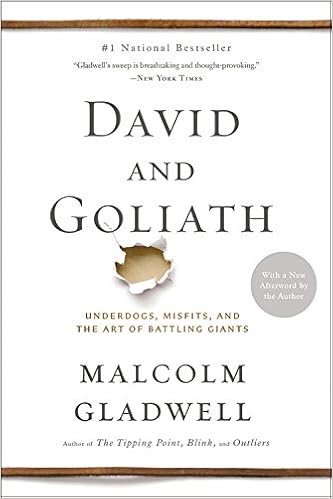 The top 10 of the lower tier colleges and grad schools make as much if not more than the bottom tier of the top ten schools. There are some reasons for this statistic. The competition is harder in the top ten schools so many smart people who can't make the top tier give up. They could have thrived in a less competitive institution. Or so says Malcolm Gladwell in his rambling book, David and Goliath.
Scott Brooks writes:
Isn't it fair to say that attending a top 10 school gets you into the "good old boy" network of those schools?
If you attend a lower tier school, you don't get that benefit. Even the alumni of your lower tier school don't care about the fact that you attended SEMO (Southeast Missouri State University), too.
I also find (anecdotal) that those that attend the lower tier schools that go on to be successful are "under the radar" with their success. They may live in a nice house, but it's rarely an ostentatious house, and for the most part it's a boring small town or located in a city in "flyover country".
They also have less glamorous businesses than those that went to a top tier school or work for a less glamorous company.
You'd be surprised how many people in flyover country that went to Mizzou, or Missouri Science and Technology (formerly the University of MO, Rolla) or to SEMO that have a successful small business or worked at Boeing for 30 years that are doing just fine.
Most of these people have no debt, they have a decent 2,500 sq. ft. home with a 1/4 acre lot, a two car garage that is paid off, and between their pensions and social security, they've $6k - $10k per month coming in each and every month. They live very comfortably on that and travel the world.
But they also have $1m - $5m in their investments that they rarely, if ever, even touch.
And let me tell you what…95% of these people are very happy and satisfied with their lives.
So I guess the definition of success depends a lot on where you live and how you've come to live your life.
anonymous writes:
"On the Payoff to Attending an Elite College":
"Students who attend colleges with higher average tuition costs or spending per student tend to earn higher incomes later on."
It's easy to imagine a selection bias there: Students who come from families that can afford expensive schools may already be networked into superior lifetime earning opportunities.
Regarding "Students who attended more selective colleges do not earn more than other students who were accepted and rejected by comparable schools but attended less selective colleges", this could be partly a legacy effect, i.e., children of alumni get, to some extent, preferential treatment and occupy spots in the incoming class that must then be denied to non-legacy students who may well be better prepared and more motivated. Those students get denied and then attend schools with lower requirements, where they excel.
Peter St. Andre writes:
The most exclusive schools can choose students with the highest standardized test scores, which measure general mental ability or GMA; and GMA is strongly correlated with career success and lifetime earnings. It's not the education at the exclusive schools that helps you, but the fact that you were smart to begin with.
Russ Sears writes:
I wonder if athlete or academic scholarship students have a different distribution of future earnings depending on "cost" versus "eliteness", and if so, what does this say about the education quality or the student's quality that they bring to the table before going to the college?
I believe Malcolm Gladwell argues in his book David and Goliath that you should choose to be a big fish in a small pond in youth so you will be brave enough to try something new.
I found this true in my case. I maybe one of those people in flyover country that fit Scott's retiree profile exactly. But I am interested in other opinions.
Oct
31
IQ, from Scott Brooks
October 31, 2017 | 2 Comments
Normal people can have extraordinary abilities. Prof. Haier writes about a non-savant who used memory techniques to memorize 67,890 digits of π! He also notes that chess grandmasters have an average IQ of 100; they seem to have a highly specialized ability that is different from normal intelligence. Prof. Haier asks whether we will eventually understand the brain well enough to endow anyone with special abilities of that kind.
The Neuroscience of Intelligence also includes a good introduction to the history of intelligence research, beginning with the development of the first IQ tests. Prof. Haier notes that a significant turning point was Arthur Jensen's famous 1969 article in Harvard Educational Review. Jensen wrote that genetic limits on intelligence meant that there were limits to what could be achieved through early education, and that there was a significant genetic contribution to the black/white gap in IQ. This so horrified liberals that for the 1970s, 80s, and part of the 90s, it was impossible to get grant money to study IQ. Even today, most research on the brain ignores intelligence, and instead concentrates on such things as schizophrenia, Alzheimer's, and other mental disorders. The Jensen article set in motion what Prof. Haier calls "a decades-old concerted effort to undercut, deny, and impugn any and all genetic studies of intelligence."
This campaign was a success. Despite the enormous body of evidence to the contrary, many people still think that no person has any inherent limitations, and that with the right role models, cultural sensitivity, and other mumbo jumbo, anyone can become a lawyer or scientist. Prof. Haier writes that one reason for this is that people who make policy are usually fairly smart and don't know anyone who isn't. They have no idea what life is like for stupid people. Prof. Haier adds that the other reason is that denying genetics is an attempt to explain away race differences in IQ.
Bill Rafter writes:
Did Will Haier suffer the same fate as Jensen?
Another money quote:
"As Prof. Haier notes, there are 51 million people in the United States with IQs of 85 or lower. Their poverty and social failure are not their fault. After 50 years of "programs" that do nothing, we should recognize that a huge part of the problem is stupidity and try to cure it."
Sep
28
No Documented People Left on Earth Alive in 1800’s and Market Musings, from Scott Brooks
September 28, 2017 | Leave a Comment
 I usually pay more attention to this kind of thing, but sometime last year, the last person alive in the 1800's died.
That seems weird to me and probably to many on this list as there are more than a few of us that personally knew people born in the 1800's.
Heck, I worked in a nursing home in 1985 with a women who was well over 100 years and vaguely remembers her great grandfather who was born in the 1700's (he was well over 100 when she knew him). That seems especially surreal to me…..I have talked to and touched the hand of a women who has talked to touched the hand of man who was alive during the Revolutionary War.
That means that there's a "one person bridge" between me and the time George Washington lived.
The oldest living person alive today (according to google.com) was born on August 4th 1900.
What does all this mean?
Somewhere in the next few years, we will pass a point in time where no one alive today was alive when someone born in the 1700's was still alive.
Here's an interesting article on the subject:
"Who Was the Last Person on Earth Born in the 1700s?"
What does all of this have to do with investing?
Well the market, as Vic always mentions, has a very nice long term positive drift. And it can be a fools errand to try and go against that drift.
The market is reflective of the human condition. As humans, we've drifted from caves, to huts, to wooden houses, to brick house, to buildings and to sky scrapers. The trajectory of mankind is the trajectory of the market. A nice upward positive drift.
But all that positive drift does us no good, if we're caught in one of the violent draw-downs at the wrong time.
Mankind may have gone from being ground-bound to standing on the moon in less than 66 years, but none of that mattered if you were one of the humans that got caught in violent uprising of WWl or the great flue epidemic of 1918, or WWll, or got stuck in a communist gulag, or in Pol Pot's killing fields.
The same is true for the market…the positive drift doesn't matter if you are an average American who worked hard your whole life and saved your money so you could retire and walked out the door with a gold watch on 1/1/2000, because your 401k has skyrocketed into the stratospheres. Or if you were the person who worked through the 2000, 2001, 2002 debacle and retired when your 401k recovered and reached new heights in 2007, only to be shellacked in 4Q07 - 1Q09.
To those people who got crushed in the dot com or housing bubbles, the long term positive drift of the market didn't matter to them anymore than the achievements of mankind mattered to the poor souls who died of of the flu in 1918 did.
Unlike video games, once you are out of the game, you don't get to respawn. You are just done.
And although finances are akin to life, there are some crucial differences. With finances, you can respawn…maybe.
You need the resources and the time…and you need to know how much you can lose before you cross the point of no return.
Aug
21
WOW!!!!!! Just…WOW!!!!! from Scott Brooks
August 21, 2017 | 1 Comment
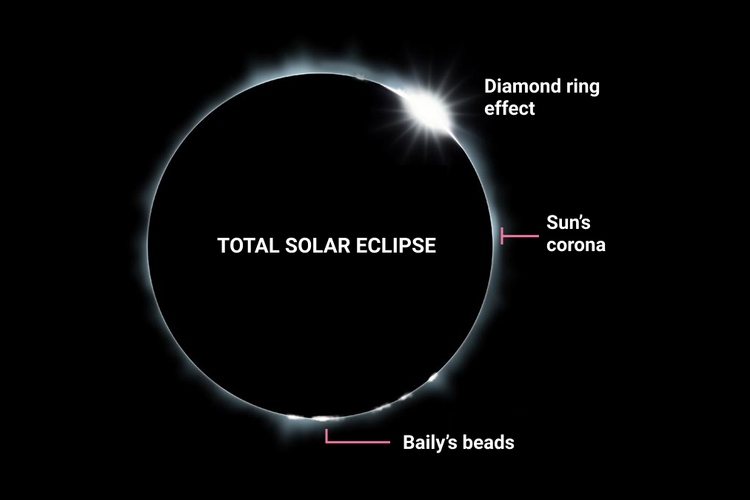 Prof. Haave and I stood on the deck of the of the parking garage of our office here in STL. We were both excited to see the eclipse, but neither of us expected what we were about to see.
It blew us away!
We watched as the "Beads" formed around rim of the moon as C2 was about to occur. The Beads are formed when the mountains on the moon block out the sun, but surface of the moon hasn't fully covered the moon.
We also saw the 'Diamond Ring" as the C3 formed (no diamond ring on C2). The diamond ring was completely spectacular. I wish there was some way to show everyone what we saw at that moment, but our iPhones were not made for eclipses.
When we were in totality, we saw "Shadow Snakes" appear on the white surface of the parking garage.
But the highlight was definitely what was happening the sky during the totality. The moon was dark in the middle and rimmed with fire. The "oohhh's" and "ahhhh's" from the several hundred people watching the eclipse with us described it perfectly.
Then someone yelled, "Look, there's a star". Then others started pointing out other stars. Everyone looked on the beauty and grandeur of the stars like children who were seeing stars for the first time.
The guys in the office next to mine, had a small table set up with a speaker for their iPhone. They were playing "Dark Side of the Moon" very softly in the background. Some other people from another office in the building overheard the music and told them to "TURN IT UP!!!!". Other people chimed in and up went the volume.
Everyone on the roof of the parking garage enjoyed watching a phenomenal celestial event all while being serenaded to the appropriate song.
If you ever get a chance to see a full eclipse, you should definitely go.
The skies are getting brighter and the temperature is rising again.
Time to get back to work.
May
9
 I believe "African Studies", "Feminist Studies", "Women's Studies", "Social Justice", "HR Specialist", and so many more add no real value to the world.
Gordon Haave writes:
I disagree, those majors also open up the opportunity for community activist type jobs.
Thurston Trowell writes:
So people should get finance degrees and MBAs and go on to become analysts and managers of mutual funds and hedge funds, at least 88% of whom lag the markets each year? In your view, exactly how are these wealth sapping leaches on society diverting peoples' hard earned retirement savings into their own bank accounts and grand villas in Connecticut adding more "real value to the world" than the African Studies major?
Scott Brooks reacts:
As usual, you jump to conclusions and ascribe things to what I wrote that I never said or wrote. It makes me think that you're part of the media who spins what people say to fit their desired narrative in order to demean those that dare disagree with their "exulted enligntened world view". Heck, it's almost like you're trying to smear and label me as some unworthy disgusting deplorable person.
But, that might only be the case if you were one of those media people. But let's look at what you said and deconstruct your faulty logic about the evils of financial people and what value to they bring to the world?
Let's keep this simple: How many people do these financial employ? How much revenue do they create from their efforts of adding value to the lives of other people (whether you see it as value or not…..people voluntarily see it as value since they keep giving these financial people money…..at least I know my clients do).
Personally, I employ 8 full time and 2 part time people, all of whom make very good money. I'd say that's pretty good. There are ~ 50 financial advisors flying to STL in a few weeks (on their dime) to spend 2 days with me so I can train them to better serve their clients, grow their businesses. Further, I will be training them on how to grow their staffing (creating jobs) as their businesses grow. I'd say that puts me and my services in demand. I'm the guy who donates money to the people who think they are doing good deeds in their communities. I'm the guy who pays the taxes that are forcibly taken from me to "support" (read: create dependence on the government) those poor souls (read: people who will vote for the polilticians who take my money and give it to the poor souls). I'd say that makes me pretty valuable.
As a matter of fact, I'd go so far as to say that the "do-gooders" of the world and they people they serve are completely dependent on the value I create so that I can donate to their services (or allow their "revered government" to take from me and give to them. Those with a degree in African Studies can do…….what? Hope to get a job teaching African Studies at some university to students who can do…..what? Hope to get a job at some university teaching African Studies to students who can do…..what? And so on, and so on, and so on, etc. etc. etc. And feel free to replace "African Studies" with "Feminist studies" or any other such worthless degree. If we eliminated African/Feminist/ studies (and other BS degrees) from universities….what would happen? I submit that the world would immediately become a better place. Of course, you may not like it because it would be a world filled with more financial people and businessmen and media types. Heck, we might even see the rise of the worst possible mashup of those things…….a media businessman who specializes in writing financial articles.
Rocky Humbert responds:
Shame on you. It saddens me that you, as a devoutly religious man, views the world in such mundane economic terms, rather than philosophical or existential terms. I suspect that hostile prose distorts your true beliefs. One's college major and one's college means little. Whether it's in physic or math or basket weaving. It's a piece of paper. And only to academics and archaically minded professionals does it have any meaning at all. How one conducts one's life means everything. Defining one's worth to the world is for only oneself and one's creator to measure.
Russ Sears writes:
Having a degree gives others insight into what the graduate values.
I will agree that the usefulness of what you learn can only be determined by the person using that knowledge.
Few art majors would have the ability or desire even if they had the skills to commit the time to engineering a bridge for example, but the engineering team may need an art major to enhance a bridge's aesthetics.
Mar
5
So Bad You Can’t Stop Listening, from Scott Brooks
March 5, 2017 | Leave a Comment
 One my way home from work one evening, I was flipping through some of my favorite channels on SiriusXM and came across theme night on the "60s on 6" channel.
It was "Spoken Word" night. For those of us old enough, you may remember the phase during the late 60s and through the 70s where spoken word music was popular (well, I'm not sure "popular" is the correct word, but we'll go with it).
The first song I heard was by some group called "Think". The song was "Once You Understand".
The song was horrible. But…it was so horrible that I couldn't stop listening. I wanted to hear what stupidity they were going to say next…and they never disappointed.
So here is a sampling of the songs that I heard last night.
Once You Understand
The Man in my Little Girls Life
I am going to warn you in advance, the songs are horrid, but you may find yourself compelled to listen to just to hear the "lyrics" that are so trite and only exist to elicit an emotional response from people who really don't have a life or the ability to create real emotion on their own…or maybe they're designed to get people like me to listen and the artist is secretly laughing with me because we get the joke.
As times have changed, these types of songs have gone away (thank goodness). But they've been replaced (IMHO) with a 24 hour news cycle of bad news and economic blathering designed to distract us from what is really important in the world.
I listened to my conservative friends babble on and on about how Obama was a Kenyan born Muslim Manchurian Candidate destined to destroy the country
I listen to my liberal friends drone on now about how Trump is an evil racist, misogynist planted by Russia to bring down the US.
I hear "economic and investing experts" on the radio and TV sounding really intelligent, but in reality, at best, they're not giving out any good information, or at worst, they're just talking their books.
So enjoy, as best as you can, the horrible songs linked above…and while you're listening, think about what distracts you on a daily basis from being the best trader you can be.
Nov
28
First Brexit, then Trump, now France: the Trend Continues, from Rocky Humbert
November 28, 2016 | Leave a Comment
 Readers of the Dailyspec who follow the trend should note the French presidential primary result:
From the WSJ:
Francois Fillion, a former prime minister who compares himself to Ronald Reagan and Margaret Thatcher, resoundingly defeated Bordeaux Mayor Alain Juppe in the runoff [election] primary Sunday, garnering 66.5% of votes.
Just two weeks ago, polls had shown Juppe, a centrist with bipartisan appeal with a comfortable lead.
Fool me once. Shame on you. Fool me twice. Shame on me. Fool me three times, shame on the pollsters and media.
Scott Brooks writes:
The pendulum is swinging hard away from the leftists.
Soon the non-leftists will screw things up and it will swing the other way.
The left (including the MSM) are like cockroaches…..not even the nuclear bomb of Trump can wipe them out.
Ralph Vince writes:
I think we're witnessing something bigger than a pendulum swinging — I think we're watching a major, glacial, cultural shift going on now, around the planet large than politics, where the last vestiges of the last century are being slowly self-lulled into extinction, and many other things going on.
I think the "ZIRP minus minus" world, the survival of the ending of easing, and other "perfect storm" factors are colliding to make for an explosive rise in asset values sans a corresponding rise in rates, that may persist for decades.
The greatest free-market transference of wealth in human history is already upon is for those willing to assume risk, to be followed by legions of those who must assume ever-greater risk. Never has there been such powerful feedback and driving mechanisms that have fallen into place.
And as I've said here, I think most people are on the wrong side of this, which further buttresses the case. As I mentioned yesterday, the "Snowflake" generation (who I regard as the new "greatest generation") are modern-day Spartans of productivity, trained in it from birth. I have infiltrated their camps, I have gone in and worked with them for months at a time, wanting to learn this-or-that (and getting paid to o it) telling myself that when I leave, I leave knowing what they know (oh, yes indeed this coerced humility from me!) and I walked out the doors with heir brains in mason jars, amazed at their work ethic, embarrassed by my own in comparison. Every preceding generation had "no such thing as dumb questions," but theirs.
What an engine, what a perfect storm, what a cultural cusp we are upon.
Nov
14
Trump Says: The EC is a Disaster for a Democracy, from Scott Brooks
November 14, 2016 | Leave a Comment
 A lot of my liberal friends are bemoaning the fact that Trump won the EC but lost the EC and contend (or imply) that HRC would be president if it weren't for the EC.
This is the same logic that implies if a field goal kicker hadn't missed his kick in the first quarter that your team would've won and instead of losing by 2 points. The false assumption is that the game would have played out the exact same way after the fact.
If the EC didn't exist, then the candidates would have run a completely different campaign. For instance, none of the candidates campaigned in NY, CA, OK, etc.
If it were a straight popular vote play, Trump would've campaigned in CA and NY and HRC would have sought out votes in OK.
Aug
3
Article of the Day, from Scott Brooks
August 3, 2016 | Leave a Comment
What advantage do we have over our reptilian brains? How can we overcome our instincts, and act against over-stimulation and it's negative side effects?
Here is an interesting article about that very subject: "Supernormal Stimuli": with the rapid pace of technology, have we been able to keep up with the new stimulation that is available?
Jun
27
The Jewish Word For…from Scott Brooks
June 27, 2016 | Leave a Comment
A prospective client asked me a question the other day. He wanted to know the Jewish word that describes "being a good steward of your money".
Does anyone know what that word (or words) might be?
Thank you!
Marion Dreyfus responds:
menschlach
or saichldik (sensible)
Being a decent chap all around
Jun
1
 The strangest thing about being the oldest person in the world is that on the day you were born there was a completely different set of people in the world than there are today. Shortly, the entire cohort of humans on earth on the day of you were born will cease to exist.
Another odd way of looking at this: Very soon there will be no humans on earth who were alive in the 19th century.
Here's another: Chances are, we are very close to running out of humans who have come into physical contact with people who were alive in the 18th century.
Why do I mention these things? I used to work in a nursing home back in the mid-1980s. There were a lot of people in that home that were born in the 1800s. We had several residents who's father fought in the Civil War.
The residents used to talk to me about their lives and the things they experienced. More than one told me about the fleeting nature of life and how quickly it goes and how they never understood when they were young how quick and precious life is.
One lady told me about how when she was very young, she was sitting on the knee of her great grandfather who was born back in 17-something (1790's probably…I don't recall) and how he told her about how his body was old but he still felt like he was young. She remembered him telling her how fast he got old.
He told her about his father (her great great grandfather) who had him late in life. He told her stories about his father had fought in the Revolutionary War.
As a man in my early 20s at the time, that story really hit me hard. Here I am speaking with a women who was hearing a story about the Revolutionary War…something that seems so distant to as to be almost incomprehensible…yet this women was only one person removed from the person telling the story.
How quickly time passes. If we measure history using war as the benchmarks….All those that fought in WWl….gone. Within a decade or two, everyone who fought in WWll and Korea will be gone. The Vets who fought Vietnam…the war I grew up watching on TV…are now getting old.
As I get older, I believe I am better understanding the preciousness of life…and just how short it is. I can remember my first day of Kindergarten (that's a story for another day…but let's just say that I got sent to the principals office within the first hour of my first day of school).
I remember my first kiss, I remember winning various sports championships, I remember getting married and the birth of my children…all seem like they just happened…but in reality, it happened in a place that will eventually be lost forever in a time that has passed.
I wonder what the next 50 years will be like…and I hope that I'm here to enjoy them!
Apr
6
The Fiduciary Rules, from Scott Brooks
April 6, 2016 | Leave a Comment
 There are big rule changes coming down the pike for Financial Advisers, Brokers, or anyone who sells and/or implements a financial product for a client.
Here is a very brief overview of the Fiduciary Rules that were released overnight. I have a link at the bottom if one would like to read more on the subject matter. I'll try and write more on the subject as I can.
This is one of the biggest changes that has come down from regulators in years. I was talking about this to one of my employees yesterday. He was worried about what this would mean for us. I told him not to worry because we already act as fiduciaries and disclose any possible conflicts of interest that may arise from time to time.
But, as I told him, there is one big change that will likely (and we now know I am likely right) come from this: MORE PAPERWORK.
The regulators have come up with something called a "Best Interest Contract" (BIC). I haven't seen one yet, but I'm sure it will be at least one more page of paperwork, likely many more.
This will, almost certainly, create new paperwork for the clients to sign. The problem this creates is that there is already WAY TOO MUCH paperwork for clients. I know the regulators think they are making things better for client by creating this type of disclosure, but in reality, it makes things worse. If clients carefully read and reviewed everything I'm required to give them, there would likely be close to 1000 pages of disclosure documents (more in many cases) that they'd have to go thru.
What's worse, is that most the disclosures are written by lawyers for lawyers. The average person can't understand what is written let alone "see the whole picture" that is presented in all the documents.
So this will effect me by the increase in paperwork that new (and possibly existing) clients must sign. I don't see how it will have anything other minor "other effects" on my business.
However, my friends that are in brokerage business and sell commission based products for a living are likely going to be in for a big surprise. Now, I don't yet understand what the level of surprise is for them, but I think it will be big. We'll have to wait to see how the individual regulatory agencies are going to interpret and enforce what is in these new rules.
Final thought (and this is strictly opinion): This is a wonderful thing for big financial businesses and a horrible thing for the small financial businesses. Sure, this will initially cost the big brokerage firms a lot of money in the beginning. But don't worry, they can afford it. The good news for them is that the more complicated things get, the more compliance intensive things get, the more compliance/regulatory costs rise, the more it squeezes out the little guy. And if you're a big guy and in this for the long haul, this is even a better deal because it makes it even more difficult for new little guys to start up their small shops.
Here is a link that gives some additional color on the new fiduciary rules.
Mar
15
When a Good Idea Becomes a Better Idea: to Tweak or not to Tweak, That is the Question, from Scott Brooks
March 15, 2016 | Leave a Comment
:format(jpeg):mode_rgb()/discogs-images/R-3451027-1343000286-3556.jpeg.jpg) Summary: Some people just aren't creative, and those that are often don't know when you should and shouldn't tweak a good idea to turn it into a great idea. Is it already a great idea, or can it be made better?
Summary: Some people just aren't creative, and those that are often don't know when you should and shouldn't tweak a good idea to turn it into a great idea. Is it already a great idea, or can it be made better?
I've often found in my life that inspiration needs to be followed with hard work. An original idea gets tweaked until it fleshes out into something that just works better. And once you have an idea that works better, you continue working to make it even better.
Many people just slog through life trying to make it, living day to day, week to week, paycheck to paycheck and, as a result, never get to tap into their true creativity…..or maybe I have it wrong. Maybe they slog through day to day, week to week, paycheck to paycheck because they lack the ability to be creative and see the opportunity that surrounds them.
I grew up surrounded by these people. Many of them are dead, many are in prison, many have served time in prison. Many of them are just shells of flesh waiting for the spark of life that lies inside of them to extinguish.
One particular memory I have is of a party I went to in grade school at Tommy Notter's house. His parents were supposed to be home, but they weren't that night. So a bunch of grade school kids got into his parents liquor cabinet. Someone even brought marijuana. It was one of my first introductions to the life that most of my friends would choose to live. I declined to imbibe that evening, and had to face much ridicule for my choice to not be cool.
However, that is not the main memory that I have from that evening. My main memory is of sitting on the coach in Tommy's living room and hearing the song "War Pigs" (by Black Sabbath) played on his parents stereo, for the first time in my life. The song absolutely kicked my butt.
For those in this group that enjoy a bit of an edge to their rock, you know what I'm talking about.
Today, I heard what I believe was the original version of the Black Sabbath heavy metal anthem, War Pigs. The song was originally called Walpurgis.
Although Walpurgis is a good song, it doesn't hold a candle to the masterpiece that is War Pigs.
At the end of this missive, I've placed links to both songs for your enjoyment.
Since I've reopened my practice and I'm taking new clients for the first time in years, I've had to work on tweaking my communication skills and, more importantly, my listening skills.
Over the last 20 months, I've noticed a marked change in my results as I become more and more comfortable with my listening and creativity skills.
My results clearly show a move a positive direction, both in client acquisition, client retention and client satisfaction.
For me, it's more of a "feel" thing. Like pilots who say they can fly by the seat of their pants because they can feel the plane and know what to do, that is the way it is my practice. Whether it's ability to see the path of least resistance so that you can lead the prospective client to making the right decisions, or to just know that you're wasting your time with a prospect who isn't going to change no matter what.
The introspection and thought process that goes into the creativity associated with communicating with people and reading people is a valuable skill set and one that everyone could improve on, even if you're not a "people person".
For me, it's a constant journey to improve…..and the biggest challenge I think I have much of the time is knowing when to say, "it's good enough and I can't make it better".
I'm sure there are applications to market and trading….i.e. is your system good (i.e. Walpurgis) or can it be tweaked and improved (i.e. Walpurgis to War Pigs).
I'll let you decide which is better: Walpurgis or War Pigs
Mar
13
Article of the Day, from Scott Brooks
March 13, 2016 | Leave a Comment
"Many scientific “truths” are, in fact, false"
In 2005, John Ioannidis, a professor of medicine at Stanford University, published a paper, "Why most published research findings are false," mathematically showing that a huge number of published papers must be incorrect. He also looked at a number of well-regarded medical research findings, and found that, of 34 that had been retested, 41% had been contradicted or found to be significantly exaggerated.
Since then, researchers in several scientific areas have consistently struggled to reproduce major results of prominent studies. By some estimates, at least 51%—and as much as 89%—of published papers are based on studies and experiments showing results that cannot be reproduced.
Bill Rafter writes:
In academia the currency is published articles. It should therefore not be a surprise that many published articles are useless or worse, flat-out-wrong to the point of being fraudulent. Consider that in the United States the typical number of scientific-based papers published in a peer-reviewed journal by a doctoral candidate is ONE. In certain other countries that number could easily exceed a dozen. Consequently the avid reader of scientific papers learns to discriminate in his reading habits against certain universities and certain countries of origin.
Would you do business with a bank that had a reputation for handing our counterfeit currency? And the fact that counterfeit banknotes exist casts suspicion over all transactions.
Jan
11
Movie Review: Ashby, from Scott Brooks
January 11, 2016 | 2 Comments
 Starring Mickey Rourke, Sarah Silverman and a few mid - low level Hollywood types.
Asbhy is another coming of age story about a young man (Ed) having to make it in a world that he seems ill equipped for.
After his narcissistic parents get divorced in Oregon, his mother (played by Sarah Silverman) moves her son Ed (the 17 year old suffering from teen angst) to Virginia where his the new guy at school.
Ed is a nerd, but also as it turns out, is a jock.
He quickly becomes an outcast at his school. Meets a girl at school who is a little weird (she has an MRI machine in her basement) and they develop an angst ridden uncomfortable relationship that is has become 100% predictable in today's formulaic "coming of age teen angst movies".
Of course, not surprisingly, Ed has a neighbor (Mickey Rourke) named Ashby who is dying of a brain "something" (we never know what is wrong with his brain) and only has a few months to live. He tells Ed that he is a napkin salesmen, but it turns out that he is really a CIA assassin who has killed 95 targets (people).
Ed knows nothing of Ashby being terminally ill till later of course when the formulaic timeline says it should be revealed….thank goodness the (sorta) girlfriend has an MRI machine in her basement to confirm the assassin Ashby's story.
Ed and Ashby have a few adventures mostly involving (insert formulaic adventures in here) wherein Ashby reveals life's truths to Ed, one of which is that Ed is coward.
Ed denies that he is a coward even though he won't catch passes from the team QB that require him to take a hit (oh yeah…..remember it turns out that he is a jock too and the fastest guy on the team). That is another part of this disjointed story that is increases the "boring and stupid" factor even more.
Does this sound exciting so far? No, you say. Well there's a reason for that. It's because the movie was HORRENDOUS.
Here's a few tidbits that I'll mention. Please note that this is presented in a disjointed manner (like this entire movie review) for a reason….the entire movie, the entire plot line, the character development the story development is just a bunch of random clips put together by a director/editor who may well have been never seen an actual movie before.
Anyway…here you go…a few tidbits from the "plot":
Ashby finds out that the last person he assassinated was ordered to be killed so that his "bosses/compatriots" could make a bunch of money. Asbhy does not like this because he thought that all his kills were justified (remember he's a CIA assassin) because they were enemies of the US. Of course, this sends Ashby on the warpath to kill his former "compatriots" in the most boring and ridiculous manner possible.
Since there is something wrong the Ashby's brain (he's dying of….something), he has Ed drive him around to his "compatriots" houses so he can kill them. Of course, Ed doesn't realize this until the formulaic plot timeline dictates it's time for Ed to know.
And just as one would expect, Ed finds out and reacts in the most ridiculous manner possible that defies all logic and reason.
Ashby teaches Ed to fight when he finds out that Ed doesn't stand up for his "sorta" girlfriend.
When Ed scores the winning touchdown, he is carried off the field and one of the slutty bimbo blondes has sex with him. His "sorta" girlfriend pretends to be upset by this (maybe she was…but the acting was bad, so it's hard to tell the difference). Ashby teaches that Ed that he shouldn't just apologize, but make amends (whatever that means).
The "sorta" girlfriend takes him back when Ed sweeps her off her feet with a "teen angst formulaic speech that no teenager in history has ever delivered."
If all that (and other things I won't bore you with) aren't enough, the movie co-starred Sarah Silverman as Ed's mom.
Silverman played the role she was born to play: A vulgar slut who has no self respect or sense of decorum when it comes to sexual exploits in the presence of her son.
Even though Ed is upset by his mother's slut-hood, he still loves her and is far wiser than she (and let's face it, according to Hollywood, what child isn't smarter and wiser than their parents).
In modern Hollywood, all parents are morons…
Well….Except for Ashby (remember, he is the very forgettable and unlikable "anti-hero" of the story), as he is a wise, but flawed man, just trying to undo all the bad he's done (he was an assassin for the CIA and only killed the bad guys) so that he can go to heaven and be with his daughter (who he wasn't there for when she overdoses on pills because she was a troubled teen girl who needed her absent father to be there for her) and his wife who died a few years later (we never learn how or why she died).
Well, good 'ole Ashby kills two of the three compatriots who had him kill the innocent guy for money. When Ed finds out that he's been acting as the getaway driver for Ashby's assassinations, Ed makes Ashby promise not to kill the 3rd compatriots. Asbhy agrees not to kill the third compatriot (and actually keeps his word.)
I won't say what this results in, but you don't have to be rocket surgeon to figure it out (remember, Ashby now has less than a couple of weeks to live anyway), but let's just say that they (the producers/writers/directors) try to make it a beautiful scenic experience in an outdoor setting to which Ashby willingly goes with the assassins sent by the third compatriot (who Asbhy spared) to kill Ashby…..oh heck, now look what I've done. I've spoiled the plot.
Oh well, it doesn't matter. The movie is so bad that you'd have to have (something) wrong with your brain to go see this movie.
Oh yeah, one last thing, did I mention that Sarah Silverman's character is an unlikable, vile, vulgar, slut who should be ridiculed and ostracized by the entire female community (and any self respecting men as well).
Do NOT under any circumstances go see this movie. It has not a single redeeming quality and not one moment that is believable or even slightly entertaining.
It is vulgar and vile and Hollywood should be ashamed of itself for green-lighting a movie this awful.
No actor, Mickey Rourke included, did their careers any good by appearing in this claptrap.
Stay Away!
Jan
4
Article of the Day, from Scott Brooks
January 4, 2016 | Leave a Comment
 "Screw Motivation, What You Need is Discipline"
Gibbons Burke comments:
Discipline involves putting off that which may bring immediate pleasure or gratification in order to do something else whose reward is less immediate and less tangible. It requires seeing the difference and valuing the difference between tactics vs. strategy. Being able to imagine a higher goal which goes beyond the immediate tangible reality of the present moment is a cognitive function which may not be evenly distributed in the population, and which may explain to some extent inequality of outcomes. It may also explain the instinctive willingness of those who cannot imagine the future to ally themselves with those who seem to have a firm grasp on "the vision thing".
Some have an internal discipline because they are confident of and guided by a clear vision of what can be done, what must be done, to achieve what is for many an intangible future outcome. Others do better when the discipline is imposed upon them from an external source, having no internalized vision.
Dec
30
Machiavellian Maxims, from Scott Brooks
December 30, 2015 | 1 Comment
 I think the group will find many useful lessons for both life and trading in these machiavellian maxims and I'm sure that the list will find plenty of fodder for debate contained herein.
Bill Rafter writes:
Those are not Niccolò's thoughts, but the author's wish as to how Machiavelli would think. The two are not the same. Also, many believe they know Machiavelli because they have read The Prince, a very short work hastily put together in three months with an expected readership of only one person, for the expressed purpose of getting a job. Because Machiavelli has become the Progressives' poster child of evil, some anti-Progressives have taken to championing him. But unfortunately they do so poorly read and for the wrong reasons.
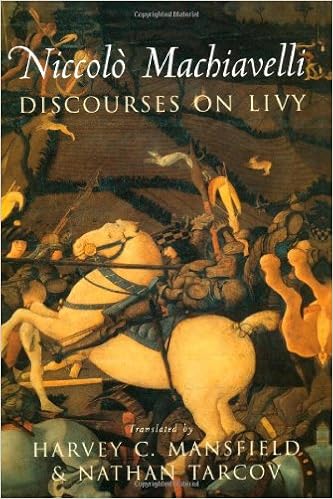
The Discourses on the First Ten Books of Livy are Machiavelli's best work, written over three years (concurrently with The Prince) for a universal audience. The Founding Fathers of the United States all read "The Discourses" as a prelude to creating our government. It would be well worth your time.
Gary Rogan writes:
The Prince was written for, well, a Prince. One problem with applying both the original Maciavellianisms from The Prince as well as these new improved maxims is that they don't seem to concern themselves with basic competency in one's line of business outside of manipulating people. For a Prince it fits: his job is essentially to manipulate his subjects, enemies, and any threat or potential resource provider into benefiting the Prince. He doesn't personally build bridges or grow food, etc. On the other hand, imagine a plumber who is also the world's greatest student of Machiavelli but is a really bad plumber. It's doubtful he can overcome his major deficiency by simply manipulating his customers.
Oct
14
An Anecdotal Observation with Many Data Points, from Scott Brooks
October 14, 2015 | Leave a Comment
 When I meet with prospective clients and talk to them about their portfolio, I ask multiple questions to determine their tolerance for risk.
Three questions I ask are:
"How much money did you lose in 2008?"
"How long did it take for your portfolio to recoup those losses?"
"Was that loss a lot of money to you?"
I've pretty always asked a version of those questions (i.e. prior to 2008 I asked about the same questions about the tech bubble).
As we all know, the market took a massive hit in those years and loses were rampant and widespread.
When I asked those questions in 2009 - 2013 people would regale me with tales of how much they lost (40%, 50%, 60%+). Even people that held a lot of bonds "for safety" spoke of the losses they experienced.
Almost everyone spoke of how many YEARS it took for them just to recover their losses (most took 5 years just to get back to even).
And almost everyone would talk about how the loss they experienced was a LOT of money to them and they'd rather never experience that kind of loss again.
Now, let's flash forward to 2015……And it's a completely different story.
When I ask them how much they lost in 2008, the majority of people say, "I really don't lose much". Some will say "I lost maybe 10% - 15%".
I am hard pressed to find a single person who lost any money worth mentioning.
Further, when I ask them how long it took them to gain back their losses, I hear things like, "Oh, maybe a few months, I really didn't lose much to begin with" or, "I think it took me maybe a year or a year and half".
When I ask them if the loss was a lot of money to them, I hear things like, "Oh, I really don't know, it was no big deal."
What's my point of mentioning all this to the group?
I know for a fact that the rank and file people of the world (the people that I deal with) lost a lot of money in the 4Q07 - 1Q09 housing debacle. I know this because they told me so and they told me they were scared and and that it took them 4 - 6 years just to get back to even and that they lost a LOT of money….more than they were comfortable with.
And now……..they've all forgotten.
Out of sight, out of mind.
All they see (again) is the magnificent rise in the stock market and they all just know that it's not likely to ever correct again in any appreciable way, and if it does, it doesn't matter….it will come back in a very short period of time.
Yes, I know this is anecdotal, but I can tell you that this is based on hundreds of interviews with prospects over many years.
And yes, the story I've written above applies exactly to the experience I had when I interviewed prospects from 2003 - 2007
They all experienced great losses in 2000, 2001 and 2002 that were beyond their comfort zone that caused sleepless nights…..and as time went on, the losses became smaller and smaller and the time it took for the losses to recover became shorter and shorter and the pain they experienced became less and less.
I think a line of lyrics from Paul Simon's "The Boxer" are appropriate here: "A man sees what he wants to see, And disregards the rest."
Ralph Vince writes:
Great post Scott, thank you.
I'm astounded by this same thing. If you took everyone in early '09 who were upset that they didn't liquidate their 401k plans, etc., the percentage of those who have now is very, very small. Especially in a ZIRP world.
Sep
16
Article about Zimbabwe, shared by Scott Brooks
September 16, 2015 | 2 Comments
 "Zimbabwe seized white farmers’ land. Now some are being invited back.":
When Tracy Mutinhiri struggled to get her tobacco crop to grow, she turned to some of the country's most experienced farmers for help.
There was only one complication: They were white.
In Zimbabwe, farmland has been a central issue in the African nation's violent struggles over race. Fifteen years ago, the government began seizing property from thousands of white farmers and giving it to blacks as recompense for the abuses of colonial rule. But now, as agricultural output stalls, black landowners are quietly reaching out to white farmers who were thrown off their land.
"The problem now is that we have the land, but they have the experience," said Mutinhiri, a black landowner. "We need to help each other."
Ian Brakspear writes:
Ex Zimbabwean farmer here. I had a 30,000 acre cattle ranch and 2,000 acre tobacco farm–both stripped bare. The house is a shell, as are the sheds and barns–water pumps, fencing, you name it, has gone and the land is unproductive–even the wildlife is not to be seen.
The "war veterans" that took over, sold everything and then came back years later and wanted a partnership – but they only wanted us to buy tractors, ploughs etc. and redo the barns for curing the tobacco and the sheds for grading and packing and then to transport the tobacco to the auction floors which used to be the biggest in the world – and in return a small % of the profit.
No one I know accepted these terms. I have not gone back in years – the deterioration is beyond belief. I'd rather keep the good memories than see the decline.
Marion is spot on. Mugabe needs to go, but the problem is all the good black Zimbabweans have left and are making good lives for themselves elsewhere
Sep
16
Article of the Day, from Scott Brooks
September 16, 2015 | Leave a Comment
 I thought this was an interesting article on how young people learn:
Snead's conundrum was obvious: You are, he said, taking young people who in most fields would be entering an entry-level job with little pressure and putting them in a job where they have to perform at a high level under often intense public scrutiny.
"The next frontier in football is understanding the mind and figuring out how you can test and teach," he said.
The first step? Like most workplaces that seek company-wide change, they needed consultants. The Rams brought in a group of academics who run a research firm to evaluate the Rams' football teaching methods. (The Rams did not identify the firm for competitive reasons with other NFL teams.) Those consultants observed portions of off-season training and training camp. They also put rookies through a standardized test, Snead said, aimed to determine how their players absorbed information. The test is supposed to mirror exams like the GRE or LSAT—which are trying to gauge future performance, not how much you've already learned. It also, Snead suggests, gauges some intangibles such as "grit, perseverance and mental toughness."
Sep
14
Ordinary Folks and Working Capital, from Ed Stewart
September 14, 2015 | 1 Comment
 On my last haircut before moving, I gave my regular lady a $100 tip on a $17 haircut (applause line here?). That small gesture brought her to tears. She is a very interesting older woman. I've enjoyed talking with the past few years. She knew I worked in investments/trading and asked if I had any ideas for her. I asked about credit card debts and she told me she just cashed in 25K of an IRA to pay down 25K of credit card debt, yet already had accumulated 2K since then and was getting in the hole again. I might invite her down to do some murals in my kids room, and perhaps do some studies on trees (She is an artist who made a living cutting hair for the last 40 years).
The point is (perhaps? At least the relevant one?) is the deadly financial problem of never having working capital that provides the flexibility that keeps one off the spike of usurious interest.
This lady had been sold on long term investments (by her branch XYZ big box bank) in high fee mutual funds with perhaps at best a 5% yr expected value over the long term, while paying off 25% interest rates on credit cards. The scams run on the lower middle class or working class are obscene.
And it is not income. Clearly if these folks can pay these obscene high interest rates, they can afford much more than they have. The problem is that they never understood the idea of having "working capital". I told my friend that her best investment is at least 6 months of living expenses in the bank. As basic as it is, and at such a low margin for error that standard that is, for many it is an alien concept. Her recent issue was a car repair that blew up her budget and started the credit card problem again. With no working capital plus compound interest against, it is like a giant pit metaphorically with wood spikes and lions at the bottom to gobble one up.
So in trading and investing, how can we use this idea? Victor has taught "never get in over ones head" as one of the key tenants of speculation. So how do we manage our cash in our speculations, investments, life's "issues" to have the flexibility to seize opportunities and avoid pit of being bent over a barrel–while still getting a solid return.
Scott Brooks writes:
The problem is deeper than that.
The people that Ed is referring to don't have the mentality to accumulate wealth and get rich. They are sold on the "here and now" mindset. They go into debt to satisfy the here and now. Something will always come up that will prevent them from succeeding. The only thing they are really good at is coming up with PLE's (Perfectly Legitimate Excuses) to justify their failures.
They are defined by their failures.
anonymous writes:
Especially with respect to this site, I would wonder the data and testing behind those assertions. Otherwise, one might consider them to be presumptive, elitist, and uncharitable, with mean-spirited implication. But for the grace of god….
Ed Stewart writes:
"presumptive, elitist, and uncharitable, mean-spirited"
Yes but who cares. I'm guilty of most those things at most times. Is time preference the essence of trading? That might be a more interesting question vs. my original one. Can it be quantified? I think so, as a hypothesis generator. Does it work better than other thought models?
Russ Sears writes:
Sorry, I disagree Scott. Ed is correct, it's a matter of education and coaching. Have a plan, believe in the plan, stick to the plan.
The average working poor Josie is not a loser. It's the average bank has learned they are more valuable dumb and paying fees than smart with small accounts. The stats say that the fees are several hundred dollars per person in the USA. So some are paying several times that. The banks have the average poor working single parent or mom in a snap trap that they can't figure how to unsnap and lift the door.
The first thing I tell kids is that you need a minimum of $1,000 in emergency cash preferably $2,000. Have a garage sale, stop buying lottery tickets, no gambling, stop buying new clothes, stop cable, and stop smart phones, etc until you have that emergency fund. Also budget, if you can't fix the budget to the pay, downsize housing, get roommates, no car, bus, pay for car pool, whatever it takes to have a workable budget. Then save for the 3 to 6 months expenses in a cash account ready for a big expense. Only then should you invest.
Most people in this problem don't have anyone they can trust to give them the advice and perhaps the tough love they need to stop living in denial. The truth is the banks want the poor.
What does this mean for "investors". Frankly I think most investors have it wrong. It's not so much managing your risk as it is managing your cash flow first, then manage your risk. You can take a lot of equity risk if your investment horizons 20 years out.
Also the lesson to investors is just because someone is in the best position to give you advice and would make some money off you if they gave you that advice, it doesn't mean they will give you the advice that's in your best interest when it conflicts with their best interest. Their best interest is CMA (cover my …) by silence or sin of omission. Then it's to make more money by selling what gives them the most profit to "cover" you like payday loans.
anonymous writes:
The thing I practice (and I don't know if it adds any edge that can be computed) is to always take some off after a good run. No mater what, be it trading, investing, bonus, etc. Never spend it all–or even most of it. Put it away for when SHTF, because as day follows night, it will…
Andrew Goodwin writes:
A major part of the problem is the thinking that makes the credit limit on credit cards equivalent to ones own money.
For my part, I will never willingly stop at a gas station that has two prices for gasoline with one higher for the credit card user than for one paying cash.
In a world where there are card rebates on gasoline, what is the point of acting responsibly with credit when those who did not act responsibly get subsidized by those who did. The dual pricing also serves to support a cash economy against the public interest.
Peter Grieve writes:
I feel that I am unique on this site as having been in this hairdresser's situation for most of my life (Hello, Peter). Obviously this is not due to a lack of economic education or upbringing. I feel that the factors include a lack of skepticism regarding my own appetites, a lack of faith in the future, a certain immediacy in response to the world. These are traits associated with immaturity, to which I confess. Of course this leads to tremendous inefficiencies, even when viewed from a purely hedonistic perspective, but it does have its compensations.
I do not regard Scott's comments as elitist, presumptive, uncharitable, or any of that baloney. On the contrary, I find the the use of the word "uncharitable" to be condescending. I do not feel that people in my position are a fit object of charity.
Everyone has their irrationalities, and they are often incomprehensible to those who do not share them. Scott's words are simple, honest truths, which many people (including me) would benefit by internalizing to a greater degree.
Stefan Martinek writes:
It is good to have an emergency cash for at least a decade; locked, untouchable for trading or similar. The rest can be at risk. And after MF Global steal from client accounts (is Corzine still free?), I think it is prudent to keep as little as necessary with FCM. In case of a brokerage failure, the jurisdiction matters (Switzerland is preferred, the UK is too slow but ok, then Canada, and the last option is the US broker).
Ralph Vince writes:
Stefan,
I entirely disagree; emergency cash has a shelf life which is very short, and our perspective warped as we are speaking in terms of USD. Being the historian you are, you know full well how quickly that cash can be worth nothing. (And again, a many of our personal experiences here would bear out, money is lost far quicker than it can be made).
A bag of air on hand is good for one breath.
People are taught that "saving" is virtuous, borrowing a vice. I would contend that we have crossed to Rubicon in terms of the notion of stored value — no more able to contain that vapor than we can a bottle of lightning. The circulation brought upon by a zirp world, turning all those with savings into the participants at a craps table, the currency being used the product of a confidence game, among the virtues to be taught to tomorrow's youth is that of creating streams of income — things that provide an economic benefit their neighbor is willing to pay for, as opposed to a squirrel's vermiculated nuts.
"Stored value," is a synthetic notion we have accepted and teach as a virtue. It has no place in nature, it is a synthetic construct, one that is not scoffed at in the violent, life-and-death world of fire and ice. Young people need to be taught the fine distinction between the confabulation of "storing value," and that of using today's fruit to generate tomorrow's.
Stefan Jovanovich adds:
From the other Stefan: I agree Ralph. "Stored Value" is another part of the economist dream that platonic ideals can be found. Money is and always has been one thing: the stuff you could voluntarily give to the tax man that would make the King find another excuse for throwing you into the dungeon. The gold standard did not change that; it simply gave the citizen a chance to make the same kind of unilateral demand on the government. It is hardly surprising that the fans of authority and "government" hate the Constitutional idea of money as Coin. How can you have a permanently elastic official debt if the citizens can ask for payment in something other than a different form of IOU?
However, Stef does have a point. Having a hefty cash balance is a wonderful gift; it gives you the time to figure out your next move. The sacrifice is the absence of leverage; the gain is having literally free time.
Scott Brooks comments:
There are a lot of companies out there that take advantage of them and the bad advice they were given from their parents. Banks certainly do. Then you've got insurance companies and brokerage firms selling them crap products as well.
But that doesn't hold water in today's society with Suzie Orman and others like her being nearly ubiquitous on the airwaves and net.
These people live beyond their means. Plain and simple.
Yes, they lack education, but even with education available, they don't take advantage of it. They are just doing what they were taught as kids. For far to0 many of these people, as long as they've got enough money for their 1-2 packs of cigarettes/day and their quart of Jack/week, they go and live lives of quiet desperation, hoping that they don't lose their jobs and are lucky enough (i.e. like not spending money on stupid stuff is "luck") to pay off their debts by the time they are in their early/mid-70s so they can live out their remaining few years (if they even make it that long) on social security.
I know. I grew up with these people. I know how they think. But for grace of God (as was mentioned earlier), I might have been one of them. But for some reason, I was blessed with gray matter that works, and I saw the error of those ways, and I was able to get out.
Ken Drees writes:
I knew a guy–lost touch with him over the years–who exclusively dealt with hairdressers and salonists. He sold variable annuities to them since these people had no retirement plans given to them from the salon owners. I believe in his mind that he was doing them a service–and I really do not know the quality of his products–but at a glance I saw them as mutual fund annuity hybrids that came from heavy fee fund families. He was a tall, dark and handsome gent and he would actually get entire staffs of salon ladies to invite him in after hours for a group meeting/financial planning discussion presentation.
He always said that business was brisk!
Jim Sogi writes:
When young friends ask me, how should I invest, I give them a simple asset allocation model based on ETFs or Vanguard and an averaging model. Invest x% of your paycheck off the top each time. Doesn't matter how much really.
Russ Sears writes:
 Scott, since this is the DailySpec let us bring a little science into the discussion, even if it is social science.
Where we differ is not what is causing the hairdresser's problem. It is in what can be done about it that I differ. I believe you can coach people to delay gratification. I coached kids that never did homework before and got "D's" and "F's" during a summer and by fall the kid was an "A" or "B" student. You probably owe a hardy thanks to the coaches in your life.
Perhaps the greatest social science finding has been the "marshmallow experiment" done at Stanford. They did test on 600 4 year olds telling them if the child did not eat a marshmallow for 15 minutes after they left, they would get a second marshmallow. 1/3rd of them made the whole 15 minutes, a small percentage ate it immediately after the others had waited various amounts of time. They followed up on these kids several time in the last 40 years. Just about every way you can think of to define success was highly correlated with the time the 4 year old delayed gratification: SAT score, college/HS graduation rate, credit scores, long term committed relationships, contentment etc. And almost any way you can define failure was inversely correlated: jail time, high school.
The correlation was stronger than IQ, social economic status at 4 years old. In other words even the dumb poor kid that delayed gratification was happy/content/successful 40 years out. He may not be making much but he is happy with it.
For a humorous view of this experiment reproduced: Joachim de Posada: Don't eat the marshmallow!
Jul
29
I Am Searching for a Song, from Victor Niederhoffer
July 29, 2015 | 4 Comments
 I am searching for a musical song that illustrates the constructal law.
The constructal law teaches us that anything that flows, which is just about everything, is 'alive' because it evolves as it flows. Life is the persistent movement, struggle, contortion, and mechanism by which animate and inanimate flow systems morph to generate better access for what flows. When the flow stops the configurations becomes a flow fossil (dry riverbeds, snowflakes, animal skeletons, abandoned technology, and the Pyramids of Egypt).
From Design in Nature
Victor writes to Rorianne Schrade:
One wonders if there are any musical pieces that illustrate this idea.
Rorianne Schrade responds:
 Dear Victor,
I hope this finds you and all of your beautiful family doing well. My apologies for not getting to this sooner–you are always delving into such interesting topics. While I'm probably unqualified to comment in any depth on constructal law, I think music relates to ideas of flow in more ways than one could ever count. The first thing that pops to mind is the need to keep a single tone itself "alive" — something that in early music gave rise to all sorts of trills and embellishments for the prolongation of tones, the continuation of the melodic momentum, and the development of musical life in a composition or improvisation. Whole sets of variations could be used to illustrate this as well, the starting with a simple theme, the gradual building and elaborating all as a way of keeping the theme alive as well as creating new music. The "flow" may be interrupted with what seems like musical "death" (a "flow fossil" or "dry riverbed" as you mention– these are beautiful too, in their own ways) in the middle of a piece of music– but the flow somehow returns or survives until the end of the piece (and longer in one's mind) if I've got the right idea of what is meant here. Another illustration might be jazz improvisation on standard tunes … keeping it flowing in a single performance as well as keeping it "flowing" through the decades through variation and new interpretations… I must be oversimplifying, but thank you always for the food for though! love to you all, r.
Alston Mabry writes:
Here are some musical pieces that I find illustrate constructal flow/order/disorder.
Starting off with the more challenging stuff:
Richard Carrick: Dark Flow - Double Quartet
And the more accessible:
Claude Debussy: Dialogue du vent et de la mer
Stravinsky: Le sacre du printemps
Cliff Martinez: Is That What Everybody Wants
Scott Brooks:
Here are two metaphorical songs about the flow of life's progressions
"Wasted on the Way" by Crosby, Stills and Nash
"Nether Lands" by Dan Fogelberg
Both of these songs are two of my all time favorite.
I am especially fond of two sets of lyrics in Nether Lands where Fogelberg sings…
Anthem's to glory and anthems to love
And hymns filled with earthly delight
Like the songs that the darkness composes to worship the light
and
Once in a vision, I came on some woods
And stood at a fork in the road
My choices were clear, yet I froze with the fear, of not knowing which way to go
One road was simple acceptance of life
The other road offered sweet peace
When I made my decision my vision became my release
As I think about those lyrics, my mind wanders to the progression of life and how we end up where we are today. I think of many of the decisions, good, bad (and non-decisions that I wished I had had the courage to make) that I've made. I don't focus on how I would be happier or my life would have been different had I made other choices in my progression. For if I let me self start the "second guessing game", it will consume like a cancer.
Instead, I focus on what I've learned from all those decisions and how I can apply them to my progression going forward and, hopefully, improve my life, the life of my family, my clients and my friends.
I think that's what progression is all about.
Gary Rogan comments:
Couldn't think of anything totally appropriate but this may come close (and it's The Surfer's favorite band)
"Natural Science"
By Rush
When the ebbing tide retreats
Along the rocky shoreline
It leaves a trail of tidal pools
In a short-lived galaxy
Each microcosmic planet
A complete society
A simple kind mirror
To reflect upon our own
All the busy little creatures
Chasing out their destinies
Living in their pools
They soon forget about the sea…
Wheels within wheels in a spiral array
A pattern so grand and complex
Time after time we lose sight of the way
Our causes can't see their effects
A quantum leap forward
In time and in space
The universe learned to expand
The mess and the magic
Triumphant and tragic
A mechanized world out of hand
Computerized clinic
For superior cynics
Who dance to a synthetic band
In their own image
Their world is fashioned
No wonder they don't understand
Science, like nature
Must also be tamed
With a view towards its preservation
Given the same
State of integrity
It will surely serve us well
Art as expression
Not as market campaigns
Will still capture our imaginations
Given the same
State of integrity
It will surely help us along
The most endangered species
The honest man
Will still survive annihilation
Forming a world
State of integrity
Sensitive, open and strong
Wave after wave will flow with the tide
And bury the world as it does
Tide after tide will flow and recede
Leaving life to go on as it was…
Jul
6
Seagull Defense, from Scott Brooks
July 6, 2015 | 1 Comment
 Today we toured Vigo Spain. At one of the seaside forts there was an old stone cross at a look out point.
David and Hunter wanted to climb out to the edge so I could get a picture of them.
As they climbed out there, a Seagull that had a nest next to it became quite agitated and began squawking at them. Then it took flight and started to dive bomb them.
It actually hit their heads in it's attempt to get them away from the next. David was having none of that and he jumped away from the cross overlooking the sea and ran to safety, but Hunter really wanted his picture taken.
The bird circled around and I as started to snap a photo, it dive bombed Hunter, pooped all over his and and then thrashed his head.
I snapped this photo just as the bird was attacking Hunter.
Whether we like it or not, this moment will be the most memorable moment of our entire trip.
I hope you enjoy this photo as much as we did!
Jun
23
Day 2 and 3 of My Cruise, from Scott Brooks
June 23, 2015 | 1 Comment
 It's like having a traveling hotel room that follows you around so there's no packing and unpacking. I'd prefer not to do the tours and experience the local "feel" on my own. But with a wife and 4 kids and the need to be back at the cruise ship on time being the paramount concern, we're stuck with tours for now. One nice thing about the tours is that they (supposedly) guarantee that they'll get you back to the boat on time or the cruise line is on the hook to get you back to the boat. I don't know if that's true, but Gwen seems to think it is.
And anyway, I'm not as adventurous as our world traveler Prof. Haave (although he did give me some great tips before I left for this trip.
Anyway, we're going to take a taxi tour of Gibraltor tomorrow and going to see the apes (I had no idea there are apes at Gibraltor).
So hopefully I'll have some moderately interesting tidbits to share with the group tomorrow.
It's now 0:45 am (that's the way they talk on the ship), so I'm off to bed so we can wake up at 08:00, eat breakfast at 09:00 and meet at the Royale theater for our tour group at 10:00.
Goodnight, Mateys!
Day 3: Gilbratar
Before, I get to Gibraltor, I need to give some color on the evening of the second day at sea.
First of all, I met an interesting couple. He works for an oil company, formerly Shell, but it was sold to middle eastern interest (a company owned by two brother….the name of which escapes me).
He gave me a breakdown of use of oil in cruise ships. Apparently, the oil used on ships is the "bottom of the barrel" stuff that would be used as tar if cruise lines didn't buy it.
It is very much like thick sludge and requires a lot of heat to make it function as a fuel. It is also not very emissions friendly…but supposedly, there are no emissions standards out on the open sea.
To top off our evening, we watched a comedian and a game show.
The comedian was Grunway Thom. He was British, but we could understand most of what he said. I enjoy a good comedian. Thom was better than good. He was enjoyable. He made us laugh without getting dirty. No obscenities, but he did have the occasional double entendre. He was a juggling a comedian. I don't know whether he was a great juggler or just an ok juggler, but I have to say that the best parts of the show were when he messed up his juggling act. He engaged the audience and involved those that chose to get up and go to the bathroom during his performance.
But the best part of his act was when people came in late and he would show them what they missed…and he would reenact 30 minutes of show in about 2 minutes.
If you ever get a chance to see this gentleman perform, please take the time out of your day to watch him. It was a true pleasure to watch a skilled professional ply out his trade.
After the comedy show, we stayed and watched the "Love and Marriage" show. Here they invite 4 married couples up from the audience and then quiz them very similar to the way Bob Eubanks did on the "Newly Wed Show".
Our kids desperately wanted Gwen and to volunteer to get up on the stage, but alas, there was no way we were going up there. Gwen had seen the show on other cruise ships before and knew what kind of questions we were going to be asked.
There is no way I'm gonna give an answer to, "Where is the strangest place you made whoopee" in front of my kids (BTW the best answer of the evening was given by a couple who had been married for 51 years. They made whoopee in a corn field while her mother slept in the car).
So on to day 3: Gibraltar.
First of all, I believe I made an error in one of my earlier posts when I mentioned that Gibraltar was part of Spain. If one were to look at a map, it would be easy to think that. However, Gibraltar is a UK overseas territory.
If you've never visited Gibraltar it is worth your time too see. The history of this vital piece of real estate is utterly fascinating. I would go so far as to say (apologies in advance to Stefan if he were to say to my forthcoming comment is hyperbole) that this piece of land is one of the most important pieces of land in the history of the world especially as it pertains to war and diplomatic relations between countries, especially England, Spain, and France.
The culture of Gibraltar is rich and diverse with European and African influences as well as Christian and Muslim influences with a bit of Jewish history mixed in.
Up to and even thru WWll, Gibraltar was (is) a strategic piece real estate. From Gibraltar you can guard and control the entire entrance to the Mediterranean. As a matter of fact, you can see Africa from here. There are even guns, dating back into the 1700's (maybe even earlier than that) that could shot all the way to Africa from the heights of Gibraltar.
During WWll, Eisenhower had a runway built so planes could take off and land. It is an interesting airport in that a street (yes a public street) crosses the runway. Let's just say that it's one of those red lights that you do NOT want to run. We crossed over the runway in a taxi (with a green light…..and little trepidation).
I believe the airport was built as a part of "Operation Torch", which (IIRC) was one of the first actions of the US military in WWll. (Stefan, jump in an feel free to clear up any of my historical inaccuracies).
We then drove thru the town of Gibraltar. It is a town of heavy English influence. English is the main language, but I heard a lot of Spanish speaking people. We drove right up the Spanish border and turned around.
The streets were very narrow and very much like you see in the movies. Although there were traffic law, stop lights and speed limits, it almost seemed that people kind of had an understanding about when they could go and not go. It would have been nerve racking for me to drive, but the taxi driver seemed very much at ease driving and giving us a verbal tour of the town and it's history.
Although we paid him for this specific purpose, I have to give him full props for a job well done. The cruise ship said that a tip was already built into the fee we paid for the tour, but when he dropped us off, I gave him an additional $50 (USD) tip on top of it. I don't know if that was too little or too much, but he seemed very pleased…and so were we.
Gibraltar is a growing town…but they only have one way to grow…out into the sea. So they continue to build and build and build further and further in to the bay, the Straits and the Med. We drove along "The Wall(s)" which were built at various times throughout history for defensive purposes…but the walls used to be where the sea was…and now the sea was about 1/4 to 1/2 mile away, driven back by the work and engineering of men!
We drove up the mountain (if you can call it that) nearly to the top of Gibraltar. Along the way, we stopped at some caves that were to be used for hospitals and other strategic war time activities during WWll.
Another interesting aspect of Gibraltar is that most of the online gambling in the world takes place out of Gibraltar. According to our taxi driver, most of the big buildings that we passed were owned by online gambling companies.
I tried to get a feel for how easy or difficult it might be to move to or become a citizen of a place like Gibraltar (not that I'm leaving the comfort of my home in STL), but I couldn't get a clear understanding of it from our taxi driver…I think the question was too much off the beaten path for him.
But he did talk about how safe of a place Gibraltar is. Very low crime. He said that if you tried to steal a car of a motorbike, there was no place to go with it. It was hard to cross the border with a stolen vehicle.
While on top of Gibraltar the driver pointed out other little cities that had sprung up over the years. There was one city called "The Line" (it had a Spanish name but I don't recall what it was).
The Line was set up because it became extremely hard for people to live in Gibraltar because it was becoming crowded. So they wouldn't allow people that didn't already live there to live there…..but they still needed workers. So this town, just over into Spain was set up to house these "less than desirable, but needed workers".
Then there was another town (it's name escapes me) that was set up because those that didn't convert to Christianity (a long time ago) were expelled as well. So they went a few miles over into Spain and set up their own town and life went on.
There was a 15 year period from 1969 - 1984 where it was very difficult, if not impossible for a citizen from Gibraltar to travel into Spain. Everything was cut off by Spain because Gibraltar refused to "reunite" with Spain.
Apparently, Gibraltar had a election about reuniting with Spain the election came out something like 1000 No's to 14 yes's. That apparently aggravated Franco, so he shut out the Gibraltar's from access to Spain.
That lasted until Spain applied for membership in the EU. There was a treaty with Britain and the borders opened.
Here's an unexpected anomalously for you (at least it was too me)….did you know that there are MONKEYS on Gibraltar? I was shocked to learn that myself.
And they are all over the Rock. As we drove up, we ran into more and more monkeys…..they were everywhere. The weren't Ape like, they were much smaller even than chimpanzees.
 Here is what they looked like.
We were told not to feed them and not to approach them especially if they had babies. However that didn't stop other tourist from feeding them. One tourist had a bag of potato chips, when out of nowhere this monkey (with a baby on her belly) ran up and snatched the bag away. The tourist tried to get the bag back, but (as you may have already guessed), the monkey was having none of that.
Here's a hard fast rule that might (loosely) have some trading applications: If a monkey has your bag of potato chips and doesn't want to give it back to you, there is NOTHING you can do get those chips back.
So Rule #1: If you don't want to lose your chips, don't reveal to monkeys that you have chips…..if they know you have chips, they will get your chips.
They have a feeding pit for the monkeys up on the Rock. We visited the pit and all that was there was a very big monkey (big my Gibraltar standards), sitting there, in a pile of fruit and vegetables, spread legged looking like he'd stuffed himself to the point of discomfort.
As a side note: He was obviously a male monkey.
Apparently, someone behind my 18 year old daughter opened up a bag of chips (please note rule #1 above) and the monkey made a beeline for the chips.
Unfortunately, my innocent daughter Abbey was between the monkey and it's chips.
Rule #2: Do NOT get between a monkey and potato chips.
As far as the Monkey was concerned, my daughter was just a prop in it's stealthy ninja like plan to get his hand on those chips.
He ran up to my daughter grabbed her shirt, pulled himself in close to her (I'm guessing to conceal himself form the person holding the chips), then he swung around her, using her clothing (and skin) as a swing to sling shot himself after the person with the chips.
When the monkey got up close to my daughter, she didn't know what do to, she just kinda froze (because it was the biggest monkey we had seen so far), When it drew itself close, my daughters eyes got as big as saucers (keep in mind, that all of this happening in mere seconds).
But when the monkey sling shot himself around my daughter, she let out a yelp (not really a scream….because she didn't want to scare the monkey) and when she felt his grip come loose, he she took off running hearing nothing but screams behind her.
Whether the monkey got those chips or not is a mystery to us……we were all freaked out by the unexpected monkey attack……but we did keep moving on, hoping to find more friendlier monkeys further up the road.
When we got back to the cruise ship, I sat on one of the upper decks eating a chocolate/strawberry ice cream cone looking out over the Bay of Gibraltar watching all the barges and boats dump rock into the water building new places that would likely become docks or maybe house a hotel or apartment complex someday.
As I sat there, I reflected on all the strife and turmoil that surrounded this strategic piece of land over the years. All the countries that coveted it (and still covet it), it's strategic importance as a military base and the economics this land.
They are under British rule (I hope that's the right phrase), but they do not pay taxes to the Brits. As a matter of fact, they pay very low taxes here (at least that's what I was told).
With the advent of the modern air forces around the world, I'm not sure that Gibraltar holds the same strategic military influence that it once held, but then again, I could be wrong.
Much of the worlds oil has to pass thru the waters between Gibraltar and Morroco, and I would guess that he who controls Gibraltar and the Suez Canal controls much of the worlds oil supply. According to our cab driver, Hitler wanted to gain control over the Suez and Gibraltar (again, I'll defer to Stefan on this if it needs adjustment or elaboration).
Regardless of it's strategic importance it is a place worth your time to visit.
The beauty of the old world, the history and the excitement of new construction makes it a must see for any trader, historian or sightseer.
That's all for now.
Take care, my friends!
Jun
22
Mediterranean Cruise Day 1: At Sea, from Scott Brooks
June 22, 2015 | Leave a Comment
 David got home from his two year church mission on June 10th and is off to BYU-Idaho in the fall. Abbey has graduated high school is embarking on her life journey.
Hunter is off on his mission next year after he graduates. Lydia will still be home for a few more years.
We figured this would possibly be our last chance as a nuclear family to go vacation together. So I surprised everyone with a few months ago by announcing that we're taking a 2 week Mediterranean cruise.
First of all travel.
The St. Louis airport is kind of rat hole. Very old and drab.
We flew out of STL to Toronto on a small plane via Air Canada. The plane was cramped and uncomfortable. On top of that, it was hot. VERY HOT. They kept turning the air vents off. Not a very good flight except I sat next to a nice women (the family was not able to sit together for this part of the journey).
We arrived in Toronto late Friday evening and it was like stepping into another dimension. The airport was modern and comfortable and looked alive. I was very impressed. The only down side was the bathrooms. They were not very clean. But outside of that, it was a delight to wait in the Toronto airport.
We then boarded the Air Canada flight to London Healthrow. It was a big plan, but not huge. seats were 3 3 3 in coach. I was going to upgrade to business class, but with a family of 6, it was a bit pricey for my lower middle class frugal south St. Louis upbringing to swallow.
So I settled for upgrading to exit row seats for the boys (the girls got regular seats and did just fine).
I have to say it was nice being able to stretch my legs out. Also, having the head rests that have the sides that close in and hold your head stable were nice too. The seats were a bit hard and the only thing that kept me from getting more sleep on flight was the fact that my butt kept waking me up from the hard seat.
The stewardesses were really nice and a bit more international than we're used to in the states. But it was pretty interesting talking to people of such diverse backgrounds.
I managed to get around 3 - 4 hours of broken sleep on the plane, so I felt pretty good when we arrived in London.
A few observations about the flights.
1. The bathing habits of some passengers left a lot to be desired.
2. The parenting habits of some passengers left a lot to be desired. There was this one baby that cried and fussed all night on the plane. It turns out, he wasn't a baby, but a toddler. The reason that I learned this is because the crying would get closer and closer, then further and further away as the parents let the screaming crying fussing child run around the plane while they did NOTHING to stop the child.
Luckily, the child was far enough away so that it never got too bad for me where I was sitting. If I had been sitting closer to the child, I'm sure I would have done something or said something to the parents. I can guarantee you that I would I have made sure the parents were awake the whole time if they insisted on letting their kid run around screaming and fussing. Yes, believe it or not, the parents were actually sleeping most of the time all this was going on. (I went back and checked as I was looking to give the parents either assistance or a very dirty look…or even a few words of "encouragement").
Once we landed in Heathrow, we disembarked into a modern looking airport and friendly staff.
The wait for customs was a bit longer than I expected. But it wasn't bad.
Once out, we found our cruise line and loaded up. They said it was an hour to 90 minutes to get to South Hampton. It was a bit over 2 hours and it was, by far, the worst part of the travel day..sitting on a cramped bus with a bunch of exhausted people who hadn't bathed or brushed their teeth in at least 24 hours wasn't too terribly bad. The worst part was the fact that the exhaustion of not getting enough sleep in the last 24 hours was really setting in.
However, even through all of that, nothing was going to take away from the excitement of taking my family on this wonderful trip.
Once on the ship, we decided as a family that we were going to stay awake till a normal time, get a good nights sleep and be on local time to fight off jet lag. We were pretty successful in our endeavor to stay awake….until we ate dinner. As we sat there eating, we made plans for what we were going to do all evening. The kids wanted to do the flowrider, Gwen and I talked about a show…a few of the wanted to "yonder" (a family word for exploring the ship and wandering around)…all good ideas…until we got our belly's full.
As dinner progressed and our belly's got full, all we could think of was the blissful release of sleep.
By the end of dinner, Gwen and I gave up on the plans to go out that evening, and headed back to our stateroom. We figured we'd sit on the balcony and watch the stars and waves go by. The kids decided to "yonder" a bit, but only lasted about an hour (at least that's what Gwen told me…because I didn't even make it onto the balcony.
I slept from 9 pm till 7 pm the next morning…the most I've slept since college…and it felt great. One more good nights sleep and I think I'll be good to go.
In the meantime, I'm gonna relax, get a massage and maybe take in a show with the wife.
One more day at sea and then we hit Gibraltar.
We hit ports in Spain, France, Portugal, Italy and England. I think two ports in each country. I'll update the list as to observations as I am able.
Bon Voyage for now, I'll check back later!
 Day 1:
We left Southhampton, went through the English Channel and then into the Sea of Biscayne.
Made friends with random people at meals. Sat with a couple from Wales. He works in IT with Unilever, I don't recall what she did. They talked about how Brits get much more "Holiday" than we American's do…at least 6 weeks.
They also gave me a breakdown of the UK and what was ok to call someone from the UK. Being from Wales, it was perfectly ok to call them English or even British (though they preferred English). Apparently, the Scot's and the Irish do not think of themselves as English and can be offended if you refer to them as such. They are, apparently, a fiercely independent lot.
We met a small group from the Isle of Wight at our Muster Station. Very pleasant group who went out of their way show a little kindness to us (letting us out ahead of the crowd as they were in wheel chairs and/or blind…so they got first shot at the exit area…and let us go ahead).
For dinner, we met a couple from Manchester who were very talkative and interesting. She was a retired postal worker and he was a semi-retired "weight station operator" who had his own business verifying the scales at weigh stations on the highways.
The couple from Manchester were very interested in asking us questions about our children and America. They wanted to understand the gun culture of America. They had both grown up in the day's prior to the prohibition on guns and remember having guns in their household.
Their impression of America from the MSM was that it was a semi-wild west with shootings all the time. Of course they suspected that it wasn't that way at all as they had been to America a few times and never saw a single gun while they were here.
The variety of people on this ship is amazing. One might expect such multiculturalism from the crew (and they are), but the passengers are from all over the world. And the best news is that most of them seem to speak at least a little English. We've no problems communicating with anyone…well…almost…
It takes a while to pick up on the accents. Even when speaking with someone we share a common language with, I'm finding that it really takes concentration on my part to sift through some of the thicker accents. Couple that with strange phrasing and colloquial words, and it can be a bit of a task at times picking up on the message that is being communicated.
Makes me wish I had watched more Monty Python or Fawlty Towers when I was younger.
Well, it's after 1 am here, so I'm gonna call it night and try and report more tomorrow. Hopefully, I'll be able to have some financial conversations about local economies to report on soon.
Chris Tucker writes:
One reason youngsters tend to scream aboard aircraft is failure of their inner ears to equalize to the pressure change. Typically, when cruising in an aircraft above 28,000 ft, the cabin is pressurized to about 10,000 ft. above MSL. This is why your ears pop when climbing or descending. If you have a cold or any inflammation in the sinuses or inner ear, then some cavity within might have some air from sea level pressure that can't escape, creating blinding pain in the skull. An old trick to remedy this, quite effective, is "hot cups". Many older flight attendants will instantly know what you mean if you ask. They will take two small paper or foam coffee cups, stuff a napkin in the bottom, soak it with boiling water and then place them over each ear. It will frequently (not always), provide some relief.
Jun
8
When to Take Social Security, from Scott Brooks
June 8, 2015 | 1 Comment
 You can run a social security maximization program on you and your spouse to figure out what option gives you the best potential income.
anonymous writes:
Either your financial advisor has a tool such as Ssanalyzer (which can cost up to $1000 per year), or you can try your luck with free programs such as described here.
But in general the rule of thumb seems to be that unless you are destitute or in poor health it does not pay to to start collecting SS early (at 62) and you should wait until 66 or even beyond.
May
25
Get a Job, from anonymous
May 25, 2015 | 2 Comments
 I think it is scandalous that many of my daughter's friends think it is beneath them to work in a menial position and earn a paycheck, all while their parents both complain and enable the behavior. Many of these kids would rather spend the summer building huts in Costa Rica in the guise of "giving back" and/or taking un or under-paid internships demonstrating that you get what you pay for.
My first job was as a keypunch operator for what was then known as Kelly Girl. I have no regrets. Not even a single letter. My daughter is working in a lab this summer undoubtedly exposing herself to products containing chemicals known to the State of California to cause cancer, and birth defects or other reproductive harm. And long after I'm dead and buried, and she's in Stockholm for the award presentation, she'll hopefully thank me.
Scott Brooks writes:
I completely agree with Rocky on this. I don't understand people that can't find a job or that think a job is beneath them. That is a completely load of BS.
I remember when I came home from college I went to the local strip malls and went door to door asking to speak to the manager of the establishment so that I could personally ask them if I could have a job. I went even a step further and told them that I would be the hardest working employee they had and that I would make them money.
I never had to knock on more than a few doors before I got hired. Filling out an application become an afterthought (i.e. I was hired based on the fact that I came in and asked for the job and told them the value I would bring….and they were like, "Oh, yeah….even though we've hired you, we need an application on file. Would you please fill this out").
As to today's college graduates who can't find a job or think a job is beneath them…WAKE UP AND SMELL THE COFFEE. The world is a hard place and it ain't just waitin' to hand you the job of your dreams because you graduated from college (big whup-de-do….so did 100's of thousands of other kids) and have shelf filled with participation trophies. Get out and find your job.
If you think a business person is interested in hiring you because you sent them a resume, you're nuts (hint: Your resume' is in a pile with hundreds of other resume's they received just this week).
What are you doing to differentiate yourself? What are you doing in the meantime to make money so that you can have, at the very least, the pride that comes with knowing that you can make yourself self-sufficient.
Let's say you want to get into the financial world but are finding it hard to get that job that you see in the movies where the guys sit at a desk all day, watching a computer screen making brilliant investment choices that enrich him and allows him to then go out all night for hookers and blow in a limousine.
What might you do in the meantime until a modern version of Gordon Gecko recognizes your brilliance and makes you his next Bud Fox?
Here's a plan:
Go to your local State Farm or Farmer's office. Call around to find a local Primerica or World Financial Group. Yeah, I know those companies are way beneath you. Heck, some of them even have an MLM function to them (ok, avoid the MLM one's if you want). But there are plenty of financial services companies out there that will hire you on a commission basis in exchange for having access to your warm market.
Yeah, yeah, yeah, I know this is way beneath you and you have an education and participation trophy shelf to prove that you don't have to stoop this low, but….get over yourself.
Find a job, learn how to sell, learn how to interact with people, learn how to get referrals, learn how to take your profits and pour them into other types of marketing campaigns so you can grow your business. And you can do all of this while living in your parents basement…and working out of the basement.
Eventually, you'll start making real money. Pour a chunk of that into getting an assistant and then eventually some staff and then an office.
Within 5 years you can be making 6 figures of income (not just revenues) and be on your way to bigger and better things.
The bottom line: Get up and go out and make something happen. Even if you don't like what I've suggested, get up, go out, and make something happen.
May
15
 Last night I had a drink of plum wine. I subsequently made about 10 errors in trading overnight. Similar things have happened to me before on the rare occasions I drink alcohol going back 50 years when I misread a card in poker and ended up losing my then minimal but very important fortune. I wonder to what extent it is a good rule not to drink alcohol on the days before, during, and after trading.
Rocky Humbert comments:
I think that needs to be tested with a controlled study. I volunteer to be the counterfactual.
Scott Brooks writes:
As a non-drinker, I can confidently say that a fall down drunk Vic or Rocky would handily beat a sober me at trading.
Although I haven't played in over 20 years, I'm pretty confident I could take them both at poker.
But I'm 100% certain that I could take them both at the archery range, even if they were sober.
A drunk Vic would easily take me at squash, racquetball or table tennis.
There are three lessons here:
1. If you are playing "for real", only play the game you can win.
2. If you are playing "for real", only play against people that you are confident you can beat.
3. If you are playing "for real", make sure you are at your peak potential to do. Do nothing to impair your physical and cognitive abilities.
Craig Mee writes:
When dealing with leverage and perceived opportunity one unfortunately can stray due to the slightest of distractions.
May
7
Cow vs. Goat, from Scott Brooks
May 7, 2015 | Leave a Comment
Bulls and bears take a back seat. Check out this video of Cow vs Goat. A cow picks a fight with a goat and loses…big time.
Market lesson: No matter how big or strong you are, don't mess with someone in their area of expertise.
May
7
Food Commodities, from Shane James
May 7, 2015 | 1 Comment
 One notes the almost 5 year decline in the prices of Maize, Wheat, Soybeans and notably/most importantly, in the price of Rice.
I am often told to pull my head out of my ^%$#% and look at the real world. Well, I look directly at it now and say this: Why are the international food agencies not involved in these markets now (maybe they are?) buying whatever amounts necessary to begin alleviation programs.
They seem more interested in blaming evil speculators when prices are high.
Perhaps Stefan and Jeff could both rightly put me back in my myopic little box and correct my interpretation of the current situation?
Stefan Jovanovich writes:
I can't, Shane. Your comments are literally a meal for the billion and more who still live have not to mouth. The central banks and national treasuries and the electorates have avoided the follies of the 1930s; they have not assumed that only preparations for war can justify income subsidies. But those people who have "learned the lesson" of the Great Depression have also done their best to ignore what the people who survived WW 2 did to get back on their feet again. They hoarded.
The rise of grain prices that had Britain remain on food rationing longer than West Germany came not from crop failures but from the producers' decision to build up inventories rather than release them.
The Marshall Plan was about bribing the American farmers to trust the government for once to pay them a log-dated premium over the market large enough to justify current sales from the inventory and a commitment to "overproduction". Without such a Marshall Plan output could remain flat while prices rose because farmers were still reminding themselves of the lesson of the past half-decade.
After restrictions of the the risks that come with a world in which commentators on current events no one can remember.
Scott Brooks adds:
Because there's no power to be gained by actually helping people get ahead. A downtrodden, hungry, oppressed man will reach out to grant power over his life to anyone who tells him the lies he wants to hear.
Stefan Jovanovich adds:
I thought Shane was pointing out that the non-profitistas were not buying low after complaining about the speculators selling high in the past. That seemed to me a shrewd observation not only for its comment on the nature of the helping professions but also for its implicit reference to how international food relief got started in the first place. In any case, I appreciated taking what he wrote as an invitation to discuss the political origins of the Marshall Plan and an amateur exploration of how grain producers might be shifting to hoarding. (Jeff has been silent because he is busy actually trading; I suspect he is also being kind enough to refrain from publicly reminding me that current production is controlled by entirely different government rules than those around in 1948.)
Where, in this meander, does Scott's comment fit? Are we supposed to say "Oh, dear, the poor are being stupid - again?" In my own direct experience of being poor (not just broke but also cut off from the safety nets of family and professional connections), I don't remember having any "power". If I had, I would have been happy to trade it for lies, if there had also been some cash to go with it. The poor don't mind being used as the excuse for the ministering to their needs; why should they? They may get only one piece out of eight from the money being spent but it is still better than nothing.
Neo-socialism does not exist in America because "the poor" demanded it but because the markets are as cruel to the well-educated as they are to the rest of us. The Congregationalist claque in Massachusetts and the Quaker gang in Pennsylvania learned that straight off; and they did not like it. Their solution was no different from the 19th century Progressives, Kennedy's Peace Corps or the current LDS - tithes and non-profit jobs for respectable children and their elders and, of course, price supports paid for by government paper money.
The lie that will always sell is the notion that people can be helped "to get ahead" through anything but commerce.
Apr
15
The Downside of Being Clever, shared by Scott Brooks
April 15, 2015 | Leave a Comment
 "The Surprising Downsides of Being Clever" :
The first steps to answering these questions were taken almost a century ago, at the height of the American Jazz Age. At the time, the new-fangled IQ test was gaining traction, after proving itself in World War One recruitment centres, and in 1926, psychologist Lewis Terman decided to use it to identify and study a group of gifted children. Combing California's schools for the creme de la creme, he selected 1,500 pupils with an IQ of 140 or more – 80 of whom had IQs above 170. Together, they became known as the "Termites", and the highs and lows of their lives are still being studied to this day.
Stefan Jovanovich writes:
Francis Galton had raised the question of intelligence measurement in the 1860s, and it was one that absorbed people's attention because it raised an important issue: could "society" - i.e. civil servant bureaucracies and charitable organizations - make the common people smarter. For the English-speaking world this was a topic for endless debate because it was really about how much more money Progressives could get spent on public schools. The French, with their universal childhood conscription (no child was allowed to avoid public schooling), did not have to debate the issue; they brought their usual scientific rigor (at least in that period) to bear and had Alfred Binet create a standardized test for all elementary school age children in 1905.
By the Jazz Age (sic) the IQ test was anything but "new-fangled"; on the contrary, it was old hat. When Terman's book, The Measurement of Intelligence, was published in the U.S. in 1916 (it was an almost complete rip and translate from Binet's work), it had been "new-fangled" and was wildly popular. One important reason for its popularity was that it was the first book in American education history that allowed parents the opportunity to test their own children. But, ten years later, when Terman began his longitudinal study, people were sour enough on the question of "I.Q." to make jokes about it. For one thing, they had already suffered through the comedy of seeing the U.S. government try to apply the test results to winning the war. (When the U.S. Army hired Terman in 1917 to use the Stanford-Binet test, it was not a "recruiting" device. The Army took everyone who was drafted now matter how stupid; the test was given to people after they were inducted to try to figure out what MOS they should be trained for.)
This article has a decent summary of what Terman did, but you will have to ignore the usual retrospective judgments that have become part of all current academic writing.
Apr
13
The Problem with Target Funds, from Charles Pennigton
April 13, 2015 | Leave a Comment
 Scott, what do you see as the the problem with target funds? Is it that they just hold too much in stocks?
I do see that AAATX, which is a 2010 target fund, does continue to hold about 50% in stocks. So they're putting someone who retired in 2010 and may be 65 or 70 years old into a 50% stocks portfolio. Indeed, that's a higher percentage than I would have expected. Is that the point that you're making, Scott? What do you think the percentages should be?
Scott Brooks writes:
To Charles and anyone who wants to read this: Prepare for a long missive.
Target date funds have a multitude of problems…I'll hit on a few.
First, they give retirees a false sense of security. A sense that they're being taken care of by these big firms that "know what they're doing".
So you see retirees who have most of their retirement tied up in investments (as opposed to pensions) still living with an accumulation portfolio (i.e. still trying to get big returns) who think they can pull 5% - 10% per year off their portfolio because they've got a portion of their assets in a target fund.
Look at what happened to the target funds from 4Q07 - 1Q09. Most of their assets get hammered by 30% - 60%.
So you have a retiree who has spent the last 2 or 3 decades in an accumulation mode with an accumulation style portfolio and now they've got to make the shift to a distribution mentality and distribution portfolio…..and they don't want to do that…they think they can still keep investing like they always have in the past. They still want to see their portfolio grow like it did in the 90's or like it did from 1Q03 - 4Q07, or like it did from 1Q09 - present.
They forget the downturns as they become further and further removed from the downturns (00, 01, 02 are a distant and almost forgotten memory and 08 is almost forgotten as well).
But they "kinda know" that they should (maybe) get a bit more conservative, so they bite the bullet and put a chunk of their portfolio in a target date fund and leave the rest in their accumulation style portfolio.
Then when another downturn hits like 00, 01, 02 or 08, they'll see their portfolio meltdown 40%, 50% and in some cases more. They'll find that their target date fund (maybe) didn't lose as much, but it still went down 30% - 40% (maybe more).
Now what?
As much as a volatile market helped them in the accumulation phase of their lives (i.e. via dollar cost averaging), pulling money OUT of the portfolio to live on (kind of a reverse dollar cost averaging) hurts even more than DCA'ing helped them.
The drag/strain of a withdrawal stream on a portfolio is bad enough, but when we have downturns like we've experienced over the last 15 years, it can be devastating.
So basically, my first gripe is that Target Date funds give a false sense of security to retirees and pre-retiress (and believe me, I see it every single week) that they are not more conservative and the TDF portion of their portfolio is safe.
My other gripe is that Target Date funds have a problem with competition. When things are going well, (as they have for the last 6 years or so), people start to get antsy because of the lower returns of the Target Date funds. So eventually, after watching their friends get higher returns (sometimes substantially higher), people start to migrate out of the TDF's.
TDF's know this and they want to not only keep their current clients, but they want to attract new investors as well. So they have to "juice" the returns a bit by holding a bit more stock than they otherwise should. For example Charles made the comment about the 2010 TDF holding 50% stock and 50% bonds for clients that are ostensibly 65 - 70 years old.
Based upon "conventional wisdom" and "rules of thumb" (assuming you accept that claptrap), doesn't 50% stocks seem a bit high?
And if you're smart enough to see thru that line of BS (i.e. 100 - your age = % of stocks you should hold) you'll also notice that investing in bonds (especially right now) is not really a "risk decreasing move". Is anyone naive enough to think that interest rates are going to stay down forever? When they do start going up, we all know bonds probably aren't going to like that very much and I feel safe in summarizing that stocks won't like it either.
Yet people believe that 'ole line of horse manure sold to them by the "big mutual fund companies" that the TDF's are going to take care of them and that they've decreased the risk in their portfolio by making the switch to XYZ fund companies TDF group.
But what if interest rates never go up again? Are holding more and more bonds a safe way to go now? Well, the old phrase "you can't get there from here" comes to mind. By that I mean with interest rates so low, the bonds aren't yielding enough to make them worth the risk associated with the "butt kicking" that may some day come if interest rates go up.
But back to my earlier point about the TDF's having to "juice" their returns to help quell capital outflows while also attracting new money in. If interest rates stay low they've got to increase their stock holdings just to keep the peasants happy. So they decrease bond positions and increase stock position. So basically, even if interest rates stay low, the TDF managers just become part of the parade of people that are helping to build the next bubble (the next bubble being whatever the fund managers are investing in to get good returns that eventually will come crashing back to earth someday)
Look, I'm not telling anyone on this list anything they probably didn't know already. We all have a basic understanding of how markets and economies work.
But the average guy out there, Johnny and Sally Lunchbucket DOES NOT HAVE A CLUE!
They have little or no pension. They do have SS.
But what they've got is a nest egg in their 401k/403b/457/IRA/Roth/etc. And that nest is a LOT of money (at least to them).
Here's an example of what I see.
Couple aged 65 has:
$250,000 in an IRA
$100,000 in a TSA
$100,000 in an 401k
$150,000 in a brokerage account
$40,000 in the bank (I don't count bank "cash" money in my financial planning equations. This is "emergency fund" money that gives them "peace of mind" knowing they can get to it).
They've got $3,000/month of SS (between the two of them) coming in They've got $2,000/month of pension (between the two of them) coming in Therefore, they have a total of $5k/month coming in each month for them "to live".
When one of them dies (usually the husband in most cases), they are going to lose the lessor of the two SS and lose $500/month of pension income….but that's another problem to discuss on another day.
The problem they have is that (while both of them are alive) $5,000/month is not enough for them to enjoy the life they've worked 40 years for to have in retirement. They need an additional $1,000/month. So they need $6,000/month "to live"
They also want to have an additional $10,000/year "to have a life" (go on cruises and other trips, help the grandkids when needed, etc.).
So far, this seems pretty doable, right? Between the $1,000/month ($12,000/year) "to live", and the $10,000 they need "to have a life", they only need to "withdrawal/strain" their portfolio for $24,000/year (or 5.8%/year). They seem like they're in pretty good shape right?
Yeah, they're fine as long as 2008 doesn't come along again and knock their $500,000 nest egg down by 45% to $275,000 (Which is what will happen to them even if they own a TDF's). (And yes, I know their total nest egg is more $640,000, but bear with me for a moment and I'll account for the rest of the money in short order)
Now, when 2008 or 2000/2001/2002 happen again, they either have to drastically change their lifestyle or very much run the risk of running out of money. Maybe they just curtail their lifestyle for the 5+/- years that it takes for the market to recover. But at age, 65, how many "5 year curtailments of lifestyle do you want to take"? You don't have much time left and you certainly don't want to waste any time waiting for the money to come back.
So what SHOULD they have done?
Here's what I would do for them.
I'd take $240,000 and put it into a private pension annuity (yeah, I know we all hate annuities, but bear with me here). That is going generate for them a guaranteed monthly income of AT LEAST $1,000/month (keep in mind that is the guaranteed minimum….it could be higher). I would almost certainly use a fixed indexed annuity (don't fall for the variable annuity and it's "potentially" higher returns game here…remember, in retirement it ain't about the gain, it's about the losses).
I would then take $260,000 and put it into a mix of low and moderate risk private money managers who focus on risk management (i.e. decreasing beta by 50% - 80%) so that I can generate for them the $10k they need to "have a life".
Now, what have I done.
I've guaranteed that this couple is going NEVER run out of money because they have their pension, social security, and private pension annuity. So, at the very least, they have the peace of mind to know they'll, at least, be able "to live".
Since I'm using low/moderate risk money managers and properly allocating their investments over multiple asset classes, they have a very high probability that they'll continue to get their $10k/year of money "to have a life".
Also, if the private money managers only continue to perform at 80% of the level they have in the past, we'll also be able to offset the ravaging effect of inflation on their spending power over the ensuing years.
Now, if you've done your math, you've noticed that I still have $140k of money left over in their portfolio. What should I do with that.
Well, now we've got to take care of the other big problem that plagues seniors…..Long Term Care.
But who wants to pay for a LTC policy that could (and likely will) skyrocket in price over time.
So what I do is take $100k and I put it into a Life/LTC Combo policy that qualifies under IRC 7702 and 101c. This is a hybrid life insurance policy that allows you to use the death benefit for LTC (you can usually access up to 2% of the DB/month for to pay for LTC).
They both end up with a policy that has (give or take) approximately $250,000 of DB on each of them, that guarantees that the internal premiums can never go up (this is very important for LTC which is NOTORIOUS for massive premium increases), pays them a decent interest rate on their money in the plans (keep in mind that the interest they pay you is usually eaten up by the cost of the insurance but the benefit of this is that it allows you to pay for the premium with pre-tax dollars while still enjoying the benefits tax free), and the policies can be shared by each other (i.e. if the husband needs nursing care and uses up his entire $250,000, he can then dip into his wife's LTC plan and use up her $250,000).
I would then set them up with an attorney who would make sure that they have a good trust in place with proper POA's (health directive and POA for asset management) and also put together a Medicare Trust for them so that they only need to really worry about LTC for no more than 5 years after the trust is set up.
That leaves $40k of money that they have in the bank. That money stays right where it is. That's the amount of money THEY NEED to have the peace of mind that they've got an emergency fund handy that they can get to by driving down the street to their local bank. This is important the Lunchbuckets to have easy access to this emergency fund money…..JUST IN CASE.
Then, I would meet with the Lunchbuckets at least once per year (usually more like 2 - 4 times per year). My staff would call them at least monthly, they would get a monthly newsletter from me, and I would make sure that they attended at least 2 - 6 client events (dinners, client appreciation events, etc.) so that I CAN MANAGE THEIR EXPECTATIONS AND THEY CAN ALWAYS SEE THAT I AM PROACTIVELY DOING EXACTLY WHAT WE SAID WE WOULD DO AND THAT THEY ARE STILL ON COURSE TO ACHIEVE THEIR GOALS AND THAT THEY DON'T START TO GET ANTSY ABOUT WANTING HIGHER RETURNS OR GET TOO SCARED WHEN THE MARKET MOVES AGAINST US. I MAKE SURE THAT THEIR CLIENT BINDERS ARE UP TO DATE SO THEY CAN EASILY REFERENCE THEIR GOALS AND CLEARLY SEE THE PROGRESS WE ARE MAKING TOWARDS THEIR GOALS.
At this point, it's all about managing expectation and being there for them when they need me.
Now, after all this, let me remind you that we're not talking about sophisticated people here. We're still talking about Johnny and Sally Lunchbucket. But everything that I've laid out above (may) seem(s) like sophisticated planning…..AND IT IS….to the Lunchbuckets.
But the Lunchbuckets don't know about this stuff. All they know is what their Edward Jones broker (who has them in the same things he did when they were in the accumulation phase of their lives….and, quite honestly, sells the same crap to all his clients because he makes a higher commission by selling "certain" products) or their UBS broker, or their Wells Fargo broker or their "regional brokerage firm" broker, or their cousin who sells insurance and mutual funds (all of whom have the same conflict of interest issues that the Edward Jones broker has) has told them. And what they've been told by these "professionals who were smart enough to pass a series 7 exam" (which you don't have to be very smart to pass) is the is the same failed BS claptrap that they've been told for years….except it's been repackaged to fit the times…..i.e. repackaged as Target Date Funds (or some other equally slimy crap).
And the next time the market corrects, the Lunchbuckets are going to get HAMMERED…..and they're going to be told by their broker to "stay the course", "hold on, it will come back", "we gotta take the lows and the highs".
But the Lunchbuckets won't like that. They'll feel a gnawing sense of anger and an increasing pit in their stomach as they watch their portofolio melt down further and further and further. And they'll get angrier and more desperate as the market starts to recover and their portfolio doesn't recover as quickly because:
1. They sold stuff near the bottom in a panic or
2. Their broker got scared and put them in more conservative investments (you, now high sell low) or
3. Or they kept making withdrawals on the way down and had to sell more and more shares just to get the same amount of money and now they don't have enough shares to facilitate continued withdrawals and allow the portfolio to recover, or
4. Maybe they believed the Vanguard BS or their broker was lazy and they ended up with TDF's. TDF managers that are now in a panic because they didn't protect their investors at all and so now they all of a sudden want to get more conservative to show that they're at least doing something, even though it's "too little, too late" and they end up buying high and selling low.
I've been typing for some time now and I think I've gotten off on more than a few tangents and strayed from the original question about why I have a problem with TDF's.
What it comes down to for me, in a nutshell, is that TDF's are just a gimmick put forth the financial services industry to gather assets by telling investors a new twist on the same old line of BS that the financial services industry has been spewing from their lying mouths for years.
The Lunchbuckets used to get pensions managed by professional and prudent companies (usually insurance companies were the best at this) and they knew that between their pensions and SS, they were going to be able "to live' in retirement.
Now, the Lunchbuckets don't get enough (or any) pension and they have to figure out how to take care of themselves. Their pension has been replaced by a large barrel of cash in the form of 401k's/IRA's/403b's/457's etc. that the Lunchbuckets are woefully unable to handle themselves…..so they get preyed upon by the predators and scavengers who infect the financial services industry.
Now, some of these scavengers and predators are naive' and ignorant about the havoc they are reeking upon the lives of those that they call clients. They are just following the company line and doing what they are told by their "superiors and bettors that are higher up the food chain". Some of the scavengers and predators figure out the harm they are doing (or they are willfully ignorant), but are so addicted to the lifestyle and the money (where else can a schmo go and make ball player money?) that they rationalize what they are doing so they can stand to look themselves in the mirror or face their wives and children.
That is, in part, the problems I have with Target Date Funds…..target date funds are just a symptom of the many problems that plague the financial services industry.
anonymous writes:
Nice work, Scott. Your clients should be grateful that you're doing this kind of thinking for them.
I guess I'd say there's nothing intrinsically wrong with the idea of "target date" funds, but Scott's saying that 1) these funds remain too heavily weighted in equities as the target date approaches and passes and 2) they often allocate reactively in a "CYA" kind of way.
I agree that annuities should play a role in most people's retirement finances, but I would need a pro like Scott to wade through the annuity world–they're complicated. I also came to the same conclusion as Scott regarding long term care insurance, which seems like a "heads we win / tails you lose" kind of deal for the insurers. Packing it into life insurance seems promising, though again, I'd want someone like Scott who is honest and immerses himself in this stuff to help me figure it out. 
Apr
13
The Real Estate Market, from Scott Brooks
April 13, 2015 | Leave a Comment
 I was with a commercial real estate broker for several hours today looking at office space for my business. He said that Commercial Real Estate is really moving well and inventory is coming way down. It's a sellers market. Rents are going up.
He said that in 2014 in the St. Louis area they leased more commercial real estate than they had in the previous 3 years combined.
David Lillienfeld writes:
In Silicon Valley, commercial real estate (CR) is almost non-existent, and the same is true for residential. Sunset Publishing maintains a beautiful garden at its headquarters in Menlo Park. After decades during which the garden was built, it will be plowed over for housing starting Jan 1 next year. Google and Facebook are both within 2 miles.
However, the situation in Tracy, on the East Bay, is a different story entirely. CR over there isn't nearly as in demand as in the Valley, and there's still reasonably-priced apartments (read: those earning under 100K can still afford them). (See this article from yesterday for a nice summary of the state of the valley economy.)
As an index of CR in the valley, though, consider: there is real estate speculation starting along the CA-92 and 17 corridors, and there are whispers of the valley extending its reach into Half Moon Bay and perhaps even Santa Cruz in the next one-to-two decades. HMB seems more likely, though, should it happen at all.
There are now two impediments to further growth in the central valley: open space (marsh lands are being looked at for construction) and infrastructure. In the AM, 101 rivals the LIE as a parking lot. East Palo Alto could be developed but it has almost no available water supply (not just water, but the infrastructure to distribute it).
So while CR is now strong out here (and residential too—as of yesterday, there are a total of 10 houses for sale on the peninsula. There are many for lease, though even then you're only talking about 50-55 or so), it's also strained—there's a limit to how many customers can get to it, there's an understanding that the valley business environment is frothy, and while there is household formation, it's anyone's guess as to how long it persists. Things change quickly when you cross to the East Bay. Strong in the valley (including the peninsula extension) and so-so in the East Bay. Everyone "knows" a downturn is coming, but no one it seems is much prepared for it. Go to the Stanford or Santana Row shopping centers, and you get the sense the area is floating on a cloud of money. (I think of it as the fleecing of Wall Street.) One sign of this state of affairs is the abundance of Teslas on I280, I680, and the 101. The Ferrari dealership in the west valley isn't hurting, but it's nothing like it was in San Diego near the QCOM and biotech ridge locales. Teslas are now seen as the new "chick magnets."
The big imponderable in California right now (and the other constraint on RE demand of any sort) is water. One story making the rounds had Facebook and Google considering moves of some of their admin functions to Reno, until they realized Reno was as short of water as California.
If there's another year or two of drought, I think much of the money now going into CR will be written off—there won't be the growth to sustain it. Not without a war between the San Joaquin Valley and the coast over water. With 10 percent of the state's water going to almond trees versus 12 percent for all human use, it seems likely that the almond trees will lose, but not before a battle
Mar
26
Baseball Grist from Flyover Country, from Scott Brooks
March 26, 2015 | Leave a Comment
Bernie Cards are MLB's most profitable team
"The St. Louis Cardinals are baseball’s biggest anomaly," Forbes wrote. "Despite playing in one of the smallest markets, the Cardinals are MLB’s sixth-most valuable team, worth $1.4 billion. During the 19 seasons Bill DeWitt has owned them, the Cardinals have posted a winning record 16 times and have been in four World Series, winning the title in 2011 and 2006.
Since moving into their new stadium in 2006 the team has never finished below sixth in attendance and has placed second the past two seasons. The Cardinals also pull in baseball’s highest local television ratings. And with Ballpark Village, the Cardinals have made the area near Busch Stadium a destination place for people looking for dining and entertainment."
Mar
9
An Uplifting Interview, from Vince Fulco
March 9, 2015 | 2 Comments
 "Ten key things to help you succeed in business, according to real estate legend Peter Thomas"
In 1968, he left to start a real estate investment business. The West in the '70s was an era of go-go growth, and by 1980 Thomas says he was worth $150 million. Soon after, his net worth was negative $70 million. It took years to work his way out from under that crash, but it taught him patience and discipline — and a sense of irony. "I was as close to being depressed as can be," he says. "I asked my wife Rita, 'If I lose everything, will you still love me?' She said, 'I'll always love you. But I'll miss you.'
Scott Brooks writes:
Great article, Vince. Thanks for posting it. Lots of meals for a lifetime in this article.
Feb
5
Advice for Teaching Finance to Kids, from Scott Brooks
February 5, 2015 | 3 Comments
 As most of you know, we've home schooled our kids for years. This past year, my three younger kids decided to go to regular school.
My son Hunter takes a business and finance class and the teacher has asked me to come and teach a class of 250 kids (in the auditorium) about investing and risk management. This will happen on Feb. 19th.
He'd like me to give a power point presentation for 45 minutes and have 15 minutes of Q&A.
Believe it or not, I've never taught high school kids before in a situation like this or at this level.
What would you all suggest to me as good subjects that would be interesting and semi-entertaining (or at least attention getting) to keep a group of 250 kids engaged for 45 minutes and cause them to want to answer questions for 15 minutes.
Any thoughts would be appreciated.
Thank you,
Scott
Rocky Humbert writes:
Perhaps start with a quote from Albert Einstein, "Compound interest is the eighth wonder of the world. He who understands it, earns it. He who doesn't pays it." The power of compounding is what's behind everything. If the kids come away with the understanding that a penny saved is much more than a penny earned, you will have accomplished a lot. It's vastly more important than stocks or bonds or risk. And the power of compounding is not just about money. It's about studying and investing in oneself. That's a life lesson.
Russ Sears writes:
Here is an idea: Light a match, set off a small fire-cracker, then blow out the match…. Then explain how risk management is about never letting fires get to big that you can't extinguish them. That an occasional small explosion can keep life fun. And managing explosive potential is key to never letting yourself blow-up.
Then show them a live trading screen, tell them billions of dollars are made and lost every day.
Ask "Who wants to be a millionaire?". Tell them how they can become one by monthly investment and compounding interest at few rates until X years. Use the same amount invested in stocks, S&P compounded.
Finally, ask if they know how much they will spend on 4 years of college. Use that lump sum how much it really cost to pay it off after interest over 15-20 years. Show how that much actually invested in stocks could pay over a 20 year period.
Tie it all back together with they need to manage debt, savings, emergency funds, risk management.
Feb
4
Tony Gwynn, from Stefan Jovanovich
February 4, 2015 | Leave a Comment
 I never saw Rod Carew play (I never, ever watch designated hitter rule baseball) so this comment may be both ignorant and unfair. But, the best pure hitter (leaving home runs out of it) I have ever seen live is Tony Gwynn. He is the last person to come close to hitting over .400 for a season, and he hit .415 against Greg Maddux (107 appearances, ZERO strikeouts).
He had the fourth best career average (Cobb .366, Speaker .345, Ruth .342, Gwynn .338).
And yet, even he had trouble with pure speed. Against Randy Johnson he hit .111, striking out 5 times in 18 appearances.
Scott Brooks writes:
It's not so hard to hit guys with a lot of speed, if they are a one-trick-pony.
What is hard is to hit the guys who can throw really hard and then change speed (accurately, of course, in both instances). Mix in one more good pitch (curve ball, slider, cutter, etc.), and you've got an almost unhittable pitcher.
Jan
23
Lynyrd Skynyrd Teaches Me a Lesson, from Scott Brooks
January 23, 2015 | 3 Comments
 Tonight I went for my usual 5k walk. I plugged in my ear phones and hit my Pandora app and had to decide between my stations. I was in the mood for some rock, so I choose the appropriate station, turned the volume to the right level and set off my journey.
About 3/4 of the way through my walk, I was heard a special treat. The studio demo version of the Lynyrd Skynyrd's "Free Bird".
Now, I'm sure most, if not all, of you are familiar with that Free Bird. It is, IMHO, one of the 3 greatest rock songs of all time (the other two being Layla and Stairway to Heaven).
But I had never heard the studio demo version before.
What is unique about this particular song is how different, yet similar, it is to the album version or the live version (I prefer the live version…."play it pretty for Atlanta").
Free Bird starts out as a ballad, but then, kicks into high gear with the famous 1970s style guitar jam.
When the studio demo version kicks into high gear, it starts out with the screaming lead guitar for a few moments…then the lead guitar stops, and all you hear for the next few minutes are the rhythm guitars.
Anyone who knows Free Bird know that lead guitar jams long and hard for at least 5 minutes straight. It is an unmistakeable 5 minutes of classic rock guitar licks that anyone with even a passing appreciation of classic rock will know and recognize.
But on the demo version, the "jam" portion is mainly rhythm guitars for almost the entire time.
What was very interesting to me is that even though there were only rhythm guitars playing for most of the song, in my head, I could not help but hear the lead guitar…even though they were not there.
I tried very hard to concentrate on the rhythm guitars and appreciate what I was hearing. Heck, I sorta played in garage band in my teens and I played the rhythm portion of Free Bird many times "back in the day".
But no matter how hard I tried, my mind forced me to hear the absent lead guitar.
Listening to this demo version of Free Bird got me thinking about the markets and my investing strategies.
How many things happen around me that I just assume are there….but really aren't…..whether in my life as a father or as an investment adviser?
When I vet money managers to place my clients money with, how much I am superimposing (is that the right word?) what I think I should be hearing/seeing over what is really going on?
When are there subtle (or not so subtle) changes that I miss because the meme playing in my head tricks me into hearing/seeing what I expect to be there?
I'm going to refocus myself to see if I'm really hearing what I think I'm hearing….or whether there are some missing lead guitar illusions that are clouding my judgement.
I pose this question to the group: How might one go about doing that?
In the meantime……..here's the YouTube link to the demo version of the Free Bird. Try and listen to it without hearing the absent lead guitars(also, bonus points if you spot the difference in lyrics):
And to give some context to those that don't know the song, here's the album version of the same song.
And I'd be remiss if I didn't include my favorite version of the song (play it pretty for Atlanta).
And just because it's so tasty, I'll throw in a little semi-obscure Skynyrd hit: Curtis Lowe
Leo Jia writes:
Reality or illusion? I like to study the topic, and learn how to tell the difference or whether there is a difference. One believes something to be real when the 5 senses send signals to the mind and the mind says thus it is real. That is what reality means to most people. What if one's 5 senses were altered? The mind then has no way to tell. Think about virtual reality. Though the current technology is not fully there to truly alter the 5 senses, it demonstrates how the mind determines reality. Actually, the concept of virtual reality itself tells that there is not a real line between reality and illusion. It is all mixed together. Do we live in the world or does the world exist within oneself? I am more inclined to the latter.
Scott Brooks writes:
Great points, Leo.
I like illusions as well. My youngest son is into magic and illusions and does a pretty fun show for kids birthday parties. Even though I know how the illusion works, it is still fascinating and fun.
But I'd like to take it a step deeper. I know when I'm being tricked when watching my son or a Penn and Teller show. But what about when I have no idea that I'm being deceived….or even deeper, when I'm the one doing the deceiving, and I'm both the deceiver and the mark (i.e. self deception).
I'd like to know how I can clear my head of those times. But…..how do I know what I don't know that I don't know?
Rocky's Ghost writes:
Excellent post, Scott! Thanks for sharing.
Rocky believes that, when speculating (as distinct from investing), more important than seeing one's own ghosts, is seeing everyone else's ghosts. For example, in his early days, Rocky would occasionally find bona fide arbitrages in the options markets. However, the ability to monetize the arbitrages relied on OTHER PEOPLE also seeing the arbitrage and closing it. If you are the only sane man, you will likely go bankrupt long before others realize that you are the only sane man. Or, put another way, when the lunatics are running the asylum, it pays to trade as a lunatic — while remaining mindful that they are indeed lunatics. Now where did Rocky leave his bottle of Clozapine?
Jan
7
Love him or not, Ed was a firebrand!, from Scott Brooks
January 7, 2015 | Leave a Comment
You always knew where you stood with Ed. He didn't mince words.
And you always knew what he stood for and believed in. His debate style was very much scorched earth which alienated many. But he was forgiving and quickly forgot the interactions ready to move on with the relationship.
On a few occasions Ed and I tangled….and he would usually (always) eviscerate me.
But from these interactions, I learned that I either needed to shore up my beliefs/positions with stronger/better research….or……..was forced to recognize the cognitive dissonance that was bouncing around in my head from the new information/POV Ed would expose me to.
But what I found most interesting about this man that I never met in person was the kindness he was capable of…..and the layers of his kindness.
On the list, he was always rough and tumble and ready to rumble and deflate what he saw as ballyhoo.
On private emails he was often cryptic and quick to criticize. But I never took the criticizer personally. I saw it as generosity…him giving of his time to help learn what was so obvious to him….but elusive to a mere mortal such as myself.
On Gmail chats, though, he was a nice guy. He was a like a coach/teacher helping me to learn and grow and come to my own conclusions (with his guidance, of course).
But on the phone….well that was a different story. He was a larger than life figure with a booming but kind voice. He was always glad to spend a few minutes talking. And even though we never met, I always felt like I was an "old friend" when we spoke.
For some reason, when I think of Ed and his emphatic beliefs and ability to express those beliefs, I always thought of that firebrand founding father, Patrick Henry.
Ed was a founding father of our group, so in his memory, I leave you with Patrick Henry's most famous speech.
http://www.history.org/almanack/life/politics/giveme.cfm
Oct
20
The Geography of Missed Shots in U.S. Professional Basketball, from Stefan Jovanovich
October 20, 2014 | Leave a Comment
 I thought this article about "How Rebounds Work" was quite fascinating.
And here is an even better link on the same topic with some very interesting graphics: "Where do rebounds go?"
Pitt T. Maner III writes:
Very nice graphics and analysis.
One of the fundamentals of rebounding used to be that you tried to track your opponent while the ball was in the air to see what direction he was going and then you tried to turn your body at the last possible second in order to "box" him out or put a body on him before he got into the rebounding zone. Wide bodies (Wes Unseld, Malone, Barkley-types, etc) were particularly effective in doing so. It took energy and work effort to do this.
The example with Noah shows him going through uncontested–the defensive players turned their backs too early and lost the opportunity to box him out–it looks rather lazy. To some degree it seems that modern pro basketball players have concentrated on areas of the game or specialized to such an extent that the fundamentals are not practiced and are often found lacking.
A fair number of rebounds are made below the rim so positioning by shorter players can make up for height differences (some of those Princeton-Georgetown matchups demonstrated that).
And the really aggressive guys like Rodman, if they managed their fouls well, and scraped and clawed were often rewarded. Rodman was a master at judging rebound distances and "worming" his way to a rebound through narrow spaces. How he ended up in North Korea I don't know…crazed.
Scott Brooks writes:
Rebounds pretty much go to the opposite side of the hoop from where they are shot. That is not a new discovery.
What a coach should pay attention to therefore is where do shots initiate from. That is the key.
Since most of the world is right handed and since most players move in the direction of their dominate hand (thus keeping their body between the defender and the ball), most shots are going to come from the right side (or the defenses left side).
This bit of knowledge is very important, especially at the high school level or lower (it is still important at the college or higher level as well)…….but how to apply that knowledge…..now there's the rub.
Rebounding is more than just boxing out (which is a lost art nowadays). Rebounding is a team effort. I like my guards and forwards that play the toughest defense to guard the opponents shooters if we're in a man to man defense or to play to the "strong side" if we're in a zone (strong side is the offenses right side/defenses left side). I want my defenders to play the shooters tight so that when they do shoot, they can get a hand up high (the closer you are to the shooter, the higher you hand is relative to the shot), and force the shooter to put a little more arc on the ball than they would have preferred.
A ball with a high arc, more often than not, comes off the rim "soft" i.e. it is rebounded close to the rim and is usually rebounded in the paint, whereas a hard bounce will goes outside the paint to be rebounded away from the rim. Soft bounces allow my center and weak side forward to control the rebound the vast majority of the time, assuming they've properly boxed out.
What about the other players, what are they doing?
My strong side guard and forward are the ones usually defending against the shot. If the shot is taken by the shooting guard (sometimes called the "2 guard"), then the strong side forward chip blocks his man (if he's close) and rushes to the hoop in a sideways motion with his back to the baseline keeping his eye on the man he's defending until he gets close to the rim, then he plants his right foot and pivots on it towards the basket with his left foot and body moving clockwise motion.
My strong side guard defending the opposing shooting guard (2 guard), boxes out the shooting guard at the point of the shot and, if done right, neutralizes him 99% of the time, i.e. he will not get his own rebound and is out of the play unless the his team gets the offensive rebound (which will cause me, as a coach to "verbalize instructions in a loud manner" to my team for allowing an offensive rebound).
So what I have is my center covering the middle of the of the paint, my strong side forward covering the left side of the paint (from the defenders perspective) and I've got my weak side forward (my best rebounder) covering the right side of the paint…..i.e. the spot where the ball is most likely to go……and all of them are violently boxing out the opponents.
That leaves only my weak side guard. What is his job.
He is tasked with covering/preventing quick passes across the top of the key from (the defenses perspective) left to right…..i.e. in this scenario, instead of shooting the ball, the"2 guard" does a quick pass the point guard ("1 Guard") who whips it over to the small forward ("3 forward") who then shots. So my weak side defender has to play with his back to the baseline (basically parallel to the baseline) while the keeping the opposing "3 forward" in front of him. (it's another story for another day of what to do if their "3 forward" moves down to low and has to be passed off to my weakside forward). My weakside guard is, therefore, tasked with keeping pressure on their "3 forward" to stop that quick shot if a the quick pass I just described happened. If he does his job right, the "3 forward" can't get off the quick shot and it allows my defense the 1/2 of a second it needs to switch from (their perspective) left side to right side defense.
Back to the original scenario (ball on left side of the defense in the hands of the "2 guard"…….When the shoot is taken (by the "2 guard") , my weak side guard has to chip block the "3 forward", then roll out for the outlet pass. If done correctly, when he gets the outlet pass he takes a few quick dribbles and looks for our strong side guard…..(remember him).
If my strong side guard has done his job right in boxing out the shooting guard (remember I said the "2 guard" has been neutralized from the play) he's got the inside position on the shooting guard. And if the oppossing point guard (1 guard) on the other team is forced to deal with my weakside guard (who now has the ball) we basically have 2 on 1 fast break occurring.
What does a 2 on 1 fast break have to do with rebounding you say? Well, if you do enough of them, then the opposing team has to assign a man to fall back near center court each time they shot to defend against the fast break which means that I have a 5 on 4 rebounding advantage.
The art of rebounding is a team endeavor. A great rebounder is one who is surrounded by a great supporting cast that simply do their jobs.
Yes, you want your best rebounder on the weakside (forward position). This guy may not be the tallest person out there, but he is the most vicious tenacious meanest SOB on the floor. He is quick and he is instictive and has the ability to multitask…..i.e. watching the opposing players and timing his "boxing out" (that's an entire art that we should discuss another day), while watching the trajectory and velocity and spin on the ball to determine where it is likely to come off the rim.
Heck, my weakside forward is usually the smartest player on the floor. I call him my "Floor General"…..but why I can him that and the job I assign to him is an entire discussion for another day.
I've written about this before, but there is a lot more to the strategy of rebounding than what I've just written here. Heck, I've only discussed the defensive side of the equation…..and I haven't even elaborate (although I have in the past) on the subtle violence and mind games that are associated with great rebounding and stifling defense or even discussed offensive rebounding……maybe I'll write about those another day.
Sep
18
Article of the Day, from Scott Brooks
September 18, 2014 | Leave a Comment
 How to Criticize with Kindness: Philosopher Daniel Dennett on the Four Steps to Arguing Intelligently:
In Intuition Pumps and Other Tools for Thinking — the same fantastic volume that gave us Dennett on the dignity and art-science of making mistakes — he offers what he calls "the best antidote [for the] tendency to caricature one's opponent": a list of rules formulated decades ago by the legendary social psychologist and game theorist Anatol Rapoport, best-known for originating the famous tit-of-tat strategy of game theory.
Dennett synthesizes the steps: How to compose a successful critical commentary:
1. You should attempt to re-express your target's position so clearly, vividly, and fairly that your target says, "Thanks, I wish I'd thought of putting it that way.
2. You should list any points of agreement (especially if they are not matters of general or widespread agreement).
3. You should mention anything you have learned from your target.
4. Only then are you permitted to say so much as a word of rebuttal or criticism.
If only the same code of conduct could be applied to critical commentary online, particularly to the indelible inferno of comments.
But rather than a naively utopian, Pollyannaish approach to debate, Dennett points out this is actually a sound psychological strategy that accomplishes one key thing: It transforms your opponent into a more receptive audience for your criticism or dissent, which in turn helps advance the discussion.
Sep
17
Attacked by Night, from Scott Brooks
September 17, 2014 | Leave a Comment
 I live in a very safe neighborhood, but tonight, I was attacked.
Indulge me as I explain and muse at the same time…
As many of you know, I am not a real trader/speculator like most of you. I believe the road to riches comes via riding the tortoise. I eschew the hare.
Managing risk within in a portfolio is paramount to success. If one can lessen risk, one, slowly but surely, gets ahead.
But there are some risks that you just can't account for. Things that unexpectedly come out of nowhere and knock you for a loop. Things that, no matter how hard you try, you just can't account for them happening.
I had just such thing happen to me tonight. I was out for my nightly walk in my very safe south St. Louis county neighborhood. A neighborhood far removed (25 miles) from the riots that happened in Ferguson a few weeks ago or the crime that occurs in north St. Louis city or East St. Louis.
I was walking my usual 5k route. It has the right mixture of hills and level paths that weaves through my subdivision and neighboring subdivisions. As a matter of fact, on this pleasant September night, I was enjoying the cool fall feel of the night while talking on my iPhone to Professor Haave…
…when it happened…out of nowhere…I was attacked.
The attack came swiftly and silently. I never heard a thing
One second, I'm walking, chit-chatting with Gordon, and the next second, BAM, something cold cocks from behind, right in the back of my head. For a second, I saw stars.
I was hit so hard, that went flying forward, almost knocked over. But I was able to right myself.
Having grown up in a rough neighborhood, I've been in this situation before. I quickly regrouped, turned my body sideways to decrease the "body area" available for another strike from my unseen enemy, brought my head in close to my body to protect it from further blows, raised my arms up in a defensive position ready to defend or strike.
Just as I was turning, I saw something zip over my head, and figured that my attackers were throwing something at me and missed. I braced for another blow as I searched for my attackers…
No second blow came. And no attackers were to be found…
As I'm processing my surroundings, I'm also talking to Gordon, basically saying, "what the crap just happened? I just got smacked in the back of my head." I can hear Gordon talking to me, but I'm not really listening…my mind is reeling and my senses are on high alert
As all of this is happening, my mind is processing the data that is available…
1. Silent attack (check)
2. Swift attack (check)
3. I saw something that went over my head as I was turning back towards my attacker(s) (check)
4. That something that went over my head landed in the tree right in front of me (check)…wait…what? NO CHECK…
Then it hit me…….even though it was very dark, I could see something up in the tree about 3 feet above my head. It looked like a blob of some sort. Wait…..that's not a blob….that's an owl!
Then it all made sense…I was just attacked by an OWL. Yes, a freakin' OWL just attacked me in my safe and secure riot free neighborhood. And to reiterate, I wasn't just given a love tap by this owl…oh no…it hit me in the back of my head so hard that it almost knocked me over. I saw stars!
I announced to Prof. Haave what had happened, and turned my iPhone on to the camera feature and got this picture of the culprit.
So, now I'm back home, with a knot on my head and a headache to match. I've got some minor scratches, but nothing too bad. I'm probably going to take a shower and go to bed shortly……and dream about ways to account for the risk of potential future owl attacks.
Of course, why stop there…My neighborhood is lousy with squirrels…..and as we all know, squirrels are Imps of Satan. Evil little beings that chew up my ceder roof shingles. I hate those little tree rats.
So do I account for the risk of squirrel attack. If so, how? What about opossums? Those things are mean. And let's not forget about the skunks.
How do I account for all these risks…?
Or, maybe…I'll just not worry about it. You can't account for all risks. And some risks aren't worth accounting for. Sometimes you just have to put up with the headaches caused by rare owl attack.
Yeah, that's it. I just won't worry about the things that really don't matter that much.
However, I do have a headache, so owl have to take some aspirin before I go to bed…but I'll hang around and write more if you can sparrow a moment for some more bad puns.
Sorry those puns were kind of fowl.
(I'll show myself out.)
Sep
17
Article of the Day, from David Lillienfeld
September 17, 2014 | 2 Comments
Interesting study, though the numbers are small.
"Study Says People Smell if Someone Has the Same Political Beliefs as Them"
Scott Brooks writes:
You can also tell a lot about people from the shoes they wear, their clothes, the kind of car they drive, and how many bumper stickers they have on their car.
Sep
2
The Hawthorne Effect: Being Watched May Not Affect Behaviour, After All, from Scott Brooks
September 2, 2014 | Leave a Comment
Questioning the Hawthorne Effect: Light Work"
The data from the illumination experiments had never been rigorously analysed and were believed lost. But Steven Levitt and John List, two economists at the University of Chicago, discovered that the data had survived the decades in two archives in Milwaukee and Boston, and decided to subject them to econometric analysis. The Hawthorne experiments had another surprise in store for them. Contrary to the descriptions in the literature, they found no systematic evidence that levels of productivity in the factory rose whenever changes in lighting were implemented.
Stefan Jovanovich writes:
No one who has ever owned or run a factory (guilty on both counts) believes that you can somehow game productivity. Workers, even if they are also profit participants, will ration their work effort, not out of class envy, bitterness or any of the usual Marxist explanations but simply because they want to have enough energy left at the end of the day to go shopping or play softball with their friends and they know that tomorrow they will have to get up and do it all over again. The people who put in conspicuous extra effort are dangerous: they are brown-nosers who aspire to middle management, and they encourage owners/managers to believe that they need hierarchies of oversight instead of simple, hard rules - don't lie and don't ever ship stuff you wouldn't buy yourself. No labor union can tolerate such a system: it leaves nothing for the shop stewards to pretend to do.
Aug
28
An Interesting Thing Happened to Me Today, from Scott Brooks
August 28, 2014 | 1 Comment
 Something happened to me today for the first time in my 27 years in the financial business.
I had some prospects that were coming in to sign paperwork and do business with me, but who cancelled their meeting at the last moment.
When my assistant followed up with a phone call, they said that they were not interested in moving forward.
Now, that's nothing new. I've had hundreds and hundreds of people decide that we weren't a fit.
But this seemed odd to me. So I called them.
I spoke to the husband and he kind of hemmed and hawed around until I finally told him to just come out and say it.
He said, "We decided not to do business with you because you're a Mormon and they don't believe in Mormonism".
He went to say (rather rambling) that it may have sounded bigoted to say that but it really wasn't. That they really liked me and thought I was the most skilled investment adviser that they had met with and were ready to do business with until they found out I was a Mormon, blah, blah, blah, blah.
So, this was the first time in my 27 years in the business that someone has come out and told me that they weren't doing business with me because of my religion.
Now, I'm sure other people have come to that same conclusion but kept their reasons to themselves, but I thought it was interesting this guy actually had the gumption to come out say it.
Ironically, I am not only not offended. I'm not even bothered by this. Actually, I'm relieved.
I feel like I dodged a potential bullet with these people. I mean, who wants to do business with people so small minded that they base decisions on such trivial matters as this.
Unfortunately, we live in a world where being a bigot or racists or any other negative moniker of the such is like having the scarlet letter branded on your face.
I believe the world would be a better place if we actually encouraged people to be open about their beliefs and biases.
For instance, this whole EEOC thing is massively stupid. I'd like know which companies are biased against races/religions/sexual orientation/etc. I'd like to know which establishments don't want "blacks" to patronize them.
I want to know who the small minded bigots are so that I can avoid doing business with them or investing my clients money into their companies.
I'd embrace a world where it was legal to have a sign out in front of your establishment that said, "Mormons are not welcome". That way I can avoid patronizing your establishment…..or said another way, I can avoid helping you create profit.
May
26
A Memorial Day Lesson, from Larry Williams
May 26, 2014 | Leave a Comment
 There is another aspect of winning races beyond speed and endurance.
I saw that today in our Memorial Day 2 Mile race. Teddy Seymour, a 71 year old trader and the first black man to circumnavigate the world by himself, knocked 2 minutes off last years time. For non runners that's huge.
I asked Teddy, "What have you been doing in training that was an amazing performance today?"
His reply was, "I'm resting more now, I run 5 days and take off 2, what I've found is that rest helps me get faster. All my life (he's a former marine) I have pushed it, it's taken a long time to learn stop, to rest."
Happy Memorial Day Trails to all.
Scott Brooks writes:
Larry makes an excellent point. Rest is vitally important.
I was taught how to lift weights by Clif Koons. We used to work together at Executive Fitness in St. Louis (which went of business over 20 years ago).
One of the things Clif emphasized was rest.
We used to have guys coming into our gym that would work out long and hard……and do it 7 days a week. Those guys would hit plateaus that would last seemingly forever. Yet, other guys would work out just as hard, but take several days per week off to let their bodies rest and recuperate. They got better results than those that would work out everyday.
I think trading can be the same way. Yes, we need to immerse ourselves in the business and become students of trading, but at the same time, we need time off from trading to let our minds recuperate. Sitting around, doing nothing, hiking, spending time with the family playing games the kids enjoy (I HATE Mexican Train……but my kids love it…..so I play it……their laughter makes it all worthwhile, though).
Although Clif and haven't worked together in 30 years, we have run into each other around town a few times and have kept in contact via Facebook. However, all that aside, if anyone would ever be interested in working with a true master of his craft, CLIF IS THE MAN to contact. He is a truly skilled student of his business, and he's a gentleman. I highly recommend Clif
For those that may be interested, here is Clif's website.
(Even if you're not interested check it out. Clif is one in-shape dude…..and he's in his mid-50s.)
May
26
Game Theory, from Scott Brooks
May 26, 2014 | Leave a Comment
I found this blog post on game theory very interesting.
"Game Theory Is Really Counterintuitive":
Every now and then, I hear someone say that game theory doesn't tell us anything we don't already know. In a sense, they are right—game theory is a methodology, so it's not really telling us anything that our assumptions are not. However, I challenge someone to tell me that they would have believed most of the things below if we didn't have formal modeling.
Stefan Jovanovich writes:
People often take aggressive postures that lead to mutually bad outcomes even though mutual cooperation is mutually preferable.
Even if everyone agrees that an outcome is everyone's favorite, they might not get that outcome.
Neither of these "insights" (sic) is a discovery that goes against intuition; children learn these lessons the first time they bring a toy to a "sharing" event with other toddlers.
Ralph Vince writes:
Game theory is the study of what makes us tick, which means we step out of ourselves, observe our own behavior.
The danger with this is that we then draw conclusions about ourselves along the lines of our acting more intelligently than we previously thought; we ascribe to reflexive intellect that which is likely simply mere instinct.
And I would add at this juncture (and perhaps this bears consideration on every thread) intelligence which outsizes one's humility is a prescription for delusion. The smartest hamster on the planet is still just a hamster. 
May
26
Is Talent Overrated, from Scott Brooks
May 26, 2014 | 1 Comment
Lots of experts are convinced talent is that crucial factor separating those who get what they want from those who do not.
But the issue is, as this article explains, that technology has taken a lot of the randomness out of the equation. Ironically, in an era in which ideologues have turned personal advantages into a political movement, we are awash in electronically engineered fixes that make it almost impossible for even the laziest or most clueless to deliver anything other than a polished product.
May
20
Video Recommendation, from Scott Brooks
May 20, 2014 | Leave a Comment
 This Flak Evading anti-aircraft Fire World War II training film is a very interesting video for the history buffs. Trading lessons abound.
Stefan Jovanovich comments:
Since I don't trade and always hated school, I leave the question of lessons to the rest of you. American bombers in WW II had no effective means of avoiding anti-aircraft fire. The abysmal tactical doctrine of formation flying combined with the ridiculous mechanism of the Norden bombsight combined to make odds of survival horrible. For a full tour of 25 missions the bomber crews who served before 1944 had worse odds of coming home alive than those given to the Marines who landed at Iwo Jima. The British had the good sense to only fly at night since area bombing was all that gravity bombs could achieve anyway in terms of accuracy. That is why to this day they are called "dumb".
May
13
Article of the Day: Follow the Ants, from Scott Brooks
May 13, 2014 | 1 Comment
 I found this article quite fascinating: "Want to Get Out Alive? Follow the Ants: ants show that emergency exits work better when they're obstructed"
Shiwakoti and his team are experimenting with placing barriers in front of the Melbourne football stadium exits that lead to the train station. The preliminary results look promising. "Just by having small architectural changes in the layout, or the train stations, or stadiums, you can have thmassive improvement in terms of evacuation rate," Shiwakoti says. Perhaps we shouldn't be surprised at the unexpected lessons we're learning. Ants have been learning how to deal with congestion for millions of years. They might just show us the way out.
Carder Dimitroff writes:
This is incredible. There have to be important market lessons here.
Ken Drees writes:
I keep thinking that an element may be missing in this concept. Ants basically lay flat, like cylinders on legs, and they can climb up and over, lift more than their weight, etc. The blocking strategy may lead to more orderly traffic for their bodies where as the human biped body is almost opposite. I can see the panic happening around the new block in my mind just the same with two packed flows all crowding and then choking at the exit. Plus what usually happens is someone falls down and then there is trampling and bunching, not to mention there are large slow body types. I am not sold on the idea, although it is very interesting.
May
12
On Being the Right Size, from Scott Brooks
May 12, 2014 | Leave a Comment
 I found this 1926 paper "On Being the Right Size" by J. B. S. Haldane quite fascinating.
To the mouse and any smaller animal it presents practically no dangers. You can drop a mouse down a thousand-yard mine shaft; and, on arriving at the bottom it gets a slight shock and walks away, provided that the ground is fairly soft. A rat is killed, a man is broken, a horse splashes.
Gary Phillips writes:
That reminds me of Billy Eckhardt's comments on bet size…
If you plot system performance against bet size, you obtain a curve in the shape of a rightward-facing cartoon whale, going up in a straight line before dropping dramatically.
He said: "Trading size is one aspect you don't want to optimize: the optimum comes just before the precipice. You want to be at the left of the optimal point, in the high zone of the straight curve."
Ralph Vince comments:
Not altogether true.
Expected growth-optimal bet size is a function of horizon, i.e. how many plays or periods.
For one period with a positive probability-weighted expected outcome (what most refer to as the misnomered "positive expectation") the expected growth optimal bet size is 1, one hundred percent.
As the number of periods approach infinity, this diminishes to the asymptote at what I refer to as Optimal f (not "Kelly," which is subset of Optimal f).
But all that is f we are discussing expected growth-optimal as criterion.
In capital markets, the criterion is often to maximize the risk-adjusted return, which occurs in the region between the inflection point less than the peak, and the point where the curve's tangent has the highest slope, which is greater than the inflection point, but less than the peak. These two bounding point for risk-adjusted return optimality are, as with the peak itself (and, as I hope I have convinced in another, previous post, the actual "expectation") a function of horizon.
Apr
14
The Sarajevo Haggadah, from Scott Brooks
April 14, 2014 | Leave a Comment
"Modern Exodus: the Sarajevo Haggadah's musical journey" from The Times of Israel:
Like all Sarajevans, Ključo, 39, was already aware of the Sarajevo Haggadah. A prized national treasure that Jews, Christians and Muslims alike have endangered themselves to keep from destruction, the book is seen as the ultimate survivor and a potent symbol of the non-sectarian unity of the people of the Bosnian capital.
Ključo, a concert accordionist who performs with chamber and philharmonic orchestras around the world, decided that she, too, must retell the story of the famed Jewish manuscript—but through the language of music. The result is "The Sarajevo Haggadah: Music of the Book," a multimedia work, which is the 2013-2014 New Jewish Culture Network's music commission.
"The Sarajevo Haggadah: Music of the Book" premiered in late March at Yellow Barn, an international center for chamber music in Putney, Vermont, where it was developed in residence. From there, the performance, which has digital art by Bart Woodstrup accompanying and interpreting Ključo's music, began a North American tour that will take it to Watertown, Mass., Dallas, Sa
Stefan Jovanovich writes:
One of the unhappy aspects of watching the present efforts to rewrite the history of the Jews in Europe is how often, for reasons of present interest, Israel has to pretend that Muslims and Catholics were just as tolerant as Communists gypsies and Greek and Serbian Orthodox. The Sarajevo Haggadah is another work of that peculiar fiction that makes the people killed at Jasenovac and starved and killed in their villages into the spiritual equals of those who did the killing but are now — a generation or two later — gracious enough to want to join hands in the name of one world solidarity. One can hardly blame the Israelis; they are, on a very good day, far more vulnerable than the Florentines facing the Duke of Milan, the King of France and Philip II while trying to keep the Pisans in line. For them Machiavelli will always be no more than light reading.
Apr
10
7 Inning Baseball? from Scott Brooks
April 10, 2014 | Leave a Comment
 Will there be 7 inning baseball next year?
"MLB Exec Thinks Games Should Be Shortened to 7 Innings, Is Wrong"
To which I say that it costs $100-150 for a family of four to go to a baseball game, the players don't have a lot of interaction with the kids (at least not that I've seen), there's no longer much meaning to the idea of a league (never mind the weird uniforms sometimes used for inter-league play), every pitcher is pulled after 90 pitches and there's now instant replay appeals. Yessir, the problem with baseball and the reason it's losing little kids' interest is the 9 innings. It's all that attention-deficit disorder among the kids (now at 25% prevalence among those under 18), so it must be the 9 innings. I wonder what would have happened if the same marketing person had been at the PGA when Nicklaus ruled the fairways. 14 hole golf?
MLB needs to find someone who knows something about marketing. "The fault, dear Brutus, is not in our stars but in ourselves." The problem is within the MLB. Baseball–all of it, including 9 innings–is just fine as it is. But fix the above, and the kids will flock to the game—just as they have for more than a century.
Apr
7
When In St. Louis, from Scott Brooks
April 7, 2014 | Leave a Comment
 The best Italian food in St. Louis is on "The Hill".
"The Hill" is a shortened nickname for the neighborhood formerly known as "Dago Hill" where the Italians all migrated too from the old country.
Both Yogi Berra and Joe Garagiolia grew up on "The Hill" so I'm sure you NY'ers (and baseball fans in general) a point of reference.
However, when it comes to pizza in STL, the best (and most popular by far) is a local franchise called "Imo's Pizza". (the "I" is pronounced as a long "E").
It's thin crust pizza, covered with whatever you order, special sauce, provel cheese, and a special italian spice. It's really good stuff.
My first job was working at Imo's in Maplewood in 1979.
Lot's of family history at that establishment…I still stop in there now and again and order some food.
Mar
12
Rashard Mendenhall’s Retirement Letter, from Scott Brooks
March 12, 2014 | 2 Comments
 Have you read Rashard Mendenhall's retirement letter. For those that haven't read it, it is worthy of your time.
Ralph Vince writes:
He got out near the top of his game.
Gramps, just before he died, a man who forgot more about the game than almost all will ever know, made a comment to me shortly before he passed away, about a running back for San Diego names Natrone Means: "A running back in the NFL these days has a lifespan of about two years, maybe three."
I found it very surprising when he said that, but have watched it occur over and over since. Mendenhall was a great running back, and his is a wise move.
Feb
17
Market Lessons and Badminton, from Scott Brooks
February 17, 2014 | Leave a Comment
I learned a lot from Mary Carrillo's Badminton Rant about the difference between pros and amateurs from the 2004 Athens Olympics.
Jan
6
Rock and Roll Lost a Great One Today, from Scott Brooks
January 6, 2014 | Leave a Comment
 As children we grow up listening to our parents music, but over time we develop our tastes. No matter how much my tastes changed, there was no amount of Led Zeppelin or Lyndard Skynard that made me stop loving what I heard on the AM radio driving down the road in my parents car.
One of those groups that I always enjoyed was the Everly Brothers.
Wake up Little Susie, Bye Bye Love, and my personal favorite "Bird Dog".
Well, a chapter of Rock and Roll was closed yesterday as we lost Phil Everly.
In my opinion, the Everly Brothers were one of the defining sounds of the early days of Rock and Roll. For those not familiar the Everly Brothers, here's a sampling…..
Nov
25
Your Brain on Poverty Article, from Scott Brooks
November 25, 2013 | 1 Comment
 In August, Science published a landmark study concluding that poverty, itself, hurts our ability to make decisions about school, finances, and life, imposing a mental burden similar to losing 13 IQ points.
It was widely seen as a counter-argument to claims that poor people are "to blame" for bad decisions and a rebuke to policies that withhold money from the poorest families unless they behave in a certain way. After all, if being poor leads to bad decision-making (as opposed to the other way around), then giving cash should alleviate the cognitive burdens of poverty, all on its own.
Stefan Jovanovich comments:
In their efforts to avoid blaming the poor, the researchers failed to consider a possibility that Jesus himself acknowledged: people who lack mental abilities are overwhelmingly among the more impoverished people in a society. (How is that for a sufficiently politically correct rendering of Matthew 26:11? In the King James version: "For ye have the poor always".)
People with low IQs do not make not smart decisions about money or breaking the law or many, many other things; it is highly unlikely that giving them money changes any of that. The history of what lottery winners do with their windfalls should be all the proof a reasonable inquiry into the question requires.
Education is supposed to be an answer to this problem; but, like so many other efforts at social improvement, the principal beneficiaries of schooling, social work, et. al. have been the helpers. (As a concession to David's likely objection, I am happy to acknowledge that the principal beneficiaries of national defense and homeland security have been the non-combatant defenders and the equipment contractors. Whether from the right or the left, government is equally corrupt and inept except when people are free to choose the tenure of any authority.)
That still leaves the question of bribery. If giving the poor money will not make them smart, perhaps those who are also violent can be bribed to leave the rest of us alone? Alas, the "lesson" of history is not very promising. Americans have periodically paid bribes in the name of safety and security throughout our history; but it has not worked very well. Our most expensive attempt - until now - was the tribute paid to the Barbary States. Those pirates were happy to take our money, but they did not stop raiding our merchant ships or enslaving our citizens even after we made a succession of peace treaties. But, as in so many other things, we were blessed by having other people solve the problem for us. The piracies ended when the French and Spanish decided that coastal North Africa deserved to have extended visits from their armies.
Now, there is a possibility to be considered by future researchers. If we can have another country to take over the burdens of our many wars on poverty, won't that solve the problem?
Nov
22
Cryptonomicon, from Pitt T. Maner III
November 22, 2013 | Leave a Comment
 Cryptonomicon looks like a fun read and perhaps presages some of the issues in the news now. What secrets will be revealed in the next 30 years about things going on today?:
"With this extraordinary first volume in what promises to be an epoch-making masterpiece, Neal Stephenson hacks into the secret histories of nations and the private obsessions of men, decrypting with dazzling virtuosity the forces that shaped this century.
In 1942, Lawrence Pritchard Waterhouse—mathematical genius and young Captain in the U.S. Navy—is assigned to detachment 2702. It is an outfit so secret that only a handful of people know it exists, and some of those people have names like Churchill and Roosevelt. The mission of Waterhouse and Detachment 2702—commanded by Marine Raider Bobby Shaftoe-is to keep the Nazis ignorant of the fact that Allied Intelligence has cracked the enemy's fabled Enigma code.
It is a game, a cryptographic chess match between Waterhouse and his German counterpart, translated into action by the gung-ho Shaftoe and his forces. Fast-forward to the present, where Waterhouse's crypto-hacker grandson, Randy, is attempting to create a "data haven" in Southeast Asia—a place where encrypted data can be stored and exchanged free of repression and scrutiny. As governments and multinationals attack the endeavor, Randy joins forces with Shaftoe's tough-as-nails granddaughter, Amy, to secretly salvage a sunken Nazi submarine that holds the key to keeping the dream of a data haven afloat. But soon their scheme brings to light a massive conspiracy with its roots in Detachment 2702 linked to an unbreakable Nazi code called Arethusa. And it will represent the path to unimaginable riches and a future of personal and digital liberty…or to universal totalitarianism reborn.
A breathtaking tour de force, and Neal Stephenson's most accomplished and affecting work to date, Cryptonomicon is profound and prophetic, hypnotic and hyper-driven, as it leaps forward and back between World War II and the World Wide Web, hinting all the while at a dark day-after-tomorrow. It is a work of great art, thought and creative daring; the product of a truly iconoclastic imagination working with white-hot intensity."
Scott Brooks writes:
I read Cryptonomicon about 10 years ago and found it to be a mostly fascinating and fun read.
I recommend it to anyone looking for an enjoyable way to wile away the afternoon.
That said, Stephenson has a very distinct writing style that is somewhat cryptic (if you'll pardon the pun). There were multiple times in the book when I would have absolutely no idea what he was talking about, who the characters were or what it had to do with the story. He told the story in a disjointed and odd manor.
It was like he was writing in a puzzle format and tried to make things a confusing…like he was trying to be clever. Unfortunately, he only came across irritating. He did tie things back together later in the book, but it became a bit off-putting after a while.
However, that aside, I did enjoy it and recommend it to the group.
Nov
5
Skydiving and the Market, from Scott Brooks
November 5, 2013 | Leave a Comment
 A moment of Zen: What do the markets and skydiving have in common? The occasional fiery crash.
Mr. S. James writes:
Common Traits include:
1. Success in either field requires deep respect for counting.
2. Checking equipment before the taking the plunge.
3. Absolutely no hesitation at the pre-planned moment.
4. Understanding that, regardless of planning, there do exist events beyond one's control that can finish everything.
5. The weather.
6. An understanding that, despite the people around you, it really is all up to you.
Nov
4
I Have a Hypothesis, from Victor Niederhoffer
November 4, 2013 | 1 Comment
 I have a hypothesis that older people with money to invest put too much value on youth in their investments, i.e, that they think that young people and things that young people buy are better than other things. I wonder if this is because of their desire for immortality or just a rejection of their loss of virility. I looked for articles that were relevant to this hypothesis but not having the scope or sweep of Pitt, or Mr. E, I have not yet struck pay dirt.
Vince Fulco writes:
Add to the mix of hypotheses, worry about not keeping up or relevant on world developments, IT, or scientific advancements. It is exhausting for some generations given they were raised with sliderules.
Scott Brooks writes:
Isn't it fair to say that the growth companies of yesterday are the value companies of today?
Older people probably want, at least, some growth in the portfolio, so they invest some of their money with the younger generation who generally more innovative and/or more attuned to "newest" innovations and idea's that come out.
This makes me think of the thread that we had on the open list last week about music. The older we get, the less we are attuned to modern (innovative?) music. We become entrenched in what we know and what impacted our lives growing up.
My theory is that the growth stage of our lives occurs during our teens, 20's and 30's. In our 40's we begin to transition into entrenched value stages and by our 50's (and one), we are value driven.
I think this applies to music and investing.
However, if we are smart (and I'd like to think we are…..at least some of the time), we inherently understand that "youth innovates and invents" and we want to be a part of that.
And since by the time we are in our 40's (and up) we have the money, we are the ones that the "youthful innovators and inventors" come to for cash to fund their ventures. And if we missed the Angel/VC and even IPO stage, we'll still invest a portion of our portfolio's with them to harness their vision……and recapture some of our own lost youthful vigor and insight.
Kim Zussman adds:
Perhaps this wasn't the case before Microsoft (Apple, Google, Facebook, etc) showed that young computer mavens could hit it big, and that nerds will rule the world. People who came of age in the PC era.
Weren't the big success stories pre-1980's stodgier companies?
Scott Brooks writes:
Wouldn't it be fair to say that GM, Ford, IBM, were the growth and innovative companies of the Henry Ford and Bob Hope Generations?
IMHO, every generation has their MSFT or AAPL, or GOOG……it's just that by the time we know about them (we being the next generation), they've become value companies.
The car companies and airline companies of our parents generation were the equivalent to the computer companies of our generation.
Pitt T. Maner III adds:
 One would think that the influence of youth is increasing due to the higher use of the internet by the over 50 crowd (which includes me).
1. "Baby Boomers Driving Technology Wave":
'What explains the rapid pick-up of tech tools among the older crowd? "The younger investor is usually an influencer towards their parents in terms of technology," says Ryan by email.
The numbers dovetail findings by the Pew Research Center's Internet & American Life Project that more than half of adults 65 and older are online today. They're flocking to YouTube, social networks and shopping sites—while also growing more comfortable using banking and other financial services online. They form a surprisingly active demographic for Facebook, where 57% of those 50 to 64 are on the social network, according to Pew.'
So you might look at who are the main internet influencers with respect to individual stocks and the stock market and older internet users. For instance Cramer appears to have a fair amount of online "clout" with respect to stock selection as might several others on CNBC.
2. There are many companies trying to figure out and somewhat quantify who the influencers are– such as Klout.
3. This is a recent paper on the influence of the collective mood state on Twitter with respect to the market.
Behavioral economics tells us that emotions can profoundly affect individual behavior and decision-making. Does this also apply to societies at large, i.e., can societies experience mood states that affect their collective decision making? By extension is the public mood correlated or even predictive of economic indicators? Here we investigate whether measurements of collective mood states derived from large-scale Twitter feeds are correlated to the value of the Dow Jones Industrial Average (DJIA) over time. We analyze the text content of daily Twitter feeds by two mood tracking tools, namely OpinionFinder that measures positive vs. negative mood and Google-Profile of Mood States (GPOMS) that measures mood in terms of 6 dimensions (Calm, Alert, Sure, Vital, Kind, and Happy). We cross-validate the resulting mood time series by comparing their ability to detect the public's response to the presidential election and Thanksgiving day in 2008. A Granger causality analysis and a Self-Organizing Fuzzy Neural Network are then used to investigate the hypothesis that public mood states, as measured by the OpinionFinder and GPOMS mood time series, are predictive of changes in DJIA closing values. Our results indicate that the accuracy of DJIA predictions can be significantly improved by the inclusion of specific public mood dimensions but not others. We find an accuracy of 87.6% in predicting the daily up and down changes in the closing values of the DJIA and a reduction of the Mean Average Percentage Error by more than 6%.
4. That reminds me of these websites
5. This influence effect on the older investor might have to be considered with respect to the depressing findings asserted by this research:
"Examining the economic costs of aging, we find that older investors earn about 3-5% lower annual return on a risk-adjusted basis. Collectively, our evidence indicates that older investors' portfolio choices reflect greater knowledge about investing but their investment skill deteriorates with age due to the adverse effects of cognitive aging."
David Lillienfeld writes:
And the problem is that it's unclear that there's any company to take over the place of MSFT, AAPL or GOOG besides AMZN, which can't seem to earn any money (real profit, not just revenues). I had hoped that my now, there would be some suggestion of which companies those may be, but I'm not seeing them.
Scott Brooks writes:
You could have said almost the same thing about railroads…..then came big steel.
You could have said almost the same thing about big steel….and then came GM.
You could have said almost the same thing about GM…..and then came IBM.
You could have said almost the same thing about IBM…..and then came MSFT.
You could have said almost the same thing about MSFT…..and then came GOOG.
You could have said almost about GOOG…..and then came……?
You have successful well run companies that create cash flow and then use that cash flow and credit to buy up smaller (other) companies….and become dominate.
Isn't that just the way the eternal business cycle works?
Isn't that really just the way of mankind and government?
Sep
19
Why Does Counting Even Matter Anymore, from Scott Brooks
September 19, 2013 | 2 Comments
 Can anyone explain to me why counting matters anymore?
I asking seriously and without disrespect.
How can one "count" for what happened today? Is there some sort of "the market is up 37 out of the last 42 full moons" question/equation that would lend one to believe that the the 2 pm rocketing of the market was going to occur?
Maybe there's some other form of analysis that we can do to have an edge?
What about fundamental analysis?
What about technical analysis?
What about astrology?
Palm reading?
Maybe I should convert Scientology and see if the Thetans give me any insights?
I firmly believe that the government (and let's be not pretend that the Fed is not the government) and politics are driving 98% of what happens in the markets now.
This is a BS market.
Ralph Vince writes:
It's a GREAT market.
At the risk of being a blasphemer, my interest in market analysis is an academic one. My implementation, devoid of my personal academic failings. That is……buy low, sell high, and at the same time, sell high something else, to buy it back lower.
You should never have a move like this go by without taking a profit on something.
Yeah, I take a lot of disparagement over my bullish stance on the markets here, as I do thinking the Miami Dolphins will be Super Bowl Champs this year. I have no skins in either game you see.
Gary Rogan writes:
If you invest long-term in good companies you don't have to be hurt and/or left out of the steady progress of the market regardless of any of this.
If you enjoy this n-dimensional game of chess than you should be like the Palindrome: smart, totally cynical and totally connected.
Ralph Vince responds:
Gary,
But the premise of buy and stay long HAS worked only because we have been in a bull market since forever. Every high of the past couple hundred years has been exceeded — long term bull market (for whatever reason).
That is a bet on that continuing.
Gary Rogan replies:
Ralph, but didn't Victor publish some whole-world stock data from Dimson, I believe it was, that showed steady progress? Isn't it the expectation for the previous highs to be eventually exceeded simply from the nature of the beast and not being a a "hundred year long bull market"?
There are really only three risks for a diversified stock portfolio:
-Geographical concentration risk (including where the owner lives so that he can actually access his money if it hits the fan)
-Unprecedented worldwide collapse
-The future being TOTALLY different from the past in this area
Otherwise it's steady progress all the way to infinity.
The three risks are unquantifiable, but seem better than being able to outwit the flexions day-to-day.
You pays your money and you takes your chances.
Ralph Vince adds:
The thing is, this isn't a big move up.
When the rain comes, it washes everything away in a hurry. Weeks worth of advance vanishes in minutes.
I don't recall, in my lifetime, a setup for liquidity disasters like we have under us here, and when this goes, it will vindicate any shorts you can hang onto.
Gary Rogan writes:
Ralph, why would all this extra liquidity resolve itself by the stock market collapsing in a spectacular fashion as opposed to say (1) Sudden high inflation perhaps followed by hyperinflation of the economy improves, and the stock market losing value in inflation adjusted, but not absolute terms (2) Or a multi-year stagflation period with the economy not doing well in some middling fashion and with the stock market slowly drifting down or simply not rising (3) Given that we will have this extra liquidity for quite some time now, evidently, based on the recent Fed personnel developments and Ben's short term and new-found caution, a liquidity withdrawal quite a few years from now, making any shorts in the meantime unfeasible, even if there is an eventual collapse?
I really have no idea what will happen if there is a bond vigilante battle royale against the Fed and it's printing press, and clearly bonds cannot be a GREAT investment at this point, but how can you be even reasonably certain that there will be a stock market collapse unless there is an overall economic collapse (which is reasonably likely, but will make profiting from the shorts a moot point)?
Mr. Kris Rock comments:
Counting is a discipline…like belonging to the mormon church is a discipline…
Ralph Vince writes:
I think people look for "causes" (du jour) to explain market moves. Right now, the story is QE, and it sounds plausible, but the story always sounds plausible, but it is always a very, very specious causation there.
We're talking about equities. Puffs of smoke that only have value because people day they do, right now, that the value is X. And that is only because they don;t have something shiny elsewhere to put their money. Equities are an easy place to park money.
But they have the same value as puffs of smoke, and when we forget that, the market has a cruel way of reminding us.
Gary Rogan adds:
The future is fundamentally unpredictable: no amount of past experimentation or data can preclude some fundamental parameter of the system changing and invalidating all the statistical evidence. We don't seem to have a choice in having to rely on the past to the extent that we understand it and extrapolating in the future. But what if a parameter like the unprecedented rise of the national debt in peacetime or the rise of socialism or the changing demographics flips the long term growth rates in profits? Or the reduction in de facto property rights or the rise of flexionism make it impossible to realize gains? I don't think there is an answer other than overall we have evolved to take the past as a consideration for the future, so we might as well stick with it for the lack of a better alternative watching out for the changes in the parameters where we do understand the causal relationships as well as (and particularly so) for contradictions.
Aug
12
Insurance Salesmen, from Charles Pennington
August 12, 2013 | Leave a Comment
 The system for selling life insurance seems kind of multi-level to me.
Around here there are a bunch of reps that sell Northwestern Mutual, which may be the highest rated life insurer. When you go the websites of those reps, what you see is not promotions of life insurance but rather promotions for starting a career in selling life insurance.
Scott Brooks writes:
That's how many life insurance companies do their marketing. Prospecting by hiring..
Put out mass hiring notices, bring people in, hire the ones that can fog a mirror. Promise to reimburse them for licensing and promise training.
The first step of training…..take this memory jogger and make a list of 25 (50, 100…as many as you can get) people that you know. Now, we'll prioritize them by your relationship with them (i.e. who will take your call and meet with you if you request a meeting).
You manager will go with you to these meetings. You will watch him give the pitch (that is your training). If you're lucky, he will help you get some referrals.
But more than likely, they are going to churn and burn thru your warm market and then move on to the next guy.
anonymous writes:
When I was fresh out of college and trying to decide what to do with myself despite a science degree, I got wind of some company called Primerica offering interviews in the area. I decided to go in and find out more despite me being the farthest thing from a natural salesperson you can find. I am not extroverted, and don't enjoy the jibber jabber of the sales game. Nevertheless, I decided to keep my mind open and give it a shot. I figured the worst that would happen is that I would waste some of my time. Red flags were going off in my mind during the interview, as to Scott's point, I was not getting the feeling there was much screening going on, breathing was probably enough. Even at that age, I was used to tough interviews, and while I was proud of my academic background and credentials, I didn't get the feeling it mattered one bit. Instead of having the good sense to walk out right there and call it a day, I let him pitch me on how successful he and the organization were, and how I could be too! I had to put together a list of names of people who I might be able to get to attend a pitch meeting for term life combined with a family of mutual funds or some such (this was pre ETF days) self managed instead of the "whole life" thing. I was unwilling to provide a large list but I did start with a few. By the time I had gone to two of the people's homes with my "manager" and uncomfortably tried to pitch them life insurance, feeling bad about it the entire time, I had almost had enough. The topper was a regional sales meeting I went to that can only be described as a cult gathering. I said my goodbyes at that point and moved on to greener pastures. Ironically, when I went to pitch one of my family friends the life insurance, he only agreed to hear it out if I agreed to sit through some MLM nutritional scheme he was hawking (can't be 100% sure it was Herbalife as this was years ago, but I suspect it was). I get a laugh out of that thinking back.
I guess someone at the top continues to make money off these schemes, as I have been out of college quite a while now, and I still see Primerica, Herbalife, and other MLMs (for lack of the other word that is coming to mind) in existence.
Scott Brooks replies:
I actually got my start with Primerica (it was called "A. L. Williams" back in 1987 when I was introduced to it).
Anonymous is right, there is a bit of a cult following…..quite a bit depending on the organization you are in.
I have to admit that I got VERY LUCKY with my upline. He was a good man and a good salesmen. He took my 22 year old butt under his wing and taught me how to properly sell, properly close and how to get referrals.
So yes, I started out by making a list of people that I knew and taking my manager to see them, but it worked out well for me….but I was, by far, the exception to the rule.
I recall that my manager gave me a VHS tape and said that this was the presentation training. Take it home along with the presentation flip chart and learn it.
He did the same with what was called the "Bob Safford 3rd Party Referral Close" VHS.
I took them home and sat in my parents living room watching those VHS tapes over and over and over. I recall we had one of those VHS players that had a remote control with a cord attached to it.
So I'd hit play, rewind, play, rewind, play rewind…..over and over and over. I'd write down exactly what the presenter/narrator said and then I'd practice over and over again until I could say the presentation perfectly. I would then practice on not just saying the words, but working on my voice inflection and body language….which leads me to my next point.
My manager also gave me sales books to read (i.e. Tom Hopkins "How to Master the Art of Selling"). And I read them.
I guess what I'm getting at is that I was extremely coach-able. If my upline told me to do something, I did it on steroids.
Now, I don't want to make it sound like my manager just gave me stuff to read and watch. He actually trained me and worked with me and let me pick his brain. He was a good guy and I'm very grateful to him for all the help he gave me to get me started.
It only took a month or two and I was the top salesmen in the office. I quickly moved up the ranks of A.L. Williams eventually becoming one of the youngest Senior Vice Presidents in the history of the company at the age of 24.
Now, don't get too excited about the SVP thing. It was based solely on sales and recruiting. So it wasn't a real position, it was more of a title.
But I quickly peaked at ALW. At age 24 I was done. Why? I quickly discovered that I didn't like "recruiting" people….I wasn't into the whole MLM thing. But most importantly, I figured out very quickly that even though ALW had decent products that they offered, there was no way I could truly do the best job for my clients with a limited amount of products and services to offer. I did like the financial aspect of the business and the prospect offering my clients more and better solutions.
So I tendered my resignation during the summer of 1989 and went out on my own and opened my own financial planning and investment practice with an independent regional BD.
And that's when my real education started. The next two years were the real school of hard knocks for me. I didn't have any kind of a real pedigree or Ivy League education (heck, I went to Southeast Mo. State U. and my degrees were in biology, chemistry and psychology with minors in physics and math…..no business or finance or anything).
I had to figure out how to do it on my own. I had get out and hustle. I had find prospects and get referrals, mail out referral letters and get on the phone to call the people I mailed letters to 3 days later.
My goal was to get ~ 12-15 referral letters per client (I was really good at getting referrals). From those referral letters, my goal was to get 4-6 appointments and close 1 1/2 - 2 sales.
It was a rough life but it was profitable and I made a decent living. But after 5 or so years of doing that, I figured there had to be a better way….and that's when I started to plan for a transition from commissions to fees…..and process that took me several years to accomplish. But that's a whole different story….one I might write about someday if anyone is interested in hearing about it.
A commenter writes:
I think it would be fascinating to hear the story in your last bullet. A key thing in business is finding mutual benefit in folks respective contact books. With the six degrees of separation being probably more like two or three in the specific 'sub sector' you're interested in, getting positive "referrals" is key. But, normally, there is a social limit on how much you can share back and forth. So 12-15 referrals is pretty amazing… what was your secret?
Jun
24
But Isn’t it Likely, from Victor Niederhoffer
June 24, 2013 | 2 Comments
Isn't it likely that anything like the current level of prices will cause a slowdown in the economy and soon we will be hearing that the tapering is not imminent?
Anatoly Veltman writes:
I assume energy prices are meant. Maybe food, too? Any other, "input" prices?
And my second question: ok, suppose "we will be hearing that the tapering is not imminent". Will it necessarily sustain record equity prices? What about cyclical fluctuations? What about economic realities? Will stocks always necessarily go up (from ANY level) due to Fed "hopes" alone? What about fiscal issues around the world? What about geo-political strains? What about currency wars? What about old fashion profit-taking, correction…
Again, the chart looks eerily like 1987 - when a drop of historic proportions proved to be a mere correction
I think the most dangerous for the market situation will arise precisely as described by the Chair: that participants will be given more Fed "hopium"; and we'll get a lot more of them in for the wrong reason and at the wrong levels.
Ralph Vince writes:
Vic,
Don't you think that depends on the pace of events though here, doesn't it?
Conceivably, things can fall off very, very rapidly given the political backdrop right now and the history of anemic real GDP growth leading as a reliable prelude to recession (and the fact that YoY real GDP has seen successively lower troughs since 1980, the stage is certainly set for a rapid descent). And if the jawboning (which is likely priced in already) doesn't provide the support it is thought to?
A commenter adds:
A Fed official has already bandied this idea in the media. On Friday Bullard said that the pace and duration of QE will respond to market conditions.
Gary Rogan writes:
The costs of the rising rates are already hitting the mortgage refinancing market severely and may soon derail the housing recovery. The cost to the Treasury of higher interest payments and the lack of the profit rebates from the Fed would be enormous, while simultaneously increasing outlays for unemployment and food stamps if the Fed causes a recession. The recovery is tepid and not self-sustaining. Also getting to 6.5% unemployment is a long way off.
It seems likely that the Fed saw a stock bubble building and decided to puncture it. When the first downtrend after the initial attempt started to reverse itself, Ben jawboned some more. He probably has a target level in mind, but he can't afford to to let the rates rise too much so it's a balancing act. What may be best from his perspective is a stock market crash followed by a quick rhetoric reversal from him and perhaps even more QE to lower the rates. He needs to have stocks and bonds to move in the opposite direction by any means necessary.
Scott Brooks writes:
IMHO, there is no amount of stimulus that ward off the coming demographic shift that is occurring in America as well as most of the rest of the developed world.
In America, the final wave (the 3rd wave) of the baby boomers have exceeded their peak spending years and are refocusing their money. Generation X is not yet ready (nor do they have the numbers) to replace the spending of the baby boomers.
Spending is one of the biggest (if not the biggest) driver of our economy. Spending peaks at about age 47/48.
If one were to look at an immigration adjusted birth index, one would clearly see that the baby boom peaked in 1961 then leveled out (with an ever so slight increase increase) thru early 1964 and then off precipitously after that. Add 48 to 1964 and you get 2012.
Spending will decrease for the boomers. The big index companies that sell to the boomers will see their profits further erode. The secular bear that started in 2000 will continue on for several more years.
It will be a traders market with several bear market rallies and opportunities to make money on the short side. I predict higher than normal volatility.
Old "buy and hold" dinosaurs like myself will have to adjust our portfolios and be more nimble. It will be a great opportunity for the day traders and option/future traders of this list to make profits (that is if you profit off volatility). Smaller more diversified positions, low leverage (you don't want to get burned by big moves in volatility), and hedging will be the hallmarks of the day. The long only crowd may experience more pain they are accustomed too, unless the volatility increases the premiums enough on OTM puts that it makes them worthwhile to sell without getting burned on the downside.
Although the potential exists, I don't see big moves down (like 1987)….I see more of a slow bleed like we saw in 00/01/02.
The combination of statist entitlements based on unrealistic assumptions are going to put excessive pressure on governments to deliver on their promises. The same pressure is going to be put on private pensions, many of which are currently underfunded.
This won't last forever, though. Things will get better. Watch demographic tables for those countries which see their demographic start to move positively and buy there when demographics make their positive move. Don't look at typical "index stock" type companies though. When demographic changes take place and the younger generation starts to move into power, they will innovate. Look at smaller companies for profits.
Of course, I've been wrong many times before so it may be best disregard everything I've said.
Ed Stewart asks:
Scott, where do productivity increases fit into this type pf analysis? After all, isn't this what boosts living standards over the long run? Rather than think in money terms, what about the creation of real goods and services that improve lives.
If it is just "spending" that is needed, they could just poof cash into everyone's bank account in the same way that today they "poof" cash into the QE programs.
Scott Brooks replies:
Ed, it's more than just spending that drives any economy. Innovations that improve productivity do play a role.
As to real goods and services and improving lives…..I am very excited about that. Difficult times are often the fertilizer needed to cause innovation. As one generation (the baby boomers) moves off into the sunset of their lives, the next generation (GenX) moves into power and gets to apply their new ideas and innovations.
Each generation builds on the work of the last….and even comes up with brand new ideas along the way.
We saw it happen from 1968 - 82, 1929 - 48 (with a hiccup due to the war), and I could go back even further. Generation shifts occur and we are in one now.
Carder Dimitroff writes:
Your argument makes sense. Unfortunately, this is not how the system has been working. Worse, those advocating for the good 'ol days do not realize they are asking for more government guarantees, a la Solyndra.
Utilities love these guarantees. Given the choice of free markets or government controls, utilities pick government controls every time.
Look at the southeastern states. They had several opportunities to create a free market, called "Grid South." They rejected that idea, preferring instead to remain centrally planned by comrades in state utility commissions.
Almost two decades ago, liberal states began implementing free-market systems for New England to Virginia and all points in between. Soon after, California jumped in. Late to the game was the Midwest. Even later was Texas. Of course, utilities operating in these states were not pleased when their generating assets exit the state's rate base.
It gets better. For decades, gas and electric utilities operated a "cost-plus" enterprise. From time to time, utilities would visit their regulators, present their [prudently acquired] costs, seek an adjusted rate to recover those costs and then asked for a modest margin.
It's like milking your neighbor's cow.
May
31
Markets and Baseball, from Scott Brooks
May 31, 2013 | 1 Comment
 For the most part on this site, we discuss the big picture and large important markets. We discuss their stats, their trends and their probabilities.
By focusing only on these large markets (usually indexes and their derivatives) we can lose sight of the smaller markets and often we forget those markets even exist.
By focusing only the large, we not only miss out on "alternative" opportunities, we miss out excitement and ready made profits.
Therefore, I would like to point out to the list some alternative markets in baseball.
As I'm sure everyone on this knows, there are really only 3 teams in baseball. The Yankees, Red Sox and Orioles which trade in the AL East market. The Trinity of Baseball, if you will.
Now, most people who follow these team know that there are also at least two other teams in called the Devil Rays and Blue Jays. This is known because every once in a while, either the Yankees, Red Sox or Orioles has to play one of these teams. Of course, there are "lesser markets out there that occasionally pop up and as a result the only three teams that really exist have to go trade (errrr….I mean…..play) in those markets as well.
Many of the anointed traders (fans) might be confused by these other markets, and not only not know anything about them, but may not even be sure they really exist. Because, they are in what Dr. Zaius refers to as "The Forbidden Zone", or as some of our anointed betters refer to it: Fly over country.
These alternative markets are commonly referred to as the AL West and the AL Central.
Now, I need you all to buckle up because I'm gonna tell you all something that will rock you at the core of your belief system. I'm gonna challenge your belief in the existence of the Trinity. For even beyond the rumors you hear of the AL Central and the AL West and the almost credible reports of citings you hear about teams existing in "The Forbidden Zone", I am going to tell you that even more than you can imagine is in the Forbidden Zone…..
You see, a little know alternative market actually does exist. It is called "The National League"….I know, I know, stay with me here. I hear your gasp and your cries of "HERESY, HERESY". But if you will stay with me, I will lead you closer to the truth.
You see, there is market out there right now that you can trade in that will bring you much pleasure. It is market based on teams that are built on fundamentals, coaching and training in the minors.
You see, not all teams are bought on the free agent market. Some teams have only a fraction of the budgets that the Trinity of Baseball has.
And these teams are doing quite well right now.
For instance, if you were to google "MLB NL Central", you would find that there are three teams that dominating. And the third best of those teams, as of yesterday, would be in FIRST PLACE in every other division in MLB.
One of those teams, a mid-market team, has a long storied history of success. A history of growing their talent internally on the farm, and making wise free agent acquisitions to lead the nucleus of home grown talent. They are so good at this, that they have won the second most championships in the history of the game, second only to the head of the Trinity, the Yankees.
And if one were to compare the money spent in reference to winning championships, the Yankees aren't even a close second to this team.
What team am I talking about?
Well, the St. Louis Cardinals, of course.
Now, I know that many of your may not know about this market, let alone have ever even bothered trading in it (or following it).
But this is a market that is worth following as there are many life and trading lessons associated with how this market works, how the team works and how they consistently build championships teams and teams that contend year after year after year.
Throw away your belief system realize that great teams are not spontaneously bought and magically appear over a few days. The late George Steinbrenner may put together championship teams in 7 Days, but there are a lot of teams out there, like the St. Louis Cardinals, that grow their teams over time….teams that evolve into Champions.
And that is your snarky lesson for the day.
One of those teams, a mid-market team, has a long storied history of success. A history of growing their talent internally on the farm, and making wise free agent acquisitions to lead the nucleus of home grown talent. They are so good at this, that they have won the second most championships in the history of the game, second only to the head of the Trinity, the Yankees.
And if one were to compare the money spent in reference to winning championships, the Yankess aren't even a close second to this team.
What team am I talking about?
Well, the St. Louis Cardinals, of course.
Now, I know that many of your may not know about this market, let alone have ever even bothered trading in it (or following it).
But this is a market that is worth following as there are many life and trading lessons associated with how this market works, how the team works and how they consistently build championships teams and teams that contend year after year after year.
Throw away your belief system realize that great teams are not spontaneosly bought and magically appear over a few days. The late George Steinbrenner may put together championship teams in 7 Days, but there are a lot of teams out there, like the St. Louis Cardinals, that grow their teams over time….teams that evolve into Champions.
And that is your snarky lesson for the day.
Jeff Watson adds:
Gibson, 1968, greatest season of pitching in baseball? What about 1968 when Denny McClain won 30 games? Who's done that since?
May
21
For Baseball Buffs, from Scott Brooks
May 21, 2013 | Leave a Comment
David, you are obviously much more knowledgeable about the game of baseball than I, so I'd like to ask your opinion on Gibson and Koufax.
How do you think they would have fared in today's modern game and how would they have been used by their teams?
David Lilienfeld writes:
Thank you, but I doubt the premise of your question is true. Gibson and Koufax would likely still anchor their respective teams, but neither would likely get more than 25, maybe 26 starts, tops. I doubt that their arms would have been as strong–they wouldn't have developed to be, they would also throw only 100-110 pitches/game (sorry, having seen the great Orioles pitching staff of the late 1960s/early 1970s, I'm a big believer in strong arms that throw complete games). Their control would continue to have been outstanding. The thing about both Gibson and Koufax is that they pitched enough innings and in enough games that when they got tired and they knew the bullpen staff was pitched out arm sore, they would suck it up and make a go of it. They would change their set-ups, mix-up pitches more and so on. But a pitcher can only be that mature if given the opportunity to play–and that's something verboten today. So while both of these folks would have excelled, I doubt they would have been the dominant forces that they were in their day.
Take a look at their records, or throw in Jim Palmer and Denny McLain too, if you want. They routinely pitched more than 270 innings–good seasons and bad. It wasn't until Koufax started throwing more than 220 or so innings that he came into his own. Heck, even in his last season, when his elbow had been so threaded by arthritis that he needed to soak it in ice for 2 hours after each game, he threw 27 complete games. I guess you could say that his career would have lasted longer if he hadn't pitched as much as he did–except that that's how he found his groove.
It's not as though this was something that characterized only the greats of the day. Jim Kaat started 42 games one season–and he played for more than two decades. Never mind that he won 280 games and was never elected to the HoF. Take a look at Steve Carlton. These guys were good, sure, but I think that, like Koufax, part of their greatness was that they were worked hard.
I'm sure there are those on this list who will say everything's fine with how pitching staffs are managed today, that I'm a dinosaur for taking such a risk with someone's arm to let them pitch so many innings, start so many games–that that experiences really isn't necessary for pitching excellence, never mind greatness along the likes of Koufax and Gibson. Much as I think the days of someone as competitive as Frank Robinson are passed, so too are the days of the dominant pitcher. Consider Jim Lonborg, who pitched more than 270 innings in his CYA year (1967). During the World Series, he pitched game 7 on two days rest. Two days! Would any manager even think of doing that today? I doubt. it. I could hear the players union rep going to court about it violating some contract clause. His wife might complain that he's being asked to do the impossible–3 days rest is pushing it as it is. Nope, the days of the strong pitcher are done.
Koufax and Gibson: we likely won't see their likes again anytime soon. Probably not in my lifetime, at least. And I doubt that if they came up today, they wouldn't be nearly as dominant, good as they might be. They would never be given the chance in the first place. It's almost five decades since Koufax retired, and people still talk about the devastating Koufax curve. The same is true of Gibson and his fastball. You need someone with the insights of a Branch Rickey to go back to the four man rotation that produced a Koufax, a Gibson. Do you see a Branch Rickey around? Me neither.
All of which may not be surprising. 100 pitches isn't very many, after all.
(Sorry for the long-winded answer, but pitch counts are a tender topic for me. I don't like coddled arms–just a sign of a pussy-wussy approach to managing the bull pen.)
Stefan Jovanovich comments:
Koufax and Gibson would most certainly be stars no but so would Bob Feller and Christy Mathewson (Tom Glavine as a right-hander). What has changed in baseball is that starters can't start at 80% and then work up to full capacity the way they did in the good old days. Matt Cain's innings pitched have matched the old timers but what he and other top-line starters have painfully discovered is that they now have to pitch the first and second innings with intensity. The technology revolution has allowed all hitters to diagnose their own swings and pitchers deliveries the way only a genius like Ted Williams once could do with only his own eyes. Felipe Alou sat down with his son Moises when the Giants got their first screen analyzer; his comment was "I never understood my own swing". The pitch count is stupid because it is a hopelessly crude metric. 75 pitches at Coors is a solid performance; at AT&T the same effort should produce 95-100. But no one now can go as long as pitchers once did; hitters aided by video study won't let them.
http://en.wikipedia.org/wiki/Felipe_Alou
David Lilienfeld replies:
Respectfully, Cain doesn't have the innings pitched numbers of past cohorts. And I disagree on the "new" need for intensity. You don't pitch an ERA of 1.1 without that same intensity, and while analysis of one's swing is helpful, pitch selection is moreso. You could have an optimal swing, you still couldn't hit a Koufax curve. Palmer's slider wasn't quite so devastating, but if he was on his game, it didn't much matter how good a hitter you were, you weren't going to hit the ball.
The thinking these days seems to be that with all the money being paid to pitchers, no one wants to risk an injured arm from over use (!). Hence the five man rotation.
Maybe we're just going to have to agree to disagree.
May
15
The Useful Idiot and the Regression Bias Tintype, from Victor Niederhoffer
May 15, 2013 | Leave a Comment
 One has to admit that Smith is the perfect exemplar of the regression fallacy with the luck being ephemeral and the skill a constant expectation. Whenever he plays and hits some lucky shots, the Knicks are sure to try to give it to him the next game and lose as the luck vanishes. What a terrible player he is, almost as bad as the other regression fallacy, Robinson, who at 4'10 likes to fight with all the bigs and is guaranteed to lose for Chicago. They should have special brands on people like that in Basketball and life so they could not cause continued damage. The forecaster who is hot is generally like that. The regression fallacy tintype should be distinguished from the useful idiot. People like Kaufman and "you know who" would be on this. I "got a little list".
Tyler Cowen writes:
I say Miami beats Memphis in six, which is OK for NBA ratings.
Smith simply isn't any good in the playoffs when others are playing real defense. The preferred model is that some individuals have zero or negative productivity in key situations.
Plus Jason Kidd woke up one morning and was 56 years old, all of a sudden.
Regards,
Tyler
Scott Brooks writes:
Looking at this strictly from the "what is best for the NBA" perspective:
What the NBA wants is a NY/Miami and OKC/SA semi-final.
Then a Miami/OKC final…..although SA would be alright too as they have Duncan. However, OKC has just a bit more star power right now, so I give OKC the edge.
And with all due respect to NY…….. Even though NY has the more attractive population base, Miami just has too much star power (and a pretty good population base).
A Memphis/Indiana final would be a disaster….but the good news is that even if Indy can get past NY (which is very possible), they ain't getting past Miami.
May
9
Cicada Cycles, from Victor Niederhoffer
May 9, 2013 | Leave a Comment
 Cicadas leave the depths below to mate on prime numbers every 13 or 17 years so as not to be eaten by predators with normal life cycles of 1 or 2 or 3 years. One wonders whether other living things in nature have such prime cycles. The market has prime cycles. It likes to do overnight what a person that has to sleep can not take advantage of. If it's down big one night, and you cant sell a position, then it knows you can't stay up the next day or two, so it will go up to let others but not you get out of the position the next day. The idea can be generalized one thinks.
Scott Brooks writes:
Another thing to consider is the confluence of cycles leading great highs or great lows.
The year was 1998 (give or take a year or two) in MO. We saw the normal group of Cicadas make their appearance as always in the summer. But that year, we saw something that we only see once or twice a century. We saw all the groups of Cicadas make their appearance at once.
I remember the normal soothing sound that I fell asleep to at night as a child become a constant irritating and often uncomfortable non-stop drone of Cicadas looking for love.
My backyard was often a fog of Cicadas flying through the air. The carcasses littered the ground and the trees. It became almost impossible to even walk a short distance outside with several Cicadas landing on you. Of course, they were harmless, but that didn't matter. It was a little freaky to know that you were surrounded by millions upon millions of Cicadas many of whom just wanted a place and decided to make you that place.
Although I didn't try it, I'm sure that if I were to have stood perfectly still out in the yard for any length of time, I would have had dozens, if not hundreds of Cicadas covering my body.
I had never seen anything like it in my life before. It was as though the world had become a horror movie with Cicadas starring as the monster that ate the Midwest.
I have lived through Cicadas' highs and lows. I believe I prefer the normal years, when their population is steady and stable and they lull you to sleep at night with melodic song.
Pitt T. Maner III adds:
You have to wonder what the collateral, human irritation effects will be this time with the billions emerging from Brood II. More crime? More accidents? People who are even more sleep deprived than normal? An increase in the sale of ear plugs? Might be interesting to look back for things possibly associated/correlated with the 17-year cicada cycle (1996, 1979, 1962, … etc.)
"US Braces for Billions of Cicadas" :
"The insects, though harmless, are considered a nuisance both for their size and sheer numbers, not to mention the noise pollution that has been measured at up to 94 decibels, loud enough to drown out the sound of overhead planes according to the Associated Press."
(but they do have a couple of positive effects):
"Additional effects linked to the cicada mating swarms include higher yield for fruit trees, beneficial tree pruning, as well as an increase in bird populations."
 Oh, and by the way:
From the Dept. of Stork/Baby statistics.
Who knew there is a "cicada market theory"? If only some of the critters could make it into the city!:
1) "The Wall Street Cicada Index"
"The large insects — which emerge every 17 years — turn out to be great news for the market. During years when the critters appeared — going back to 1928 — stocks posted an average annual gain of nearly 21%, roughly double their historical average. That's a far better track record than most active mutual fund managers enjoy, the majority of whom tend to lag the market average over time." and 'Standard & Poor's market-data guru Howard Silverblatt agrees. When MarketWatch called to sound him out this morning, it turned out he'd already thought to check out the cicada market theory and had been pleasantly surprised by the results. Of course, that doesn't mean he's rushing to buy. Just like when we gaze at the stars or tea leaves, it's easy to read too much into stock market returns, he warns. "You can prove anything you want," he says. "Start with your answer, and I have the data to prove it."'
2) But the "flash crash" of May 1962 would have occurred during a cicada emergence too.
Mar
27
Some Good Definitions, from Victor Niederhoffer
March 27, 2013 | Leave a Comment

Lives there not one spec here
whose profits have caused all hope to disappear
who's meager talents and frailty
would not qualify him for disability
Here are some good definitions on the 54 million American with disability.
David Lilienfeld writes:
That's an ADL-based definition, and includes persons with Alzheimers, Parkinsons, and several other conditions–including osteoarthritis, which is prevalent among those of us over 50.
Scott Brooks writes:
Still, that's 17.25% of the population. That's 1 in 5.8 people on disability. That number should give even an ardent liberal like David pause.
We have over 15% of American's on food stamps (of which many are both on disability and food stamps).
We have 40 million on SS.
How many taking Section 8 housing? How many others "entitlements" are we paying out?
TBTF bailouts.
How many government programs can even an ardent liberal find in the budget and say, "the government shouldn't be doing that"? I'll bet there's more than a few.
Let's start a contest and all throw $100 into a pot. The winner is the person who correctly identifies the "straw that broke the camels back".
Stefan Jovanovich writes:
David's liberalism is to be treasured. Liberals have been the people who — throughout American history — got the rest of us to admit that the country had a problem. The difficulty is with their command and control solutions — public education, for example. Penitentiaries (thx friends), planning for land use, minimum wage and child labor laws, drug laws — the list of foolish solutions is endless. (I am not saying these are David's). The "welfare" problem is real — there are tens of millions of adults who are too slow sick or stupid to be profitably employed. That is the problem; what we constitutionalists have to do is find a solution. Offering up the market is a good way to begin the diagnosis but by itself it is the same kind of malpractice that had doctors blaming ulcers on their patients behaviors.
Russ Sears writes:
Rather than disability a better definition would be unrecoverability. What spec still here has not had their dreams shattered more than once and has not, after some soul searching, found the strength to get up and learn from it.
Frankly, hope is fickle, fleeting, but it only appears to be extinguished. After a few hard runs in the woods and a few days time, hope has always reappeared and shown a path to turning the pain into greater future strength. Not that the path shown is ever easy or sure, but it has always reappeared, sometimes 360 degrees from the path I thought was the way previously.
Running has taught me that training is mastering recovery.
Jeff Watson writes:
And right away, getting back up on the horse after he's bucked you and cracked a couple of ribs is very important. Or, when you are surfing in huge waves, wipe out, break your board, and suffer a three wave hold down and nearly die, grab another board and paddle right back out….who knows you might get the ride of your life.
Mar
25
Springtime in Missouri, A Winter Wonderland…or is it Time to Build an Ark? from Scott Brooks
March 25, 2013 | Leave a Comment
 Check out this picture of my deck …and the snow is still coming down!
The ground is already highly saturated. This is a heavy wet snow, and it's still coming down. They expect it will snow continuously until early Tuesday morning (3/26/2013). If our deep soil moisture and water tables are not completely filled up yet, they almost certainly will be after this snow.
And to think…..the spring rains really haven't even started yet. Any "upstream" land that drains into the Mississippi, Missouri, Illinois or Meramec Rivers is going to pass through St. Louis and other agricultural parts of the Midwest. If that land "upstream" from here get's a lot of moisture, we could be in for some real flooding.
I'm not a weatherman and I'm not making any predictions, but this sure smacks of 1993 to me.
— keep looking »Archives
- June 2026
- May 2026
- April 2026
- March 2026
- February 2026
- January 2026
- December 2025
- November 2025
- October 2025
- September 2025
- August 2025
- July 2025
- June 2025
- May 2025
- April 2025
- March 2025
- February 2025
- January 2025
- December 2024
- November 2024
- October 2024
- September 2024
- August 2024
- July 2024
- June 2024
- May 2024
- April 2024
- March 2024
- February 2024
- January 2024
- December 2023
- November 2023
- October 2023
- September 2023
- August 2023
- July 2023
- June 2023
- May 2023
- April 2023
- March 2023
- February 2023
- January 2023
- December 2022
- November 2022
- October 2022
- September 2022
- August 2022
- July 2022
- June 2022
- May 2022
- April 2022
- March 2022
- February 2022
- January 2022
- December 2021
- November 2021
- October 2021
- September 2021
- August 2021
- July 2021
- June 2021
- May 2021
- April 2021
- March 2021
- February 2021
- January 2021
- December 2020
- November 2020
- October 2020
- September 2020
- August 2020
- July 2020
- June 2020
- May 2020
- April 2020
- March 2020
- February 2020
- January 2020
- December 2019
- November 2019
- October 2019
- September 2019
- August 2019
- July 2019
- June 2019
- May 2019
- April 2019
- March 2019
- February 2019
- January 2019
- December 2018
- November 2018
- October 2018
- September 2018
- August 2018
- July 2018
- June 2018
- May 2018
- April 2018
- March 2018
- February 2018
- January 2018
- December 2017
- November 2017
- October 2017
- September 2017
- August 2017
- July 2017
- June 2017
- May 2017
- April 2017
- March 2017
- February 2017
- January 2017
- December 2016
- November 2016
- October 2016
- September 2016
- August 2016
- July 2016
- June 2016
- May 2016
- April 2016
- March 2016
- February 2016
- January 2016
- December 2015
- November 2015
- October 2015
- September 2015
- August 2015
- July 2015
- June 2015
- May 2015
- April 2015
- March 2015
- February 2015
- January 2015
- December 2014
- November 2014
- October 2014
- September 2014
- August 2014
- July 2014
- June 2014
- May 2014
- April 2014
- March 2014
- February 2014
- January 2014
- December 2013
- November 2013
- October 2013
- September 2013
- August 2013
- July 2013
- June 2013
- May 2013
- April 2013
- March 2013
- February 2013
- January 2013
- December 2012
- November 2012
- October 2012
- September 2012
- August 2012
- July 2012
- June 2012
- May 2012
- April 2012
- March 2012
- February 2012
- January 2012
- December 2011
- November 2011
- October 2011
- September 2011
- August 2011
- July 2011
- June 2011
- May 2011
- April 2011
- March 2011
- February 2011
- January 2011
- December 2010
- November 2010
- October 2010
- September 2010
- August 2010
- July 2010
- June 2010
- May 2010
- April 2010
- March 2010
- February 2010
- January 2010
- December 2009
- November 2009
- October 2009
- September 2009
- August 2009
- July 2009
- June 2009
- May 2009
- April 2009
- March 2009
- February 2009
- January 2009
- December 2008
- November 2008
- October 2008
- September 2008
- August 2008
- July 2008
- June 2008
- May 2008
- April 2008
- March 2008
- February 2008
- January 2008
- December 2007
- November 2007
- October 2007
- September 2007
- August 2007
- July 2007
- June 2007
- May 2007
- April 2007
- March 2007
- February 2007
- January 2007
- December 2006
- November 2006
- October 2006
- September 2006
- August 2006
- Older Archives
Resources & Links
- The Letters Prize
- Pre-2007 Victor Niederhoffer Posts
- Vic’s NYC Junto
- Reading List
- Programming in 60 Seconds
- The Objectivist Center
- Foundation for Economic Education
- Tigerchess
- Dick Sears' G.T. Index
- Pre-2007 Daily Speculations
- Laurel & Vics' Worldly Investor Articles
