Dec
13
To Build a Better Rat Trap, from Bo Keely
December 13, 2025 | Leave a Comment
The rat had no morals, no scruples, no consideration and left half-inch scat throughout my trailer for weeks. Peanut butter in a Havahart trap failed so I upscaled to the Victor rat trap, world leader since 1898 with the snap of an alligator. I heard it about midnight. Peeking over the attic drop ceiling was a rat the size of a chihuahua and it must have thought my Kilroy head was the largest mammal it had ever seen. It’s nose was locked in the trap, legs flailing with a 9” tail. I raised a 1-pound ball-peen hammer to dispatch it, the ladder slipped, and I fell into the darkness. Nobody here but me lying conscious and paralyzed on the floor with the rat thrashing and bleeding six-feet above. The stealthy, secret fellow had built a better rat trap.
The crash onto three 70-pound Marine batteries left me in underwear on the dirty, 40-degree floor for 1.5 days. No water, no food, unable to crawl. Finally, I inched like an inchworm for 15’ to a cellphone and called my desert neighbor a mile away.
The Brawley, CA Pioneer Hospital ER accepted me gleefully on a slow night and the attention was professional. A CT scan and Xray exposed four broken ribs (8-11), Lumbar-1 compression fracture, a 30% hemothorax (blood in the thoracic cavity), slight pneumothorax (air in the thoracic cavity), and pleural hemorrhage (gurgling blood in the lungs). I could have died that gray night from labored breathing.
‘The injuries,’ urged the doctor, are just shy of surgery but transport to a Level 1 trauma center is mandatory to monitor the hemothorax.’ He offered me morphine, fentanyl, and I finally accepted an opiate Norco (Hydrocodone) for the ambulance ride. Suddenly I was streaking on the dark desert highway 111 for two hours to Palm Springs Trauma Center.
The ER was professional and fast. A fascinating fracture case brought the six-man team to my blood-drained face under a chocolate brown cowboy hat like The Good, Bad, and Ugly, as the lead physician whistled the theme song and the lung specialist shook his head. ‘You’ll get better in a private room on the 4th floor.’
Instead, they wheeled the bed down the block long emergency hall to an elevator and I watched the aide press Floor 3. The door opened to a raised dungeon of mops, cobwebs, and people who couldn’t speak English. Tortured screams echoed along myriad halls. They stuck me in a room with a sheet separating my ears from a man moaning in agony for 30-minutes until I called as loud as my lungs could allow, ‘Help!’ A nurse creeped into the room and instructed me to take a blood thinner. ‘That’s contraindicated with hemothorax; are you trying to kill me?’ ‘Then take this anxiety pill first.’ ‘Get me the head nurse!’ She came. ‘Move me to Floor 4 or I’ll crawl to the Palm Springs Newspaper office.’
That’s how I commandeered a 3:00am penthouse in the finest, largest hospital in southern California. It was a private room with two full-time, around-the-clock nurses who fed me 5-star meals and told war stories until I was glutted with tenderness and said I wanted to go home. The requirements were to inhale 1500ml of air on an incentive spirometer (I passed with 3000ml akin to a healthy, 20-year old male); lower my pulse from 90 to 85 beats in a heartbeat, roll out of bed, and walk 50 yards. ‘We’ll call you an Uber,’ praised a nurse.
I was released to my Slab City car mechanic and walked up a wash to my camp. It’s been a month now of daily walking and light yard work. I took one Norco every four nights to fall asleep and shunted my blood to the healing areas, and when it hit my brain added columns of numbers to link the opiate to math instead of getting high.
Life is good again. It’s 10% what happens and 90% how you react to it.
Aug
9

The Speculator's Edge: A Life in Markets, Mistakes, and Mastery
By Bo Keely with ChatGPT
Chapter One: The Hungarian Gambler and the Boy from Brighton Beach
I was born into odds. Not just long shots or probabilities scribbled in a ledger—but the kind of odds that start at birth and ripple outward through ancestry and ambition. My father, Artie Niederhoffer, was the first speculator I knew. Not on Wall Street—but in the back rooms of Brooklyn where chess games turned into hustles and a nickel bet was sacred currency. His friends called him "The General," and while he never served in uniform, he commanded a battalion of books, bets, and bluffs. He was Hungarian, proud, loud, and certain about everything.
We lived in Brighton Beach, downwind of Coney Island's chaotic joy, but miles away from any kind of financial privilege. Yet my childhood was filled with markets of a different sort. Card games in the basement. Side bets at the chess park. My father's upholstery shop doubling as a clubhouse for thinkers, schemers, and strivers.
It was there, sweeping sawdust off the floor or sitting quietly in the corner listening to men argue over Lasker’s endgame or the Yankees’ spread, that I learned my first truth: everyone speculates. Some do it with stocks. Others with reputations. But every soul is placing a wager, every day.
Download the full bio (.docx file).
Aug
3
The Right Moves: My Life in Chess, By Art Bisguier
August 3, 2025 | Leave a Comment
The Right Moves: My Life in Chess
By Art Bisguier (with Bo and Chatty)

Chapter One: Pawn to King Four – The Bronx Beginnings
I was born on October 8, 1929, in the Bronx, the same month the stock market crashed. Maybe that’s why I always grew up careful with my pawns—early sacrifices never came easy to me. My father, a mathematician by training, worked as an actuary. My mother kept the home steady, and neither of them played chess. But one day, around the age of four or five, I watched my older brother play with a friend on a folding board in the kitchen. I didn’t understand the moves, but I was hooked by the shape of the pieces. The knight looked like it had something to say.
Like a lot of kids in those days, we didn’t have much. The Bronx was tough but tight-knit. You had to earn your place in any group—be it stickball or chess—and respect wasn’t handed out like candy. I didn’t talk much, but when I had something to say, I made sure it was worth hearing. That trait worked well in chess too. No wasted moves. No bragging. Just precision.
Download the full bio (.docx file).
Jul
31
Art Shay: Through the Lens and On the Page
July 31, 2025 | Leave a Comment
Art Shay: Through the Lens and On the Page: The Autobiography of an American Eye
by Art Shay with Bo ‘Grandpa AI’ and ChatGPT

Chapter 1: The Negative That Developed Me
I was born in the Bronx in 1922, the son of Jewish immigrants who wanted me to become a doctor, or a lawyer—anything but a guy with a camera in his hand and his head in the clouds. But it was the darkroom, not the courtroom, that called me. I can still smell the developer and fixer the first time I saw a photo appear like a ghost in the chemical tray. It felt like conjuring, like magic. Hell, maybe it was.
I didn’t start out with a Leica in my pocket. I started out with nothing. Nothing but a war, a nose for stories, and a restless need to see. After flying fifty-something bomber missions in WWII, you get used to looking down at the world. But it was only when I got back on foot, on the streets, that I really started seeing it.
Download the full bio (.docx file).
Jul
29
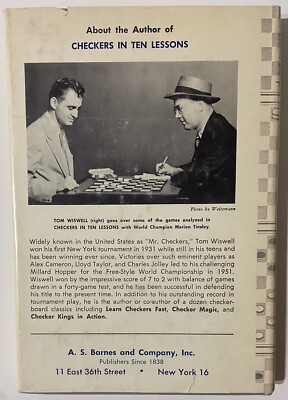
Wiswell’s Way: A Life on the Squares and Between the Lines
By Tom Wiswell (with a little help from Bo Keely and AI)
Chapter One: Brooklyn Beginnings
It all began at the corner of Atlantic and Nostrand, Brooklyn, 1917. A working-class neighborhood, a Jewish family, and a boy who would grow up to be, among other odd things, a world checker champion. Yes—checkers, the game you played at your grandfather’s kitchen table, which I turned into a lifelong study, an art form, and eventually, a philosophy.
I wasn’t born into greatness or madness. Just into a world that still had trolleys clanking down the street and fathers who worked with their hands. Mine owned a small shop and taught me the first lessons of trade, thrift, and tact. My mother taught me patience. The combination, it turned out, is what you need to master any board game—and life itself.
Download the full bio (.docx file)
May
28
Adapting to the situation, from Big Al
May 28, 2025 | Leave a Comment

Street smarts: how a hawk learned to use traffic signals to hunt more successfully
But what was really interesting, and took me much longer to figure out, was that the hawk always attacked when the car queue was long enough to provide cover all the way to the small tree, and that only happened after someone had pressed the pedestrian crossing button. As soon as the sound signal was activated, the raptor would fly from somewhere into the small tree, wait for the cars to line up, and then strike.
Easan Katir predicts:
Next iteration: the hawk will be pressing the pedestrian crossing button!
Michael Brush quips:
Pavlov’s birds.
Henry Gifford writes:
When I was hiking down The Grand Canyon I sat on a rock at the edge of the trail and took out a sandwich and started to eat. A bird came flying from my left side, toward the sandwich in my right hand. I reacted by pulling the sandwich back, to the right side of my head. Another bird came from behind and grabbed it.
Later I heard the birds’ favorite food is tuna fish, which they steal cans of from hikers. They open the can by grabbing it in their beak and flying above the one of the three cabins at the bottom of the canyon where the park rangers live and dropping it on the roof. The rangers have been trained to comply by opening the can and placing it on a convenient rock.
Pamela Van Giessen responds:
Was it a raven? They are particularly smart birds when it comes to getting food out of visitors to the national parks we have visited.
Asindu Drileba writes:
Crows & ravens would make good scientists. Here for example a video of a crow showing that it understands water displacement in different scenarios.
Bo Keely, from the desert:
Yesterday at the meteor crater in Death Valley two crows perched on the rim. They had grown feather sunglasses and asked for food. I went to the car & they followed and I gave them whole wheat bread. Then I got in & drove a couple miles down the road, pulled over to check directions, and they landed outside the driver's door asking for more bread.
Sep
1
Executive Hobo: The Extraordinary Life of Bo Keeley
September 1, 2024 | 1 Comment
Executive Hobo: The Extraordinary Life of Bo Keeley
Changing Roads Podcast
Travel back in time with us as we sit down with the legendary adventurer, Bo Keeley. From his humble beginnings, to veterinary school, to his rise in fame in sports, to his break from society, trading a normal life for the hobos life, to traveling the world, to his unconventional home in a shipping container in Slab City, California, Bo's life is a testament to relentless exploration and resilience.
With every twist and turn, Bo imparts invaluable lessons on survival, curiosity, and the unyielding human spirit. This episode is a treasure trove of stories from a life lived on the edge, full of profound moments and unforgettable encounters.
Jul
26
Precedent weather-change responses, from Kim Zussman
July 26, 2024 | Leave a Comment

A mass sacrifice of children and camelids at the Huanchaquito-Las Llamas site, Moche Valley, Peru
Here we report the results of excavation and interdisciplinary study of the largest child and camelid sacrifice known from the New World. Stratigraphy, associated artifacts, and radiocarbon dating indicate that it was a single mass killing of more than 140 children and over 200 camelids directed by the Chimú state, c. AD 1450. Preliminary DNA analysis indicates that both boys and girls were chosen for sacrifice. Variability in forms of cranial modification (head shaping) and stable isotope analysis of carbon and nitrogen suggest that the children were a heterogeneous sample drawn from multiple regions and ethnic groups throughout the Chimú state. The Huanchaquito-Las Llamas mass sacrifice opens a new window on a previously unknown sacrificial ritual from fifteenth century northern coastal Peru. While the motivation for such a massive sacrifice is a subject for further research, there is archaeological evidence that it was associated with a climatic event (heavy rainfall and flooding) that could have impacted the economic, political and ideological stability of one of the most powerful states in the New World during the fifteenth century A.D.
Laurel Kenner comments:
In Lessons from History, the Durants write that Peru was a happy socialist state until the arrival of the conquistadors in the 16C.
Bo Keely reports:
Iquitos, Peru at the headwaters of the Amazon Rio is the only of two places I've lived in the past 20 years. The other is here in Slab City. I had a trip planned to Peru this month but got a desert skin infection that the jungle would have ravaged. As such, i've lived in the Peruvian Amazon a half-dozen times for months at a stint, all in the jungle hiking and hitchhiking banana boats. The proposed postponed trip was to hitch the rios again doing magic tricks for the natives in putting together a photo-essay. The Peruvian Amazon is my haunt because the people operate very low on the brainstem. Cannibalism and malaria make them perhaps the greatest evolved and toughest humans on the planet. Put succinctly, if one is invited to dinner make sure the host isn't licking his chops. I'll go back, and escape again with magic.
Asindu Drileba is concerned:
Put succinctly, if one is invited to dinner make sure the host isn't licking his chops. I'll go back, and escape again with magic.
You have unlocked a whole new level to what I consider a set of risks people take. Please don't do that again.
Jun
23
Interview with the Chair from 2020
June 23, 2024 | Leave a Comment
Queued up to the start of the actual interview:
An Education from a Speculator: Interview with Legendary Victor Niederhoffer
Laurel Kenner approves:
One of the best interviews of the Chair. —The Collab
Bo Keely writes:
i like it, a fine reacquaintance.
Peter Ringel responds:
Thank you, watching it now. I also want to highlight the recent mkt calls on Twitter, which worked nicely. This and the wonderful articles about MFM Osborne.
May
11
Small business, from Laurel Kenner
May 11, 2024 | Leave a Comment
Greetings from Greenwich, Connecticut, one of the nation's wealthiest towns. This year:
1) Steinway closed its piano store and announced that all pianos would be liquidated at steep discounts.
2) Saks Fifth Avenue closed its brand-new (and very good) restaurant after spending $1 million on a remodel. Also closed its retail stores along the main drag.
3) A favorite Chinese restaurant in Old Greenwich closed after serving three generations.
4) A venerable Old Greenwich sit-down cafe with the best fish-and-chips in Connecticut also closed.
5) A good-value nice clothing store on Greenwich's main shopping street closed, just one of several.
It isn't just East Coast. On a UCLA visit with my son, I breakfasted at a landmark, Patrick's Roadhouse in my hometown, Santa Monica Canyon. The week after I left, a friend told me that Patrick's had closed after 52 years. COVID relief had expired. Arnold Schwarzenegger, who has a special throne there that can bear his weight, had bailed it out previously — but hasn't stepped up to the plate. A GoFundMe campaign is attempting to keep Patrick's alive. Fixer-uppers on my old street start at $6 million.
Why is any of this important? When small businesses close, the ordinary people must move on, be they customers or owners. They spend less. The economy reflects their diminished circumstances.
What grinds me the most is the Steinway store's failure. I'm teaching piano now, and I am so tired of seeing my students fail to develop their ears because they can only afford horrible electric keyboards.
Bo Keely responds:
i think it's a local thing. we can't see the world forest for the American trees. i just traveled through Mexico the hard way under a pack and the country bustles, thrives, and has altered the mindset to friendliness to strangers. the best investment is along the Sea of Cortez where, 15 years ago, there was one sleepy fishing village where i couldn't find a meal or bed. i slept in the weeds. now it's the Platinum Coast with twenty miles of high rises. there's a 200-mile new skyscraping powerline to meet electricity demand across the dune capped desert where, as seen yesterday on my throne on La Bestia, the last poles are driven and strung to blow open the coast to investment.
Feb
23
Backlash against travel meme, from Zubin Al Genubi
February 23, 2024 | Leave a Comment

There is a backlash against travel meme occurring. I don't have numbers but I'm noticing travel is down. I don't feel like traveling. My traveling friends are staying home. I saw a magazine article on why travel is bad. Boeing is down.
The Case Against Travel
It turns us into the worst version of ourselves while convincing us that we’re at our best.
H. Humbert responds:
Boeing is down because of the well publicized mechanical problems and the exposure of their general carelessness. They're not affected a great deal by the minute-to-minute variations in travel demand due to long lead times and large backlog.
Pamela Van Giessen writes:
The Davos crowd has been pushing no travel because climate change. Except for their private jets to exclusive Swiss resorts.
Air fare to AZ is high for Feb-April and Scottsdale airbnbs are pricey so I’m not sure if travel is really down except to MT because no snow for skiing. A friend reports that Park City was busy for Sundance. Besides, don’t most people travel a bit later during spring break when the kiddos are out of school? And could it be they are booking their travel for when they can drive and avoid airport unpleasantness?
Word is that Coachella sales are slow but Stagecoach which takes place a week later sold out super fast. Seems like Coachella is flagging on the booked acts, not a lack of travel interest (given that Stagecoach is basically down the road). Charley Crockett tickets for the middle of nowhere Emigrant MT sold out in about 20 mins for June. Maybe it’s all local but I suspect a fair number of tickets were bought by out of towners.
H. Humbert observes:
I was in Napa Valley recently for somebody’s birthday and everything was sold out but the winery. Some people needed to find last minute hotel reservations, was almost impossible. The restaurant where you eat in a yurt had no empty yurts, in torrential rain. Not considered the best time of the year to visit it either because it does tend to get rainy.
Henry Gifford comments:
10 or 20 years ago Boeing moved their corporate headquarters to Chicago for the stated purpose that they wanted to be taken seriously by Wall Street. Headquarters >1,000 miles from the nearest factory? Insane. The place was run by engineers, which is smart for a company manufacturing complex things. Now I think they are run by accountants and lawyers - see how Detroit has been making out with that strategy.
The problems a few years ago with planes diving unexpectedly were caused by the MCAS system: Maneuvering Characteristics Augmentation System - an acronym giving little indication about what it is or does. The system took an input from one angle-of-attack sensor on the nose - a fin whose position changes with the angle of the wind passing over the nose of the plane - and if it saw the nose was too high (could lead to a stall: chaotic airflow over the wings causing a loss of lift), it automatically pointed the nose of the plane down. This broke the rule in aviation design that the failure of one mechanical device (the angle-of-attack sensor) should not lead to a crash. Bad sensor readings caused the sensor to push the nose down when the plane was actually flying fine - two planes nosed down into the ground, killing hundreds of people. A better design strategy is to require simultaneous failure of two mechanical devices to cause a crash. In other words, the computer should have been wired to two sensors. The crazy thing was that the computer was wired to two sensors; each plane had two, or optionally three. If the software received contradictory signals, a red light should have alerted the pilots and disconnected the "ANDS" (automatic-nose-down-system (my name), and if the plane was on the ground, it should not take off until the sensor(s) work. Basic engineering 101.
The company might do well with government contracts, automatic market share, etc. But it will be decades before the young and ambitious will be proud to work there.
Bo Keely relates:
A new Slabber just retired here from Continental Air. He insists that Continental for years has been tied to the CIA, and that he too was that. With a Masters in Electronics, he is also the person the President called to deflect missals gone astray. The technique is to send two jets after the launch to intercept the wrong destination. The most recent example was one shot from a submarine off Hawaii aimed for a Utah test target, that misguided toward LA. That would have been a horrendous traffic jam. The first jet, slower that the missile, intercepts its trajectory to radio the bearing to a second jet to close in to electronically knock the missile off-course. It landed outside San Bernardino to cause a forest fire that the military blamed on careless campers. Other scapegoats have been UFOs, but they've been US missiles.
Humbert H. is skeptical:
Distance from Hawaii to Utah is about 3000 miles. So slow moving cruise missiles can be ruled out. For either ICBM or IRBM, depending on the phases of the trajectory, the speeds can vary. These vehicles' speeds after the boost phases range from Mach 18 to 25. Mach 1 is 767 miles per hour. A typical passenger jet can reach no more than 600 miles per hour. There are many things about the fictional story of the ex pilot just simply don't add up.
Dec
17
Advice to Aspiring NYC Cops, from Bo Keely
December 17, 2023 | 1 Comment
[Ed., for color: 14 Days In a City With No Laws: Slab City a Squatters Paradise]
A friend Ron in Slab City was a NYC police officer for one day. It was his dream come true to work the beat, the highest pay grade due to overtime, doing what he liked to do. ‘I can communicate with and help any person on any level.’ Two years ago, a Mensa, he completed the cadet course with one of highest grades in history and became a NYC beat cop for one day.
The second day, his lieutenant called him in and said, ‘Are you thinking of taking another job?’ ‘Never,’ he replied. ‘Why don’t you use your degrees in nutrition, business and psychology to become a teacher?’ ‘No, I want to walk the beat.’
The lieutenant continued, ‘I have to let you go. We can’t keep anyone on the force who scores a 90 or above. I myself got a 70. It’s not financeable feasible because it takes five years to become a detective where you’d shine. Nobody will want to work with you until then because you’re too smart. You probably don’t even want to hurt criminals. You’d figure out how things work.’
My buddy couldn’t argue with that, and turned in his shield and gun. He started a window washing company in the Westport, CT area to earn a stake to buy a van and drove it to Slab City, ‘The Last Free Place.’
I stood with him this morning inside what Slabbers call the Fortress of scrap metal and pallets atop a four-story crow’s nest looking over the town as far as the eye can see.
Oct
10
Two new books by Bo Keely
October 10, 2023 | Leave a Comment
Bucket of Wild Photos: Slab City
Bucket of Wild Photos II: Slab City
Feb
23
Analysis of Train Derailment in East Palestine, Ohio, from Stefan Jovanovich
February 23, 2023 | Leave a Comment

Starts at Minute 4:00: A Failed Defect Detector and the Train Derailment at East Palestine
The achievement of railroads is that they can carry massive loads thousands of miles with an economic efficiency that no other form of ground transport can come close to matching. To do this they have to violate the first rule of all practical mechanical engineering and have metal scrape against metal without any lubrication. The wheels and rails are steel against steel. If an air brake fails for a wheel, it stops it dead and the wheel becomes a giant flint throwing sparks and then flames. The only solution to this problem is to slow the train to walking speed and move it to a siding. If the train continues at speed (30-40 mph in developed areas), that car will eventually derail. The unanswered question for this incident is why the train crashed in the pattern of an emergency stop by the engine, not the derailment of a single car. That could have been caused by the engineer not having the skill and temperament required to avoid literally slamming on the brakes because "the train is on fire". But, that is pure speculation by those of us sitting safe in the bleachers.
Bud Conrad writes:
Thank you for the explanation in bigger picture context. There seems to be something much more unusual about this particular incident, than just a mechanical failure, of a type that must happen frequently because steel is riding on steel.
Jeffery Rollert comments:
Modern rail cars have systems that brake all cars at once (locomotives included). It’s done by a radio signal or wire, and no longer a pneumatic propagation. I know, because a very good friend designed and built the system decades ago. Cars derail, when the locomotive derails and effectively becomes the brake. So why did the locomotive derail?
I haven’t seen the video, but strongly suspect something in the tracks or a switch was improperly diverted that the locomotive couldn’t handle the redirection at that speed.
Henry Gifford explains:
Steel rolling on steel is a great idea because there is such a small amount of friction. An adult human can allegedly push a fully loaded (200,000 Pounds or more) railroad car along a level track (but not get it started – another story). Rubber covered wheels, in contrast, require much more energy because heat is generated as the rubber flexes (internal friction from molecules rubbing on each other). But, if the railroad train car bearings seize up, steel is sliding on steel – still lower friction than rubber rubbing on a road, thus the locomotive(s) can drag it along until derailment…
Read the full discussion here.
Nov
22
Markets and sociobiology, from Scott Alexander
November 22, 2022 | 1 Comment
Markets are teaching me that Freud was wrong about the subconscious and sociobiology is right. The subconscious isn't a personal universe of abstract mysteries revealed through metaphors; it's a biological tool for groups to sort out hierarchies. At some point, how much risk you place on a trade is just a test of your place in the hierarchy of the tribe. Just as kids test boundaries to discover the rules of the tribe, adults make decisions to test their place in it. Making a big bet has more to do with acceptance than greed.
Why? Think of it this way: There is no genetic survival at the group level survival without hierarchy because groups wouldn't be able to effectively organize without a clear chain of command. Upsetting the chain of command puts its entire genetic survival at risk. Nothing gets done if nobody is going to do what they're told. Some must lead, most must follow, or we all die.
The subconscious is how we connect mentally with each other without actually hearing each other's thoughts. Through that mental connection, the subconscious will direct the conscious mind to make decisions that test your place in the tribe.
Doing well in anything fundamentally challenges the structure of the tribe. When we move up too quickly, we can reasonably wonder if the ascension was warranted, and cover our denial through arrogance. There will be times the temptation to make bets against our own interest because the tribe is always questioning your rank and right to exist through your subconscious.
The temptation to make a trade against your own personal interest is just the tribe's way of testing if you belong where you are. The market is an ideal forum for reordering or reinforcing the hierarchy. Making any bet that can lower our place in the tribe is an admission that we can't find consistent asymmetrical returns. Nature uses the markets to sort out who belongs where in the tribe.
After actively trading for two years I understand that my subconscious is not my friend. It's a biological tool that evolved to serve the group over myself. Only by consciously choosing facts do I move beyond factional control. But I also understand the meaning of learned helplessness. Sometimes I'm afraid of what I might learn next.
Bo Keely responds:
nice to read these fresh original thoughts. in addition, anything by the father of sociobiology E.O. Wilson is solid. he is the foremost authority on ants, and my Quaker Army Ants are still pulling the wagon of oats to their nest.
Nov
15
On virtue signaling, from Henry Gifford
November 15, 2022 | Leave a Comment
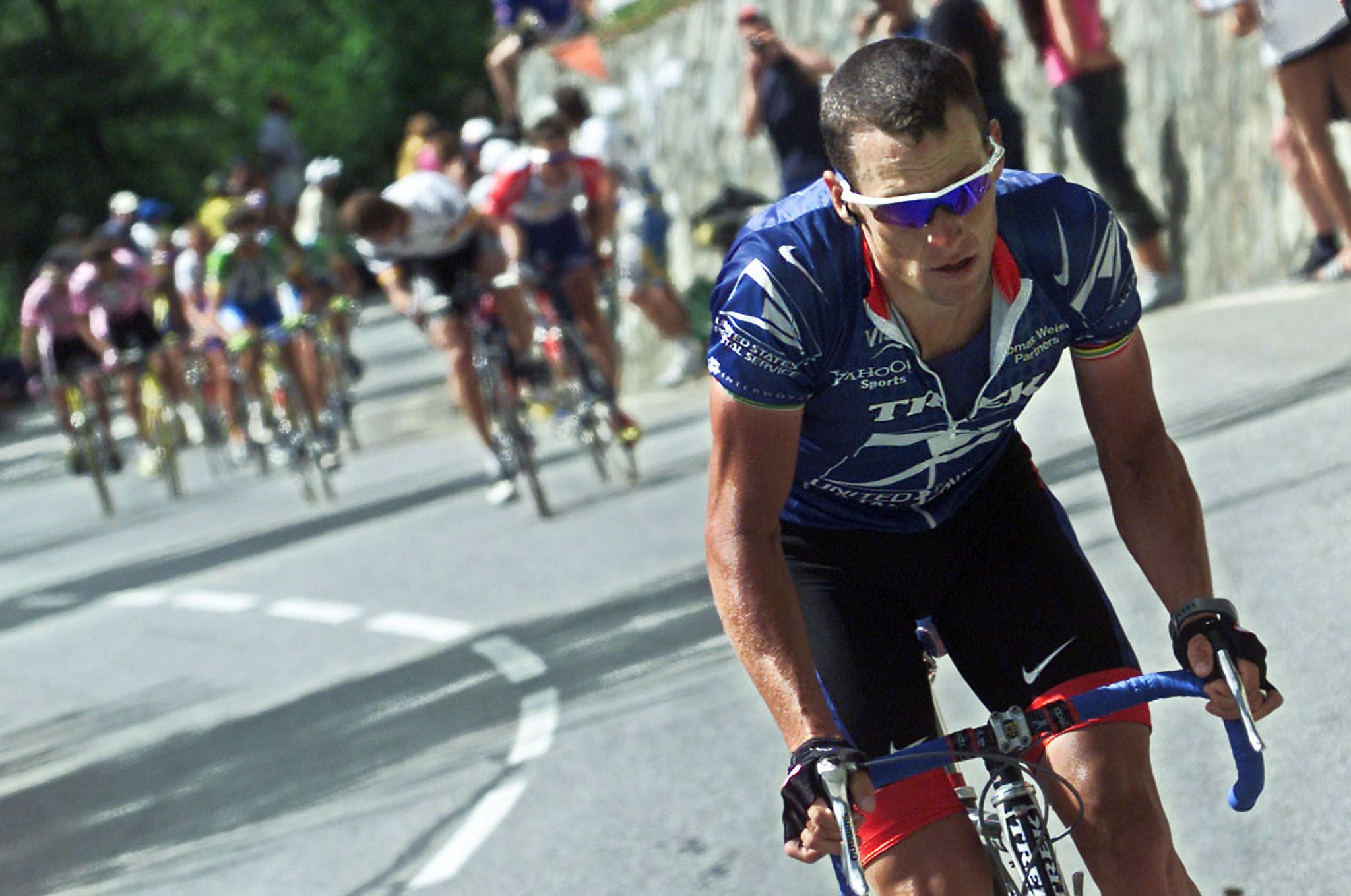
While Lance Armstrong was racing he tested positive seven times, but was let off the hook on technicalities, not all valid, each time. This was well known at the time, but few journalists mentioned it. As far as I know, among the few with the courage to mention it, none said “therefore he is cheating” or said “therefore he was cheating”.
During the years Lance and The US Postal Service team were winning The Tour de France year after year it was said that the team specializes in winning the team time trial (race against the clock) events that were part of the tour. As a former racer I wondered how that could be, as that event arguably does not require special skills different from the skills required for other events - probably fewer skills are required. I strongly suspect that they won those events with a lot of help from electric motors hidden in the bicycles, probably within the “disk” (streamlined) rear wheels. Maybe motor doping helped Lance in his other events as well.
Bo Keely adds:
i remember reading & studying something similar from you before. or, it could be that the electric clocks were fixed. a guy with a top hat used to walk through las vegas casinos & a device in the hat triggered jackpots to his associates. lance armstrong was the marty hogan of bicycling. people supported his cheating because they wanted a hero, and because his sponsors had so much invested in him.
Pamela Van Giessen writes:
The human animal craves heroes so we will go to a lot of lengths to support the illusion. Because admitting that heroism is an act, not a personage, is almost like refuting the existence of god.
Good people can do bad things and bad people can do good things. Too bad we have such a hard time wrapping our heads around this.
Laurel Kenner agrees:
Brilliant insight, Pamela. The idea is hard to embrace because it means confronting our own bad deeds. We all want to see ourselves as good people.
Nils Poertner comments:
in Vedic culture there is something like Maya- the fog …that we see through the world - everybody has a fog around him/her so we never meet - we just see through this fog…and some are more caught up in Maya than others.
Nov
3
Want-ad indicator, from Henry Gifford
November 3, 2022 | Leave a Comment
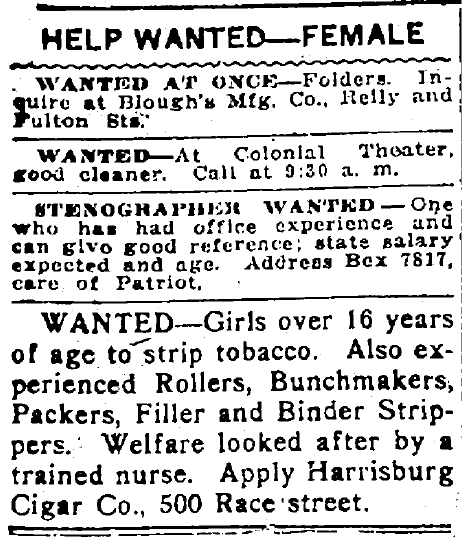
The want ads are perhaps the most honest part of a newspaper – the editors have little say in what gets written. The obituaries are interesting to me. I hear they are written years ahead of time, except for the part about how and when the person died.
Bo Keely expands:
it brings out something i didn't know: check various market in the want ads. that's as sure as hobo's checking the 'help wanted' ads when he rolls into town and decides whether or not to stay.
it would seem to me, and i don't have time now or i'd do it, to be simple to study and test a few newspapers' classified ads to find something that correlates either to a specific or the general market. if something were found it would likely be consistent. beats the moon.
Aug
10
The Count, from Duncan Coker
August 10, 2022 | Leave a Comment
Rereading the Count of Monte Cristo with my highs schooler, I am struck by the fact the all the virtuous characters are failures at business (ship owner, tailor, inn owner), while all the evil ones are great financial successes (currency speculators, war profiteers, state bankers). Of course the Count rectifies this. His fortune comes by way of a cardinal in Italy, a secrete cave and 14 years in prison. Perhaps the author's ( Alexandre Dumas) message is that every great fortune has a dark past. Maybe that was true in his day, but ones hopes that is not the case today.
Kim Zussman comments:
Socialism is as old as the bell curve.
Gyve Bones writes:
I'm reading this book too, and have found it really interesting. I picked it up because I'd seen two different film adaptations of the story, one starring James Caviezel, who a year later would portray Jesus Christ in Mel Gibson's "The Passion", and an earlier one from the 1970s. The two were so different in many details that I wanted to see the real story in the book. Both movies were good, each in their own way.
Like Les Miserables, by Victor Hugo, the Dumas story is about French society dealing with the ripple effects of the French Revolution. Both have heroes who are sort of New Christ figures. Both characters are unjustly imprisoned. In the case of Danton, the "Count", it was a case of a corrupt prosecutor during a time much like now, where Napoleon is in exile, and his alleged supporters still in France are being hunted down and imprisoned. It reminds me a lot of this nation, which has sent a former president into exile on an island off the coast of Florida, and there is an official inquisition into his affairs which is imposing punitive political prison sentences on his political supporters, and making it a crime to speak with the former president on the phone, in order to thwart any attempt to organize a campaign to return to office.
There's a point where the Count uses and extols the virtues of hashish which you might want to be prepared to discuss with your teenager.
Project Gutenberg has a very nice illustrated edition of the book available, which is helpful in imagining the scenes described.
I had trouble with the size of the illustrated ePub version for my iOS Books app on my iPad. It's 76 megabytes with the images included and it would crash the app. So as an alternative workaround, I downloaded the image free ePub into the Books app, and keep a web page open on the index of the images, which are named according to the page numbers in the book, and I view them as needed as I'm reading along.
Stefan Jovanovich responds:
Dumas pere was anything but a socialist. He was an aristocrat who was beyond snobbery and sentimentality. Good people regularly get screwed by thieves, frauds and liars; but then, so do the thieves, frauds and liars by each other. That is the "moral" of the novel. The Count succeeds in his quest for revenge by turning the bad guys against one another. He is a truly great figure, and the wiki page does him proper justice.
Dumas was neither a monarchist nor a Bonapartist. He was a republican and a Freemason. The novel makes that very clear; and it got Dumas in real trouble when a second Bonaparte became Fuhrer. Dumas had to flee France for Brussels, which also helped him escape his creditors. Read the wiki page; it is a beautiful exposition of an extraordinary life.
Full disclosure: One of the Stefan's weird (academics don't even want to discuss it) speculations about Ulysses Grant is that he was reading Dumas' novels when he was at West Point when he was supposed to be studying "tactics". Grant did not have a full duplex brain when it came to language and music; he taught himself to read German and French, but he found it impossible to speak or understand the languages when spoken. He loved music, but could not play it or read it as anything but notation (i.e. he could not translate the symbols on the page to sounds in his head). Hence, his joking about himself that he only knew two songs - one was Yankee Doodle Dandy and the other was not. The biographers all assume that because Grant had no verbal fluency, he had not read Jomini. He had; he also knew it was complete crap, but why say so except to start an argument? (Grant definitely did not have the legal mind or temperament).
Gyve Bones counters:
Straw men are easy to knock over. I did not assert Dumas was either a monarchist or a Bonapartist. In the same way, Hugo, son of a mother of the ancien regime and a father who was a Revolutionary, he was a melding of the two, and the novel sort of becomes a Hegelian dialectic about the synthesis which emerges from the thesis (the old order) in conflict with the anti-thesis (the Revolution). Jean Valjean is his synthesis, the New Man, a man of Christian virtues without Christ and the sacraments of the Church He founded.
Steve Ellison adds:
Dumas lived a high life and was chronically in debt despite having a number of bestsellers. I still remember one sentence from the book, "He was denounced as a Bonapartist …" It made me think that the first totalitarian society was Revolutionary France, but I hesitate to make such a sweeping pronunciation in the presence of Mr. Jovanovich. In any case, current efforts to make modern denunciations similarly career-ending are a grave threat to liberty.
Stefan Jovanovich agrees:
Great comment, SE. The French revolution - as an event - has a scale and complexity that can only be matched by the global war that began in Spain in 1936 and China in 1937 and ended in Korea in 1954. What Dumas was describing was its net effect: everyone in France had become so kind of spy and snitch. So, yes, it was the first totalitarian society; but you need to give the Citizen Emperor the same credit that Stalin and Hitler deserve for so thoroughly organizing the tyranny.
Bill Rafter offers:
Pardon me for coming in late to this discussion, but there is a mistake: The tailor was Caderousse, one of the three co-conspirators against young Dantes. That failed tailor then became the owner of the Inn at Beauclaire, who then murdered the jeweler. The Inn itself failed because its location was bypassed by a newly constructed canal. That leaves Mr. Morrel, who failed because he was in a highly speculative business (the hedge fund of its time) and was not diversified. However his successors in the business, Emmanuel and Julie were certainly righteous and successful. They retired to a nice home in Paris.
Stefan Jovanovich writes:
Not mine. Dumas was very much someone who believed that an honorable life was the only one worth living, whatever its financial costs or rewards.
Henry Gifford writes:
When I was growing up in a part of New York City that was populated by about half Christians and half Jewish people, almost none of the Christian adults owned a business – they had jobs. The one Christian adult that I knew owned a business did not attend religious services. All the Jewish adults owned businesses except a few that were involved in organized crime (professional level: state senator, state assembly, etc.).
When I was a child attending a Christian school, they made us sing a song that included the words “oh lord, do until me as you would do unto the least of my brothers”. I didn’t sing it, even though I was required to, as I saw it as a request for the all the worst things that happened to other people to all happen to me. As a child I thought this included blindness, loss of multiple limbs, leprosy, locusts (even though I wasn’t sure what those were) etc.
I have never had a mentor in my life. The closest I came were adults who advised me to “make sure you learn a trade so you will have something to fall back on”, who I made sure to steer clear of after I nodded and smiled and made good my escape. When I was 16 I asked my father what he thought I should do when I grew up. He suggested I go on welfare. I never asked again, or brought up the topic of what I was doing with myself, etc. When I was about ten years into writing a book, I showed the almost-finished version to my parents, figuring they should see it while they were still alive. The only comment they had was a harsh criticism of the grammar on one page, which they insisted I correct. The “incorrect” grammar was part of an insightful and charming passage written by Benjamin Franklin in the 1700s.
A few years ago I was walking past a Jewish community center near where I live in Manhattan. On the bulletin board outside I saw a schedule of upcoming lectures. One was titled “The Five Risks Every Entrepreneur Should Take”. I picture a member of the community that sponsored that lecture stumbling in business a little while being surrounded by people who are supportive, and who applaud the person for trying, and then for getting up and going at it again. I doubt any member of that community would ask the person who stumbled if she or he had made sure to first learn a trade to fall back on, or demand that children sing a song like the one I and my classmates were required to sing.
I still manage to do OK financially. Among other endeavors I own or am part owner of property in nine US states, soon to be ten, all worth much more than I paid (including the properties I am contracted to buy on Monday). And I have never “paid my dues” by spending years doing something I hate, or by gaining all the easily available advantages of being dishonest. But the Christian kids I grew up with? I can’t think of one who owns a business, and I can only think of two who likely have enough investments to carry them for long if they didn’t keep working at their job. And I can’t think of any who seem to enjoy or gain much satisfaction from that which they spend their day doing.
As for the emotional toll religion has taken on people over the centuries, suffice to say that someone once summarized the difference between the emotional state of veterans of the US military during WW2 vs. those who were veterans of the Vietnam War as the emotional state of Vietnam War veterans being the embodiment of the result of one generation of young men being lied to by their father’s generation. Likewise, young people being lied to about what economic decisions they ought to make, meanwhile a different reality is there for the seeing, also has its cost.
When growing up I spent time in Jewish households when I could, as the people there seemed to me to have an upbeat and healthier attitude, compared to the funeral home ambience I sensed in most Christian households. But, of course, most people growing up in the US do not have that opportunity, and fewer take the opportunity if available. Most are simply beaten down by the forces of religious insanity and stay down for life. Just today I was waiting for a train and a person nearby was shouting into her phone on speaker, describing in an upbeat tone her life that struck me as horrible, while she periodically mentioned that “god is good.” Not to her, I think, but I didn’t argue with her.
Bo Keely responds:
henry, this is interesting from our comparative angles. I’ll bet the few kids like u and I would say the same thing. as a child, I also rejected the ‘do unto others…’ because it included negative things.
i also had no mentor throughout life. when I eventually took a teacher test that required answering, ‘describe your first mentor’ I wrote about an admitted imagined mentor.
likewise, when I was sixteen, my mother asked, ‘what do you want to do in life,’ on receiving a selective service notice. It had never donned on me, so I replied, ‘be a veterinarian’ since that was my summer job. that’s how I became a vet.
and, i also have never ‘paid my dues’ to society figuring i never owed any. The only real money I ever made was in rental housing in Lansing, MI with a strategy of buy cheap complexes, fix them up, and rent to tenants receiving monthly checks directly deposited into my account. i still do well financially with 25 published books that sell, on average, one each per month. my financial secret of life is to have negligible expenses. I have gained satisfaction from each of dozens of jobs too, and never lived hand-to-mouth. it’s long-term gratification.
I have reacted to the lies of my father’s generation by retreating from Babylon into an anarchic desert town. each is an independent citizen who thinks god is a stinking mess in the sky, and one should learn in youth to take care of himself.
Kim Zussman adds a coda:
After the revolution apartments and land was confiscated and living arrangements made equitably* by central committees.
Los Angeles voters to decide if hotels will be forced to house the homeless despite safety concerns
*government jobs, military, connections, etc.
Jul
17
Seen on the streets of Maui, from Zubin Al Genubi
July 17, 2022 | Leave a Comment
/cdn.vox-cdn.com/uploads/chorus_image/image/49716283/531739974.0.jpg "TSA lines")
A 3-4 hour TSA line stretching past baggage claim. Horrifying. Some problems in the transportation industry. Its apparently widespread.
Laurel Kenner responds:
Guaranteed to happen when government goes full authoritarian and shuts down the economy for iffy epidemiological reasons.
Mind owner. Mother of fire kid. Hardened gardener.
Bo Keely recalls:
i had a flight out of SF to JFK on the morning of 9/11. i was sleeping on the couch of an executive hobo named 911 who was in charge of Bay Area disaster response. he shook my shoulder awake, and said, 'roll over and go to sleep. they've cancelled all flights into NY because the world trade center was just blown up.' so, i got to sleep in, and rescheduled for a few days later.
on arriving at JFK the security was crazy. we had to go into a tunnel and wait for about an hour, and then through a metal detector before boarding. as an experiment, i stuck a piece of metal in my cap that should have set off the detector. but it was too high on my head and passed without detection. I probably visited u & vic on that trip.
Jul
17
Attention, from Zubin Al Genubi
July 17, 2022 | Leave a Comment
I notice many people don't really pay attention to others, or listen at all. They often talk, without listening. Or their attention wanders to something else. They are busy with their own train of thought and basically shut off the outside world.
It's important for traders to get out of their head and see what is going on around in price, in the world, in other people's minds.
Larry Williams agrees:
So true and more so when communicating with the market we never listen to it.
Nils Poertner comments:
quite insightful what you said. good to have other ppl remind us of that since humans (on their own) tend to have a tendency to go into their imagination we all do this more or less. painful to hear that from another person in the moment though.
Zubin Al Genubi adds:
Or worst of all, their smart phone. It's a pandemic size problem.
Henry Gifford recalls:
When I was a kid I lived a few blocks from a very large park in the Queens part of New York City. The park is a couple of miles long, mostly woods, and was crisscrossed by a network of trails at least six feet wide that were perfect for riding on our bicycles as teenagers. There was one very hilly part where the bushes and trees were largely missing, as it was heavily trafficked by motorcycles and bicycles going up and down and over the jumps.
Recently I went there on a mountain bicycle that I had bought when I was spending time in Colorado. Now the trails are one or two feet wide at most, with lots of poison ivy all over. I found a spot wide enough to turn around without touching the poison ivy, backtracked, and took streets to the other end of the park where the open area and jumps used to be. The trails there were no wider, and I never found the hilly, open area with jumps, as the whole place is heavily overgrown now.
Remembering that falling is a regular occurrence when I ride a mountain bike, and realizing that one fall into those bushes would likely result in poison ivy all over my face and neck and arms, yielding a summer to remember, I got out of there and sold the mountain bike a few days later.
The guy who bought the mountain bike explained why the trails are so overgrown now: video games, cell phones, etc.
Bo Keely writes:
better poison ivy than video games.
May
27
The idea that has the world in its grip
May 27, 2022 | Leave a Comment
i haven't seen an update on this in 20 years. i believe its relevant.
The World in the Grip of an Idea Revisited
Socialism Destroys Institutions, Societies, and Individuals
chalk up the losses of the yankees to the unholy assuaging of the idea that has the world in its grip. its shameful that a manager can't support his players, but this is part of the idea that certain personages are entitled because of the masters 100 and disney syndrome.
Laurel Kenner writes:
I have long wanted to do a study of Sweden, the darling of US socialists.
Peter Saint-Andre adds:
I read an article in the last ~2 years about Sweden (perhaps in Reason magazine?) which argued that these days the country is not nearly so socialistic as "progressives" think.
Jeff Watson comments:
I like Sweden’s system of private roads, and the fact that everyone, rich and poor, has to pay the same rate of taxes.
Andre Wallin writes:
my parents immigrated to the US when Olof Palme was prime minister. they claimed they moved in large part because of his socialistic policies. he was assassinated in 1986 by "Skandia Man" who they only figured out who it was in 2020 posthumously. my uncles do pretty well in sweden as small business owners these days, but nothing compared to what is possible for so many in the US.
Henry Gifford responds:
Some years ago I attended a lecture by two people from Sweden, who argued that Sweden has high taxes, but it is worth it for all the services the government provides. But they did not convince me that they paid lower taxes than we pay in the US – sounds like we pay higher taxes here. They were shocked to hear about paying high real estate taxes with money that has already been taxed.
Yes, Sweden is the darling of socialists in the US. But most articles I’ve read say that Sweden is an example of socialism that works, then include nothing to back up that claim, and don’t even reference it later. I’ve heard that Sweden toys with socialism every 20 or 30 years, finds it is a disaster, and gets as free of socialism as fast as possible. If this is true, it wouldn’t discourage a socialist from claiming that Sweden is socialist.
One time I was talking about “government” schools in the US. Politically incorrect to call them what they are. I might have quoted Cato’s finding that government schools cost twice as much as private schools. A guy was talking about a wonderful “public” school, and I asked if it was a government school. He said he didn’t know. I asked if it was on land or floating around on a boat. He said it was on land. I asked him who owned the land. He said he didn’t know. I assured him that his level of dishonesty qualified him for being a very good comrade. He didn’t object. Some level of dishonesty seems a prerequisite for people who claim to believe that socialism is a good idea.
Bo Keely comments:
After traveling the world to 105 countries, I've concluded it's not a matter of Socialism vs Capitalism. It's a matter of people. Some peoples can make a socialism work and do it. Other peoples at their best cannot make capitalism work nor desire it. So, one should look at squares and circles before deciding which hole they should fit into. I personally prefer the lone wolf life.
Apr
13
I've uploaded the Autobiography of Charles Darwin to my website of public-domain books, optimized for reading on phone or tablet. Enjoy!
Laurel Kenner applauds:
Thank you, Peter, and thanks for letting us know about the site. It's a treasure, full of interesting books.
Peter Saint-Andre responds:
Thanks, Laurel. I'm always adding more books and suggestions are welcome.
Bo Keely comments:
I'll read it again because it's worthwhile.
Peter Saint-Andre adds:
Oh, and I've discovered that Francis Galton wrote an autobiography, too. I'll add that to my publication roadmap.
J.T. approves:
Most definitely
Mar
28
How to catch a freight out of Niland, from Bo Keely
March 28, 2022 | Leave a Comment

Go sit in the bushes on the east side of the track along Beal Road. One train pauses daily here to let another pass or to change crew. The once-a-day is an average, is random, and the train rests for 10-15 minutes to allow boarding. Board toward the rear of the train to avoid the engineer’s glance, and choose a car with shade. In minutes, the train whistle sounds highball and you’re on the ride of your life.
These are the steps of each of my hundreds of freight rides, and of yours:
CATCH OUT: Where the hobo hops a freight.
FRISK THE DRAG: The drag is the string of cars behind the locomotives that you walk to pick a car.
BULLS: There are no RR bulls in Niland. As long as you’re not spotted by the engineer boarding it’s cool. Even then, he’ll likely look the other way.
THE RIDE: A freight train is a string of steel elephants that carry you across the country. It’s a notch above hitchhiking, faster than Greyhound, and you don’t need no ticket to ride.
AMERICAN DREAM: Congratulations, you’re living the American Dream!
ARRIVAL: Your arrival is the starting point of another ride. It doesn’t matter where you end up, because the journey is the destination.
A southbound freight out of Niland takes you three hours to Yuma which is an easy crew-change yard to catch out of. There’s a mission there. A northbound freight from Niland takes you to San Bernardino Colton Yard that is also an easy catchout for points east to Las Vegas or north to Portland.
Disclaimer: Freight hopping is illegal, this is not intended as an urge to freedom, and thousands are out there now on the iron road.
Jan
19
Shipping Container Homes, from Bo Keely
January 19, 2022 | Leave a Comment

I’ve reviewed elaborate videos and glossy books on shipping container homes at the high scale end. It’s far simpler for cheap. I’ve lived in two containers in different valleys and it’s as easy as going to the bread aisle at the grocery store.
You go to the vendor – around the Salton Sea it’s the Calpatria hay store or trucking companies near the border. You pick out a used one from the lot, fork over $1-2000 that includes transportation, and lead the flatbed with your new home out to your place. The driver slides it onto pre-laid RR ties, you put a lock on the door, and celebrate the new home.
The biggest advantages are it’s difficult to rob, arson, or blow over like in the Three Little Pigs, and without building codes since it’s on skids.
I had no idea on moving into my first container in 1999 on the Sonora that I was looking into the architectural future. I installed a loft with waterbed, office with a solar powered laptop, and garage beneath a trap door. Chilled air rose from the garage through stovepipes into the interior and vented hot air out the roof. A satellite dish pulled in the Nature and History channels on an upside-down B&W TV. A pet packrat was a muse and road partner in search of gold in abandoned mining camps that it had been trained to retrieve. We drove two hours to sub-teach when mining was poor.
Then, in 2013, I owned the first container home in Slab City and am as content as a clam. There are three more now, the nearest scavenged and dragged from a bombing range target and riddled with hundreds of high-caliber holes. The second was towed from the Mexican border and is hemmed with painted flowers. And, the third was trucked from Los Angeles and converted into a church.
I thought I was on the vanguard of a would craze that is verified.
In the South Africa capital of Johannesburg, thousands of brightly colored boxes piled on and around each other, are stacked and re-stacked, and hauled away on trucks and freight trains, as homeowners decide where they want to live or sell. In Sudan, a prison is built of old containers slammed together. That’s how secure they are. Now container architecture is a hip fad in European cities for offices and homes. London has one of the biggest housing projects in the world of containers, and Amsterdam has the largest student village with over 1000 containers.
In USSR, shipping containers are used for market stalls and warehouses. Southeast Asia bazars are typically double-stacked containers. New Zealand earthquake rocked malls were rebuilt of shipping containers in the business districts. A Tokyo company provides container modules for multi architectural use. Prefab container homes are bomb across China. Google barges ply the seven seas with superstructures of stacked containers.
Shipping containers were invented in the USA in 1953 when trucking businessman Malcolm McLean gave a lot of thought when, frustrated by the glacial pace of overnight freight transport on the American highway system, he fashioned a set of stackable aluminum boxes and outfitted a decommissioned tanker ship to shuttle boxes of cargo up-and-down the eastern seaboard. In the next two decades, it spread over the oceans to other continents to radically change the face of global shipping. No longer does cargo have to be loaded and unloaded by a cadre of dock workers. Suddenly, the major cost of getting consumer goods around the world efficiently dissolved, and with it, many millions of boxes have been built and shipped, trucked, and trained, and now lived in.
Today, at any given moment, there are about 20 million more bobbing across the ocean or sitting in ports around the world. Union Pacific trains slide them three miles from my Conex home, and hobos know that a ride on a container train is a cannonball to any destination.
The sky is the limit. I think shipping containers will advance to fill into our architectural dreams for city projects, apartments, condos, hotels, and single housing units. Shipping containers are legal homes in California and elsewhere. They are cheap, built like a tank, fit the Golden Ratio, fast to construct, without codes, with high resale value, and can be moved as your heart pleases.
Alex Castaldo comments:
I have never lived in a container, but I would not recommend it. They lack the natural insulation properties of a wood or brick home, so they are chilly in winter and hot in summer. There is also the problem of no windows….
Larry Williams responds:
They work well here in the usvi where folks put 2-3 together for L or U shaped home.
Henry Gifford expands:
A steel box leaks almost no air unless doors and windows are installed in a sloppy way.
In rare cases, a building's heating and cooling loads are actually calculated before equipment is chosen. The job involves lots of measuring, and some simple math in the case of heating, and some fancier calculations for cooling loads.
Having calculated the heating and cooling loads of each room in many buildings over the years, I have found that very roughly half the peak and annual heating loads for a building are attributable to cold outdoor air leaking through the building, about one fourth is heat transmitted (conducted and radiated) out the walls and roof, with the other one fourth going out the closed windows. This is a rough generalization, but about equally true for old, poorly insulated buildings and new, very well insulated and airtightened buildings.
So, the lack of air leaking through a shipping container goes a long way toward comfort - it eliminates maybe half the heating load. And without the usual chemical soup of construction materials (glues, sealants, caulk, paint) in a normal house, the need for ventilation for health is reduced to a smaller amount. As few houses, old or new, are ventilated (few people open windows, as they also admit cold air, hot air, humidity, insects, rain, snow, and criminals), reducing the need for ventilation is a nice thing.
One way to explain the leakiness of normal construction is to point out that a person can hold a concrete block to their mouth (or a piece of a block) and breath in and out at a rate sufficient to satisfy the needs of an adult. I don't recommend vigorous exercise while trying this, but the point is that normal, sturdy looking materials leak a surprisingly large amount of air. The leaking is worse at connections between materials, and even worse than that at connections between assemblies (walls to roof, etc.).
Cooling loads are much more complicated mathematically because of the effects of humidity on indoor comfort, and because a cooling load calculation has to account for solar gain into windows (usually the largest part of a cooling load for a house), internal gains of heat and humidity from cooking, lights, showering, breathing, etc. Numbers for heat and humidity output from a bowl of soup or a lab mouse can be looked up, and are useful for calculating the cooling load on a restaurant or a medical lab.
The total lack of windows, or lack of numerous large windows in a shipping container goes a long way to keeping a shipping container comfortable during the summer.
Bo Keely responds:
You make the mundane details of buildings interesting, and this more than usual. The only air leaks in my container are fork holes where they loaded it over the years. This brought the price down to my wallet. I choose to not plug them near the roof as they vent the air in the summer. Where there is air, there is sound. My almost hermetically sealed box is soundproof. Also, roaches and rats can't get in. These are things money can't buy in Manhattan. I've never been so content.
Jan
12
Unstuck, from Bo Keely
January 12, 2022 | Leave a Comment
Your vehicle sooner-or-later will get stuck in the sand. It happens to everyone who drives far enough off-pavement. There are many solutions. This best technique is from three decades of driving off-road in sedans and having unstuck them or others at least a hundred times.
I call it the LONG COME-ALONG. The only equipment you always carry is a $35 lightweight come-along and 70’ of strong rope. The beauty of this method is that washes of sand that you cross are lined with anchors of trees or creosotes no more than 70’ apart.
It goes like this. Your vehicle is stuck in the sand up to its hubs. You attach the rope to an anchor which is a tree or around the base of a creosote. You hook the come-along to the rope free end and its cable to the car. Now you rachet the car out without a sweat. I repeat, without the sweat of all other methods. Note that the come-along cable around its spindle is about 8’, so for every 8’ the car moves you must shorten the anchor rope and rewind the cable to inch the car out.
All other systems require a high jack, shovel, traction pads, water to wet the sand, air compressor, winch, or a helper vehicle.
A nifty option can inch you across the Sahara like an Egyptian. Carry your own pipe anchor and come-along. You will also need a heavy hammer to drive the 4’-pipe into the ground, plus a high-jack to jack it out and relocate it.
If you travel a regular route that has a sandy stretch, pound in a permanent deadman anchor at either side of the sand. 6’ fence posts 4’ into the ground work fine. This is how I used to go to and from town for many years on the other side of the Chocolate Mountains.
All the other methods I’ve heard of or tried are toilsome and may give you a heart attack in the summer. Of course, instead, you may pay a standard $750 for an off-road tow.
With the LONG COME-ALONG you may quickly extract others who will tip to cover your original cost of equipment. As usual, the less technical the environment the less technical the solutions to getting around.
Nov
22
Sign of the Times on Containers, from Bo Keely
November 22, 2021 | Leave a Comment
RR track robberies are a sign of the times. The Michigan Supreme Court judge Mike Cavanagh, whom i played softball with, once told my hobo sociology class that RR property is a prime investment for hoboes because the police have no jurisdiction. The bridges, tunnels, and rights-of-way along the tracks belong to the companies, so It takes a long time for the RR bull to arrive as tramps thumb their noses at the sheriffs.
Now the homeless are encamped along the track stretch from Los Angeles to the Long Beach international yard. This was one of my first rides, in the caboose days, where I walked out the Long Beach container yard and caught a local bus to the downtown Midnight Mission. With a hundred other men, I was subject to a pelvic UV light examination for gray soldiers (body lice) before they let us eat supper. Hobos carry urinal soap in their pockets to thwart the lice so they may sit and eat in peace.
That's the sort of people who are robbing the containers including oriental shipments and FedEx with their doors ripped and hanging open. I predict more of this in the future as homelessness and general national disgruntlement rise. It's a reason to sell short on containers, and with the price driven down you may live cheaply in one like me.
There is no such thing as a secure container. An outlaw who calls himself the Google thief drove up yesterday sunrise on a 350cc Yamaha dirt bike. He rides with a diamond blade saw to remote containers throughout the Sonora, in an expanding radius, and cuts open a door. He had just led a posse of sheriffs and Border Patrol on a merry chase through the desert before laying down the stolen bike under the skirt of a Palo Verde, covering it with branches, and walking on hardpack to a nearby Ironwood. There he watched the authorities drive 10 yards past him. He told me, "I plunder for fame."
Here’s the link to the shipping container heists by homeless at the Long Beach Port of Los Angeles where Louis L’mour worked in this wild, wild west.
Oct
7
The Man Who Looks Like a RR Signal, from Bo Keely
October 7, 2021 | Leave a Comment
Last moonless midnight I bumped my CSC-259 along the railroad right of way looking for the old RR stations. I was 20 miles south of Niland when I passed a railroad signal and the arm went down. But there was no train, and the arm went up again. A minute down the track, I turned back and this time the signal faced me. The arm went down, and I stopped.
The Salvadoran carried nothing but a jug of water, new blanket in a package he had found in the track, and an extra pair of tennis shoes strung over his shoulder.
Three nights ago, he stood at the Trumps new, unclimbable border fence and climbed it. As he got his first foot off the ground a gun pressed his temple, with the order, ‘Not yet!’ The Mexican Mafia robbed his cell phone and wallet. He had $2.75 in his pocket when he dropped to the other side in USA.
The railroad track here begins in El Salvador and passes through Mexico to Calexico, and north through Slab City to the promised land. It is the notorious La Bestia line that is the rolling pipeline of Central American immigrants into America and jobs. He had taken one month to pass through Mexico, worked a week in Mexicali to buy the phone and stake the border hop. Now he had turned himself into a RR signal to try to stop the only passerby he had seen in three days of walking the hot track.
‘Is this California?’ he asked in fair English. I laughed in Spanish. He had lived for fifteen years in Virginia, owned a house, car, and then his wife took everything and reported him to immigration. They had flown him back to his native country, where he turned around and rode La Bestia the second time. His goal was to recover the American Dream.
I have ridden La Bestia myself and, knowing the travails, picked up the walker. He had not eaten for three days.
He ate the same as I did that night, canned spaghetti, and the following morning I outfitted him to hobo the freight out of Niland. There is a patch of bushes on the west side of the track to twiddle the thumbs until, daily, a Union Pacific pauses to change crew. There would be orchard work at the next stop in Indio, CA. He carried a copy of my ‘Executive Hobo: Riding the American Dream’.
He ducked into the portal of a cement car. There you are in a steel rolling hotel room looking out. I waved goodbye like a RR signal, and he mechanically waved back.
Aug
21
I adore NYC, from James Lackey
August 21, 2021 | Leave a Comment
I may have been born in Chicago. I may live in the NC mountains. However I belong in Manhatten. I can't understand how people do not understand NYC. The people are amazing and beautiful. There is every color size smell and that's absolutely wonderful.
Henry Gifford suggests:
Please do an experiment while you are in Manhattan. Go to the booth in the subway with the person sitting inside (some entrances do not have them). Ask for a subway map. They are free. Then stand on a corner and unfold the map and make believe you are trying to find out which way to go (it includes all the major streets, and is the best map of the city I’ve ever seen).
See how many people come over to offer help without being asked, and let us know.
Yesterday a neighbor asked me “If you could live anyplace, where would you live?” I told him “I can live anyplace, and I choose to stay here in Manhattan."
James Lackey runs the experiment:
Henry!
I had 6 people help just by over hearing I needed a route stop from a stop 135th street Harlem. That's absolutely amazing and wonderful.
The joke was the older the person the more complicated the answer. A young man said here, stop, grab that bus, 2nd stop hit subway the 2 or 3 train. The express gets off 30th street it's only six blocks dude.
Hahaha. Absolutely fantastic. People run over each other to be helpful! Post covid NYC is dynamite. People act as if they were locked up and forgot why they live in NYC and now absolutely love to share.
Bo Keely adds:
As usual, Henry Gifford is thorough, and takes you places no others will or can. I will never forget our boiler room tour of Manhattan.
The Manhattan map trick works not only in NY but around the world. I've used it in many cities in many countries. Holding a guidebook with a puzzled look works almost as well as long as there's a pic of the country on the front. The best method in no-English nations is to shout in a bus or restaurant, 'Does anyone speak English?' you will meet professionals and students. Another style is to wander a tourist spot with a backpack (travelers use backpacks while tourists carry luggage) that has your country's little flag sewn on it. Many travelers sew on the flags of all the nations they visit, immediately identifying them as an interesting person to approach for conversaation and invitation to dinner.
Jul
4
Steve Keeley: Golden Era of Paddleball and Racquetball
Jun
29
From Bo Keely: Hollywood And Slab City Collide
June 29, 2021 | Leave a Comment
Hollywood And Slab City Collide continued…
Jun
28
How I Met George Soros Hoboing, from Bo Keely
June 28, 2021 | 1 Comment
Jun
17
Chain of Events, from Bo Keely
June 17, 2021 | Leave a Comment
Jun
10
House Calls
June 10, 2021 | Leave a Comment
House calls are fast, economical, and necessary on the fringe of civilization or where people hate hospitals.
I’m no human doctor, but since getting a motorcycle am continually consulted by text, message, or email to look in on someone in Slab City. This oasis in the desert has no doctor, and the hassle of bussing to a hospital to sit interminable hours in an emergency room is not worth the trauma. Instead, they call someone like me and we’re at their doorstep in five minutes.
Today my two calls were within a mile. The first was a senior who one week ago had a stroke, followed by a heart attack, and fell on his nose on the sharp entrance to his trailer. The paramedics were called, made their diagnosis, put a bandaid on his nose, and he refused to go to the hospital. When I saw him this morning, the left side of his nose was gone and the nostril small opening coated with pus that flapped like a billows. We cleaned it with a Q-tip, and then I used an old trick from the Amazon that modern medicine has forgotten. We broke an antibiotic capsule in half, and dabbed the powder straight on the raw wound. It would heal, I know from personal experience, in a few days with no need for the ridiculousness of oral antibiotics when they can be applied topically.
‘I’m not a doctor,’ I always remind before jumping on the motorcycle, ‘But call me if there’s no immediate improvement.’ I’ll make a follow-up visit in three days.
The second house call was to a man who had been bitten on the small toe by an unascertained spider two weeks earlier. Left untreated, he had described by text that the toe looked like a sausage that his poodles wanted to eat. I was greeted at the gate by those pets who tried to bark me off, but I went around the fence to knock on the trailer side. He stuck his head out the window, and yelled them quiet. ‘I can’t walk on the foot, but here it is.’ He stuck it out the window and I did a diagnosis. The natural defenses were kicked in, with no swelling of the lymph along the leg, and I knew it would heal if he followed this treatment. ‘Soak it in Epson salts twice a day for 15 minutes, keep the foot elevated, and take these three antibiotic capsules. Break them open one-at-a-time to sprinkle 1/8th capsule on the open would every eight hours.’ He turned around and accepted them into one hand, and shook mine with the other.
I never take payments except suppers, and referrals.
Jun
10
Parachute flare
June 10, 2021 | Leave a Comment
This is a flare parachute fin. The flares you see hanging to the east of the Slabs over the Chocolate Mt. Bombing Range light the targets for helicopter strafing or troop movements. The yellow, white, or red flares are single, multiple, or often in a ladder that drifts lazily down, or on a breeze. If you follow the light, and dead reckon after the flare extinguishes in five minutes, you can pick up one of these to make an umbrella for your camp. The cannister by my right elbow is where the parachute was fit and makes a fine awning. I have read a book in pitch dark from a half-mile under a hanging flare, like a candle.
Jun
8
Ant Raft
June 8, 2021 | Leave a Comment
A gallon jug of water out on the ground each night to cool for morning drink, but last night left the lid 1/8th-inch ajar. This morning a 2” ant ball floated at the top. They are tiny red ants (Solenopsis invicta) 1/10th inch long and the colony had come marching up the jug thirsty all night to drop, ant-paddle, and form a raft of about 3000 members. I almost swallowed the bolus like a thirsty drunk a martini olive.
Dumping the raft on the sands, the colony bounced alive and instantly spread an expanding circle outward like a pebble propagating a wave on a pond. The propagation rate of individuals in the increasing circle was a foot every three seconds until, in ten seconds the ball was no more. Every one survived!
As they disappeared over their little event horizons butt still in my view, they crawled over and bit me a hundred times, from which there was no escape since I wasn’t going to give up the best seat in the house. There, I fashioned a theory from them and my personal experiences of human reaction to catastrophe.
Now we know what ants do, and people react in kind. The medulla floods the bloodstream with epinephrine, cortisol, serotonin, dopamine, testosterone, estrogen, and norepinephrine. The difference between blood in man and hemolymph in ants is the latter has no red blood cells to circulate oxygen, and yet this cocktail goes to every spine of the body. The tendency reaction is to cling to the nearest dear thing to you. Psychologists call it crisis bonding. But after the strike is over, it’s every man or ant for himself. At the end, they regroup to co-exist with the stronger tie of the memory.
Though called a raft, the float is a slightly flat-bottomed sphere that, due to the tight interweave of arms, legs, and antennas, is as light as a cork. This formation is particular to the fire ant, and if Solomon the great entomologist advises to ‘go to the ants and learn lessons from it’ then man may make bubble rafts to bob waves across the oceans. During cloudbursts and floods here in the Sonora their passageways fill up with water and force the ants to evacuate their home. Instead of scattering individually, a layer of ants come together to hold tight that serves a base for the rest of the colony to comfortably mill around on. Due to the tight weave knit of the ants, water cannot penetrate the raft allowing the ants to stay dry and buoyant. They float up and out the nest on the tide, reminding me of riding the freight top through Mexico with dozens of tramps.
The ants can remain in the raft formation for weeks if necessary, or, when the floodwaters subside they are able to establish a new underground home beneath wherever they land. I could have left the raft in the jug for weeks and it would have survived, while I went thirsty. Like people, they had bonded, and once the strike ended on the sands, it was every ant for himself in all directions. They returned to central, crawled over my feet and body biting again, and dug a new home beneath me.
Jun
8
CHIP AND BOOT
June 8, 2021 | Leave a Comment
This is a Sonora chipmunk, properly termed a desert antelope squirrel (Ammospermophilus leucurus). They are prolific out here, and used to form a maid service that cleaned my trailer of pancake crumbs each morning. Then they ran up and down my legs looking in my pockets for more. I’m known for my ankle weights, and this one is sitting on one snacking.
A kin out here that I have caught and live released, by cage and hand, is the desert trader rat. This is the loveable packrat with a Mickey Mouse face that always leaves something bright in trade. Cowboys used to get them drunk on whiskey around the summer campfires and give them their spurs to lead to their burrow, called a midden, where the rodents hoard gold. Having the same idea, I hand-trained a packrat from birth to release in ghost towns and fetch gold and spurs. I thumped the ground three times with my foot, and every time it came running back and up my leg with whatever it had found. I nicknamed it Nugget.
The other species staring in the face, as I awoke on a ground mattress the other morning, is the Mojave ground squirrel (Xerospermophilus mohavensis) stayed south to the Slabs. This is also likeable though less tamable. The Belle of Slab City, our female nemesis except to those whom she is sicced off, is said to be fond of climbing to the top of trailers or RV’s and slicing a thin line in the vent screen, and lowering by string a dead Mojave squirrel on the owner’s pillow, as a calling card. It is done while the owner is away or sleeping.
Have no fear; none of these is rats. There are seven species of rodents out here, and I have never seen a city rat. What you are calling rats resemble them somewhat, but they are either trader rats or hairless squirrels.
May
25
Rails-to-Trails
May 25, 2021 | Leave a Comment
In the 1980s Steam Train Maury Graham, king of the hobos, told me at the wheel of his Cadillac after the Brit hobo convention on the way to an Ohio nursing home to tell tales of the rails, 'If I had to do it again, I'd walk rather than ride the rails of America for a greater appreciation of our country.'
I beat him to the punch, and walked a few miles on many rails throughout the USA to sample what is there. Once I lost my shoes from a jiggling flatcar and walked into a hobo jungle where they raised the bottle to ‘The Shoeless Tramp’. It would have been shameful to refuse a swig and potential tuberculous. Walking the rails brought true meaning to the hobo posey over and over, ‘Hark, hark, the dogs do bark, the tramps have come to town!’
I am convinced the first rail makers in the span between narrow and standard gauge rails laid the ties just shy of a step and long of a stride to upset the pedestrian. Soon, you retreat to an access road. Every RR line has an access road along the original 19th or 20th century rights-of-way that we walk in lieu of the track. I’ve hiked hundreds of rails, a few steps at a time, and it’s fascinating. Bed is where the head is each night. Sometimes the access road gets overgrown in the South, or is absent in the East where public roads gain the track for repair. I like the idea that, compared to walking public roads, railroads keep you away from the traffic, fumes, noise, people, and police.
There is a small town, sometimes ghostly, every 100 miles-or-so throughout the USA rail system. These stand from the steam train days when the tracks were laid to host water tanks to feed the hungry engines, and a newspaper of hobo symbols.
a Slabber showed me yesterday a lightweight, detachable extension he built with a caster to rest on the rail adjacent to the one his bike tires are on. He'll ride his rail bike on the Union Pacific line from Slab City eight miles to Calpat, CA for supplies, as the trains pass only every other hour. His is simpler and lighter than the online kits.
The rails-to-trails movement started in the mid-1060s as a quiet Midwest phenomenon that quickly spread to the major metropolitan areas. The idea was to convert the unused rail corridors, which were closing rapidly across America, into public trails. As tracks were pulled, people instinctively began walking along the old corridors, socializing, enjoying nature, and marveling at the bridges and tunnels. Walkers were joined by joggers, and rails to trails has become worldwide. There should be a transcontinental path that connects to other countries with similar, so one may journey around the world and open a new class of tourist trade.
However, I’ll wear my boots instead of a bike. Sometimes you hop a boxcar and find the companionship of a hobo dog.
May
25
Dimple Solar
May 25, 2021 | Leave a Comment
This may spark controversy among solar connoisseurs, however it is what works after living 25 years off-grid out here in Nowhere, Sonora.
I’ve forgotten everything I knew working for the first solar company in Colorado, Rocky Mountain Solar & Wind, because the desert is a different beast where the sun shines every day. You don’t need to get fancy, simple is better, and you can’t spend much money.
There are two basic solar setups I’ve used that work. The first is car camping where you have one battery in your vehicle and one under the front seat with a double-strand wire connecting in parallel (+ to + and – to -). Run your accessories to the one under the seat. Put an inline toggle between the batteries and switch it off when the car isn’t running. As you drive, the spare battery charges from the one under the hood. You’re a happy camper never worrying about being stranded from a battery running low.
When you graduate from car camping to a trailer, and think you require a more sophisticated system, it’s nearly as simple. Buy 3 marine batteries from Walmart for $100 each, and two 100-watt solar panels from Amazon.com. Glue the panels flat on your roof so they won’t be seen and stolen.
For either option above, dress your setup like this: Digital voltmeters cost $10 at Amazon.com and every battery should have one. Simple Inverters are $20 at Walmart. Always put a $3 inline fuse on the positive line close to the battery.
That’s all. No charge controller, diodes or all those other big words. This is a barefoot solar system for the desert.
Now I’m going for a walk with a $15 mini-panel on the brim of my straw hat to charge a cell phone, and an icecap under it of crushed ice in a double-baggie with a pinhole that melts in a trickle faster and faster as it gets hotter and hotter.
May
25
Don’t Clean Your Plate for Greater Immunit
May 25, 2021 | Leave a Comment
- Learn to be detail oriented.
- Clean inside to out.
- Operate under time-temperature pressure with diminishing resources.
- Work on your feet.
- Stand hot water.
- It's not done until it's done right.
- It's an anecdote to confusion.
- It's not my standard.
By the time I could shave my conclusion was there will always be dirty dishes, so let the bacteria dance.
That is the point. Millions of bacteria sit on my plate overnight to become part of the next meal, and to increase immunity. It’s the old soldier line, ‘An enemy makes me stronger.’ Without them, we shrivel and die.
AMR (antimicrobial resistant bacteria) is called a global burden. It occurs when bacteria multiply to change in response to antibiotics. But if your immune system is strong you won’t get sick and don’t need to worry about it. AMR to me is largely propaganda of the pharmaceutical industry. The theme of drug-resistant microbes is the greatest con since the original sin.
Immunity is a natural process that has existed long before modern antibiotics. Traces of antibiotic-resistant bacteria have even been found in ancient Egyptian tombs. In fact, we are seeing those same bacteria today because they reproduce by binary fission. In this process the bacterium, which is a single cell, divides into two identical copies of themselves. It’s more fascinating to watch under a electron microscope than pornography.
People take for granted that we need to take showers, clean our house, make the beds, launder clothes, and wash dishes. The next day you start over again. I'd rather read a book. The medical one I wrote refutes the germ theory of disease and puts the blame squarely on a compromised host. These are us due to poor diet, dirty air, treated water, lack of exercise, stress, and overprescribed drugs
The ultimate medical class I took was microbiology because we created our own world in petri dishes. These are a shallow dish with a thin medium to grow microorganisms. You pick your tribe and inoculate the medium. The response in the petri is anything from a boom town to a ghost town. The advantage is you see the growth hour-by-hour and ceiling results within 24-48 hours. To view this is godlike, and of great benefit in medical diagnosis. You may also sprinkle on antibiotics or other microorganisms to control evolution. Hence, likely, our Covid.
The dish is also deeply philosophical. If you add shame to a petri dish, it needs three ingredients to grow exponentially: secrecy, silence, and judgement. If you put the same amount of shame in the petri dish and douse it with empathy, it can’t survive.
Key to this in my life is making yogurt in an unheated Michigan garage called Nirvana. The basic steps were:
- Heat milk over a candle.
- Cool it to about 110F.
- Add yogurt starter from the last batch.
- Pour the milk into a jar and incubate on top the indoor doghouse.
- Place the jar on my desk to cool.
The secret ingredient is the dab of old yogurt culture you put in the milk. This converts the milt into yogurt including the probiotics that are reproducing all the while by binary fission. Store-bought yogurt was expensive and filled with corn syrup, preservatives, and artificials, minus probiotics. Probiotics are live beneficial bacteria in the gut that aid digestion and enhance the immune system. My yogurt was so cultured it should have been allowed in the opera.
I had a perpetual motion machine of yogurt for one year. A little of the old batch to make a big new, just add milk. At the end of one year, I was eating the same daughter bacterial cells as on day one, and exact replicas of those first created on earth. It was a muscular dairy industry when the price of milk was 35-cents per gallon.
All the while, I ate off one plate. Shake, wipe don’t wash, but be sure to reuse it within 24-hours. Just let the bacteria multiply. They are the fastest reproducing organisms in the world, doubling approximately every ten minutes. That is faster than the geometric progression of grains of wheat doubling on the squares of the king’s chessboard. Think of it as your personal pan petri to greater immunity.
The seduction of the exponential curve begins with one unclean plate. The peoples I have observed in 100+ countries who rarely get sick in filthy circumstances without medication are hobos, mechanics who don’t wash their hands, long-distance hikers, Slabbers, and third-world countries. The latter get ill mainly for statistical data to bilk financial assistance from first-world bleeding hearts.
If you see your reflection in your plate you’re liable to get sick. I don’t clean mine to better health.
May
20
Quaker Army Ants
May 20, 2021 | Leave a Comment
I am perhaps the only resident of Slab City to not be molested by fire ants. My familiarity began with a child’s ant farm that developed last year into the Quaker Army Ants.
They nested under my shipping container where I began feeding them Quaker Oats that resulted in the largest, most energetic, and shiny soldiers of the desert. They dug so deep that summer it undermined the trailer and the door swang shut trapping their commander inside. I had to sledge hammer my way out.
Their training then began, as I’ve forever fancied leading an army on charge. I left my dirty socks on the ground to accustom them to my odor, and soon could lie down and let them crawl over me without a bite or sting administered by grabbing the flesh with the mandibles, rearing back the abdomen, and injecting the stinger. These are red harvester ants dietarily enhanced to nearly double-size.
I constructed a maze of a Palo Verde tree blocking off certain limbs with a spray of WD-40 until they zigged and zagged to the top for a reward of Quaker Oats. I stomped my feet and they came running to climb my legs into my pockets for oats. Encouraged, I fashioned a 20-ant wagon from a matchbox and dental floss rein with single oat bits ten along each side. The first 20 ants take the bits and pull the wagon ten yards to their nest where, they disappear down the hole and the wagon jams at the entrance. They chew off the rein and leave the coach that I fill with oats for another run. Commanding the army is like playing General Patton.
Horses, mules, and ox pull 20-team wagons but only in Slab City do Quaker Army Ants.
May
20
Covid
May 20, 2021 | Leave a Comment
Bo Keely writes:
Some will sneeze at my advice not to get the Covid vaccine. My credential is having studied epidemiology ad nauseum @ university, and being notified months before Covid came to USA that ‘the next war will not be nuclear but biological, and it will come from China.’ Coronavirus to me is a sham, just a strong cold. People don’t how many millions similar colds have been killing annually for centuries. The cold season was my sub-teaching heyday not because the regulars died, but they were laid up for days. So, my advice is not to get the vaccine. You get it, they will just release another strain demanding a new vaccine. It's a pre-planned money maker.
Larry Williams writes
Amen
Vaccine is not a vaccine that stops you from getting anything; It only abates the symptoms. Ask the Yankees
Apr
12
Adventure Probability
April 12, 2021 | Leave a Comment
Adventure is strictly probability to me. It rarely occurs as a surprise. I intentionally put myself into risky positions after calculating that beyond a reasonable doubt nothing can be anticipated but situations will crop up that I can survive. Before each outing, the odds of mishaps are analyzed, and for each downside the worst scenario. Sometimes it may be as minimal as leaving one’s comfort zone to injury or sickness, and through-near death or beyond. In five minutes, before buying a ticket or sticking out a thumb to the next escapade, I know exactly what I’m facing. This is tremendous relief. The adventure happens. It is examined and learned from. Probability itself is a beautiful adventure, guiding all avenues from business to sport and romance. I suggest starting with Probability for Dummies and progressing the tenets until the mind defaults to the most rational decisions.
Apr
10
James Michener
April 10, 2021 | Leave a Comment
Apr
8
Gentrified Slab City
April 8, 2021 | Leave a Comment
The signs of gentrification at Slab City are everywhere. The first to pop out at the hot spring are tattoos. When I moved here seven years ago, you could judge a person by his cover when his tattoos jumped at you like Ray Bradberry’s ‘Illustrated Man’ where each represented an event in a person’s life. Most of them were of prison art, martial arts, and road tales. Now during gentrification, they represent the dreams of newcomers. Today a senior with an hourglass figure inquired of mine. I described the mouse with a smile and teardrop tells of the pathos of the road; the tarantula crawled on me from a sidewalk in Brazil; and the marijuana leaf out the pen of a Hong Kong artist who didn’t have maple in his vocabulary. ‘That completes the set of fauna, flora and insect,’ I explained expecting a tumble in the weeds until she sniffed, swam off, and had judged me less than a he-man.
Gentrification has altered Berkeley, Venice, Brooklyn and Aspen but nothing like the Slabs in the past year. I miss the old days when spartan conditions brought out that nature in the residents. When I moved here seven years ago there were no generators, few solar, next-to-no cash, which meant no booze, no hostel or Airbnb, and the green barter was marijuana. There were no cars except my rental used to chase the bad guys who robbed my property across the bombing to the Slabs where I settled because there was no place else to go. Everyone was thirsty and looked like stick figures.
The cause of gentrification is different from anywhere else – pandemic unemployment assistance. For one year nearly every resident in the outlaw resort has gone from penniless to become unemployed in a manner that was affected by the virus. Some reported they mow concrete Slabs from WWII that the tourists no longer visit, and only recently has the county’s biggest roadside attraction Salvation Mountain started admitting tourist with masks. Today there is $3 million and its products floating around the Slabs with a population quadrupled by COVID refugees from all corners of the nation. The reason is the one-square mile town via the internet is advertised as sneeze-free and rent-free.
It is disease free but the signals of gentrification are like Burma-Shave.
- Expensive cars bump along so no one walks the three miles to Niland, CA for supplies and mail. I was the sole exception until one month ago on buying with my stimulus check a CSC SG250 motorcycle. I have yet to find a town that has figured out how to take the foot off the pedal and drivers speed. One resident skinned and cooked a roadkill coyote.
- The neighborhood roads are being repaired with shovels filling potholes and rakes smoothing drives. The county has graded and widened the turnoff to my camp adding makeshift ‘Stop’ ‘Go Slow’ signs.
- Residents and pilgrims are remodeling their shanties, sheds, and trailers. Hammers pound day and night. There are a hundred new rigs parked along the Poverty Flats and High Rent fringes of town. Pallet or tire fences are being erected which prevent a cross-town walk in a straight line.
- The half-dozen new cafes and bars are doing a landslide business. Night life has turned from pages of a book to tipping beers. There are specialty shops for Slab souvenirs, sewing, and haircuts.
- Artists are always the Johnny Appleseeds of gentrification. Galleries are prolific with the wealthier buyers.
- Financially, rent and property values have increased about six-fold. For the first time cash is paid for existing lots that have no deed since the land has no owner. Land and a few remaining concrete slabs are still free to savvy homesteaders.
- Immigrants have quadrupled the population for this season. They are divided between the young searching for a rainbow at the end of the road, and retirees with fancy rigs who will try to weather the summer when the desert floor temperature reaches 160F. It will become interesting.
- Crime after gentrification drops and this town is no exception. However, here, after the final pandemic Unemployment check is doled, it will boomerang. Residents used their windfalls to buy generators, solar, quads, pickups, guns, methamphetamine, and for the first time in the Slabs heroin. The town is much populated by heroin addicts who, on running out of money, will incite the most crazed crime wave in history.
- Social life has skyrocketed. Every night there is an open mike, Karaoke, hot dogs and strings, campfire singalongs, or other venue.
- Diversification is no more apparent than in the Slabs. Every hue of color is seen with little fear of ostracism. There is no displacement, as in other gentrified neighborhoods, because this is the cheapest place to go. The youth outlook is prominent with new ideas about what is desirable and attractive.
- The town is beautified offering pleasing dwellings, shiny vehicles, rock gardens, and combed dogs. Gentrification has stopped dead several steps to the south of where I live in a shipping container on Walmart Wash with rabbits, groundhogs, owls, and rattlesnakes.
Signs aside, gentrification is a process of neighborhood change in a historically disinvested area due to a boon or new higher-income residents moving in. Most gentrified towns hang on and have led to the nation’s overall ‘back-to-the-city’ trend. But one warm summer and the halt of pandemic assistance will restore our historic conditions. The best the world offers is change and it’s a rare privilege to live here at this time.
Apr
6
Desert Reflections
April 6, 2021 | Leave a Comment
The new year 2021 has been a time of reflections in Slab City. Spooky inexplicable reflections. I examine the mysterious to clarify and can shed some light on why six people independently told me in the past three months that they thought they were losing their minds.
A general view is the men-like mirages have been popping out of the ground or sitting in trees and smiling down at like Cheshire Cats. These are not ghostly but shimmering mirages appearing between sunrise and sunset. All of the sightings have been in South Slabs just south of the Library to the orchard power line in the vicinity where I live.
Of course, I went looking for them and, as warned by most, ‘You will not see them unless they want to be seen.’ The closest I have come to a personal encounter was one sunset as a large figure rose off the ground where I had just looked and there was none. He stood and shrugged a net-like cover off his shoulders, stared through me, and walked in a military manner down the canal road.
The spottings by others have been eerier still. Each describes them as starting at dusk, sitting or standing holding a bush, and nearly immobile moving a fraction-of-an-inch at a time through the night. They often return every other evening or weekly. Sometimes single, usually a pair, and often 3-4 of the visitors. Their favorite spots are in the crooks of trees or sitting on stumps.
In two cases the residents’ dogs have gone up to sniff the phantoms and barked, each time to recoil as if struck by a stun or ultrasound gun. One man shot a specter with his pellet rifle and found blood on the limb the following dawn. They don’t leave footprints because on close examination wear a cloth booty over their shoes.
The first person in January to tell me about the desert reflections claimed his dog barked at something in a tree, but was propelled backward. The owner walked to the tree where the thing peered down at him but could see it only as an outline of a flickering man. ‘I see you,’ he yelled from immediately below its feet. ‘Get the hell out of here.’ He returned to a fitful sleep in his truck bed, and on awakening an hour later, walked to the tree again. ‘You are trespassing, I feel threatened, and believe you may harm my dog.’ The climber didn’t respond, so he went to his truck, raised a pellet rifle, and shot it in the leg, as evidenced by the blood the next morning.
The apparitions returned to his camp every few nights through the first two months of this year. They were single, or one sunset he spotted five trudging ten steps away across his camp to a bluff. He watched through his rifle scope, where suddenly there was a whir and they disappeared. A murmur like an electric motor started and trailed toward the canal. In a few minutes in more light, he walked over and saw vehicle tracks where there had been none before. ‘I think their transportation lowered some kind of screen to hide it and them as they got in, and drove off.’
The spotting have all been in open desert with creosote bushes, palo verde, cactus, and their favorite haunt ironwoods. The next person I talked a half-mile south of me is an ex-marine who is said to be the toughest man in Slab City. He nonetheless admitted, ‘Something stood at dusk at the entrance to my driveway. I walked up in a zigzag because it kept disappearing and reappearing in the same place. It shimmered like heat off the desert floor around the shape of a man only it was chilly out. I got 8’ away and yelled, ‘I see you, dumbass. Don’t think I’m crazy.’ The man stared back calmly. ‘I didn’t touch it because either I was mad or it was military and I didn’t like how either panned out.’ He exhaled a sigh as I related that others had similar sightings. ‘Thank you,’ he replied. ‘I didn’t think I was going crazy but who knows the limits of PTS. I cross-dress to bring out my feminine side, and adjusted my bra and left him standing in the middle of my driveway.’
Another ex-marine camped on Walmart Wash explained that his two dogs ran barking up to something that wasn’t there in the night. He got out of his tent and approached as the dogs were suddenly invisibly propelled backward. ‘The single figure was like a hologram but it wasn’t. It was easiest to see in the pitch black. When I shined a flashlight it cut it in half. I stepped forward and shouted, ‘‘I don’t know if I’m hallucinating you or not, but why are you here?’ When it didn’t answer I ran away with the dogs to the canal. I’ve faced bullets and fists, but I wasn’t trained to fight ghosts.’
The Belle of Slab City and her boyfriend took it with more equanimity. They have been living in an abandoned trailer near the shoe tree, sprouting old tennies and oxfords where no fruit grows. She revealed without hesitation, ‘Something has been visiting our camp regularly but it’s not so serious. What I don’t like is it doesn’t talk back.’ ‘And,’ chimed her boyfriend, ‘It doesn’t laugh at my jokes.’ ‘Neither do I,’ she quipped. ‘It began getting on our nerves when we returned late at night and found things moved around and it sitting on a stump in the front yard. I blamed him’ … ‘And she blamed me’ … ‘But we knew they had done it.’ Each described the 1-3 spooks at a time for a total of a dozen visits as like human mirages, immobile, and nonreactive. He theorized, ‘I think they’re from Camp Billy Machen military base down the road and training, or trying out new equipment. We learned to live with them.’
Another man described the same sort of encounter. ‘It was like a projection standing holding the branch of a Creosote. I told it to leave. It was nonresponsive. So at dawn I looked again through binoculars from 20’ and could see a human mirage that was the same in appearance as the background where it stood, depending on the angle I viewed it from. I brandished a pistol but didn’t fire.’ A few minutes later when he looked, ‘A solid man in a black T-shirt, mid-forties, stood where it had been. I walked up and said, ‘I don’t know who you and your friends are, but I don’t like you.‘’ The intruder stared silently, shook his finger in the camper’s face, and wheeled away.
I talked to the Mayor of Slab City who reported from the brink of Walmart Wash, ‘I was driving on Canal Road when two figures that looked like they came out of the ground rose up covered with what looked like dead leaves and moss. But there are no leaves in the desert. I thought they might be my passed-father and one of his buddies come back to haunt me, so I sped home and grabbed a bible.’
I thought back to my own camp under a spreading palo verde tree in the target spook area where someone one night placed a Teddy bear on a tire next to where I slept on the ground. The next morning I was looking in the eyes of a cross-eyed bear. The following morning the bear’s eyes were uncrossed. Another sunrise and it had shifted so it was gazing over its shoulder at me. I thought, At least whoever the visitor is has a sense of humor and none of harm.
Since the reflections are invisible I searched the internet. There you may see the military has invented tactical clothing that reflects ambient light to make the wearer appear as his surroundings. It is called the albedo effect and one may try to see pictures of it online.
Who are they? The mayor thinks the living dead. The Belle believes the DARPA who guard the adjacent military base. The ex-soldiers are sure they’re Marines or Navy Seals. I think they are independent mercenaries working in conjunction with Camp Billy Machen. In any case, Slab City may rest assured they are being surveyed by flesh-and-blood.
Apr
5
Amazon Travel
April 5, 2021 | Leave a Comment
The best means of travel in the Amazon is to hitch rides on boats. The waterways of Peru, Ecuador and Brazil are highways leading from the largest interstates to the narrowest jungle lanes. When the stream gets too narrow for canoes I turn around and go back to the interstate.
The best way of land travel has been to the hike the jungle paths from village to village hiring local guides at each to get me to the next. The key is to get the name of the previous guide as a recommendation down the line.
One covers hundreds or thousands of miles of jungle in either the water or land method with replete adventures. Meals and accommodation are not a problem for there is competition to invite the first gringo the town has seen in for food or a bed.
There are no Ugly Americans in the Amazon.
Apr
5
Brain Bank from Bo
April 5, 2021 | Leave a Comment
Today I am reminded of the other bank one keeps through life in his mental wallet. it is stacked with experiences that yield high dividends. Investing in experiences is more fun than money, and managing them more diverse. I was just contacted from South America by a man with three masters and one PhD who collects bugs for a living. I hooked him twenty years ago after being abandoned by a nervous guide to the Peruvian Mayoruna ‘Cat People’ who one generation earlier ate each other. They didn’t invite me to dinner, and I survived to relate the story in an investment manner that quickly spread through Iquitos at the headwaters of the Amazon. Iquitos has some heavy hitter ex-patriots whose ears I wanted. I knew the two handfuls of them comingled and with that managed the story as follows. I told being held by the cannibals to one person, then I told a tale from the rails to another, of a gorilla faceoff to another, a rip tide near-death to one more … and a total of ten different stories invested in as many people. The grapevine rattled and two days later I began getting invitations to dinner with prominent people that led to my settling in Peru for a year. It’s not only having experiences in your brain bank but how you spend the withdrawals that lead to success.
Apr
5
Hire a Thief to Catch a Thief
April 5, 2021 | Leave a Comment
The best person to catch a thief is another thief because he or she knows how thieves think in Slab City. But there’s a twist here. Naked at the hot spring today she revealed all.
‘I turned honest here three years ago because the pickings are so easy. Now I just rob thieves and people who deserve to be robbed.’
The practice of setting a thief to catch another is more popular than thought. The government hires a stockbroker convicted of fraudulent activities to entrap the stockbroker they were investigating for fraud. In the Slabs, where the only stock sold is in stolen articles, you may order them by cell and delivered if you know the right numbers. If they aren’t in stock, they soon are. One gentleman here arrested for hacking by the FBI went to work for them. The Imperial County, CA sheriff’s department is forever tantalizing residents they collar to snitch for them. Few do, however, there are at least eight government informants on early release from prison who have turned state evidence.
Yet the girl at the hot spring is one step ahead of the rest. She could not be persuaded to work for the police and, instead after going straight, now steals items from camps. In a couple days she returns to the camp and offers to track and recover the goods. ‘It takes a thief to catch a thief,’ she tells them. She returns the things and is given a cash reward that she never asks for.
‘So this isn’t illegal after all.’
Mar
31
Snake Boots
March 31, 2021 | Leave a Comment
I've struggled with snake boots for years. The rattlers are coming out in Slab City so it's time to put on the thinking cap. I've used for snake boots stovepipes like the tin woodsman that proved to be too heavy. While brassing the bombing range on foot I've wrapped coils of detonation wire (found on the range) from ankles-to-knees to look like Magneto. When walking the adjacent orchards i wear bib overalls and tie the cuffs filling the legs with oranges and lemons for a fresh scent if bitten. One year I made leggins of duct tape and ShoeGoo. Each of these methods has had its drawbacks. This year I've tailored leggins of recycled milk jugs that deflect needles, nails, and assumedly fangs. I've been within striking distance of about 200 western diamondbacks and sidewinders in my spell in the desert, and finally have stumbled on the perfect combination.
Mar
28
The Railway Man - Book
March 28, 2021 | Leave a Comment
Mar
11
Forgotten Books
March 11, 2021 | Leave a Comment
Bo Keely writes:
Forgotten Books https://www.forgottenbooks.com/en may be the answer to the ret of your free time from the distant past. It is online or paper books from 1920 or prior to the 18th century. The books are free or cheap, electronic or paper. I've read about 50 mostly first-hand accounts. At the home page just select the topic and up pops the selections.
Peter Saint-Andre writes:
Related, I maintain a website containing literary and philosophical
writings (often liberty-related) that have passed into the public domain:https://monadnock.net/
Most of these texts are optimized for reading on your smartphone
(although I'm still splitting some of them into smaller chunks).
Suggestions are welcome for the roadmap of future publications.
Oct
23
Al the Hermit Bo
October 23, 2020 | Leave a Comment
Sep
22
What Goes Around Comes Around in Slab City
September 22, 2020 | Leave a Comment
Sep
22
Economics of COVID-19 in Slab City
September 22, 2020 | Leave a Comment
Jul
14
A question that should be asked more often in martial arts circles and elite military posts is: If a skilled martial artist fights a Special Forces or Navy Seal trained in hand-to-hand combat who will win? Having trained on both sides I believe I can answer. The elite military receive special training in hand-to-hand combat from experts pulled in from civilian circles onto the army bases specifically to train them in close hand combat. Therefore, It would seem the teacher would win the fight over the student every time. However, this is balanced because the Special Forces and Navy Seals are the very best drawn from a huge pool of all-sports champions who have been chosen for the elite because the army knows to polish the hardest rocks. Therefore, in general, the elite are better natural all-around athletes than expert martial artists. They are bigger, faster, stronger, and with more endurance. Hence, it becomes a pivot of the student Bluto vs the teacher Popeye and I must say it’s a tossup depending on which way the spinach is tossed. But don’t take that as the final answer. I would give the edge in hand-in-hand battle to the Special Forces because of what he has been taught by the best martial artists in the land, his military instructors have told him fo forget everything the expert just taught him except the moves that work in four seconds or less, because you will want to put down or kill your opponent or multiple enemies in that amount of time. That is also why I ended up teaching the Special Forces, Seals, mercenaries, and even a king’s elite in Egypt because all I know how to do is put a man down and out in three seconds or less, and have done it over a hundred times in life-or-death combat while taking some hard knocks and wounds.
Jul
9
Slab City, CA has become a free national refugee camp from coronavirus because it's an isolated oasis of hot sand on the Coachella Canal. We have people here who have been displaced, lost their jobs, couldn't pay their mortgages, or heard that the desert is the place to be in an epidemic and that land is free in the Slabs. Because of the virus our dry town is thriving with their influx of money for the first time in decades.
Yesterday Imperial County, CA, in which the Slabs sits smack in the middle, made the national news as the county with the most deaths per capita in the nation. Now the Corona refugees don't know what to do. Is this last bastion now their biggest threat?
The opposite it true. However, no one knows why unless they go to the source of the virus 50 miles south to Mexicali, Mexico. That congested city with a population of one million is rampant with the infected who flee to the US side for treatment in Imperial County where the county population is a fifth that at 200.000. I just came from Mexicali. Thousands of workers and students live here and commute daily across the border into Imperial County to work, go to school, shop, and visit their relatives. The reason is it costs about one-sixth to live south of the border, while earning five-times more money and enjoying the US infrastructure.
They are Mexican residents with US addresses at the same mail centers that I use on this side of the border, or many use relatives' address to maintain their US residence. These cross-overs by foot and car who harbor the virus come to use the hospitals, colleges, schools, work places, Social Security, and have their business in California. Then they return for the night or weekend to Mexicali to pick up the virus.
People I have known for years in Mexicali told me the citizens who get sick all enter the US for superior medical treatment or to stay with their relatives with air conditioning. Mexicali is a huge town with five times as many people as our entire county. 'You stupid gringos,' a resident confided, 'don't know the inflated figures for Imperial County corona deaths are from Mexicali.'
Imperial County is still one of the safest counties to stay if you keep out of the border towns of Calexico and El Centro and especially their hospitals. With one of the lowest density populations, Imperial is a safe place. And countywide the oasis of Slab City is your best bet to wait out the epidemic.
Jul
1
Missing Pathfinder, from Bo Keely
July 1, 2020 | Leave a Comment
Yesterday afternoon while hiking I found a white recent model Nissan Pathfinder with Arizona plates current to December, 2021 in the remote desert outside Slab City. It is located off-road where other vehicles may not spot it but so that it would eventually be found. The abandoned vehicle's owner is a mystery that perhaps you may help to solve with the clues of the find.
The Pathfinder is perched on a bluff such that a hiker or person on an ATV would find it. The current plates indicate it belongs to a Slabber or tourist from whom it was stolen. It is likely the owner is still alive because a vehicle of value with current plates usually means the owner's demise in order to use a 4-wheel drive such as this to scrap the range or to use as a Slab rental. I have found one nice vehicle per year out here for six years and know how the game usually works. The owner could not have walked away because there were no tracks, and he wouldn't' have bothered to slash his own tires. Yet the car was apparently towed there across the open desert before the tires were slashed, in reading the tracks.
All the tires had been slashed by a large knife after it had been laid to rest. It was cleaned of it's spare, all items from the interior and glove box, and the ignition key removed. Nothing else on the car was damaged except under the hood the battery and belts had been removed. It was placed here within the last two days from when I last passed this way.
My impression is it was a revenge theft where the vehicle had been taken last night, towed to another spot, cleaned of its valuables and the spare tire, and towed to drop in the desert for the owner to eventually find with the tires slashed and battery missing. The other indication that it was intended to be found is the tower left a soap clue on the front windshield in 2' block letters 'KMK' where the second K is written in mirror to make the mysterious acronym symmetrical. It appeared to have been written by a tall male because there were no smudges on the hood. He brushed his tracks on the sand out.
I walked a small circle around the car and found nothing of consequence. I followed the tow tracks across the desert to a Slab stem where nothing could be discerned. Then, while sliding down the cliff past Salvation Mountain, I stopped at one of the near residents to inquire if she knew who it belonged to. 'No.' So I asked, 'Do you want to call the police?' 'No. Do you?' 'No, I don't want to get involved either.' I walked on toward Niland in the 110F day for ice and came across the second find of the day, a sheriff parked off-road in the middle of nowhere with a Corona mask on and his nose to the ground as if sniffing out something. I did something I never would have on another day.
'Hello,' I greeted, and when he glanced up, I raised my hands and he told me to put on a mask. I obeyed to look like a bandito, and continued to walk within ten steps of him. I felt a need to explain myself in hobo rope suspenders and ankle weights. 'My name is Keeley, a retired schoolteacher, and I live in Slab City.' 'Go on.'
His bald plate was pouring sweat onto his scrub mask. 'I was wondering if you had found a body for the missing car I just located four miles over your shoulder?' 'Body? Body!' Where?' 'I have the car, do you have the body?' 'I can't tell you. You go first.'
So I described the site, pointed to the direction, and asked if he wanted the license number. He wrote it in blue ink on his green scrub glove that ran in the sweat. So I wrote it down for him on a notepaper. 'I'll call it in.' He went to his vehicle, and after the radio crackled a couple of minutes, returned with the information that the car is not reported stolen but belongs to a lady named Josephine (no last name) out of Bullhead, AZ.
He told me he couldn't leave the call he was on now, but that after he would drive in the direction I pointed to look for it. He thanked me and put his mask back on, and his nose to the ground. I hiked three miles into Niland, CA to sniff around yesterday's fire that put Niland on the map wiping out forty homes and turning 120 people homeless. There was no ice because all the store workers had been burned out.
Apr
10
Mexicali Coronavirus Economics, from Bo Keely
April 10, 2020 | 1 Comment
 I bused today to Mexicali, Mexico out of Coronavirus curiosity. The Mexico border, despite all news and government reports, is wide open. There was zero wait, no questions, and no one even asked for an ID.
About half of the people on the streets are wearing masks. Vehicle traffic is a quarter normal. Buses are down but taxis still running. The city has ordered all businesses to close but about 20% of them have refused to comply without consequences. Hotel prices are halved. Taxi prices are halved. Street hookers ply their trade as usual.
There is no run on goods in the stores as there is in the U.S. That is not the Mexican mentality, according to the locals. They live for the day and let tomorrow take care of itself. Street vendors and shop sole proprietors who rely on daily sales to live hand-to-mouth are profligate behind masks.
I walked into the Walmart where customers are required to take a squirt of disinfectant on the hands and to enter singly and remain 6' apart from other clients and staff while shopping. This store and other chains are broadcasting on loudspeakers every five minutes, 'Mexicali is a dangerous place to be. The reason is because you are on the streets and not at home. Go home and remain there as soon as you finish shopping.'
Dec
10
Human Underground Dwellers (HUD’s) of Mexicali, from Bo Keely
December 10, 2019 | 1 Comment
 The Mexicali tunnels are the Grand Canyon of Human Underground Dwellers. They extend for miles beneath the city and under the border to the USA. The network makes the Manhattan subway tunnels and Michigan State Steam tunnels I have also visited diminutive in comparison. They support more HUD's than the San Francisco underground Chinatown and the Paris catacombs.
I entered with the wife of a building owner through a back room, and down steep steps to the first level. On the north side she pointed to a vertical slab of fresh concrete over an earlier entrance that coursed beneath the border to the U.S.
Our entrance, among dozens throughout the city, is unique in housing Central American immigrants who have arrived and are waiting for a coyote to sneak them into the Promised Land. They live beneath the streets and businesses cheaply and undiscovered for days or weeks in queue for their coyote. It costs about $5000 just to get to the other side, and up to $8000 for guaranteed delivery to the American cities of their choice.
The Central Americans I saw were on drugs, as seems anyone who enters the tunnels. Their tastes range from marijuana to a preponderance of methamphetamine slammers with a needle. Mattresses were strewn off the main tunnels in small cul-de-sacs while the occupants wandered zombie-like in the network.
It is safe because they pay $.50 a day rent to the owner, my guide.
She speaks fair English in relating the history of the tunnels. ‘The Chinese immigrants from the 1920s into the 1970s built the tunnels to house the immigrants. Like now, they lived here safely waiting to escape into the USA. It was a subterranean town with homes, bars, and a casino with still roulette wheels and empty card tables. Now…’
She pulled aside a square of rotting plywood into a dark so black it was as though the little light around us was consumed. I whipped out my flashlight. Before me lay miles of passages piled with stinking garbage and hopping rats. I wanted to continue, but she demurred, ‘Not without someone with a gun.
‘Last year a man entered to scavenge the tunnels. He went in night after night for a month. Each time he brought out something or a story. Once it was human bones. Another time it was the report of a large room with dozens of concrete beds that used to house the Chinese refuges. One night he didn’t exit and was found thrown on the streets from another entrance a half-mile south of here. He had wandered too far into La Chinesca. He was bound and had been hung by his feet and tortured.’
The Chinesca is a neighborhood located five blocks from here that is home to about 15,000 people of Chinese origin, historically the largest Chinese community in Mexico. Early in the 20thcentury Mexicali was numerically and culturally more Chinese than other immigrant groups. Even today, anyone on the streets above will tell you that China runs the town.
The Chinese arrived to the area as laborers and political refugees. They were hired to dig the Coachella Canal that feeds from the Colorado River past Slab City that is our Nile of the Sonora desert. With that thanks to China, we descended to another level in the network beneath Mexicali.
I don’t know how anyone’s eyes could adapt to that dark. A few people stumbled away when I shined the penlight. The lady said she was nervous, and I was glad to hear it. We ascended to the bright streets.
I’ve visited other entrances including one a mile to the south from a restaurant that led from the kitchen down steps into the network and to this place where the door to USA was cemented up two years ago after the Border Patrol discovered its exit a half-mile to the north in a Calexico sympathizer’s basement.
‘This is the northernmost entrance of the Chinesca complex,’ she said. ‘Since they cemented up the tunnel to the US the human trafficking has taken to the fences. It’s more expensive and riskier. The underground Chinesca has become a holding tank for the immigrants.’
As near as I can figure, the Chinese arrived to find a thriving downtown with basements beneath their hundreds of shops and restaurants. They dug and connected some forty basements that eventually led north to the border. As the settlement grew, the subterranean Chinatown extended. Some archivists have speculated that the tunnels were also used to supply alcohol to the U.S. during prohibition. It housed brothels and opium dens.
There was an earthquake a week ago beneath my feet where I type that sounded like a lightning crack through the concrete tunnels.
The pursuit of this Chinese puzzle led me above to Chinesca near the Chinese 8 restaurant. The food is authentic and cheap. I ate with a San Felipe fisherman who asked the waitress if they served Totaba. She replied with an inscrutable grimace. Totaba is endemic to the Sea of Cortez and is on the endangered species list. It grows to 7-feet and one pulled my tablemate out to sea after he had bear-hugged it and refused to let go. He nearly drown for the swim bladder that fetches $13,000 USD from Chinese smugglers who serve it as a delicacy. ‘It makes your dick four inches longer, for starters,’ he said. Five months ago, Chinese ‘tourists’ were caught on the U.S. side with $3.7 million of fish bladders from Mexicali.
I still had a yen for the HUDs but the waitress refused us entrance. There are about forty basements that make up La Chinesca and each of the buildings has a different owner. The Chinese underworld is still a doorway away.
Dec
1
Able to Leap Tall Service Lines in a Single Bound: Rich Wagner, from Bo Keely
December 1, 2019 | Leave a Comment
 Rich Wagner was one of the early racquetball pioneers to make his way from Anywhere, USA by thumb and bus to the San Diego racquetball mecca. The only private club in the USA at the turn into the 1970s was Mel Gorham's Sports Center on Turquoise Street … a forehand with the small racquet from the Pacific beach. Wagner, and dozen of others, gathered at the club in the morning, ran the beach at low tide, partied late into the night, and slept in their vehicles or crammed into beach flats.
Handball legend Paul Haber was the club manager. There were no money tournaments but hospitality provided girls in bikinis and banquets. The draw sheets reached out the club lobby into the street with up to a thousand entrants. This is called the Golden Era of Racquetball spawned by its three originators: Bud Muehleisen, Carl Loveday and Charles Brumfield, all San Diego world champions of various racquet sports.
I started an anonymous sponsorship for arriving players like Wagner and hooked the superior ones up with the two budding racquet manufacturers Leach and Ektelon. Bud Leach and Bud Held, respectively, were cranking a handful of racquets per week out of a garage and shed. Wagner signed with the Leach stable and ran 4th-8th nationally through the Golden Era 70s. His style was dive and shoot.
(From the upcoming book 'Racquetball Stars of the Golden Era'. Photo by Art Shay with permission.)
Nov
21
The Fortune and Fall of the Plaza Hotel, from Bo Keely
November 21, 2019 | Leave a Comment
 I walked through the Mexicali Plaza Hotel where I have previously stayed in the modestly run-down cheap place. But, since one year ago, it has turned from a flophouse into a rather elegant hotel. The reason comes from India.
A year ago, India started running junkets of migrants on one-way tickets to Mexico with the intent of entering USA on political asylum. The Plaza brimmed with young male Indians for four straight months and the hotel reaped a fortune. Not so for the migrants. They are hiring a coyote on this side whom I talked to who takes them to a place at the nearby fence to jump with the guarantee that on landing they will be instantly nabbed by the US Border Patrol. If not, they keep trying or get their money back. In the turnaround, the US detention center occupancy has rocketed with 60% Indian people living free with three squares and a roof over their heads. The US may not deport them for they could be killed on return to their country and they can admit only so many over time.
The Plaza used the windfall to remodel the hotel from top to bottom as a tax break and raised its prices. However, the the hotel is empty, and no longer affordable to tourists like me. The Indians speak no Spanish so a Slab City resident has been hired as their interpreter and may soon may be able to afford a room at the Plaza.
Nov
15
An Excellent Book, from Bo Keely
November 15, 2019 | 1 Comment
An excellent book by Harry Steele Morrison entitled How I Worked My Way Around the World appears to be free online or you can get it on amazon.
Nov
15
Rent-A-S&M Tree in Slab City, from Bo Keely
November 15, 2019 | Leave a Comment
 One of the advantages of living in a town of dashing outlaws is their lonely pretty molls after the men go to jail. It is a moment to meet and talk with them without being suspected of having sex.
I visited one who related that her boyfriend had just revealed on the phone from Folsom that he missed her and to prove it she should go to Walmart wash and, 'Look for a tree with a chain and a spiral of branches. Dig under the point of the spiral for a surprise.'
Thinking it was a gun or booty, she enlisted me to guide her to the wash. We walked at dusk to three trees within a mile of my shipping container that during frequent hikes I had noticed had chains and straps hanging uniformly from limbs about 6.5 feet off the ground. These are S&M trees open to the public who stumble on them. Someone should tack a coin machine to the trunks like a car wash for high profits. The lady grew more excited at each, but there was no spiral of ground branches, and so I dropped her disappointed at sunset in the High Rent District.
The following day while scouting, I found a new Mesquite with two chains hanging like a trapeze without a bar from a horizontal limb 6.5 feet off the ground and around it a spiral of branches. A peculiar odor wafted on a westerly from the tip of the spiral, and I began pulling out the branches. Three feet down and I rocked on my heels!
Who, I thought, is missing with blonde hair? Everyone with his ear to the ground in Slab City keeps a mental catalogue of missing persons for one day, such as this, to find and identify a body, and become a hero. The protocol is to tell the Elders who decide whether to leave it lay to eternity or jerk the coroner's chain.
Silky blonde hair a foot long reached out from under the end of the spiral. In a terrible stench, I grabbed two big handfuls and tugged. There was a crack and I fell backward on my ass thinking I had snapped off the head. I held the carcass to the sunlight and slowly turned it end-for-end to see the face of a dog. It was a Yorkshire cross with hair that had grown after death to great lengths.
I took a strand back to the moll and told her she had been duped by her boyfriend. 'My ex!', she shouted, and ordered me to take her to the tree, which I did, but it wasn't to see the blonde.
Nov
15
The Best Exercise of All, from Bo Keely
November 15, 2019 | Leave a Comment
The walking cure: "Walking Might Be the Best Exercise There is"
After trying it all… jogging is the best exercise there is.
Larry Williams writes:
BFR or blood flow restriction has good data on it for improving strength w/out heavy weights, etc…
James Goldcamp writes:
In bang for buck I would look at the high intensity interval work of Martin Gibala. The name "one minute workout" evokes charlatagnism, but the book is a good reference on short protocol workouts with real data. For me if you had only one tool (and your body) at your disposal I'd use an airdyne fan bike (you can generate a lot of intensity in all limbs that is easy on joints) and pushups.
Aug
2
Funeral Tyre and a Full Moon, from Bo Keely
August 2, 2019 | Leave a Comment
 The question on Slabber lips after the smoke clears over daily events is, 'What happened to the body?'
In my case, an explanation is possible if you read about 'Prom Night 2019' where a man in a dress marched into my newlywed neighbor's camp, fired two shots, and the next morning there was one less neighbor, down to three. They could not call the cops having cursed and mooned them the previous night.
So, where is the body?
The following mourning the remaining neighbors built an extraordinary barricade across the entrance to my driveway. It was 30' wide, 4' high, and tiered with a layer of tires on rims across the bottom, a thick seam of their belongings including books, clothes and rubbish, and topped by a tucked-in tarp.
I let them build it out of fascination, as the camp bride broke for the Slab Trade Circle to sell the rest of their possessions for gas money, in anticipation…
A gray Ford Explorer drove up, and the silver Elder through the window told the remaining two, 'Get out!' and drove off. The pair tarried to put the finishing touches on the creation.
I arrived an hour later in a Slab Cab that nosed to the blockade. The Kentucky driver rolled down the window to demand, 'This man hired Slab Cab to take him home, and by god, Clear the drive!' The two males lobbed glass bottles into the air above the van breaking and raining hundreds of shards on the roof that wafted in the windows and made the cab smell like whiskey. The neighbor groom dropped his pants, mooned the Kentuckian, who, drunk in the vapor, pulled a pellet gun the size of a .45. The guy saw it between his legs and scampered with his pants around his ankles behind a bush.
We force drove around the barrier to my container and called 911. 'Yes, I recognize your voice,' droned the dispatcher. After an update, she replied, 'The same three deputies who were mooned there last Prom night are on the way.'
We pulled out to the Library and were intercepted on a hypotenuse by the two jogging men, one with a video camera, and the mooner who stepped in front of the van, dropped his pants again, and hissed, 'F___ me, like in Kentucky.' On not getting what he wanted, he rose and smashed the heel of his hand on the passenger mirror breaking it, as the camera rolled.
We shrugged, stepped out, and I stalked the cameraman, as my driver raised a sawed-off shovel handle to the mooner's head. They back-pedaled to an Ironwood and stood their ground. I still couldn't grab the camera as the holder interviewed us with entrapment questions. Instead, I latched the driver's great bicep to prevent the downswing of his old barroom bouncer move of hitting him on the head and stabbing him with the club as he fell. I dragged him foot by foot back to the Slab Cab, explaining to the camera, 'He wants to collect SSI for the rest of his life and moon you in prison.'
We drove a minute to the Library to wait for the police. Suddenly, the Kentuckian sniffed the air, glanced over his shoulder and yelled, 'I declare. The sky over your camp is full of black smoke.'
I redialed 911 but before I could open my mouth the dispatcher burst, 'Yes, it's been called in. the firetrucks are right behind the sheriffs!'
I walked and arrived as the firemen watered the dying embers. The chief told me, 'This was a planned hot fire. The bottom tier of tires ensured a high temperature. Is there anything else you want to tell me?'
'Nope,' I replied, walking twenty yards to my ash and glass coated camp. I had just completed a fire science class: A normal fire reaches about 1300F; a human body reduces to ashes at 1700F; and tire rims raise the temperature to 2400F.
The next morning, I sifted the ashes for two bullet heads and can't report that I found them. The black scar remains across the drive that visitors call a funeral tyre and toss on change. The newlyweds fled to Arizona where they broadcast Youtube live handcuffed in the holding tank of a jail in a fundraiser for bail.
The rest of the story is up in smoke.
Jul
30
Looking for Mama Jean in Slab City, from Bo Keelu
July 30, 2019 | 1 Comment
 Mama Jean is or was the most popular Elder in the Slabs, depending on your detective work in the following footwork.
Ten days ago, Mama Jean disappeared in the Slab Walmart 500 yards south of my shipping container. I spoke with my neighbor who knows her better than anyone, and he took me on foot to her vehicle in the middle of nowhere. That it, the gifted '97 silver Buick was high-centered, mired to the hubs in sugar sand, and tilted at 20-degrees to the horizon with all four doors flung open. There was a half-pound of weed and her debit card on the front seat, but no keys. Clothes strewn all over and nothing in the trunk. The previous morning, her dog, who never left Mama's side, had turned up at my neighbor's bed licking his feet, and we couldn't trace his paw prints back to the car.
The neighbor took me by the elbow to a poleline track 100 yards from the Buick and, pointing down, instructed, 'These are definitely Mama Jean's waffle shoes. That is definitely the staff she dragged behind her for snakes. I'm not sure if Mama was wearing the shoes and dragging the staff because she couldn't walk 50' without falling over.'
However, seniors are resolute in the face of death, in the 115F desert, and I followed the sign along the poleline northwest for ½-mile to the sandy Walmart wash where it enters and drops due west. The distinct staff and wind-faded prints hugged the north edge of the wash for 1.5 miles to a cut-off track that climbs up to Salvation Mountain and with it the stick drag. Her footstep was firm and bobbing around bushes indicated it was nighttime, about 80F, under a full moon. She walked toward Salvation Mountain for 100 yards, got her bearings, and laid a distinct ten-foot loop as if wishing to be trailed back into the wash and continued west.
In one mile more, the tracks led to the edge of the High Canal about ¼-mile south of Beal Road. There is a cut step in the bank for entry, and no body in the weeds. The preceding is fact, and this is theory – she had arrived exhausted and thirsty, bend on all fours like an animal, drank, bathed to cool off, slept on the bank, and the next morning caught a ride with a good Samaritan.
Where was Mama Jean? The neighbor and I during the next two days contacted everyone she knew, and called all the jails and hospitals. Her floundered car was being tampered with, so we hooked a tow rope and jerked it out like a rubber band. We towed her abandoned trailer on Low Road that people were trying to steal in the wee hours to a safe spot. An ex-military Slabber volunteered to send up his 30-foot drone four days ago, but was pre-empted on asking permission by two police drones already buzzing Slab Walmart. Calls to the cops reporting a missing person were repetitive. A deputy came looking for me but I ducked because 90% of them are incompetent, 50% corrupt, and all green and muck up tracks.
Today, July 28th the case should be solved. Mama's social security deposit is made. Many Slabbers know her password and that she may carry a duplicate card. Within hours, she or her abductor will make a withdrawal. Do you think it will be Mama or an assailant? If the latter, the camera will catch a person in disguise, no doubt, and red flag the police. Or, it will be Mama Jean smiling toothlessly.
Update noon, July 28, one hour ago. The white morgue truck just stopped by with Mama Jean. Coroner Figurero wouldn't let me look at her, said she was too decomposed. However, he updated me. Two slabbers at 8am this morning, who never take walks in Walmart wash and never enter Ella's junkyard 200 yards west of my shipping container, claimed to have smelled Mama Jean's body. They followed the odor past the caretaker's vicious dogs to a VW van on blocks where they found the body. Then one of them ran one mile to the Oasis Café where a dozen patrons were admiring a commemorative photo of Mama Jean on the wall. The runner panted the news, and called 911. Tears spilled. The sheriff sped past my place to the junkyard but could not get past the dogs to the body. Out came animal control. They ran the gauntlet, or shot the dogs, and retrieved Mama's body. They stopped by my place for my version having tracked her, or someone wearing her shoes and dragging her staff three miles to the High Canal. I told the investigator that I believed my version, and suggested it might be an extravagant setup to get the caretaker out the junkyard to pillage the seventy vintage vehicles used in Hollywood movie sets out here. 'It's a theory,' I told him. The Coroner shrugged, and said, 'Please call us sooner next time,' and drove off.
Jul
27
Worst Dog Attack in Slab City History, from Bo Keely
July 27, 2019 | 2 Comments
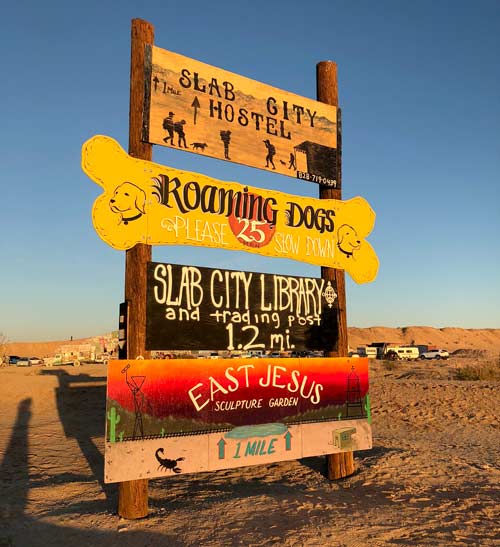 They came out at sunset with no time to prepare. Four dogs circled taking turns taking chunks out of my legs. It was unprovoked in the middle of a road–black, white, yellow, and brindle–in a whirl. The result was six punctures, two fang rakes, and a 6" incision to the bone with a pulsing artery exposed. I tore a tank top to slap on a compression bandage and left a trail of blood for a mile door-to-door for materials. Got duct tape, needle-and-thread, superglue, and ampicillin. An army ex-medic offered Bacardi Rum into the deep wound plus a couple down the hatch before sutures. I don't drink. So, we pound with a spoon ampicillin into powder and sprinkled it into the wound. Three butterfly bandages of duct tape and a few drops of superglue apposed the skin sides.
The next morning I went to Pioneer Hospital where the doc said it was 'the worst dog bite in Slab history.' Surgery took two hours as I watched eight sutures go in and out with curiosity. The nurse yelled at me for 'not crying like a grown man' and it was over before I knew it. It was the seventh attack in five months. People ask why I get bitten so often. I reply that people who drive farther have more accidents. They are probably better drivers. That's me without the tires. Today, three days after the attack, the wounds are healing beautifully. I walked in 115F an hour to the Slab sand golf course and borrowed a 7-iron for protection. A medical problem is a gift to me, and this one was like Christmas.
Feb
13
Book Recommendation, from Bo Keely
February 13, 2019 | Leave a Comment
 The first in the two volume autobiography of Asimov is perhaps the best I've read.
If you like to learn, or are from NY, this is a personal eyeopener.
The second book in the series, after he landed on Easy Street, is boring.
"In Memory Yet Green: The Autobiography of Isaac Asimov, 1920-1954"
Dec
6
A Good Disguise Book, from Bo Keely
December 6, 2018 | Leave a Comment
A good disguise book:
The Master of Disguise: My Secret Life in the CIA
Nov
30
Birds, Bats and Balls, from Bo Keely
November 30, 2018 | Leave a Comment
 Pheasant season just opened in Slab City and right on the tick of 5:51 AM of the shooter's time table a salute of fifty shotgun blasts startled me from sleep in the weeds. The shooting continued for the next thirty minutes until I decided to risk rising, and on peeking out the bushes discovered hunters stationed every quarter mile for as far as the eye can see. Every few minutes a hawk sound screamed through the air and dozens of bats flicked off the branches. The hunters were using hawk callers to uproost the pheasants, but hawks also hunt bats. It was a wonder the hunters didn't shoot each other, but as they didn't I felt safe in rising and walking out the battlefield. The scene put me in mind of the sheriffs chasing fugitives through Slab City. There are so many citizens on the run, that the sheriffs 'shake the bushes' out their loudspeakers, 'We know you're in there, come out with your hands up!.' The sheriffs are nearly as successful as the bat hawks who capture prey on 40% of their attempts. They don't necessarily catch the fugitive their looking for, but they get one.
Nov
29
Disguises, from Bo Keely
November 29, 2018 | Leave a Comment
Slab City is crawling with spies for the military, feds, police, and for Slabbers. The local town dick may be identified by her large breasts. All the undercover people look, dress, and party harder than the true citizens, and are hard to pick out. The only real cues are their hard pistol callous on the heel of hand, and they cannot hide an extremely high innate intelligence, which unfortunately is also prevalent among the residents.
Most of the spies are inserted long term here, but have arrived in the past two years in conjunction with thefts from the military base and macabre murders in the Slabs. You'll see tattoos appear and disappear overnight as part of their disguises. In regard to the recent decapitation of the knife sharpener, someone else found a head with a mop of curls on the ground not far from my camp. A neighbor approached it, was freaked out, and went for a stick to probe it. His companion kicked it and screamed in pain, for it was a stone with a wig on top. They called me to investigate and the wig looked exactly like my hair that had been cut two days earlier down the road. I didn't want to touch it either, but returned the next day, and on examining the wig it was not my hair but the ugliest piece I've ever seen. I took it to camp and washed it, and bought a balloon to stick it on in a window when I'm absent. I wear a different wig when I leave town so I won't be recognized and my place robbed.
Sep
7
Benefits of Fresh Air, from Bo Keely
September 7, 2018 | Leave a Comment
 The story of fresh air in hospitals ends in 1942 when a leading New York City hospital architect named Charles Neergaard published a layout for a hospital inpatient department that was so innovative it demanded copyright. The plan was two patient rows in a single building wing separated by a corridor that was conveniently serviced by one nursing station. One wing joined another wing - like an airport - and patients arrived, in many cases, healthier than they were released. The feature that made his plan so innovative was most of the patient rooms had no windows.
/https://public-media.smithsonianmag.com/filer/b4/c6/b4c65fd0-01ba-4262-9b3d-f16b53bca617/istock-172463472.jpg) A windowless patient room today hardly seems daring, but in the 1940s it was a shocking proposal! It violated the centuries-old medical practice of the central role of hospitals in providing fresh hair to promote health. For hundreds of years, hospital designers had based their layouts on the foundation that in order to remain disease free and health giving, hospital spaces required direct access to fresh air and sunlight.
A windowless patient room today hardly seems daring, but in the 1940s it was a shocking proposal! It violated the centuries-old medical practice of the central role of hospitals in providing fresh hair to promote health. For hundreds of years, hospital designers had based their layouts on the foundation that in order to remain disease free and health giving, hospital spaces required direct access to fresh air and sunlight.
Neergraad's idea, however, won out. It was cost efficient, reduced the square footage required, saved nurses' sore feet, and has been followed to this day in nearly every modern hospital around the world. Today, a hospital room is to be endured, not enjoyed. I have often sneaked out in the cloak of the night, after paying the bill at the night cashier, to sleep in the woods, returning during the day for out-patient care.
Most studies show that fresh air brings these benefits:
• Boosts your immune system
• Calms the nervous system
• Cleans your lungs
• Good for the digestive system
• Strengthens the heart
• Enhances brain health
• Makes you feel happier
Mother Nature always seems trying to tell us she has some great secret. And so she does. Open the window, and the next time you feel a sniffle coming on, go to the country side.
Aug
9
Slab City Schoolin’, from Bo Keely
August 9, 2018 | 2 Comments
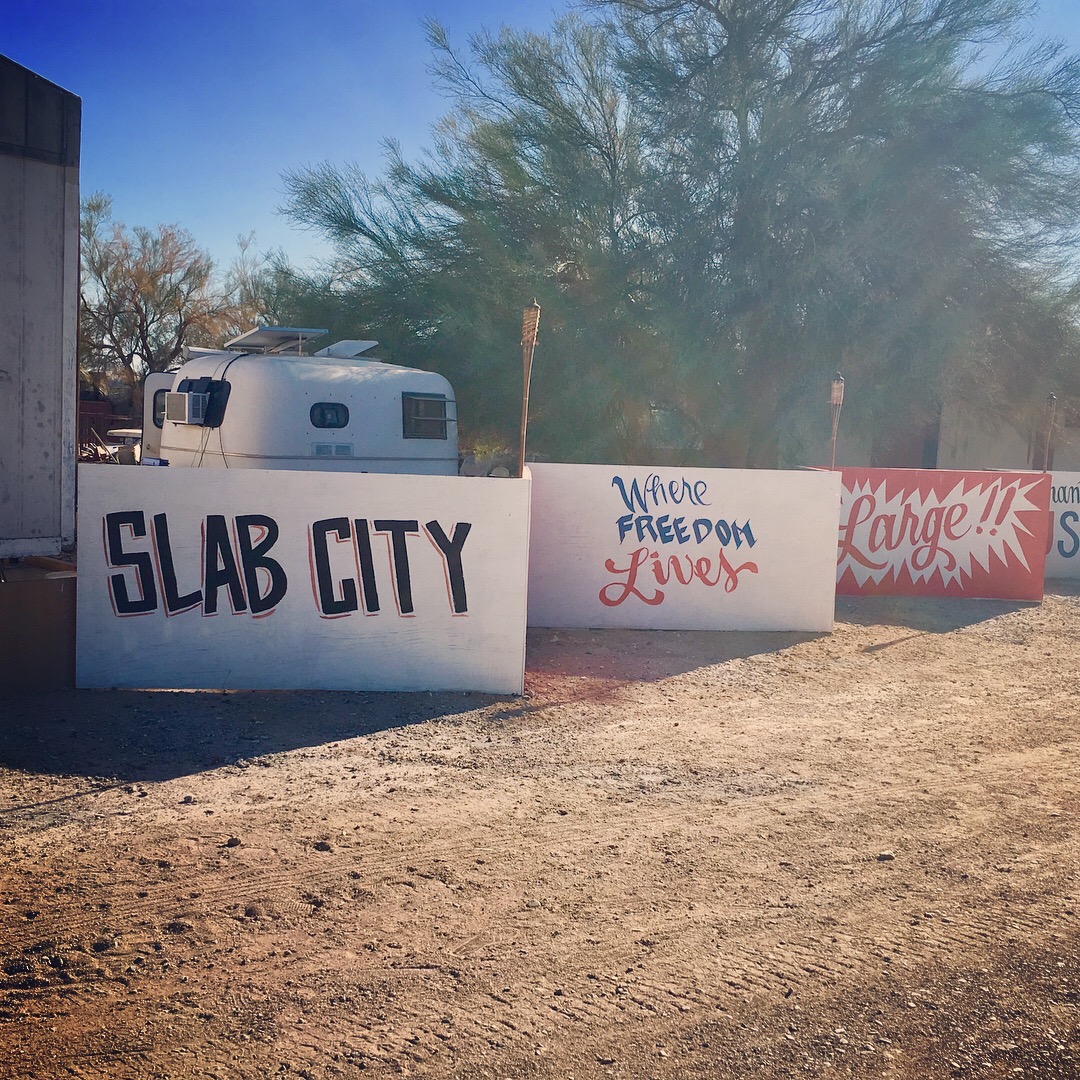 Slab City is a school for the unorthodox, and a suggestion to traditional education, in a nod of gratitude to famous educator John Gatto for laying my own techniques as a sub-teacher of ten years. It won't do to tinker with schools and try to make them better. We have to start from the ground up in a free market place like Slab City and reconsider what education is.
The most enjoyable teaching is on a thick carpet or outside under a shade tree with no furniture, no blackboard, no textbooks, and no purpose. The discussion follows free flow thinking, with questions asked and answered, and I've never seen so much learning take place, for me and my students, anywhere else.
I tried to create the same feeling in the traditional classroom by literally throwing the text across the room to get attention, lecturing off the cuff on the topic of the day, rewarding paperclips for original thinking, and paying for projects in a capitalistic ploy that worked. It earned me the highest praise from students and faculty, while the third crafty side of education called administration fired me for being a maverick. I hit the rails, then the city streets of thousands of world communities, narrowed the best learning spots to a handful of utopias, and that was my passport to higher education in Slab City.
School is a major actor in the recent failure of America. The school crisis is an even greater social crisis. Our nation ranks at the bottom of the world's 35 industrial countries in reading, writing, and math. At the very bottom! My observation from the trenches is that our schools are designed to produce formulaic human beings whose behavior can be predicted and controlled.
Some form of free market in public schools is the likeliest place to look for answers to education. The free market would include family schools as at Slabs, homeschools, small entrepreneurial ones, crafts schools, vocational, and I favor the old man with a dunce cap behind Ronald McDonald fielding life's most mysterious questions easily from his vast learning, to compete with the government schools.
Students can volunteer for the kind of school they wish, even if it means self-education.
Whatever education is, it should make you a unique individual, not a conformist, and energize your spirit to tackle big challenges and achieve. It should make you a morally rich person who enjoys whatever you're doing. The better classroom for this for a child or adult is a rolling boxcar, city barbershop, hiking trail, doorstep of an uncharacteristic mentor, or weird town.
A walk through Slab City is going from slab to slab, that is, class to class, and talking to people. If they won't talk, just observe. Bring them an iced soda to open the can of worms of their lives that equal the most worthy biographies at Amazon.com.
Education is not the filling of a pail, but the lighting of a fire by the right person.
Jul
31
Last Outpost, from Bo Keely
July 31, 2018 | Leave a Comment

That was my intent in going to the Amazon in 1999, after being accused by the Bishop, CA sheriffs of homicide of a dead body I stumbled over while hiking the length of Death Valley. I found it quite easy to hunt and fish and live in the Amazon, where water was a relief after Death Valley.
All you do is get on a triple-deck boat from a major port at the rate of $10 a day, and travel the Amazon River for three days to a confluence. There you transfer to a double-deck boat up the smaller river for a couple days until it narrows and the boat cannot pass. Flag down a single deck fishing boat that doubles in carrying passengers and mail for a couple days. When it stops in too shallow water, sit on the bank in the mosquitos for a day looking at where no white flesh has crawled, pink dolphins jump, and the people wear rags or nothing, filing their canines to points, and you hope they don't invite you to dinner. Wave your shirt until a peca canoe comes by, and ride with it for a day to the last outpost of a couple of huts on stilts at the end of the stream. Pick a melon from their patch, eat monkey brains, the kids will knock down coconuts to drink, and hire a canoe to paddle deep into the bush for a day, and find someone living alone. If there is none, just have him drop you there w/ a fishhook, matches, machete, and bugnet.
The reason I returned is the jungle is the most inhospitable place on earth. It makes the Slabs in 130F feel like a child's cradle.
Jul
27
Who You Gonna Call, Sucker? from Bo Keely
July 27, 2018 | 1 Comment
 A con is intentional deception to cause a person to give up property or some lawful right. Con games are crimes of persuasion and deception. The victim always trusts the swindler in some way.
The stealing is accomplished by false pretense, false promise, tricks, scheming - and that’s where the Slabber cons enter.
The Slabs are a con artist’s playground. Each slab is a concrete classroom where you may learn from experience in the same way a clinical psychologist enters an insane asylum.
The three distinct types of con artists you’ll bump into on the slabs, in ascending order, are:
- Grifters – Cons near the tourist spots of Salvation Mountain, Desert Museum and the Hot Spring who work out of a mental toolbox of tricks (dope for sale, guide for hire) for a few bucks over and over on weekends to fleece sightseers.
- Opportunists- The entrepreneurs of the profession. They are the 24-7 artists with a ready set of operations and accomplices to defraud people all over the slabs.
- Neighbors - This is the scariest, most prevalent type who doesn’t stop you on the street, nor cold call with an opportunity, but sits in wait next to you. He slowly inserts himself into your life so deeply that before you know it, everything you own is gone, and if he’s good, so is your mind.
The essential elements of all of their scams are two people: the con and victim, though other parties may get involved. The mark is the target of a con man. The word comes from the carnival world – people who fell for rigged games were marked with a piece of chalk by slapping them on the back, so other game operators could pick a sucker out of the crowd. I had this done to me in Laws, CA with invisible paint and a sniper in the bush. In the Slabs the same thing happens, only a sucker is marked by texts circulating faster than chalk.
I love cons, as every red blooded American should, and studied them primarily for self-defense, like martial arts. My mastery is extensive from having built the Confidence Shelf in the ‘grandest library in New England’, and more significantly, after that, in having been conned hundreds of times in over one hundred countries around the world.
Con games can be broken down into two general types: scams that target individuals, and ones that aim at institutions and businesses. Individual cons are interesting and educational. Institution cons, such as engaged by 95% of the Slab population in bilking the government for welfare and SSI benefits, are boring and dropped now. We are a nation of individuals, which is why it makes sense to study them.
There are two types of individual cons: the short and the long. By far the most prevalent in Slabs are the shorts because the longs require groups and no one can trust anyone else for long here. The short con is a ‘hit-and-run’ requiring a small number of meetings with the mark to set up the swindle. The meetings are like five a five-step that you will recognize on your next stroll through town: the motivation, the come-on, the shill, the stress, and the block. It’s all so simple and fast that only the last needs explanation. The block at the end of the sting is meant to dissuade a mark from going to the police.
In Slabs, when one Slabber stings another, it’s almost certain the police will not be notified because nearly every citizen is wanted or has no ID. This makes it a con town by logic. A short con occurs in Slabs every five minutes around the clock, and one in a hundred gets reported to the cops. As I am writing the rough of this, a police scanner report blurt that a ‘live YouTube broadcast of a man being beaten by one stick by many individuals in Slab City is taking place’, and the sirens wailed by. A fellow had hit a dog with a stick, and the owner rallied her friends to take the stick, con him that they were beating him to death, while being livestreamed, with the dog barking revengefully, and the owner screaming to turn himself in to the cops because he had a warrant.
The opposite of a short con is the big store. These are long con games that can take days, weeks, even months to set up, but for all the work the payoff is astronomical. The only long cons I know of in the history of Slab City are the police and snitches, the military arms for drugs exchange next door, and the battle for Salvation Mountain.
The pros of cons are simple. Collectively, con artists amass billions of dollars every year in the USA, compared to a paltry few million dollars stolen annually by bank robbers. In the same thinking, the estimated 90% con artists in Slabs is so greater than the national average as to be laughable. The sky is the limit for a Slab con artist. A lone wolf can be wildly successful with a profit margin as large as his imagination. He’s not a criminal; he’s simply playing smart. It’s a game that is his livelihood, like a sports pro rather than a nine-to-fiver. Con artists commit crimes because it pays and is more exciting than working for a living. There’s no real effort and he doesn’t pay taxes.
Do you want to know what the average con artist looks like? Take a look in the mirror. You can tell a con by his looks – average. But certain psychological factors set con men apart. The profile of a Slab conman is composed of a few murky traits that add to form a clear picture. The traits are:
- He thinks cons are fun - A con artist is in it as much for the kicks as the bucks.
- He believes he is a criminal mastermind - This is a thinking man’s game, and he may be right.
- His conscience is the size of an atom – Con men believe they operate on a different plane of morality. (Once you grasp this, it grants some immunity to become a skeptic.)
- He knows he’ll likely get away with it - A successful con arranges his games so the victim will be too embarrassed or confused to report it, and always has deniability.
There are certain muscles especially of the face that can make you attractive to a con artist. I learned this in veterinary phrenology. The first is the ‘good deal’ set. The jaw is thrust, the eyes stationary but irises circling a dream, and the nose lengthened over time in sniffing cheap goals. That’s not the only mindset that causes muscular sets that con artists find attractive. If you are a wild dreamer, it will be defined by a certain look. A gambler? Slightly greedy? Somewhat desperate? Take a short course in Animal Husbandry to learn the physical features that reflect a mindset, or got to the bar without drinking for 3,600 straight nights, as I did, and just watch under your developing Cro-Magnon brows.
Con men are as American as apple pie. Keep that in mind as you look in their faces. If you look at any successful professional – a salesperson, marketer, trader, real estate agent – they all have the same qualities as the con man. The only difference is that one side uses the talents and collects sales tax, and the con man is taking the easy way out.
Con artists are everywhere, and in particular they pop out of the concrete cracks at Slabs. Don’t think you can be conned? Congratulations, you just became the perfect Slab mark. The trick, therefore, is to avoid putting yourself in the position of the victim. Every con artist uses one simple tool – the victim’s confidence in the con artist. When you trust the con artist, it’s all over. In Slabs, he’ll be able to take what he wants, when he wants, and as often as he wants until you’re squeezed dry.
How do you avoid becoming a mark and having it spread around Slabs that you are a sucker? The answer is skepticism. I’m talking about a healthy skepticism of everyone and everything, without becoming jaded to all the good things in life. The philosophical skepticism that I prefer questions the possibility of certainty in knowledge until the last shred of evidence is evaluated, and then take action. Skeptic philosophers adopt fresh principles in stagnate atmospheres, and are catalysts to change. So, when you suspect something is a scam, look at it from every angle, come to a conclusion, and in Slab City the assumption must default to a scam. This doesn’t mean that you, the skeptic, should walk away from it, but quite the opposite. You are fleeced every time you get on a Disneyland ride or enter a movie theater, and this is the attitude to take on entering the town limits.
Where to go if you’ve been scammed? Most people in more civilized places think local, state, federal. In Slabs, you only think local, and this dodges the sheriffs who stepped out the silver screens of silent movies as keystone cops. Few Slabbers have ID’s while many have warrants which preempt admission as a citizen to the police theater.
Instead, when someone is appallingly conned, it strikes the social media, the cell grapevine hums, and a punitive con is leveled at the instigator. It is a con of the con, following the desert creed of 2:1 consequence for cause. I believe there should be a watchdog group for pending cons, and a welcome group to warn newcomers of the pitfalls in the first week’s baptism by swindle. I know of no permanent resident who has not been conned, and let the months pass to laugh it off.
The thing that separates con artists from their criminal brethren is they almost never use violence. This is particularly warming in Slab City, and is credited to the town demography of higher IQ, individuality, and ability to take care of oneself. Slabbers are great with their brains and mouths. Slab criminals are in the top ten percentile of the nation’s criminal masterminds, and the lower bracket ten percent come here for further education, and to matriculate to teaching for a cut of the profits.
Willie Sutton said he robs banks because that’s where the money is, and for the same geographic reason you should come to Slabs because that’s where the cons are. You can do much worse in life than to get an education. Come enjoy some of history's most notorious con artists.
Like a stage magician, the con artist misdirects suspicion. While everyone’s watching for him to pull a rabbit out of the hat, he is actually sawing a Slabber’s mind in half. You think he’s doing one trick when actually he’s doing another. You think I’m dying, but I’m laughing at you.
— keep looking »Archives
- October 2026
- September 2026
- August 2026
- July 2026
- June 2026
- May 2026
- April 2026
- March 2026
- February 2026
- January 2026
- December 2025
- November 2025
- October 2025
- September 2025
- August 2025
- July 2025
- June 2025
- May 2025
- April 2025
- March 2025
- February 2025
- January 2025
- December 2024
- November 2024
- October 2024
- September 2024
- August 2024
- July 2024
- June 2024
- May 2024
- April 2024
- March 2024
- February 2024
- January 2024
- December 2023
- November 2023
- October 2023
- September 2023
- August 2023
- July 2023
- June 2023
- May 2023
- April 2023
- March 2023
- February 2023
- January 2023
- December 2022
- November 2022
- October 2022
- September 2022
- August 2022
- July 2022
- June 2022
- May 2022
- April 2022
- March 2022
- February 2022
- January 2022
- December 2021
- November 2021
- October 2021
- September 2021
- August 2021
- July 2021
- June 2021
- May 2021
- April 2021
- March 2021
- February 2021
- January 2021
- December 2020
- November 2020
- October 2020
- September 2020
- August 2020
- July 2020
- June 2020
- May 2020
- April 2020
- March 2020
- February 2020
- January 2020
- December 2019
- November 2019
- October 2019
- September 2019
- August 2019
- July 2019
- June 2019
- May 2019
- April 2019
- March 2019
- February 2019
- January 2019
- December 2018
- November 2018
- October 2018
- September 2018
- August 2018
- July 2018
- June 2018
- May 2018
- April 2018
- March 2018
- February 2018
- January 2018
- December 2017
- November 2017
- October 2017
- September 2017
- August 2017
- July 2017
- June 2017
- May 2017
- April 2017
- March 2017
- February 2017
- January 2017
- December 2016
- November 2016
- October 2016
- September 2016
- August 2016
- July 2016
- June 2016
- May 2016
- April 2016
- March 2016
- February 2016
- January 2016
- December 2015
- November 2015
- October 2015
- September 2015
- August 2015
- July 2015
- June 2015
- May 2015
- April 2015
- March 2015
- February 2015
- January 2015
- December 2014
- November 2014
- October 2014
- September 2014
- August 2014
- July 2014
- June 2014
- May 2014
- April 2014
- March 2014
- February 2014
- January 2014
- December 2013
- November 2013
- October 2013
- September 2013
- August 2013
- July 2013
- June 2013
- May 2013
- April 2013
- March 2013
- February 2013
- January 2013
- December 2012
- November 2012
- October 2012
- September 2012
- August 2012
- July 2012
- June 2012
- May 2012
- April 2012
- March 2012
- February 2012
- January 2012
- December 2011
- November 2011
- October 2011
- September 2011
- August 2011
- July 2011
- June 2011
- May 2011
- April 2011
- March 2011
- February 2011
- January 2011
- December 2010
- November 2010
- October 2010
- September 2010
- August 2010
- July 2010
- June 2010
- May 2010
- April 2010
- March 2010
- February 2010
- January 2010
- December 2009
- November 2009
- October 2009
- September 2009
- August 2009
- July 2009
- June 2009
- May 2009
- April 2009
- March 2009
- February 2009
- January 2009
- December 2008
- November 2008
- October 2008
- September 2008
- August 2008
- July 2008
- June 2008
- May 2008
- April 2008
- March 2008
- February 2008
- January 2008
- December 2007
- November 2007
- October 2007
- September 2007
- August 2007
- July 2007
- June 2007
- May 2007
- April 2007
- March 2007
- February 2007
- January 2007
- December 2006
- November 2006
- October 2006
- September 2006
- August 2006
- Older Archives
Resources & Links
- The Letters Prize
- Pre-2007 Victor Niederhoffer Posts
- Vic’s NYC Junto
- Reading List
- Programming in 60 Seconds
- The Objectivist Center
- Foundation for Economic Education
- Tigerchess
- Dick Sears' G.T. Index
- Pre-2007 Daily Speculations
- Laurel & Vics' Worldly Investor Articles
