Mar
21
In the World of FX, from Craig Mee
March 21, 2016 | Leave a Comment
I figure there are a lot of phone calls between central banks [now], namely the Fed calling the shots [just like] after 2008.
I see that after consolidation, the dollar yen ramped up for about 10 months (after the Japanese stepped it up the week after the Fed stepped it down on qe) and eurusd was belted for about 10 months from top to bottom. Funnily enough Draghi had his cake and ate it too. (The last sentence kept the Fed happy).
So how about the USD has a breather [i.e declines] until about October, and then everyone has had their day in the sun [i.e has had a turn at depreciating their currency], and maybe fx101 is back on track.
John Floyd writes:
I would caution some danger of being too sanguine of such prospects and consider the following question: "What are the differences between 1998, 2008, and the current set up in 2016?".
One might consider the key question to ask preceding 2008 was what was driving the US consumer and what were the prospects for housing, mortgage equity withdrawal, the size of consumption as percent of the US economy, and the US economy as a percent of world GDP.
The vulnerabilities in 2016 are not centered in the US and the emerging markets represent a significantly larger portion of world GDP. China is now the world's second largest economy and emerging markets as a whole account for about 40% of the world's GDP.
But, unlike 1998, the emerging world's weakness is not anchored to fixed exchange rates that were prevalent in Asia and Latin America and public finances are in better shape.
Rather than being US centric fault lines are seen on multiple fronts such as the UK, China, Brazil, South Africa, Russia, Japan, and the European periphery to name a few.
The room for official policy maneuvering is also very different in 2016 than it was in 1998 or 2008.
One of the things I found most helpful pre 2008 was the simple math of looking at the components of GDP by country and the global weights of GDP and anticipating the direction and size of changes. Today, that same math yields some interesting conclusions into the possible outcomes and market reactions.
Feb
22
Article of the Day, from Craig Mee
February 22, 2016 | Leave a Comment
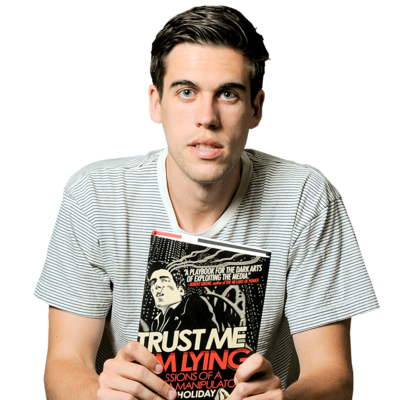 "The Real Reason We Need to Stop Trying to Protect Everyone's Feelings" by Ryan Holiday
Pitt T. Maner III writes:
Ryan Holiday has a great list of "his favorite books":
I used to go around and ask every smart person I met—even emailing important people I didn't know— "What books do books when you recommend to a kid like me?" That's how I was introduced to the Stoics. That's how I found many of the books on the list below. The quake books—as Tyler Cowen put it—that shake you to your core. Having been introduced to them by those kind, patient individuals, I thought I would pay it forward by putting together a list of the books that have shaken up my life and that have helped make me the person that I am. It's a list that has changed over time—and will continue to change—but it's a good enough place to start.
I remember Joyce Carol Oates saying that she liked to tack inspirational quotes on the wall in her writing den. These Bartlett-worthy quotes served her as a kind of touchstone or centering device to stimulate reflection or proper thoughts before starting work. What other short but powerful sayings or books should be included (or omitted) in this list?
Feb
11
Thought of the Day, from Craig Mee
February 11, 2016 | Leave a Comment
What portion of price movement is based on risk i.e. squeezes and hour of the day (open or close), and when does rational thought basis news or fundamental back drop come into play? Should strategies be tailor made for each period? And can you distinguish one from the other?
Feb
8
SP500, from Craig Mee
February 8, 2016 | 1 Comment
From my view point, half way up the stands, it would seem to be a worthy time to discuss the balance of power and the ground that was made and ultimately lost in the price action of the market since the initial wave of fast selling hit in early January. The struggle of price to fight back from its low point with minimal great runs, epic short term battles between good and bad near the recent highs, and finishing the week on a low point, and the potential changing fundamentals at play, (with heavy selling in USD this week), puts this conflict on the big screen. Could it not be said, that the market during January did little to flush positions, and that the opportunity costs of holding longs at this juncture is just far too great? I say this to engage everyone in discussion, as I see a break from these levels as a high risk of opening up some clean air to the downside.
Feb
1
Article of the Day, from Craig Mee
February 1, 2016 | Leave a Comment
 Astrology and numerology rule markets, ok, Julian?
"We're all prone to a bit a Calendarism thanks to the birthday cult, but this "worst start to the year" thing doesn't make sense even by time measurement standards. A year is the unit of time the earth takes to make a revolution around the sun, so every day is the start of another 365-and-a-bit-days period.
And one man's calendar is another's papist intrigue. The Gregorian calendar would have you believe today is February 1, and all that January stuff is over. By the Julian calendar, it's actually January 19. The All Ordinaries Index has had a positive start to the Julian year, it hasn't fallen at all. And the Julian is only one of many alternative calendars to play with or live by.
Never mind months, there are myriad years to choose from. Go all North Korean with the Juche calendar (it starts on Kim Il-sung's birth) and it's only 105. Or break out your ab urbe condita toga to make this 2769. (I thought we'd have intergalactic travel by now.) Personally, I like the choice provided by the various Hindu calendars – we could be pretty much anywhere between 1938 and 5117.
It might help to apply some perspective to the market's outbreak of Calendarism by looking at a graph of the All Ordinaries Index over the past five or 10 years – either Julian or Gregorian.
"There's suddenly nothing particularly special about the latest tooth added to the saw – it's just another one. There have been falls bigger and smaller. It matters little what name the calendar puts on it."
Dec
23
I Put Up a Post on Twitter, from Victor Niederhoffer
December 23, 2015 | 1 Comment
 I put up a post on twitter about the 7 things you should do to play squash until 100. 7 glasses of water a day (by the way I've found that the alkaline water filters seem to give a better taster to NYC water, and they say they're much healthier), 7 workouts a week, 7 sex or thoughts of same a week, 7 fruits or veg a day, 7 hours of sleep.
I wonder what are the 7 things a a trader should do to prosper. I would start with 1. Don't over trade. 2. Keep the vig done. 3. Don't close out profitable positions during the day. 4. Don't reverse near the end of a week. 5. Only trade active markets. 6. Go along with the central banks. 7. Never short stocks, and possibly bonds.
Craig Mee adds:
8. Take some initial risk off, once in the money, so at worst it's a flat result. 9. Always allow for a portion of your position to be there for maximum gain. 10. Add further positions where possible.
Dec
3
Article of the Day, from Craig Mee
December 3, 2015 | Leave a Comment
This article looks at safety issues and poor responses by pilots in aviation crises due to automation. It may be worth investigating for insight on how to capitlize in markets when things spiral out of control.
"Why the Airasia Crash Report Should Serve as a Wakeup Call for Travelers"
Nov
20
Seven Phases of the Terror Network, from Craig Mee
November 20, 2015 | 2 Comments
10 years after this piece was written, it is still worthy of review– "The Future of Terrorism: What al-Qaida Really Wants": "In seven phases the terror network hopes to establish an Islamic caliphate which the West will then be too weak to fight."
Nov
10
Alone on the Wall, from Craig Mee
November 10, 2015 | Leave a Comment
 There are some trading comparisons in this article. Maybe a bit like all in or no stop for a week, month. Long S&P?
"If he falls, he dies: The ultimate stakes of Alex Honnold":
With his sharp intelligence, Alex inclines toward a hyperrational take on life. He actually insists, "I don't like risk. I don't like passing over double yellow. I don't like rolling the dice." He distinguishes between consequences and risk. Obviously, the consequences of a fall while free soloing are ultimate ones. But that doesn't mean, he argues, that he's taking ultimate risks. As he puts it, "I always call risk the likelihood of actually falling off. The consequence is what will happen if you do. So I try to keep my soloing low-risk — as in, I'm not likely to fall off, even though there'd be really high consequences if I did.
Aug
25
The Curse of the Duck, from Craig Mee
August 25, 2015 | Leave a Comment
 Are there market analogies here? Could this conclusion below for the very best batsmen in cricket be suitable for the top performing markets/sectors? The greatest risk is for them to stumble early in a session otherwise it pays to expect further strength.
The conclusion seems to be that there is a very small window in the beginning of a batsman's innings in which there is a greater chance of dismissal than there ordinarily is. This makes sense — batsmen take some time to acclimatise to the game conditions. But this is a small window — once the batsman has scored about three runs, you have the same chance of dismissal whatever the current score. Interestingly, tiredness does not seem to play a part — the exponential distribution holds well out to 250 runs (quite a few hours of batting). It should be remembered that this analysis was completed on the top 34 run scorers of all time (5953 innings) and so represents the best ever batsmen. Lesser batsmen are likely to get low scores, so perhaps this window is slightly wider for them. But if we turn to the greatest of the great, Bradman, the window is essentially one run. His effective average before he had scored was a very mediocre nine runs. After he had scored two runs, this effective average had risen to 69. You had to get Bradman out very early!
Stefan Jovanovich writes:
Seconded.
What fascinates me about cricket is that it is the inverse of baseball. In baseball the really good pitchers are the rarity. Against them even the best hitters can only hope for mediocre performance. At any one time, almost everyone in the major leagues can hit a 90 mph fastball (those few who can't don't last long). So, on the days when a mediocre pitcher or pitchers are unable to control their other pitches, the scores can balloon to lopsided totals that are not seen in even the most thorough drubbings in cricket. The rule for the really good pitchers is the same one Craig has just shared: you have to get to them early. Once a great pitcher has adjusted to the shape of the ballpark's mound and the effects of the day's weather and gotten the first few outs, he will be nearly unhittable.
See Sandy Koufax and Nolan Ryan
Galen Cawley adds:
Stefan, agreed, but you can't omit this guy!
More importantly, I found this entire discussion on pitching and the art of deception to be utterly fascinating. The video analysis is eye-opening. It tells you why you know what you know pitching (and hitting)…and makes your knowledge better. It's positively Baconian. Key excerpts:
"What he means by this is that if a hitter swings at what he thinks will be a 90-mph fastball down the middle, he can still accidentally run into either a 96-mph fastball down and away or an 85-mph pitch on the inside — all intersecting the arc of his swing — and make solid contact. Husband believes this happens far more frequently than one might think. Standard baseball strategy says that all a pitcher must do to avoid this dilemma is mix up his pitches — fastballs, sliders, changeups, curveballs. Because they come in at different speeds, the hitter will be confused. Simple, right?
"The problem," said Husband, "is when pitchers pitch backwards."
This means that if a pitcher throws an 86-mph slider high on the inside corner, and follows it with a low-and-away 92-mph fastball, the pitches' EV readings would be exactly the same: 89 mph. And hittable by accident.
[My emphasis: i.e., most pitchers throw to the hitters' bats because they lack command — most retail investors throw money at the markets because they chase the form, and have poor execution to boot!]
There is an imaginary stripe that runs diagonally across the strike zone, from the batter's feet to shoulder level in the opposite batter's box, where a pitch's EV equals its actual speed. Husband calls this the Zero Line. He calculated that for every 6 inches the ball moves closer to the hitter from that line, it picks up 2.75 EV mph; for every 6 inches it moves away, it loses an equivalent amount. This gives strikes thrown at identical speeds on a given horizontal plane about a 6-mph fluctuation in reactionary speed from one end of the strike zone to the other. Add vertical differences into the equation and that spread can easily double, all for pitches that are thrown at the same actual speed.
This idea is far less important on a single-pitch basis than it is when integrated into a sequence. The hitter's perception of the speed of a given pitch is affected by the speed and location of the pitch or pitches that immediately precede it. Roughly speaking, a pitch that follows slower pitches can appear faster, and something slow, when following a faster pitch, appears to be even slower.
"Hitters are like sharks to blood," Husband explained. "When they see two pitches in the same place and at same speed, they begin very quickly to be able to time them, and when they can time them, they attack. But that timing maxes out at about a 6-mph difference in pitch speeds."
I Love the idea of a sequence…how many times has the market changed up on my and put me in an 0-2 count?
Stefan Jovanovich replies:
Absolutely. The entire art of pitching is to not let the batter get comfortable with where he is looking. "The plate is 7 baseballs wide; until you get to 2 strikes, you look at either the inner 4 or the outer 4." (That is a steal from a MLB hitting coach whose name escapes me right now.) If you let the batter look in the same horizontal box, he can hit the pitch, as Husband says, even if he is looking "in" and the pitch is thrown "out".
My only quibble is to point out that Maddux's performances in the post season were mediocre. By the time the best teams get to the playoffs and especially the World Series they finally get enough rest between games to be really quick with their bats. That is when a pitcher needs to be able to simply throw it past them - as Maddux couldn't. The pitchers who could reach a virtual speed of 95+ - "virtual" because there are left-handed pitchers like Warren Spahn and Madison Bumgarner who used their high leg kick/body turn to hide the ball as they delivered it on the diagonal Husband describes. Their balls came faster than they were thrown.
Of course, there was also a pitcher named Koufax who hid the ball but didn't need to; he was positively unfair.
Jun
15
This is the End, from Craig Mee
June 15, 2015 | Leave a Comment
 What brings an end to an exuberant speculative driven market? The government changing legislation or changing the playing field first and then a trigger kicks?
Take the Australian property market. After explosive growth in its capital cities, particularly in Sydney and Melbourne, they're now reeling in unlawful chinese buying in their residential property market, with an initial 200 home purchases being investigated and this being mentioned as the tip of the iceberg.
It may be worth looking at what transpired in Singapore some years ago, and whether the same forces are at work in different ways in Australia. Singapore ended with a 40% top to toe haircut after their government made significant changes over time and then the Asian crisis hit. Will the same occur in Sydney, Australia?
anonymous writes:
Your post is titled, "this is the end" and it is substantively similar to the useless idiots who warn others to exit the stock market before it "crashes" … But your logic is arguably worse because a home is a consumption good that has a store of wealth value with substantial transaction costs.
If you want to contribute something useful to Speclist, might you share with us the rate of return on average Sydney/Melbourne home prices from the top tick in 1996 to the present time? I'm certain you will find that it's significantly above the rate of inflation. I'd also guess that you don't own a home.
I have recently done some simple studies of the prime/average Australian real estate market. I find the local pundits to be ignoring the cost of comparable real estate in other world capitals. The typical story says that average prices are 9x income. But the way those numbers are calculated are completely bogus — including taking account of mortgage rates that have declined from >8% to 4ish%. The Australian market looks rich compared to its historical valuation, but it's not rich compared to its peer markets. Since its been the marginal foreigner buyer that is making the headlines, the peer markets need to be considered as the benchmark.
I am not making a call on the Australian real estate market. But if the market value of my home is going to decline 40%, why should I care? But if you think the National Bank of Australia is going bankrupt, then there's a trade there. But that's not what you said.
Jun
12
A Hidden Market Contradiction, from Craig Mee
June 12, 2015 | Leave a Comment
It would seem from the example set by the drift that a more conservative approach in the markets is the winner. However in other areas of life creativity must be present for technology and the world to move forward and develop. Is that a contradiction that many people cannot understand, may not know is even present, yet ultimately rules their very existence? It's possibly an issue that faces every trader wanting to overplay every point, an innate sense, which could be gladly taken advantage of by the understanding few.
Jun
5
Fundamentals vs. Technicals, from Craig Mee
June 5, 2015 | Leave a Comment
It is interesting how there has always been a question between fundamentals and technicals. Though it seems there is no question. Fundamentals and drift hold the conditions and price action holds the shape–the shape of how to get on, how to benefit, and how to make the most of the current economic situation. You need the macro understanding before anything else is possible… and then magic is possible.
anonymous writes:
I'm not sure you need the macro understanding. Look at radio and air travel in the 1930s. Or IT (or at least large sectors of IT) in the 1970s.
Fundamentals ultimately win, the same way water does.
May
25
The Right Mind Set, from Craig Mee
May 25, 2015 | Leave a Comment
 Amber Halliday, (Australian Olympic rower and recent stroke victim), recently said: "the mind-set that you need to become an Olympic athlete is pretty similar to the mind-set that you need to recover from serious injury or illness."
… or trading, applying and dedicating yourself more than the next guy.
Jim Sogi adds:
As my skier guide friend says: "pain is just weakness leaving the body."
May
22
The DAX, from Craig Mee
May 22, 2015 | Leave a Comment
The Dax is like a snake digesting its food, after some time of reasonable volatility. When it awakens it will be of interest. Which direction will it dart. It has been unusually tired this recent week.
May
15
 Last night I had a drink of plum wine. I subsequently made about 10 errors in trading overnight. Similar things have happened to me before on the rare occasions I drink alcohol going back 50 years when I misread a card in poker and ended up losing my then minimal but very important fortune. I wonder to what extent it is a good rule not to drink alcohol on the days before, during, and after trading.
Rocky Humbert comments:
I think that needs to be tested with a controlled study. I volunteer to be the counterfactual.
Scott Brooks writes:
As a non-drinker, I can confidently say that a fall down drunk Vic or Rocky would handily beat a sober me at trading.
Although I haven't played in over 20 years, I'm pretty confident I could take them both at poker.
But I'm 100% certain that I could take them both at the archery range, even if they were sober.
A drunk Vic would easily take me at squash, racquetball or table tennis.
There are three lessons here:
1. If you are playing "for real", only play the game you can win.
2. If you are playing "for real", only play against people that you are confident you can beat.
3. If you are playing "for real", make sure you are at your peak potential to do. Do nothing to impair your physical and cognitive abilities.
Craig Mee writes:
When dealing with leverage and perceived opportunity one unfortunately can stray due to the slightest of distractions.
May
14
The Writing on the Wall, from Craig Mee
May 14, 2015 | Leave a Comment
Always better to see the writing on the wall sooner than later.
"Faces of the Queensland drought":
Cattle grazier Duncan Emmott, who runs stock at Whitehill Station, just south-west of Longreach, (QLD Australia) said he saw the writing on the wall last year. He made the decision to cart off much of his stock and, as of next month, will only have about 120 head of cattle left on his property – less than 20 per cent of what he would normally have on the land. "I think it's a lot easier to make the decision in times like this and to sell and get your stock off while they're still alright to sell, rather than hanging on," he said. "I think that emotionally, psychologically, it plays on your mind a lot more watching your stock get poor, dying, getting bogged, seeing them get pulled out of the bog every day– that's a tough thing to do, to see that happen."
May
4
 I have been thinking about the ability of snakes to see in the dark. What players in the market have abilities beyond the norm to see their prey no matter the chaos?
"The ability to sense infrared thermal radiation evolved independently in several different families of snakes. Essentially, it allows these animals to "see" radiant heat at wavelengths between 5 and 30 μm to a degree of accuracy such that a blind rattlesnake can target vulnerable body parts of the prey at which it strikes.
It was previously thought that the organs evolved primarily as prey detectors, but recent evidence suggests that it may also be used in thermoregulation and predator detection, making it a more general-purpose sensory organ than was supposed.
May
4
RBA Tomorrow in Oz, from Craig Mee
May 4, 2015 | Leave a Comment
Journo's are said to be getting the word and are calling for a rate hike. However it does not appear "things have changed substantially" from last month on the aussie dollar, employment, cpi and growth. Nor has the tone of the governor himself. However markets have run off with the newsmen who "have the word", presenting opportunities (and only that) for those brave souls who look to position counter to the herd.
Apr
27
Spending May Be Key to Winning, from Craig Mee
April 27, 2015 | Leave a Comment
 Spending is the trading way, but are there implications for your own risk or should we step it up to maximize our potential…
"Maybe Floyd Mayweather's spending is the key to winning"
"The best you can do is to control the spending, you can't stop it," said Jonathan Miller, a Scottsdale, Arizona-based accountant and advisor to athletes who co-founded the Sports Financial Advisors Association. "It's their money, they're going to do what they want with it."
A more realistic approach, Miller said, is to understand their psychology and spending relative to their wealth. He said he helps them make smarter spending decisions, like figuring out expenses (such as dinners or club nights) may be tax-deductible and asking more questions about each purchase. Miller said he also tries to make sure members of the athlete's entourage and team all have specific jobs.
Miller said that for some athletes, big spending is part of their psychology of dominance and confidence. So it is sometimes unwise to shut down the spending.
"If you drive up to the game or the fight in a Ferrari, or look in the mirror at your big ring or cash, that may give you confidence to step in and win," he said. "There's a psychology there that you or I could never fathom."
While Miller said that some advisors tell athletes to start planning their second career early, he said that top athletes need to think that they are invincible in order to keep winning.
Apr
13
Richie Benaud, from Stefan Jovanovich
April 13, 2015 | Leave a Comment
Richie Benaud, who has died aged 84, became so celebrated as the most intelligent and articulate of television cricket commentators that his youthful triumphs, as one of Australia's greatest all-rounders and most inspirational captains, tended to be overlooked. In his seventies Benaud wryly observed that he had lost count of the number of times young cricket fans asked if he had ever played the game. He was, in fact, the first Test player in history to achieve the double of more than 2,000 runs and 200 wickets.
Craig Mee writes:
Well spotted Stefan. Richie was always short sharp and to the point, loved and respected in England almost as much as in Oz, not an easy feat when it comes to sport. He was stoic and always positive. He was often quoted about cricket and life through its ups and downs, something we should all pay careful attention too, and on reflection all of us, no matter their position could say about trading and financial markets.
Mar
12
Can’t Help But Think About the Contest, from Craig Mee
March 12, 2015 | 2 Comments
I can't help thinking for the competition "what is a trader" what percentage bias it may have on the outcome to have the voters' thoughts on the winning entry exposed (i.e entry with favourable early views having a greater chance to go on and win it) with ballots where the entry is positioned in the queue. This kind of thing may influence markets and prices in addition to this competition.
Gary Rogan writes:
Years ago in a college psychology course I had to devise and conduct an experiment. What it wound up being was walking up to women in a shopping center and asking them to rank the attractiveness of something like five men in photographs. In half of the attempts, they could see previous results and in the other one they could not. The previous results were fake and ranked "ugly" men quite high. The effect was quite significant, although now I'm having trouble quantifying it.
Mar
5
It’s a Carnival of Chaos, from Craig Mee
March 5, 2015 | Leave a Comment
Whether man-made or from nature, the more work done on a structure the stronger it should be. Thus inday trading there are many things that could knock over a juvenile formation, like flow or a breath of hot air. This together with the vig and blinkered vision to macro events (and the inability to accumulate willfully) generally spells disaster.
Mar
2
The Fix, from Craig Mee
March 2, 2015 | Leave a Comment
I found this article very interesting:
Focus on the weak who are allowed involvement in major competitions for the sake of being global, and rig away. What markets could be similarly placed?
Feb
14
Horses for Courses, from Craig Mee
February 14, 2015 | Leave a Comment
One thing about the technical debate is the timing side is of greater interest to those if you're using leverage and accumulating a position. If not, it's probably not such a huge question. With thanks to Ralph, it's significance is where you're looking at loading up from and the potential reward it can allow for…with pennies of risk for the potential dollars of gain.
Feb
12
The Great Chart Debate, from Rocky Humbert
February 12, 2015 | 6 Comments
Any reader who has not looked at a price chart in the past 90 days please stand up and identify yourself. For that person and that person alone can cast a stone (at technical analysis).
Gary Phillips writes:
I look at charts all the time, but that's really not the point. For someone who is as truly blessed with the ability to determine causality as yourself, you must realize that charts are not predictive in of themselves.
Larry Williams writes:
Parts of charts are most definitely predictive. Patterns repeat. And I agree that so much of TA is misleading and based on whims and fancy yet there are parts that really do work.
anonymous writes:
Ah, the chart debate has returned.
While surely an example of survivor bias, I have witnessed industry greats use charts and technical analysis as part of their speculative arsenal. Of more interest is that these people used their own personally derived versions of these methods and not the versions available at no cost to everyone. I dare say that the creators of well known indicators have ways of using them that they would never reveal (rightly so!).
A few points about charts:
1. At the higher frequency end, in the OTC macro markets, ALL of the chart services are wrong and ALL of the chart services are correct. Each has its own price, so there is no 'right'. This probably doesn't matter to most and doesn't fatally damage the pro chart school.
2. Some market extremes are written out of history for various reasons (regulatory, legal, error, political correctness and vested interest). The move toward full electronic trading might alleviate some of these in future.
3. Commodity prices on charts…. Should we adjust them by inflation? What are we actually looking at? What are we comparing.
4. Equally spaced data? What to do with price action measured in equal intervals (say, for example, 5 minute charts) when the price doesn't change during the period but the recording software has to put a number in there so it averages, uses the last price, the first price of the next period etc…
5. There is a reason why the big quant firms have interesting individuals whose life's passion is ensuring data is clean/ accurate.
6. It is probably a fair point to state that the recording of price information has improved since, say, the 1970's. The tricks now are more to do with latency of its delivery and the subtle recursive methods some providers appear to use to set their lows and highs. As an example, watch EURUSD spot today if you have something approaching Direct Markey Access and if you watch closely enough you may note that the high as printed on your screen (for eg.) sometimes moves higher a few seconds after the price has actually moved lower. A less charitable person than I would suggest it was to ensure all the stops on the banks' electronic platforms could be said to have been done within 'the range' ( whatever that is ). I guess it might just be an optical illusion generated by my mind's inability to accept being stopped at the high. Ha!
SideBar on this last thing– one great method market makers employ to get stops done is to drastically widen their spreads when near stops. ( Much small print allows stops to be done if inside the spread for ' risk management' purposes ). This may go some way to explaining the mystery of the changing highs/lows after the fact….
John Bollinger writes in:
I don't understand. If charts aren't predictive why in the hell do you all waste your time looking at them? Do you have so much time on your hands that you can engage in frivolous pursuits at work? If you gonna talk the talk, walk the walk. If you think charts aren't helpful, STOP LOOKING AT THEM.
Rocky Humbert writes:
While I am in agreement with the inestimable Mr. Bollinger that looking at charts has utility, I would be cautious about the term "predictive."
When I go to the doctor's office, her nurse always takes my temperature. My temperature is not so much "predictive," but rather it is informational. In numerous ways, looking at charts are like taking a patient's temperature.
I wish I could claim credit for this insight, but I can't. It's from Bruce Kovner (who I still consider the best trader/investor from a risk-adjusted return perspective of the past 30+ years.)
Ed Stewart writes:
It seems to me that body temperature is predictive of future temperature change do to homeostasis. The breakout from the range where homeostasis functions is going to be predictive of body temp = ambient temp if there is not a reversal or intervention.
Rocky Humbert replies:
Fair point. But you don't need to take a patient's temperature to know that EVENTUALLY body temperature = ambient temperature.
Keynes figured that out when he wrote that "in the long term, we're all dead." (See: JM Keynes "Tract on Monetary Reform, (1923) Chapter 3)
Kovner's actual quote was in reference to so-called fundamentalists who scoff at charts. He said, "Would you go to a doctor who didn't take a patient's temperature."
Gary Rogan writes:
You don't need to take the patient's temperature nor to study medicine to know that eventually the body will assume ambient temperature, but there are clearly situations when the current temperature is highly predictive of the timing, barring an intervention. As such, this whole analogy and the corresponding point just don't work.
A more expanded quote by Keynes reads as follows: The long run is a misleading guide to current affairs. In the long run we are all dead. Economists set themselves too easy, too useless a task if in tempestuous seasons they can only tell us that when the storm is past the ocean is flat again. He was in fact arguing for short-term action based on predictions even though in the long run the economy will recover. So it a way it's almost the opposite point to what Rockstergeist indicated he was making.
Craig Mee writes:
No doubt with the right risk management you can make money trading in many ways, but surely the best outcome is to not leave plenty on the table and have a lot of what ifs in the outcome, together with an ordinary win loss ratio while still banking a healthy return. In the pursuit of excellence, it doesn't seem winning and the above go hand in hand. Though possibly for others this isn't an issue, and probably quite rightly it's all about the bottom line. Hence the saying, "trade the way that you're comfortable with".
Gary Phillips writes:
Considering the maelstrom of controversy and unchecked emotion the subject elicits, perhaps TA should join sex, politics, and religion on the list of banned subjects for this site.
John Bollinger replies:
Careful, the site will become very quiet as the best part of what is discussed here is technical analysis in one way or another as a survey of the literature will confirm.
Feb
2
What Market Situation is Similar to The Seahawks, from Victor Niederhoffer
February 2, 2015 | 1 Comment
 Okay. What market situation is similar to The Seahawks decisions to pass with first and goal on The Patriots 1 yard line with 1 minute to go which pass was intercepted.
anonymous writes:
Working a bid/offer to get flat with a profit ahead of an announcement only for it to come out 1 minute early and go the wrong way resulting in a painful loss.
Andrew Goodwin writes:
That play call will go down in the annals of history as one of the worst calls ever. The folks who gathered to watch where I watched included one most vocal who cried for Lynch to get the ball to run. Many were calling for the run.
Let us call this a trick play that backfired. The deception factor was high but the pass call was otherwise a poor decision.
David Lilienfeld writes:
Respectfully, with the benefit of a good night's sleep on it, I disagree. Go take a look at the defensive line. Where was he going to run. The line had been getting a surge. I'm not sure that's the exact passing play to use. A screen might have been better, but a run wasn't going to necessarily do the trick, and with time running down, an incomplete pass buys time for another play. Bad passing call, but going to the pass makes sense. Just not that play. Something a little harder for New England to read would have been better, though.
Chris Cooper writes:
I'm in the middle of reading Scorecasting: The Hidden Influences Behind How Sports Are Played And Games Are Won by Werheim and Moskowitz. The authors do an exceptionally good job of demonstrating how conventional wisdom in such situations can remain wrong. I would not be surprised to find that this particular example was a theoretically correct call which nonetheless always leads to opprobrium by the masses.
I recommend the book, and note that it is on the Chair's reading list as well. The insight into referees is particularly well expounded. Likely many market lessons.
Tim Collins writes:
At the very least, you try the run. Lynch is truly hard to take down. Call time out if he doesn't make it. Use a QB roll out on 3rd down. Throw it away if not there. That would leave any play open for fourth.
anonymous writes:
The play made sense in terms of clock management. It was about NOT giving a guy like Brady an extra 20 seconds to come back and beat you. Further, one must wonder why Seattle didn;t let the play clcok run down to :01 and call a timeout at that point.
A similar analog occurred at 2:02 left in the fourth quarter, when NE kicked off winning 28-24. I was certain they could kick the ball short, allow for a run back, let the clock burn on the play and then stop for the 2 minute nonsense, rather than giving away a pass play for free by kicking a touchback.
NE didn't do that of course, and by the two minute warning, the ball was at midfield.
The point is,running down the clock, or not, is not without its risks. The hypothetical — give the ball to Lynch, could have been a fumble as well. The game is comprised of such things, and no play is without risk, as is no trade, hanging out there by its lonesome.
Tim Collins replies:
Fourth down play doesn't matter, so you have one run and one pass with the one time out. As long as my QB doesn't take a sack on the rollout, I'm fine. Plus, I thought they took too long to get to the line. There was 55 when they huddled up/lined up. Seattle took over 30 seconds to run that 2nd down play. Either way, I run on 2nd down. I'm stopped short and call time out. I now have roughly 20 seconds (plenty more if I actually get lined up in a timely fashion and run), so my QB rolls out. He is told to throw it away if there is not a wide open lane to the end zone or no one is open. As long as he does what he is told, I have plenty of time to run one last play from the 1 yard line. It doesn't matter what the last play is. I either score or the game is over as I will turn over the ball.
Sure, you could switch these and run the roll out on 2nd and the running play on 3rd down. I might even leave that decision up to Wilson based on his read of the defense, but these are my 2nd and 3rd plays. And, yes, I would run it again with Lynch on 4th down from the 1.
Pitt T. Maner III writes:
My 2 cents and second guessing– Don't lead the receiver. Aim at his body so he boxes out the defensive back(s). The bigger and stronger the receiver you run across the middle the better. More chance of a defensive interference call. It was a play with poor execution. Lynch can catch the ball too as was seen– one would rather have him fight a rookie DB over a short pass. A fade to the corner with your tallest receiver might have been good too. It's all about size and position and ball placement.
Victor Niederhoffer adds:
"Seattle Coach Pete Carroll Stands By Decision to Pass"
Scott Brooks disagrees:
I disagree.
He had one time left and The Beast in the backfield. Run the ball twice and then use your timeout. At the very least, he Belichik would have been forced to call a time out to preserve the clock in the (likely) event that Seattle could have Beasted that ball across the goal line.
Worst case scenario, if you pass, do a fade route to the corner.
The Pats were stacked in the middle prepared to take on Lynch, why throw it into a sea of blue?
They even had time to do a play action and give Wilson time to improvise and still throw it away if there's nothing there. Then run two running plays and use the timeout in between.
It was a stunningly poor call, one that will haunt Carrol for the rest of his career.
Pitt T. Maner III writes:
Think of the money involved (excluding endorsements and lots of other things): "This year, the salary bonus for players on Super Bowl teams has inched up a bit to $97,000 (up from $92,000 a year ago) for each winning player, compared with $49,000 for players on the losing squad ($46,000 a year ago). So the total gap between the game's winners and losers should be a bit higher than it was last year, when the difference was just under $3 million."
anonymous writes:
Read a paper earlier this year that the most statically reliable goal line play was the slant pass. The least was the fade pass. In my observation the receiver needed to be about 2 yards deeper. He was too shallow to get separation.
Craig Mee comments:
This reminds me of turning a winning position into a loser. We have probably all achieved this in a number of ways. Spreading off risk and turning over possession has got to be up there. I must include talking to a fellow trader and after the chat swinging your position from net long to net short, and watching the market go limit long.
anonymous writes:
What about the quarterback sneak?
Would be good to have stats on how many inches/feet can be reliably picked up on a quarterback sneak, even if everybody knows it's coming:
"Around the time Pro-Football-Reference added the Game Play Finder in 2012, I used it to look up Tom Brady's rushing success in short-yardage situations (third or fourth down, 1-2 yards to go). The results were staggering. Including last season, in his regular-season career Brady is 88 out of 91 (96.7 percent) on these runs, including 56 straight conversions. That's almost as efficient as the extra point. After researching some other quarterbacks, I found that most of them had great conversion rates. This is largely due to the quarterback sneak, which has worked 85.9 percent of the time since 2009".
Feb
2
Article of the Day, from Craig Mee
February 2, 2015 | Leave a Comment
You could possibly say that the more a market folds and bends with contours, the more secure and accommodative it becomes.
Jan
25
While at the Wharf, from Craig Mee
January 25, 2015 | Leave a Comment
 Yesterday while looking at the beautiful harbour of Sydney waiting for the Manly ferry, I witnessed some interesting herd behaviour. The wharf was packed with tourists and day trippers awaiting departure when an inaudible announcement was made over the loud speakers. Well, within seconds some people got up off their seats and started to queue for entry at the ferry gates and 90% of the rest of the people followed, only to have to stand for another 20 minutes before the gates opened and the ferry left. Point being, amazing that the people who had a good position (seated) were blindly led into the abyss by a select few on a what if. Always control your own information channels. As with life, as with markets.
Jan
23
Thought of the Day, from Craig Mee
January 23, 2015 | Leave a Comment
It can be interesting to open up a quote list and view the prices with a mindset that you haven't looked at the market in months or years. Oil here, bonds there, etc. And then process your initial reaction.
Jan
21
The Trouble With Movies, from Stefan Jovanovich
January 21, 2015 | 1 Comment
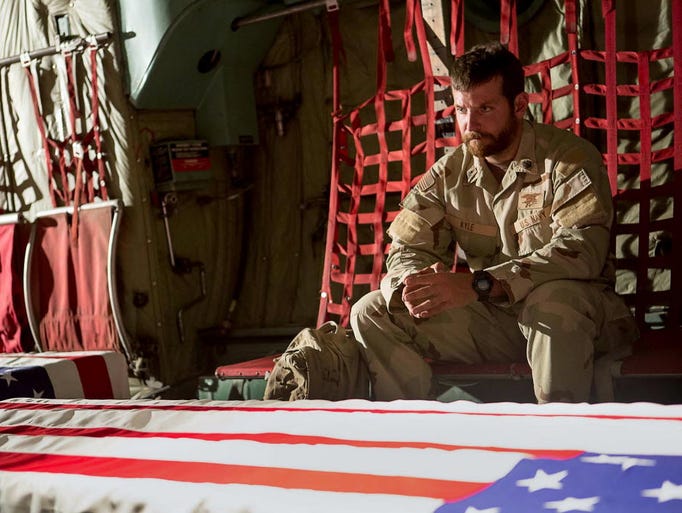 The trouble with movies is that they have to pretend that a bunch of people hitting focus marks according to a shooting script somehow represent "reality". The trouble with war movies is that their portrayal of "reality" is almost always made by people who have never gotten shot at. There are some exceptions: They Were Expendable (which was a box office semi-dud) had Robert Montgomery, and he was even able to prevent John Ford from injecting his usual bravado. James Stewart was able to convey something of what it is like to fly bombers in combat and he helped his friend Gregory Peck put that across in Twelve O'Clock High; but these are the only ones that come to mind for this former Hollywoodista. I doubt American Sniper is much different; but I am not curious enough to find out. (My taste in films is now antique; I find the underscoring in most "modern" films and TV so maddening and deafening that I limit myself to the ones where there is a reason for the music - i.e. Fred and Ginger are doing something to it.) What I can say, without having seen the movie, is that they probably made it about the wrong guy. As Chris Kyle himself was generous enough to say in his C-SPAN interview, Carlos Hathcock is the model; everyone is else is just trying to learn his lessons.
Pitt T. Maner III writes:
Michael Moore received a bit of feedback for one of his recent comments related to the film: "Marine Sniper Dakota Meyer: Michael Moore's the Real Coward". Maybe he should stick to Selma…
Craig Mee writes:
"Hitchcock once said that he survived in his work because of an ability to "get in the bubble," to put himself into a state of "utter, complete, absolute concentration," first with his equipment, then his environment, in which every breeze and every leaf meant something, and finally on his quarry."
Jan
5
The Financial Media, from Jeff Watson
January 5, 2015 | 1 Comment
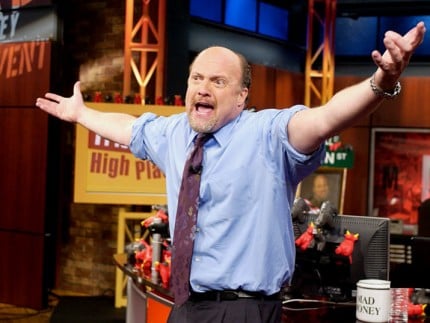 Media advice is of little worth, except for a fade perhaps. After all, the primary purpose of the typical financial reporter is to make his/her quota in inches. Quantity over quality. The purpose of the financial media is to sell ads, make money, and hook you like a fly fisherman casting a fly at a trout. The TV financial media has been taken over by guest experts(touts). I avoid reading or listening to them like the plague as I prefer to make my decisions looking through my own lens, not the lens of others(who are observers, not players), second hand.
This broken down old grain trader looks at the financial media with a very flinty eye, much like one looks at the guys at the track who sell tout sheets when you walk past the turnstyle. Make your own decisions, keep your own counsel, and play your own hand. If you need advice, there are private subscription services, for a high price, that might, sometimes be worth listening to, but unless they have skin in the game avoid them like the plague.
Craig Mee writes:
Everyone is now a salesman trying to justify themselves…listener beware. Funny how the country boys seem to do less talking and more listening and see things more clearly. I suppose that happens when you're not selling your soul on every deal as a means to pay the rent.
Dec
17
Quote of the Day, from Craig Mee
December 17, 2014 | Leave a Comment
"Everything went right on final day. I had an inkling when momentum was starting to shift my way. I took my chances and they paid off." -Greg Chambers, Winner of Australian PGA
Dec
15
The Decoy, shared by Craig Mee
December 15, 2014 | Leave a Comment
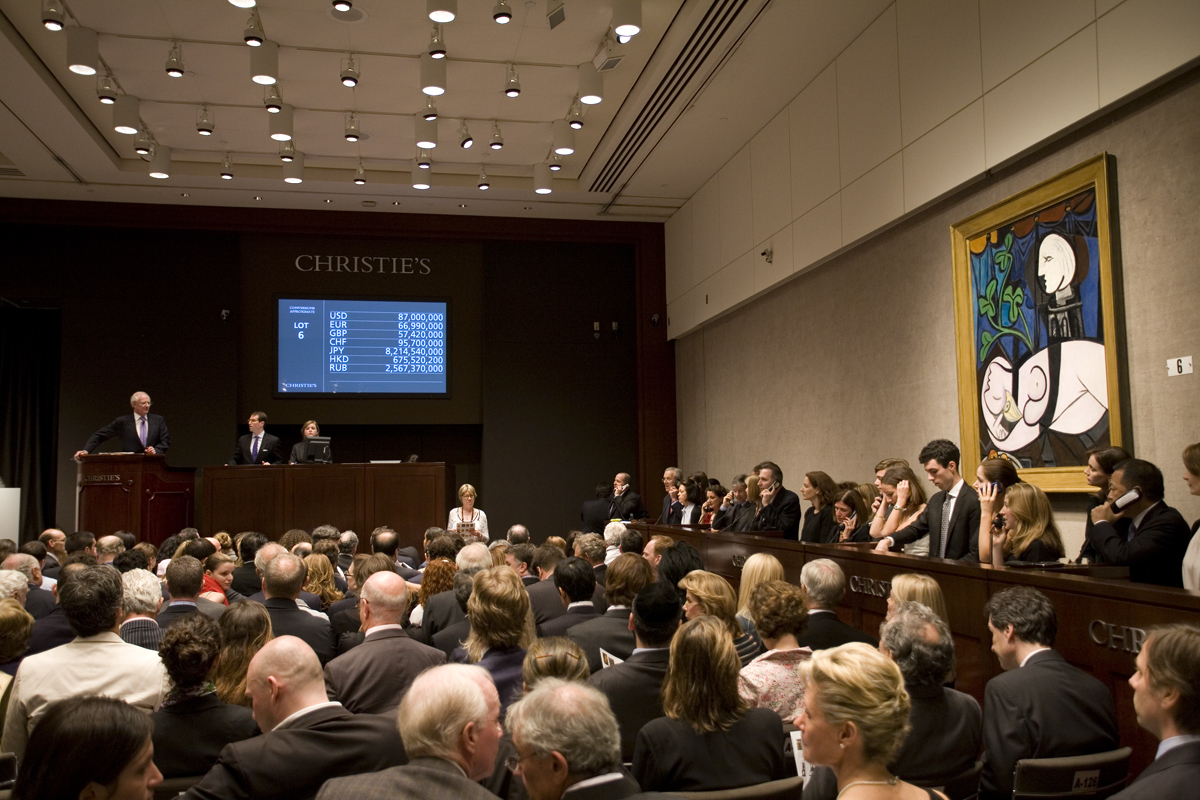 Sneaky auction tactics puts buyer on top in Cremorne:
Sneaky bidding tactics paid off for a family at a Cremorne auction on Saturday. Seven buyers registered to bid for the unrenovated Federation house two blocks north of the Oaks Hotel at 214 Ben Boyd Road, but only four groups raised their registration cards. When auctioneer Peter Matthews, of Ray White Lower North Shore, brought down his gavel at $2.09 million, the underbidder crossed the front path and hugged the buyer.
The crowd of 30 onlookers were left scratching their heads. The decoy was distracting her competitor with incremental bids, paving the way for her father to slam down two intimidating bids, the second of which ended the auction.
The pair had used the little-known "daughter decoy" strategy, which managed to muscle out a young Paddington family, who retreated looking disappointed. "You do what you have to do," the decoy said.
Dec
14
Suppose We Consider Prices as a Building, from Victor Niederhoffer
December 14, 2014 | 2 Comments
 Suppose we consider prices as a building whose purpose is to reach a certain goal as do architects when they are building a skyscraper or some such. What form does the price have to take in order for it to reach its goal? What attributes must it take on the way up, and what backing and filling must it take in order for the building to have a proper stability?
Jonathan Bower writes:
In my early days on the exchange floor I was intrigued by Market Profile (sample) which is the accumulation and "stacking" of ohlc bars. Several companies allowed one to aggregate on different time frames other than the original 30 minutes. While I never became interested in the "analysis" of profiles, I always thought they were useful in viewing the market from another perspective. Maybe it's worth going back and doing some quantifying.

Paolo Pezzutti writes:
One interesting characteristic on the way up is the continued occurrence of false breakouts to the downside on the various time frames as bad news hit the market. Regardless the efforts of the "jinx of the day" prices move down just to hit the tight stops incautiously positioned by traders and regularly move up and squeeze the few shorts left in the market.
anonymous writes:
One industry analyst with which I had frequent contact (he covered the metals and mining industries) used to assert that whenever a company senior exec is about to retire, you can be pretty sure that his incentive options will be nicely in the money.
Stefan Martinek comments:
Victor, I would argue proper stability is not needed, as those with stability i.e routine retests of previous highs on a break out, are just as susceptible to fail over time as a market which trades parabolic. It is just the problem that these markets, like usdjpy recently, give you few constructed setups re: risk reward–to get on, when they start moving.
Victor Niederhoffer responds:
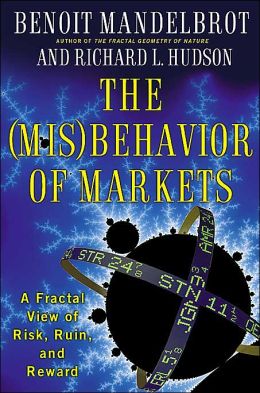 But this must be quantified, Mr. Martinek. Regrettably Mandelbrot was not able to program or count. See Roberts work on 1950 showing the similarities and impossibility of differentiating all the "scaling" and "regularities among the irregularities" of Mandelbrot and random charts.
Stefan Martinek adds:
From B. Mandelbrots The(Mis)Behavior of Markets:
There are too many very big and very small changes, not enough medium-sized ones. And the changes appear to scale with time: The proportion of bigger to smaller price-moves follows a regular pattern as you look at monthly, weekly, or daily charts. […] The size of the price changes clearly cluster together. Big changes often come together in rapid succession, like a fusillade of cannon fire; then come long stretches of minor changes, like the pop of toy guns. There is scaling here, too: If you zoom in on an individual cluster of big changes, you find it is made up of smaller clusters. Zoom again, and you find even finer clusters. It is a fractal structure. Nor is it just the price changes of interest; at times, the price levels also exhibit some kind of irregular regularity. The charts sometimes rise or fall in long waves, or with small waves superimposed on bigger waves. But none of these phenomena—clusters of volatility, or irregular trends—resemble any of the cycles, waves, or other patterns that characterize those aspects of nature controlled through well-established science.
Craig Mee comments:
"But none of these phenomena—clusters of volatility, or irregular trends—resemble any of the cycles, waves, or other patterns that characterize those aspects of nature controlled through well-established science."
I'm not so sure about that statement. Irregular trends and phenomena = what he discussed = do not resemble other patterns of nature controlled through well established science. Price does not have to equal nature all of the time. Just some of the time. Pick your battle.
Dec
5
USDRUB, from Craig Mee
December 5, 2014 | Leave a Comment
Patterns patterns USDRUB…why not look at them? The inner workings of price action…There is increasing volatility and a lower swing on the right shoulder. An in focus head and shoulders with a neckline coming into its own on a break below 52.60. Risk and reward is what this represents– your risk is your call.
Oct
31
Gold, from Craig Mee
October 31, 2014 | 2 Comments
 Will a $1,200 retest in Gold offer a big fig tight stop chance to offload a bit of gold after stops were cleared today? Are we favoring bullish/salable equities now into at least March/April next year and the USD to keep its grin? Has the price of manufacturing gold declined or is it still around the 1000-1100 mark? Will that contain the slip, and any privy below here provide value buying, or are there far to many doom and gloom gold species who are about to be pressured?
Oct
31
Traffic Patterns in Bali, from Craig Mee
October 31, 2014 | Leave a Comment
 I'm watching the drivers today in Bali, Indonesia, and I couldn't help thinking they drive like they live. For many on the island, due to the culture and religion, life is relaxed. Road traffic though is fierce, but always when changing direction a slow merging takes place particularly with cars and heavy vehicles, and then there is a gradual build up of speed. Looking around at westerners, they favor quick sharp movements–a total contrast.
I considered, as I was threading my own way through the peak hour buses and trucks and a million bikes, that before the world became globalized many markets probably traded very distinct lines representing their countries default behavior. No doubt, there was a distinct lack of "shadow hands" in the till upsetting the flow. Possibly they had their own insiders come in for the rake occasionally, but generally performed uninterruptedly.
Today I am amazed at the frequency of the same patterns in the big markets with global cover, but there is so much noise and fakes ins and outs along the way…and there's a prevalence of many developed and complex structures to finally achieve their end. Human emotion and character is that resilient. Even today, it achieves its end goal even though I think of the simpler days, when simple patterns ruled the waves.
Oct
30
The Industry Employing a Million, from Craig Mee
October 30, 2014 | Leave a Comment
 "Running out Red Tape is a Growing Industry":
What industry sector employs more Australians than construction, education or manufacturing, and three times as many as mining? What function costs private industry and government a combined $250 billion a year? Few would have guessed compliance – the red tape industry. And it's booming."However, a frightening report released this week by Deloitte Access Economics fingers the real red tape culprits – the private sector business community whose compliance costs leave the government looking like rank amateurs when it comes to creating and paying for what, in many cases, are unnecessary and unproductive self-imposed rules.The total private sector workforce grew by 10.4 per cent over that same five-year period; its compliance workers grew by 17.4 per cent.Ironically, the group that represents our very large companies, the Business Council of Australia, has been a flag-waver for the government's attempts to tackle red tape. The embarrassing reality is that it should be focusing on its own backyard.
Ed Stewart writes:
The missing factor is that "private" compliance rules are motivated by government mandate. They are required in order to avoid fines, bad pr, or lawuits. For example in the USA we have EEOC and OSHA, which both create enormous private bureaucracies and consulting practices. The "private" workplace rules are most often attempts to fulfill the requirements of these mandates.
Consider the headache a company must go through to fire an employee, particularly if they are "of color". It is a long drawn out process of documenting "evidence" that is fraught with risk if done wrong. Then you have the seminars on avoiding offending others, how not to think with the little head and accidentally cost the company 10m, the lengthy questionnaires with many imbedded "tricks" to weed out those not "with the program". It all works to create an environment that actively stifles common sense and rewards bureaucracy-enforced sensitivity.
Mandated dead-weight employees who can't be fired have a compounding effect of non-productive complexity. Everyone is a "stake-holder" and all ideas must be treated equally - or else. This leads to three hour meetings with no defined objective, the purpose of which is to provide ample room for people with no task related to the corporations primary purpose to feel important.
In my opinion we would see allot less "offshoring" of jobs if large US corporations were allowed to operate, hire, and fire efficiently.
Oct
30
If It’s White or Dead Don’t Touch It, from Craig Mee
October 30, 2014 | Leave a Comment
 A good way to look at diet is if it's white or dead, it will cause in most, long term volatility.
White Rice, white bread, tofu, white sugar are included in the if it's white and refined don't touch it category.
Alcohol, coffee, cigarettes, snacks, are in the dead filler or not of sufficient nutritional value category.
Working on these two alone ("if it's white or dead don't touch") can improve your general long term health by multitudes.
And so be it with Mr. Market…if you side step through all the rhetoric, props and deception, and focus on investments that have economic value at the heart of the them, not propped up by any whiz bang marketing campaigns or an overseeing federation, and clever use of the laws, then your chance of low volatility long term returns would be somewhat increased. Which is probably the way we all want to live.
Oct
20
Two Things That Interested Me Today, from Craig Mee
October 20, 2014 | Leave a Comment
 While walking around the rice paddies with my 3 year old daughter exploring, I came across a lean-to. The rice farmers used it to store things, to get themselves out of the sun, and run their ropes from it near harvest time to scare off the birds from eating their crop.
If you are interested in what products the locals use, the contents of the lean-to gave me some good insights. There was a Japanese made stone for sharpening their cutting knives, a particular brand of water additive for sweetening their drink, and a type of match for burning the end remains of the crop before the next harvest. Farmers here are not known to make a lot of money so to splurge on a imported product from Japan certainly was interesting.
Secondly, some time ago I spoke to a western European guy making great coffee and his own gelato, and asked him, "Why be buried in this area? You could be on the tour bus route and make a lot of money as your product is great." To which he replied, "I feel good just servicing the local community". I then felt slightly guilty by even having mentioned that to him. One year later, I noticed today while cruising on the bike, he has changed his location, and lo and behold, his parking lot in front of the shop was jam packed, and so was his car park opposite (shops don't generally have a secondary parking lot) with buses and tour guides everywhere. A faint grin ran over my lips, as I was obviously surprised. Cash is obviously king!
Oct
10
How Much Are We Missing in the Market? from Craig Mee
October 10, 2014 | Leave a Comment
 "How our brains trick us into ignoring movie doubles but let us recognise people we love":
Our brains are constantly perceiving the world as more stable than it actually is. Consider this: Every time the light hits your face differently, you look a little different - but people don't perceive you as having suddenly changed into someone else. In fact, they probably don't see your face as having "changed" at all. Without this neurological trick, the world would be a decidedly more confusing place.
But according to a study published this week in /Current Biology/, that mechanism - which researchers have dubbed the "continuity field" - can also steer us wrong, and have us convinced that two totally different faces or forms are the same.
"The brain is creating stability out of what's actually a very unstable system," said David Whitney, the senior study author and a University of California at Berkeley professor of psychology. His lab coined the continuity field term in a previous experiment. In that study, they observed the mechanism by which people meld similar looking objects together.
"When you're watching /Harry Potter/, you don't notice that his plain T-shirt changes to a Henley, for example," first author and doctoral candidate Alina Liberman said. "Your visual system is primed to see things as remaining stable. You have a bias towards ignoring small changes in your environment."
Leo Jia writes:
I wonder if this has to do with focusing of attention.
For instance, if you focus on the nose of a portrait on a computer screen and then the nose changes color or shape, you should be able to notice that. But if in the mean time, the ears changed, then it is hard for the person to detect that because his attention was on the nose only.
Perhaps this is the evolutionary way of using resources efficiently because the brain's processing resource is limited. This must have proved to work well during, say, hunting. Men wouldn't easily lose focus of the rapidly running rabbit because they see changes instantaneously. What men perhaps don't easily see is that a cheetah starts to chase the rabbit from another angle.
In terms of reading the market, the reason I believe we often miss things perhaps has more to do with the fact that there are so many things going on at the same time that our attention can't handle them all.
Oct
7
‘Guaranteed to Happen’ of the Day, from Craig Mee
October 7, 2014 | 1 Comment
If you're working a limit and miss the fill by 1//2 a point, and you then go to market when it's 5 away so to get the position on, the price will hit your original order limit. And of course if you don't go to market, you'll miss the trade of the year. You can put your lunch money on it.
Ralph Vince adds:
This comports to one of a family of distributions named after Maurice Tweedie , who classified a group of distributions, incl. Pareto, as comporting to:
Variance(x) = a * ExpectedValue(x)^p, where the constants a>0 and p>=0
The various distributions that are classically known occur at certain values for p (e.g. p==2 for Pareto), which is of no consequence but what IS of consequence is that this basic form is where we see so much occur in so many events market-related, insurance-related, weather-related, etc.
Oct
6
Music, Waves and Markets, from Craig Mee
October 6, 2014 | Leave a Comment
 I used to find when turning off surfing video music and just watching the surfing video, and then playing some other music, it used to sync on the big bottom hand turns or re-entries. It would also close at the same time as some major tube section–I would swear by it–but it was some time ago, and Kelly always drove off the lip harder than anyone… Hard for an Ozzie to say that. It reminds me of how Vic wrote in his first book that "music is designed to end at the hour and that's when the prices get market and the margins and settlements are settled."
Oct
6
Bitcoin Went Down, from Craig Mee
October 6, 2014 | Leave a Comment
 "Bitcoin went down."
One efficient markets cliché is making fun of the people who hop around trying to explain and anthropomorphize whenever the stock market goes up or down. You know, Stocks Mixed On Strong But Conflicting Emotions or whatever.
Another cliché is that bitcoin is reinventing modern finance as we watch. So bitcoin prices dropped below $300 yesterday and look at this: "Bitcoin tumbles: are investor's losing faith?".
Analysts are citing a number of factors for the decline: bearish chart signals; ongoing regulatory concerns; large sell orders by some early adopters; and a shift in the supply/demand balance.
There's a sense in which you always want to be the analyst who cites "a shift in the supply/demand balance," though in a larger sense you never do. (Also never be the "bearish chart signals" guy, come on.)
"Some contend that Bitcoin's price is irrelevant and that it does not reflect the virtual currency's true value." Of course, and while the second half of that sentence is true in any financial market, the first half is weird. But that's not a surprise, right? Obviously bitcoin didn't go down yesterday "priced in bitcoin".
Sep
30
Pressure is Building, from Craig Mee
September 30, 2014 | Leave a Comment
"Nearly a third of ASX-listed companies are fragile, at risk of financial catastrophe, report says":
A report out today on the health of Australia's listed companies says nearly a third are confronting the risk of a financial catastrophe.
Analysis of almost 16,000 annual reports by professional accounting body CPA Australia showed more alarm bells were ringing now than during the depths of the global financial crisis in early 2009.
The research, conducted between 2005 and 2013, said the red-flagged companies were exposed to the dual risks of the end of the mining investment boom and an unexpected slowdown in China.
Sep
17
Betfair Pays Out Early - Insiders Say No, shared by Craig Mee
September 17, 2014 | Leave a Comment
The Betfair Sportsbook is paying out a substantial six figure sum on the NO vote three days before the market closes, fully confident that the Exchange will once again be the most accurate barometer of a political vote…
The moves comes as the £8.6m Exchange market remains vehemently in favour of a NO vote at 1.27 (1/4 and a 79% likelihood), despite opinion polls predicting a much closer result after the votes have been counted on Friday. Over 85% of the total volume traded is in favour of a NO vote.
Several big individual trades continue to come on NO, with one customer staking £55,000 and another backing it for £27,000 on Sunday alone.
There has been little sign of the YES vote gaining any traction with political bettors, trading at 4.5 (7/2), and the average size of bet placed on this outcome under £80, in comparison to the £465 average bet for the NO vote.
Betfair's Naomi Totten said: "Political bettors have often favoured the Exchange as their choice of betting platform and it has historically provided an accurate prediction of political outcomes. Paying out early on our Sportsbook is testament to the esteem in which we hold the illustrious track record of our Exchange.
Aug
20
The Beautiful Sound Of, from Craig Mee
August 20, 2014 | Leave a Comment
 Tom Hanks created a free app that is number one in the app store right now that makes your ipad etc sound like a typewriter because "everything you type on a typewriter sounds grand, the words forming in mini-explosions of SHOOK SHOOK SHOOK. A thank-you note resonates with the same heft as a literary masterpiece," he said.
It may be time to get that Big S&P pit radio up and running…or something that can turn volume i.e flow into rhythm.
Aug
15
Playing Yourself Back into Form, from Craig Mee
August 15, 2014 | Leave a Comment
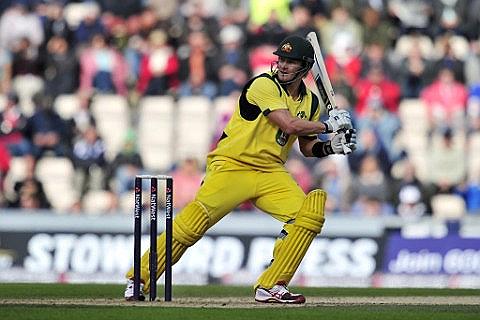 Some lessons here for traders in this article about cricket.
"Batting When You're Out of Form":
Being out of form with the bat is an experience that all cricketers go through whether they are test players or club amateurs. With each low score that comes, the batsman disappears into a world of self-analysis and negativity which creates a vicious circle of lack of confidence leading to even more low scores. It's important to realise that just as it's easy to have a bad run of form, it's just as simple to get back into something like reasonable nick. Here are some tips to help you do it.
1. Most bad trots come from mental rather than technical issues. You have the same eyes, same legs, same body all round so how you're thinking must be playing a part. Remove negative thoughts and steel yourself to get runs the next time you play. You've scored runs before, you can score them again.
2. Time in the Middle – A run of low scores usually indicates you've spent a short time batting out on the pitch. For your next innings, make a conscious effort to relax and bat some time to help re-learn some of the good batting habits you used to do. If it means you're a bit slow so be it. Andrew Strauss's 177 against New Zealand in the winter is a prime example of a player batting conservatively but for a long time to get back in form.
3. Not Playing Well? Accept that fact and bat accordingly. If you've had a run of low scores you won't feel that confident so it's essential to play in a simple, lower risk manner. Watch the ball as closely as you can and look to play the ball in a narrow 'V' between mid-off and mid-on with a vertical bat. Leave the higher risk horizontal bat shots like the pull and cut until you're 'in' or feeling back in better nick.
4. Run some singles – Bad form leads to lack of scoring and tension at the crease. Don't just look for boundaries to get you out of the slump. Quick singles are an excellent way of creating momentum and are absolutely priceless at the start of your innings so actively look for them and let your partner know you're ready to run.
5. Practice – The mental side of a bad run can be challenging so take positive action to get your game back on track. A good net session will do you a lot of good and some throwdowns during the week will help you feel that the bat is sitting better in your hands. You may have developed a technical fault which could be magnified by a lack of form so ask a team mate or coach to have a look at you when you're batting. Even if you're in terrible form, you will start to score runs again one day so the question is how can you assist that happening sooner rather than later. You may require a little break from the game to clear your head of distractions but if that's not the case, keeping your game simple, playing straight, batting for as long as you can whilst being positive and running singles is definitely your best option.
Aug
10
What We Can Learn From Bamboo, from Craig Mee
August 10, 2014 | 1 Comment
 A problem many market participants encounter is that they hold rigid views and systems which, just like the strongest steel and concrete, are destroyed under the right conditions.
It is nature that produces the strongest products of all, and we can learn from nature how to handle our trading. Take bamboo, for example: "the plants endure cold winters and extremely hot summers and are sometimes the only trees left standing in the aftermath of a typhoon. They may not reach the heights of the other trees, but they are strong and stand tall in extreme weather."
This article "10 Simple Life Lessons from Bamboo" provides many lessons for us all.
anonymous writes:
Here are a few amazing things I have learned about bamboo over the years:
1. The young can grow very fast - 3 feet in a day.
2. Thickness of the young and the mature is about the same.
3. Most grow on barren land.
4. A whole forest of bamboos can come from a single root.
5. They blossom once about 60 years, after which they all die and allow new seeds to grow.
6. The seed has potent stimulant for animal reproduction.
7. Bamboo shoots, bamboo fungus, and leayv (or bamboo worm) are delicious to eat.
Jul
28
 The canopy of the large coastal redwoods contains a forest of trees growing from the top branches and trunk. Sometimes an oak tree for example grows at 175 high from the trunk. Half of all living species are contained in this canopy. It is good to remember this relative to the counterpart to bearometer at this level.
The coastal redwood is the longest lived, biggest, and heaviest living thing in world dwarfing the biggest whales by 50%.
Craig Mee writes:
There are some great photos and a good story in this 2009 National Geographic article: "The Super Trees"
"California revolutionized the world with the silicon chip," Fay says, his voice deceptively soft. "They could do the same with forest management." "Perhaps the most amazing thing about redwoods is their ability to produce sprouts whenever the cambium—the living tissue just beneath the bark—is exposed to light. If the top breaks off or a limb gets sheared or the tree gets cut by a logger, a new branch will sprout from the wound and grow like crazy. Throughout the forest you can find tremendous stumps with a cluster of second-generation trees, often called fairy rings, around their bases. These trees are all clones of the parent, and their DNA could be thousands of years old. Redwood cones, oddly enough, are tiny—the size of an olive—and may produce seeds only sporadically. As a result, stump sprouting has been key to the survival of the redwoods throughout the logging era."
This ability of the redwood, may highlight the importance of accumulation to build anything of a significant structure.
Jul
22
Is the Low In? from Craig Mee
July 22, 2014 | Leave a Comment
Have we hit the low in market bashing…i.e libor fixing, forex fixing, hft, dark pools? Is now the time to go bid on volume and volatility? Or is there plenty more in store….
"Barclays' 'dark pool' volumes drop in wake of lawsuit, data shows":
Volume in Barclays Plc's private U.S. trading venue, or "dark pool," fell 79 percent in the week and a half after the New York attorney general accused the British bank of giving an unfair edge to high-speed traders, according to data released on Monday.
Jun
23
World Cup Observations, from Craig Mee
June 23, 2014 | Leave a Comment
 Watching Messi in the world cup game for Argentina I had the thought that the longer the game goes on, the more the defense forgets about the opposition's marquee players and what they are capable of, and the more they begin treating them like any other player, hanging off slightly in defense.
At that point they show their brilliance.
Just like the markets.
Jun
19
The Boy Who Cried Wolf, from Craig Mee
June 19, 2014 | Leave a Comment
 I've always felt the story of The Boy Who Cried Wolf has many lessons for traders. The story from wikipedia is below:
The tale concerns a shepherd boy who repeatedly tricks nearby villagers into thinking a wolf is attacking his flock. When one actually does appear and the boy again calls for help, the villagers do not come thinking that it is another false alarm and the sheep are eaten by the wolf. The moral stated at the end of the Greek version is, "this shows how liars are rewarded: even if they tell the truth, no one believes them". It echoes a statement attributed to Aristotle by Diogenes Laërtius in his The Lives and Opinions of Eminent Philosophers, where the sage was asked what those who tell lies gain by it and he answered "that when they speak truth they are not believed".William Caxton similarly closes his version with the remark that "men bileve not lyghtly hym whiche is knowen for a lyer".
Jun
8
Tennis and Markets, from Craig Mee
June 8, 2014 | Leave a Comment
You cant be 2 -1 sets down in a major 3-4 in the 4th and serve 4 second serves…and expect to win…
Exhausted? Nerves? What's the trading equivalent …or like the serve in tennis …what is the trading equivalent when you can't force the issue?
Jun
1
Going Against the Flow, from Craig Mee
June 1, 2014 | Leave a Comment
Possibly the only way to hold any sort of intensity in a tennis match where the home crowd is against you (I'm watching the French) is to change tack and, as McEnroe did so frequently, control the situation as best as you can. You could try to get the crowd on your side by making them laugh, for example, but this might distract you. It may be like in trading against the cycle or trend and pinpointing your exact entry points, where although you know you're against the tide, you can still win without changing your style. So maybe you can have your cake and eat it too. You just need to know that's exactly what's going on.
May
28
Pascal’s Law, from Victor Niederhoffer
May 28, 2014 | Leave a Comment
 To what extent can Pascal's principle where a change in pressure is transmitted undiminished to all parts of an enclosed liquid or gas system, whereby a small change in force on a narrow area can move a much larger force on a larger area as used in car lifts or construction machinery, be applied to markets in certain situations? Is this a useful question?
Stefan Jovanovich writes:
The Chair has asked a question that I cannot answer so I will add to my stack of irrelevant comments. What is called the Industrial Revolution was neither. Metal working and large scale enterprise were not new things. The Arsenal at Venice and the Royal Navy's yards with Brunel Sr.'s block carving automatic lathe did not need the "invention" of the steam engine. It was the discovery and application of the paradoxes of fluid dynamics that created our modern world — first steam, then gases and liquids generally.
Gary Phillips writes:
Mauboussin likes to talk about the market as a complex adaptive system and critical points where large scale reactions are the result of small scale perturbations, the implication being that causality can be difficult to identify because it is often very subtle.
Traders tend to focus on multiple and ubiquitous agents that may not drive price, but do support their directional bias, while ignoring potential outcomes with low probability that may be driven by hidden or obscure agents. Same with systems with too many degrees of freedom and over fitting.
Gary Rogan writes:
I often think of the market as a Pascal system or a school of fish. How do all the stocks know to move the similar direction?
Ralph Vince writes:
In the context of fluid dynamics, Gary's question leads to the (near inescapable) conclusion that the movement of stocks prices, in this context (with an isomorphism to 3D space of the varioius stocks) is characteristic of the flow WITHIN the de/compressing cylinder itself, under varying states of compression at varying times.
A study of hydraulic flows would show that fluid flow within the cylinder itself is not uniform, and is also a function of various degrees of pressure.
From this we could create such a model.
Gary Rogan responds:
It is kind of like that, but it's almost like there are local agitators within the cylinder. This morning provides a perfect example that I can see in my own stocks. Some joint venture news in MDLZ, one of the Kraft spinoffs has provided positive agitation to the food stocks, and more so to the specifically beverage stocks, and less so to the consumer non-durable stocks. This agitation is somewhat sticky in that when the market first rose for whatever reasons and then fell likely on Yellen's remarks, these stocks seemingly have experience a smaller sensitivity to the market had the important news not occurred. It's like a decompressing cylinder with small local explosions/collapses.
Ralph Vince adds:
 Matter in the expanding (i.e. decompressing) universe may be a better model?
But it still boils down to a feed back loop where the output of one becomes the input for the next ( in one case amplifying and in the other dampening).
Gary Rogan writes:
That's an excellent analogy and something I've been reading a lot about! It's not perfect but likely productive.
Immediately after the Big Bang the small world was pretty uniform. But then quantum uncertainty fluctuations have added a small pattern to the Universe that was the progenitor of what we all see today. In addition sound-like wave resonated within the Universe leading to the spectrum we still see in the microwave radiation today. Gravity has dramatically amplified the initial quantum fluctuation leading to the truly observable local pattern of galaxies, stars, and planets. And of course all the following star formations, collapses, and explosions created all the heavy elements as well reshaped the local structure of galaxies. Plus there is all the dark matter and dark energy (dark pools?) that exert gravitational and expansionary forces that can only be guessed at by their effect.
Craig Mee writes:
From the back benches, I think the problem may lie in measuring the change in volatility, since under no news conditions, the environment may be ideal, for example, after news releases in Europe mid morning before the states come in. After that though, it may be difficult to separate cause from effect.
Jim Sogi writes:
Might a small amount of money pouring into something like gold or oil or wheat move the entire market? The canary principle might be at work rather than Pascal's causal function, and there may be a lag, complicating the relationship.
anonymous writes:
 The use of finite-volume methods in sell-side modelling suggests it is a useful question. Market cap is a "squishy" concept of volume, as it can change when prices rise and fall. Book value is less squishy but still far from rigid.
Imagine a directed graph of trade flows among several companies, forming a trade network. Suppose there is a bottleneck somewhere. Destroying this link might be more disruptive than destroying other links.
My father used to talk about one of his coworkers who whirled about his organisation with fingers in every pot. This individual did much more than his job description suggested. When he left the organisation many projects across departments floundered.
The Allies' North African campaign of WW2 was meant to attack a "pressure point": Rommel's petrol supplies. Paraphrasing ER: "The bravest man can do nothing without guns, the guns can do nothing without ammunition, and neither guns nor ammunition are mobile without petrol."
I would also use the metaphor of joint-locks in jiu jitsu. Consider the manifold of configurations of your opponent's feet, knees, hips, shoulders, elbows, wrists, fingers. Applying pressure (vector) to the wrist and fingers in most of these configurations will not move the opponent's feet or hips. Joint locks find the configurations where a small force in precisely the right direction will cause the opponent's feet and hips to move a lot.
Saving the geekiest example for last: in George Lucas' fantasy world, certain Jedi Consulars are able to, with sufficient meditation and magic, see "shatter points" in a situation–precisely the kinds of vulnerabilities that will spread and multiply force to a wider area.
May
22
Still Market Waters, from Craig Mee
May 22, 2014 | Leave a Comment
 I visited Nitmiluk National Park in the Northern Territory of Australia over the last few days, and in particular Katherine Gorge. One thing that stood out is the absolute calmness of the place. In that lay the strength. This will change of course in the wet season when roaring rivers floods and waterfalls prevail. Much like markets, slow low volatility trends exhibit strength, but with Larry’s seasonals and a shift in the prevailing wind, much may change.
May
21
Don’t Trade When Unwell, from Craig Mee
May 21, 2014 | Leave a Comment
It has been mentioned many times by many veterans not to trade when unwell. Although that's difficult, especially as a setup trader, I concur. If you lose, your immune system is no doubt compromised further by the bad news and your mood certainly does not improve.
May
16
Article of the Day, from Craig Mee
May 16, 2014 | Leave a Comment
This article made me think about what ways markets are presented to alter whats actually underneath.
"Colin McDowell dissects the anatomy of fashion":
In The Anatomy of Fashion McDowell says he wanted to explore the obvious, but often overlooked, foundation of fashion: the human body. Starting from the beginning of recorded history and carrying through until the present day, he catalogues the various ways the body has been fetishised, forbidden and used to excite people through the ages. As McDowell writes in the introduction: 'Clothes do not simply conceal the body: they alter it. Pads make shoulders wider; bras change the silhouette of the breasts, corsets and belts provide narrower waists; collars make necks longer and more slender; vertical stripes elongate the body; dark clothes appear to slim. These physical trompes l'oeil have an emotional counterpart: if we think we look good, we feel good.'
May
16
The Long Hold, from Craig Mee
May 16, 2014 | Leave a Comment
 Whether it is scientists who have worked on a issue for years, a man whose marriage has broken up after 25 years, or an investment manager who is used to pocketing big profits on fees and no matter the fund's performance will always find a way to underpay his staff, so much depends on personality types. Man is not the most flexible of creatures. Ego and bravado no doubt play apart. The setting of one's mind by repetition becomes a formidable force.
Could it be with Manchester United that the players group had mentally prepared for the exit of sir Alex Ferguson and after his tight reign had prepared for a "break"? No matter the coach that followed, the result would have been much the same. I wonder if traders make the same mistakes with profit and loss curves and goal setting, creating the gremlins that brings their trading down.
Jordan Neuman writes:
In his baseball analysis, Bill James conjured the "Shotten Syndrome," named for mild-mannered Burt Shotten (well played by one of Barney Miller's colleagues in the movie 42). The theory was when a relaxed guy followed a taskmaster, in Shotten's case Leo Durocher, the team would respond positively.
In trading the analogy would be hewing too closely to a fixed idea of one's trading. Whether that is limiting the type of contracts one trades, long or short bias, long or short premium, it tends to eventually narrow the processes of the mind. Of course straying from one's area of competence is a separate problem, but who said this is easy? I have been running my own fund for 16 years, and while I wish I could have more than a few "pitches" back, as the low-level Air Force guy said in War Games, "#@$%, we're still here!"
May
7
Kiwi News, from Craig Mee
May 7, 2014 | Leave a Comment
The kiwis jaw-boned today heavily on the bird. After major talk and rate increases saw selling through Asia into Europe, I will be interested to see if the news will be acted on and if it will further reposition into the morning in the U.S. and beyond.
Earlier in the day it appears the European open drove buy stops after heavy Asian selling for the first hour to two, which gave the bank dealers a nice bid to sell into… then, wack. Lovely juvely, I will have to look to see under such conditions if it is their usual form….quacks like duck, walks like a duck ….
Apr
28
Surf Cafe Thoughts, from Craig Mee
April 28, 2014 | 1 Comment
 I was people watching, sitting down at a local surf break cafe at dusk last night. From the rich kid expats with brand new surfboards hamming it up after a day in the surf to the tourist couples enjoying a seafood dinner, to the guys in the break getting the last waves of the day to the street hawkers sifting through their pockets for loose change for a bottle of water and doing the thirsty work of sizing up the crowd for the next sale– all participants were in the same working scene, but no one was thinking about what the other participants viewed. It made me think that there are so many variables to consider about how everyone got to be the way they were. As with life, as with markets.
Apr
22
Victoria Makes Poker History, from Craig Mee
April 22, 2014 | Leave a Comment
 We need to analyze this. She is unconventional, chatty, attractive. Does she throw the competitors off?
"Victoria Coren Mitchell makes poker history with San Remo victory"
Now Victoria Coren Mitchell has made history by becoming the first two-time winner of one of poker's most prestigious tournaments.
"I think I'm quite quirky in poker because there still aren't many women playing big tournaments," she said.
"I have another job and I sit at the table drinking wine and chatting. Poker's a strange game because it's face-to-face combat and we're trying to knock each other out and take each other's money but at the same time we're all friends."
Ross Jarvis, editor of PokerPlayer magazine, said Coren Mitchell's win came at a time when professional poker veterans are fighting it out with a new generation of online whizzkids, many of whom have won millions before they turn 20.
"You have players who are the best in the world who are well-known in poker, then there are so many young players who you won't have heard of until they burst on the scene. Within the hardcore, there are people as famous as Victoria but when it comes to the mainstream she's in a league of her own," Jarvis said.
Jeff Watson opines:
In my opinion, a good poker player that happens to be a woman will beat up most men. Women scare me at the table and I generally play around them. If they're semi hot, flirty, and charming, they have an significant edge provided they have solid poker chops. Their edge exists because they are in control just because of what and who they are and by virtue of this, can manipulate the opposite sex. It's a spectacle to see a solid woman poker player slice, dice, and chop up her victim. And many men believe that these women are just lucky since there's still that core belief out there that women aren't as good as men in poker.
Ed Stewart writes:
 A man's competitive instincts start to shut down around a beautiful woman. Competition goes against the natural order that furthers the species in a beneficial direction. Chivalrous notions emerge, good business sense quickly erodes. One can't fight that instinct for long, in my opinion. It is a lost cause.
In the old days when the workday was more segregated men were protected from this weakness. Now it is open season on us and the other side knows it. If a brokerage salesperson with a very sensual and attractive voice asks to make a face-to-face presentation, just say no, as difficult as it is to do, summon the will to do it and you will be thankful.
It could be that this is why men practiced some forms of workplace sexism. It kept us from becoming fools on a consistent basis. When our main work conflicts are with men we are energized. It feels natural. Not so much the other way. A women might read this and be extremely disturbed and think, "think with the big head" but it is easier said then done. Modern mores are constructs, conditioning, overwhelmed by the most simple flirtation, and every good looking professional woman knows this.
If we try to avoid the attractive woman we might be in violation of laws, so self-preservation is now illegal too.
Apr
17
Fear of Calm Environments, from Jeff Rollert
April 17, 2014 | Leave a Comment
 There are a number of texts on single handed sailing, which speak to the effects on being becalmed on a sailors nerves. It may surprise some to know that long periods of being becalmed are more dreaded than fierce storms by experienced offshore sailors.
Since many traders work for themselves, I wonder how many are able to handle a lack of action without unintentionally selling volatility.
Many a lake sailor has learned this lesson and got caught with too much sail up when the weather changed abruptly.
I'd observe the Chair's courts provide such an outlet.
Chris Tucker writes:
 When I sailed from Honolulu to Berkley in the late eighties we suffered from exactly this problem. There is a semi-permanent high pressure system that usually sits between Hawaii and California and in order to sail back to the mainland you have to go around it. This means sailing northward from Hawaii for some time and then turning east towards the mainland once you've gotten around the northern edge of the high. The temptation is always there to make the turn. You are, after all, not sailing in your intended direction and there is a tremendous amount of psychological pressure to make the turn. After a while we found ourselves behaving like a bunch of kids in the backseat: "Can we turn yet? Can we turn yet? Can we turn yet?" And of course, we turned too soon and were becalmed for 17 days of our 27 day voyage. I saw the Pacific Ocean flatter than any pond. You had to put your face right down against the water and look along its surface to see the 1/2 inch tall swell.
We also dealt with some fierce weather and parted several sheets and lines — all of which had to be replaced to prevent the sails from being ripped to shreds. The top of the pilot house was fourteen feet above the water line and we were taking green breakers right over it. I had to replace the outhaul on the main, riding the boom like a rodeo cowboy in the middle of this. Exciting to say the least. I have to admit that shinnying up the forestay to gasket the jib, with the stay rotating in huge arcs and trying to fling me bodily into the sea while the bottom dropped away from below us and then screaming down the face of the wave to bury the bow in the trough - this - this was exhilarating and I've rarely felt more alive. The doldrums on the other hand, they were their own kind of hell. But I did find some of the most solidifying inner peace I've ever known during that time. So completely different sides of a coin. Looking back it seems that a tremendous number of miracles chained together have kept me here still breathing on the face of this rock. It is a wonder, an absolute wonder that I'm still here.
We were in a 56' ferrocement (yes - a concrete boat) 86 ton ketch. She was a very slow beast of a tub but quite roomy and comfy with a stable helm. There is nothing like the sea (except perhaps a bare rock face several hundred feet up) for pure clarity.
Craig Mee writes:
Work out your plan and the surrounding environment early, then plan to reassess in x hours or if the wind conditions change. Shut out any thoughts by fixing the radio or doing onboard work. Just like with trading, shut the monitors down, set call levels and work on some project management. Don't give the gremlins and hoodoos freedom to run wild.
Calm markets are worst after you take a hit and have lost ground and the agitation is there to move p and l to previous highs. The fact that markets delivered opportunity previously is directly correlated to the loss of opportunity currently. So vigilance and attention to detail should be at their highest. I wouldn't argue at this point to downsize positions until you play back into form.
Apr
15
For the Technicians, from David Lillienfeld
April 15, 2014 | 3 Comments
Taking a look at the BDI over the past year, is there now a head and shoulders? I ask out of pure ignorance—just trying to learn.
Gary Phillips writes:
Back in the day, before the day…
I am loathe to admit it, but I first read Technical Analysis of Stock Trends by Edwards and Magee in 1971 when I was 18 y.o. (Btw: the acknowledged bible on technical analysis was written in 1948). There weren't any computers back then, so we had to keep the charts by hand. Along with reading and studying the book, Leo Melamed and Barry Lind mentored me in the application of TA to trading. I used to keep charts back then for Tom Dittmer, who ran Refco. In return, he taught me how to scalp in the pit when I first became a member of the CME in 1976. Bob O'Brien sr. taught me about the livestock markets, and when I migrated to the CBOT, I leased my membership from Bill Eckhardt, and was lucky enough to receive his tutelage. I stood next to the largest independent futures trader in the world (Tom Baldwin) for 10 out of my 25 years in the bond pit, and after + 40 years of trading, at the age of 61, I am still learning the craft from Vic and others on the list. Ghere are a couple of points to be gleaned here:
1. as Rocky H. once said, I am smart enough to know I'm dumb enough, that I don't know everything; which is the reason why I have always surrounded myself with individuals who are smarter and more experienced than myself. Unless you are playing poker, you never want to be the smartest person in the room– you won't learn anything, and you should never stop learning! and 2. the bible on technical analysis was written when Truman was president. I think they were still communicating by telegraph back then! Does anyone in their right mind really think that today's machine driven markets even remotely resemble the markets of that era?
David Lillienfeld writes:
Ok, but I don’t think the BDI is an object of HFT. So wouldn’t older approaches (i.e, from 1948) still be applicable? Or from a technical perspective, is it the tenor of the market (a butterfly in Africa flapping its wings sort of thing) which matters?
Gary Phillips writes:
It's still an index and algo-driven professional trade, and I can't envision the palindrome putting on a massive short position predicated on a h&s top formation.
What is timeless in reference to traditional TA, is the tendency for traders to isolate the one data point (formation) that supports their directional bias while ignoring data points that contradict with their forward looking view of the market.
Charts in and of themselves are invaluable. They provide a point of reference for money management, capital flows, correlations, relative strength, etc, but, traditional TA (cliched patterns, trendlines, etc) seem anachronistic as a stand-alone predictive tool.
Craig Mee writes:
Hi Gary,
I think its a mistake to put all TA in one basket. For example, trendlines are very different than patterns. If you can quantify the edge your setups possess, you may have something to work with. The problem that I see is with most technicians, they are running so many parameters and indicators that this is unachievable. I think market volatility and news is a function of whether markets behave similarly now to 60 years ago and am constantly amazed at often they do.
Gary Phillips writes:
Perhaps in a very generalized manner, i.e., markets go up and they go down, they back and fill, and uncertainty is still a fundamental reality in trading, and, just as in the past, the best we can hope to achieve, is an incomplete, but probabilistic knowledge of that environment. However, the tools we use have changed and so has the perspective needed to understand the context of the contemporary market. It requires an approach built on an analytical framework that is relevant to current drivers of price. While traditional TA may provide a comfortable resolution and a summary shortcut to order amongst all the chaos, it doesn't yield any insight into market structure. What dramatically distinguishes today's trade from yesterday's is market structure and Fed policy. To a very large extent, price action is no longer controlled by humans, and to an even larger extent, price action has been contaminated by qe/zirp. This is the fork-in-the road where the past deviates from the future. This means resisting the sirens' call to assign causality to traditional ta patterns, trend-lines, fibs, and other hackneyed tools that were created for highly auto-correlated markets, driven by human decisions and real risk/reward considerations. It means using the right tools with proper perspective and incorporating relevant informational signals from a wide range of deterministic processes. The new-normal approach begins with recognizing the current dynamics of liquidity provision and developing an informational framework with signals that reflect the machine driven reality of HFT, along with an understanding of the impact of qe/zirp and risk-on/risk-off.
Craig Mee writes:
Agreed there are some larger drivers at play, and something like a magnetic or invisible hand keeping the pull to one side. But the boom and bust nature of the markets of the last 19-20 years is far from at an end so any extension will still be reverted. There may be periods and instruments where opportunities at times are limited, (for example, I would say its probably easier playing the curve now in rates then trading outrights) however fear and greed under the right volatility conditions is, in my humble opinion, still a force to be reckoned with. Separating the house of TA from price action and behavioral sciences is probably a good start so as not to give a illusion of believing in hocus pocus and mad methods while not understanding the underlying. The major returns and opportunities will still run with fundamentals, whether forced or established, but being able to have a value entry via the opportunities that humans create through their ever present qualities such as running with the herd on news and perceived threats which don't eventuate can allow for outperformance. I believe that the question of whether to weigh the opportunities that human behavior presents has to be sized up under the right volatility to ascertain whether risk has been compromised.
Apr
10
The Hoodoo Trade, from Craig Mee
April 10, 2014 | Leave a Comment
Victor has always said, "don't get in over your head" and it may be interesting to note you can do this in more ways than one. The following is not the most obvious way to get unstuck. I'd classify it as rotting from the inside.
Recently while putting on a trade with suitable parameters, I executed a sell order and initiated the correct size for risk, however as the market ran, seeing an opportunity, I hit it again for some size with a very close protective stop which I immediately moved to scratch. The market kept moving my way over the next several days. Lovely. However at this stage my mind was busy executing other trades and unwittingly focused on mark to market net profit across the board. So when the market jammed without reaching my profit target for said trade, this caused undue attention to this trade and bad trading habits to creep in, like trying to manage a position which should never of been as mark to market open profits tumbled.
I learned my lesson: keep away from trades that could take away from your model focus (or at least keep them and the attached numbers very separate). It's a bit like a hoodoo/ gremlin entering your book. It initially promotes great things but then seizes on the opportunity once you're off guard and tries to destroy you. The focus has to be in "holding the line" and allowing for no errors or anything that promotes them.
Apr
8
Thought of the Day, from Craig Mee
April 8, 2014 | Leave a Comment
It's interesting that when trading some things, although not technically correct, just make sense and are hard to ignore. For example, although you know it's best to have your edge play out on a particular model/stance, if you're running a position and happen to check the market when the price is a tick or 2 away from your exit target, then it just makes sense to book. At this moment in history it may be a 50/2 trade against, but your impulses cannot be ignored, right or wrong.
Apr
7
Why Math is Like Street Fighting, from Steve Ellison
April 7, 2014 | 2 Comments
 I found this approach quite fascinating.
An M.I.T. professor wants his students to begin using educated guesses to come up with solutions to math problems in the real world.
"Why Math is Like Street Fighting":
Street fighting and math hardly seem like they would fit together.
But for Massachusetts Institute of Technology professor Sanjoy Mahajan, street fighting is a perfect analogy to encourage his students to use educated guesswork to solve math problems in the real world.
"In street fighting, the beautiful form of a kick doesn't matter," Mahajan said in a phone interview with the Star. "What really helps you is if you connect and get results you need and survive. You can think of problem-solving as being in a duel with nature. You want to get to the end. The beauty and the elegance of it doesn't matter."
In his course, the "Art of Approximation in Science and Engineering," Mahajan, associate director for teaching initiatives at MIT's Teaching and Learning Laboratory, wants his students to use a variety of principles or ways of reasoning - everything from analogical to pictorial - to come up with solutions.
Mahajan believes essentially the students have to lower their standards - a hard thing for any educator to utter and even harder thing for perfection-wired students to embrace.
"They have been trained that science and engineering is all about rigor and exactness. And yes, it is at the end. But at first you need a rough idea of where you are. You need to lower your standards and get something on paper."
Mahajan believes that if students focus on rigorous exact formulas of mathematics, they'll never come up with solutions. "Life comes at you with roughly stated problems," he said. And "you need rough answers."
He often encourages students to draw a picture of why something is true and then they can usually apply the answer to a harder issue. "Our brain is more developed visually than symbolically," he explains.
He also advises his students to find a simpler version of a problem they're trying to solve and try to solve that first. Once that's done, the student can apply the answer to the larger problem.
Another technique he said students can use is "the divide and conquer" form of reasoning. "If you have a hard problem, divide it into bits," said Mahajan. "Like the British ran their Empire."
Mahajan says the key to street-fighting math is to be intuitive and adept at understanding how equations work in the real world.
"You can use these techniques to explain interesting things about the physical world," said Mahajan, who was born in England, grew up in New Jersey. He went on to study physics at Stanford, then mathematics at Oxford University. He did his PhD in theoretical physics at the California Institute of Technology and post-doc work at Cambridge University in England.
"I wish everyone would learn math this way."
In an attempt to share his theories with the world, he has written a textbook for his students and anyone else who might be interested. Street Fighting Mathematics: The Art of Educated Guessing and Opportunistic Problem-Solving is published by MIT Press but is also available online, licensed under the Creative Commons Non-Commercial Share Alike. That means anyone who is interested can download it for free and distribute copies of it as long as they don't sell it.
Orson Terrill writes:
I totally agree with this guy. Progress shouldn't be a prisoner of perfection. When I traded my first algorithmic "system" in currencies, I did not have the privileges to automate my trades with my currency "broker" (often they take the other side on paper), nor the funds to get a real intermediary (I was in college while supporting my teenage brother). Keeping two separate computers running, I had my right hand over my ten-key to an excel workbook, and my left middle finger on the key to take the bid or ask. Often, I would only get the initial figures into my excel sheet, and then "quick and dirty" my way forward for a few minutes. I was still able to put a large number of trades lasting less than a minute, and many that were only a few seconds (it depended on market volatility). The approach was to scalp after a relatively large move began to pause, and depending on the time of day, it could be unreasonable to expect scalping opportunities to remain for long (though they could before an important announcement, or as traders battle each other over the significance of whatever line in the sand has formed, or both).
It is true that much learning is sacrificed at the cost of the perfect learning of formulas that are usually only a model, or an impression, of what happens in the real world anyways. If you're hoping that a price model can be generalized, a holy grail, then it is almost certain that the conjecture will need be formulated with liberties taken.
Craig Mee replies:
Point taken. But though you can win a scrappy dog fight, and the numbers are all quite correct in the excel spread sheet, for longevity in this game, I'm all for finding form and beauty. If you can fight day in and day out and keep your head above water and do ten years and kill it, good job, as in, job done. But to fight every day, and not suffer long term brain damage, I think, is tough to ask.
Apr
2
Guaranteed to Happen, from Victor Niederhoffer
April 2, 2014 | 4 Comments
 1. When you got out for lunch, the market will take a big move in your favor that you were too slow on the trigger to capture. Your wicked friends will stay glued to the screen during that time, knowing the big move in what would have been in your favor is about to happen.
2. When you switch your position size down after series of big losses, you will hit 5 winners in a row, which will not compensate you for just one of the big losses you took.
3. The bonds will rally big on a economic number like GNP, but stocks will go down sharply and the explanation will be concerns about interest rate increases.
4. The big basketball game will feature a comeback the previous evening that is exactly like what happens in your market, and your team won't make it to black nor will you.
5. Whenever you have a big loss, and it turns around and goes to break even and you get out with a hootenany of relief, the market will go at least as far in your favor if you held as your were under water before.
6. Whenever there is serious morbidity in your family, you will lose many days in a row.
7. After a tremendous decline, the market will percolate around near unchanged for a day or two until you give up hoping for a rise, and then it will have a huge rise in your favor.
8. After a series of lucky trades in your favor, you will increase your size and the market will give you a tremendous beating. The same thing happens with basketball teams when they hit a lucky % of threes in the first half. When they try the same thing in the second half, they will make only 10% of them, and will go on to an ignominious defeat.
9. The worst trader on your team will be the one that defends you after a big loss and says that everyone should rally behind the boss, he's been trading the longest. Imagine the ignominy of having Smith the worst player in the league, and the cause of all the Knicks woes, defending Woodson and saying all the team should rally behind him because he works so hard.
10. Your wife will come in and look at the roller coaster chart of your swings on the day, and suggest "why don't you get out of half". You won't listen to her and you'll double up, and you'll be so ashamed you'll quietly sleep in the dogs kennel that evening.
11. The more time that passes from your early days as a speculator, the better you were (in your own eyes).
12. When you're long the grains in the summer, and you spend a weekend in the Hamptons, the sun will shine brightly all day, and a light rain will fall at the end of the day.
13. When you go out for dinner, the person next to you will be talking about his youngest daughter bought Netflix and Tesla and made millions on them.
14. After getting out of positions successfully on a swing during the day, you will try it the next day, and by the close if you had held your position you would be a rich man.
15. When you're long the market over the weekend, war will break out, or John Kerry will be reported to be visiting the Mideast or Russia to put out a fire.
Please add to the list.
David Lillienfeld writes:
Vic, if it makes you feel any better about it, I often wind up having to sleep in the kennel, and that's without a trading loss. And we don't even have a kennel.
Gary Rogan writes:
David's tale of woe reminded me of the old definition of Metaphysics: it's like being in a dark room and looking for a black cat that isn't there. Either that or the waterbed joke: you know it's going to be a bad day when your waterbed has sprung a leak and then you realize you don't even have a waterbed.
But for me what's guaranteed to happen is this: if I buy a little of some stock, I will have a nice gain, if I buy a lot, I will have a big loss.
Ed Stewart writes:
 The malevolent invisible hand guides ones trades when the in-laws visit. Suddenly your position size is 3X the norm, getting bigger, and at just the wrong time.
George Parkanyi writes:
16. When you sell or short a stock - a takeover announcement will happen the next day (that happened to me twice - sold Robert Simpson; shorted General Instrument).
17. When you go from theory to practice, your well-researched and tested system will immediately bleed money, and will only start making money (without you) when you stop using it.
18. The positioning of your stop-loss order is irrelevant - you WILL be stopped out within a few cents of the low/high, and the market WILL go roaring the other way. (This is the only sure thing in trading.)
19. You will apply logic, reason and critical thinking to the market. You might as well have thrown a dart.
20. In exasperation you will eventually just throw a dart. Your position will go against you.
21. You will continue trading anyway, because your DNA has failed, permanently locked in the "I can do this" switch position.
Craig Mee writes:
As soon as you mention a position to
anyone (some more so than others–for example, Vic's Hoodoos) the
heavens will open and you can kiss it goodbye.
Ed Stewart adds:
Another guaranteed to happen item. Far more often than should occur by chance an invisible hand keeps you in the loss by a few ticks. At this point if you get out with a planned time based exit, most often prices move quickly in what would have been your favor. If you stay in, it does the opposite. And a related item, if you get out with a day-trade profit, it keeps going in your favor for days. If you swing trade it, the reversal was just a blip in the previous trend and you are soon dunked underwater again. My thought, and I could be wrong, is that much of this is real, not imagined, and is a more distant effect of the adverse selection problem with limit orders.
Mar
28
Book Review: Poachers Were My Prey, from Ken Drees
March 28, 2014 | 1 Comment
 I read this great book Poachers Were my Prey: Eighteen Years as an Undercover Wildlife Officer last year and kept thinking about how dailyspecs might like it.
The down low: this is the starter book of this type of law enforcement. He is the Donnie Brasco of wildlife rangers.
I think all specs will like the book. It's the hustle of the country roads instead of the city streets.
It will open your eyes to new cons and new applications to markets.
Now I know there are a few of these types of book out there, so maybe some have read others in the genre that they would recommend.
Enjoy!
Mar
12
What Free Market, from Craig Mee
March 12, 2014 | 3 Comments
What free market? Maybe I'm missing something here, but I can't really believe this at face value anyway. Tesla getting squeezed out seems… would "un American" be the right phrase?
"Tesla Stores May Be Closed After N.J. Blocks Direct Sales"
Mar
3
Meaningful Runs, from Craig Mee
March 3, 2014 | Leave a Comment
Something I wonder about is at what stage does a "meaningful" run higher need to be justified with a fundamental reason that's ongoing, equating to the acceleration and allowing you to hold stock at these levels or at least be overly geared to the long side?
Boris Simonder writes:
Can you quantify the definition of meaningful. Surely there's a wide interpretation.
If the security is gapping up aggressively, or in an usual way, more than its group peers, there may indeed be fundamental reasons behind it to justify holding the security. On the other hand, less liquid securities could just move faster (higher beta) without any fundamental reason we see today or the time of the move. But then again this could also apply to any security. The trick is to use the right input/tool (to justify a position) at the right time, regardless of methodology.
Feb
17
Dr. Market, from Craig Mee
February 17, 2014 | 1 Comment
This article on oxytocin on wikipedia made me think that it's possible different markets release their own cytokines and perform better and recover faster when interacting with their favorite partners.
Social behavior and wound healing: Oxytocin is also thought to modulate inflammation by decreasing certain cytokines. Thus, the increased release in oxytocin following positive social interactions has the potential to improve wound healing. A study by Marazziti and colleagues used heterosexual couples to address this possibility. They found increases in plasma oxytocin following a social interaction were correlated with faster wound healing. They hypothesized this was due to oxytocin reducing inflammation, thus allowing the wound to heal faster. This study provides preliminary evidence that positive social interactions may directly impact aspects of health.
Feb
4
Aussie Thoughts, from Craig Mee
February 4, 2014 | Leave a Comment
 I'm rather nervous about the ability of the EUR to hold on after much gain against the likes of the aussie, cad and old mate yen. Maybe like golf we can work back from the putting green, and others can drive home a more macro view why this may indeed be the case.
Besides rates, the last x period has taken out any overdone goodwill built into the Aussie-China trade partnership during the commodity boom. Now it's back into a form of value, but whether against EUR or USD, that's open to debate.
Today EUR/AUD RBA announced no cuts with the sign off: "In the Board's judgement, monetary policy is appropriately configured to foster sustainable growth in demand and inflation outcomes consistent with the target. On present indications, the most prudent course is likely to be a period of stability in interest rates."
So at least on the aussie side this is conductive to the pair continuing to flatten.
— keep looking »Archives
- August 2026
- July 2026
- June 2026
- May 2026
- April 2026
- March 2026
- February 2026
- January 2026
- December 2025
- November 2025
- October 2025
- September 2025
- August 2025
- July 2025
- June 2025
- May 2025
- April 2025
- March 2025
- February 2025
- January 2025
- December 2024
- November 2024
- October 2024
- September 2024
- August 2024
- July 2024
- June 2024
- May 2024
- April 2024
- March 2024
- February 2024
- January 2024
- December 2023
- November 2023
- October 2023
- September 2023
- August 2023
- July 2023
- June 2023
- May 2023
- April 2023
- March 2023
- February 2023
- January 2023
- December 2022
- November 2022
- October 2022
- September 2022
- August 2022
- July 2022
- June 2022
- May 2022
- April 2022
- March 2022
- February 2022
- January 2022
- December 2021
- November 2021
- October 2021
- September 2021
- August 2021
- July 2021
- June 2021
- May 2021
- April 2021
- March 2021
- February 2021
- January 2021
- December 2020
- November 2020
- October 2020
- September 2020
- August 2020
- July 2020
- June 2020
- May 2020
- April 2020
- March 2020
- February 2020
- January 2020
- December 2019
- November 2019
- October 2019
- September 2019
- August 2019
- July 2019
- June 2019
- May 2019
- April 2019
- March 2019
- February 2019
- January 2019
- December 2018
- November 2018
- October 2018
- September 2018
- August 2018
- July 2018
- June 2018
- May 2018
- April 2018
- March 2018
- February 2018
- January 2018
- December 2017
- November 2017
- October 2017
- September 2017
- August 2017
- July 2017
- June 2017
- May 2017
- April 2017
- March 2017
- February 2017
- January 2017
- December 2016
- November 2016
- October 2016
- September 2016
- August 2016
- July 2016
- June 2016
- May 2016
- April 2016
- March 2016
- February 2016
- January 2016
- December 2015
- November 2015
- October 2015
- September 2015
- August 2015
- July 2015
- June 2015
- May 2015
- April 2015
- March 2015
- February 2015
- January 2015
- December 2014
- November 2014
- October 2014
- September 2014
- August 2014
- July 2014
- June 2014
- May 2014
- April 2014
- March 2014
- February 2014
- January 2014
- December 2013
- November 2013
- October 2013
- September 2013
- August 2013
- July 2013
- June 2013
- May 2013
- April 2013
- March 2013
- February 2013
- January 2013
- December 2012
- November 2012
- October 2012
- September 2012
- August 2012
- July 2012
- June 2012
- May 2012
- April 2012
- March 2012
- February 2012
- January 2012
- December 2011
- November 2011
- October 2011
- September 2011
- August 2011
- July 2011
- June 2011
- May 2011
- April 2011
- March 2011
- February 2011
- January 2011
- December 2010
- November 2010
- October 2010
- September 2010
- August 2010
- July 2010
- June 2010
- May 2010
- April 2010
- March 2010
- February 2010
- January 2010
- December 2009
- November 2009
- October 2009
- September 2009
- August 2009
- July 2009
- June 2009
- May 2009
- April 2009
- March 2009
- February 2009
- January 2009
- December 2008
- November 2008
- October 2008
- September 2008
- August 2008
- July 2008
- June 2008
- May 2008
- April 2008
- March 2008
- February 2008
- January 2008
- December 2007
- November 2007
- October 2007
- September 2007
- August 2007
- July 2007
- June 2007
- May 2007
- April 2007
- March 2007
- February 2007
- January 2007
- December 2006
- November 2006
- October 2006
- September 2006
- August 2006
- Older Archives
Resources & Links
- The Letters Prize
- Pre-2007 Victor Niederhoffer Posts
- Vic’s NYC Junto
- Reading List
- Programming in 60 Seconds
- The Objectivist Center
- Foundation for Economic Education
- Tigerchess
- Dick Sears' G.T. Index
- Pre-2007 Daily Speculations
- Laurel & Vics' Worldly Investor Articles
