Nov
21
VIX Intraday Range, from Cagdas Tuna
November 21, 2025 | 1 Comment
Yesterday's range in VIX was one of the widest & wildest one I have seen in a very long time that happened without any major news. Wednesday close to Thursday low 18% decline followed by 46% rally to the day's high. Is there anyone who can check the occurrences in the past and how SPX traded in the following days of such a massive range explosion?
Asindu Drileba responds:
The Chairman's book, Practical Speculation, has a detailed analysis of the multivariate relationship between the VIX and the SPY. Unfortunately I forgot the page, and I am currently not close to my copy. [see pages 107-110] But it has something to do with how the fluctuations around the average of the VIX affects the SPY.
Paolo Pezzutti does some counting:
#VIX +11.71% at 26.43
Highest close since 24 April
Since 2020 VIX>26 has occurred 290 times.
After 4 days the Emini S&P Futures:
+27.01 pts Mean, 63.4% Wins, 1.63 Profit Factor
Larry Williams cuts to the chase:
Vix goes up when stocks go down they are inverse of each other—no magic there are all.
Apr
14
“Policy” and regularities, from Paolo Pezzutti
April 14, 2025 | Leave a Comment
Although the stated goal is to reshore high-tech manufacturing, exempting tech products undermines that aim, while taxing low-end goods won't bring back production that left decades ago. The policy thus fails on both fronts: it neither restores domestic manufacturing of cheap goods nor incentivizes reshoring of advanced technology.
In any case, the US dominates the key technologies of the future. China is only a follower and Europe is not even in the competition so far. So regardless of who is the the Pres or what he is doing, dynamics related to growth may remain untouched.
For a counter, however, once again the “Tweet-based policy” during the weekend eroded predictability of statistical patterns.
Aug
25
Counting and ML, from Paolo Pezzutti
August 25, 2024 | Leave a Comment
What is the role of Machine Learning models and Features selection in this "counting" philosphy? Have all these "new" methodologies overcome and made useless the traditional counting and statistical approach? Or can they coexist, as long as one can find a niche in which to conduct profitable operation?
William Huggins responds:
ML and feature selection run on "traditional statistics", which is basically about comparing empirical data to what randomness around a benchmark should look like. think of them as like hydraulics, which transformed the shovel into the backhoe for large operations but without rendering the "basic version" obsolete.
Big Al links:
In the Google Crash Course in Machine Learning, the first model is Linear Regression.
Jan
2
Thoughts on EUR for January 2023, from Alex Castaldo
January 2, 2023 | 2 Comments
I do not focus on foreign currencies in my trading. And there are people here, such as Mr. John Floyd, who are far more knowledgeable about FX. So some of you may find these thoughts a bit simplistic; keep in mind I am an amateur!
I believe that a factor that makes a country's currency attractive to investors is the success (or lack thereof) that foreign investors have investing in the country in question. We can gauge this success by using ETF's that specialize in particular countries. For example SPY measures the performance of stock investors in the US, while EZU tracks investing in Eurozone stock markets.
What do we see? In recent months EZU has been performing better than SPY. For example in the last 6 months of 2022 SPY had a total return of 2.03% and EZU 9.56%. For 2022 as a whole SPY -18.38% and EZU -16.67%, two ugly numbers, but EZU did better. (These numbers will change between now and Dec 31, but not by much).
In my view this kind of comparison (especially given that Europe did poorly the previous few years, so it's a remarkable turnaround) will attract additional US investors to Europe, strengthening the currency. That is why I am bullish on EURUSD for the month of January 2023.
Bud Conrad responds:
Your logic is that if the stock market of a country rises, the currency of that country will rise in exchange rate. In the early days of this Speclist, the chair would ask me if I had "counted" the historical experience, which you cite for the last six months and year, but usually you need something like three cycles of inflection to get confidence.
The more usual comparison for currency strength are the Interest Rate Parity, using the futures market expected exchange rate and the difference in Interest rates.
And there the International Fisher Effect, also described here.
Often international traders look at trade balances for the country that has a trade surplus to be more attractive so the currency might rise. Trade surpluses mean they are a lender and not in debt to other countries. The US is the world's largest debtor, but the currency has been doing well.
John Floyd writes:
Doc makes the broadest, cleanest, and most accurate point about what drives currencies: what are expectations for return by BOTH domestic and foreign participants, and how does that drive investment flows into equities, FI, FDI, etc, which shows up in the BOP and Capital Account - on the other side of the ledge is the Current Account and the Errors and Omissions.
Admittedly I don’t know much about currencies and this is the area I know least about, but flow data is well researched and document by many at banks, independent research firms, IIF, IMF, BIS, etc. One challenge is it is often very much lagged, so Doc’s idea of looking at actual market instruments makes sense, and this is often particularly useful for emerging markets.
Capital account flows can fund a current account deficit for a very long period of time. Look at the US now or look at the Asian Currencies pre the crisis: errors and omissions become important given capital flight, particularly EM. Think Russia pre ’98 and Swiss bank accounts, etc.
As Doc well knows infinitely better than me, we need some more data and this can all be tested.
More broadly, outside of equity flows, Bud’s point of interest differentials will drive some capital flows. Also consider FDI from Europe to North America to diversify dependence on European energy costs and to friend shore manufacturing capacity.
And I would be remiss to not mention Italy (sorry Doc). Italy is in a Euro straightjacket that not even Houdini could get of. ECB is tightening with inflation at 10%, Italy 150% debt to GDP, Italian per capita GDP is barely higher than when joined Euro in 1999, Italy needs circa $250 billion in funding in 2023, 10 year yields in Italy up from 1 to 4.5%, all Italy issuance past few years was essentially bought by the ECB. This is not politically sustainable. Just look at the evolution of recent German politics. The ECB’s TPI is there but is intended for temporary dislocations and will require Italian political concessions. Oh and Italy is 10x Greece and the world’s 3rd largest sovereign debt market behind the US and Japan.
Read the full discussion here with additional contributors and charts.
Dec
7
Timing, from Nils Poertner
December 7, 2022 | Leave a Comment

If Timing in mkts is everything - I mean everything - how can one improve it?
Few yrs ago, there was this mixed martial arts boxer called Chuck Liddell. He had amazing timing like no other one else had - and was mostly a counter-boxer. Eventually others figured him out but he has his run. He observed his opponents carefully- - and in the right moment broke the pattern and leaped forward when his opponent didn't expect it. Same parallels to trading mkts perhaps?
a - observe everything
b - develop a bit of courage for the leap (but only after a and plenty of practice)
c - practice.
William Huggins responds:
reminds me of Miyamoto Musashi's exhortation to his students that breaking the opponent's rhythm was the most important part of competition. He suggested a number of techniques (fight with the sun behind you, chase opponent onto uneven ground, stab at the face, etc) but I wonder if those are of limited applicability when squaring off against faceless (and innumerable) market-based opponents simultaneously.
his Book of Five Rings is hundreds of years old and thus free everywhere.
John Floyd writes:
Extending on your martial arts analogy….and bringing in the law of everchanging markets…timing is improved in terms of outcome and consistency if one recognizes and can adapt to prevailing conditions, using experience and intuition, and what tools to pull out of the quiver and employ.
This article from one of my teachers talking about my esteemed dojo mate Paul Williams is a worthy read on an application of timing.
Zubin Al Genubi adds:
One of Miyamoto's strategies was run, then suddenly turn and attack while fleeing. I've found it a useful trading strategy. He would also arrive to a duel early, or late, throwing off the opponent's timing.
Paolo Pezzutti comments:
Intermarket relationships can provide good timing. For example when bonds print a new 20-day it is quite bullish for stocks over the next days. Buy signal last Friday at the close. Since Mar 20 holding 3-5 days T-score up to 4. Last 10 trades after 5 days all positive. (Chart on TWTR.)
Aug
11
Summer reading, from Zubin Al Genubi
August 11, 2022 | Leave a Comment
I need some new books to inspire me. Suggestions? Last few science book were great.
Bill Egan replies:
Against the Tide: Rickover's Leadership Principles and the Rise of the Nuclear Navy by Dave Oliver.
Laurel Kenner adds:
Sue Stuart-Smith: The Well-Gardened Mind: The Restorative Power of Nature
William Logan: Sprout Lands: Tending the Endless Gift of Trees
Thomas Sowell: Black Rednecks and White Liberals
Michael Brush suggests:
The Gene
The Emperor of all Maladies
Why We Sleep
Henry Gifford offers:
Buildings Don’t Lie, Better Buildings by Understanding Basic Building Science: The movement through buildings of heat, air, water, sound, fire, light, and pests. By…well…Henry Gifford!
Big Al recommends:
Prime Obsession: Bernhard Riemann and the Greatest Unsolved Problem in Mathematics
The Seven Pillars of Statistical Wisdom
The Biggest Bluff: How I Learned to Pay Attention, Master Myself, and Win
Re Riemann, 3Blue1Brown has a great bit to enhance the visual:
Visualizing the Riemann zeta function and analytic continuation
A reader writes:
Major Transitions in Evolution: Maynard Smith & Szathmary
Indra's Pearls: Mumford + Series + Wright
Coe/Stone: Reading The Maya Glyphs
Fred Schwed: The Pleasure Was All Mine
Japanese Tales: Royall Tyler
African Folktales : Paul Radin
Ernst Haeckel : Art Forms from the Abyss
Owen Jones: The Complete Chinese Ornament
Trigonometric Delights : Eli Maor
Voices from the Whirlwind - Fenc Jicai
The Cowshed - Ji Xianlin
Rural Worlds Lost - Jack Temple Kirby
Paolo Pezzutti enjoyed:
Relentless Strike: The Secret History of Joint Special Operations Command
Laurence Glazier adds:
Emily St John Mandel, Sea of Tranquility. Sequel to her earlier The Glass Hotel, which was partly about a Ponzi scheme.
And Brandon Q. Morris, physicist sci-fi writer.
Peter Krupp writes:
Here are two science books that I found fascinating focused on quantum physics written by one of the great contributors to the quantum theory of computation, David Deutsch.
The Fabric of Reality (quantum theory - many world interpretation, quantum computation, epistemology, and much more).
The Beginning of Infinity (the nature of scientific progress, how it has accelerated in the past few centuries).
Jul
9
For those who are interested, I thought it would be good to share the link to dowload the ebook from Mit Press.
Algorithms for Decision Making
This book provides a broad introduction to algorithms for decision making under uncertainty. We cover a wide variety of topics related to decision making, introducing the underlying mathematical problem formulations and the algorithms for solving them.
Jun
28
Update on the AI discussion, from Laurel Kenner
June 28, 2022 | Leave a Comment
If you missed Newton Linchen's Zoom talk on AI this morning, here is a link to the recording, passcode: &6yLyn*F.
He included a demo, explained the different types of machine learning, suggested books, and related the colorful story of how a powerful reinforcement learning algo of the sort used for self-driving cars and rocket landings took five days to run and nearly melted his computer. (That's not an algo he uses in his trading for clients.)
If you wish to download the recording you can, but be aware that you will be downloading an untrimmed version as Zoom preserves the original. The talk starts at around 30:15.
Laurence Glazier comments:
This is brilliant. It is so nice that nowadays mathematicians have an alternative to aerospace pursuits. I would like to see AI applied to classical music, so I could have an engine at my side as I tried to figure out the complexities of a piece, much as a grandmaster may be assisted by an AI chess engine like AlphaZero. I am also looking at altering the design of the theramin to interpret conductor gestures, and ultimately AI may have a role here too.
Paolo Pezzutti writes:
Excellent presentation. As you highlighted it is all about features. Models are open source therefore you can only work to tune parameters. The choice of features is fundamental. Either as a continuous series or conditional (1 vs 0). It is is also important how you select training data taking into account the current regime. An interesting approach to study in addition to price relationships is introducing alt data such as payrolls or yields spreads, or intermarket relationships. I guess that brilliant minds with powerful computers are continuosly processing huge amounts of data pursuing an edge that is a moving target due to everchanging cycles.
Jordan Low asks:
Thank you for your talk. One of the problems I had with classifying up or down days is that the ML model tends to find "buy-the-dip" opportunities to pick pennies, but might get wiped out on a larger volatility event such as a pandemic. Is this a problem you face as well, and what are the strategies to mitigate this?
Jun
27
Prediction Power Of Algorithms, from Newton Linchen
June 27, 2022 | Leave a Comment
It’s been said that machine learning algorithms have no particular prediction power for the stock market, due to it’s intrinsic randomness and the all pervasive opportunity for curve fitting. (My very first inquiry here on the List, back in 2009, was about how one could avoid overfitting.)
Specially when dealing with short-term trading (day trading), it’s considered that nothing can really beat the random nature of the market. And I agree, to a certain point.
But my experience in recent years, particularly applying machine learning for the day trading of stock index futures, would suggest otherwise. There’s a frontier between stock market analysis and data science that can lead to predictive power using machine learning algorithms.
Perhaps the best advise is to use them for classification, not regression. And here we are in pattern analysis, so to speak. Classification algorithms can identify feature characteristics and recurrent patterns in an nonlinear dimensional space. So, with enough work on the subject, it’s possible to identify tradable patterns, (which in fact remain uncertain, as per the black box characteristic of certain algorithms), and to build a trading strategy around them.
My best experience so far has been with a QDA (Quadratic Discriminant Analysis) algorithm, with real trades for the past 15 months. Here’s the documentation link for the QDA algorithm, which is public knowledge as part of the Scikit-learn python library:
Laurel Kenner asks:
Newton, what role does human inspiration play in revising hypotheses in the scientific method that AI seeks to automate? Can an AI replicate out-of-line ideas, lucky errors, the contrarian stubbornness of human thought? Can it know what it is to add value?
Newton Linchen responds:
After 15+ years in the stock market, I went to grad school in computer science, to learn such algorithms. Before that, I had no idea how they worked, and as a trading strategies developer, my main concern was always to avoid curve fitting at all costs.
I’m not the best student, but from what I’ve learned, and applied in my work as an analyst, it became clear that we, who are foreign to this area, have much misconceptions about the nature and the role of AI. In fact, I think AI is a very bad name, as, most of the time, we are dealing just with approximation functions.
What machine learning algorithms excel, is to perceive relationships between the features, mapping those features in a hyperplane, (which is a confusing name to express that each feature is understood as a dimension itself in the dataset). The quest is not for to suppress human insight, knowledge and creativity, au contraire: is to use it in an orderly fashion as features for the algorithms to learn from. I believe Marcos Lopez de Prado has a body of work in this field, and clearly it is him who should be bringing this topic, not me.
In my experience, the algorithms learn patterns (that perhaps we couldn’t identify), and generate predictions. A whole other work begins when we decide what to do with those predictions (as in terms of time length of the trade, profit target, stop loss, stop-the-algorithm policy, etc). So, AI won’t substitute human knowledge and insight in the markets, but I believe it’s a precious tool for research.
Nils Poertner adds:
human intuition is underrated, isn't it - to make sense of the world sometimes? we are all geniuses in a way but don't see it that way.
The intuitive mind is a sacred gift and the rational mind is a faithful servant. We have created a society that honours the servant and has forgotten the gift.
- Albert Einstein
Paolo Pezzutti comments:
I have not worked with Qda. I am convinced that classifiers are more interesting from the trader's perspective than regressors. I have coded things using xgboost which is also quite popular just to understand the approach and the potential. There is a huge effort to do in order to identify and select features. Overfitting is an easy trap.
Leo Jia writes:
I prefer seeking entry-exit pairs to only predictive conditions. Overfiting is unavoidable. But there are techniques to largely eliminate them. Also, it's not enough to only seek the best performing (however one defines it) conditions based on the given data as paradigm is surely changing, so it's important to find lukewarm or even losing conditions that are to well perform sometimes in the future. In any regard, expecting machine learning to do a great job on timeseries financial data as it can do with, say, image detection is unrealistic due to many factors, notably the lack of training data and the paradigm changes. So other assisting techniques (which turn out essential) have to be used ulteriorly.
Jun
5
Payroll Tax Receipts, from Bill Rafter
June 5, 2022 | Leave a Comment

How are they going to paint this as a strong economy?
[Data source. -Ed.]
Andy Aiken responds:
It's not, but it gives the Fed a pretext to hold off on rate increases in an election year.
Vic adds:
46 leaked the numbers in his speech on Powell. they get the numbers several days in advance.
A reader asks:
Bill, how have ten year yields reacted in the past when the number is both negative year over and continuing to accelerate down trend? It seems this could be the catalyst that causes the long end to flatten out/rally as the Fed continues to raise the short? Does that hypothesis bear out in testing?
Bill Rafter replies:
Thanks for the question. I will not know until I test.
George Zachar asks:
oddly, the y/y% change in private eci wages has roughly doubled since late 2020, now at 5%. can you square the circle?
Bill Rafter replies again:
I will have to look at it. The payroll taxes are most the macro I can tap, so I tend to put their veracity on top.
Paolo Pezzutti comments:
I was hoping an Api could download the file from the treasury website. There are a number of Api's in Python or R to download datasets in json, csv, xml from FRED and other websites as alternative data to find relationships and regularities with stock index prices. Some of these keys are premium. I wonder if this approach provides real added value with respect to counting based on the idea that prices represent the synthesis of all market players actions and views.
Jan
19
Rate hikes and stock market returns, from Zubin Al Genubi
January 19, 2022 | Leave a Comment
From Marketwatch.
As it turns out, during so-called rate-hike cycles, which we seem set to enter into as early as March, the market tends to perform strongly, not poorly.
In fact, during a Fed rate-hike cycle the average return for the Dow Jones Industrial Average DJIA is nearly 55%, that of the S&P 500 SPX is a gain of 62.9% and the Nasdaq Composite COMP has averaged a positive return of 102.7%, according to Dow Jones, using data going back to 1989 (see attached table). Fed interest rate cuts, perhaps unsurprisingly, also yield strong gains, with the Dow up 23%, the S&P 500 gaining 21% and the Nasdaq rising 32%, on average during a Fed rate hike cycle.
Penny Brown wonders:
Very surprising. I am wondering why there is a mantra: "don't fight the fed." And "three hikes and a stumble."
Vic adds:
not mentioned is that the average fed rate increase cycle lasts 5 years. there have only been 13 of them since the fed was founded in 1910. usually these is a run of 15 increases once they turn from red to black.
i believe that the fed will not raise until the S&P is much stronger. a very nice close today (18 Jan.)
Nils Poertner comments:
the more talk about rising rates (and neg impact on stocks) the better it is for stocks. to a point of course.
everything is taking to the extreme these days. said to my cousin "eating apples is good for health" - and he replied "eating 10 apples isn't." of course not, but for now it seems so wrt rates.
Paolo Pezzutti writes:
Over the next few days option expiration this month can be an issue for stocks in terms of volatility. Not rising rates in my humble view.
Jeffrey Hirsch agrees:
Performance during January’s option expiration week
Big Al writes:
The Fed has never been sitting on a balance sheet like this, along with the other major CB's. Plus, the aggregate amount of debt is quite high after all these years of ZIRP. This will not be a "normal" rate-hiking cycle.
Aug
8
Goldman, State Street Face Antitrust Claims Over Currenex
August 8, 2021 | Leave a Comment
Paolo Pezzutti suggests:
I think this article may be interesting to those into markets microstructure:
Goldman, State Street Face Antitrust Claims Over Currenex
Goldman Sachs & Co. and State Street Bank & Trust Co. were hit with federal antitrust claims in Manhattan over an alleged scheme to rig foreign currency transactions through Currenex Inc., a State Street affiliate that operates a leading exchange platform.
The proposed class action accuses Currenex of fraudulently telling traders its software relied on the industry-standard “first in, first out” system for matching “bids” and “asks,” when in fact it gave State Street and Goldman the ability to “jump in line” and cancel transactions at the last second.
A reader reacts:
Omg that's hilarious…GS traders would benefit if that suit became case law. However I'd need a good lawyer to tell us about law.
The joke is HFT must have the ability to cancel and front the que.
I'm very good at visualizing all of this as "The Watcher" was a program we bought circa 1996 and that was my career as a "day trader" 96 to Feb 2002 when Vic bailed me out the first time of 4 times.
The NASD was computer Market making system.
The nasd sec said mm must be on both bid and offer electronic and be if= fx % away from inside bid ask spread. By 2002 the nasd worked much better than nyse or a pit.
My first button was a 20% price riser. We called it the monster buy button.
Bid 995 ask 1000 my buy would be 1200! I'd take offer go straight to que.
This worked for 2 months.
I got an instinet machine and was so arrogant they called 1000 share does orders dumb pikers and they didn't care. A year later they tried to ban us.
Get the joke trading is like all racing you invent an edge and wait for everyone to copy or steal it. Or you lose all the times as those with unlimited funds. Or friends in DC have the inside starting position the fastest car best engineering and if you drive for them and do not win constantly I'd try a new sport like catfishing.
A reader comments:
I am of no help with any question of securities law. The farthest I ever got in the test-taking you all have endured was getting the license for being an investment adviser, and after a very short time (I think it was a year and a half) I realized that I had put my head in the noose of a second bureaucracy whose mission statement was "enjoy playing gotcha with the small mammals and be ultra nice to all reptiles large enough to be able to hire you for a 'private sector' job with porn benefits."
Aug
17
What Makes a Good Mother?
August 17, 2020 | Leave a Comment
Laurel Kenner writes:
Gentlemen, your assistance is requested. As my son enters high school, I am earnestly seeding guidance on how to be a good mother during these next four crucial years. As I understand it, he needs validation and a clean house in all senses of the phrase, and not too much direct advice. I don't want him to become an adult with mommy problems, and I don't want him to go so wild that he spoils his later life. Specs, please share your thoughts. What are your most vivid memories of your mother during these years? How did she help or hurt? What makes a mother of a teenage son good or bad?
kurtsskurtss writes:
Avoid all lecturing/preaching/cajoling. Instead, ask questions and try to act like a friend or confidante, way more than a parent. If he trusts that you will not be judgmental, but instead will be a good listener and help him to recognize potential outcomes for various actions, he will be willing to share more of his life with you.
Zubin Al Genubi writes:
Give him well defined specific tasks he must do to get his allowance or a specified reward of his own choice. He can choose the tasks. Could be wash dishes twice a week or clean his room one a week. Could be all A's. Control behavior using incentives. Use of authority is useless as is an appeal to reason. Kids don't think.
Write down the tasks on a calendar and check off performance as an agreed contract. Put in writing for bigger or long term rewards such as a car for no smoking or drugs till 16.
Big AI writes:
One thing i'll offer is this: once the average boy crosses the puberty
threshold, it's like somebody poured gas on him and lit him on fire.
most of his mental bandwidth becomes focused on girls and negotiating
all of that, especially in school where there are all these girls who
have crossed the threshold too. and at the same time, this new
dynamic that is dominating his life is something he doesn't want to
talk to his mother about.
Paolo pezzutti writes:
We are parents. Not friends nor advisors nor confidants…..
Not even task organizers. Our role in my view is to transmit values. Just that. Transmit values which are the main tools to live their life. They will then choose their objectives. Establish their priorities and tasks. Live their sex life. Values are the core issue.
larry writes:
Teach him to cook, wash clothes and iron. It will make him self sufficient
Jonathan Bower writes:
I'll second this. Additionally, in Scouting many ideals are worthy of pursuit to round out a person's character and skills.
Aug
19
Turmoil in Quant Land, from anonymous
August 19, 2017 | 2 Comments
 A great read:
J.T Holley writes:
The Law of the ever changing. The rudder is still the objective standard. Just try a little bit harder.
Use the objective but become more subjective while using the objective as a ruler.
Count. Then count again. Count some more. Die counting.
Adam Grimes writes:
A broad question on this topic.
Thinking about volatility, I understand how selling vol can depress implieds. This is obvious and if there's an ever-present offer on volatility (e.g., from banks selling for "yield") this would have an impact on pricing of those derivatives… but am I correct in thinking that there's no mechanism whereby this can actually effect realized volatility? And if realized volatility were higher (it obviously has not been) then the mispricing of those derivatives would be clear and the sellers would be crushed. We also could not have a situation where pricing of implieds comes dramatically apart from realized vol for an extended period of time because there is a day of reckoning on most of those instruments.
I can easily understand how buying and selling might, for instance, erode cycles or seasonality in the underlying and would quickly erase arbs, but I don't see how buying and selling pressure in a derivative can affect realized volatility. (Again… just to belabor the point… impact on implieds is obvious.)
I could imagine being a very deep-pocketed seller of vol and then operating in the underlying to dampen swings there, but it would seem that I would quickly magnify my risks to unacceptable levels without any assurance that I'd be able to accomplish what I was trying to do.
Am I missing something here, or is there a missing piece to this low vol puzzle in general?
Ralph Vince replies:
Adam, YOU'RE not missing ANYTHING. The notion that too many sellers of options dampen implied vol., if it were true, would create a wonderful opportunity to buy options, which, ultimately, reflect outcomes consistent with the historical vol over the period the options have been held. That is to say, the actual outcome of price distributions between the day I buy the options and the day the expire is, datum est, a function of the historical vol over that time window.
Ultimately, like a psychotic mistress you cannot shake, implied and historical can never be too far away for too long.
anonymous writes:
Yes, this piece seems to be catered towards those whom are subscribers or clients of the author. I like to think that longevity in systematic/quantitative strategies relies on creativity and flexibility more than a fundamental understanding of statistics or arithmetic.
As Chair said "don't try to make money the same way twice".
If too many people are only focused on selling vol because that has been the main source of alpha over the last 3 years, then it would seem reasonable to expect those same actors to see heavier drawdowns and volatility being pushed like a hydraulic press into over leveraged players. A more prudent observer would find a way to take advantage or quantity some of these "irregularities".
Zubin Al Genubi writes:
A couple of questions remain unanswered: Why has volatility been so low?
Other questions: why is inflation so low with such low rates?
Won't some of the old strategies start to work again once this low vol regime ends?
Personally I don't even bother to trade the low vol. Better to travel.
Paolo Pezzutti writes:
The concept of ever changing cycles is always valid. Competition on a set of inefficiencies exploited by more and more actors reduces gradually the edge. It has always been like this. The issue is that no edge is given and working forever. Innovation and research can never stop. One has to continue counting, find new regularities , dismiss those who do not work any more. An area of research in this regard and discussed in the paper is how to exploit the growing sector of passive investing and etfs. What are the new regularities that these growing actors are creating for the speculators to exploit and profit from?
anonymous writes:
They didn't take on enough risk, it's THAT simple.
What a pile of yadda yadda, "We don't really know why things didn't work as well as they had in the past, but we've fixed it because we have a lot of smart people working for us."
A failure-justifying amphigory, and fails at that too.
anonymous adds:
Managers have to have a story to tell, especially when they under-perform the benchmark. The negative effects of index funds and ETFs is a pretty common part of the story these days. I am very skeptical because, from the cheap seats, it seems that if you took all the passive money and gave it active managers, they would wind up in aggregate holding the same positions as the passive funds held, only minus bigger fees. Following that logic, one consequence of passive investments would be higher markets because more of the customers' investable funds actually reach the market rather than being siphoned off by intermediaries. Which means that intermediaries will need to find new ways to siphon off funds.
Jul
19
The Long and Short of It, from Ralph Vince
July 19, 2017 | 2 Comments
It looks to me as though the high is about in here. Maybe a drop of 5-10% over a period of at least a few weeks. All of this in the context of a very powerful bull market that will carry for at least the next 4 or 5 years (with fits and starts, decades) driven by lower rates, lower unemployment and low inflation in a world fast transforming on the energy and transportation arenas.
Anatoly Veltman writes:
I only glance at the charts, and I see no difference between the 2007 topping action and the current chart juncture. So to me it looks more like agreeing with Ralph about no charting reason to hold Long here, but also not anticipating reasons to look for Long any time soon. What was that about "lower rates"??
Paolo Pezzutti writes:
Charts are useless. Your perception can be biased by what could look like specific formation. I think we should discuss the possibility of a top based on a more scientific and measurable approach. It's been years since we've heard about analogs with past topping formations and distribution patterns. Sooner or later stocks will move to the downside anyway.
anonymous writes:
If we are in an analogous market to 2007:
Have we had any "warning shots" similar to Feb. 27, 2007 in which the underlying weakness of credit markets began to be evident? Is there reason to suspect that commodities are at bubble levels, or that a commodity bubble may form as in 1H2008, in divergence from the trajectory of earnings growth and equity prices? Are quant funds blowing up, indicating a sudden change in historical relationships between markets?
Ralph Vince writes:
Giant bull market in bonds for the past 35 years.
I KNOW I'm not smart enough to call the top in that one. There's no great insight on my part, I'm just sticking with the bass line here, and that brings us to a 1 big-handle on the thirty constant mat.
Larry Williams writes:
The bearish Cassandra's on bonds miss the point. The Fed can't raise rates much here in a struggling economy. 2% GDP growth looks like about it based on velocity of money and credit. The Fed has to stop using Phillips Curve model.
May
9
Robots and Jobs, from Paolo Pezzutti
May 9, 2017 | 1 Comment
"More Robots, Fewer Jobs: Yes, robots are replacing workers. But there's more to the story"
But this is nothing new. I believe it is nonsense refusing technological advancements as a fundamental component of our society and welfare. Labor will adjust moving to higher added value activities and education will gradually improve to allow this process. It has happened for centuries.
Nov
18
Bonds Rout, from Paolo Pezzutti
November 18, 2016 | 2 Comments
We are very close to 100% of probabilities the Fed is going to increase interest rates. JY remarks triggered another wave of selling. If the threat is worse than the execution what else can we expect? May be we have seen a short term low on bonds?
Aug
31
Borrowing Your Enemy’s Arrows, from Paolo Pezzutti
August 31, 2015 | Leave a Comment
 "Borrowing your Enemy's Arrows" is the title of a work of Cai Guo-Qiang which is on view at the Museum Of Modern Art in New York. Built on the skeleton of an old fishing boat excavated from his hometown, the sculpture, suspended above ground, is pierced with 3000 arrows. The title alludes to a legendary episode from the third century in which the general Zhuge Liang had to replenish a depleted store of arrows, as his army was facing an imminent attack from the enemy.
According to the tale, the Chinese general sailed "across the Yangtze river through the thick mist of early dawn with a surrogate army made of straw, while his soldiers remained behind yelling and beating on drums. Mistaking the pandemonium for a surprise attack, the enemy showered the decoys with volleys of arrows. Thus the general returned triumphantly with a freshly captured store of weapons".
This work is about the strategic importance of deception and cunning. As indicated in the MoMA website it is also about "surreptitiously gathering strength from one's opponent". When I visited the Museum yesterday, this work reminded me how badly I was misled by the market last week.
Last Thursday, after 3 consecutive down days, a new 20-day low and a number of other bullish patterns that had worked so well over the past years, prices plunged in a terrible 2-day down move of about 150 points.
During the move I started to throw arrows in a tentative to spot the turning point and try to recover the damage already done. The drums noise, the mist, emotions helped the "enemy" to gain strength and make me weaker.
When I finished my arrows and the margin was depleted, that was the right moment for the market to turn up for a bounce that has been as violent as the plunge. Hats off to those who put the boat down the river and managed to engineer this masterpiece of deception. Many costly mistakes were made. I had another hard lesson to learn.
Jul
29
If You Aren’t in Over Your Head, from Paolo Pezzutti
July 29, 2015 | Leave a Comment
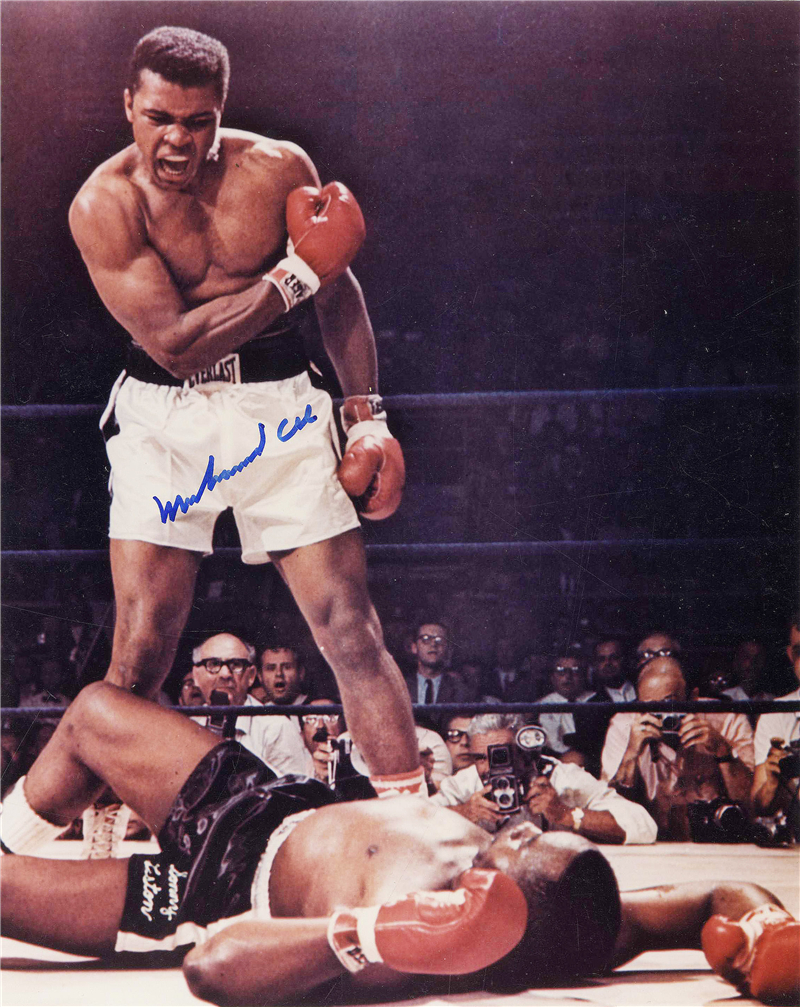
"If you aren't in over your head, how do you know how tall you are?" -T.S. Eliot
"Many people never connect with their real talents and fail to attain their potential because they don't push what they do to excess" -Rod Junkins in "The Art of Creative Thinking".
Though it is quite prudent to compromise and maybe aspire for a success which is realistically feasible, failure proof, and safe, risk and loss aversion do not allow you to fully achieve your potential. Each time you grab the crumbs that market banqueters leave under the table.
The emini yesterday moved steadily down gradually forcing dip buyers to give in and therefore driving prices even lower in a 4 consecutive down days streak, which occurred last time at the end of March. Mean reversion would start at some point and it would likely be triggered at some point approaching the close of the last day of the week.
I counted previous similar situations and 90% of the time, prices moved up from 1500 to the close with a stunning profit factor and a reasonable number of events. Eventually the trade ended up with a very amateurish scalp that brought very little improvement to the P&L as prices moved up 9 points during the last hour of trading. (I have a good excuse as I was at home with screaming and fighting kids around me).
You should always have a feeling of respect for any amount of money made. However you must fully exploit your edge in a highly competitive environment where the most brilliant (and sometimes evil) minds fight for their share of profit.
You must be aware that the day you have a loss you might return most of the meager profits made over past several weeks. The day your edge starts fading you might give back a great deal of the profits made by the time you realize that the approach followed is not working any more.
Pushing your limits allows you to know yourself and understand who you really are. It allows you to measure your value as a fighter. Champions in all sports, heroes in all fields of combat situations are those who push to the limit their obsession for planning and training. Strong with their conviction and self confidence built on thousands of hours of hard work, they face situations with boldness and courage in order to win a decisive victory over the adversary. Not just a win on points in case of boxing, but a knock out.
We all know, however, that though this method may lead to the most outstanding victories, such a full "risk on" approach also leads to dramatic falls and defeats. History is full of episodes of great personages that relied too much on their ego and we should also not underestimate the importance of luck.
One thing is for sure. You need to give yourself an opportunity to succeed, to emerge, to realize your potential. Otherwise you will continue to drift without the ability to stay the course or, at best, to be a below par trader. But this is not only about trading. It is about the way you live your life, it is about who you really are. We have a duty with respect to ourselves, which is to do our best in our life to fulfill our talents.
Jul
19
The Moves, from Victor Niederhoffer
July 19, 2015 | Leave a Comment
 “The moves are all there, waiting to be made…But you have to find them.” -Tom Wiswell.
It’s all so simple–in retrospect. The Greek Crisis had to end the way it started–the sonata form. Beethoven’s fifth–the tension release–the frustration aggression hypothesis–the constructal law–. The odds were 100 to 1–that it would end right where it started. But what a game it was.
Paolo Pezzutti writes:
4 consecutive times both S&P and bonds up is a rare event. It occurred only 6 times since 1999 (it does not seem really predictive though). Gold, oil and euro have printed new n-day lows for 3 consecutive days. Markets have liberated forces that have changed the constantly unstable balance and relationsip between assets. Nothing terribly new has actually happened: gold, oil and euro have continued their downtrend. Stocks have moved once again in the direction of the past 7 years (I could be very wealthy had I followed the Chair’s advice…). I would dare to say the euro is driving. As these macro moves are initiated and sustained by “central planners” there may be room for mean reversion, but one should be careful not to burn his fingers.
Jul
14
Chladni Patterns, from Paolo Pezzutti
July 14, 2015 | Leave a Comment
 When I visited the Rosslyn Chapel near Edinburgh I was amazed by the beauty of this masterpiece built in the 15th century. Interestingly, the chapel became the subject of speculations related to connections to the Knights Templar or Freemansonry. The topic became popular when Dan Brown wrote about these symbolic designs in The Da Vinci Code.
A specific aspect of the architecture I found fascinating at one end of the chapel, is the ceiling with 4 cross-sections of arches containing designs on each array of cubes. The cubes are attached to the arches in a musically sequential way. Some claim there is a code behind the cubes sequences, which hide melodic and harmonic progressions. In some of the decorations others can recognize symbols similar to Chladni patterns.
Chladni was a German physicist and musician (1756-1827), who was considered as the father of acoustics. He did research on vibrating plates. A metal plate, supported by a post in its center, is vibrated at a single frequency by use of a mechanical driver. For most frequencies, nothing at all happens; when certain special frequencies are hit, however, standing waves appear on the plate, driving the sand away from the points of large vibration to the points of no vibration. By varying the frequency of oscillation, we can find a large number of the so-called resonance frequencies and their accompanying patterns, which become increasingly complex and beautiful as we up the rate of oscillation.
I was intrigued by the concept of a code to interpret what you see, that is the beautiful symbols organized in apparently random sequences. The idea of a hidden key that allows you to read the real message to be delivered in the form of visual patterns corresponding to specific frequencies and, when built harmonically together, to melodies. Interesting is also the concept of resonance, which is responsible, in Chladni's experiment, for moving the sands to the points of no vibration.
There are parallels with financial markets. Do visual patterns in markets hide apparently random price relationships? How to apply the concepts of frequency, amplitude and resonance to breakout moves and mean reversion? Higher harmonics imply more nodes and therefore mean reversion is likely? Could round numbers be associated to points of no vibration as they function as attractors? It is beautiful, however, to observe how sequences offer interpretations that are not obvious at first.
Stefan Jovanovich writes:
The vibration technology testing suggested is 1950s era Soviet/US related and is dated. A quick read about "The Thing" is available to those interested. Basically you throw a broad range of frequencies until you hit one that creates feedback. The Thing had the advantage of passivity and no power source so it was not detected for years.
I'd like to see testing of the hypothesis that the round number effect is more an effect created by options strike price standards and larger open interest at round numbers in home markets Forex rates and price scaling change key index values for international specs.
A brain in the past was Leon Theremin who worked with musical instruments and bugs.
The revelations about "The Thing" and its detection give an idea of how to test for key vibrations or their absence. From wiki:
The illuminating frequency used by the Soviets is said to be 330 MHz.[6] The Thing was discovered in a stroke of luck by a technician with an untuned video receiver[citation needed] — a wideband receiver with a simple diode detector/demodulator, similar to some field strength meters. It was then located during a technical surveillance counter-measures "sweep" of the Ambassador's office, using a signal generator and a receiver in a setup that generates audio feedback ("howl") if the sound from the room is transmitted on a given frequency; the generator was tuned to 1800 MHz. The device was first assumed to operate on this frequency, but tests showed it was unstable and insensitive. Peter Wright, a British scientist, then got the Thing operating reliably at 800 MHz.
For land-based structures, this debate continued through the 1980s. It was important to the nuclear power industry. They were required to design against probable seismological events. Millions of engineering hours were dedicated to modeling flexible and rigid systems. Both worked. Billions of dollars were lost as the industry switched from one approach to the other. Flexible models require detailed analysis of harmonics, which varied by geography. In the end, the industry settled on rigidity–mostly.
Jun
15
The Tipping Point, from Jim Sogi
June 15, 2015 | Leave a Comment
At what point in the day do stocks reverse direction? The Chair mentioned after lunch. In theory it should be when there are more buyers than sellers, or the momentum of buying over whelms the downward pressure of sellers. Traders, like many other organisms, tend to move in herds, or try to follow. Whether it follows through to a reversal, like just now, or whether it is a head fake prelude to further drops is important to distinguish within one's time frame. It is important to catch the turn at the cusp rather than after confirmation when it is probably too late to capitalize efficiently. The data can signal those points in real time but there seem to be about 3 or 4 things or more going on at once in terms of forces at work or data streams to consider and factor in. It seems also to be a computational capacity problem and data flow issue. That's why I've always thought a 3 dimensional approach would be helpful.
The other big problem is to weed out the big trend days and not get caught under the falling knife. One thing I use to try weed out those trend days are the 10:1 updn signals that Marty Zweig talks about as signals, but not in the same way.
Kurt Sprecht writes:
Untested on my part, but if the morning has been somewhat variable (i.e., no large increase or decrease at the open which holds in a tight range), there often is a reversal during the Eastern time zone lunch hour. My apologies for lack of specificity or corroborating data.
Paul Marino writes:
My insomniac tendencies have noticed liquidity changes at the 3am euro open for S&P globex. Really starts at 1 am but by 3 is when it gets over 5k volume per 5 minute bars as Europe opens. An anonymous smart speclister had mentioned a couple months back the different openings in the FX throughout the day. I concur and see it in the S&P too. 1 am, 2:30 am, 3 am, 8 am, 9:30 am, 11:00 am, 1:30 pm, 3:50 pm, 4:05 pm, 8:00pm.
Paolo Pezzutti writes:
I find Paul's observation very relevant and I have noticed that at least some of these time of discontinuity have regularities. The activity picks up some minutes before. There may be predictive value in it but likely very short term.
anonymous writes:
In response to "traders move in herds": You have the herd, yes, but then you have the cliff. More and more "optimal execution" algos for firms running large money are actually designed to spot the short term herd and use that to get into positions in the opposite direction. I'm under the impression that this has become extremely prevalent in equities, and is the main cause of much of the new normal price movement characterized by many traders as having "lack of follow through". I've recently used the understanding of this characteristic in my own design of algos with good success. (I am a discretionary, short-term hedge fund trader and newly turned quant).
anonymous writes:
There is a lot of variation between markets. As we know, futures and equities are very different beasts. Even between equities there are large distinctions. In the less liquid stocks I like to accumulate intermediate to long term positions in, I have found that the algorithms that exist to exploit small orders (what appears to be Market makers blocking competing orders) and accumulate position algorithms are extraordinarily stupid. The only issue for the trader is, if you note this and take advantage of it systematically, it is almost certain to be some form of criminal act. As we have seen, the manual trader is not allowed to exploit or beat the dumb algos of big firms. One other thing I have found is on certain days it seems that relatively small aggressive orders can change the trend of the day as (it seems) some algos look for others to establish a bottom level that amazingly they then seem to defend and even accumulate from. Note this is not really short term trading stuff, more notes I've made when buying my list of stocks.
anonymous writes:
This trader has the questionable habit of buying at the highs and selling at the lows to see what kind of (paper) is around. I've never been able to follow the herd, instead I try to re-direct it in my market.
Jun
5
The Order of Things, from anonymous
June 5, 2015 | Leave a Comment
I once asked of the Chair, is it really worth it to trade markets not based in the United States? We decided that it was an 'interesting' question.
Taking this further it is of much interest to calculate the relative stability of markets. 'Stability' can be measured in many ways and I leave it to the reader (if there are any) to think about this point further.
For example:
1. Are US T - notes more stable than their international peers?
2. Is the S&P 500 more stable than its international peers?
3. Does relative stability explain why the regularities extant in U.S. markets are often massively more persistent than those for similar markets 'overseas'?
There are some interesting things to look at if one believes that the U.S. markets are at the beginning of the chain that moves other markets.
Clearly the more 'stable' market and the market at the beginning of the chain changes from time to time but my supposition is that it takes some great measure of 'statistical crisis'– for lack of a better term– to upset the U.S. market's hegemony even temporarily.
Bill Rafter writes:
Presumably stability is the opposite of volatility, but there are a lot of ways to count volatility. And of course there is the question of "over which period?" I'm only guessing of course, but I'll bet that John B would define stability as staying within N standard deviations of a moving mean. And that also begs the question as to the period considered. Should the period be static or floating?
Ideally markets that are more stable would attract more portfolio holdings. That is, there would be a stability premium, or alternatively a cost of volatility. If there were two assets priced at $10 and you knew (don't ask how) they would be priced a $20 at a given point in the future, which do you buy for the portfolio? Obviously the more stable of the two since you may have the need to liquidate before the end of the period. In theory the more volatile one would be discounted vis-à-vis the more stable one. With stocks the end certainty is less defined than with bonds.
The original question implied that the investor/trader was looking to be long country markets that were more stable.
Let's suppose that you believe the country ETFs represent their respective markets. Then you could rank those ETFs by inverted volatility. We have done that after first ranking them by other means. We then would have say 10 ETFs that we would like to own, and make a final selection of a few according to inverted volatility. Alternatively it also makes good sense to buy the entire 10, but with different percentages of your equity.
Does that work? Yes, it is more profitable than holding SPY, but not exciting, such that we don't charge for it. We always include SPY in such rankings, as a tracer bullet. The really interesting thing is that SPY never rises to the top of the daily rankings.
We also have the problem of "over which period". One consideration would be to rank all the country ETFs according to the same period, as though China and the U.S. should be compared by the same time standard. That would seem correct if the account owner had a specific time need. Another consideration would be to let each country ETF dictate the period for comparison. But then you might have the input time for Australia being ranked over two years, with SPY only ranked over two months. That would seem correct if the investor was more of a speculator.
Apr
27
Loss Aversion, from Paolo Pezzutti
April 27, 2015 | 1 Comment
Loss aversion is likely what differentiates the pro from the amateur. It strongly influences what people do with their money. It may contribute to the difference in the up and down behavior of the market.
Consider this situation: you are given $1000. You have to choose to a. take a risk– heads you get 1000$ more, tails you get 0$ more, or b. play it safe and you'll get 500$ more.
Most people would choose the "play it safe" option and run with the money.
In the market this approach generates little, very frequent profits for weak hands. It is the kind of profit taking attitude that you regret when you see prices going up another 15 points when you've just made 2. I think this approach also contributes to build momentum as players re-enter at higher prices not to be left out. Corrections are mild as they are the effect of short term profit takers.
Consider this situation: you are given $ 2,000. You have to choose to: a. take a risk– heads you lose 1000$, tails you lose 0$ or b. play it safe and lose $ 500. Most people will choose to bet. And I tried it with friends. They are all convinced it is much better to bet because you want to avoid losing 500$. It is exactly the same bet both times actually. Each has a 50% chance.
"When faced with possible losses, people choose the risky alternative", it says in the book "Good Thinking" by Denise Cummings. "Most people would rather take a bet that could end up costing double the sure loss".
If this were an investment, this means you will hold onto an investment as it loses money, hoping it will regain its value. More likely than not you will ride it all the way down. We know what happens next. It is related to fear and greed, the main drivers in markets and life. When fear gets to extreme levels you have capitulation and the public liquidates near the low.
Researchers show that animals also do the same thing. An experiment was made with monkeys. The key mechanisms are that people respond more strongly to losses than comparable gains, and people respond to changes in relative gains and losses rather than absolute gains or losses (losing or gaining 10$ means more if you only have 20$ than if you have 200$).
Traders, or wanna-be traders, want to go home with a profit at the end of the day. Even a small profit but the P&L spreadsheet has to be green… One could try and quantify the effect of profit taking that provides the minimum level of satisfaction that psychologically forces a trader to close his or her position.
Similarly, one could try to define the level of desperation that finally forces the trader to a sort of liberation and relief from stress when he/she liquidates a big losing position. This would help define the average move of legs during choppy days, or could help anticipate accelerations after a certain amount of points moves.
Apr
10
The Most Frustrating Thing in Trading, from Ed Stewart
April 10, 2015 | 6 Comments
 One of the most frustrating things in trading is when you research a (qualitative, not a systematic) trade, stay up late figuring out how you want to express the idea to maximize gain and minimize loss, and then the next day when you want to put on the trade that stock is up near 3%.
Considering it has done nothing for months you figure, "I will wait till to buy on a decline a bit lower". Then the next day you see it is up 8% and the options you had looked at were would be up 60% in a few days had you conceived of the idea just 1 day sooner.
I think at such times (similar things have happened to me 3 times so far this year) one is very prone to going on tilt, such as finding some other market to chase, or otherwise do something out of frustration that is not logical and end up losing what you would have made had you been one day sooner.
I am wondering if there is any way this sequence of events can be generalized beyond specific circumstances of one trader, to general market phenomenon, maybe even events that lead to predictable circumstances.
Jeff Watson writes:
Whenever I go surfing, I miss a lot of good waves. I either am in a wrong position, miss it completely, or just blow it off thinking a better one will be behind. I never feel bad about missing a wave because there will always be another wave sooner or later. I look at trading exactly the same way I look at surfing.
John Floyd writes:
Agreed, put another way as someone once said to me “there is a bus every 5 minutes”. Also importantly in terms of the limits of time and energy don’t spend it worrying about missed moves, focus on what is ahead.
I read a poignant quote recently in The Joyful Athlete: ”Second tier athletes tended to beat themselves up for mistakes, while the champions simply noted their errors and moved on, wasting no energy on self-recrimination.”
Stefan Jovanovich writes:
I have the same problem. Sometimes I wait on a trade too. I think it is greed, the desire to seize the least/highest perfect. So I remember: "Luke, trust your instincts!"
Anonymous writes:
I strenuously disagree with the philosophy that "there is a bus every five minutes." (My late great father used to say, "there's always another street car.")
This is a rationally flawed analysis. Because it treats an opportunity cost as economically different from a realized cost. The reality is that the P&L from an opportunity cost is real, and it compounds over time. And this is true so long as one is consistent regarding timeframe, methodology and performance benchmarking. The most pernicious thing about this street car delusion is that it can be hidden, rationalized and forgotten.
By way of example, our fellow Spec Lister and Bitcoin Booster, Henrik Andersson declared on March 12: "Crashing commodity prices, currency war, crashing yields (with a big chunk of European debt trading at negative yield), surely this can't be because everything is so rosy in the world, this cant possibly be 'good' news. Couple this valuations close to ATH and I have for the first time in 25 years sold everything (I started investing when I was 12). Everything."
Since this declaration, the SPX, Dax and Nikkei have all risen between 3 and 6% — and the DAX is at an all time high. If Henrik measures his performance on a daily or weekly basis, this is a bona fide opportunity loss of substantial note. But if Henrik measures his performance on a long term, multi-year basis, it is way too early to render a verdict and this opportunity cost may well morph into an opportunity gain.
John Floyd comments:
Point well taken and a good one. I was afraid my quick comment might garner the need for elaboration. The point I was trying to make is if you “miss” a trade you should learn from the experience and move on, while trying not to repeat the same error in the future. Juxtaposed against expending energy lamenting the perceived lost opportunity, which also has a cost. Assuming this is done with some degree of improvement I think it is both rational and sound. In this way the opportunity cost is treated as real and minimized over time. If there is improvement made then returns are compounded in a positive fashion as opposed to a pernicious one. In anonymous’ example that might even mean Henrik recognizes what may or may not have been an incorrect thesis and “buys” everything the minute he read anonymous’ post.
Sushil Kedia writes:
My two cents on the table:
Opportunity costs as well as realized costs are both known and quantifiable only after the market has moved. At the instant of a decision as to whether to decide to take a trade or not, both are unknown.
Since a real P&L is a progression of a series of unknown infinitesimally sized but infinite number of moments, it is likely a flawed debate to undertake whether or not opportunity costs compound, since if those said opportunity costs actually turned out to be realized losses they too would compound.
Transliterating approximately what the Senator has said often in the past, the purpose of a trader is not to be in the market, but to come out of the market, one would like to tune one's mind to focusing on how much could one gain without losing beyond a point. For each this is a unique set of numbers despite the market being same for all. This uniqueness comes not only from different skills, but different restrictions on the types of trade one is allowed to take, the different marketing pitch each has to use for garnering risk capital (oh we keep transaction costs low), the different risk tolerances each must remain within etc. etc.
So each needs to focus on how one will travel from an infinite series of infinitesimally small pockets of time in deciding when to not decide.
Paolo Pezzutti writes:
With regards to missed opportunities, I have two observations.
Firstly, I think our mind is biased in focusing on the good trades that one could have made. We tend to forget the bad calls. It is true, however, that if your trading methodology is systematically not "efficient" then your performance will eventually be sub par.
Secondly, if you continue to miss opportunities, you may have an issue in pulling the trigger when it is the right time to do it. I have a long way to go to improve my trading and I think I have to work on both these areas. My trades are inefficient, because I can spot good entry points but my exits too often get only crumbles that the market mistress is willing to leave on the floor after a lavish dinner. Moreover, one tends to be afraid of taking the trade right when the risk/reward is more convenient, that is when fear is the prevalent sentiment in the market, the moment when you should "embrace you fears" as Larry Williams would say.
As a final comment, I have to commend the market mistress for her naughtiness and deceitfulness. The employment report on Good Friday released with markets closed saw prices of stocks plunge seriously (20 pts in 1 hour) to get 30 pts back on Monday. Many opportunities during the Easter weekend in stocks, bonds, currencies, commodities because of ephemeral end deceptive moves. Who knows if they were orchestrated or simply "random".
I went short gold on Thursday at the close (1715) at 1202.6. The first price printed on Monday was 1212.7. I eventually took a loss later that day of about 14 points. After 2 days gold was down at 1994. Focused on my potential loss, I did not exploit the huge opportunities offered. Afraid of even bigger losses, I liquidated my position instead of trying to close the big gap printed at the open. Moreover, I did not buy stocks or bonds to trade the obvious lobagola move. Double damage.
It is a matter of mindset. There are coincidences, situations; there is the ability of a trader to translate into action tests, statistics related to these conditions created by the market mistress. The more extreme the conditions, the more compressed is the coil, stronger and more powerful it will be the reaction in the opposite direction. Much to learn.
Duncan Coker writes:
I have always had a hard time reconciling opportunity costs/gains with realized costs/gains, though I know in economics they are comparable. For example, a casual friend offered me a private investment opportunity which didn't smell quite right and I declined and I left the money in cash earning -1% real rates. Shortly thereafter the enterprise went bankrupt and all would have been lost. I suppose on an opportunity basis it was a huge success for me, 100% gainer, and yet my cash account is the same earning -1%. Every day trading is a missed opportunity to be fishing on a nearby river which is easier for me to grasp and adds to the overall cost of the trading endeavor. Being able to forget and move on is a useful thing in trading. A swim or run at the end of the day does it for me.
anonymous writes:
I do believe one can go broke from taking profits. Maybe if one has very few positions at a time this could take a while to notice (the benefit to marketing a long term strategy of any sort– few observations) but everyone will fail.
Think of football, a defense might determine that if they can hold the other team to 17 points that they have won their part. What if the offense deploys their secondary after 14 points? May your successes be larger than your defeats.
We are playing an unbounded game, we have no idea the amplitude of future gains or losses, let alone their frequency. Taking profit when unwarranted may not give us a chance at tomorrow.
As for opportunity, we all balance the fear of missed opportunity with the fear of loss. The more successful traders I've known are slightly more fearful of leaving money on the table than losing money. Slightly.
But that depends on the difference between the value and utility of the opportunity. Duncan, you bring up the ultimate question about the purpose of life. Way to make this a deep conversation.
Dec
14
Suppose We Consider Prices as a Building, from Victor Niederhoffer
December 14, 2014 | 2 Comments
 Suppose we consider prices as a building whose purpose is to reach a certain goal as do architects when they are building a skyscraper or some such. What form does the price have to take in order for it to reach its goal? What attributes must it take on the way up, and what backing and filling must it take in order for the building to have a proper stability?
Jonathan Bower writes:
In my early days on the exchange floor I was intrigued by Market Profile (sample) which is the accumulation and "stacking" of ohlc bars. Several companies allowed one to aggregate on different time frames other than the original 30 minutes. While I never became interested in the "analysis" of profiles, I always thought they were useful in viewing the market from another perspective. Maybe it's worth going back and doing some quantifying.

Paolo Pezzutti writes:
One interesting characteristic on the way up is the continued occurrence of false breakouts to the downside on the various time frames as bad news hit the market. Regardless the efforts of the "jinx of the day" prices move down just to hit the tight stops incautiously positioned by traders and regularly move up and squeeze the few shorts left in the market.
anonymous writes:
One industry analyst with which I had frequent contact (he covered the metals and mining industries) used to assert that whenever a company senior exec is about to retire, you can be pretty sure that his incentive options will be nicely in the money.
Stefan Martinek comments:
Victor, I would argue proper stability is not needed, as those with stability i.e routine retests of previous highs on a break out, are just as susceptible to fail over time as a market which trades parabolic. It is just the problem that these markets, like usdjpy recently, give you few constructed setups re: risk reward–to get on, when they start moving.
Victor Niederhoffer responds:
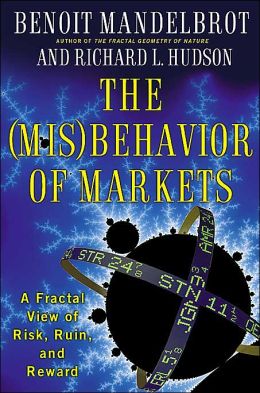 But this must be quantified, Mr. Martinek. Regrettably Mandelbrot was not able to program or count. See Roberts work on 1950 showing the similarities and impossibility of differentiating all the "scaling" and "regularities among the irregularities" of Mandelbrot and random charts.
Stefan Martinek adds:
From B. Mandelbrots The(Mis)Behavior of Markets:
There are too many very big and very small changes, not enough medium-sized ones. And the changes appear to scale with time: The proportion of bigger to smaller price-moves follows a regular pattern as you look at monthly, weekly, or daily charts. […] The size of the price changes clearly cluster together. Big changes often come together in rapid succession, like a fusillade of cannon fire; then come long stretches of minor changes, like the pop of toy guns. There is scaling here, too: If you zoom in on an individual cluster of big changes, you find it is made up of smaller clusters. Zoom again, and you find even finer clusters. It is a fractal structure. Nor is it just the price changes of interest; at times, the price levels also exhibit some kind of irregular regularity. The charts sometimes rise or fall in long waves, or with small waves superimposed on bigger waves. But none of these phenomena—clusters of volatility, or irregular trends—resemble any of the cycles, waves, or other patterns that characterize those aspects of nature controlled through well-established science.
Craig Mee comments:
"But none of these phenomena—clusters of volatility, or irregular trends—resemble any of the cycles, waves, or other patterns that characterize those aspects of nature controlled through well-established science."
I'm not so sure about that statement. Irregular trends and phenomena = what he discussed = do not resemble other patterns of nature controlled through well established science. Price does not have to equal nature all of the time. Just some of the time. Pick your battle.
Nov
30
Quote of the Day, from Victor Niederhoffer
November 30, 2014 | 1 Comment
 "When all you do is hope for the best, things have a way of turning out for the worst." Greg Satell in Forbes about crazy John du Pont who killed Dave Schultz. The movie Foxcatcher is highly recommended. And the quote is very applicable to those nursing bad positions in markets.
Paolo Pezzutti adds his thoughts:
When you start hoping to get even with a losing trade it is time to close it. It means there is no rationale to keep it open. It is your ego that won't accept defeat and you'll only make things worse keeping the trade going. The problem is that many times hope works and you actually manage to exit your losing trade decently. It is just that one time out of 100 when prices do not come back that they bite your jugular and kill you.
Jul
16
Only in America, from Marty Fridson
July 16, 2014 | Leave a Comment
 I had a cab ride last night with a 53-year-old Romanian immigrant. He grew up milking cows manually and his father earned $1 a day. Driving a cab in New York is hard work. When this driver comes home at night, he has to go out for a walk twice in the evening to relieve the stiffness in his back and bottom. He jokes that he tells his wife, "You'll have to go with the milkman, because I'm too tired." But he now makes $400 a day, equivalent to the average monthly wage in Romania when he was growing up. He has saved his money, so that without going too heavily into debt he has bought a spacious two-level apartment in Queens with a garden and a parking space. His two teenage daughters have the whole second level as their rooms. He bought what he thought was a giant-sized flat screen TV for $2,000, but his daughter's room was so big that from her bed to where the screen is, she can barely see the image. He and his wife emphasize education, with the result that his elder daughter was one of 100 students accepted to a top school that had 15,000 applicants and his younger daughter has a 97 average. Summing up, he is proud that coming from a humble beginning, he has become a millionaire by owning his own cab and a medallion that he bought for $200,000.
A truly inspiring story: By being part of a government-operated conspiracy to suppress competition, he has amassed $1 million of wealth based on economic rents. Heavy lobbying perpetuates this scheme. Just one question: What will the value of the collateral he put up for his home loan as Uber becomes better established?
Paolo Pezzutti writes:
This story shows once again how the generation of immigrants now 50 or so years old lived the American dream. The romanian taxi driver was able to arrive in the US penniless and end up sending his kids to good universities, buying a house and owning a very valuable medallion. The story of growth and success has occurred to millions of immigrants over the past decades. This is what really is fascinating about the US. The question is whether the US is still able to sustain the American dream. Will the new generation of immigrants find it harder to integrate in the society, find a good job and provide education to their kids?
Jul
11
Patrick O’Brian and Trading, from Victor Niederhoffer
July 11, 2014 | Leave a Comment
 I was recently asked by a friend whether Jack Aubrey had any lessons to teach for trading. I don't know anything about nautical things but I answered him as below. He asked me if I had written about deception anywhere. I would be interested in any lessons that others have learned about markets from Patrick O Brian's books.
[…] there's a fake Englishman strategist, L!ddell H@rt, who fancies himself a master of deception. And I covered his insights. He's sort of like Ogilvie. Everything self serving. I believe that deception is one of the things they are very big on in the Military colleges. Deception in nature is the model. It's ubiquitous.
Lessons? From a layman's point of view, yes. Forget the maneuver. Go for the jugular. And always have an escape plan. And use indirection at all times to get your way during the battle. And always be prepared to change your plans in the midst of the battle. Almost all the battles he won, he had to change in the middle.
Paolo Pezzutti writes:
I think the chair describes three main aspects of Jack Aubrey that are very relevant. Those aspects are:
1. deception
2. the determination to go for a big win over the enemy
3. the ability to adapt to changing situation.
I also think Jack Aubrey's has some characteristics like those of successful traders– for example, confidence. Jack was intimately aware that his abilities at sea as a Captain were first class. This was because of nautical competence, instinct, hard work training, cohesion and sharing of objectives with the crew, detailed planning and analysis of all factors before engaging a battle. Finally the intimate conviction the the British Navy was far superior to any other Navy. He also had the willingness to take risks. You can't win if you are not willing to lose. Jack Aubrey was taking big risks in order to leverage his edge against the enemy. This is similar to how traders take larger trades when the odds are in their favor.
Jul
11
The Tweets of Jack Schwager, from Paolo Pezzutti
July 11, 2014 | 1 Comment
 I took the time to write below a collection of tweets by Jack Schwager (@schwager). I find there are a number of useful quotes.
"Scaling out of a position ensures at least partial profits if move continues while mitigating profitsurrender if mkt reverses"
"You don't have to get into or out of a position all at once."
"Traders who are successful over the long run adapt" [O'Shea]
"Traders who fail may have great rules that work, but then stop working." [O'Shea]
"What we call intuition is the objective synthesis of information based on past experience, unhindered by emotional distortions"
"The trick is to differentiate between what you want to happen and what you know will happen."
"Whenever you try to get all your losses back at once, you are most often doomed to fail." [Schwartz]
"Impulsive trades can be dangerous. Trades cited as their most painful by the Market Wizards were usually impulsive ones"
"The market will seldom reward the carelessness of trades born of desperation."
"The markets are an expensive place to look for excitement."
"I don't trade for excitement; I trade to win." [Hite]
"Hollywood image of trading as adrenaline-filled and high-risk makes for good visuals but has nothing to do with successful trading"
"If I get a rush, it means that something has gone horribly wrong." [Alex Honnold]
"Most people lose in trading because their inclination to make comfortable choices leads to worse-than-random results"
"The more a trading system has been optimized to improve its past performance the less likely it is to perform well."
"If you bring normal human habits and tendencies to trading you'll gravitate toward the majority and invariably lose" [Eckhardt]
"Investors did much worse than random in selecting stocks from our prescreened list" [Greenblatt]
"The need for emotional satisfaction will lead most people to make decisions that are even worse than random." [Eckhardt]
"Position sizing should be reduced when different positions are positively correlated."
"Traders should be willing to take larger trades when they have very high conviction."
"When you have tremendous conviction on a trade you have to go for the jugular. It takes courage to be a pig."[Druckenmiller]
"It's not whether you're right or wrong that's important but how much you make when right and lose when wrong" [Druckenmiller]
"You cannot win if you are trading at a leverage size that makes you fearful of the market." [Seidler]
"One sure way of knowing your position is too large is if you wake up worrying about it." [Clark]
"Trade within your emotional capacity or you'll get out on meaningless corrections and lose on trades that would have won"[Clark]
"The larger the position the greater the danger trading decisions will be driven by fear rather than by judgment and experience."
"A greedy trader always blows up." [Kovner]
"Advice to novice traders: Undertrade, undertrade, undertrade. Whatever you think your position ought to be cut it in half." [Kovner]
"Mr. Stupid, why risk everything on one trade? Why not make your life a pursuit of happiness rather than pain?" [Jones to himself]
"The thing that saved me was when a trade met all my criteria, I would trade 5 times the position size as other trades" [Marcus]
"Just as in blackjack trading larger for higher probability trades & smaller for lower ones could shift negative edge to positive"
"Be wary of trumpeting your predictions about mkt b/c it will make you more reluctant to change your view if mkt facts change."
"Good traders liquidate their positions when they are wrong; great traders reverse their positions when they are wrong."
"If I was thinking one way & now see it was mistake then I am not only person in shock so I better be first one to sell" [Platt]
"When I am wrong, the only instinct I have is to get out." [Platt]
"Soros has the least regret of anyone I ever met. When trade is wrong he will just cut it, move on, & do something else" [O'Shea]
"When mkt moves counter to my expectations have always been able to say "hoped to make money on this but not working so getting…"
"Loyalty is a good trait – in family, friends, and pets, but not in a trader. For a trader, loyalty is a terrible trait."
“If you don't stay with your winners, you are not going to be able to pay for the losers.” [Marcus]
"The success rate of trades is the least important performance stat and may even be inversely related to performance" [Eckhardt]
"The need to ensure that a trade will end up in the winning column leads traders to leave a lot of money on the table."
"Human nature seeks to maximize the chance of gain rather than the gain itself." [Eckhardt]
"While amateurs go broke by taking large losses, professionals go broke taking small profits." [Eckhardt]
"Men who can both be right and sit tight are uncommon." [Lefevre]
"It was never my thinking that made the big money for me. It always was my sitting. Got that? My sitting tight!" [LeFevre]
"Beware of taking dubious trades born out of patience."
"Debussy said, "Music is the space between notes." One could also say that successful trading is the space between the trades."
"There are no called strikes on Wall Street." [Warren Buffett]
"I just wait until there is money lying in the corner, and all I have to do is go over there and pick it up." [Rogers]
"One of best rules anybody can learn about investing is to do nothing absolutely nothing unless there is something to do" [Rogers]
"Dangers of watching every tick are twofold: overtrading and increased chances of prematurely liquidating good positions"
"Having a quote machine is like having a slot machine on your desk – you end up feeding it all day long." [Seykota]
"There is plain fool who does wrong thing at all times but there is Wall St fool who thinks he must trade all the time" [Lefevre]
"Trading is a matter of probabilities. Even the best trading processes will lose a significant percentage of the time."
"You can't win if you are not willing to lose."
"A losing trade that adheres to a prftbl strtgy is still a good trade b/c if similar trades repeated process will win on balance."
"Do not confuse concepts of winning and losing trades with good and bad trades. Good trade can lose money and bad trade can make…"
"To win at trading, you need to understand that losing is part of the game."
"Amateur traders lose money because they try to avoid losing. Professional traders understand they need to take losses to win."
"If you get out even, you can say, "I was not wrong. I didn't make a mistake." That need not to be wrong is exactly why people lose"…
"I was able to become a winning trader when I was able to say, "to hell with my ego, making money is more important."
"Why is getting out even so important? Because it protects the ego." [Schwartz]
"What is the ultimate rationalization of a trader in a losing position? I will get out when I am even."
"If you know you have won the game of trading before you start, then there is no problem taking a loss." [Dr. Van Tharp]
"One sure sign that you lack confidence in seeking the advice of others."
"One way to gauge whether you will be successful as a trader is whether you are confident that you will succeed."
"Confidence is one of the most consistent traits exhibited by the successful traders I have interviewed."
"If you listen to anyone else's opinion, no matter how skillful or smart a trader might be, I guarantee it is going to end badly."
"You have to follow your own light. When you try to include someone else's style you end up with worst of both sides." [Marcus]
"It is truly amazing how the market will not let traders get away with even a momentary lapse of discipline."
"As long as you are in a position, there is tremendous anxiety. Once you get out, you begin to forget about it." [McKay]
"If you stick around when the market is severely against you, sooner or later they are going to carry you out." [McKay]
"When I get hurt in the market, I get the hell out. It does not matter at all where the market is #trading." [McKay]
"Effective money management is not a matter of complexity, but rather a matter of discipline."
"By only risking 1%, I am indifferent to any individual trade." [Hite]
"It is the 80/20 rule of life. In trading, 80% of your profits come from 20% of your ideas." [Platt]
"While you are in a position you cannot think. When you get out, then you can think clearly again." [Marcus]
"When in doubt, get out and get a good night's sleep." [Marcus]
"If undecided btwn liquidating losing trade + gritting teeth + riding out remember there is 3rd alternative: partial liquidation."
"By trying to be 100% right, many #traders end up being 100% wrong."
"The need to be 100% right prevents many #traders from considering partial liquidation."
"In-the-money options may sometimes provide a more attractive risk management tool than stops."
"Place stop at level that disproves your trade premise, not your pain level. Mkt doesn't care about your pain threshold." [O'Shea]
"Placing stop too close can lead to multiple losses. Traders will want to get back in b/c they don't think they're wrong" [O'Shea]
"You have to be willing to allow enough risk for the trade to work." [O'Shea]
"Why is deciding where you will get out before you get in so important? Because before you get in is last time you have objectivity."
"The most important trading advice if restricted to only 10 words: know where you will get out before you get it."
"Know your uncle point." [Schwartz]
"The amount of attention most beginning traders devote the money management is inversely proportional to its importance."
"You can do well with a mediocre method and good money mgmt, but go broke with a superior entry method and poor money mgmt."
"Don't focus on making money; focus on protecting what you have." [Jones]
"If your portfolio is sailing to new highs almost daily and virtually all your trades are working, watch out!"
"Winning streaks lead to complacency and complacency leads to sloppy trading."
"My biggest losses have always followed my largest profits." [Schwartz]
"If the trend in your equity is down, that is a sign to cut back and reevaluate." [Marcus]
"Traders may be aware of a losing streak but slow to realize that a loss has far exceeded acceptable levels."
"If you are in a losing streak, the best solution is not trying harder, but rather the exact opposite: stop trading."
"When you are getting beat to death, get your head out of the mixer." [Dennis]
"When I have had a bad losing streak, I have been able to say to myself, "you just can't trade anymore.[Marcus]
"In the end, losing begets losing. When you start losing, it touches off negative elements in your psychology" [Marcus]
"I will keep on reducing my trading size as long as I'm losing." [McKay]
"After a devastating loss, I always play very small and try to get black ink, black ink… And it works." [Schwartz]
"Keep reducing risk during equity drawdowns so that you will have a gentle financial and emotional touchdown." [Seykota]
"When trading poorly I keep reducing my position size. That way I will be at my smallest size when my trading is worst." [Jones]
"Generals always fight the last war; portfolio managers invest in the last bull market." [Rogers]
“The idea that #tradingsuccess is tied to finding some specific ideal approach is misguided. There is no single correct methodology"
"Were it not for their relentless persistence, many of the Market Wizards would never have discovered their
ultimate potential."
"In trading, just as in archery, whenever there is effort, force, straining, struggling, or trying, it is wrong."
"You have to learn to let the arrow shoot itself"
"If you are out of sync with the markets, trying harder is often likely to make matters even worse."
"If trading is going well, it will seem effortless. if trading is not going well, you can't force it right by working harder."
"The hard work in trading comes in the preparation. The actual process of trading, however, should be effortless."
"It is a quirk of trading that you could be successful for the short-term without knowing anything; that possibility fools people"
"The possibility of short-term trading success by pure luck beguiles people into thinking trading is a lot easier than it is."
"Trading is probably the world's only profession in which a rank amateur has a 50-50 chance of being right in the beginning."
"But the fact is that the people who are really successful in trading are tremendously hard workers. Why are so many people attracted to trading? Because it seems like an easy way to make a lot of money."
"I was amazed to find that so many of the great traders I interviewed were workaholics."
"I always want to be better prepared than someone I am competing against. I prepare myself by doing my homework each night."
"If you have an approach that makes money then money mgmt can make the difference between success and failure."
"Good money management alone is not going to increase your edge at all."
"To make money you need to have an edge and employ good money management."
"Successful #tradersare confident that their methodology provides an edge."
"So what exactly is your methodology? If you cannot answer that question, you are not ready to be risking money in the markets."
"Money mgmt cannot save you if you do not have an edge. It is helpful in preserving capital only if you do have an edge."
"If you don't have an edge then the optimal money mgmt strategy is to bet it all at once–the epitome of bad money mgmt."
"If I try to teach you what I do, you will fail because you are not me." [O'Shea]
"By living the philosophy that my #winners are always in front of me, it was not so painful to take a loss." [Schwartz]
"Successful #traders find a methodology that fits their personality." #LBMW
"Market success is a matter of finding the methodology that is right for you, not finding the one true methodology."
"There are a million ways to make money in the markets. Unfortunately they are all very difficult to find."
"Those seeking one true answer to the mkts haven't even gotten as far as asking right question let alone getting the right answer."
"There is no single true path in the markets; no single market secret to discover; no single correct way to trade."
"Persistence is instrumental to success. Most people faced with the early failures of some of the Market Wizards would have given up."
"Novice #traders should start with small amounts of cash because they might as well pay less for their market education."
"Failure is not predictive. Even great traders often encounter failure – and even repeated failures – early in their careers.
Jul
4
W’s and L’s, from Victor Niederhoffer
July 4, 2014 | 1 Comment
 "The people who are coming into the game, the creativity, the intelligence—it's unparalleled right now. In ten years if I applied for a job, I wouldn't even get an interview" -Billy Beane quoted in The Signal and the Noise by Nate Silver. Silver knows baseball very well, and there are many insights and carry overs in his chapter on W's and L's in his book. Here are some of them.
1. Silver developed a system called Pecota to predict when a hitter was going to be good. He picked Petroia who became a Most Valuable Player whereas all the other systems missed him. He started out badly and then improved greatly. The principle of ever changing cycles applies to baseball as well as our field. While silver doesn't know anything about markets and his chapter on it is one of the worst I've read, he seems like an amiable personage. I like his humility. He goes up to Petroia to get an interview: "'No. I won't give you a minute. I'm trying to get ready for a Major League baseball game,' he said in as condescending manner as possible every syllable spaced out for emphasis."
2. In developing his system, he tries to weasel out skill from luck the same way Galton did. He doesn't like batting average but likes things like home runs and strikeouts versus walks. Would we be better by looking at how far down or up, the market was rather than the win or loss.
3. There is an aging curve. A player is good after a few years but bad near the end. It's sort of like the s curve for growth. Silver tries to capture which part of the aging curve a player is on and uses that to pick how much to pay a player. He doesn't seem to realize all the difficulties in differentiating between the 20 kinds of curves that are possible, and the predictivity of making assessments even if you knew the curve a player was on. It's very similar to the problem we have in looking at similarities. Which are the variables to measure, and even if you could find the most similar would that be predictive. Neural networks is based on the similarity algorithms.
4. Bill James comes up with a similarity rating starting with 100 to see how a player compares to other greats. Seems to use linear distance. Much of James work should be applied to markets. The trend follower who lost so much who's now the baseball owner should have used James as his chief speculator rather than following blindly the moving averages.
5. Silver concludes that scouting + computers is better than just computers. I believe that no system is good without judgment and the question of clinical versus objective rating is a ongoing debate in psychology.
6. Silver actually evaluates his predictions versus the scouts and concludes the scouts did better. One has to compliment him for his objectivity in making such an evaluation. It is amazing how few of the forecasters in our field actually provide an evaluation.
7. Silver points out that everything about baseball is encapped in the score cards and the videos. He believes that baseball is the best slate, the most detailed and accurate base of operations for forecasting. I wold say that our own field where tick data for all trades is available is just as good.
8. He comes up with 4 factors that go beyond the statistics that are good for evaluating a player. Preparedness, concentration, competitiveness, and stress management. It would be good to have Brett's take on these factors. They all seem reasonable and might be applicable to our field in choosing employees and partners but they are untested. I would think humility would be one of them for our field as well as hard work. I like that Petroia never wasted a second but tries to play his hardest even in the warmup. That's what I like in a trader and how I tried to be in racket sports also.
Brett Steenbarger writes:
"4 factors that go beyond the statistics that are good for
evaluating a player. Preparedness, concentration, competitiveness, and
stress management. It would be good to have Brett's take on these
factors. They all seem reasonable and might be applicable to our field
in choosing employees".
There are several meals for a lifetime in
that post; thanks for sharing. I strongly suspect that there is at
least one single factor that runs through preparedness, concentration,
competitiveness, and stress management and that's the ability to sustain
an intense level of goal-directed activity over time. Dean Keith
Simonton's work on greatness finds that successful people are productive
people: they are highly purposeful. Traditional interview methods rely
on self-report and end up being biased by the interviewer's perceptions
of an interviewee's likeability. A more objective measure would gauge
how productive a candidate is across domains.For example, one of my
favorite interview questions asks applicants to walk me through their
process for generating an idea for a trade. The successful ones offer
rich detail about a unique process that entails significant analysis
(digging into an area) and synthesis (assembling observations into
conclusions). The unsuccessful ones offer superficial explanations of a
generic nature. You learn a lot by delving into the details of how a
market participant prepares for the trade. Much of what predicts success
are cognitive strengths, not just personality.
Paolo Pezzutti writes:
I think the ability to sustain an
intense goal-directed activity as suggested is an important factor for
anyone who runs an organization. The main thing however is to couple it
with a vision of what the organization has to be in the future. This
translates into a number of goals that lead the organization to that
point. These goals have to be analyzed in order of impact and effort it will take to achieve. Finally they have to be
prioritized and executed. Competence, determination, leadership, the ability
to sustain long working hours, the will to succeed are all important in
the execution phase.
Feb
17
I looked at all Combos, from Victor Niederhoffer
February 17, 2014 | 1 Comment
I looked at all combos of today's highs versus yesterday's highs, and today's lows versus yesterday's lows, for daily S&P from 2009 to present I find 96 inside days going up an average of 2.8 points with a sd of 15 the next day for a t of 1.7
today high > than yest high, today's low great than yest 516 ob u =0.3
today high > yest high & today low < then yest lo 121 ob u = 0.2
an outside da today high < yest hihg & today low > yest low 96 ob u =2.8 t=1.3
inside da today high < yest high & today lo < yest low 380 ob u = 1.0 t= 0.3
futures prices.
Rocky Humbert writes:
What about if you limit your studies to 1) Fridays? 2) Fridays before 3 day weekends? 3) Fridays before 3 day weekends after severe weather/NYC school closings? 4) Fridays before 3 days weekends after severe weather/NYC school closings when the weekly closing price in natural gas is at a multi year high? 5) Fridays before 3 day weekends after sever weather/NYC school closings when the weekly closing price in natural gas is at a multi year high and the fed funds strip is pricing in no tightening for the next 90 days? 6) Fridays before 3 day weekends after severe weather/NYC school closing when the weekly closing price in natural gas is at a multi year high and the fed funds strip is pricing in no tightening for the next 90 days and there is a new Fed chairman and it's the second year of a presidential cycle and the trailing SPX p/e is 17 and the dividend yield is 1.95 and my dog threw up after eating too much snow?
Victor Niederhoffer writes:
It is always good to have Rocky poking fun at statistical studies. Apparently the mean and measures of the distribution variability have no value to him. However, we are agreed on one thing that splitting a variable with a zero mean into many bins does not add much value to decision making. Without meaning to denigrate the gist of the critique, I hasten to agree that there is a big difference between statistical significance in the past, and predictivity for the future. If there were no such difference, then all my followers and I would be very wealthy men like the Rosthchilds who always said that if they knew where the market was going "I would be a wealthy maaan". How do you say that in German.
anonymous writes:
Ich ware ein reicher mann
Paolo Pezzutti writes:
There are certain market paths and regularities that help making decisions about opening and closing trades. I am not sure whether this process can be fully automated in order to search, evaluate and implement these regularities. For sure, however, knowing and using the methodology is not enough to make you wealthy. There are many other factors, as your trading choices are discretionary, that influence your performance such as money management, discipline, consistency and so forth. I find that the "technical analysis" aspect of trading is not the main problem. Before beating the market I have to beat myself….. In this regard, Brett Steenbarger, for example, highlights pretty well the psychollogical and behavioral issues of trading.
Jan
24
SPY 20 Day Range Goes Below 2%, from Kora Reddy
January 24, 2014 | Leave a Comment
SPY 20 day range (defined as 20 day intra high - 20 day intra low ) / (Avg(20 day intra high, 20 day intra low) printing a value of 1.97% = (184.94-181.34)*100/(184.94+181.34)/2
Not many instances since 1993.
Paolo Pezzutti asked:
Kora, what are the implications from a practical perspective?
Kora Reddy replied:
12/13 times SPY (for interleaving trade samples) closed higher 20 days later, but the sample size is too low to make a bullish bet.
3/4 times for the non-interleaving samples, SPY closed higher …
12/13 times SPY closed higher than the current close in the next five days at some point of time ( i.e first profitable exit, otherwise exit at fifth day at close.)
Kim Zussman expands:
Dividing SPY into non-overlapping 20 day periods (counting back from 1/22/14 to 1993), I checked for Kora's low range periods.
Range = 20D HI / 20D Low
The most recent range appears to be the lowest in the series, 1.0198 (1.98%)
There were 11 other instances of 20D range <3%; and the next 20D appears to be very bullish:
One-Sample T: nxt 20d ret
Test of mu = 0 vs not = 0
Variable N Mean StDev SE Mean 95% CI T nxt 20d ret 11 0.0146 0.0161 0.0048 (0.0038, 0.0255) 3.02
Here are the instances:
Date H/L nxt 20d ret
04/07/06 1.023 0.022
12/16/93 1.023 0.023
04/08/13 1.024 0.036
08/18/05 1.024 0.015
07/27/93 1.024 0.028
01/14/94 1.026 -0.005
06/22/05 1.026 0.009
12/20/13 1.026 0.015
01/25/07 1.027 0.021
10/12/95 1.029 0.019
04/01/93 1.029 -0.022
avg 1.025 0.015
Jan
22
For Those Who Believe Analogs Are Predictive, from Paolo Pezzutti
January 22, 2014 | Leave a Comment
For those who believe analogs are predictive: on January 9th the market closed at 1833. The next day it printed a top at 830 at 1842.50 Then it plunged to 1826.25 at 1150 and finally recovered until the close at 1837.50.
Yesterday the move was basically identical, not only as far as the dynamics of price during the day but also the levels touch are the same. The day before, the market closed at 1834.25. Yesterday, it printed a top at 950 at 1843. Then it plunged to 1826.25 at 1210 and finally recovered until the close at 1837.50
The outcome on Jan 13th was that the S&P fell to 1815 down about 22 pts.
We'll see what happens today.
Jan
21
Balancing Time, from an Admiral Personage
January 21, 2014 | Leave a Comment
 Balancing time is one of the main issues I have both at work and in my spare time. I have to admit that I have devoted maybe too much energy to work and too much time has been subtracted to family, sports, friends and culture. Time that will never come back and that could have helped develop a more balanced view of life.
I am convinced that a balanced approach brings benefit to both your personal life and business. Workaholic lifestyles may often produce excellent results as your career progresses because of your own commitment, dedication and ambition. Family, cultural trips, sports, hobbies, and romance, however, nourish the mind and enlarge one's horizons and perspectives. Meeting people not directly linked to the professional environment provides possibilities of creative ideas and interdisciplinary solutions. Visiting places and understanding other cultures allow us to see issues from various and original perspectives enriching us with the right degree of flexibility and wisdom.
I am striving toward such an approach. However my time is divided between commitments at work that require full dedication. I work a 5 hours drive far from the family. My "unbalanced" approach is as follows: I spend almost 12 hours a day at work plus at least 4 hours a day studying material related to markets, trading and patterns from Monday to Friday. The weekend is fully dedicated to my girls and we go to the swimming pool, horse riding, playing tennis. We may go to the movies, visiting friends or just playing together. I do my best but I am also aware that being successful in all important areas of my life is quite difficult.
Moreover one should not also underestimate the importance of a satisfactory and fulfilling sentimental life which closes the circle. I believe that the journey is more important than anything else. Living the journey of life every day with enthusiasm and clear objectives is eventually what really matters to me.
Dec
30
The Turkey-Iran Gold Connection, from Paolo Pezzutti
December 30, 2013 | Leave a Comment
Once again I'm noting how government interventions open loopholes to money making (legally or not…).
In this case, it was about sanctions to Iran, the Turkish state bank and the Turkish establishment. The gas for gold deal, provided that the info in the article is correct and that gas prices plunged over the past years and gold is about 30% down from its highs, which may have proved to be very remunerative for those who conceived it.
Most of all it displays once again, sanctions or not, the role that gold continues to have in an era of fiat money and bitcoin.
Dec
10
Thoughts on the Mauritius Command, from Paolo Pezzuti
December 10, 2013 | Leave a Comment
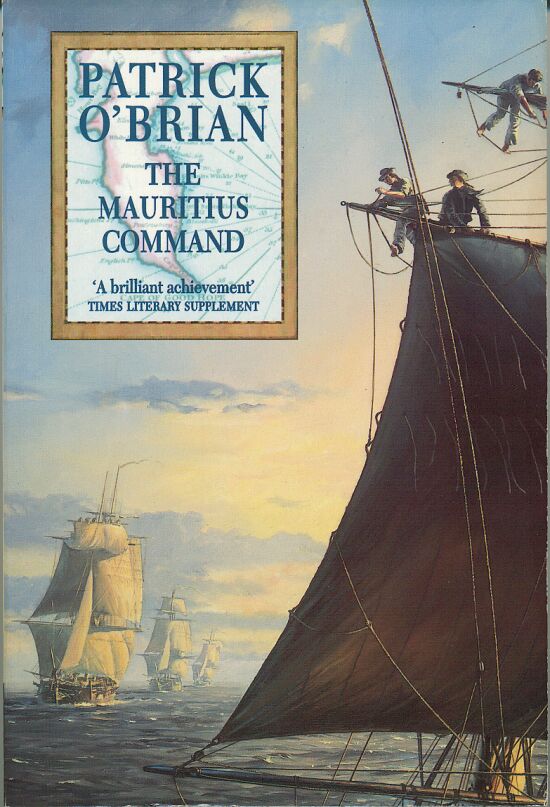 I've just finished rereading The Mauritius Command. Jack Aubrey was studying Admiral Hamelin's moves when Maturin asked his intentions. He described his plans and options which all depended on Hamelin's moves. If he…then I will… and after that if he…..then I will…. with all the ramifications of his thoughts spelled out rationally and most of all based on his knowledge of human behavior, sea, winds, ships and guns. A profound professional knowledge like that has to be the base on which one can build success. His professional knowledge matched with the ability to project actions and consequences in the future make him the remarkable commanding officer and commodore we admire. At a certain point he had a disadvantage as far as the number of ships was concerned. Yet he was sure he would win. He felt the enemy lacked the determination to fight. And that was enough.
Oct
30
FOMC, from Paolo Pezzutti
October 30, 2013 | 1 Comment
 The FOMC announcement for the policy meeting is expected to leave rates unchanged. As Bloomberg reports "market focus will be on the FOMC's characterization of the economy-especially the labor market-and on any hints on timing of the start of reducing quantitative easing".
It seems markets are anticipating the release of the minutes expecting another hurrah: let's print some more money….! Markets have been printing new record highs day after day, and I completely missed this move losing instead my hard earned money trying to counter the impressive ongoing uptrend.
I have always wondered if my being contrarian has something to do solely with counting. I continue to see every day bearish patterns that miss their expectations, although I am aware that euphoria may invalidate typical mean reversion behaviors. I think there is something about being a contrarian by nature, like someone who is not willing to be part of a herd. Or to conform to stereotypes.
Extending the concept to its limits, being a contrarian could be also related to the inability (or unwillingness) to fully integrate oneself in the established common set of values of social contexts. As herd behaviors take a long time to exhaust their thrust, often times it would be better anyway to be less dogmatic.
Ed Stewart adds:
A few thoughts about your post with an admission of little expertise.
Sometimes I truly feel that in spite of all the intelligence applied to it, trading is not much more complicated that other types of commerce where consumer tastes are fickle. As someone else said, it is the art of "what works now" or "what can I buy now to resell at a higher price".
To me, the best of counting is in studying, "what is our market is doing now" and "can i find a profit in it". I find when I get to far away from this basic notion my counting (limited as my abilities are) stops working.
In terms of contrarianism, I don't see it as a technical strategy or a need to always be fading price, so much as a mindset that recognizes that the great loss from the public shows up in money weighted returns, not just transaction costs. If you do what the public does you lose more than you rightfully should, as Vic has said many times.
I see much of trading as playing the forward curve of expectations. The easiest trade to me is shorter term fear against longer term drift or an expected value — and not to "dig in ones heals" but to stay nimble and play for a blip, at least in futures. And not massive fear but just the many little fears that show up regularly and give the other side a chance to exit or initiate at a poor price - and if it turns out out wrong adjust and move on quickly. Make the money back somewhere else.
The worst thing about shorting stocks to me is that it gets you thinking about covering when a more profitable thought at that moment might be to get long - So often on a short trade one squeezes out with a small profit right before the market blasts off again. And when you evaluate it you see that it was indeed a good time to get long, but you were oriented the wrong way and lose out.
One analogy that I liked a great deal in Practical Speculations is that energy dissipates through an ordered flow. That idea and its relation to studying price behavior and economic things like the impact of QE has been very useful to me. QE and similar is potential energy, the markets turn it into kinetic energy. Subsidized cost of capital lead to share buybacks, shrinking float. Shorts crushed. The entire market thermodynamics chapter is highly useful and one of my favorites.
Aug
23
Advice for a Young Person, from Dan Grossman
August 23, 2013 | Leave a Comment
 I have been emailing my 8-year-old grandson a daily quotation or one-line advice (about sports, learning or life in general), which he seems to enjoy.
But I am running out of quotations and pithy advice relevant to a young person. Does anyone have either a good source of these, or some particular favorite quotes or advice?
Many thanks,
Dan
Ralph Vince writes:
Here's some for you Dan. You may want to edit them for a younger mind, plus, you may not agree with all of them, but these are some that come to mind as I sit here and thing about it:
1. Don't try making sense out of it. You're in an insane asylum – things are not going to make sense, people will do things that don't make sense, that they cannot adequately explain. People don't know what makes them tick, only that they tick.
2. Happiness, of course…is all in your head. If you don't know that, if you haven't come to that realization, you will never be happy.
3. The Bull Market Syndrome. People, when they are met with success, take personal credit for it (bull markets breed geniuses), and when they are met with failure, blame luck.
4. Actually, luck is responsible for both! If you can only die by being struck by lightning, eventually, you will die by being struck by lightning! Conversely, if a man were to live forever, and bought a lottery ticket every week, eventually, he will win the lottery, with a probability that approaches certainty. Just stay the course, keep doing today what you must do today. As Woody Allen says, "Fifty percent of success is just showing up."
Luck Trumps Brains. To get luck, keep showing up each day with your shoes on.
5. Creativity trumps money every time.
6. Fortunately in life, you don't have to succeed at everything you do, only a few things. One success often justifies all prior attempts.
7. You can buy great a education – you can not buy brains.
8. The Oswald Principle: Usually, the best course of action in life, is to take no action (and usually, the best thing to say is nothing!). The guys in jail or there not because they didn't do anything. Usually, you should just sleep in! If nothing really bad happens today, as my friend Oswald said to me in eighth grade, it's been a good day!
9. You don't have the problems you think you do. Actually, the only real problems are health and criminal problems. Everything else is just a frivolous, meaningless nuisance.
10. Never say never. Everyone, however righteous they may claim to be, however upstanding they say they are, will, under the right circumstances commit the crime. A cold morning, wet, hungry, tired, angry….they'll do things they never dreamed they would!
11. Everything is going to be OK. It always is.
12. You never know what's going on in someone else's life. Before you do or say something nasty to them, realize this. Perhaps they have just gotten some awful news of some sort. You never know what is going on in someone else's life.
13. Don't pressure yourself. Just take care of today's things today, and relax…we got all the time in the world. The proper attitude in performance of anything, be it athletic, mental, etc., is a kind of relaxed, aware, confident attitude. You see it manifest in sport all the time (Ali, Ramirez…..or hitting a gold ball).
14. Don't complain and don't explain.
15. Don't react or engage emotionally with others. There is great power in stoicisim, in a cold, blank, stare back when others are trying to engage you in a fight.
16. Similarly, if it is someone you love or must live with, trying to engage you in an argument, practice avoidance. Just try not to be around them, to avoid them. Go out for a walk.
17. Live "in the tunnel," but think outside of it. In other words, deal with the mundane, immediate issues at hand, think as out-of-the-box as you can.
18. You can always "lift" more than you think you can.
19. Women will be as bad as they are allowed to be.
20. You should pray for your enemies — you need them. You need to have some enemies to keep life interesting.
21. Treat those you love as though they were going to die at midnight.
22. Your body is a record of how you have cumulatively cared for it.
23. The easiest way to learn things in life, is through observation. Sit back, watch all the ways everyone around you will figure out to how to screw up.
24. There are two ways to learn something. The easy way and the hard way. With the easy way, someone tells you something and you learn it. The hard way is the way we usually learn things, and we usually don't learn it the first time through. So the easy way, you see, is the equivalent of a windfall. (note to teachers – you can cause the easy way in others if you can convey a different perspective on a problem, a manner wherein the person learning thinks, "Ah, I see it now."). The moral here is that there is no point lending money, time or advice to help people out if they aren't going to listen to you, if they are going to insist on remaining on their own vector, unchanged by your advice, wherein they are going to learn their lesson the hard way with or without your giving them time, money or advice. So don't give it unless they are going to incorporate it.
25. Do not succumb to the suffocating culture of comfort. If you are comfortable, you are in trouble, you just don;t see it heading towards you.
26. Remember – your best trades are ahead of you.
A commenter writes:
The time to abandon is when you have to step UP into the lifeboat (or raft). Any other time is premature.
Vincent Andres writes:
Hello,
A creative man is motivated by the desire to achieve, not by the desire to beat others.
All philosophical con games count on your using words as vague approximations.
A refusal to vote represents a definite expression of political opinion, a rejection of the candidates & the programs offered.
Credit is not…a magic piece of paper that reverses cause and effect, and transforms consumption into a source of production
if men want to oppose war, it is statism that they must oppose.
Man is not a lone wolf and he is not a social animal. he is a contractual animal.
and many more from A. Rand here.
The highest laws of the land (America) are not only the constitution and constitutional laws, but also contracts - H Arendt
The most radical revolutionary will become a conservative the day after the revolution. - H Arendt
Concentrated power is not rendered harmless by the good intentions of those who create it. - M Friedman
"Governments never learn. only people learn." - M Friedman
"Humility is the distinguishing virtue of the believer in freedom; arrogance, of the paternalist."
It takes a special sort of man to understand and enjoy liberty - and he is usually an outlaw in democratic societies.
The average man doesn't want to be free. he wants to be safe.
Sorry if not all quotes are appropriate for a 8 years old.
There are many specialized twitter accounts who deliver 1 or several quotes per day. There is one for Ayn Rand.
Anonymous writes:
Try to always practice good manners; be particularly polite, deferential and prepared at bars, gas stations, convenience stores and parking lots for these places are fraught with others over-valuing matters and ready to imprudently defend their claim.
There will be fights, unavoidable fights, they will find their way to you, you don't need to look for them.
Paolo Pezzutti writes:
It's not how to achieve your dreams. It's about how to live your life. -Randy Pausch
Throughout the centuries there were men who took first steps down new roads armed with nothing but their own vision. -Ayn Rand
Apr
15
Typhoon, from Paolo Pezzutti
April 15, 2013 | 1 Comment
 I have just finished reading Joseph Conrad's "Typhoon", which was first published in Pall Mall Magazine in 1902. The story is about Captain Macwhirr, who sails the steamer Nan-Shan into a typhoon in the northwestern part of the Pacific Ocean.
The personality of the Captain is interesting. He is a dull, ordinary, methodic, decent professional, who lives an emotionally uninvolved life.
"Captain MacWhirr had sailed over the surface of the oceans as some men go skimming over the years of existence to sink gently into a placid grave, ignorant of life to the last, without ever having been made to see all it may contain of perfidy, of violence, and of terror. There are on sea and land such men thus fortunate–or thus disdained by destiny or by the sea".
He was confronted with a decision that might endanger the life of his men. When the barometer and other clues began to hint at trouble ahead, he decided not to lose time on an alternate course. However, he made up his mind without being fully aware of the risks and consequences. The conversations between the Captain and Jukes, the first mate, are enlightening: ….."How can you tell what a gale is made of till you get it?"…..
….."If the weather delays me–very well. There's your log-book to talk straight about the weather. But suppose I went swinging off my course and came in two days late, and they asked me: 'Where have you been all that time, Captain? ' What could I say to that? 'Went around to dodge the bad weather,' I would say. 'It must've been dam' bad,' they would say. 'Don't know,' I would have to say; 'I've dodged clear of it.' "
…"A gale is a gale, Mr. Jukes," resumed the Captain, "and a full-powered steam-ship has got to face it. There's just so much dirty weather knocking about the world, and the proper thing is to go through it with none of what old Captain Wilson of the Melita calls 'storm strategy.'
 This is a story about destiny. The decision of the Captain started the ball rolling putting inexorably in motion a predetermined set of events. Nothing could stop them. There are immense forces that cannot be escaped once engaged. Why should a Captain of a fully efficient brand new ship change course? "Keep her facing it. They may say what they like, but the heaviest seas run with the wind. Facing it–always facing it–that's the way to get through. You are a young sailor. Face it. That's enough for any man. Keep a cool head."
99,999 out of 100,000 times, changing course would be a waste of time. But that ONE time you enter the perfect storm, you can only suffer the violence of the sea and hope in the benevolence of destiny. What is a calm and flat surface can suddenly erupt into a storm capable of destroying anything in its way. This reminds me of the inherent unpredictability of oceans and of complex systems.
There are many similarities with life and trading. You can either run away from risks and dangers. Hiding. Or you can face your choices rationally, based on facts, on models that, somehow inflexibly, frame and contextualize events. The limited experience one has of events and ever-changing cycles does not include all possible variables. Black swans happen and can have devastating effects. The fat tail of distributions cannot be simply ignored because sooner or later you may run into it. And in that situation, there is no "storm strategy". You can only trust the ability of your helmsman to face the wind and keep going. You can only trust the structure of your ship.
This is fascinating and applies to life and trading. It is this balance between fear and rationality, between the trust in our own capacities to build the future and the awareness that destiny can be stronger than us. It is the dignity of the human being, which faces bravely the unknown. With the awareness of these limits one has to navigate both calm and turbulent waters.
Far as the mariner on highest mast Can see all around upon the calmed vast, So wide was Neptune's hall … — Keats
Apr
3
Pieve di Sorano, from Paolo Pezzutti
April 3, 2013 | Leave a Comment
 I happened to visit this small XII century church near Pontremoli a few weeks ago and I was surprised how easily you can find historic gems that are not well known. There are too many. This millenary building is built on a pre-romanic site in a valley along the main roads of communication through the mountains. The first document about the parish dates to 1148. It was built with stones and cobbled paving coming from the banks of a nearby stream. Its X-century Romanesque layout has remained unchanged. Its inside has been changed and only recent restorations have revealed the ancient Medieval decorative frescoes under the plaster-work and some sculptures. A perfectly preserved pre-Christian idol is also kept in the church. The area of Sorano was settled in Prehistory. Many stelae-statues have been found in the area. These carved stones confirm the presence of settlements since the Bronze Age. As civilizations alternated through centuries, new structures were built over the remains of previous buildings and settlements. However, the signs of past cultures manage to survive until today. Services are still attended daily in this consecrated church. This is probably the reason why the church is so well preserved. It is fascinating how through wars and dramatic changes it was passed on from one generation to the next in exceptionally good condition.
Italy is for sure a place full with history and culture. The artistic and architectural heritage is immense. They are not just "old stones" from dead civilizations. They are part of our ordinary and daily life. They are living testimonies of where we come from and who we are. They help us understand how we got here. They enrich us every day when we visit our "open air" museums. We proudly preserve this patrimony because we feel it is our home. With these ideas and values in mind, Italians will navigate these turbulent times.
Mar
12
VIX to New Lows, from Paolo Pezzutti
March 12, 2013 | 2 Comments
Moving to single digits? The market moves slowly but in long runs to the upside. It squeezes shorts like frogs boiled in water getting warmer and warmer and it attracts new buyers. On progressively lower volumes.
Mar
6
Italy, from anonymous
March 6, 2013 | Leave a Comment
 For anyone who thought the worst is definitely over for the EMU, it might be helpful to watch Italy over the next couple of months. The irresistible force meeting the unmovable rock sort of thing, as the Germans preaching austerity are met by Italians saying no way as they head home for their mid-day pennichella. I thought the European banks were close to being buyable again, but I guess I was wrong. As Carder observed, beware the Ides of March. They seem to be an interesting time for things happening in Rome.
Paolo Pezzutti writes:
As an Italian once again I have to observe how prejudices are still widespread. I don't know many people in my country who head home for the mid-day pennichella. I work at least 12 hours a day and like me there many who work pretty hard. Often with low salaries and unfair contracts. This article references the position of the left party (Democratic Party) which is bringing forward, very similarly to other countries in Europe like France, the idea that the kind of austerity we are implementing has very tough implications socially and on the economy (we entered in a deep recession because of higher taxes). One can agree with this position or not, but frankly speaking, I don't think this kind of silly humor is appropriate.
Feb
4
And Never Never Go to Sea, from Stefan Jovanovich
February 4, 2013 | 1 Comment
 It has been a while since the dailyspec discussed the potential for mayhem in the Straits of Hormuz. So far, the greatest threat to American interests has come from our own Navy. It has been nearly 4 years since the USS Hartford collided with the USS New Orleans. The "accident" injured 15 sailors; the repairs to both ships cost over $100M.
The folks at StrategyPage just reported some of the details of the accident report:
1. There was no one supervising the sonar operator when the collision occurred
2. The sonar operator was not, in fact, looking at his screen at the time but talking to a fellow crew member
3. The ship's navigator was not plotting the ship's course but "doing something else, while listening to his iPod"
4. The officer in charge failed to raise the ship's periscope to scan the horizon before the ship breached the surface
In total there were 30 errors in procedure.
Chris Tucker writes:
Complacency and sloppy work are very difficult to control after they have taken hold of a work group. The proper place to kill them is in early training. People who are responsible for large numbers of other peoples lives and/or for highly valuable property need to be trained in active vigilance early in their careers. Unfortunately, safety is a boring topic to most — it lacks the intrigue of the higher mission, it lacks the luster of fancy technical gadgetry, and because it is something that has to be practiced with diligence day in and day out, at all times, it is difficult to keep at it.
But safety and its execution is absolutely essential to any complex operation. Organizations and systems that require precautions have to inculcate a culture of safety and then impress it into their people regularly. It can never be treated as a one off training item and then checked off as completed, it has to be pressed, again and again and drilled into the subconscious so that it comes automatically. Active surveillance, much like active listening, is a skill that requires practice to master.
I suspect that in the crossing of an active shipping lane like the Straits of Hormuz, that submarines use active sonar, but I have no idea how frequently they ping. Probably on the order of once every two or three seconds, much more than that and there is insufficient time to capture reflected signals without interfering with them. The point is that an operator, especially at a time that requires extra vigilance — like surfacing, needs to actively direct his attention to his equipment and scan for threats at least once every three seconds.
While this sounds easy enough, it requires a great deal of will and energy. Distractions constantly compete for attention and need to be reduced. Again, training is the only way to control this and create an environment that rewards attentive execution of duty and punishes the creation of distractions and sloppy behavior. I suspect that if the navy chose to drill procedures in vigilance and active surveillance as often as they train for emergencies or attack maneuvers, the frequency of these incidents would be dramatically reduced.
P.G writes:
Excellent stuff on complacency, but "culture of safety" might be too strong a goal for any place in the military. It's true that the Navy is the service where war most closely resembles peace. Most naval ships in WWII saw only a few hours of combat over the years' duration. Day-to-day operations were quite similar to peacetime ops, with the environment (including friendly ships) being the principal enemy. But the few hours of combat were the whole point, and it seems to me that safety must not be so deeply ingrained that it cannot be easily discarded when the necessity arises.
Paolo Pezzutti writes:
Western navies nowadays are dealing with decreasing budgets, changing operational scenarios and threats, issues in recruiting and retaining the professionals they need. All these factors are tightly linked. The level of ambition of naval forces is questioned in terms of requirements and capabilities needed. The threats is different from what it was at least two decades ago and attention is growing mainly for maritime security tasks. Hard to justify expensive investments to develop complex and futuristic weapon systems. For sure maintaining the fleet efficient and effective is tough at times when navies are struggling not to reduce numerically their fleets below critical thresholds. Recruiting highly skilled professionals and most of all retaining them is also critical. They need to find a motivating environment that meets their expectations. Innovation and technology are allowing the reduction of manning on board ships and submarines in order to achieve the compression of operating costs. This is also introducing risks because each member of the crew has more tasks than in the past to perform and no redundancy. On the job training and management of emergencies are issues to deal with. More focus over the past years is on modelling & simulation to train crews ashore although any sailor knows that these solutions cannot fully replace experience gained at sea. Some have questioned the extent of manning reduction that was envisioned as acceptable only a few years ago based on lessons learned developed on new constructions. The quality of training is key as days at sea spent each year tend to decrease. Incidents are the expression of this situation. Training concepts and processes have to change and adapt rapidly to this environment. As budget and personnel decrease, this is the challenge of this decade.
An interesting sidenote about, "Stick close close to your desks and never go to sea, And you all may be rulers of the Queen's Navee!":
The object of Gilbert's satire is not so much the person of publisher and politician W. H. Smith as the system that in essence de-professionalized command positions in the British armed forces, and promoted those with wealth and political connections rather than military ability. Thus, Gilbert was in effect attacking the long-standing aristocratic tradition of purchasing commissions. Instead of "serving a term" as a midshipman (which was the conventional route leading to officer status and ship's command), Sir Joseph has taken a strictly political route to the Admiralty.
Russ Herrold writes:
A former officer (here: identified as JG) from the US Navy who served in submarines inter-lineates replies to the article you linked to:
Sub commanders are under a lot of pressure to keep their sailors from leaving the navy (JG agrees). But the long periods submarine sailors spend away from their families creates pressure to get out and take a civilian job close to home. (JG agrees) The submarine sailors are very capable, and highly trained, people. Getting a better paying civilian job is not a problem. So sub captains try to keep the crews happy. That often leads (JG: Bull Shit!) to lax discipline. (JG continues: just lax discipline with this command)
Interestingly the article's remarks about generally available better substitutions employment were not addressed in the initial comments back to me; in following up privately, JG thinks the author is over-stating the substitution opportunities …
But then that makes for a more urgent article, then, doesn't it?
Chris Tucker adds:
My whole point is that these people are professionals and should be behaving like professionals. They are in positions of responsibility and need to act as such. There is a tremendous amount of self validation that comes with knowing that you know your business and that you act accordingly. People that understand this arrive at work with their heads held high and don't just talk the talk but actually walk the walk. They don't feel entitled to anything unless they've earned it themselves. This is the kind of behavior and path to self esteem that needs to be engendered. It is not about safety, per se, probably a bad choice of words on my part. It's about being a professional, about being an expert. And about wanting to be those things. It's about knowing what needs to be done and doing it properly, correctly and without fail.
Jan
28
Contagion, from Paolo Pezzutti
January 28, 2013 | Leave a Comment
Discussions and analysis about financial contagion are not attractive nowadays. "They" have found out that risk complacency is more remunerative as there will always be the political will to "sustain" the system. Whatever it takes.
A commenter writes:
The paper you linked to deals with financial contagion. What about politico-financial contagion? I'm thinking about what happens to the markets if Iran turns around in June, say, and explodes a nuclear device somewhere in the Indian Ocean. Do the markets panic? To the same degree? While the idea may strike some as a wild hypothetical, the reality is that such a scenario may yet come to pass, perhaps this year perhaps next year. There are many types of contagion (pity those traveling through De Gaulle on the bio front), and for the markets, it may not much matter which one is the triggering event. Complacency isn't limited to financial affairs, even if there may be a financial dimension to the outcome.
Oct
3
Article of the Day, from Paolo Pezzutti
October 3, 2012 | Leave a Comment
 My submission for article of the day: "Why is the Euro so Perky? "
The article presents a medium term bearish view of the Euro. The view that the Euro is relatively strong because of the 200 days moving average seems ridiculous. Moreover, the ECB as a lender of last resort has been brought on only recently, while the Euro crisis is a long process started back in back 2009. The idea of a weaker Euro because of structural issues that cannot be solved by a divided group of leaders and nations can be shared, however, this has been a European problem (actually THE European problem) for centuries.
The Euro resiliency is a temporary phenomenon. Right, there are several outstanding reasons for the Euro to be near parity vs the USD. None of them has been sufficient, however, over the past 3/4 years to weaken significantly the Euro. If you compare prices between Europe and the US prices are at least 20% lower in the US. One example: the Ipod Touch 32 Gb cost 329 Euro vs 299$ in the US.
The Fed's "quantitative easing" program has provided underpinning for the Euro. The push of the Fed in the direction of a weak dollar is very strong and has so far outweighed the structural Euro weakness. In relative terms, it has to seen how quickly the 2 trends evolve respectively in Europe and in the US. If the US "system" is more resilient and the crisis in Europe accelerates because from the sovereign financial level it spreads heavily at the social and political level then we'll see the parity of the EURUSD. In this context, the unemployment rate in the Eurozone and especially in the southern nations is an important indicator. It is steadily increasing and it emphasizes the risk of a deterioration of the social structure should this trend continue longer.
David Lilienfeld writes:
Based on what I saw and heard in Barcelona in August, I think the matter has now gone out the ECB's domain. Granted it's a very small sample, but as I've noted before, many Barcelonians have become disillusioned with the EU and with their country in particular. That will, at some point, manifest in spending patterns and capital flight–and I doubt that that thinking will change soon. The European leaders "successfully" kicked the can down the road, but with the result of raising both the cost and the pain of the inevitable crisis resolution. Hence, the issue is no longer whether the Fed's efforts with regard to the dollar are stronger than the impact of the EU's structural problems. Those structural problems, in part because they've been unattended to for so long, will ultimately lead to the euro depreciating relative to the dollar. What the Fed is doing is at best temporary, ie, tactical. The problems with the euro, however, are strategic.
Bottom line: I agree with your concern, and at this point, I'm not sure I see how even the exit of Spain and Greece would help matters much. France is now stagnating. That doesn't bode well for crisis resolution anytime soon.
Paolo Pezzutti replies:
David, actually this is not temporary…
John Floyd writes in:
The key, I believe, is to recognize the Euro is a political animal. The politics are now unraveling from both the top (core countries) and bottom (peripheral countries). Bad economics have led to bad politics and the circle is becoming self-reinforcing. The U.S. dollar, rightly or wrongly, remains the world's reserve currency at the moment. There are approximately $200 trillion in derivative contracts denominated in Euros. The size of the decline in European growth, the politics, and the market product entanglement is making the Euro's ultimate price more difficult than ever to forecast as it may be 1.0 or .80, or lower. The expected returns of the thesis that the Euro goes lower in value however are increasing rapidly as the vortex of the deciding forces gather momentum and power.
Anatoly Veltman writes:
That was interesting reading, until you got to "forecast, may be". How to interpret what follows?
John Floyd responds:
My point was not to be interesting but to outline what I think are the key drivers of the Euro and the potential feedback mechanisms through trade and financial channels globally.
As to how to interpret what follows that is up to you. As a guide I would think outside the box and remember some combination of the following: the Tequila Crisis, the ERM crisis, why "hedged GKO's" were not really hedged, the Malaysian Ringgit fixing, how a butterfly flapping its wings in Iceland had a major global impact, etc.
Jeff Rollert writes:
I like to think of it as the behavior of the passengers in a plane, which just lost altitude suddenly.
They suddenly realize the only ones in control are in the cockpit, yet are unable to see where they're going (just where they are and a little of where they've been).
John's point is very good. History is not a (literal) guide but how investors react to the unexpected is useful.
I'm finding many pieces of evidence of avoidance behavior, including an overweight of whatever was last read.
The model may be a reversal from highly regulated markets to highly unregulated ones.
I've been going to ethnic markets for insight recently, as the calmest investors I observe are immigrants, for insight on their interaction.
Jul
26
Draghi, from Duncan Coker
July 26, 2012 | Leave a Comment
 Very European that Draghi would make some vague heroic comments to save the Euro sending the market up 20 points, mid-day on Thursday. Most on the continent take off Friday and the August vacation soon approaches so the timing in retrospect seems obvious.
Paolo Pezzutti writes:
Quite impressive how markets are reacting to Draghi's remarks. Assuming that it is hard to believe that effective actions will follow his statements. I wonder if this another opportunity to short the Euro. Unless actually they are counting more on the US printing presses getting ready…..
Anatoly Veltman writes:
One absolutely should have a long-term EUR shorting program. The European experiment was flawed at its core. The result will be eventual technical breach of the currently defended 6-7 year low. It happens to coincide with the same price area, from where the just-introduced EUR slid non-stop in 1999-2000, until it landed near 83.00. This time, the matching of the initial 1.6->1.2 leg will again target 1.2->.8 straight slide. Being involved in the world's most liquid trade is a must for every spec!
Jun
26
 I recently read Michael Burry's keynote speech to 2012 UCLA class. I think the last sentence of the following quote points out a sad reality about western countries and the political elites in particular. They do not intend to pay the bill today and face the issues. They need to postpone the moment of truth in order to preserve their position and priviligies and continue to milk the cow until there's something left for them. With very little transparency, statement after statement, and summits after summit, they explore solutions that would enable them to remain in power and win the next election. Exchanging long term term risk for short term benefit. Their benefit and the benefit of those who continue to make money thanks to their policy. Bad news hit the public and the situation gradually deteriorates month after month. As frogs put into a gradually heated pot filled with water, the public does not jump out. Until they realized they are boiled.
In any environment and situation there are opportunities to speculate and make money. This time is not different. Burry profited from the 2008 crisis. I have no idea yet how to profit from the next big wave that will hit us (it is not a black swan and it is only a matter of time). The point is that it is sad that our kids have to pay the bill for wrong choices they have not made. And that our societies are wasting the quality of life standards, the competences developed over the past decades because of greed and power of a few:
"Ben Bernanke continues to backfill this logic and I fear that history is being written wrong yet again that ignorance is willful. Our nation's economic policies are born of a synthesis of theories on how to deal with the great depression of the nineteen thirties yet seem unable to honestly examine the most recent one. Sadly at the highest levels of economic thought in government questions are not tolerated. It is as if we are dealing with the binary judgment of a fundamentalist religion. Finance theory and practice fare no better; the continuing crisis makes a mockery of the principles which have guided credit policy and risk management since the 1960s. As it turns out information is not perfect, volatility does not define risk, markets are not efficient, the individual is adaptable. But the dark ages of finance allow no such light. Mainstream economists and finance practitioners please check your premises. You have contradictions before you. Truthfully I do not expect much to change. Practically speaking, history has demonstrated the ability of sovereign nations to justify themselves and to postpone the moment of crisis."
Kim Zussman adds:
Doctor used to be the zenithal career: near impossible barrier to entry, rigorous education, prestige and high income for improving people's lives.
Now it is the financial manager.
Maybe during his lifetime the meme will swing back and Michael will go back into practice.
Jun
17
Sunday-Monday Potential Moves, from John Floyd
June 17, 2012 | Leave a Comment
 Rocky asked this question once a year or so ago about the outlook for the Euro after one of the many EU/peripheral events, and I thought it was a good one. So how might we measure and estimate, and what are people’s expectations for moves on Sunday-Monday following the Greek elections?
I am of the opinion in the medium term the elections don’t even matter. But, that is a different topic and exclusive of any short term opportunities.
Anatoly Veltman writes:
A quick note on S&P: I think current risk is enormous (due to recent complacency).
Paolo Pezzutti writes:
I think that we have to be aware that if Germany accepts the eurobond concept, Europeans will buy a lot of time although will only delay to pay the bill. That may have a significant impact on eurusd and equities. Not sure how likely is that, but as the situation worsens pressure on Germany increases. Especially after that in France, an important player, it prevailed the idea that socialists can improve things by increasing public spending.
John Netto writes:
Long gold / short silver. I've been working this position for most of this week and it is telling us about some of the macro variables at play. This ratio is currently shy of 57 and can ascend to 60 given all of the global macro variables at play. Silver has been trading very heavy and under most circumstances I put together, the long gold short silver one helps me take on the sort of risk-adjusted exposure I like…
GL in the markets…
Jun
12
Trading is More Difficult Now, from Ralph Vince
June 12, 2012 | 1 Comment
 Anatoly shared this interesting article with me: "Jack Schwager explains why trading is more difficult now".
My thoughts:
So Uncle Ben's innovative efforts and the endless bailout/disappoint cycles, currently centered in Europe, have nothing to do with making the situation more unpredictable by a non-flexionic observer?
Anatoly Veltman writes:
Hmmm, was trading actually "easier" a few decades ago? I don't think so. I think returns may have been, on average, a few hundred basis points higher. I think that is what he (Schwager) is referring to).
So too were rates a few hundred basis points higher though. In short, I think the difference is, (ceteris paribus) attributable to differences in rates, not that trading on things that move are moving in ways that elude us any more than they always have.
Reasonable size orders are played against by HFT algorithms. That's exactly how they take billions in profits out of the zero-sum every quarter
Ralph Vince adds:
If I have an order in for BA to sell, say, at 70.10 limit, what do I care if it's done by one big tuna or a school of piranha? I'm not following you I think on the last point.
Anatoly Veltman responds:
All depends on the size you're trying to execute. If small, your fill will be random. But a reasonable size limit order at 70.10 will only get filled, if algos figured out that there will be no chance to sell at 70.10 immediately thereafter — according to what they automatically sniff in order books. Thus you are only allowed to buy a loser. If your 70.10 is currently a good buy — you'll never execute, which is the highest level of slippage.
Ralph Vince writes:
Anatoly, doesn't that argument though say that there are no other sellers around at 7010? Would there be the same number of sellers at 7010 as if there were no HFT? (I'm not trying to taunt you here, I'm trying to see if this really MAY be a problem to me that I am oblivious to.)
Anatoly Veltman writes:
You're implying "fair" market as you used to get via direct execution. But there is no direct execution now, as HFT's are co-located. Thus the execution of your limit order (that seems fast to your eye) is in fact a slow-mo replay of the actual market that experienced multiple biases in the meantime. I'm not sure why you should be "oblivious to the problem", if a handful of HFT entities report consistent billions of profits every single quarter. These ARE modern commissions.
Paolo Pezzutti comments:
Trading is as difficult as it was I guess. Each time has its challenges though. In the past you had less access to real time data, software, information, but higher commissions. Today you have more sophisticated players and technology (hft), which can provide an expensive edge to some. There always be an edge and niche for everyone in some market, some product, some time frame. And it is everchanging. So if you are fast and adaptive you can find new ways to make money and abandon old and exhausted patterns. This is the beauty.
Jan
30
Ten Steps One Should Take to Become a Successful Speculator, from Victor Niederhoffer
January 30, 2012 | Leave a Comment
 I am often asked what ten steps one should take to become a successful speculator.
I would start by reading the books of the 19th century speculators, 50 Years in Wall Street, The Reminiscences of a Stock Operator by Markman, and others.
Next I would read the papers of Alfred Cowles in the 1920s and try to compute similar statistics on runs and expectations for 5 or 10 markets.
Third I would get or write a program to pick out random dates from an array of prices, and see what regularities you find in it compared to picking out actual event or market based events.
Fourth, I would read Malkiel's book A Random Walk Down Wall Street and update his findings with the last 2 years of data.
Fifth, I would look at the work of Sam Eisenstadt of Value Line and see if you could replicate it in real life with updated results.
Sixth, I would start to keep daily prices, open, high, low, and close for 20 of so markets and individual stocks and go back a few years.
Seventh, I would go to a good business library and look at the old Investor Statistical Laboratory records of prices to see whether it gave you any insights.
Eighth, I would look for times when panic was in the air, and see if there were opportunities to bring out the canes on a systematic basis.
Ninth, I would apprentice myself to a good speculator and ask if I could be a helpful assistant without pay for a period.
Tenth, I would become adept at a field I knew and then try to apply some of the insights from that field into the market.
Eleventh, I would get a good book on Statistics like Snedecor or Anderson and be able to compute the usual measures of mean, variance, and regression in it.
Twelfth, I would read all the good financial papers on SSRN or Financial Analysts Journal to see what anomalies are still open.
Thirteenth, of course would be to read Bacon, Ben Green, and Atlas Shrugged.
I guess there are many other steps that should be taken that I have left out especially for the speculation in individual stocks. What additional steps would you recommend? Which of mine seem too narrow or specialized or wrong?
Rocky Humbert writes:
 All the activities mentioned are educational, however, notably missing is a precise definition of a "successful speculator." I think providing a clear, rigorous definition of both of these terms would be illuminating and a necessary first step — and the definition itself will reveal much truth.
Anatoly Veltman adds:
I think with individual stocks: one would have to really understand the sector, the company's niche and be able to monitor inside activity for possible impropriety. Individual stocks can wipe out: Bear Stearns deflated from $60 to $2 in no time at all. In my opinion: there is no bullet-proof technical approach, applicable to an individual enterprise situation.
A widely-held index, currency cross or commodity is an entirely different arena. And where the instrument can freely move around the clock: there will be a lot of arbitrage opportunities arising out of the fact that a high percentage of participation is inefficient, limited in both the hours that they commit and the capital they commit between time-zone changes. Small inefficiencies can snowball into huge trends and turns; and given the leverage allowed in those markets - live or die financial opportunities are ever present. So technicals overpower fundamentals. So far so good.
Comes the tricky part: to adopt statistics to the fact of unprecedented centralized meddling and thievery around the very political tops. Some of the individual market decrees may be painfully random: after all, pols are just humans with their families, lovers, ills and foibles. No statistical precedent may duly incorporate such. Plus, I suspect most centralized economies of current decade may be guilty of dual-bookeeping. Those things may also blow up in more random fashion than many decades worth of statistics might dictate. Don't tell me that leveraged shorting and flexionic interventions existed even before the Great Depression. Today's globalization, money creation at a stroke of a keyboard key, abominable trends in income/education disparity and demographics, coupled with general new low in societal conscience and ethics - all combine to create a more volatile cocktail than historical market stats bear out. 2001 brought the first foreign act of war to the American soil in centuries. I know that chair and others were critical of any a money manager strategizing around such an event. But was it a fluke, or a clue: that a wrong trend in place for some time will invariably produce an unexpected event? Why can't an unprecedented event hit the world's financial domain? In the aftermath of DSK Sofitel set-up, some may begin imagining the coming bank headquarter bombing, banker shooting or other domestic terrorism. I for one envision a further off-beat scenario: that contrary to expectations, the current debt spiral will be stopped dead. Can you imagine next market moves without the printing press? Will you find statistical precedent of zooming from 2 trillion deficit to 14 trillion and suddenly stopping one day?
Craig Mee comments:
 Very generous post, thanks Victor…
I would add, in this day and age, learn tough typing and keyboard skills for execution and your way around a keyboard, so you don't wipe off a months profit in the heat of battle. I would also add, learn ways of speed reading and information absorption, though these two may be more "what to do before you start out".
Gary Rogan writes:
Anatoly, I don't think really understanding the sector and and the niche is all that useful unless one knows what's going on as well as the CEO of the company, which means that in general understanding quite a bit about the company isn't useful to anyone without access to enormous amount of information. It's the subtle, little, invisible things that often make all the difference. There are a lot of people who know a lot about pretty much any company, so to out-compete them based on knowledge is usually pretty hopeless. It is nevertheless sometimes possible to out-compete those with even better knowledge by sticking with longer horizons or by being a better processor of information, but it's rare.
That said, it has been shown repeatedly that some combination of buying stocks that are out of favor by some objective measure, possibly combined with some positive value-creation characteristics, such as return on invested capital, do result in market-beating return. Certainly, just about any equity can go to essentially zero, but that's what diversification is for.
Jeff Watson adds:
 In the commodities markets it's essential to cultivate commercials who trade the same markets as you(especially in the grains.) One can glean much information from a commercial, information like who's buying. who's selling, who's bidding up the front month, who's spreading what, who's buying one commodity market and selling another, etc. When dealing with a commercial, be sure to not waste his time and have some valuable information to offer as a quid pro. Also, one necessary skill to develop is to determine how much of a particular commodity is for sale at any given time…. That skill takes a lot of experience to adequately gauge the market. Also, in addition to finding a good mentor, listen to your elders, the guys who have been successful speculators for decades, the guys who have seen and experienced it all. Avoid the clerks, brokers, backroom guys, analysts, touts, hoodoos etc. Learn to be cold blooded and be willing to take a hit, even if you think the market might turn around in the future. Learn to avoid hope, as hope will ultimately kill your bankroll. When engaged in speculation, find one on one games like sports, cards, chess, etc that pit you against another person. Play these games aggressively, and learn to find an edge. That edge might translate to the markets. Still, while being aggressive in the games, play a thinking man's game, play smart, and learn to play a strong defensive game……a respect for the defense will carry over to the way you approach the markets and defend your bankroll. Stay in good physical shape, get lots of exercise, eat well, avoid excesses.
Leo Jia comments:
Given that manipulation is still prevalent in some Asian markets, I would add that, for individual stocks in particular, one needs to understand manipulators' tactics well and learn to survive and thrive under their toes.
Bruno Ombreux writes:
Just to support what Jeff said, you really have to define which market you are talking about. Because they are all different. On one hand you have stuff like S&P futures with robots trading by the nanosecond, in which algorithms and IT would be the main skill nowadays, I guess. On the other hand, you have more sedate markets with only a few big players. This article from zerohedge was really excellent. It describes the credit market, but some commodity markets are exactly the same. There the skill is more akin to high stake poker, figuring out each of your limited number of counterparts position, intentions and psychology.
Rocky Humbert adds:
I note that the Chair ignored my request to precisely define the term "successful speculator," perhaps because avoiding such rigorousness allows him to define success and speculation in a manner as to avoid acknowledging his own biases. I'd further suggest that his list of educational materials, although interesting and undoubtedly useful for all students of markets, seems biased towards an attempt to make people to be "like him."
If gold is up a gazillion percent over the past decade, and you're up 20%, are you a successful speculator?If the stock market is down 20% over a six month period, and you're down 2%, are you a successful speculator?If you have beaten the S&P by 20 basis points/year, ever year, for the past decade, without any meaningful drawdowns, are you a successful speculator?If you trade once every year or two, and every trade that you do makes some money, are you a successful speculator?
If you never trade, can you be a successful speculator?
If you dollar cost average, and are disciplined, are you a successful speculator?
If you compound at 50% per year for 10 years, and then lose everything in an afternoon, are you a successful speculator?
If you lose everything in an afternoon, and then learn from your mistake, and then compound at 50% for the next 10 years, are you a successful speculator?
If you compound at 6% per year for 10 years, and never have a meaningful drawdown, are you a successful speculator?
If the risk free rate is 6%, and you are making 12%, are you a more successful speculator then if the risk-free rate is 0% and you are making 6%?
If you think you are a successful speculator, can you really be a successful speculator?
If you think you are not a successful speculator, can you be a successful speculator?
Who are the most successful speculators of the past 100 years? Who are the least successful speculators of the past 100 years?
An anonymous contributor adds:
 In conjunction with the chair's mention of valuable books and histories, I would append Fred Schwed's Where are the Customers' Yachts?.
While ostensibly written with a tongue-in-cheek hapless outsider view of 1920s and 1930s Wall Street, it has provided as many lessons and illustrations as anything by Henry Clews. In this case, I am reminded of the chapter in which Schwed wonders if such a thing as superior investment advice actually exists.
Pete Earle writes:
It is my opinion that the first thing that the would-be speculator should do, even before undertaking the courses of actions described by our Chair, is to open a small brokerage account and begin plunking around in small size, getting a feel for the market, the vagaries of execution quality, time delays, and the like. That may serve to either increase the appetite for such knowledge, or nip in the bud what could otherwise be a long and frustrating journey.
Kim Zussman adds:
The obligatory Wikipedia* definition of speculation is investment with higher risk:
Speculating is the assumption of risk in anticipation of gain but recognizing a higher than average possibility of loss. The term speculation implies that a business or investment risk can be analyzed and measured, and its distinction from the term Investment is one of degree of risk. It differs from gambling, which is based on random outcomes.
There is nothing in the act of speculating or investing that suggests holding times have anything to do with the difference in the degree of risk separating speculation from investing
By this definition one must define risk and decide what comprises high and low risk — which may be simple in extreme cases but (as we have seen repeatedly) is not very straightforward in financial markets
*Chair is quoted in the link
Alston Mabry writes in:
I'm successful when I achieve the goals I set for myself. And rather than a target in dollars or basis points or relative to any index or ex-post wish list, those goals may simply be to act with discipline in implementing a plan and then accepting the results, modifying the plan, etc.
Anatoly Veltman adds:
And don't forget Ed Seykota: "Everyone gets out of the market what they want". I find that everyone gets out of life what they want.
Plenty a market participant is not in it to make money. Fantastic news for those who are!
Bruno Ombreux writes:
This will actually bring me back to the question of what is a successful speculator.
In my opinion success in life is defined in having enough to eat, a roof, friendships and a happy family (as an aside, after near-death experiences, people tend to report family first). You can forget stuff like being famous, leaving a legacy or being remembered in history books. If you are interested in these things, you have chosen the wrong business. Nobody remembers traders or businessmen after their death except close family and friends. People who make history are military and political leaders, great artists, writers…
So you are limited to food, roof, friends and family. Therefore my definition of a successful speculator is a speculator that has enough of these, so that he doesn't feel he needs to speculate. I repeat, "a successful speculator does not need to speculate."
Paolo Pezzutti adds:
I simply think that a successful speculator is one who makes money trading. Among soccer players Messi, Ibrahimovic are considered very successful. They consistently score. They experience short periods without scoring. Similarly, traders should have an equity line which consistently prints new highs with low volatility and a short time between new highs. Like soccer players and other athletes it is their mental characteristics the main edge rather than knowledge of statistics. One can learn how to speculate but without talent cannot play the champions league of traders and will print an equity line with high drawdowns struggling losing too much when wrong and winning too little when right. Before dedicating time to find a statistical edge in markets one should assess his own talent and train psychologically. In this regard I like Dr Steenbarger work. In sports as in trading you very soon know yourself: your strengths and weakness. There is no mercy. You are exposed and naked. This is the greatness and cruelty of markets and competition. This is the area where one should really focus in my opinion.
Steve Ellison writes:
To elaborate a bit on Commander Pezzutti's definition, I would consider a successful speculator one who has outperformed a relevant benchmark for annual returns over a period of five years or more. Ideally, the outperformance should be statistically significant, but market returns can be so noisy that it might take much of a career to attain statistical significance.
Jeff Rollert writes:
I propose a successful speculator dies wealthy, with many friends. Wealth is not measured just in liquid terms.
Should a statistical method be preferred, I suggest he is the last speculator, with capital, from all the speculators of his college class.
In both cases, I suggest the Chair and Senator are deemed successful, each in their own way.
Leo Jia adds:
If I may wager my 2 cents here.
I would define a successful speculator as someone who has achieved a record that is substantially above the average record of all speculators in percentage terms during an extended period of time. The success here means more of a caliber that one has acquired which is manifested by the long-term record. Similarly regarded are the martial artists. One is considered successful when he has demonstrated the ability to beat substantially more than half of the people who practice martial arts, regardless of their styles, during an extended period of time. It doesn't mean that he should have encountered no failures during that time - everyone has failures. So, even if that successful one was beaten to death at one fight, he is still regarded as a successful martial artist because his past achievements are well revered.
With this view, I will try to answer Rocky's questions to illustrate.
Julian Rowberry writes:
An important step is to get some money. Preferably someone else's. [LOL ]
Jan
17
The End or the Beginning of the Euros, from John Floyd
January 17, 2012 | Leave a Comment
 I was reminded today that when the U.S was downgraded in the summer U.S. bond yields went down. Despite the moves by European officials spreads continue to widen, etc. Furthermore, some of the starlets of the pageant like Ireland are now beginning to tire. While I think the movement in prices in Europe and the Euro are far from complete it is not too soon to consider the knock on effects and feedback mechanisms throughout other currency pairs globally. Consider the size of European GDP (along with the US and Japan at the very least below trend growth) and the impact on the world via trade, sentiment, growth, etc. The math is not dissimilar to the impact of mortgage equity withdrawal, housing, consumption as it impacted U.S. growth and through the U.S. the rest of the world.
Paolo Pezzutti writes:
Europe will drag the US into a recession. Unless markets accept further QEs from the fed, ECB and why not the Chinese. This because the only acceptable way for equity markets is ti go up in this situation? What is the limit to central banks balance sheets? If this solves the problem in the short term to politicians ans at the same time provides profits to corporates and keeps alive banks, it looks like the holy grail. Except that at some point someone has to pay the bill? But when?
Jan
5
AAPL, GOOG and the Market, from Paolo Pezzutti
January 5, 2012 | 5 Comments
 No way bears can succeed until these stocks continue to trade near all time highs. AAPL quadrupled since 2009 and also GOOG performance is impressive. How can these trends be reversed? It seems they do not have much to do with the European debt issues, housing crisis and middle east tensions. People buy ipads, iphones and android devices to play Angry Birds anyway. There is a cultural shift ongoing that needs to be understood and Blackberry might be doomed.
Dec
13
Hammers and Nails, from Paolo Pezzutti
December 13, 2011 | 1 Comment
 On a sunny and breezy day she brought me to visit a blacksmith's workshop in the countryside of Tuscany. It was like being on the run for some reason. Far from our responsibilities. Far from our daily routine. I was living a parenthesis that would be forgotten the next day.
The place was quiet and took us a hundred years back to the past. The workshop was located along the course of a creek. It would produce electric power through a rudimentary water mill. It was intriguing how it would exploit the energy of that flow. I discussed with her parallels between the ever changing shapes and speed of water and trading. Even if characteristics and parameters would rapidly and unpredictably change, nonetheless there was energy in there that was transformed and utilized. That power was used to build something that you could touch, use. Something that you could see and weigh. Not some obscure and confusing virtual service.
Here was this old guy in a little village in Tuscany who would make a living manufacturing handmade nails, knives, tools. At times when in a globalized market you can buy nails from companies in China, which manufacture 600 tons of low carbon common nails per month. She gave me as a gift one of his nails. It looked strong and hard. But it was bent. And crushed.
She handed it over to me and did not say a word. She was waiting to see my reaction. That was her way of communicating ideas and feelings. Through objects. It was a fascinating challenge. Someone clearly tried to hammer that nail into something and failed. When you drive a nail into something you have to hit it hard several times and be accurate. You have to be determined. I thought she was referring to my long quest to be a better trader and my stubbornness. Regardless of my inability to professionally structure my trading operations. Even the hardest and quality nails could end up bent. That nail was about failure. My failure. I was somehow disappointed. I always wanted to be encouraged in my effort. She noticed it. "That is not the right answer", she said. "Unrequited love is very painful. It is something irreversible. You can be tough and strong. But you end up like a bent nail. You can try to straighten it up, but you will never fully succeed. It's like having butterflies in your stomach forever…".
This happened a long time ago, but I still have that nail. It reminds me that we can be hammers or nails and there's not much we can do about it.
Jim Lackey comments:
A post of greatness. Passion for the markets waxes and wanes over time and with results… but there is never anything more enjoyable or motivating to me as to read posts such as these. Thank you. lack
Nov
27
The Path Ahead, from Victor Niederhoffer
November 27, 2011 | 4 Comments
 I believe we've had enough of the grist for the chair and that we return from commodities. We have learned from the exchange. The market is down 7 days in a row. Where's it going? I note only 3 other occasions in the last 15 years. There is not necessarily light at the end of the tunnel 10 days later based on the past.
Ken Drees writes:
With the euro news winds moving US equities and the "bad" German bund auction capper for the moment, the inner core begins to feel the fallout and therefore the closer we are to a plan B coming up out of the blue. Every euro bond auction is now going to be bad until something is done. I would say we are close to the rumor stage of rescue and that equities are tilted for a rally. I think the 7% retail spending increase may be enough to get things started if some positive rumors surface for rescue in euroland.
Paolo Pezzutti writes:
Who should be the rescuer? Unless in Europe somebody questions the excessive welfare state built over the years, nothing can change. People still give for granted "rights" and privileges that cannot be afforded any more. Somebody has to question the size of governments and the perimeter of their interests and actions. Nobody is doing it so far. They are still looking for lenders and trying to find money rising taxes. How can we be optimistic?
Nov
25
6 Down Days in a Row, from Victor Niederhoffer
November 25, 2011 | 3 Comments
 We've had 6 down days in a row taking us down 100 points with every variety of way to do it. 2 up opens, 2 big down opens, small declines, big declines. The kids book Caps For Sale comes to mind. Every kind.
Paolo Pezzutti adds:
Maybe this down streak of 6 anticipated lower sales is for Black Friday. Or simply, the market is schizophrenic, printing huge up and down swings driven by algos. My view is that with Europe already in a recession and the US with very few weapons left (practical and political), hoping to provide additional stimulus to the economy, even Apple will sell far fewer iPads and iPhones.
Of course, as far as weapons are concerned, we need to closely follow the Iran and Syria crisis. It could provide new elements of instability and deception from other issues. In this environment during sell-offs I am always tempted to buy lower opens…
Nov
3
The Greece People, by Daniel Grossman
November 3, 2011 | 6 Comments
 Some years ago I was a tourist in Turkey and I hired the captain of a small sailboat to take me out for the day. The captain could only speak a little English but enough for me to learn he was a retired Sergeant from the Turkish Army.
When I said to him the Turkish Army had a reputation as very fierce fighters, he explained that was necessary because Turkey was surrounded by bad countries — the Syrians, the Iraqis and, shaking his head, the worst of all, "the Greece people".
As I scan financial news reports from Europe over recent weeks, the Sergeant's words echo back to me: "The Greece people, very bad."
[No offense to SpecListers or others who may be of Greek descent. I just liked his serious and striking English phrasing: The Greece people, very bad.]
Paolo Pezzutti comments:
I think an extremely weakened Greece could destabilize the area. You heard also that "the government of Greek Prime Minister George Papandreou has sacked the top commanders of the Greek Armed Forces in one afternoon.
The move came within 24 hours of Papandreou's announcement that he intends to hold a referendum on the European Union's bailout package, which is widely seen in Greece as a ploy to forestall early elections." Very unusual move in a NATO country.
Oct
2
Operation Twist, from Rocky Humbert
October 2, 2011 | Leave a Comment
Unless I am mistaken, the "twist" is not duration neutral; whereas
real bond investors tend to be duration sensitive. That is, selling $1
billion at the short end and buying $1 billion past the 10 year is
roughly equivalent to putting 7x the amount of real investor money into
the market. This is a point that has not been widely discussed — and
may explain why the bearish effects at the short end will be dwarfed by
the bullish effects at the long end.
Alston Mabry replies:
If 'duration' is the sensitivity of price to a change in 100 basis points of yield, and the Fed sells 2's and buys long bonds in equal amounts, and the Fed is effectively increasing their portfolio duration, does it follow necessarily that the Fed is putting around 7x more money into the bond market?
Doesn't it matter how the rest of the market participants decide to adjust to what the Fed is doing? What if long rates go up? I'm not saying they will, just wondering. Once QE2 was announced, the 5-year rate went up and stayed up until the end of QE2 was in sight. Now the Fed was actually printing money with QE2, and so the rise in the 5-year rate was coincident with a huge run-up in the stock and commodities markets. But it wasn't unreasonable to predict that QE2, aimed at 5-6 year maturity, would push the 5 year yield down.
Paolo Pezzutti writes:
For those who want to try and find quantitative relationships between Fed intervention and market moves…this operation schedule may be useful.
Bud Conrad writes:
I still wonder how they sell off the short end and maintain ZIRP. Something will have to give, and I expect it to be the selling of short term.
Sep
16
ECB and Liquidity, from Paolo Pezzutti
September 16, 2011 | 3 Comments
The new ECB plan may add liquidity to the system but I do not see how it can solve the sovereign debt problems, which are getting worse month after month. It seems, however, that Mr Market believes that the story may have a happy ending, which looks totally nonsense to me. In the meantime AAPL is once again near its highs regardless of negative economic data and the fast growth of Android.
Sep
11
Israel, from Paolo Pezzutti
September 11, 2011 | Leave a Comment
 The fact is that the Arab Spring could as well ignite instability (rather than bring democracy) in the region, altering established relationships and the balance of power. Recent events in Turkey, Egypt and Syria and the growing challenges from Iran, all indicate a quickly deteriorating situation.
All this at a time when Europeans and the US are very busy with internal problems. Moreover, in Israel protests over the economy are increasing.
This is to say that the dynamics of this bear market in Israel could be mainly driven by specific local conditions, which in turn could add to and influence the already grim global scenarios.
T.K Marks writes:
Hopefully there is little correlation between the Israeli open and my beloved if woebegone Jets open against the Cowboys tonight. I'll be taking it in from the spirited street of Telegraph Ave. in Berkeley, so I'm holding your karma personally responsible if things if things go awry.
Sep
9
Separating the Wheat from the Chaff in Technical Analysis, from Steve Ellison
September 9, 2011 | 2 Comments

The scientific method has two parts. There is theory, which requires knowledge and intuition to posit a cause and effect, and there is testing, collecting data to determine whether the observations refute the theory. If I understand your point correctly, empiricism is necessary but not sufficient. There should be a theory that is not entirely based on the observed data. As an imaginary example, “The S&P 500 is likely to decline on Friday afternoon because day traders are biased to the long side and want to be out of the market before the weekend” is better than “The S&P 500 was down on 19 of the past 30 Friday afternoons”.
Ralph Vince responds:
Steve, yes, but the premise, the cause, needs to be proven. “The S&P 500 is likely to decline on Friday afternoon because day traders are biased to the long side and want to be out of the market before the weekend” needs to be proven as causal, not merely posited as a possible cause.
Frankie Chui writes:
Yes, I always end up asking myself “why does it not work anymore after it has worked for so long?” when the moment I trade it the system stops working. It has also happened to me quite often where I backtest a strategy, everything seems ok, trade it for 2-3weeks and that’s the end of that system. Therefore, I am now experimenting with optimizing parameters in systems more frequently, perhaps once every two weeks on a rolling basis. Optimize two weeks of data, trade it for a week, optimize the past 2 weeks again, trade it for another week. Of course the 2 week/1 week time frame may not be the best (I just randomly chose it), but has anyone ever done anything with this kind if approach? I’m curious to see if this will work for day trading. I am new in mechanical trading, but I’m very curious to know if optimizing data fast enough will allow a trading system to work better and longer (for day trading).
Jeff Watson writes:
Frankie, you’re running up against Bacon’s ever changing cycles, which tend to render systems obsolete.
Phil McDonnell adds:
There is an insidious danger when you use optimization. The optimizer will fit the system to the data too well. It will never perform as well out of sample as in sample. It becomes especially important to use tests of statistical significance when you do optimizations.
The optimizer can actually create a multiple comparison problem in some cases. For example if you tested, looking for seasonality and wanted to find which month was the best to buy it would create a multiple comparison bias and any test for significance would have to have a much higher threshold than if you just tested September.
One way to judge a system and evaluate whether it will continue to work is to plot out the equity curve. If your testing assumes an equal sized investment each time then the system can be plotted on an ordinary arithmetic scale. If you compound it should be plotted on a log scale. Either way the most desirable system would be a system that looks like a smooth line going monotonically up to the right as time passes. If it starts to roll over then it may be a system about to fail.
Paolo Pezzutti writes:
The system should be quite robust. It should work pretty well with a sufficiently wide range of values of parameters. There should also be few parameters avoiding curve fitting.
Sep
4
Nadal’s Lethal Forehand, from William Weaver
September 4, 2011 | 3 Comments
 To a non-hand-eye-athlete this article "Nadal's Lethal Forehand" was very interesting. Nadal's top-spin of 3,200 RPM versus Federer at 2,700 and Sampras at 1,700, is aided (if I understand correctly) by his palm pointing towards the sky prior to contact. At the same time his body angle and straight arm provide added force. To the novice spectator it would seem most players must concentrate on developing one or the other as increased ability in one area is detrimental to the other, at least in the same shot.
This reminds me of combining mean reversion with trend following. I started by constructing separate strategies in each area and using them as non correlated members of a portfolio. Later I found that I could do better by using the information from each in the same system. Note that I track performance statistics separately for risk management, but have combined the signals. Best of both worlds?
The article also notes how Nadal finishes his swing either at his shoulder for high hit balls or over his head for low hit balls. For any onlooker (though they may not be able to react) one can see if the ball is high or low but I think this is a good example of adapting the same strategy to multiple scenarios, if not even a regime.
Lastly, Nadal's returns bounce an average 33 inches on hardcourts and 64 inches on clay courts. In my humble opinion it seems as though the already increased volatility of global markets has provided an environment where macro driven price action is more likely to move further than usual. I understand that implied volatility is highly correlated to historical or realized volatility, but might it be predictive, or… might it allow for (not cause) more extreme moves? Vol rises, spreads widen, the same order can now move the market further?
Just thoughts. Any information on the tennis side of this post would be greatly appreciated! Wm
Paolo Pezzutti writes:
I find very interesting that he tends to use his forehand as often as he can. The main lesson here is that he focuses and leverages on his strength. Normally we tend to work on our weaknesses to reach a balanced performance. Rather, this is an example about it is more rewarding to insist and further exploit to the extreme your best shots. Nadal uses his backhand only if he really has to do it. Instead of working hard in order to become an average performer in many different areas, it is much more rewarding to concentrate your mental and physical energies to exploit the talent you have in one specific matter. This is something I may have realized too late in my life, but it is a good lesson anyway. Paolo
Aug
22
Sunday, from Victor Niederhoffer
August 22, 2011 | 8 Comments
 One would imagine the Sunday open to close in Israel might be predictive of the open in the US on Sunday night, and possibly the open to close of us on Sunday. By Israel open on Sunday, the US has already passed Friday close. And Israel would be catching. Of course the US Open is not a predictive thing since it can't be acted upon, but a descriptive one. The whole subject of the influence of Indian, European, Asian, and mideast markets on the US is an interesting one and calls for much counting, correlation, and finesse.
Anatoly Veltman writes:
I'd be the first one to stress the equities "rolling wave" over the timezones, as well as inter-market influences (as in currency-gold-stocks-bonds-oil, etc). Being said, there are two clear new ingredients that make historical statistics less than meaningful: central meddling and modern algos.
1. What can possibly be the use of percentile correlations and sequences observed over any historical duration, if current market interventions and near-global ZIRP are unprecedented.
2. Modern algos thrive on constant change/adjustments. To paraphrase Jim Simons: what feeds "our" fascination is that our former immersion into discoveries (within pure science) would eventually yield an ever-lasting law or theorem — while (market) discoveries we achieve today will only live a blip of time, and so you have to journey on (almost daily) to your next discovery and implementation.
So in consideration of the above major influences, my current MO would be: do not rely on hard stats. Do rely on your instincts, understanding of the new world financial order and good occasional privileged information — and trade discretionary.
Chris Cooper adds:
I can accept Anatoly's "two clear new ingredients" but reach different conclusions. My conclusions are:
1) Trade at a higher frequency so that you can get enough recent stats to be meaningful.
2) Trade fully automated, not discretionary, so that you don't fool yourself about your alpha. Also, it's the only sensible way to trade at a higher frequency.
"Relying on your instincts and understanding the new world financial order" are important only at the meta-level.
Paolo Pezzutti adds:
I think:
1. Cycles are ever changing. Today it is because of ZIRP, tomorrow it will be because of new rules or products coming on that influence market structure. I don't know if cycles will be shorter or longer. You trade them until they work. Counting still works.
2. Frequency depends very much on commissions. Some regularities at shorter time frames cannot be traded if your commissions are too high. Frequency depends also on technology you have available. Also, one should trade a frequency where you have less competition.
3. New cycles means new patterns to come up and old patterns to die. Keeping track of ongoing patterns is important and also establishing criteria to determine a pattern has stopped working. Early discovery of new patterns is vital for your performance. But how much data and evidence do you need to validate a new pattern? More importantly on the tech side is how you implement the search of new patterns. A continuously running search can scan the data according to certain criteria and propose pattern to be evaluated further.
4. Trading should be fully automated to trade higher frequencies, more markets simultaneously, and decrease stress.
Newton Linchen writes:
Dear Paolo,
You said: "Keeping track of ongoing patterns is important and also establishing criteria to determine a pattern has stopped working."
I once asked this question (how to measure the "death" of a trading strategy) to the List, and the answers were disappointingly vague. ("They work until they don't anymore", and such kind of answers).
To my knowledge, this is a vital question.
Recently, I backtested a strategy a colleague was trading, to discover that in the last 6 years you would lose your entire wealth trading it. But he kept trading it, due to an anchoring with an event when "it worked", plus a kind of empirical testing of only few months.
This means he was caught by the siren song of a series of "lucky strikes" within a larger distribution of years of losses.
This behavioral concept ("anchoring") is quite interesting, and we smile at the poor guy who don't count.
But what concerns me is that we can behave the same way, (although counting), when we face a regime shift (ever-changing cycles) and keep trading the defunct strategy… Until when?
Perhaps a rough answer would be to establish a drawdown metric related to the maximum historical drawdown? (i.e., we trade it until a drawdown x% larger than the greatest historical, and then quit?)
Or maybe the reason to trade a strategy must be quantitative whether the reason not to trade it anymore should be qualitative? (i.e., acknowledgement of the regime shift…)
A final thought would be a strategy based on market microstructure — in the way it is present in ALL regimes.
Any thoughts?
Newton.
Aug
21
Roubini, Al Jazeera, from Paolo Pezzutti
August 21, 2011 | 4 Comments
 I read the latest article written by Roubini on Al Jazeera.
I was interested 3 years ago in his views about the economy, but I was not aware of his negativity about capitalism, the welfare model of our societies and globalization. I thought his being pessimistic about the economy was linked to the temporary situation of the economy and not to his distrust in capitalism and globalization. His solution to the current mess is a mix of public and private, social welfare, public safety nets, increased regulation and supervision of the economy and markets, fiscal stimulus and progressive taxation provided by inspred governments in order to…..,as he says, enable workers to compete, be flexible and thrive in a globalised economy. A pseudo-socialist view of society very similar to what is being done in France is basically the vision of the future in a globalised world according to Mr Roubini.
The view of self-destructing capitalism is so politically driven and has no firm ground. Rather, we should consider that after several decades without any serious competitors which could challenge the leadership of western countries, today India, China, Brazil and others are able to provide goods and services at lower prices than our countries. This is causing a structural imbalance and money is quickly flowing away from Europe and the US towards other places in the world. The fact is that we are being slow in adapting to the new environment. How to educate our labor force, to do what? What is a sustainable economic model in this environment? Can we still be manufacturers? Of what? What can we export to those countries? These are the kind of questions we should try to answer as we compete in a globalized market. The problem is that now we risk to be the losers in a capitalistic "system" that we have created. The problem is that we were used to be the winners. The bitter truth is that we are getting poorer, ever more indebted and we do not want to accept that we should decrease our expectations and the living standards that we have given for granted. On the other hand, we should let the market forces at work to generate new opportunities, innovation, investments, ideas. It may take a few years, but we may come back stronger and a new balance would be found. Government intervention would only require more time for our countries to adapt because of stimulus to the wrong sectors, protectionism, unionism, bailouts of non competitive corporates, waste of scarce resources and so forth. The view of an international system a la Roubini is old, it has already failed and cannot work. It would be a disaster.
Paolo
So Karl Marx, it seems, was partly right in arguing that globalisation, financial intermediation run amok, and redistribution of income and wealth from labour to capital could lead capitalism to self-destruct (though his view that socialism would be better has proven wrong).
Recent popular demonstrations, from the Middle East to Israel to the UK, and rising popular anger in China - and soon enough in other advanced economies and emerging markets - are all driven by the same issues and tensions: growing inequality, poverty, unemployment, and hopelessness. Even the world's middle classes are feeling the squeeze of falling incomes and opportunities.
To enable market-oriented economies to operate as they should and can, we need to return to the right balance between markets and provision of public goods. That means moving away from both the Anglo-Saxon model of laissez-faire and voodoo economics and the continental European model of deficit-driven welfare states. Both are broken. The right balance today requires creating jobs partly through additional fiscal stimulus aimed at productive infrastructure investment. It also requires more progressive taxation; more short-term fiscal stimulus with medium- and long-term fiscal discipline; lender-of-last-resort support by monetary authorities to prevent ruinous runs on banks; reduction of the debt burden for insolvent households and other distressed economic agents; and stricter supervision and regulation of a financial system run amok; breaking up too-big-to-fail banks and oligopolistic trusts. Over time, advanced economies will need to invest in human capital, skills and social safety nets to increase productivity and enable workers to compete, be flexible and thrive in a globalised economy.
Aug
21
S&P Under Investigation, from an admiral
August 21, 2011 | 1 Comment
Consider how often has S&P made mistakes in the past. S&P missed the Enron crisis, the Lehman collapse, the economic troubles of Spain, Ireland and Greece, the mortgage related bonds before 2008. This time, however, it is different because it seems they overreacted (at least some say so) to the US difficulties in finding the (in)famous debt deal. It is not clear why S&P has decided to expose the US vulnerability to a higher debt level. The risk of backlash to the downgrade is high. The “system” and the environment could now become hostile or, at least, unfavorable. The downgrade was likely “political” rather than the result of a cold and independent analysis. It was the trigger for the stock markets sell off. But it was just the trigger. It is interesting, however, because S&P’s move is a crack in the Wall Street-Washington DC connection. May be just a first crack. On thin ice.
Aug
13
Italy and France, from Paolo Pezzutti
August 13, 2011 | Leave a Comment
 Mr. Market has resumed the attack to Italy (and in particular banks). However, the news is that now also France, the big fish and a juicy prey, is under the spotlight with the possibility of a downgrade and SOCGEN down more than 20% today (with rumors about insolvency). Is there actually "someone" implementing a strategy behind this? Or is it just a sport looking for conspiracies everywhere? Whatever it is, it looks quite well coordinated. I think that pressure on Europe can help the US distracting the attention of speculators from its problems. Europe is much weaker both politically and economically. When we go again into a recession it is going to be tough for the Euro. And actually I don't understand why it is still so strong vs the dollar. This may be the next big opportunity when all of a sudden confidence in the Euro will vanish.
Aug
4
Some were saying to expect a big decline in case a debt deal would not occur. A failure to compromise was the "bad news". Eventually a compromise was found. An impressive bear trap was set up. Markets opened sharply higher and accelerated to the downside. So it seems that actually the "bad news", as the markets perceived it, was the done deal. The news is that Mr Market is finally reacting negatively to bad news. It was right about time. Today it went down because there are concerns about a "weak economy"… when over the past months nothing could shake the dip buyers' confidence. The game may be changed. I think a new cycle has emerged and we'll have to study and find new patterns and behaviors. But how many points does the S&P have to go down before they offer another stimulus?
Gary Rogan writes:
It is true and I even mentioned it earlier today that "a failure to compromise would be terrifying" was one of the big lies our sadistic fascist government has promulgated. I refuse to believe that that in itself was a bear trap. Why? Because it was clear to anyone with an ounce of common sense that while the Republicans had ALL THE CARDS to completely stop the insanity HAD THEY HAD THE WILL (how? by simply refusing to extend the debt limit NO MATTER WHAT) they DID NOT HAVE THE WILL, at least not to go through a few days like today while being blamed for them and not capitulate. So in some sense they HAD NO REAL CARDS, and thus the bear trap would have to be for very innocent bulls, more innocent than one can credibly believe in.
The deal in itself had no effect in my opinion. The market is a very imperfect predictive device in that it acts on emotion at least as much as on the information. A few days of turmoil and orderly declines did indeed shake the confidence enough so that the market finally had an excuse to react to the bad news it has known for a long time, weeks or months. The reversal yesterday gave an excuse to call the end of the improbable down run sequence. The Roadrunner suspended in mid-air for a few moments after running past the edge of a cliff comes to mind.
Aug
2
The Optimum Bias, from Paolo Pezzutti
August 2, 2011 | 2 Comments
 I found the article "The Optimism Bias" by Tali Sharot very interesting.
Our brain is hardwired for hope. The brain evolved over the ages to look positively into the future. Even in bad outcomes our brain tends to find some positive conclusions. There is a neural mechanism that generates optimism:
…these precise regions - the amygdala and the rACC - show abnormal activity in depressed individuals. While healthy people expect the future to be slightly better than it ends up being, people with severe depression tend to be pessimistically biased: they expect things to be worse than they end up being. People with mild depression are relatively accurate when predicting future events. They see the world as it is. In other words, in the absence of a neural mechanism that generates unrealistic optimism, it is possible all humans would be mildly depressed.
I try to draw some parallels with trading. Most traders tend to look positively to news and expect positive outcomes to challenges. This could explain why buying a dip is more successful than selling an expansion of price to the upside. It explains also why crashes catch by surprise the optimistic herd, that continues to look positively into the future although all the elements are there to understand that things are very bad. Only a few "mildly depressed" investors manage to sail macro and micro events maintaining a good understanding of what is going on. (I am not sure whether this is good or bad news because it is not very exciting to be "mildly depressed" in order to make money…).
"How do expectations change reality? ….. To induce expectations of success, she primed college students with words such as smart, intelligent and clever just before asking them to perform a test. To induce expectations of failure, she primed them with words like stupid and ignorant. The students performed better after being primed with an affirmative message". “Expectations become self-fulfilling by altering our performance and actions, which ultimately affects what happens in the future. Often, however, expectations simply transform the way we perceive the world without altering reality itself.”
The majority of the people display optimism (which is generally considered as a winning attitude), but they are surprised by negative events that happen more often than not. They take risks because they see a bright future and are self-confident. They make more mistakes (and win less frequently) than pessimists although being positive can improve their results and their performance. When few of them win, they win big.
At the same time it is hard for pessimists (which are are seen as "losers") to be surprised. They analyze all the various scenarios, especially the negative, and are ready to cope with them. They see the world as it is. They make less mistakes. They tend not to take risks because things could easily turn bad. They have more winners, but have a lower average winning trade. Their results are less volatile. When they are caught by surprise, it is very, very painful.
Jul
23
European Version of QE, from Paolo Pezzutti
July 23, 2011 | Leave a Comment
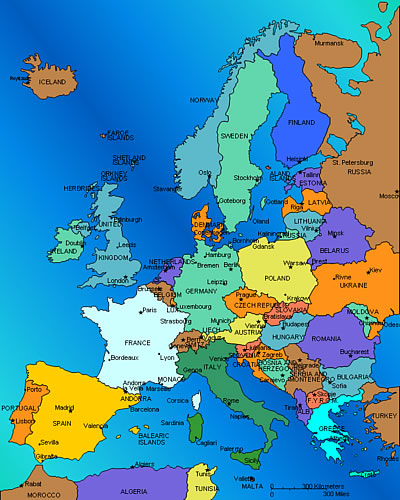 After euro leaders announced a new (big) aid package for Greece and measures to prevent bond yields rising further in Spain and Italy, it seems that Europe has solved its sovereign debt problems…. Markets celebrate the European version of QE. Also Europeans (we'll see what Americans will now do about it, but I think the answer is pretty clear and markets know it) can now delay any tough decisions on deficits. Someone else will pay the bill. Pretty sad. However, markets go up and everybody is happy so far.
Kim Zussman writes:
Do not recall the oft-heard warning that a Greek default or failure to raise US debt limit will result in financial Armageddon prior to the Lehman collapse. That not yet distant memory still has usable power. Perhaps a day's meal in that.
Bruno Ombreux writes:
The 100s of billions will mainly come from the pockets of the German, French and Dutch taxpayers, since the ECB printing powers are limited. As for the Greek, they have lost their sovereignty but they will find freedom though work. You know. Arbeit macht frei. That is at least for the next few months until bailout 3 is needed and the whole show starts again.
Also, about the question from the bleachers: How are the ECB's "printing powers" more limited than the U.S. Federal Reserve's?
read this: European Central Bank
They need to maintain some capital and this capital is provided by the central banks of the member states. They cannot do too outrageously stupid things, because they can get bankrupt if some member state central banks stop capitalizing them.
And you can be sure that the German or Dutch have an uncle point.
Politically, the ECB is also far less inclined to print than the Fed:
- It has only one mandate, low inflation, whereas the Fed has a dual mandate: inflation and economic growth. In effect, the ECB doesn't really care about economic growth. - The German have been paranoid about inflation since Weimar and would not let the ECB go too far. - If you look at the ECB board, it is predominantly hawkish according to analysts and observers that spie every word uttered by these guys.
But the main reason they have less power to print than the Fed is that they have to please a lot of member states. Which creates checks and balances. Whereas the Fed only has to please one guy, the US president, who nominates board members.
John Floyd adds:
Leaving any debates on what is considered QE and what is not.
The ECB has lent to the periphery through its rediscount window Euro 330 billion, this is in addition to the Euro 75 billion in secondary market purchases of peripheral country bonds. The ECB has a capital cushion of about Euro 10 billion. One could argue this might be a stretch of the single mandate of the ECB's 1998 charter.
To Ireland alone the ECB has exposure of Euro 180 billion, or about 100% of Irish GDP.
Other thoughts on the most recent Euro summit:
The general reaction in markets and the street research has been this plan delivers slightly more than expected and is a bold plan. Not surprisingly this has been the analysis of most of the rescue packages globally since 2008. Yet, the failure of the packages on so many levels is fairly evident if one looks at economic growth, interest rate spreads, etc.
The most recent package clearly will buy some time. How much is an open ended question but I expect much less than previous packages as the Pavlovian reaction wears thin.
Amongst the many issues of implementation, political approval, private sector etc. I think the key failings are:
1) There was no increase in the size of EFSF. Furthermore, even the relatively paltry and debatable rating of current EFSF has yet to approved. To cover Spain and Italy would require 1.5-2.0 trillion Euros.
2) Concessions on rates and maturity extensions for Ireland and Portugal are nice but small relative to the fiscal adjustment required.
3) The debt relief to Greece is insignificant and will bring debt to GDP from 172% to around 150-160%, depending on whose estimates you are using.
4) Given that there is not much debt relief and the fiscal adjustment is massive there cannot be much hope that the domestic political willingness in Greece will be there to stay the course.
Jul
19
Query of the Day, from Victor Niederhoffer
July 19, 2011 | 2 Comments
Why does the S&P, when in a certain stage, go down when there is good economic news because the interest rates go up when there is good news, and stocks are valued as an infinite stream of discounted earnings so the interest rate is more important because it is compounded recurringly while the effect of output is ephemeral as everyone knows. I believe that the reason that stocks go down on the rating announcements is it impacts the desire of everyone to hold risky things during uncertain times, but the more that the ratings are cut back, the greater the chances that a deal to cut spending will be made and this is good for interest rates.
Rocky Humbert responds:
I'm probably being dense, but I still don't follow your logic. You first sentence doesn't address my point about what's happening in the PIIGS right now — sovereigns are being shut out of the bond market, but blue chip borrowers are conducting business (pretty much) as usual. The rising sovereign interest rate seemingly is becoming less and less relevant to the conduct of business to business lending. In pointing out this 7-sigma phenomenon in a private correspondence with a very knowledgeable spec this morning — that this is a a very different world than we've seen for the past 40 years — the spec replied, "[This is closer to ]the world that JP Morgan inhabited, where sovereign credits were more risky than sound companies and the banks bailed out the Treasuries. I grasp what you mean in the context of not-owning-risky assets when things seem uncertain. However, this is a mindbending paradox. The risk is arising from the riskless asset. So if the riskless asset is becoming more risky, does it follow that the risky assets are proportionally more risky? Because if you sell the risky asset because you're scared of the riskless asset, do you buy the riskless asset even though it's becoming risky even though it's what made you sell the risky asset to begin with??? Off to the gym…
George Parkanyi adds:
Corporations (at least the true going concerns that serve a broad economic need) seem to have the resiliency of cockroaches (e.g. the Japanese and German companies that survived the massive bombing in WWII being case in point). Companies have more flexibility than governments (in general) to adapt to changing economic environments. They can more quickly re-deploy capital and can cut costs more quickly and aggressively.
It has occurred to me that if sovereign debt, massive amounts of which are out there, eventually are widely perceived as crap, there could be a veritable stampede out of it - especially in conjunction with declining currency and/or inflation. So where is that money to go? The first look would probably be commodities - especially precious metals, and the initial panicky inflows will likely drive up prices dramatically. We've seen some of this already, facilitated by the advent and growth of commodity ETFs. By the same token, there are legions of equity ETFs, funds and well-run companies which will be perceived as a safer than sovereign debt because of the survivability advantages of corporations. As commodities soar, equities will start to look like screaming bargains in comparison. Dividend-paying big-caps may very well become the new bonds from an institutional investor's perspective. This transfer of capital from debt to equity could drive stocks much higher as well in a boom similar to what commodities are experiencing. Interest rates may not matter. At high stock prices, companies will be able to raise capital through equity offerings, and dividends may come into vogue as another way to attract that outflow from bonds. As bonds are being sold, they may get to the point where they are so low that governments (that still wish to avoid default) may start buying them back on the cheap to retire them. If you had a trillion in debt that just got marked down to $500B, and you had that money and/or could print some to fund the buy-back, wouldn't you take that opportunity to wipe the $500B off your balance sheet and improve your credit rating?
Now that I think about it, jacking up interest rates to short your own debt (to buy back later) could be one bizarre option the Fed could try at some point. Although you'd likely strengthen your currency doing that and it could backfire … unless … you short the other guy's currency first … and use those profits to buy back your debt. You could probably do this once.
Interesting times indeed. Rocky's PIIGS observations are very well worth thinking about.
Paolo Pezzutti adds:
As a country defaults I do not expect to see all companies go bankrupt. The financial health of a government does not imply that companies cannot make a profit. In a sell off type of environment where asset managers weigh down their portfolio in a troubled country, I agree you can find good bargains. One problem may be the timing. When in 2008 prices plunged I started to buy stocks of very solid companies in Italy. Unfortunately prices continued to the downside some tens of percent. It took more than a year to see prices go back to my level. during a panic also good quality stuff can sink. In Italy there are some of these companies. I look at the utilities sector,luxury, oil. I look also at banks. Most of them are well managed and are mispriced right now. But we'll probably could buy at much lower prices. Imagine what could happen in these troubled countries in case of a slow down of the global economy.
Jul
19
Query of the Day, from Jim Sogi
July 19, 2011 | 2 Comments
Eyeballing June and July turns shows the turn off the bottom characterized by volatility and a range but the turn at the top is characterized by stagnation, a few doji's, then a sharp reversal. Is this a generalizable characteristic of big turns a la Magee or Nison? Second question. Will the top of the June range at bottom provide "support" at this level? What is "support" and how does it work? Is it psychological, or are the actual orders in place? Despite despised topic of the question its kind of hard to ignore. Certainly patterns can be quantified and tested but not without problems of generalization.
Paolo Pezzutti writes:
The top was printed as exhaustion of buyers. But the importance of the 1300 level should also be considered. It means that at present few people have the guts to buy new highs. However there are still many out there willing to buy dips, supports (such as round numbers), retracements, new moons and so forth. Don't know what would be needed to change this approach of investors and traders and start a new 'cycle' with different behaviors. What is needed to shake this confidence? Bad news about the US debt? Or the European crisis? No way. Already tried… Probably an unsatisfactory earnings report by Apple…. Paolo
Jul
18
Google Earnings, from Paolo Pezzutti
July 18, 2011 | 1 Comment
With Google cap above $ 191b and price up more than 12%, I wonder if the earnings surprise is really worth about 20B$. Google+ may finally be the solution to the next stage of goog growth, but I am always skeptical of these big gaps (probably because I never own the stocks when they happen …. and I am a contrarian by nature).
Jul
15
The Only Way is Up? from Paolo Pezzutti
July 15, 2011 | 4 Comments
 Once again the market has been fast in recovering, and it seems that certain levels cannot be broken to the downside. What are the structural reasons for the US market better performance? One is tempted to say that the bear case has no hope. However.
Allen Gillespie writes:
The bear case is as strong as ever in real terms. There are only 4 ways out of a debt crisis.
1) Inflation = losses to bond holders in real terms
2) Deflation = losses to other claim holders and parasites (austerity)
3) Default/Restructure = shared burden between all claim holders
4) Productivity Gains = actual improvement in debt servicing capabilities
Historically losses in sovereign defaults are estimated to be around 40% over 8 years. Recall the official policies are thus
1) Fiscal = "I want to spread the wealth around" - notice the use of the word wealth not income. Wealth is all accumulated savings of income. And how do you tax wealth - inflation and regulation.
2) Monetary = Inflation targeting at 2%. Inflation targeting is nothing more than a gold standard with a higher base rate. Under the gold standard there was no long term inflation, so short rates tended to be volatile but long rates very steady. Flat yield curves prone to violent inversions like the one we got prior to 2008 (19 months).
I think the government model is the 1940s where government was ramped up during the War and then handed things back off after the war to the private sector. This was a time of 2.5% interest rates and 5.5% inflation because inflation would go from 0 to 10% twice in the decade.
We are close to inflection - the food companies have announced that food inflation will be 7-8% next year.
The saddest part is that the powers that be think only #1,2,3 are possibilities because they have no appreciation or trust in people for #4. Peter Thiel is the best thinker on that issue.
Take energy as an example - are earnings up because of #4 or #1? Obviously, more #1 than #4 but some of both looking at nat gas. However, the Prez wants to determine the winners and losers so that is disadvantaged to other lobbies. It's sad.
Are you shorting in nominal or real terms - important question.
Jul
15
A Sign of Strength, from Paolo Pezzutti
July 15, 2011 | Leave a Comment
Despite the news about the debt in the US and the crisis in Europe, the S&P danced up and down in a trading range for weeks. It is a sign of uncertainty but also a sign of strength in times of bad news. I find interesting however that the dollar remained pretty weak over the past weeks which means markets are weighing more the problems of the Us debt rather than the Euro crisis. In fact, last year in May the dollar went down to 1.19 when the problems of the Greek bailout started. Today it is above 1.40.
Jul
13
Italy’s Debt, from Paolo Pezzutti
July 13, 2011 | 1 Comment
Raising the yearly rate to hold a stock or bonds account will push away small investors from markets. More importantly it shows once again how in Italy private investing is made difficult if not discouraged. Italians over the past decades have invested their money in housing. The percentage of home owners is very high. Also it is well known the initiative of small companies run by families. This is at the same time the strength and weakness of the country. The development of the stock market was always neglected. Private savings are high but what could happen (or is it already happening?) is that capitals move abroad to safer places.
— keep looking »Archives
- June 2026
- May 2026
- April 2026
- March 2026
- February 2026
- January 2026
- December 2025
- November 2025
- October 2025
- September 2025
- August 2025
- July 2025
- June 2025
- May 2025
- April 2025
- March 2025
- February 2025
- January 2025
- December 2024
- November 2024
- October 2024
- September 2024
- August 2024
- July 2024
- June 2024
- May 2024
- April 2024
- March 2024
- February 2024
- January 2024
- December 2023
- November 2023
- October 2023
- September 2023
- August 2023
- July 2023
- June 2023
- May 2023
- April 2023
- March 2023
- February 2023
- January 2023
- December 2022
- November 2022
- October 2022
- September 2022
- August 2022
- July 2022
- June 2022
- May 2022
- April 2022
- March 2022
- February 2022
- January 2022
- December 2021
- November 2021
- October 2021
- September 2021
- August 2021
- July 2021
- June 2021
- May 2021
- April 2021
- March 2021
- February 2021
- January 2021
- December 2020
- November 2020
- October 2020
- September 2020
- August 2020
- July 2020
- June 2020
- May 2020
- April 2020
- March 2020
- February 2020
- January 2020
- December 2019
- November 2019
- October 2019
- September 2019
- August 2019
- July 2019
- June 2019
- May 2019
- April 2019
- March 2019
- February 2019
- January 2019
- December 2018
- November 2018
- October 2018
- September 2018
- August 2018
- July 2018
- June 2018
- May 2018
- April 2018
- March 2018
- February 2018
- January 2018
- December 2017
- November 2017
- October 2017
- September 2017
- August 2017
- July 2017
- June 2017
- May 2017
- April 2017
- March 2017
- February 2017
- January 2017
- December 2016
- November 2016
- October 2016
- September 2016
- August 2016
- July 2016
- June 2016
- May 2016
- April 2016
- March 2016
- February 2016
- January 2016
- December 2015
- November 2015
- October 2015
- September 2015
- August 2015
- July 2015
- June 2015
- May 2015
- April 2015
- March 2015
- February 2015
- January 2015
- December 2014
- November 2014
- October 2014
- September 2014
- August 2014
- July 2014
- June 2014
- May 2014
- April 2014
- March 2014
- February 2014
- January 2014
- December 2013
- November 2013
- October 2013
- September 2013
- August 2013
- July 2013
- June 2013
- May 2013
- April 2013
- March 2013
- February 2013
- January 2013
- December 2012
- November 2012
- October 2012
- September 2012
- August 2012
- July 2012
- June 2012
- May 2012
- April 2012
- March 2012
- February 2012
- January 2012
- December 2011
- November 2011
- October 2011
- September 2011
- August 2011
- July 2011
- June 2011
- May 2011
- April 2011
- March 2011
- February 2011
- January 2011
- December 2010
- November 2010
- October 2010
- September 2010
- August 2010
- July 2010
- June 2010
- May 2010
- April 2010
- March 2010
- February 2010
- January 2010
- December 2009
- November 2009
- October 2009
- September 2009
- August 2009
- July 2009
- June 2009
- May 2009
- April 2009
- March 2009
- February 2009
- January 2009
- December 2008
- November 2008
- October 2008
- September 2008
- August 2008
- July 2008
- June 2008
- May 2008
- April 2008
- March 2008
- February 2008
- January 2008
- December 2007
- November 2007
- October 2007
- September 2007
- August 2007
- July 2007
- June 2007
- May 2007
- April 2007
- March 2007
- February 2007
- January 2007
- December 2006
- November 2006
- October 2006
- September 2006
- August 2006
- Older Archives
Resources & Links
- The Letters Prize
- Pre-2007 Victor Niederhoffer Posts
- Vic’s NYC Junto
- Reading List
- Programming in 60 Seconds
- The Objectivist Center
- Foundation for Economic Education
- Tigerchess
- Dick Sears' G.T. Index
- Pre-2007 Daily Speculations
- Laurel & Vics' Worldly Investor Articles
