
Daily Speculations The Web Site of Victor Niederhoffer and Laurel Kenner
|
|
|
Daily Speculations The Web Site of Victor Niederhoffer and Laurel Kenner |
Dept. of Child Rearing


05-May-2006
Letter to a Newborn Son, from Victor Niederhoffer
Aubrey Darwin Niederhoffer was born May 3, 2006, to Laurel Kenner and Victor Niederhoffer. He weighed in at 7 pounds 12 3/4 ounces and measured 21 1/2 inches tall. He is named after Jack Aubrey, the hero of Patrick O'Brian's series of nautical novels, and Charles Darwin, whose life and travels were the basis for the Stephen Maturin character in O'Brian's books.
 The occasion of a birth is always a good time to take stock of the important
things in life that a father would like to share. In your case, it's even more
important, because at 62, I am the oldest father that the Pennsylvania hospital
where you were born had ever discharged, and I am going to have to compress much of my hopes and knowledge and love for you
into a few short years. Here are some of the main lessons for you that I hope to
set in motion so clearly and firmly by my own example and also with practical
direct applications for you while I'm alive that it will become second nature
to you. These guidelines will be useful merely for a review, as it's too
late to lock the stable after the horse has been stolen, so here goes.
The occasion of a birth is always a good time to take stock of the important
things in life that a father would like to share. In your case, it's even more
important, because at 62, I am the oldest father that the Pennsylvania hospital
where you were born had ever discharged, and I am going to have to compress much of my hopes and knowledge and love for you
into a few short years. Here are some of the main lessons for you that I hope to
set in motion so clearly and firmly by my own example and also with practical
direct applications for you while I'm alive that it will become second nature
to you. These guidelines will be useful merely for a review, as it's too
late to lock the stable after the horse has been stolen, so here goes.
The Mouse with One Hole
You will soon learn to love the memory of your grandmother Elaine. She gave of herself selflessly so that her family could excel and prosper. Nothing for her three kids and 10 grandchildren and her many good friends was too unimportant for her to attend to. She led an exemplary life, with nary an enemy. Hardly anyone who knew her who didn't love her. One thing she really wanted was to see you before she died. Regrettably, things don't usually happen the way you hope, and she died one week before you were born. OK, a tragedy, but at least she had many a smile thinking and hearing about you while she was waning, and you will through her teachings, her books, her progeny, her eulogies and her bios have many opportunities to learn from her. Nevertheless, let this be a lesson for you.
Your investments, your romances, your aspirations will never be realized the way you planned. There is much uncertainty and risk in the world. Even when the outcomes are known, it's largely chance what's going to occur. Do account for risk and uncertainty in what you do. Never leave yourself with just one exit on any important pursuit. Constantly plan for the contingencies that are not at the peak of your hopes, or most likely outcome. Follow the wisdom of many animals and remember the proverb, "The mouse with one hole is quickly cornered."
Listen and Learn
While we're on the subject of your grandparents, you'll soon find out your paternal grandfather was a king among men, whose spirit lives in thousands of others. My book Education of a Speculator is a love story about him, and you'll get the main ideas from that. Regrettably, he never thought he was going to die young, so he never wrote down guidelines like these, but he did read me, my sister Diane and my brother Roy a story every night for 18 years, and he drove us to and attended all our 10,000 lessons and tournaments, so we got a good dose of what he would have written down for us. One of his most important mottos was "Listen and Learn." In its most exact sense it means that you should always be ready to find wisdom in what other people say, and try very hard to absorb it without injecting your own preconditions into the fray. At a more general level, it means to be humble, to always be wary of your own liability to error, to always give the other person the benefit of the doubt.
When you're investing, there is one super-person that you must always listen to, and that's the market. To fight the market without humility is the cause of certain death. You see, all that has to happen is for you to be wrong enough for you to lose all your chips. And it doesn't take long for that to happen, especially if the market or anyone else senses they can make a killing by doing you in. Regrettably, there are some people who, like the vultures and maggots and hyenas, specialize in waiting for you to be near the death point, and they always can tell when you're near death; so the market usually will take that last move just to suck your life blood away when you're not humble.
Give Others the Benefit of the Doubt
The world is full of great people and small people. You'll find they all think they're well-meaning and good. There is good and bad in everyone, but if you treat everyone as if he's a good person, you'll tend to bring out the good. That will augment your life immensely. Conversely, if you treat people like they're bad, not only will they clash with you but you'll help them to become bad. People never give you more than you expect of them. Artie was a master at giving the other person the benefit of the doubt. There was a joke in our family that we all hated to play ball when Dad was on our side, because every ball we hit was out and every ball they hit was in, according to him. But he taught us the value of sportsmanship. He taught us that if you needed to win so badly that you had to bring out the worst in other people then you'd bring out the worst in yourself also.
When you're doing business with someone, remember that all profits come from recurring relations with the other side. If you're the kind of person who's always trying to get the edge by assuming the other side is trying to put one over one you, no one will want to do business with you twice because it will be so unpleasant for them. Sure, you'll get gypped a few times by giving the other person the benefit of the doubt, but you'll make up for it on the many occasions when someone says, as they sometimes say to me, "You know -- you've never asked anything from me and you've brought out the best in me, and here's something meaningful for you." As for the applicability of this to investing, remember that your counterparts, brokers and agents are going to have to benefit from doing business with you, or else they can't continue in business. So you have to give the other person the benefit of the doubt; otherwise, you won't be able to continue.
On another level, giving the person the benefit of the doubt assumes he is very intelligent and knowledgeable. That's part of being humble and preventing yourself from assuming that you know more than others. The importance of humility as a requisite to success in investments cannot be overemphasized. That is why it crops up in many of my points as a corollary or condition to success. You'll learn this best sometimes by falling victim to the contrary. Eventually, you'll see people who are always boasting about their own success and how much smarter they are than everyone else. They're obviously not giving the other person the benefit of the doubt. You'll find a lot of these arrogant blowhards around, but you may overestimate the number doing business at one time, because they're sure to go out of business. So the only ones who are left are the newbies who have not gone under but soon will.
People are Able
The one observation that I can make from my own experience that has the most explanatory power is that almost everyone you meet will have some aptitude, know-how, taste or expertise that's highly effectual and interesting. When you go through life, try to elicit those unique qualities in the people you meet. Assume that the average Joe on the street has much to teach you, and be ready to drink it in. One of the most effective ways that I've found to bring out the these know-hows in people is to sit down with them sometime over lunch or take a walk, and just say, "Tell me a story," or "Teach me something." You'll be surprised at how those simple words open vast vistas of erudition and knowledge you never dreamed of.
You'll discover that every investor has a different method of applying his trade. That's one of the beauties of an enterprise system like we have in our country. The process of providing a product is divided up into many parts. Because of these many parts, people can pick and choose those they are most interested in or most able at. This is called specialization and niche-building in the animal and plant worlds. The process of finding your own niche, the area that you have the greatest edge, in as well as figuring out what the niches that others specialize in, is a grand goal in life but also a crucial aspect of the process of investing.
The Importance of Small Things
Little strokes fell great oaks. No matter what great goals you have for yourself, and I hope they'll be very high, you have to start somewhere. The best place to start is with something little, something you are accustomed to doing well, maybe from your mastery of games or music. For example, you might want to become the world's greatest trader. To do so you have to start by trading something with someone. Try it with someone in the family, trade a tennis lesson for a piano lesson, or a set of plate blocks, for a penny black. Once you start, you'll find it easier to get to the next step.
The best lessons in doing small things come from music. Every day you have to start by doing some very simple exercises. Then you have to practice over and over again until you can meet anything written in music with great aplomb. Once the technical difficulties are mastered, in music or anything else, you can concentrate on the things that make for greatness, the rhythms, the content of the main themes, what the composer has in mind, the dynamics, and the pedals.
Time and again I've applied the lessons I learned from practicing the piano and violin, which, among other instruments, I'm sure you'll be playing. I found it normal to practice by myself in squash, just by hitting each shot for 10 minutes at a time alone on the court. That's really how I got good, once I received the proper instructions, foundations and guidelines from Jack Barnaby. Amazingly, to this day, hardly anyone else did that, and people used to look at me like I was an oddity for practicing by myself in all my racket sports, and it was much harder in tennis in the old days before they had machines.
When you want to start investing, make a little trade. Wait until there's been a long run without a success in some field like the stock market, and then take the other side with a very small quantity. Do it so small that you can afford to hold for more than a day. Remember the mouse with one hole. If it's up the first day, then get out. If not, wait for two or three days to close out. After that, call it a day. The markets will always be there.
Because of the wide applicability of the value of learning by doing small things, you'll find it applicable to every pursuit. I like to apply it to problem solving. Whenever you have a problem, start by doing the problem as if there were just one or two things or persons involved. Count out the possibilities. Then see how you solved it and apply it to more things. If it worked for one, then did it have to work for two? Not only will you know the way to solve more complex problems that way, but you may have within you a generalized proof by induction.
Incentives Matter
Actions happen as the result of individuals' making choices based on a comparison of benefits and costs. If you want certain actions to happen, or if you wish to know why they did not happen, compare the benefits that were available to the costs for the individual. When they increase you'll find more of the action and when they decrease there will be less.
The best incentives you'll find are the ones that involve money. That's because people can use money to get more of the things they want and the things that have the most value to them. Sometimes the best way to see the importance of something is to assume you had none of it, or a googol of it. Often when there are no money incentives you see the craziest things. In my day, there was a book about the lack of money incentives in Russia, written by G. Warren Nutter, titled The Strange World of Ivan Ivanov. He said that because they had no incentives in Russia, no one worked hard, and they never produced what people wanted. He and Mises and Hayek predicted that the system would break down, but no one believed them at the time. Indeed, they used to teach at Harvard and all the other good schools that the Russian system was as good as ours for producing goods and grew just as fast. But then the truth came out. There was uniform poverty in Russia, except among government officials, and no one was there to take care of the sick cow because there was no benefit from doing so.
Worse yet is what happens to people's character when they don't have incentives. They must constantly fight against their inmost tendencies to improve themselves, which they think about almost every waking minute. If the system doesn't provide for a way to make those incentives to improve themselves easy -- or worse yet, the Russian system made the money incentives to improve yourself illegal, since all economic goods belong to the state and to start a business or trade in Russia was a capital crime -- it makes people crazy and deceptive and suspicious. Almost all the Russians I've met have a strong tinge of dishonesty within them, developed in their communistic upbringing as a prerequisite for survival. The terrible influence of lack of incentives on character is usually present whenever you see people doing consistently bad things.
I hate it when someone who wasn't brought up in an incentive system comes to me. He's always thinking, what can he take from me, what can I give him without a trade. Worse yet is what he thinks about me. He sees me as an enemy, and thinks "What the h--- is he trying to get?"
I love to buy investments where incentives are changing. Some of the best opportunities arise when governments or associations privatize their activities. All the sudden, the sick cows get milked, people start working long hours, the customer becomes the king rather than a problem. When you were born there was a movement for all the exchanges to become private profit making entities, and the importance of incentives in improving their operations and making them fight harder to get business led to many profit opportunities. Always make sure there are incentives in the people you invest with for them to make money for themselves while they're making money for you. If the incentives are not in balance, then you're going to have big problems unless you or someone else changes them quick.
Counting
I've discussed many areas that are crucial to success. How can you keep track of them? There is only one way, and that's to count. Now, counting is best learned by doing. In your family Francis Galton reigns supreme. Your eldest half-sibling Galt was named after him. He is often referred to as the king of counting. Galton kept an index card and pen in his pocket at all times so that he could classify relations between two things into the times they moved together and opposite from each other. This is what the call the process of co-movement and countermovement, or contingency tables, in technical terms. The best way to become a good counter is to do it often. My first memories are of Artie sitting in 90-degree heat at Dodger Stadium and counting the number of hooks and errors in handball. In my mom's book with Artie, The Police Family, they give a beautiful example of counting by classifying all the books ever written by police families -- by kind of favorability, style, content, happiness of the characters and many other variables.
Count often and practice at it, and it will become second nature to you. You'll make many discoveries. Even more important, you'll learn to be skeptical of the kind of things that are going to come down the road that are based on superstition and myth, magic and cult wisdom.
Read good books on counting. I like the classic statistical books on counting like Statistical Methods by Snedecor and Cochran. Also good is Statistics Without Tears by Derek Rowntree. But any book that gets you to take out the pencil and paper and teaches you good examples from many different fields is good. The third aspect of counting nowadays is that it's important for you to develop a tool above and beyond the pencil and paper to do your counting. For that purpose, it's essential to learn a good programming language so that you can count systematically and extensively. The programming languages that I learned on were based on FORTRAN and BASIC. Nowadays, many people find that using the statistical programming environments R and Matlab is an excellent way to round out counting in practice. When you've mastered these three steps to counting, you'll have to gone a long way toward becoming a good speculator. You'll not only have a proper basis for making statements about the relations that matter in markets, but even more important, you'll have a basis for rejecting those that don't. There's a mantra that all the people associated with me follow that has been very helpful in their investments and, indeed, in their lives. When someone suggests a trade or procedure, always ask the question, "Er, have you counted and tested that?"
Aubrey, one of the first jobs that you have is to cry, to let us know what gives you happiness and pain, and to get your body functioning properly. I know this is very important for you, but right now it's been keeping your mother and me up for the first two days that you've been alive. And before I tell you the other important lessons, based upon such things as the importance of games, the importance of books, or music, the overriding significance of compound interest, the importance of taking a proactive approach, I'm going to have to get some sleep. Then, I'll talk about the importance of having proper mentors, of choosing a path where you have the wind at your back, the lessons about diminishing marginal return, the key significance of trade, and the lessons from examples of heroic men. But before I tell you about all this, I'm going to have to get a little rest.
The importance of books
If there's one thing that is the essence of the Niederhoffer tradition, one thing that is key to our being, it's the love of books. To put this in perspective, I grew up in a very small 1,000-square-foot apartment. Yet there were more books in that apartment than in the four big libraries that I keep today, which are written up in the "World of Books." The joke is that the reason my family had so many books is that my father, Artie, worked in the book publishing district and all the publishers would beg him to take their books for free so that they didn't have to pay the expense of dumping the books in the East River, which was the only way they had to deal with remainders in those days. But the truth is, my parents loved books and no matter how little money they had there was always money to buy a used one or rent one from a lending library. Five librarians came to my father's funeral, because every week he'd visit the library and take our three or four books and read them and return them with thanks.
From the day I was born, my parents read a book to me every night. I started the same tradition with you.
Books are important for so many reasons, but the most important is probably that they can take you anywhere in time or space. A book can take you back hundreds of years, to different countries, into a myriad of different situations. It can give you insight into different kinds of professions. It can arouse any kind of emotion: humor, suspense, happiness, pity.
The other reason books are so important is that they contain lots of knowledge. There's an expert on every subject and when experts have something really enduring to say , they publish it in a book. They do this usually out of a love of their subject, a calling to communicate with posterity. That's one of the keys to books. They are made to last. They contain what's known about a subject that everyone should know as of the time they're written, and that people should still know in a hard form in a hundred years.
We live in a verbal society where people who can use words well gain power and respect. No better way to learn about verbal power than through books, as almost everyone who's good with words eventually writes them. I'm proud to say that my mother and father wrote six, including one they did together, and I wrote one, and I also wrote one with your mother, continuing the tradition. I am also happy that one of your sisters has already written a very good book, and she has another one coming soon. I hope you will be the third generation to do so.
One thing you should know about books: Take them in many forms. Read them, listen to them in the car or at home, listen to your parents or friends when they read them to you, talk about them in book clubs, ask your friends to tell you a story from books , or write some yourself. Each form will develop new levels of knowledge and happiness for you.
I find that the best books were written many years ago -- I like to say 100 years ago. One reason for this is that books in the old days were read by a more thoughtful kind of audience, and books had to be of a higher quality to sell in those days. The other reason is probably related to survivor bias; the books that are old and still around are obviously the ones that still hold up. But I think there's something more involved than survivorship bias; namely, the books of the old days tried to talk about timeless, important things. The audiences were not quite as divided as they are today. The topics that the old books addressed were more expansive, adventurous, heroic. The negative reason that the old books are better is that they didn't have to worry about everybody being a victim in our society and they didn't try to write that people are entitled to thing, the idea that currently has the world in its grip. The old books often were about people using their talents, knowledge and effort to overcome the obstacles to achieve their individual goals.
One way I have of really enjoying good books is to read best-sellers like those of Louis L'Amour or Patrick O Brian, or Frederick Forsythe, or John Le Carré, or Colleen McCullough, or Tom Clancy. They know what things people are interested in, they can construct a plot that keeps you moving forward and ties together beautifully, they know how to get you excited and then release you, and they know how to talk about important things that make you happy. One thing that ties all these authors together is that they write about important things, and they research their subjects so carefully that you walk away from the book with tremendous knowledge of a new field, as well as enjoying your visit to a new world.
I can't conclude this paen to the importance of books without telling you some of my favorite books. Presumably you won't like all of them now, but I can assure you that they each have been instrumental to the enjoyment and knowledge that I have picked up in my life. The one book that I find that I can read over and over again which people say is the greatest novel ever written is "Don Quixote." It's a book about a heroic quest, to right the wrongs of the world, to protect the weak, to uphold romantic values, to make the world safe for women, to enjoy nature, to uphold friendship. And yes, it's a book about books because the thing that inspired it were all the books about chivalry outstanding at that time that were full of holes and mistakes.
I have a recommended list of books on my site that I'm constantly adding to so I'll refer you there for a little review of some of the essentials that will make your life so much better, and on the other side, not to have read them will make your life so much more empty. Some of the highlights: "Atlas Shrugged," the Patrick O Brian series about Jack Aubrey, whom you were named in honor of, starting with "Master and Commander" and ending with "Blue at the Mizzen" (which most people who love Jack and Stephen never get to read because they're so sad to come to the end of the series that they don't wish to finish); "Gone with the Wind," by Margaret Mitchell (and be sure to see all the letters I have of hers that show what a great historian and wonderful woman she was); "Old Home Town," by Rose Wilder Lane; "Monte Walsh," by Jack Schaefer; "Moby Dick," by Herman Melville; and a few books by Louis L'Amour -- any will do, but especially "Hondo," "My Yondering Years," "Son of a Wanted Man" and the Bowdrie series; "Memoirs of a Superfluous Man," by Albert Jay Nock; "Memories of my Life" and "The Art of Travel," by Francis Galton; and some Shakespeare since he has shaped the Western mind and is Mr. Literature, and some Mark Twain, because everyone should have a little bit of Tom Sawyer, Huck Finn, the Connecticut Yankee or the Traveler up the Equator, in him.
While you're at it you should read some of the most important investments books, and again these are reviewed on our site: "Triumph of the Optimists" by Dimson et al.; "Trading Exchanges," by Larry Harris; "Horse Tradin'," by Ben Greene; "The Economic Way of Thinking," by Heyne, a good book on valuation by Damodorian, and both of your father's books.
Start a library when you're very young and try to follow your parents' tradition of increasing it to beyond the previous generation. Make the ratio of books to space in your house exceed ours, and let there be a dozen librarians at your funeral. Love, Dad
Gary Rogan says:
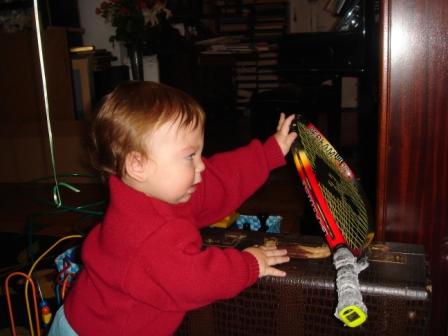
Congratulations on the birth of your son. Talk about a long wait being rewarded. About incentives in Russia: there aren't any places in the world without incentives unless you are on a rock in the middle of the ocean and are out of resources. Otherwise, some courses of behavior are always more rewarding than others. In Russia they were often not aligned with the common good. When the rules of the game are misaligned the incentives of those playing it, they will violate the rules. The general tendency through the course of history is for the rules to become more beneficial for the common good. The process goes in fits and starts because those in power often benefit from the misalignment or simply from the rules themselves. I'm not sure why you singled out Russia, most of the world is either corrupt or corrupted compared to the US. Let's be thankful we live in a country where the sense of fair play is at the highest stage of development. Rarely do great societies regress, but when they do the whole world suffers enormously. And I would love to know the story of the squash racket in the picture of you and your son. Mazel tov!
Shui Mitsuda adds, "Things My Grandfather Taught Me":
I often found it difficult to teach a job to a top-score graduate because he thinks he knows and he tries to solve problem only within the knowledge of what he knows. A low-score graduate on the other hand learns fast because he knows he does not know and doesn't hesitate to ask if he faces problem. It is not a shame that you don't know. What's shameful is you think you know what you don't know. So always stay humble and ask questions until others are fed up with you.
It is not a question of whether you can get it and cannot get it.Just get it.
When everyone is dancing around like drunken mad people, the party is close to the disastrous ending. (After selling off his golf membership at $800k in 1990 which today trades at $25k.)
No matter who you are, everyone of us encounters a few key moments of opportunities in life if you live long enough.
Success or failure all depends on whether you desperately go and grab that few opportunities at right moment of time or you just let it pass by.I see this is the key moment, grab it."
Todd Colbeck notes:
Luck is when preparation meets opportunity. You need to prepare daily to be ready for that window of opportunity when it opens.
"The Best Advice My Dad Ever Gave Me," from Dr. Mark Goulston
I don't believe in voices from the hereafter. I believe that once you're gone, you're gone... but I did clearly hear the voice of my father speak to me after I kissed his cold, leathery forehead as he lay in his open coffin just before we closed it for his memorial service.
He said:
Don't treat a big thing like a small thing and don't treat a small thing like a big thing. Don't do what I did.
Yossi Ben-Dak offers:
Coming back to civilization after a few weeks of doing my best to stand up to evil people in Darfur and elsewhere, is very redeeming when the first reading you do, back at your computer, is the Daily Speculations.
Physical evil that specializes in the effecting of ugly separation and destruction of loved ones seem to take double pleasure in insuring that children and/or parents suffer the loss fully cognizant of the intense suffering and the concomitant memories that are bound to last ..Disenfranchisement, Pain, Disappointment with the human race, not knowing who is a friend, never having a moment to stop and reflect ---are the only legacies remaining in parts of humanity that seem stuck. Somehow, even those that come to leadership among them seem to expect others to invest in them, for them, to conclude what is right and what is wrong, or alternatively certain leaders react with a selfish, self centered focus on an ideology not founded on anything but a very narrow interest to be pursued--that rarely elevates them to a different stage in life or death. They do know any better and the "caring system" of Humanity is dedicated presently for their paying the worst price for any lesson anybody learns in this inhuman mess.
Civilization to me implies the type of empathy, emotions and reflection shared by Roy and Vic at the loss of their mother --and our friend, Elaine, and the birth of Vic's son, Aubrey.
When you get to appreciate the waning and end of a great personality such as Elaine, you realize that the finality of life always involves prime evil by itself, but when there is that special room and evidence for the 18 years nightly story legacy, planning for uncertainty lessons, the life model to appreciate and mold others -- the pain transfer, in part, --- to enlightened constructive instructions for a choice for others, loved ones in particular, but others as well.
What is uniquely astute in my perception of Vic's letter to his son, is the condensed nature and practicality of this communication predicated on the need to transfer knowledge and insight. One may find it strange that speculation and a dictum of "Er, have you counted and tested that?" seem to be a key perspective in this reflective exercise for a barely born person. However, truth is that such reflections are a communication to ourselves in a constant internal and necessary dialogue of self examination. Only then it is worth the transfer and Vic is, once again, honest, valid and reliable. What makes it very practical is the instruction of one of the first jobs Aubrey has--to cry. At the very least, he will have other jobs to tend to when growing up.
James Sogi
The baby's checklist if crying, in decreasing order:
That pretty much covers it. I wonder if there is a similar checklist for trading?
13-May-2006
Letter to a Newborn Son, Part II, by Victor Niederhoffer
You were named after two characters, Jack Aubrey, a very worthy character Patrick O'Brian and C.S. Forester wrote about in their series of books about the adventures of the greatest British naval captain in history, who traveled the world with great skill and overcame great danger to make the world safe for freedom; and Charles Darwin, the greatest biologist, who after a trip around the world discovered the nature of life and change. While both showed extraordinary abilities, mental and physical strength, study, science, and character -- friendship, loyalty, persistence -- in their quests for success, the heroic quality of Jack Aubrey is what inspired your first name.
 Heroism is the quality of using great strength to overcome danger toward some
noble goal. It is usually associated with the feats of heroes like Hercules and
Odysseus and Aeneas who go on great, dangerous adventures around the world to
right wrongs and make the world a better place.
Heroism is the quality of using great strength to overcome danger toward some
noble goal. It is usually associated with the feats of heroes like Hercules and
Odysseus and Aeneas who go on great, dangerous adventures around the world to
right wrongs and make the world a better place.
Most of these hero stories have some common themes: travels far and wide, romance and peril with a great woman, grave challenges to born, the building of a home, a fight with evil characters and the achievement of great goals and the ultimate uncertainty about their fate and reputation. Indeed, you will learn all of life is a miracle in the sense that out of the millions of possibilities of sperm trying to catch the egg, the chance that any one will capture the prize is highly improbable. For you to be born, you had to overcome not only these normal great odds but the conjunction of many separately unlikely events. And yes, your parents had to perform some heroic acts of their own involving that were not entirely devoid of negative consequences to set the stage for your heroic turn.
Heroes don't have to conquer dragons or live in heavens. They can do everyday things and live in real homes. But they must overcome risk, and they must have lofty goals. Anything good that you achieve in life is going to be fraught with risk and uncertainty. Like Jack Aubrey and other heroes, to achieve greatness in life you are going to have to develop all the aptitudes and abilities that your genes and environment have given you to overcome these risks so you can achieve great things. You will have to realize that the road to achieve them will be as difficult as those that Jack and the other heroes undertook in fighting the French or discovering scientific principles; or, perhaps most important of all, being a wonderful and loyal friend, helping others to achieve greatness whether in his own family, his friends or his loyal shipmates. But at the end, if you approach life in a heroic fashion you'll go a lot further than if you follow the tried-and-true humdrum path that most of us must travel in order to deal with the ordinary challenges of life.
Heroism today is usually associated with the acts of policemen, firemen and soldiers. But the real opportunities for heroic acts come in your everyday life, after you've used everything you've been given to overcome some great danger or achieve a worthy goal. Your father has not been devoid of heroic qualities in his everyday life as a speculator. Nowhere are the dangers greater, the risks more daunting and qualities needed to surmount them more encompassing. Your mother is a hero also, because she has had to overcome a million obstacles that would have killed an ordinary person in order to achieve her noble goals of being a successful writer of thousands of articles, co-author of a book with your father, and mother at the age of 51.
These are just everyday examples of noble goals that can be achieved by everyday people doing everyday things if they have the courage and the heroic spirit and a heroic quest a la Jack Aubrey in mind.
The road to a successful life in many things including specdom which your daddy professes requires heroism. You must travel to all areas of the world of knowledge, including economics, psychology, statistics, physics, . You must experience all aspects of life, gambling, sports, trading, loss, victory, friendship,. You must be of good character to inspire friends , partners, and employees. Most of all you must have courage and inner physical and mental strength to overcome danger. The danger usually comes when there is great or small panic. That's when you have to take out the canes, both physical and mental that you have learned to step into the fray. But at a more general level, the courage you must have is to overcome conventional thinking, the ideas that have the world in their grip at any one time- that are designed to make you a good paying citizen in the entitlement or fixed sum society that the powers that be , whether in the brokerage community, or the market would have you play a proper role in. In the mortal case , which you unfortunately are rather than a God who cant die, the difficulties of heroic acts are even greater because you can die. So you have to make sure like Jack Aubrey that you never risk too much on any one battle so that you are killed in action. Related to this, when you do lose, you should always have the ability to escape, even if it requires like Jack Aubrey did in Post Captain to dress as a bear.
Paolo Pezzutti adds:
Being a hero requires extra qualities. You must possess an inner balance of capabilities, objectives and responsibilities you have. Every time you make a decision you have to weigh risk and reward with regard to the expected benefit and the costs of a loss. Which could be a life, money, honor and so forth. Clear vision of values you have to defend, the burden of the responsibilities you have (your men, your family, you employees, etc.) must provide you guidance whenever you decide to take actions risking something of your own and putting on the destiny's hands also other people's interests and lives. Most of all, I believe, you must be conscious of your capabilities, your value, your ability, your determination to reach the objectives of your actions. You must be ready to bring to sacrifice yourself and those you are responsible for. You must be ready ready to accept a defeat. With honor. And sometimes there is no escape. This is granted only to great men.
13-May-2006
Letter to a Newborn Son, Part III, by Victor Niederhoffer
The Economical Aspects of the Law of Diminishing Returns
There is a law that you'll discover called the law of diminishing returns that you're going to have to balance with the noble activities in your life The law is that with a fixed amount of a certain input, as you keep adding other inputs to achieve some ends the returns keep getting smaller The example that's usually used to show it is that if you have a certain amount of land and then you keep adding additional units of machinery or chemicals to produce something like wheat, the additional units of wheat keep getting lower and lower. But this universal law applies to all things that have input.
In your schoolwork, your first efforts at studying or doing homework are going to yield a lot more than your last efforts. The reason for this law is that we all have an unlimited number of things that give us happiness. Because we have unlimited desires and we're only human with a limited amount of resources, be they time, money or mental or physical strength, we have to sacrifice something to achieve any satisfaction.
The things we sacrifice at first to achieve our desires are the ones that are least costly, where the path requires the least effort or the least money. As we go down the road, the path is always a little bit more torturous, and the costs increase.
Because of this law, you're going to have to economize in what you try to accomplish. After something like 10% of your efforts in a particular field, you're going to achieve, say, 90% of the output that's possible. The consequence and the other side of the coin of this law is that the satisfaction you achieve by using your money or time are going to be greatest at the early stages of your spending of time, effort and money than they will be in the later stages.
They call this law the law of diminishing marginal utility, and the first law the law of diminishing marginal return. Both laws are a consequence of the universal law of the path of least resistance.
You will find consequences of these laws in almost everything you do. The number of toys you play with, the number of books you read, the number of girls you share romance with, the number of jobs tat you try, the number of sports you master, the number of jobs you take, the friends you associate with, the employes that give you the most value, the customers who give you the most profits, the times that you make the most money in the market.
Like all good things, there has to be a balance. You see, in order to really achieve greatness in anything, you're going to have to give it that little bit of extra. It's just because of the law of diminishing marginal returns that most people stop at the point where their additional inputs become costly to them. So if you want to achieve greatness, you're going to have to overcome the economical laws of diminishing returns and put in that extra effort -- stuff that's really hard and costly -- so you can differentiate yourself from the herd.
08-May-2006
Thoughts on Life and Death, by Victor Niederhoffer
There seems to be something entirely unified about the process of life and death. They represent the only two changes in state. But also, they seem to occur with many of the same hallmarks. Looking at it from the macro level in humans, one notes that a typical process of death seems to start with a loss of voice, the loss of mobility, the loss of a smile, the loss of a hand hold, the loss of the opening of the eyes, the loss of ability to swallow and digest, the loss of the ability to breathe, and then, finally, the inability of the cells to function as directed by the brain. Similarly the new born starts out with the opening of the eyes, the ability to breath on his own, the ability to swallow, the ability to move, the ability finally in the third month to smile. The content of communication of the newborn and the dying being are also so similar. Both are able in the main to communicate happiness, discomfort, hunger and desire for cleanliness and nothing else.
I can't tell whether this is a profound or trivial insight as no references to similarity between life and death appear on Google but there are hundreds of thousands of papers on life and death processes. Certainly the change from being in the uterus and having all functions performed for it by the mother, and the change from being in the living world having to do everything for oneself, (assuming no machines) and having all cellular activity stop has been noted.
In any case it seemed to me that often the beginning and end of a period are often inordinately related in a nonrandom fashion. To make my hypothesis come true, I imagine a reasonable formulation would be that the first period is inordinately similar to the last period. I decided to test this in a number of simple exploratory ways. I started with quarterly moves in the S&P 500.from 1989 year end to 2005 year end.
Let's take the four quarters of 2005 as examples:
Quarter  Change
1        -3%
2        +1%
3        +3%
4        +2%
The first quarter was down 3%. The nearest quarter to it in % change was quarter 2 at 4% away, call that rank (1). The second nearest quarter to it was quarter 4 at 5% away, call that rank (2), and the furthest quarter of all away was quarter 3 at 6% away, call than rank (3). If there were no similarity between the beginnings and the ends of the period, then there should be a uniform distribution of ranks away for each quarter. Indeed, I found that quarter 4 was ranked (3) seven times, quarter 4 was ranked (2) four times and quarter 4 was ranked (1) 5 times. The standard deviation of the expected number of times that quarter 4 should receive each rank is 1 assuming drawings from randomly distributed quarterly changes so this set of observations is not sufficient to reject the hypothesis of randomness.
A similar study was made to see if January and December of each year are inordinately related. Within each year, I calculated the rank of monthly percentage change (1 to 12). Then I calculated D = abs(Rank(Jan) - Rank(Dec)) for each year. The unconditional mean of D is about 4.34 and I estimated the standard error using resampled monthly returns since 1951.
The mean D from 1990 to 2005 is 4.25 (see below), indicating a very slight and statistically insignificant tendency for Jan and Dec changes to be similar.
SINCE                          IMPLIED
YR   ACTUAL   MEAN*   STDEV*   TSTAT
 1951  4.07     4.34    0.36   -0.75
 1960  4.30     4.34    0.39   -0.10
 1970  4.11     4.34    0.44   -0.52
 1980  4.04     4.34    0.52   -0.58
 1990  4.25     4.35    0.67   -0.14
* Resampled estimates
Finally, a study was made of the moves of Friday as a function of the moves on Monday. It turns out that over the last 10 years, there is a rather significant tendency of the order of a correlation of -0.10 for the moves on Friday's to be opposite from the moves on Monday's. Of course this relation has been attenuated considerably in recent years.
Still, I remain convinced that there is a general tendency for births and deaths to be intimately related at the macroscopic and microscopic level and one will not be reluctant to augment this thread with further ideas from the world of demography and biology in the future in one never ending quest to improve oneself and one's knowledge.
Dr. Janice Dorn comments:
 Near the end of his life, Cicero wrote that "Nature has only a single path
and that path is run but once, and to each stage of existence has been allotted
its appropriate quality." Across all cultures, epochs, classes and races, the
experience of aging is a universal denominator of the human condition. From a
biological standpoint, each human life has its own rhythm and beat which consist,
at the most elemental level, of alternating cycles of growth and decay. The
song: Windmills Of Your Mind says: like a circle in a spiral, like a wheel
within a wheel, never ending or beginning on an ever-spinning reel.
Near the end of his life, Cicero wrote that "Nature has only a single path
and that path is run but once, and to each stage of existence has been allotted
its appropriate quality." Across all cultures, epochs, classes and races, the
experience of aging is a universal denominator of the human condition. From a
biological standpoint, each human life has its own rhythm and beat which consist,
at the most elemental level, of alternating cycles of growth and decay. The
song: Windmills Of Your Mind says: like a circle in a spiral, like a wheel
within a wheel, never ending or beginning on an ever-spinning reel.
For many Native American tribes, life is manifest by "four hills" (childhood, youth, maturity, old age), Each of these hills corresponds to a wind and a season, and possesses its own challenge, climax, and resolution. To the Hindus, it is a journey through four spiritual spaces called ashramas. Pythagoras was among the first western thinkers to interpret life as a cycle of four phases, each roughly twenty years long and each associated with a season: the spring (childhood), the summer (youth), the harvest (midlife) and the winter (old age). This is analogous to the Roman division of the biological cycle into four phases: pueritia (childhood), iuventus (young adulthood), virilitas (maturity) and senectus (old age).
Quaternal seasonality of the human lifecycle has remained a constant in literature, philosophy, and psychology. "Metaphorically, everyone understands the connections between the seasons of the year and the seasons of the human life," writes sociologist Daniel Levinson. "Each has its necessary place and contributes its special character to the whole. It is an organic part of the total cycle, linking past and future and containing both within itself." Carl Jung similarly describes the "arc of life" as "divisible into four parts."
Setting aside all but one aspect of the phases of our lives, i.e., focusing on values, it may look something like this:
Childhood -- acquiring values
Young adulthood -- testing values
Midlife -- applying values
Elderhood -- transferring values
You all know that I am not a counter. I look at technical patterns, and, for many, this is pure heresy. However, for purposes of expanding on the life cycle, please indulge me this simplistic rendering? The stock market is a living organism, and, as such, stocks go through the same stages of life as do human beings.
Childhood: this is the basing period which occurs in the early stages. Reasons for this aside, such basing may occur for months to many years, oscillating within the restraints of so-called support and resistance. It is acquiring value, but this is recognized by few. One day, it overcomes resistance and enters into what is called a break out. This begins the next stage;
Young adulthood: volume increases, growth of the underlying company becomes evident and the stock is bid up by those who see these changes and improving business conditions. It is testing values, and may, at this time run to its 200 period moving average. This is a technical signal for many to either buy the stock or buy call options on it. This is the period of testing its value. based upon those who are willing to invest in it. At some point, the stock becomes overvalued and distribution may begin, sending it into the next stage:
Midlife: here, as in so many of us, there may be a mid-life crisis of sorts when what is referred to as "distribution" takes place. There is usually plenty of time to work through this phase, as it may take a while for the stock to break below its 200 period moving average. The process of distribution can be painful for those "late to the party" and manifest as excess volatility and a confusion regarding the direction of the stock. Values are applied and, in this case, found to be either wanting or in need of readjustment. For human beings who are not well grounded or prepared, this stage of the life cycle can be chaotic. Then, as investors are increasing confused, the stock enters the final phase:
Elderhood: its value is transferred elsewhere, and the stock enters into a period of decline. Those late to the party are confused and may become physically or mentally ill when they realize that the value has been transferred, leaving only a shell of what used to be. The stock is no longer young, or even middle aged. It is decaying and unhealthy. It can then fall to or below the 200-day moving average, and, all the plastic surgery in the world cannot make it young again. A facelift is only skin deep.
The time to find, invest in and nourish a stock is when it is in youth and young adulthood. If you do not do it then, the amount of work, both physical, mental, emotional and spiritual, to bring it to health and desirability is enormous. For some, it is worth it. They scalp or trade it, but don't invest in it. Kind of like a series of one or two night stands. Full of sound and fury, signifying nothing.
We had joy, we had fun. We had seasons in the sun....
Dr. Mark Goulston comments:
On the topic of life and death and the many stages in between, I am reminded of the quote of wonderful teacher and champion of public psychiatry, the late Milton Greenblatt, M.D.:
First we are children to our parents,
Then parents to our children,
Then parents to our parents,
Then children to our children.
Roy Niederhoffer responds:
 One thing that occurred to me is that the beginning vs. end of
life could work in a "first too little" finally "too much" idea. For example, an
infant probably has "too much" oxygen, "too many" undifferentiated cells vs. at
the end "too little" oxygen and "too few" undifferentiated cells. The idea is a
little like the logistic growth curve where first populations are below
equilibrium, then at equilibrium, then exceed equilibrium. External symptoms of
"too little" and "too much" in your blood might be the same -- for example, too
much calcium vs. too little calcium might affect your behavior similarly
(problems with cell membrane transport, maybe?) , but the cause of similar
behavior might be entirely different. Maybe people work like stars, where there
is a natural path of evolution not that "mortality recapitulates ontogeny" but
more like a symphony with an introduction, main part of the movement, then a
coda, which may reference the coda but perhaps continue the evolution in the
same direction. Here's a link to the
way stars evolve... possibly relevant.
One thing that occurred to me is that the beginning vs. end of
life could work in a "first too little" finally "too much" idea. For example, an
infant probably has "too much" oxygen, "too many" undifferentiated cells vs. at
the end "too little" oxygen and "too few" undifferentiated cells. The idea is a
little like the logistic growth curve where first populations are below
equilibrium, then at equilibrium, then exceed equilibrium. External symptoms of
"too little" and "too much" in your blood might be the same -- for example, too
much calcium vs. too little calcium might affect your behavior similarly
(problems with cell membrane transport, maybe?) , but the cause of similar
behavior might be entirely different. Maybe people work like stars, where there
is a natural path of evolution not that "mortality recapitulates ontogeny" but
more like a symphony with an introduction, main part of the movement, then a
coda, which may reference the coda but perhaps continue the evolution in the
same direction. Here's a link to the
way stars evolve... possibly relevant.
Debra Moon adds:
 I found your thoughts on life and death very thought provoking.
I couldn't help but consider the ideas of volitional vs. non-volitional
participation as related to what you wrote. Especially as the ultimate question
seems to wonder how patterns effect the market.
I found your thoughts on life and death very thought provoking.
I couldn't help but consider the ideas of volitional vs. non-volitional
participation as related to what you wrote. Especially as the ultimate question
seems to wonder how patterns effect the market.
For years I was associated with a professional group called Specialists in Group Work. Irwin Yalom, known as the guru of group specialists, identified significant patterns that occur when a group organizes itself over time. The first stage of a group is called "beginning", the birth stage, if you will, followed by the transition stage, the working stage, and finally the termination stage. My observations in teaching and leading group classes for 15 years left me fascinated with the overlaps/similarities of the beginning and final stages of a group. Both were marked by certain features that were inverse but consistent. In fact all of the stages of the group were quite predictable and when mastered allowed the leader to work with the flow of volitional contributions of the members in a way that would allow for ultimate group vitality and productivity or in the hands of a neophyte leader would lead to the group aborting itself. Paying attention over the years increased my fascination for how the volitional nature of groups patterns could be observed in all social interactions if one pays attention. Meetings, dates, even short phone calls have the same beginning, transition, working, and termination stages. I have so much more to say about this in terms of how the stages manifested in the behavioral choices of members but time crunch requires me to save it for another posting (one example: members often inadvertently wore the same color clothes during the weeks of working stage of a group process). Note, the working stage is marked by the highest level of interpersonal intimacy.
Volitional activity seems what makes the market seem chaotic and quite frustrating to interpret. My hunch is that non volitional activities and patterns seems to have less impact than choice in terms of which patterns give the most information for mastering any sequence as well as offering the opportunity to enhance or correct a sequence.
While biological/physical contribution have merit, my hunch is that any patterns in nature or otherwise that are non volitional, if ruled out would expose the pieces of data worth noting. For example, patterns related to conception and suicide seem more relevant than anything cellular or intrinsic. Your brother mentions the patterns of an already written symphony and star formation. Again the non volitional aspect of the finished piece would interest me, but the volitional aspects and stages of symphony writing might offer a far more useful pattern than the characteristics of the finished product. Also performance patterns seem noteworthy by which a piece is rusty at first practice to peak performance to it ultimately growing stale from being overplayed. Examining what else was happening when a new star was formed would seem relevant and more powerful data as opposed to the patterns of star formation.
Taking what might seem like a completely left turn here, I suggest that intimacy/intensity levels as marked by the working stage of any interaction or group process are a huge volitional factor that would lead to understanding market patterns. Heightened intensity marks all volitional intimacy related group/interpersonal activity. Groups, procreation, the choice to die, creativity all somehow eventually demonstrate the intimacy/intensity factor and fosters outcome relevant to the levels of volitional participation. When peak performance is reached intimacy is at its highest. All hypothesis for sure but I thought I'd add my two cents. I just share what I observe and let your experts make the links, if any. Since the market is participatory, since participants create one "huge" group, it might make sense to study patterns of intimacy more closely.
P.S. Emerson said, "what you are shouts so loudly, that I cannot hear what you say." In my field this quote is distilled/simplified as therapeutic folklore into "don't listen to what people say, watch what they do." I love this quote as it creates for my mind a pertinent analogy to volitional vs. non volitional data. Non volitional data is the "say", volitional data the "do". The "say" may be of integrity/truth or red herring quality. Nonetheless, rendering the "say" irrelevant is the first step towards clarity.
Kristian Blom offers:
So much for Google search. Every culture has traditionally seen the loop of Life/Death, and often with a glint in the eye! "We come and we go."
"Where do we come from and where do we go to, and what is it like?" thundered a wandering Dervish. "I don't know," said Nasrudin, "but it must be pretty terrible." A bystander asked him why. '"Observation shows me that when we arrive as babies we are crying, And many of us leave crying and reluctantly, too."
James Sogi remarks:
The ancients viewed dawn as the birth of the day, and night as death. For an early riser, the slow rosy red fingers of dawn spreading across the mountains and sky, the frenetic chirping of thousands of birds greeting the dawn, the sounds of the pond coming to life are part of the birth of the trading day. Various studies have shown a similar market phenomenon occurs where the daily opens and closes tend to be correlated, by higher volume and volatility, and to some degree in return. Philosophically it is good everyday in viewing the birth and death of each day to remember the transience of life and all things human, and to take the time to value and cherish that which is important in this short life.
Russell Sears says:
I am the alpha and omega, the beginning and the end says the Lord, who is, who was and who is to come... Revelations 1:8
For me spring is a spiritual time, after taking daily communion on my runs, throughout dark winter mornings, suddenly there is once again light, vibrant colors, new life and bird's song of love to greet me in the morning.
The Omega of Winter, followed by the Alpha of Spring.
Perhaps the greatest similarity of Birth and Death, is the human reaction to these mysteries. This reaction range for boundless hope to limitless fear. Perhaps it is the basis for religions and the motivation for betterment of the whole. From the most irrational mysticism to the greatest scientific discoveries.
We have all known spent old men that could not make peace with their allotted time and curse the young. Yet most of the loved ones whose death I have witnessed first hand, have had a need for the youth of the new born, to feel the hope that is in a related baby, that their life is eternal. And as my mother died, my internal vow not to let her wisdom part.
All parents know the hope within an expecting birth, that this child is will revolutionize the world with his combination of intelligence, athleticism and leadership. And all parents have had that moment of panic, from a soon to be found save, wondering tot.
Perhaps my God is Hope, as this is the name of my first born daughter. Perhaps my God is Faith in mankind. Yet, we know so little about the beginning and the end. The uncertainty and unknowable in start-ups, IPO's and bankruptcies lead to fear and hopes so fundamental as birth and death.
Nat Stewart adds:
The similarities I see are the simple ones, such as dependence on others for survival. The child starts off completely dependent and goes through a gradual process of becoming independent. The dying go through the opposite process: gradual loss of function, complete dependence, and then death.
In considering a market analogy, this is one factor I would consider. Would beginning or ending periods be times when a specific market would be more inclined to follow other markets? Do markets develop greater independence in the middle periods that would correspond with maturity?
Another commonality between the old/near death and the young can be a certain naivete the willingness to believe or the desire to trust. Children seem to develop a rational facility quickly, but lack experience, acquired knowledge, and context for making decisions. The old/dying can be the opposite: The experience is there, but the ability to recall, reason and function go into a decline. Early on, the market is grappling for footing, context, an equilibrium price as the child struggles to understand and improve, seeking to self correct. Towards the end, it is not a struggle for improvement, but a struggle to exist, the lastly the struggle to exit. Could moves in the market operate on similar principles? Are markets more prone to influence from ephemeral factors at beginning and endings of periods, and could their reaction be different, based on the nature or context of the change (beginning or ending) that is occurring? Secondly, how in the market does the transition occur between the "end" of a period and the "new beginning?" of the next period? Is there a change of tone, readjustment that must occur, perhaps close to open?
The beginning of life, advance into maturity, and death are marked by symbol and ritual. Before birth, at birth, rights off passage into maturity, last rights, funeral, and burial ceremony. Is the pathway between the beginning and end of market periods marked by similar "rights of passage" where character and expectations change? If so, is it discounted? Is behavior in the next "stage" dependent on prior period?
At the beginning of life, one is self focused, the ceremonies one watches and focuses on are primarily ones own with little regard for "out there". Growing older, the ceremonies one focuses on are increasingly those celebrated by others who are at an earlier stage, for example one's children or grandchildren.
Perhaps an analogy is that early in periods, or in the life of a company when growth is strong, the there this same self focus exists its behavioral (innovation, new products) and trading characteristics. Later in the life of the company or period, the factors that influence and lead are external, reacting. On the negative side, the young can be resented, in business legal protections. On the positive side, the old get joy from watching the successes of the young, the young learn from the old. Perhaps suggesting potential relationships in the stock prices between companies with some similarity but different stages in the life cycle? Or something else?
You hear from people at the beginnings and at the endings. First it is congratulations, then it is condolences or sympathy. people you have not heard from in years, never expected to hear from again, who are completely out of touch but for a moment. Who are the genuine well wishers and phony sympathizers the market hears from at the beginning and ending of market periods, and do "they" have a reaction, mood, or one-two liner that can be predicted?
Dr. Mark Goulston responds:
On Living, Loving and Dying:
It's more than thirty years ago and I'm doing EKG's as a medical student in a moonlighting job at a home for the aged in Boston. On the third floor at the far end of a corridor is a man in a wheel chair, who sits there most of the day with no visitors. I asked the nurses what that was all about. They said he was a famous attorney that nobody ever visits. He was as arrogant and condescending as he was brilliant, and even though he had won many cases in his life, he hadn't won many friends.
"Hmm," I thought to myself. Something about that didn't add up.
I then ventured into the room of Mr. Cohen who was alert and so full of energy that he seemed very much out of place in the "holding station" for the next world. I asked him what he was doing there, especially when he seemed so...uh...alive.
He told me: "Two floors below us is my wife. She had a stroke three years ago and on her best days, she smiles a little and I believe she recognizes me, but I can't be sure..."
"That's all very nice," I interrupted, "but you could live on the outside and visit her and still have a life."
"My wife and I escaped from Russia," he interrupted me and took back the conversation, "in 1915 to Europe and then we moved to America. I can't keep track of how many times she saved my life and I saved hers, but it was more than a few."
Young, impatient and "transactional" (I didn't know that word back then) in my mind set, I re-insisted, "Yeah, yeah, I understand, but you still don't have to live in such a depressing (I couldn't fathom living there) place as this."
"Sit down," he insisted, "every day I get up, get my newspaper, go down to my wife's room, change her diaper, bathe her, and braid her long beautiful hair just as it was in the old country. Then I sit next to her and read my newspaper."
"That's very sweet, but..." I started again, but couldn't get my words out when he cut me off.
"Every day," he now spoke firmly, "I get to go down to my wife's room and give her dignity. She would have done the same for me. I enjoy doing that. She was and still is the love of my life."
"Okay," I said in exasperation (still myopic in my youthful arrogance), "you're a very nice man, but I still don't get it."
I packed up the EKG maching and started to leave the room and Mr. Cohen offered me his parting comment: "Maybe some day you will."
And now thirty-five years later, "I get it."
Sushil Kedia comments:
'A matter of life and death' is one phrase that is so oft used with the correct logical operand 'or' displaced with 'and'. No one bothers to seek the logic behind this and here instead of or when actually in the context and is meant as or.
But then, could this be not an expression where the issues, parameters or statistics of import are known in our minds to be the same in either situation?into feasible Boolean operators, one clearly has ease in assigning 0 to death. However, life is one state where there are shades of 0 and 1. It's a very unique Boolean. Goes to the realm of Fuzzy logic then.
In the end we are all dead is a truth that does over-ride all else with certainty. However, despite this certainty the difference is made by how one chooses to spend the opportunity in between life and death. Between the life and death of an investment, trade, business or economy is a struggle to overcome the counter-cyclical forces operating against its life. Acknowledging fully well that so far any expectations of beating death are totally improbable each and every organism, social structure & system indeed endeavors to outsmart death.
Like the ever-prevalent relay race, at the expiration of the doted line a runner hands over the baton to the next one. The circle of life progresses past the doted line of death by handing over batons of coded information through accumulated knowledge of the solved problems and aspirations of the unsolved.
If weekends, month-ends, year-ends, seasonal-ends, pattern-ends, runs-ends, non-run-ends, points-of-inflexions on ever-changing cycles all contain a coded byte of information influencing the behavior of the latest carrier of the baton then it has a possibility of being another extension of the human perceptivity and collective wisdom.
For each, death is a certain reality. There are phases within life that are for some often and for others less frequently uncertain reality. With all the possible advances in estimation technologies of the duration or survival time of life, in the larger domain the certainty of death is as uncertain as life itself.
In the fluctuating pendulum between the perceived certainties of life and death there is however another parameter of a generally certain truth erupting with a far more predictable regularity and much much higher frequency of hunger. The word hunger can evoke pictures of insurmountable suffering, agony and deprivation on one hand while it clearly is the measuring stick of the efficacy of life. Companies that are continuously hungry for cash, whatsoever a size they may reach are in fact the one's that have enough growth opportunities available. On the other hand, the cash spewing machines, the one's with an overplus which they are not comfortable in deploying anywhere in the world (not even in cash itself) are the uneasy giants that have come close to the point of crossing the hill of growth, if not already having done so. So, if death is the only reality that relieves one from facing the daily reality of hunger it adds up with the idea that quality, quantity, frequency of the occurrence of hunger and its resolution is a possible fair way of projecting the curve of life remaining ahead.
Getting back to the idea of points of disconnect in between the regular flow of markets, a longer than usual holiday, weekend, unplanned disruption (pleasant or otherwise) coming by, is there a tendency for the group-think in the herds of markets to unwind? There is a doubting Thomas inside the mind of every man playing at ever-changing frequencies. Self-evaluation, constant monitoring and adapting to the environment are desirables in the affairs of men. Is it not happening that such breaks tend to take the individual to be more an individual than while he was during the preceding week, month, day or year participating in the crowds. The weaker hands, then clearly have a possibility of in sufficiently large numbers wishing to acknowledge their individual mistakes over the break, getting it incorrect yet again to set off in the next baton carrying relay of markets the similar phases and relationships of prices.
Dr. Kim Zussman responds:
The physical changes shortly after birth, and as one approaches death, mirror the cycle of the entire life process. Life is a temporary organization of molecules, themselves once being involved otherwise, which will once again disperse to become part of many other organisms. Imagine just knowing the participatory history of each carbon atom within your body since they first formed in a star. Which rock was it trapped in, until volcanic heat released it into the air? What cities did the wind that carry it through, and which ocean currents did it swim? Which life forms were once made of what you are now?
Thousands of years ago, a tree grows solid structure of cellulose and protein formed of CO2 welded with photosynthesis using energy from the sun. After living a hundred years the tree dies, falls, and rots for another decade, through the action of microbes and water. Bacterial and fungal enzymes break down structural cellulose and smaller molecules are liberated into the soil and the air as CO2. These once again are taken up by new plant life, which might be grazed upon by cattle or formed as carbohydrate-containing fruit which is pureed and fed to young and old people without teeth.
Stars like the sun are composed mostly of fuel hydrogen, and heavier trace elements formed in nearby supernova explosions billions of years ago. The violent death of huge stars seed the cosmos with ingredients for birth of higher complexity.
We are programmed to think of ourselves, our species, race, or families as unique enough to fight to the death to defend, and entitled as winners of competition to consume the flesh of lessers. This battle between relatives is as ubiquitous and eternal as our cells made of atoms once of someone else but destined to become countless others when the temporary collection "me" is over.
Read Steve Leslie's post on the upbringing of Tiger Woods

A good month to be born! My son, Christian Michael, joined us Friday morning, May 19th! My wife, Leanne, and I couldn't be more proud. He is one day old and already giving us attitude. He joins big brother, Gabriel (5) and big sis Mira (4). He is perfectly healthy, something that you just can't take for granted given all the many variables that can go wrong during pregnancy and labor. In Christian's case we had to be concerned over little things like a knot in his cord! The courage to be a mother is immeasurable. Oh, but more importantly, when I asked the little man what he wanted to be when he grew up...I'm pretty sure he said "Speculator"...although it might have been a burp, I'm pretty sure it was "Speculator." Best, Dave Bacile
08-Dec-2006
A Post On Daughters, from Rodger Bastien
I'm not sure this has a place on your site. I have two daughters (23 and 21) who I am so proud of, both honors students, one a financial analyst for Maersk and the other just hired as a treasury analyst for Bank of America. I know you have very successful daughters who you are proud of and I thought you might relate to these feelings. As you will find, those feelings for daughters and sons are so different, neither better than the other, just different. Happy Holidays to you and your family!
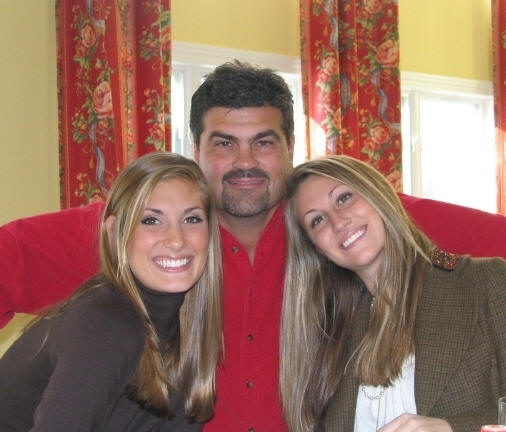
I don't think you can look for true love, it has a way of finding you. That, at least, is what happened to me. It seemed that one day she popped into my life, and before I knew it I was hers, a willful prisoner bound by all the softness and beauty the feminine mystique had to offer. Yes, I was smitten.
At first, I tried to resist. In my "might makes right world", it was going to take more than a pretty smile or pouty lip to change my ways. But "my way or the highway" became a lonely road and when it became clear that we both knew who wore the pants in the family, I learned to choose my battles, choosing only those that I knew I could win, or at least come in a close second. Not a perfect arrangement, but workable.
Like most relationships we had our share of rocky times. There were times that she left me for awhile and broke my heart, and I regret not telling her how much I missed her. Where once I had been the only game in town, I was cast into the new role of entertainment by default, the fun of last resort. I put on a happy face and performed the tried and true, the silly shtick that used to make her giggle and melt my heart away but by then she was on to me, wiser about the world, knowing there wasn't really a quarter behind her ear or that I couldn't possibly pull off her nose and then somehow put it back. And that day when she suddenly released my hand when we walked towards her friends at school confirmed my greatest fear...from that point on I would share her with the rest of the world.
Time has a way of changing one's perspective. Last night, from a far away place as she sipped a grown-up drink and contemplated her next day's work as a professional woman, we talked on the phone for an hour about the passage of time, shifting priorities and her much anticipated holiday visit. We talked about books and family and love interests, writing and travel and yoga, philosophy, poetry and even a little psychology. When she said, " Dad, I am so anxious to come home I dream about it!," I knew that the need to desperately horde her affections had disappeared. In its place was a deep gratitude that I have 100% of a part of her that we both cherish and can visit at any time of our choosing. And I know that privately, she will pretend to be surprised when I pull that quarter from behind her ear.
Write to us at:
 (address is not clickable)